Joined August 2015
- Tweets 28,791
- Following 4,870
- Followers 4,076
- Likes 226,623
545 Photos and videos













Pinned Tweet

12 Aug 2019
@GCPcloud were just one of many integrations over the last three months for @Chainlink. As Sergey begins to invest heavily in the future of the project and continues building a world class team, what will the next three months hold for the industry standard oracle network $link?
13 Jun 2019

We're thrilled to share that Google is one of the great companies integrating #Chainlink into their approach to smart contract adoption. Here's how @GCPcloud users can use Chainlink to connect to BigQuery, one of Google's most popular cloud services. cloud.google.com/blog/produc…
8
6
53

The $LINK ramp will be studied in business schools in the future.
Jan 30

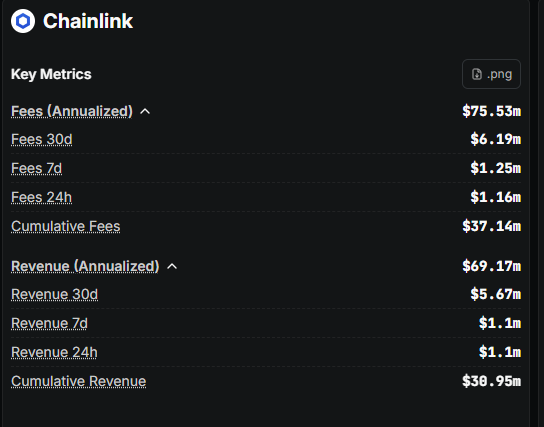
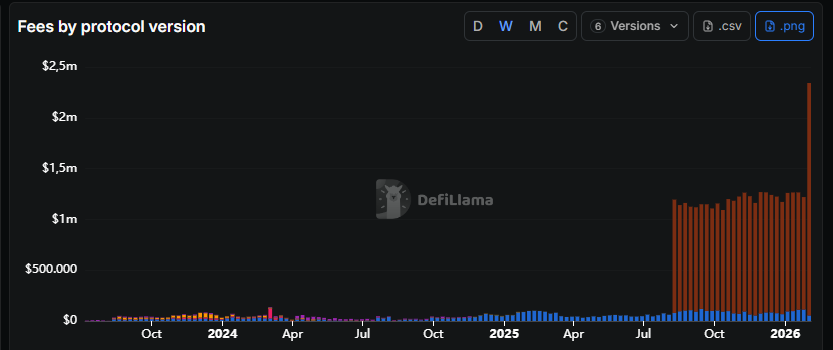
Ignore all negative news. Chainlink had the biggest fee and is only growing, be happy with the price at which you can still buy now. I expect a very soon increase in the weekly reserve buybacks.
YOU ARE RIGHT ABOUT CHAINLINK
it just takes a little longer than expected!
$link
9
22
224
16,229

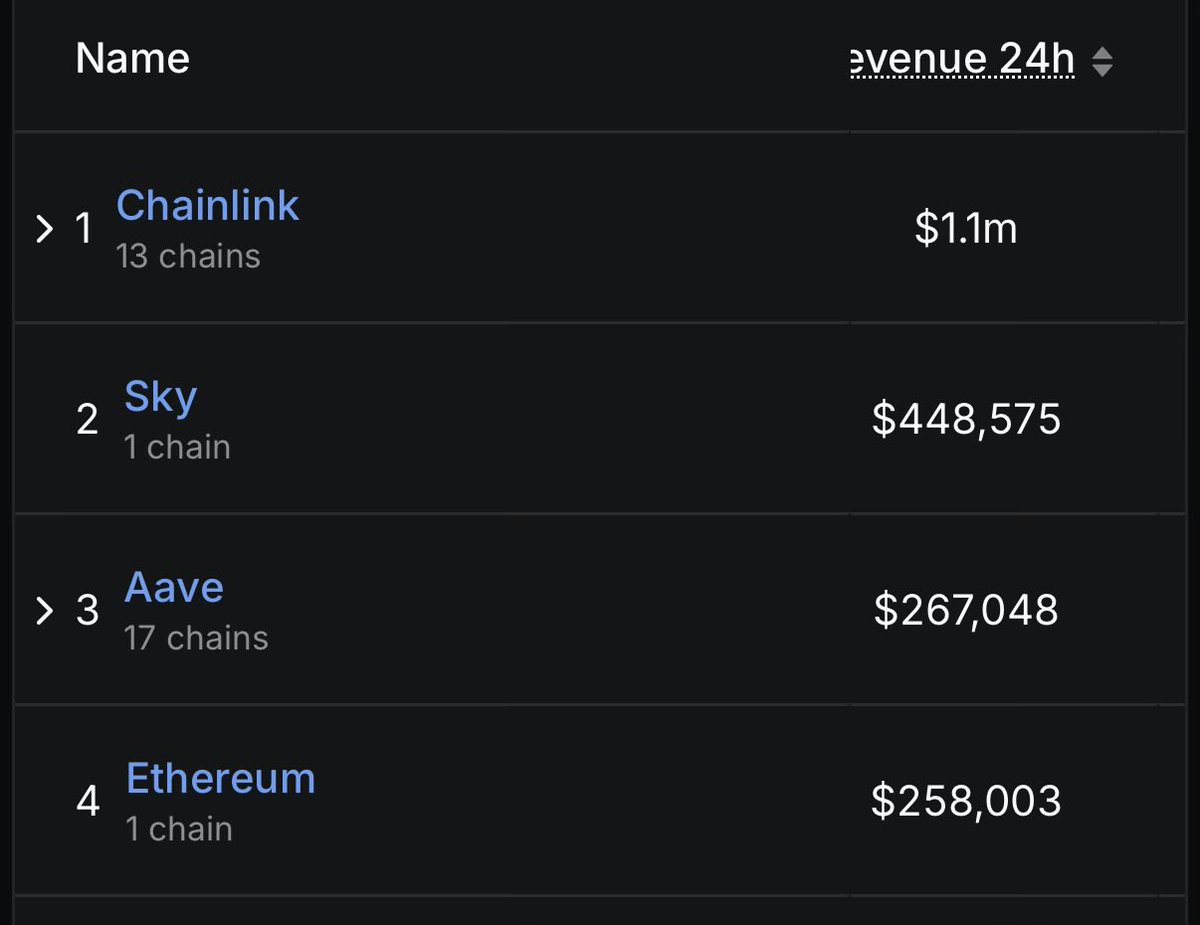
@chainlink was the number one revenue generating protocol trailing 24 hours.
426% higher than Ethereum.
$LINK $ETH
39
71
413
40,095

Alex retweeted

Jan 28
> but <my_token> is the native token
Thats sounds cool. For 2017. This is a hybrid multichain world. Told everyone a long time ago - "a whole new toolbelt" - you better understand abstraction.
$LINK
Jan 27

2
4
20
1,235
Alex retweeted


DTC Tokenization Service is designed to establish the standards that make interoperability possible: consistent on-chain data, unified token controls, and seamless value transfer across networks.
Today's financial infrastructure is fragmented. Blockchain offers a path forward, but only if the industry builds a common foundation. We're creating it.
Learn more: dtcc.com/digital-assets/toke…
1
8
105
4,635
Alex retweeted

Jan 27
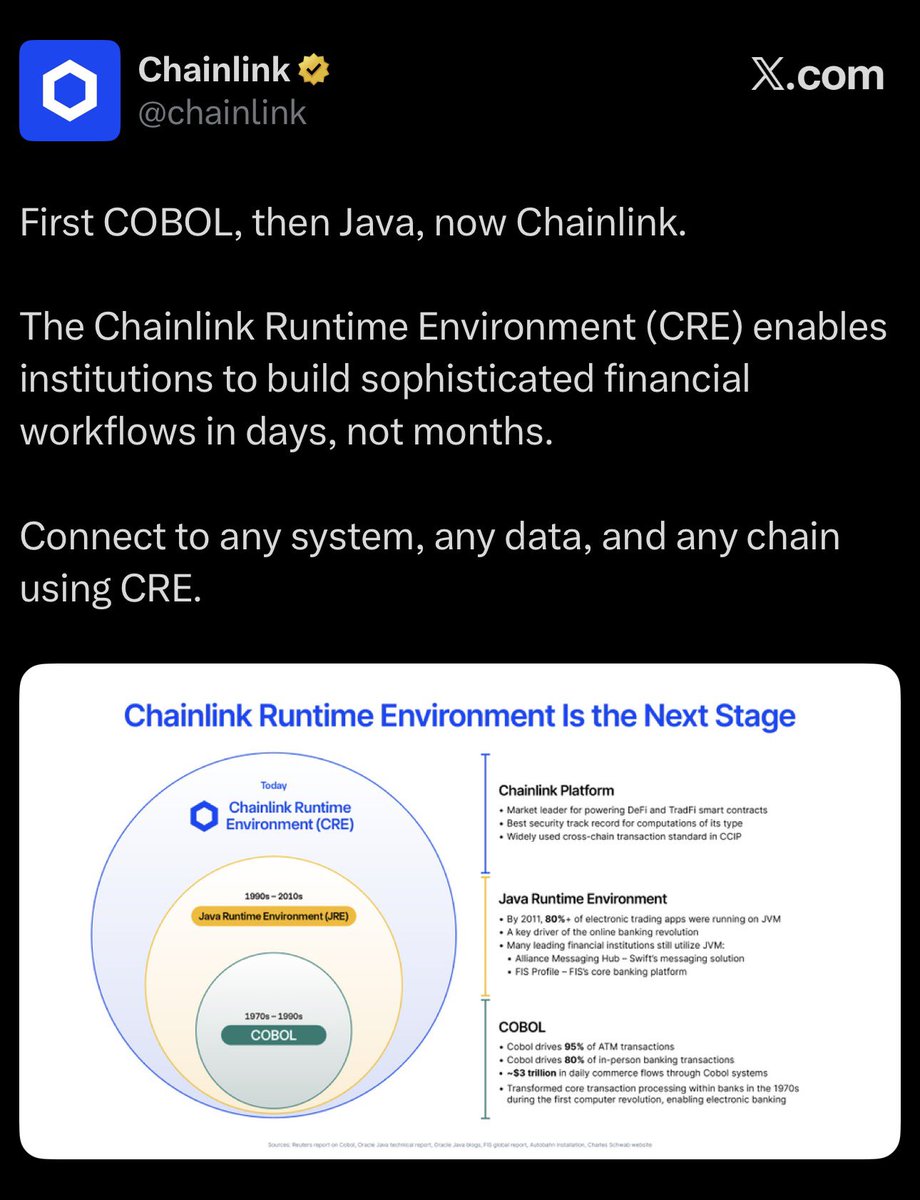
Chainlink’s next evolution: a unified runtime environment, CRE, to serve as the orchestration layer for global onchain finance
Jan 26

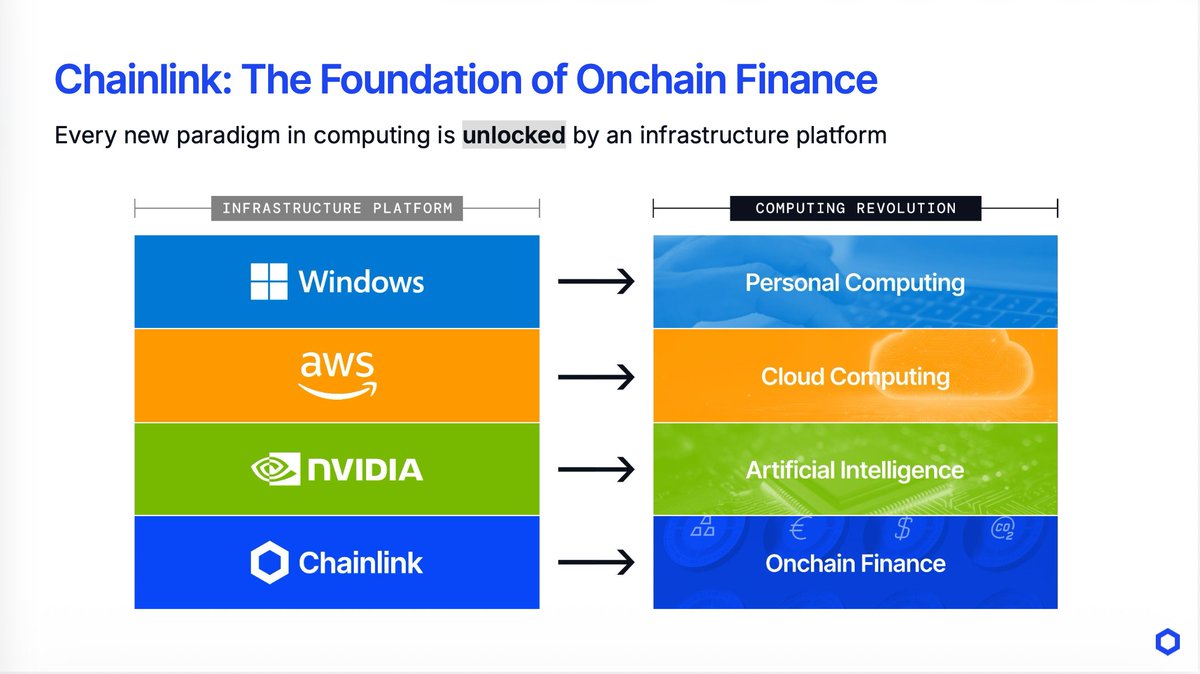
What does @chainlink have in common with @nvidia? They have evolved from products into standards through network effects.
When people hear “network effects,” they often think of social networks or marketplaces, where value increases as more users join. In the case of NVIDIA and Chainlink, the dynamic is subtler but more powerful. Each has built a technology platform around which an ecosystem of developers, tools, integrations, and institutional practices has formed.
As more organizations build products and workflows on NVIDIA’s hardware and software stack, it becomes easier and safer for others to do the same. Expertise accumulates, tooling improves, and operational risk declines. Over time, choosing NVIDIA stopped being a bet on superior specifications and became the only decision for teams that needed reliability at scale. NVIDIA did not just supply GPUs; it became the standard foundation for AI development.
In many ways, Chainlink is similar. As more data providers, applications, and financial institutions integrate with the network, its reliability and security improve. That reliability and security, in turn, attract the largest DeFi protocols and traditional finance institutions that are adopting onchain infrastructure. Integration with Chainlink reduces coordination and trust costs, making it the global standard for serious applications rather than merely a competitive option.
The platform wins because it minimizes risk, aligns incentives across a broad ecosystem, and answers a critical question for decision-makers: What do the best teams in onchain finance already rely on? Chainlink.
11
119
3,376
Alex retweeted

Jan 27
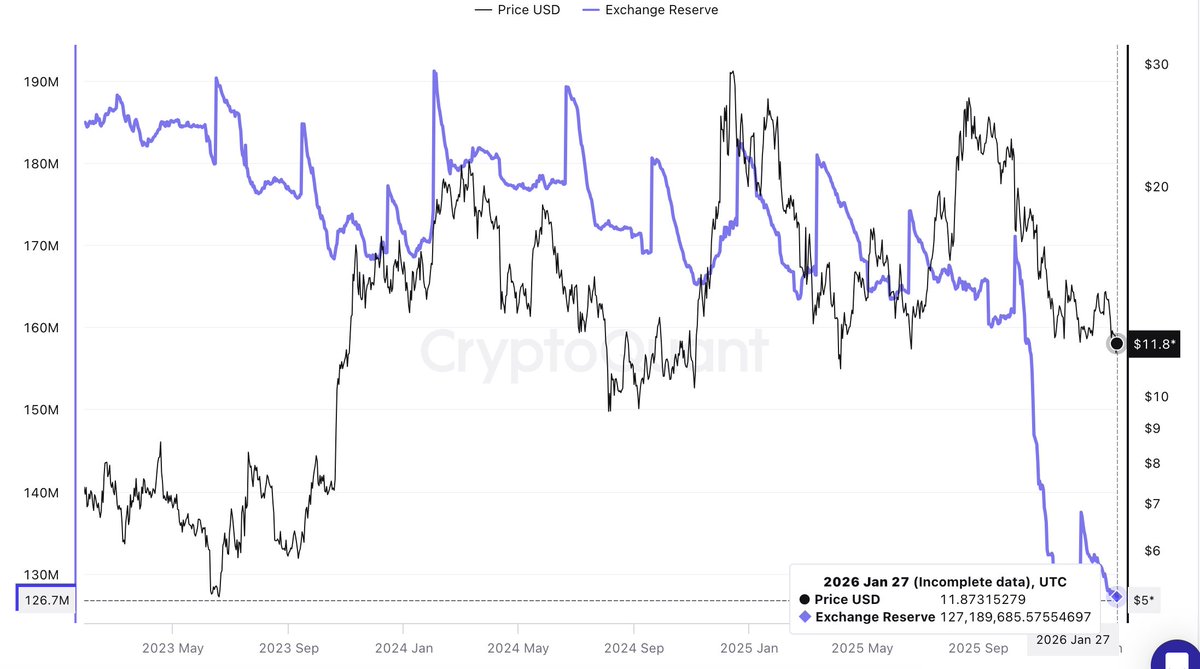
🚨 $LINK ON EXCHANGES HAS DROPPED TO ALL TIME LOWS. WHALES ARE ACCUMULATING AND HOLDING🚨
15
21
292
11,518
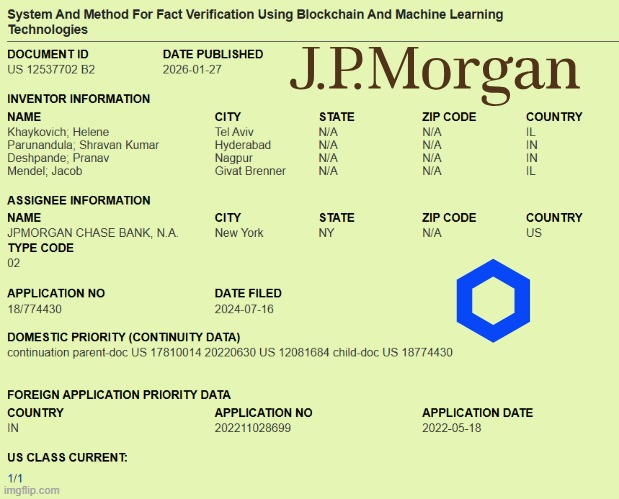
1/
Pause for a second.
A @jpmorgan patent is casually talking about @chainlink.
Actual core infrastructure....
A global bank acknowledging $LINK exists (for the 100th time) at the center of truth verification is insane.
My followers will not work seasonally on a boat.
🧵 👇
18
54
392
47,090
Alex retweeted
Global banks are using $LINK as infrastructure, they don't want you to know though. They keep it in the shadows without saying anything publicly, but the future of finance is connected by $LINK

1/
Pause for a second.
A @jpmorgan patent is casually talking about @chainlink.
Actual core infrastructure....
A global bank acknowledging $LINK exists (for the 100th time) at the center of truth verification is insane.
My followers will not work seasonally on a boat.
🧵 👇
7
14
170
5,973
Alex retweeted

Jan 26
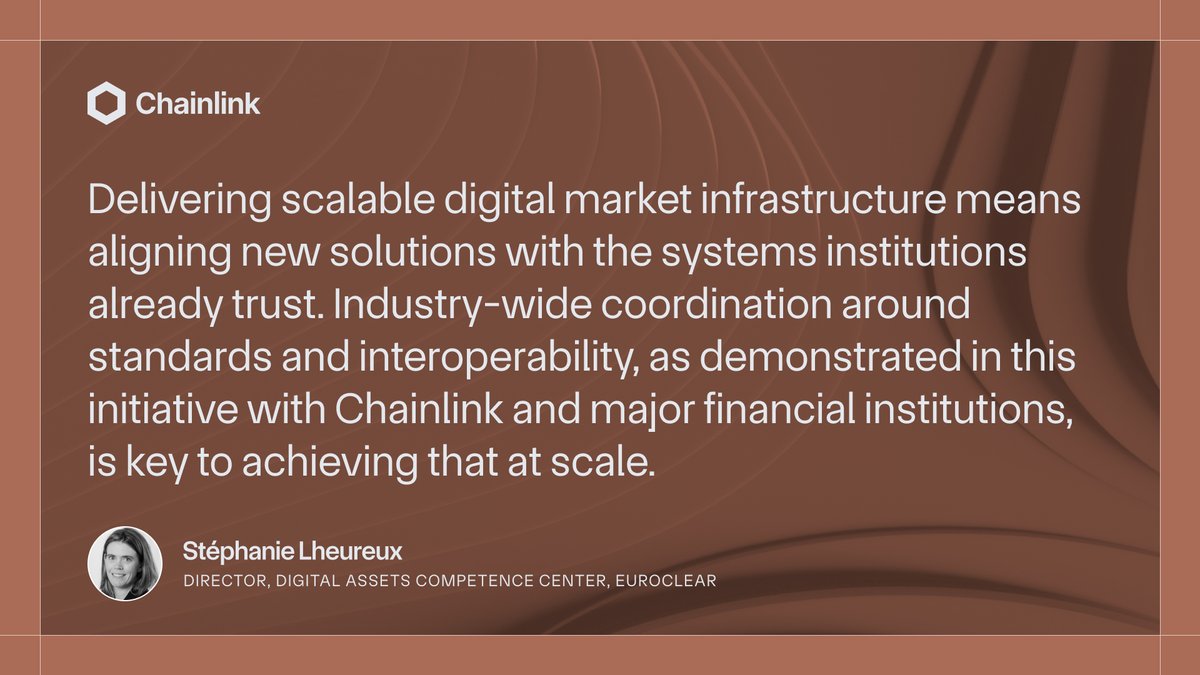
Chainlink’s work with Euroclear & 23 major organizations is modernizing corporate actions processing.
In the solution, CCIP & the Chainlink Runtime Environment (CRE) power the processing, validation, & cross-system distribution of corporate actions data.
29 Sep 2025
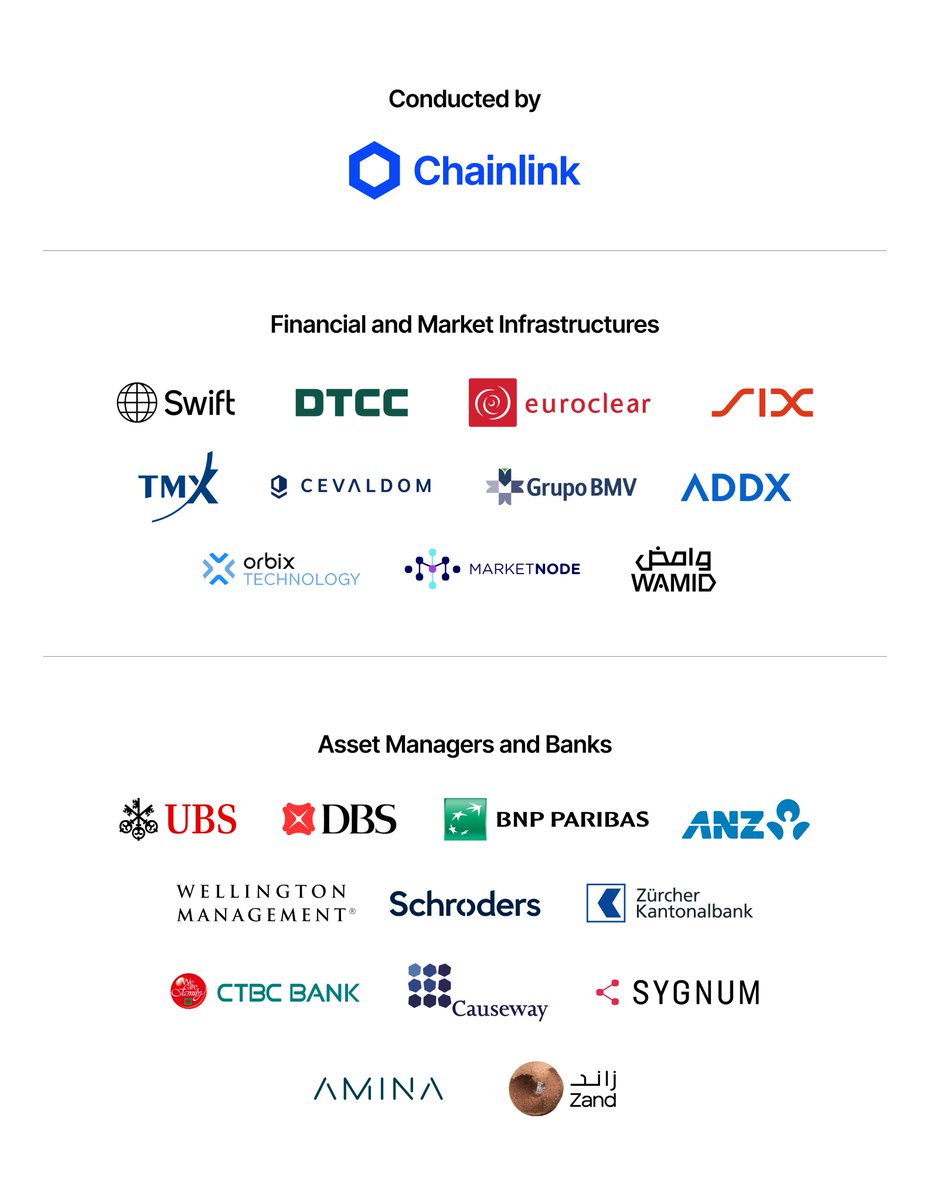
We are excited to announce a major industry milestone in a global corporate actions initiative led by Chainlink in collaboration with 24 of the world’s largest financial organizations, including Swift (@swiftcommunity), DTCC (@The_DTCC), and Euroclear (@EuroclearGroup).
prnewswire.com/news-releases…
Corporate actions are a critical building block for public equity to operate successfully onchain. Building on the foundation established in the first phase of our industry initiative, we now have successfully demonstrated how the Chainlink platform, blockchains, and AI help solve one of finance’s most complex data challenges in a production-grade solution with unparalleled data accuracy, ISO 20022 messaging functionality via Swift, connectivity across DTCC AppChain as well as additional public and private blockchains, and much more.
🧵⬇️
30
139
782
56,088
Alex retweeted
Jan 26
Institutions won’t replace their decades-old systems.
Chainlink connects those systems to blockchains so they don't have to.
"I think we finally found our use case for crypto"—@awealthofcs & @michaelbatnick with Ryan Lovell on the Animal Spirits Podcast: podcasts.thecompoundnews.com…
26
131
745
31,782
Alex retweeted
Jan 27
Chainlink Labs has joined the Global Alliance for KRW Stablecoins (GAKS) led by WEMADE, a 600M user platform.
wemade.com/news/eng152
The alliance is advancing stablecoin standards in Korea by leveraging Chainlink's data, interoperability, compliance, & privacy standards.
35
157
905
26,709
Alex retweeted
Jan 27
Turtle has entered a strategic partnership with Chainlink to bring institutional liquidity onchain.
@turtledotxyz is exclusively using CCIP & Data Feeds to power its liquidity infrastructure & support major institutions moving onchain with Chainlink.

72
151
862
35,305
Alex retweeted

Jan 26
NEW EP: Why Tokenized Assets Are Crypto's Next Mega Trend with Chainlink's Zach Rynes
$10M in MEV recaptured. Trillions in assets ready to move onchain. BlackRock, Fidelity, and the NYSE are making their move.
In today's episode, we sit down with @ChainLinkGod of @chainlink to cover:
- The Atlas Acquisition: Scaling SVR Across Chains
- How Chainlink Recaptures $10M in Liquidation MEV
- Why Institutions Are Finally Ready to Tokenize
- DeFi's Role in the Neo-Finance Era
- The Infrastructure Play for Trillions Onchain
Full episode links below.
Timestamps:
00:00 Intro
02:40 Zach's Smart Con Reflections
05:18 SVR Breakdown: Recapturing MEV
06:51 Halliday, infiniFi, Kalshi Ads
08:01 How Atlas Fits Into Chainlink's Vision
13:08 The Tokenization Megatrend
15:30 Relay, Trezor Ads
16:03 Quality Assets: The Missing Piece
18:49 Asset Layer vs Protocol Layer
20:06 Zach's 2026 Outlook
22:31 Closing Thoughts
13
36
213
21,745

🚨JUST IN: @CHAINLINK MOVES DEEPER INTO TRADFI TERRITORY
From Swift and UBS
To a KRW stablecoin alliance led by WEMADE
Here’s why this matters ⬇️

14
40
324
11,665
Alex retweeted
Jan 27
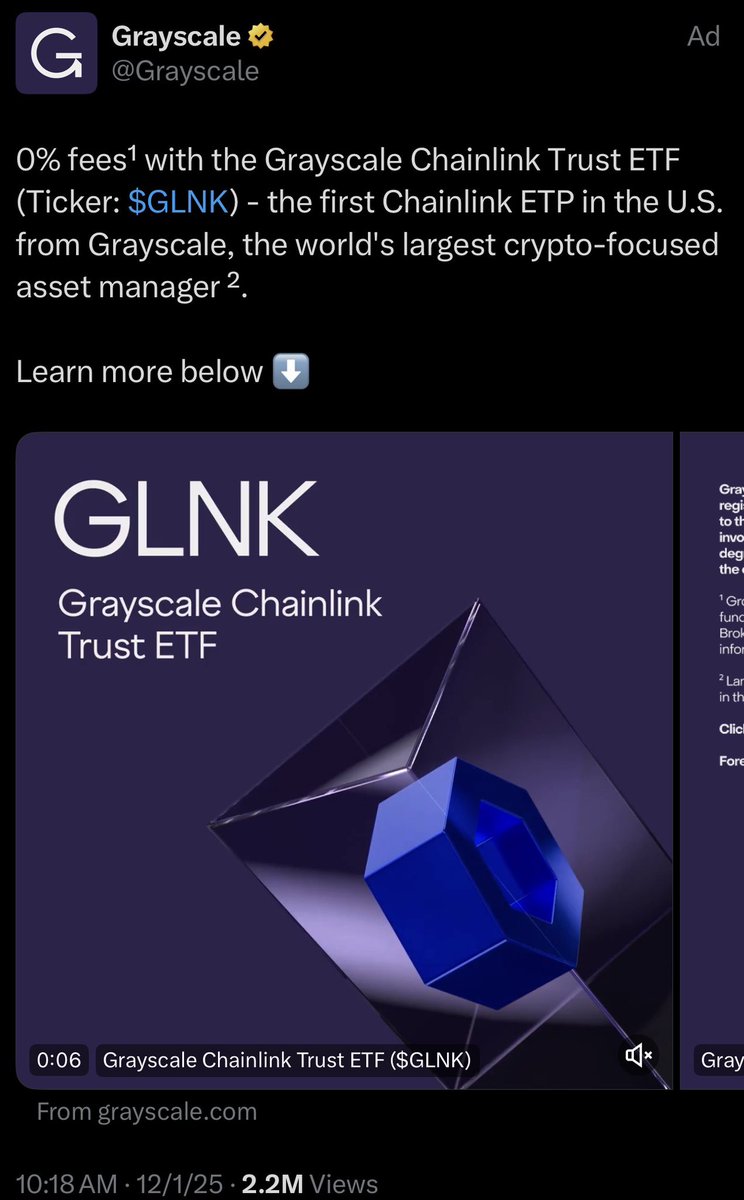
Grayscale is paying to advertise its $LINK ETF on X, you love to see it
Similarly to how institutions and crypto apps are racing to integrate Chainlink services to gain market share, asset managers globally are beginning to compete for $LINK investment vehicle market share
4
22
208
5,944
Alex retweeted
Jan 27
"It's about how do we tokenize the whole world, that's our main motto."
44
82
715
42,971
Alex retweeted

Jan 27
Chainlink just flipped the script on DeFi profitability with the acquisition of Atlas by FastLane.
By integrating this tech into the Chainlink Platform, protocols can now recapture Oracle Extractable Value (OEV), turning what was once a "cost of doing business" into a primary revenue stream.
This, combined with CCIP v1.5 and the debut of CME Group’s LINK Futures, has transformed LINK into the "Universal Liquidity Standard" for the $30T tokenization market.
10
22
256
5,021
Alex retweeted

Jan 26
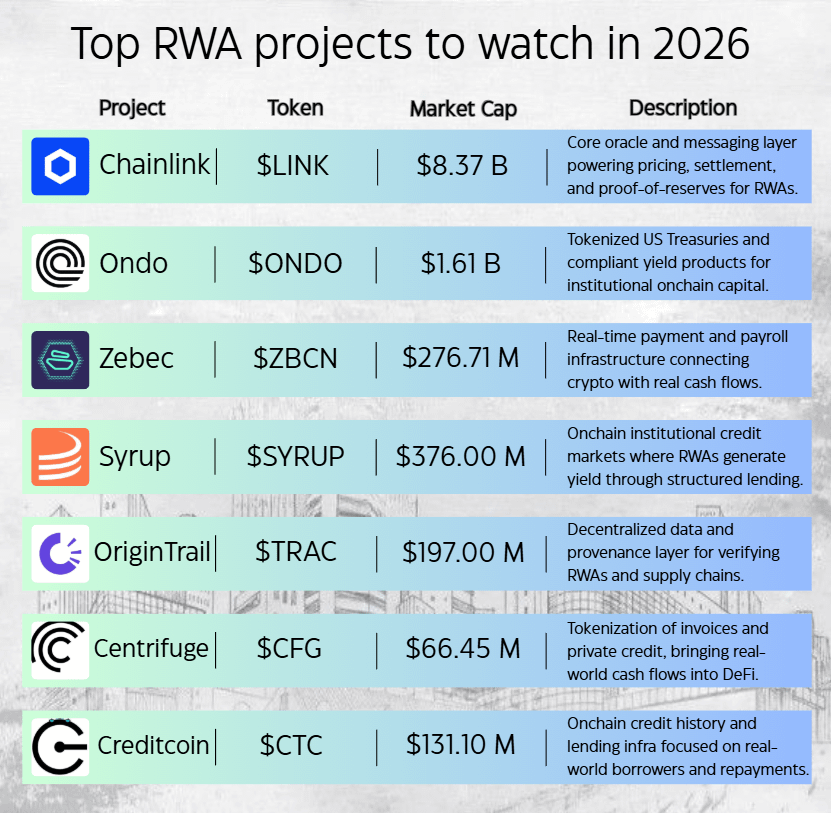
RWAs are where generational wealth will be built in 2026.
Gold at ATH. Silver at ATH. Real assets repricing everywhere.
Crypto hasn't priced this shift yet.
Most will realize when RWAs already 5-10x'd.
7 RWA protocols before they explode:
1. @chainlink
The backbone of RWA pricing and settlement. Proof of Reserves, CCIP, and data feeds are what make tokenized assets usable at scale. Most RWA stacks depend on this layer whether they mention it or not.
2. @OndoFinance
Tokenized US Treasuries and yield-bearing RWAs for onchain capital. Clear product-market fit with institutions looking for compliant yield without leaving crypto rails.
3. @Zebec_HQ
Streaming payments and real-world payroll infrastructure. Bridges onchain assets with real cash flows, not just static tokenization.
4. @maplefinance
Institutional lending and credit markets onchain. RWAs here aren’t just assets, they’re balance sheets and risk models expressed in smart contracts.
5. @origin_trail
Supply chain and asset provenance infrastructure. Critical for RWAs where verification, metadata, and traceability matter more than yield.
6. @centrifuge
Tokenizing invoices, credit, and real-world receivables. One of the few projects with long-term traction connecting private credit to DeFi liquidity.
7. @creditcoin
Onchain credit history and lending infrastructure focused on emerging markets. RWAs here are loans and repayments, not just wrapped assets.
18 Nov 2025

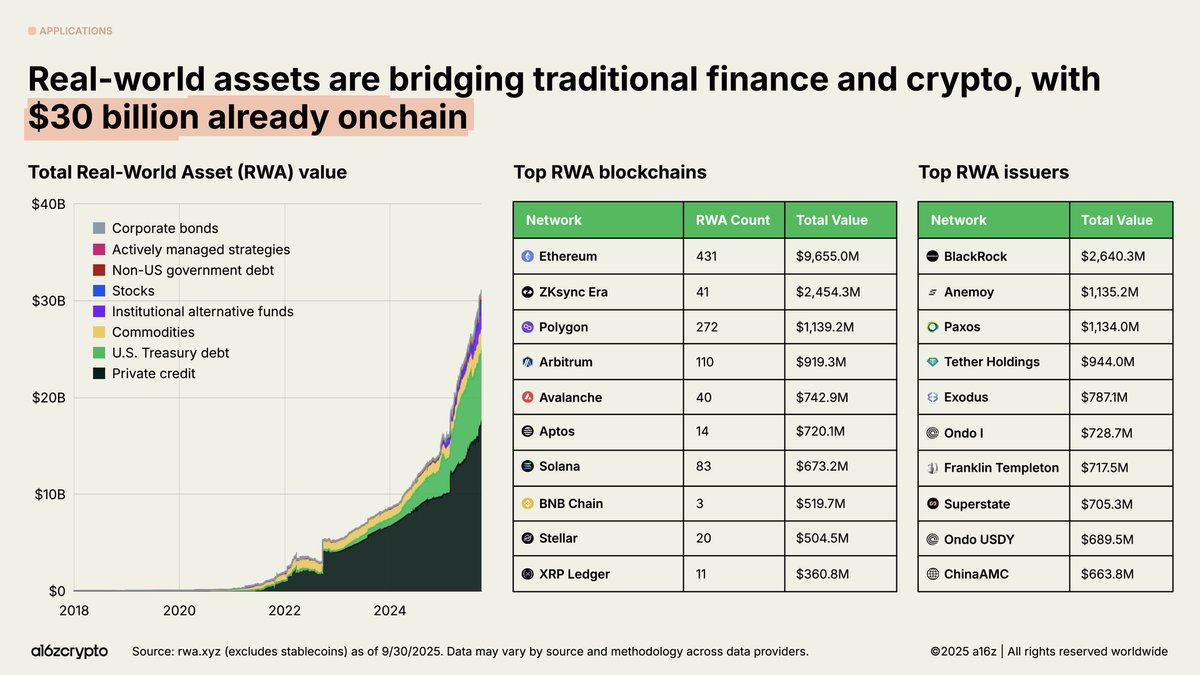
Real-world assets (RWAs) — traditional assets such as U.S. Treasuries, money-market funds, private credit, and real estate that are represented onchain (“tokenized”) — bridge crypto and traditional finance.
The total market for tokenized RWAs sits at $30 billion, up nearly 4x in the last two years.
146
214
871
79,811