
Chang Lab at UCSF, human brain, speech, brain-computer-interfaces, neurosurgery
Joined August 2020
- Tweets 155
- Following 6
- Followers 2,737
- Likes 13
48 Photos and videos

Jan 22
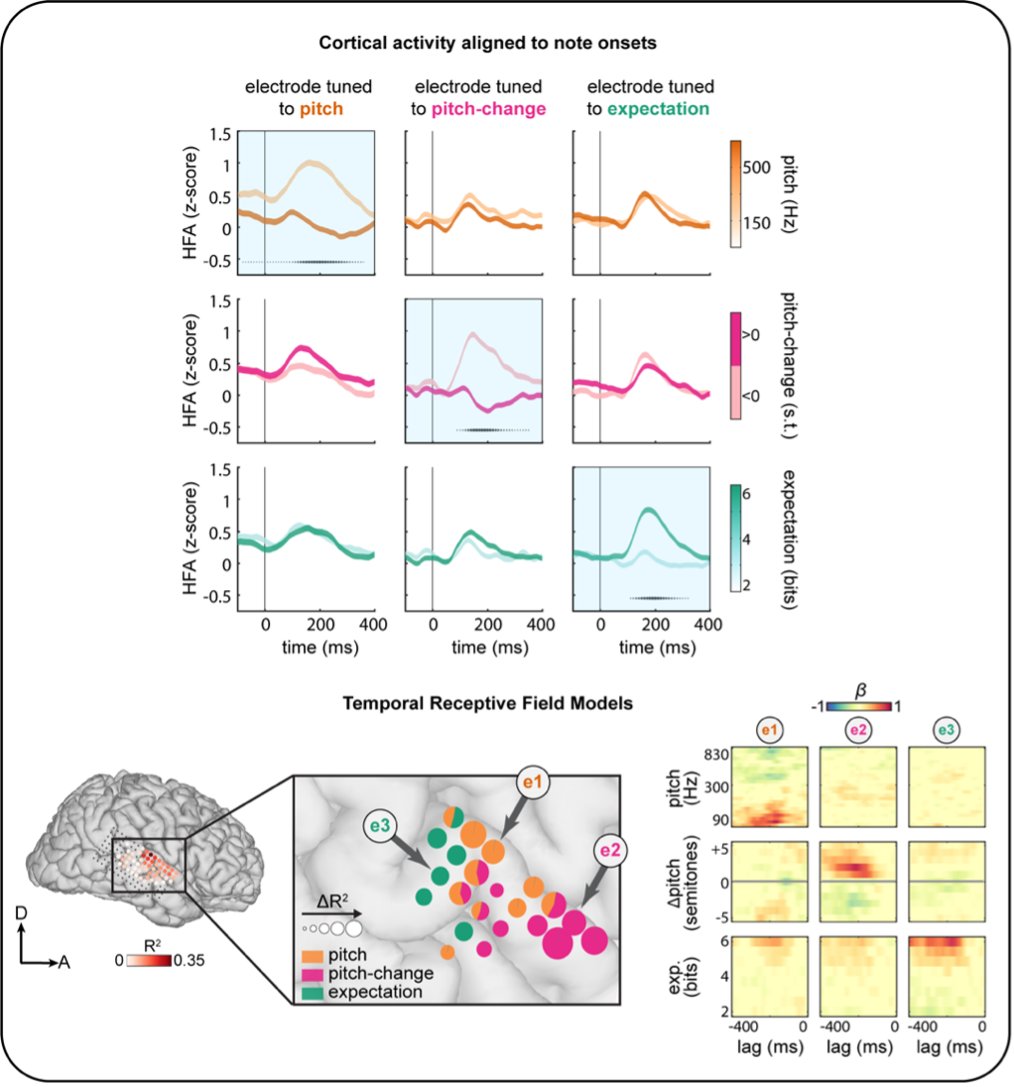
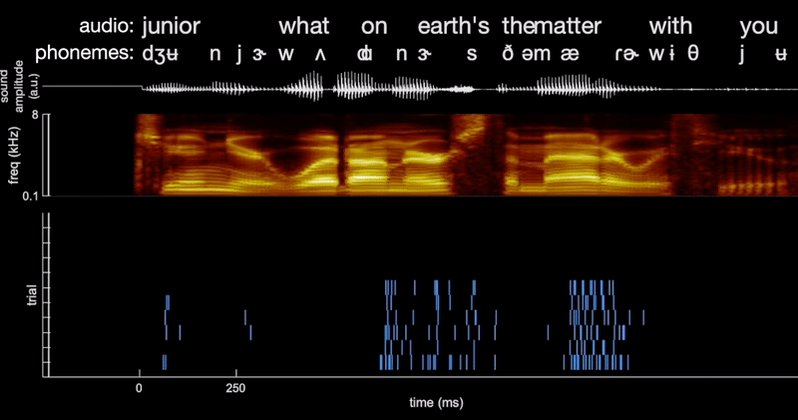
New work from our lab showing the human frontal lobe receives fast, low-level speech information in parallel with early speech areas!
doi.org/10.1038/s41467-025-6…
10
24
4,665
ChangLabUCSF retweeted

31 Jul 2025
For more than a century, scientists thought that Broca's area coordinates the muscle movements required to speak. But new @UCSF research from @ChangLabUCSF identifies the key role that the middle precentral gyrus (mPrCG) plays in this process. @jessierliu
l8r.it/ua64
13
41
3,126
29 Jul 2025
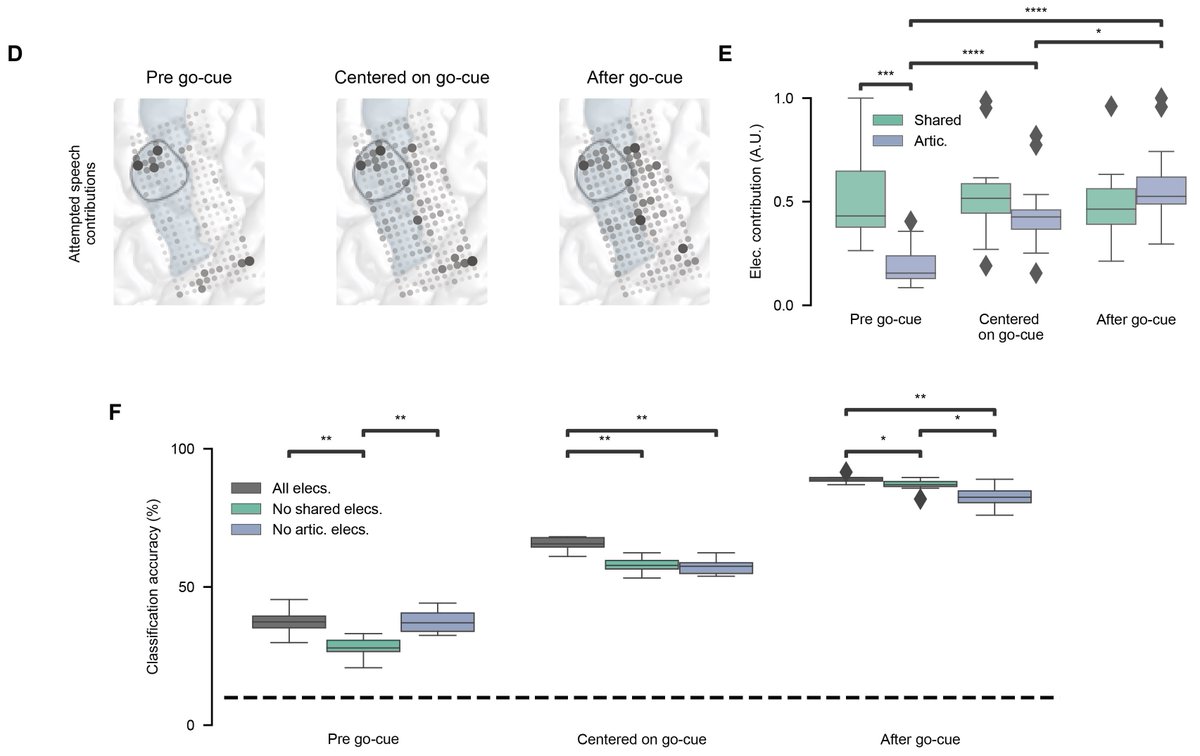
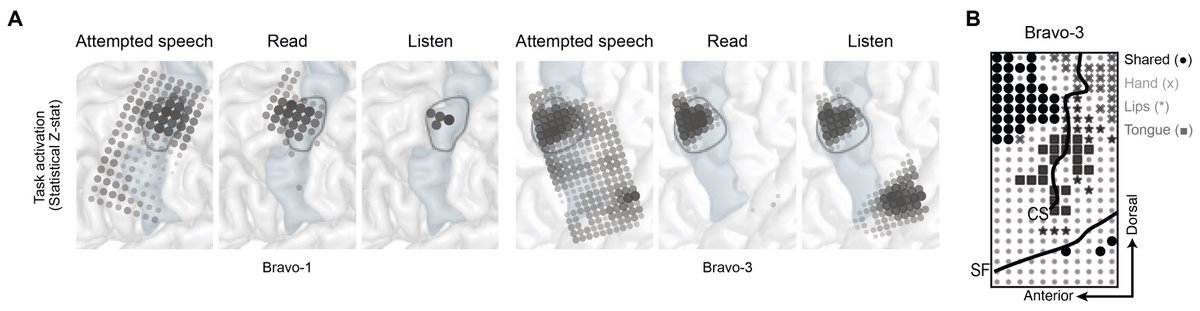
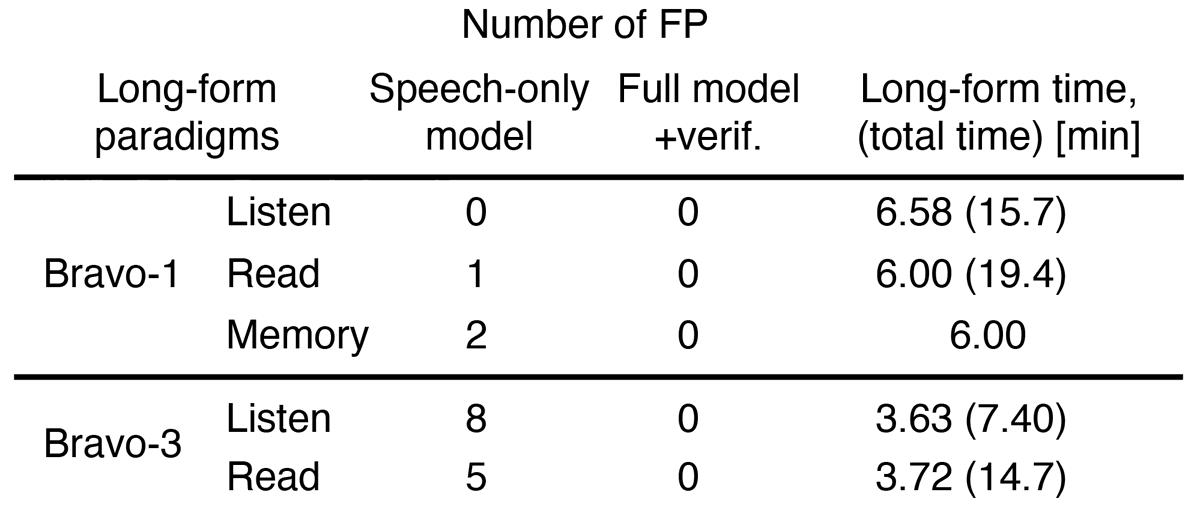
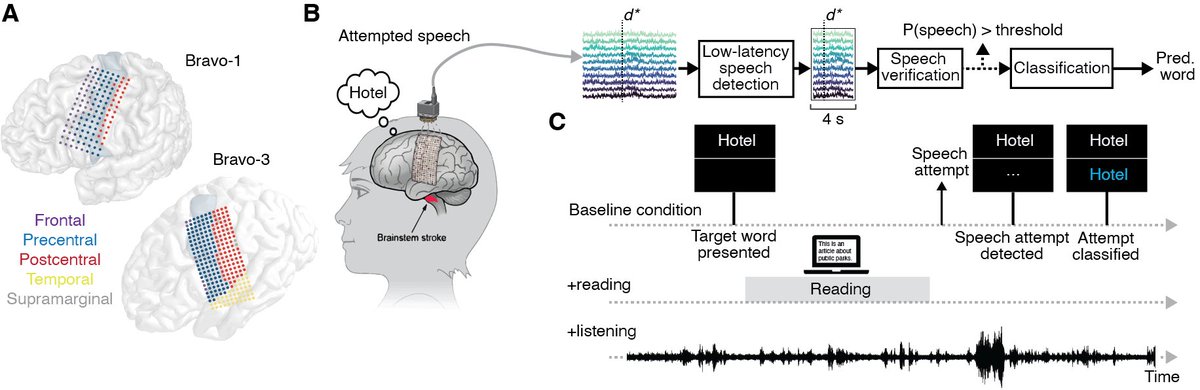
Check out our latest work developing speech decoding systems that maintain their specificity to volitional speech attempts, co-led by @asilvaalex1 and @jessierliu iopscience.iop.org/article/1…
1
8
24
2,766
29 Jul 2025
Rather than coding specific vocal-tract movements during attempted speech, activity at these shared electrodes could be decoded into words prior to attempted speech, supporting the emerging role of the middle precentral gyrus in speech-motor planning.
2
1
575
29 Jul 2025
This work wouldn’t have been possible without our two amazing participants, Bravo-1 and Bravo-3, their family and caregivers, and the support of our team!
2
423
17 Jul 2025
Our latest research on the neural basis of speech-motor sequencing is now published in @NatureHumBehav! Check out this high-level explainer video and read the full paper here: nature.com/articles/s41562-0…
16 Jul 2025

New in @NatureHumBehav, @jessierliu, Lingyun Zhao, PhD & @ChangLabUCSF show that the middle precentral gyrus coordinates the muscle movements required to speak, challenging the longstanding view that Broca's area controls this process: nature.com/articles/s41562-0…
9
48
4,793
4 Mar 2025
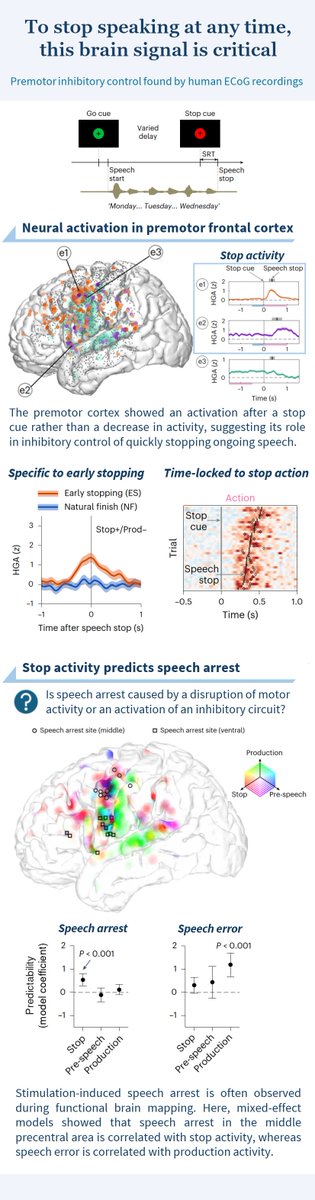
Our latest work on the neural mechanism for stopping speech production is published! See a brief summary below and the original paper linked to the post at the bottom.
3 Mar 2025

In natural conversations, people can stop speaking at any time. How? Using high-density electrocorticography, Zhao et al. find a distinct neural signal in the human premotor cortex that inhibits speech output to achieve abrupt stopping. @ChangLabUcsf
nature.com/articles/s41562-0…
1
13
53
6,326
20 May 2024
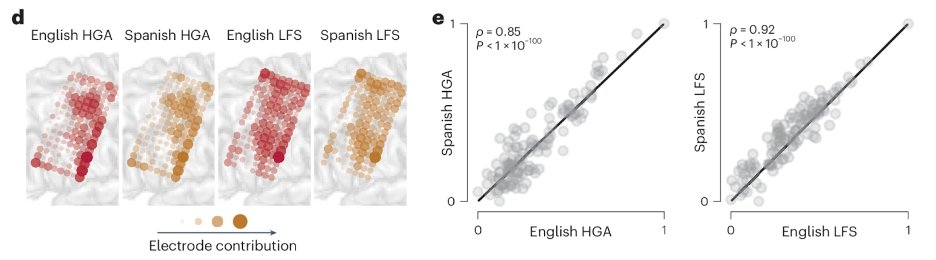
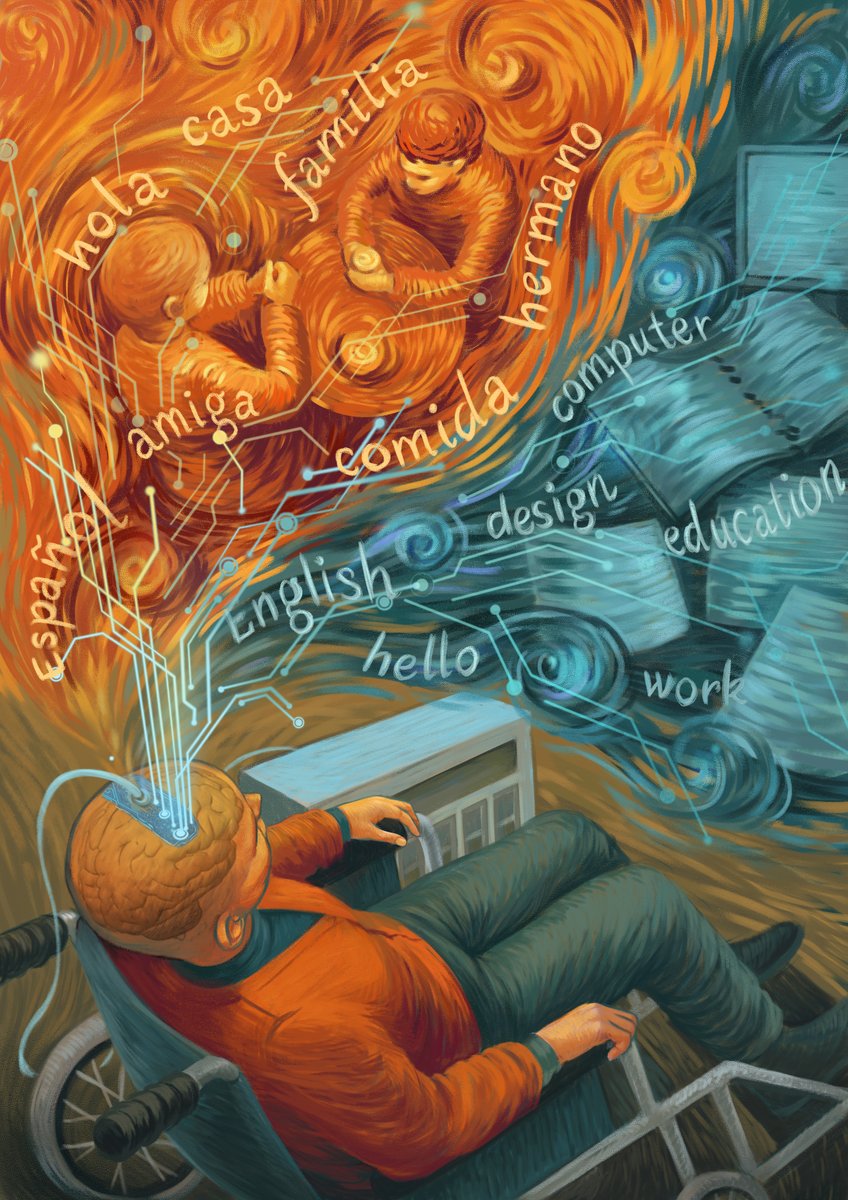
Excited to share our work on developing a bilingual speech neuroprosthesis that decodes cortical activity into English and Spanish sentences in a person with paralysis. Out today in @natBME! nature.com/articles/s41551-0…
3
24
131
19,739
20 May 2024
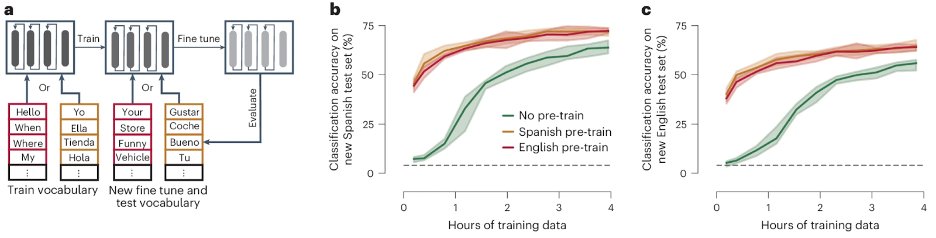
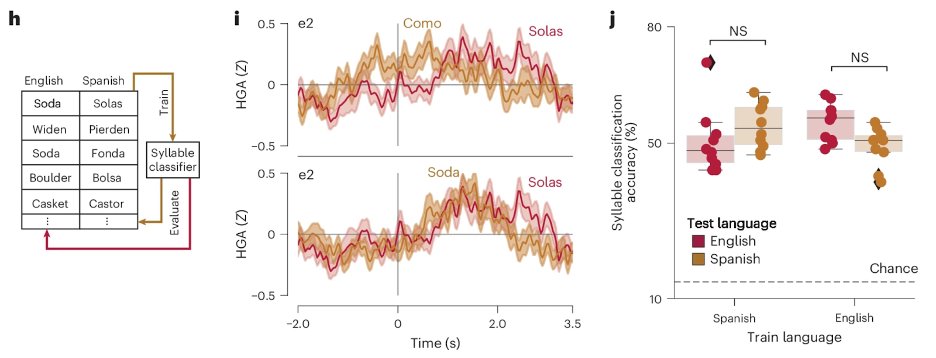
We leveraged this finding to demonstrate transfer learning across languages. Data collected in a first language could significantly expedite training a decoder in the second language, saving time and effort for the user.
1
2
4
1,755
20 May 2024
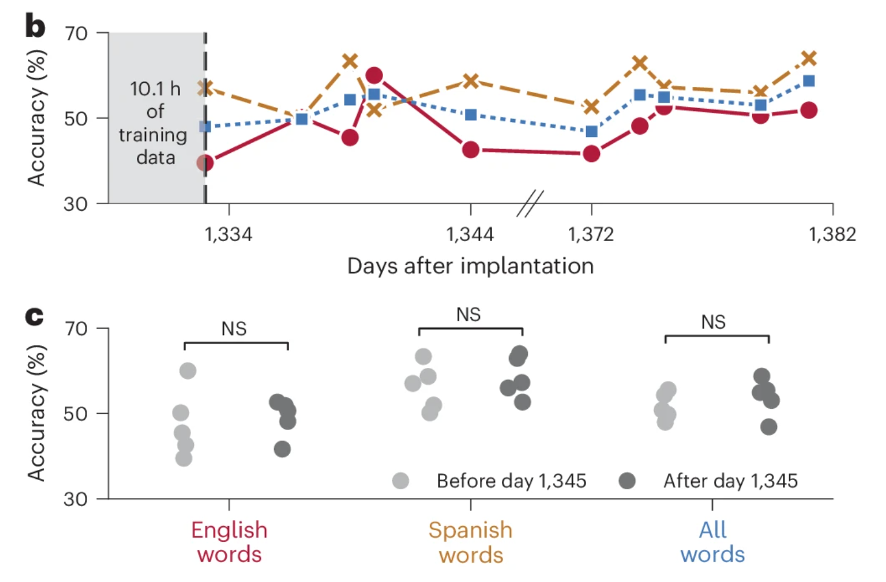
Our models also showed stable performance without retraining for ~2 months and these results were achieved ~4 years after ECoG implantation. We hope these findings can be scaled to more patients in the near future!
2
3
1,382