Sew your wounds yourself .… Life Changing Profits Only 🌮
Joined June 2016
- Tweets 10,525
- Following 868
- Followers 2,503
- Likes 5,525
1,738 Photos and videos













11h
BTC drops to 30k
I become number 2 in the world of competitive Bey Blade X
Life’s still good
44
19h
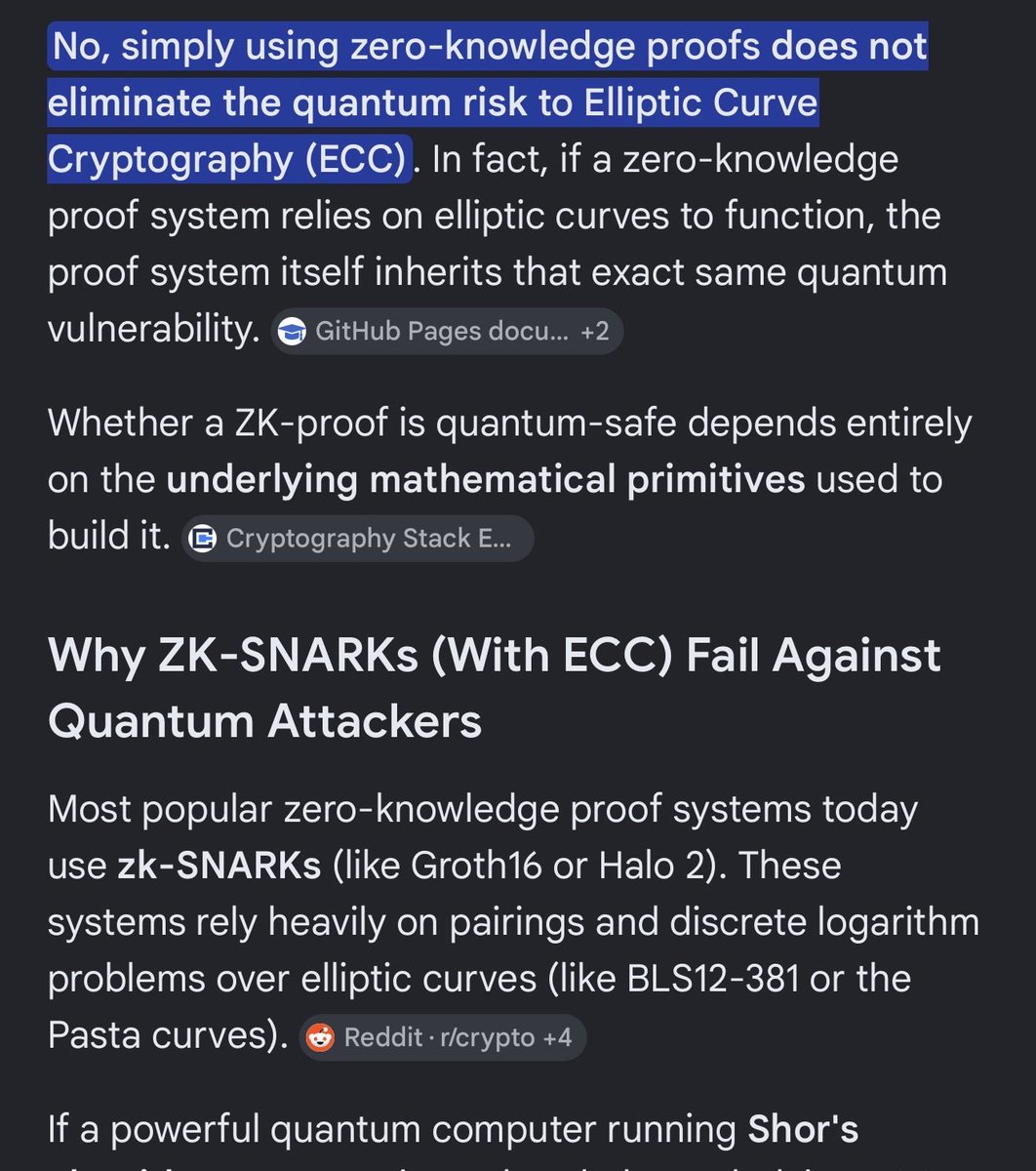
The Eth ecosystem got so far ahead of everyone else it’s now doubling back to steal the formal verification and privacy narratives 😂
Is this a closable gap?
56
22h
Righttttttttttt
Jun 13

JUST IN: 🇺🇸 US government orders Anthropic to suspend foreign access to Mythos Fable 5 AI model, citing national security concerns.
Anthropic has disabled access for all users worldwide.

43
Jun 12
If you got rekt on the opening print you’ve learned a valuable lesson
47
Jun 12
7’ step back 3 🤮

SOUND UP to hear the ELECTRIC atmosphere in the Garden as New York pulled off its historic comeback win ⚡
69
Jun 12
Maybe some of these smaller teams should unite, this may help produce better offerings which may lead to bigger funding. Market conditions also call for a pause in funding things and teams/products that aren’t vital/ produce 0 revenue. I don’t have any problems with Ecad and I appreciate what they’ve done.
Jun 12

Brother in Christ, it is the same story over and over and over again.
At some point we have to stop treating every independent team that falls out with Tezos funding as the villain by default.
Kolibri guys were the problem. Arri was the problem. ECAD is the problem. Public RPC operators are the problem. LIGO users were the problem when their language got deprecated. Indexers and app teams were the problem when upgrades broke things. Everyone is always unreasonable except the system that keeps producing the same outcome.
Of course ECAD should show what they built and what they were paid. I’m not against accountability. But that cuts both ways.
If the question is “has ECAD built successful infrastructure outside Tezos?” then the paired question is “has the funding body repeatedly funded ecosystem infrastructure in a way that produced durable, transferable, well-maintained public goods?”
Because the pattern we keep seeing is not durable stewardship... It is grant-funded public goods, rising maintenance burden, funding cuts, hard migrations, social blowups, then consolidation into the same small set of insiders.
Signatory may not be existential in the sense that Tezos halts tomorrow without ECAD but that is a low bar. The question is whether Tezos wants independent critical infrastructure teams, or whether every useful tool eventually gets starved, absorbed, deprecated, or replaced after the original team is burned out.
Other chains manage to fund wallets, SDKs, RPCs, explorers, signers, infra teams, grants, and ecosystem support without turning every maintenance negotiation into a morality play. So yes, ask ECAD for the work product and numbers. But also ask why Tezos keeps ending up in public knife fights with the teams that built useful things for it.
Fair ask on funding numbers. ECAD should publish the ledger if they want public support.
But the “what did they build?” part is not mysterious.
They created and maintained Taquito, the dominant Tezos JS/TS SDK. The npm packages still show hundreds of thousands of monthly downloads across Taquito core, RPC, local forging, Michelson encoding, utils, signer, and Ledger signer packages.
They built Signatory, the protocol-aware remote signer for Tezos operators using HSMs, Cloud KMS, TEEs, Ledger, policy enforcement, watermarks, and Prometheus monitoring. That is key-management infrastructure, not a toy app.
They operated public RPC infrastructure through ECAD Infra. Their shutdown post says the endpoints served roughly 54 million requests and 1.2 TB in the prior seven days.
They built node/baker Ansible tooling, Tezos monitoring/exporter tooling, Grafana datasource work, Taquito templates/boilerplates, lower-level Go/protocol utilities, and newer TezosX tooling.
So yes, ask for funds received. That is fair. But the work-product question has receipts. ECAD was responsible for SDKs, signing infrastructure, RPC infrastructure, operator tooling, monitoring, developer templates, and support surfaces that Tezos apps and operators actually used.
Cost aside, ECAD was one of the things Tezos could rely on 100% of the time. They were a shining star of consistent competency. Now they're "the devil."
Feh.
3
262
Jun 12
You can always sell your bag make multiples elsewhere then come back with house money😂
I did it years ago and it helps the mental a ton
41
Jun 12
Are these guys trying to raid the WarChest? Down to the last 30mill like dot?
30
Jun 12
I haven’t seen a single team leave take their creativity elsewhere and become successful.
1
1
188