
Joined January 2022
- Tweets 160
- Following 84
- Followers 371
- Likes 464
4 Photos and videos
Cheese Enthusiast retweeted

26 Feb 2024
1
19
48
1,822
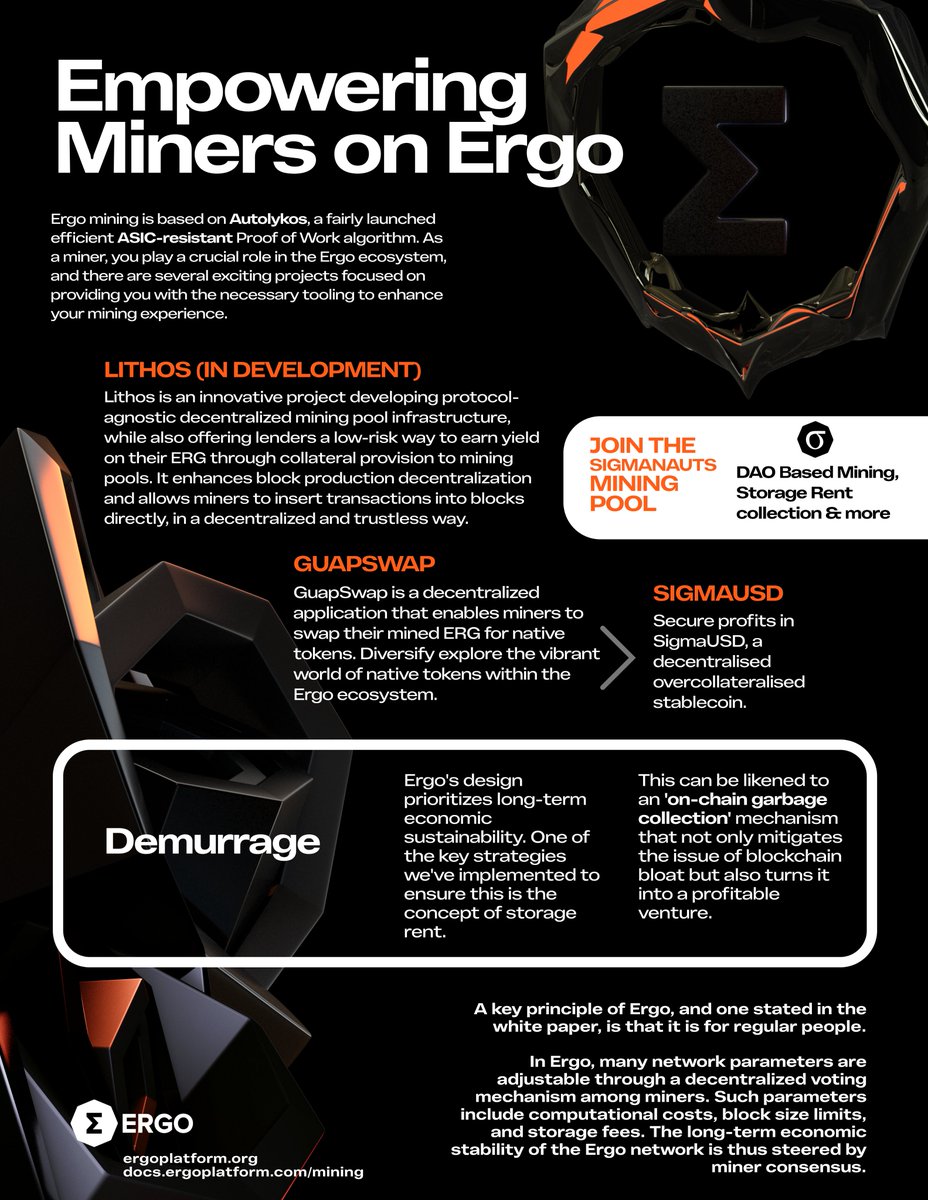

What’s the latest with @LithosProtocol?
The first milestone WIP
Implement Lithos Miner Client:
● Introducing the Solo-Miner / Lithos Client featuring storage rent transactions, MEV, and enhanced transaction selection.
● Lithos emissions and pool functionality contracts
1
15
58
1,543
Lithos development is starting.
A universal solution to deliver better economic assumptions to miners and security assumptions blockchains .
@ergo_platform @LithosProtocol
binance.com/en/feed/post/318…
1
30
99
2,894
Cheese Enthusiast retweeted

21 Dec 2023
Indeed, it became so common these days that people think it is an essential attribute of crypto. No, it is not.
Most of the problems stem from the original sin of the unconstrained account-based programming model of smart contracts.
The model is so attractive for professional developers because they can reuse there skills.
Users, however, mostly unaware of the risks, and of the fact that, due to intrinsic "flexibility" of the "EVM-compatible" smart contracts, developers simply cannot guaranty asset safety. This should change or else users will start to be wary of EVM-compatibility as a sign of a "high risk" or "danger" zone in the crypto world.
On the other side of the spectrum eUTXO-based smart contracts (such as those in @ergo_platform and @Cardano) where you can precisely describe (and also formally verify) the conditions for assets transfer. But, developers need to learn new tricks, which, you know, sometimes can be a really painful cognitive exercise - the main reason of slow adoption of eUTXOs.
21 Dec 2023

This is the news of the day.
Last week was @ledger’s drainer attack.
A week before that: @peapodsFinance’s reentrancy vuln.
November ended with @kyberswap’s flash loan abuse based on a logic bug.
And it goes on, and on, and on...
@alephium fixes this.
5
21
67
4,908
Cheese Enthusiast retweeted

30 Apr 2023
SigmaFi was originally going to be primarily miner-focused and called HashrateBonds.
It still is a tool where miners can potentially extend their rewards.
Miners are the initial liquidity providers in proof of work. @Ergo_Platform
30 Apr 2023

Sigmafi is built on a simple idea. Create an open market set by borrowers rather than lenders.
Borrowers should be able to request whatever collateral and terms they feel are feasible.
Lenders can then choose what to fund.
There is no token, everything is open source.
2
16
91
4,978
Cheese Enthusiast retweeted

29 Mar 2023
New interesting EIP , "Redistribution Smart Contract for claimed Storage Fees" github.com/ergoplatform/eips…
3
24
90
6,140
Cheese Enthusiast retweeted

18 Mar 2023
1/ 🚀 Discover #SigmaFi, a cutting-edge decentralized loan platform on #Ergo! Explore its powerful features and dive into the P2P lending revolution. A tweet thread for you! 🧵👇 #DeFi #Crypto #ergonauts #DiscoverErgo
18 Mar 2023
P2P frameworks in action on @Ergo_Platform.
Programmable boxes can be resilient and give users the ability to create their own financial tools.
The backend here is quite beautiful. There is a lot to learn and discover to empower the end user.
1
14
51
3,110
Cheese Enthusiast retweeted

25 Feb 2023
In case you missed it, LITHOS submitted a project for Ergohack VI.
Our goal for Ergohack was to create a demo outlining the functionality of the collateral contracts that will ultimately be used within the protocol.
Check out our final submission 👇 github.com/Lithos-Protocol/L…
1
14
45
2,287
Cheese Enthusiast retweeted

15 Feb 2023
I hope we see miners engage in Defi.
GPU Mining rewards are not that great across the board, so any assistance in increasing the value of the tokens they mine helps.
It might make sense to put your GPU to work.
Then put your tokens to work.
@Ergo_Platform
3
3
25
1,036
Cheese Enthusiast retweeted
15 Feb 2023
Sigmafi.app has been in community development for a while.
Peer-to-peer collateralized lending allows borrowers to access the value of their crypto without having to sell.
Enabling P2P loans against your crypto holdings.
Users set their own terms.
@Ergo_Platform
1
12
44
6,705
Snisps have the long term potential to disrupt stratum mining as we know it.
Tm soon @CheeseEnth
1
1
20
1,020

11 Dec 2022
Yes, this is the end of GetBlok's SmartPool. It is sad to see something I've spent so many hours on end up like this. But the crypto market has not been kind to anyone, and that includes #Ergo.
7
10
86
11 Dec 2022
Despite the challenges, I want to stress that this is NOT the end for decentralized PoW mining pools. Fully decentralized options haven't even been tested yet. If anything, things are just getting started🙂.
3
8
62
11 Dec 2022
SNISPs, collateralization, and layer-2 can all push things forward and allow for full decentralization. The future remains bright, regardless of today's news.
5
9
56

Before 5.0 soft fork
-Stake boxes: 3438
-Stake boxes per compound tx: 50
-Compound tx per block: 3
-Expected time to completion: 23 blocks
-Actual time to completion due to congestion: 50 blocks
After 5.0 soft fork:
-Actual time to completion: 2 blocks
#Ergo @ErgoPadOfficial
4
36
85


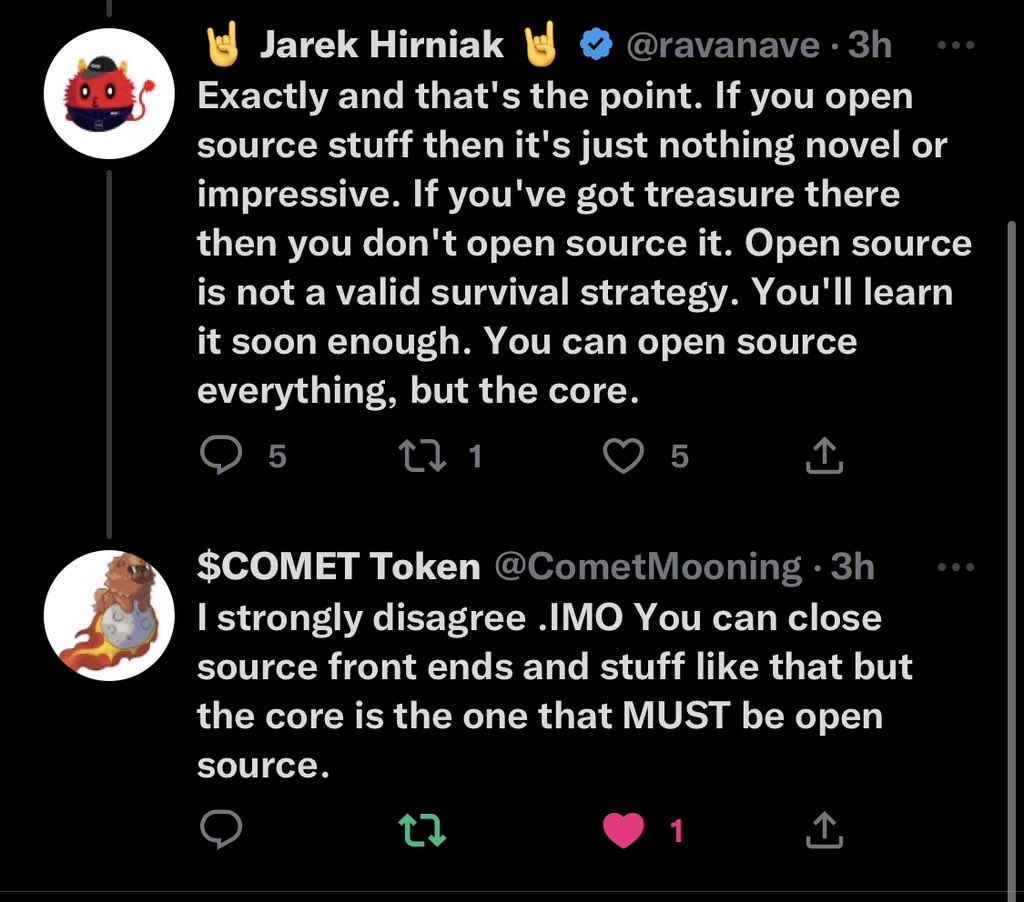
Never thought I’d witness a literal meme coin speak more sense than the lead architect of what’s likely to be the biggest defi protocol on Cardano.
If you think you’ve got treasure you should open source it. Period.
@ravanave @CometMooning
5
5
30
Cheese Enthusiast retweeted

24 Nov 2022
One should open source their core not to impress someone but because it’s an industry standard for projects built on blockchain.
2
3
11