
Nonpartisan research to improve children’s lives. Sign up for our newsletter here: eepurl.com/c_vYWv
Joined September 2009
- Tweets 15,983
- Following 529
- Followers 25,842
- Likes 1,565
1,243 Photos and videos


Pinned Tweet

9 Nov 2022
“Child Trends is pausing posting on Twitter as we monitor changes to the platform. We are committed to providing evidence-based, unbiased information. Social media should be held to the same standards. For now, find us on LinkedIn.” @jifranklin VP of Comms buff.ly/3t9bGoh
4
1
5
Child Trends retweeted
6 Jul 2023
Head over to Threads to see what we're up to! threads.net/@_childtrends
1
1
2
2,038
22 Jun 2023
New look, same great research. Introducing the new and improved Child Trends website! Check it out to see our latest research, meet our staff, and more. buff.ly/2RPAsqR
3
1,077
15 Jun 2023
You've probably noticed that our high-quality research has been missing from your feed for a few months. Child Trends isn’t sharing our work via Twitter anymore, but you can find us on LinkedIn! buff.ly/3t9bGoh
568
9 Nov 2022
In addition to being separated from familiar people and places, AIAN children placed in foster care may also be separated from the preventive and protective resources offered by Indigenous communities and cultures, according to @aroundhim_d. buff.ly/3hryz3H
1
2
8 Nov 2022
In a new Child Trends datapoint, @aroundhim_d provides strategies that researchers, policymakers, and practitioners can use to strengthen efforts to reform the child welfare system and address injustices specific to Indigenous families and communities. buff.ly/3hryz3H
1
2
8 Nov 2022
To ameliorate the injustices AIAN children face in the child welfare system, practitioners should prioritize kinship and Tribal community placements when children cannot remain safely at home, according to @aroundhim_d in a new Child Trends datapoint. buff.ly/3hryz3H
1
5
8 Nov 2022
A new @ChildTrends datapoint from @aroundhim_d finds that in the 10 states with the largest proportions of American Indian and Alaska Native (AIAN) children, AIAN children are overrepresented in foster care in nearly every state. buff.ly/3hryz3H
1
5
8 Nov 2022
Federal policies that forcibly removed AIAN children from their communities and into government and missionary boarding schools have resulted in historical trauma that still significantly impacts the well-being of Indigenous Peoples and communities today. buff.ly/3hryz3H
4
Child Trends retweeted

Be sure to check out #NRCEC2022's opening plenary session recording with Dr. Chrishana Lloyd. The session featured our commissioned @ChildTrends research exploring how the history of systemic racism continues to impact the #ECE field: bit.ly/3JZBo4Q

Missed our 2022 National Research Conference on Early Childhood (NRCEC)? You are in luck. Select #NRCEC2022 Session Recordings and Poster Galleries are now available here: bit.ly/3BMLTG7
1
2
2

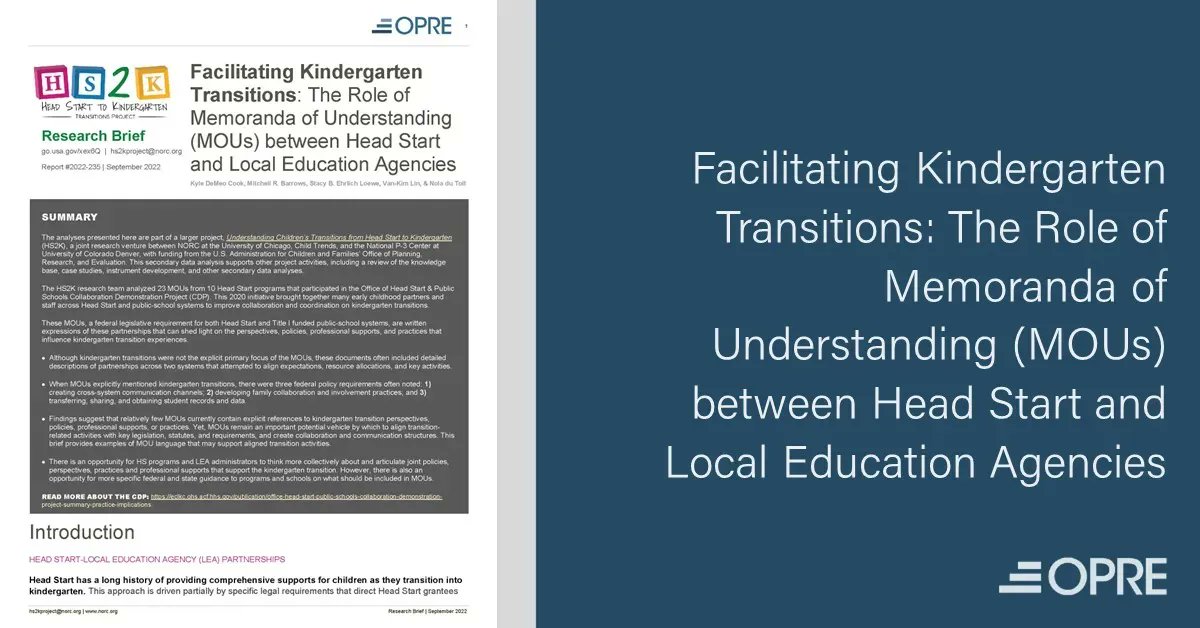
Report from @NORCNews, National P-3 Center and @ChildTrends describes how some #HeadStart programs and LEAs use memoranda of understanding (MOUs) to support their collaborative efforts on kindergarten transitions. #ECE buff.ly/3Wp6D0p
4
3
4 Nov 2022
It is imperative that federal policies acknowledge & respect Indigenous sovereignty, Knowledge, self-determination, histories, & needs, to support & promote the well-being of Indigenous Peoples, according to @HeatherJ_Gordon, @aroundhim_d, & @Beth_Jord. buff.ly/3Nl2mXw
2
3 Nov 2022
In new comments to @theNASEM from @ChildTrends, @HeatherJ_Gordon, @aroundhim_d, & @Beth_Jord provide examples of federal policies that contribute to racial & ethnic health inequities & potential solutions for Indigenous children, families, and communities. buff.ly/3Nl2mXw
2
3 Nov 2022
“We believe the federal government has a key role to play in reducing disparities for Indigenous communities through changes to federal policies that currently foster inequities in the health and well-being of Indigenous children and families.” buff.ly/3Nl2mXw
1
3 Nov 2022
According to @HeatherJ_Gordon, @aroundhim_d, & @Beth_Jord, federal efforts to achieve racial & ethnic equity for Indigenous Peoples must emphasize decolonization, support Tribal sovereignty & self-determination, and address Federal Indian Law. buff.ly/3Nl2mXw
1
1
4
2 Nov 2022
HAPPENING TODAY! Join us as we live tweet @DanaLThomson.
27 Oct 2022

Don’t forget to register for a #SpotlightExlusive event with panelists from @ChildTrends @AEI @jainfamilyinst and @NiskanenCenter! We will discuss the different perspectives surrounding the cause of the positive trend in childhood poverty. us02web.zoom.us/webinar/regi…
1
3
2 Nov 2022
In order to ensure that families receive maximum benefits when experiencing poverty, we need to reduce administrative burden and increase supports for young children and for those who are experiencing deep poverty.
1
1
2 Nov 2022
For more information about the 1993-2019 decline in child poverty, including the factors that led to it and how we can move forward to continue this progress, read @DanaLThomson and @RybergRenee's Child Trends report. childtrends.org/publications…