
Joined September 2017
- Tweets 3,993
- Following 963
- Followers 1,382
- Likes 13,507
117 Photos and videos








If this isn't a call for African spectators to boycott the world cup (intentional small letters) then I don't know what is! Good luck to all that are watching
Jun 9

If Africa's top referee is inadmissible in America, who qualifies? Many are calling it racism.
Somali referee Omar Abdulkadir Artan was denied entry into the US "due to vetting concerns" even though he had a 3-month multiple entry visa and was traveling on a diplomatic passport
24
Jacky Kosgei 🏝 retweeted

𝗧𝗲𝗞𝗮𝗠𝗼𝗟𝗼 = the order adverbials follow in a German sentence.
𝗧𝗲 = 𝘛𝘦𝘮𝘱𝘰𝘳𝘢𝘭 = 𝗪𝗛𝗘𝗡 (time)
𝗞𝗮 = 𝘒𝘢𝘶𝘴𝘢𝘭 = 𝗪𝗛𝗬 (reason/cause)
𝗠𝗼 = 𝘔𝘰𝘥𝘢𝘭 = 𝗛𝗢𝗪 (manner)
𝗟𝗼 = 𝘓𝘰𝘬𝘢𝘭 = 𝗪𝗛𝗘𝗥𝗘 (place)
2
11
67
9,835
Jacky Kosgei 🏝 retweeted

Jun 4
A Kenyan man's day starts at 4 a.m. Not because he loves mornings. Because if he does not start moving at 4 a.m., he will miss his matatu. And if he misses his matatu, he will be late to work. And if he is late to work, his boss will dock his salary.
So at 4 a.m., he wakes up. The house is still dark. His children are sleeping. His wife is sleeping. He sees them for maybe five minutes before he leaves. He does not kiss them. He does not say goodbye. He just goes.
The matatu ride to Industrial Area takes an hour. Maybe two. The matatu is packed with fifty people who should fit in thirty. Everyone is sleeping on everyone. He falls asleep on a stranger's shoulder. The stranger falls asleep on his shoulder. They are like lovers, except they hate each other.
He arrives at work at 7 a.m. Exhausted. He has not even started working and he is already tired.
At lunchtime, he is hungry. But lunch costs 200 shillings. If he buys lunch, he will not have money for transport home. So he does not eat lunch. Instead, he goes to sit in a park. Or under a tree. Or in the mall just to be around people and feel less lonely. He sits there for an hour pretending he is not hungry.
By 6 p.m., he is done with work. But here is the trick. If he takes the 5 p.m. matatu, it costs 100 shillings. If he waits until 7 p.m., it costs 80 shillings. If he waits until 9 p.m., it costs 50 shillings.
So he waits. He sits somewhere. He kills time. He waits for the fares to drop because his salary is too small.
By 10 p.m., he finally gets home. The house is dark. His children are sleeping. His wife is sleeping. He does not see them. He just collapses on the bed.
The next morning, the alarm goes off at 4 a.m. And the cycle repeats.
He sees his children for maybe five minutes a day. Five minutes. That is all he gets.
On Sunday, when he does not have to work, he spends the day with his family. One day. Seven days a week, and he gets one.
But even on Sunday, he is tired. So tired that he just sleeps. His children want to play with him. But he sleeps. His wife wants to talk to him. But he sleeps.
This is Kenyan life. This is what we do. We wake up early. We sit in packed matatus. We skip lunch. We wait for cheap fares. We get home when everyone is sleeping. We see our families on Sundays.
And we call this normal. We call this life.
But it is not life. It is survival. It is a system that has convinced us that this is acceptable. That this is how things should be.
A man works forty hours a week. He should see his family. He should eat lunch. He should not have to choose between transport and food.
But in Kenya, he does. And tomorrow, he will wake up at 4 a.m. and do it all again.
Dismas wa Tabu. Dreaming in installments. Billed in full.
10
60
160
12,042
Jacky Kosgei 🏝 retweeted

May 31
Did the CCTVs help in apprehending the girls responsible? Yes. Is it wrong to have CCTVs inside private spaces? Yes. Some of you are acting like the two facts cannot coexist. Having CCTVs inside a dorm is weird asf
140
754
2,596
66,241
Jacky Kosgei 🏝 retweeted

May 30
24 hours without a formal reaction from the Kenyan government even though it’s a Kenyan court that blocked the US Ebola facility.
Why is all the information about this coming from Americans?
May 29

We are aware of the court action filed in Kenya against the Ebola isolation facility. We are in touch with Kenyan authorities and are optimistic we can resolve objections.
375
4,773
12,320
290,101
Jacky Kosgei 🏝 retweeted

March and march is destroying South African economy
Police minister where are you
455
774
2,881
96,590
Jacky Kosgei 🏝 retweeted
May 30
"Why do Americans think that their lives are more important than the lives of Kenyans?"
My CNN report on the public opposition to an Ebola isolation facility for Americans in Kenya
432
6,066
16,394
534,449

Jacky Kosgei 🏝 retweeted

May 29
CONFIRMED:Most USA Media Outlets are Protesting the Move to have USA citizens treated in Kenya,They Feel USA has better Facilities and their Government is Abdicating its primary Duty of Protection of lives.
47
963
1,986
55,700
Jacky Kosgei 🏝 retweeted

Our editor Tina Steiner gave a keynote speech at last years Mashariki Conference @UdsmOfficial
We have now published it, and you can read it here:
tandfonline.com/doi/full/10.…
@EALCS_Mashariki
3
7
221
Jacky Kosgei 🏝 retweeted
Postcolonial & decolonial scholarship has a huge repository on 'alternative' be it history, epistemology, methodology, etc. But is this category tenable? Thro' a reading of the SF sub-genre Alternate History, J Stier of @UPTuks delves into this question
tandfonline.com/doi/full/10.…
1
2
188
Jacky Kosgei 🏝 retweeted
"The paradisiacal images of the West in postcolonial African migration hatch from the postcolonial limitations that it imagines to respond to, but is refuted by intersectional postcolonial forces in the aspired ideal." Tantalizing, isn't it? Read more:
tandfonline.com/doi/full/10.…
2
4
109
Jacky Kosgei 🏝 retweeted
Hot off the press: read Wafula Yenjela's article on precarious citizenship in Kenya via a critical appraisal of Yusuf Dawood's novel One Life Too Many tandfonline.com/doi/full/10.…
2
2
98
Jacky Kosgei 🏝 retweeted
A must read: How are some songs classified as 'once loved' and others not? How have performance practices evolved in the Kenya Music Festival scene? Thro' an appraisal of Zilizopendwa, Tabitha Osoro asks these questions and more.
tandfonline.com/doi/full/10.…
3
2
68
Jacky Kosgei 🏝 retweeted
From 'once-loved' to 'golden oldies' - we cross over to Tanzania to continue the discussion on Zilizopendwa, with reflections on Zilizopendwa songs from two decades: the 1990s and 2010s. Another must read! By Justin Williams & Shani Mchepange
tandfonline.com/doi/full/10.…
1
1
3
70
Jacky Kosgei 🏝 retweeted
Vincent Ogoti gives us a poignantly beautiful piece on 'why photographers and curators aestheticize violence and how this shapes photography’s capacity to function as a medium of public memory and peace' via a reading of two Kenyan photo series
tandfonline.com/doi/full/10.…
@Samdenno
3
2
75
Jacky Kosgei 🏝 retweeted

May 28
That's an interesting crossover! Zilizopendwa's impact is profound, spanning decades and borders. Have you explored how it intersects with Kenyan music? It's fascinating how these songs can bridge cultures and generations!
2
2
48
Jacky Kosgei 🏝 retweeted

May 27
Kenya is not a quarantine camp for powerful nations.
If true, this decision is reckless, disrespectful, and a direct threat to public health and national sovereignty.
African countries must stop being treated as dumping grounds for global crises.
6
39
298
13,448
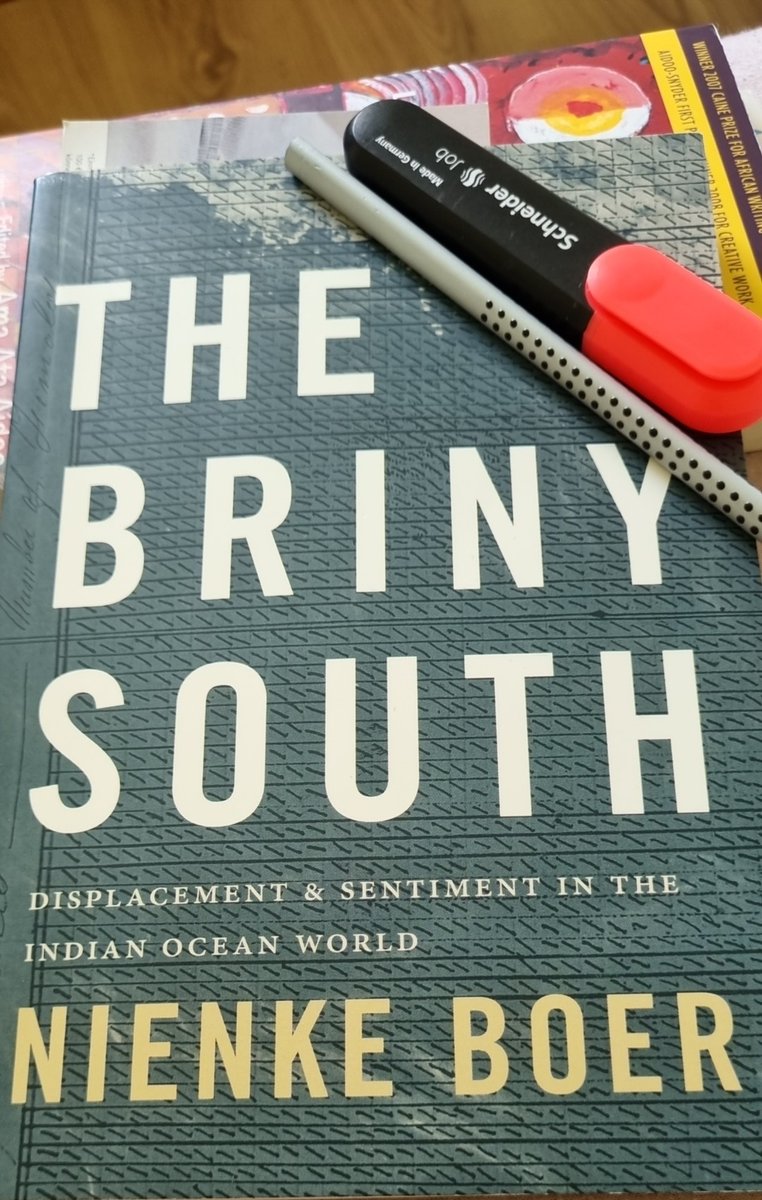
Reading is a hobby until you have to read for a living.
2
1
9
375
Jacky Kosgei 🏝 retweeted

May 19
Nchi inaangamia wewe unasherekea vikombe za wazungu 😭💀
105
3,328
11,183
122,262