
Web3
Joined October 2022
- Tweets 11,106
- Following 1,013
- Followers 1,814
- Likes 21,202
359 Photos and videos









Pinned Tweet

May 13
Base's ecosystem continues to grow. Backed by Coinbase, it's a project that could be a Layer 2 leader. @base
Complete guild tasks : guild.xyz/base/home
The Guild Coinbase task has currently been completed by 53,000 people, which could be an important criterion for the airdrop.
🔹Base App base.app/profile/0xaBc9f41A8…
🔹Farcaster
farcaster.xyz/cihangirmans
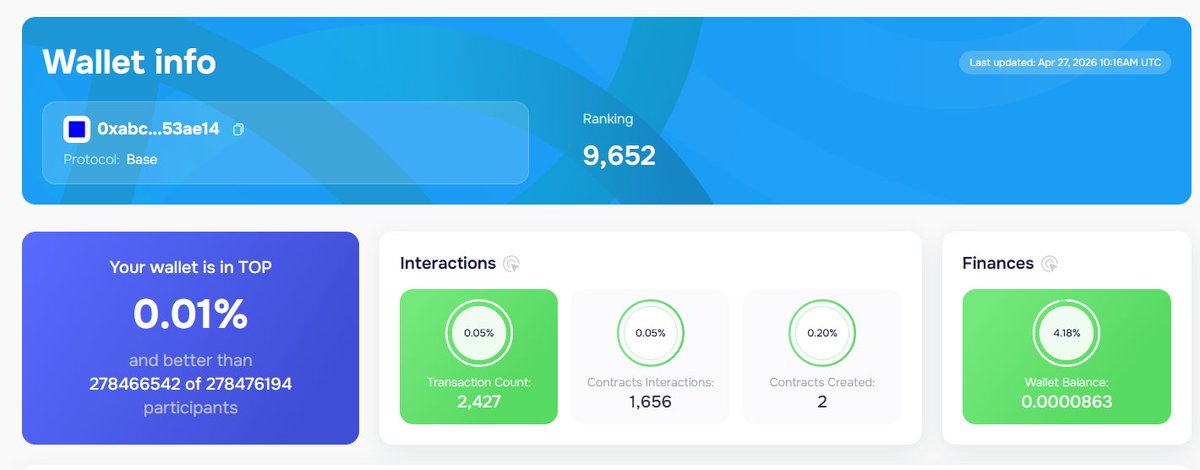
My baseline ranking on LayerHub is 9,652. layerhub.xyz/chains/base

4
5
38
3,026
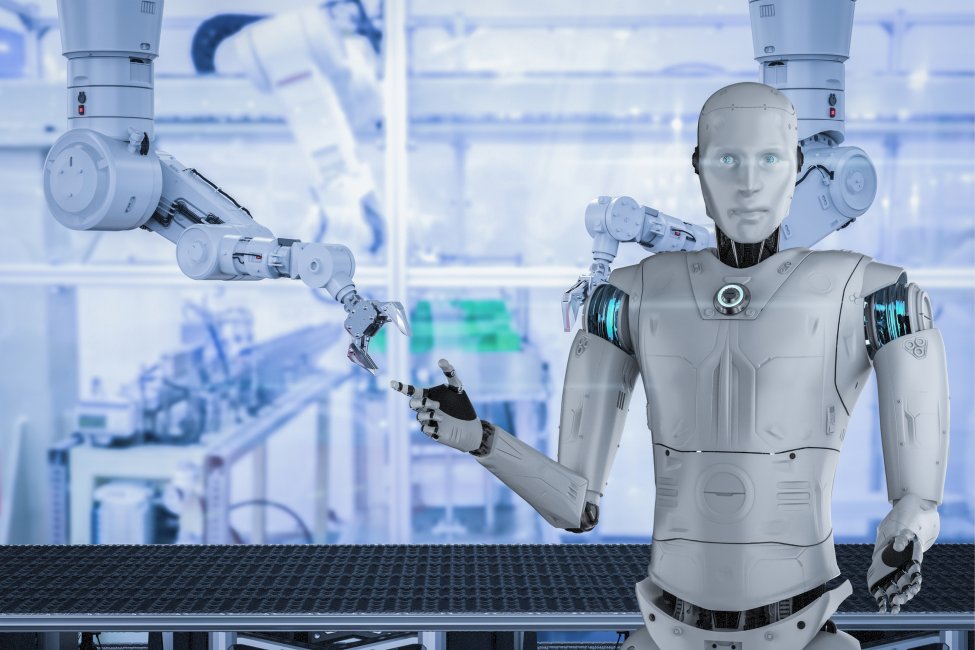
PrismaX redefines the field of robotics by combining real-world visual data collection methods with fundamental models. Designed for a future where humans and machines work hand-in-hand, PrismaX allows people to operate advanced robots remotely while providing valuable data to train physical-AI systems. @PrismaXai
By rethinking how PrismaX data is collected, how the remote control is coordinated, and how the models are scaled, a fundamental layer missing for physical AI is created.
🤖PrismaX is building an open coordination layer for the entire robotics and physical AI industry. Think of it as a connective tissue linking operators, data providers, robot owners, and AI model developers into a single global network.
✅PrismaX is a decentralized data marketplace platform that supports real-world robotics development efforts. PrismaX also aims to make real-world data accessible in the field of robotics.
#Web3
7
42
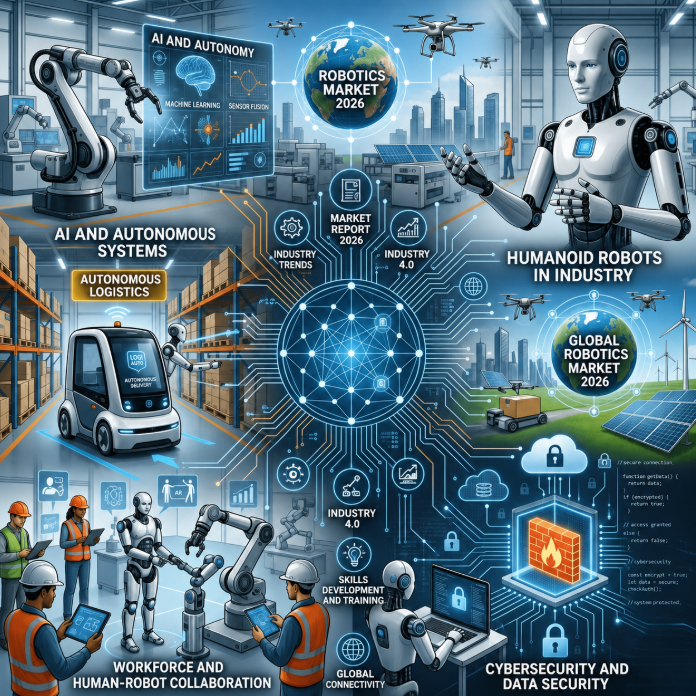
Businesses across the globe are investing in artificial intelligence to automate processes, personalize customer and employee experiences, and transform their industries. AI-powered robots are being used to improve outcomes such as quality, efficiency, and cost savings, while reducing the burden on employees and allowing them to focus on the most critical and highest-value tasks.
🤖Unlike their isolated, independent predecessors, modern robots leverage cloud computing, edge computing, and artificial intelligence to continuously learn and adapt. Rapid technological advancements are paving the way for new robotic capabilities and applications in unprecedented ways.
✅AI-powered robots can collect and analyze information about their environment in near real-time to complete tasks and act accordingly; often doing so autonomously.
@konnex_world Konnex is the first decentralized marketplace to bring together AI and robotic workforce with blockchain technology. Its core principle is to transform digital AI data into real-world action; robots sign smart contracts among themselves, and physical work is verified with Proof-of-Physical-Work (PoPW) and paid for with stablecoins. #Web3
6
42
TradeOnPear is a social-centric prediction market platform. It aggregates prediction markets from multiple venues into a single interface, allowing users to trade on various events with one account. The platform shows real-time conviction, volume and best prices across different prediction markets. @tradeonpear
🍐Currently, points are earned through social tasks, daily login gives points, and referral points are also collected.
rewards.pear.trade/r/cihangi…
7
98
Jun 13
Pear brings prediction markets into a single social, mobile-first experience. Track portfolios, discover traders, monitor activity, and trade across various platforms without switching between apps @tradeonpear
🍐You earn points by logging in daily and sharing on social media.
rewards.pear.trade/r/cihangi…
10
131
Jun 13
TradeOnPear is a social-centric prediction market platform. It aggregates prediction markets from multiple venues into a single interface, allowing users to trade on various events with one account. The platform shows real-time conviction, volume and best prices across different prediction markets. @tradeonpear
✅Arriving early always puts you ahead.
🍐She is building the future of social commerce, and most people don't realize it yet.
🔽To maximize your participation🔽
🔹Complete every available task
🔹 Never miss a daily entry
🔹 Follow new campaigns and updates
🔹Stay active within the ecosystem
rewards.pear.trade/r/cihangi…
3
11
165
cihangir retweeted
Jun 13
Stay active and be happy. @base
My #Base operations have been ongoing for 3 years.
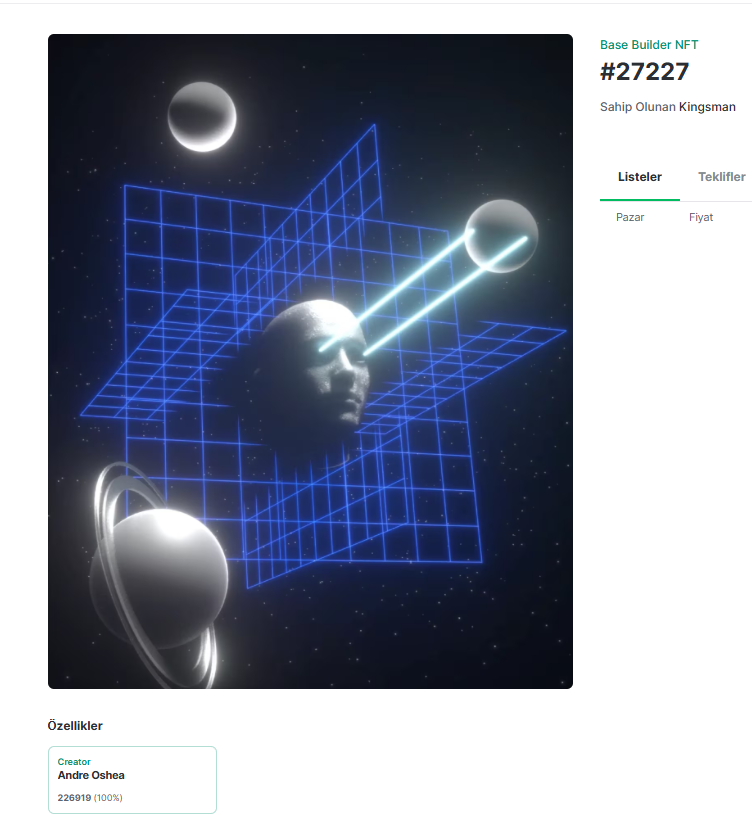
🟦I'm one of the 251,778 base builder NFT holders, this will provide an advantage.
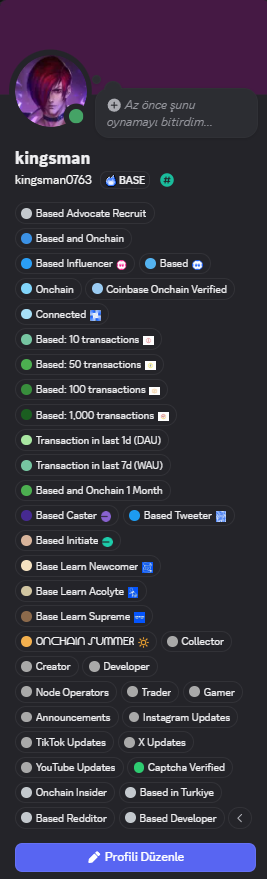
🟦My Discord roles that I've collected.
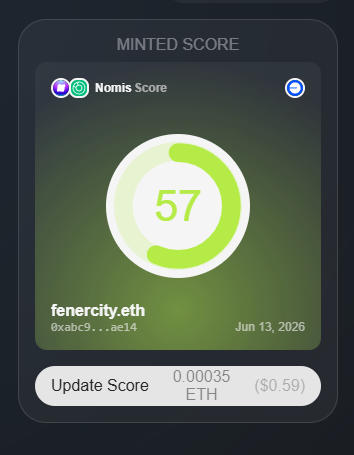
🟦Try to keep the Nomis base score high. @0xNomis
nomis.cc/scores/base
🟦Coinbase Onchain Verified, a key benchmark for a potential airdrop, has been verified by 54,000 people.
guild.xyz/base @guildxyz
🟦 @baseapp I use it actively every day. Connect and verify your social media accounts.

9
4
43
3,459
Jun 13
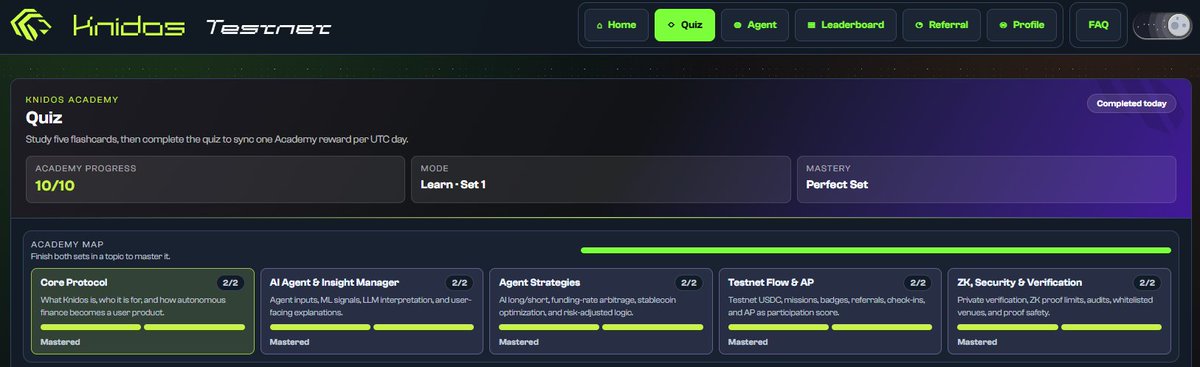
Knidos is an on-chain AI fund manager platform powered by autonomous transaction agents. @knidosxyz
Knidos Academy
Quiz
Shows five flashcards, then completes the test to earn an Academy prize for UTC day.
I'm leaving an invitation code for those who haven't logged in.
testnet.knidos.xyz/dashboard
KND-D64D14A4 / KND-C0697C10 / KND-E453D2E8
1
12
204
Jun 13
Automation and robotics technologies are creating a major transformation in the business world. The workforce must adapt to this transformation by developing digital skills and collaboration abilities. Human-machine collaboration will increase productivity in the workplace while also creating new job opportunities.
🤖Automation and robotic systems, combined with advanced artificial intelligence and robot technologies, are having a significant impact on business processes. The use of automation is increasing in factory production lines, logistics, the healthcare sector, and even the service industry.
Konnex is attracting attention with its success in automation and robotics. These robots, with enhanced physical mobility integrated into the real world, will facilitate the business and service sectors. These AI-integrated robots will utilize stablecoins to prevent price fluctuations in payments. @konnex_world
11
103
Jun 13
🍐TradeOnPear is a social-centric prediction market platform. It aggregates prediction markets from multiple venues into a single interface, allowing users to trade on various events with one account. The platform shows real-time conviction, volume and best prices across different prediction markets. @tradeonpear
Points are earned through social tasks; daily login is required.
rewards.pear.trade/r/cihangi…
1
8
111
cihangir retweeted

Jun 12
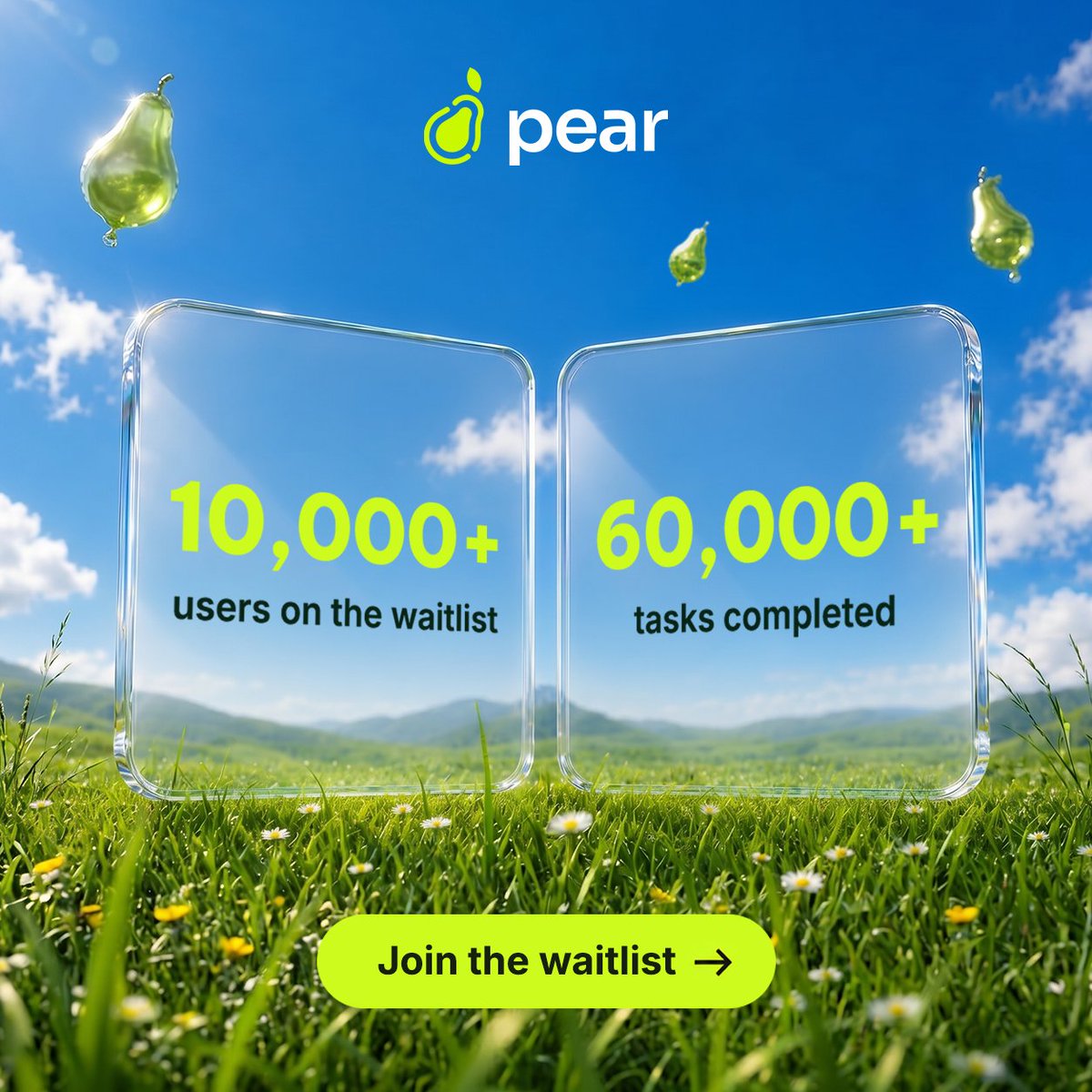
We are humbled by the response so far.
10,000 users on the waitlist
60,000 tasks completed
This is moving faster than we expected.
Join the waitlist → rewards.pear.trade
11,273
11,290
8,673
139,179
Jun 12
TradeOnPear is a social-centric prediction market platform. It aggregates prediction markets from multiple venues into a single interface, allowing users to trade on various events with one account. The platform shows real-time conviction, volume and best prices across different prediction markets. @tradeonpear
rewards.pear.trade/r/cihangi…
1
8
48
Jun 12
Just downloaded Pear, use my referral quick its got limited uses! 👇 rewards.pear.trade/r/cihangi…
6
50
cihangir retweeted
Jun 9
Trading alone was never the end state.
The future is connected.
One account. Every market.
Waitlist now open.
rewards.pear.trade
16,311
18,779
15,318
372,296
Jun 12
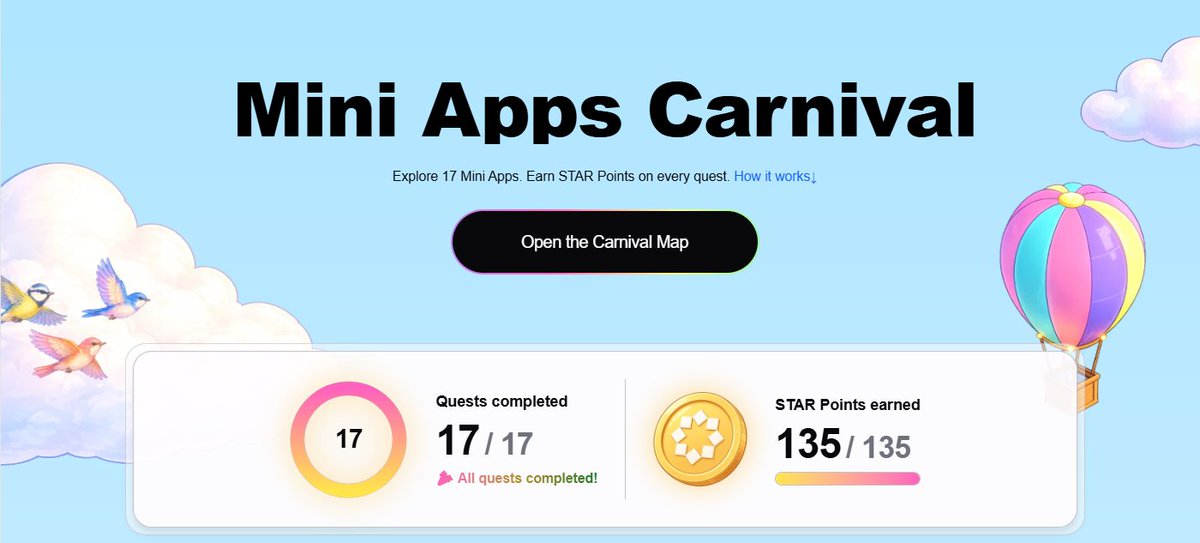
The Startale Carnival of mini-apps ends on June 17th. Star points will be valuable later; the more you collect, the better. Free tasks are available, try to complete them.
New tasks will definitely be coming soon.
🔽Games that are free 🔽
1⃣ Clash Horse 5 race @clash_horse
2⃣Dice or Die Daily entry and exit for 3 days @DiceOrDieGame
3⃣World of Trinity Play 3 rounds of the game. @worldoftrinity
4⃣Cool Cats Gain 200 gold in Cooltopia @coolcats
5⃣Morning Moon Pocket Cut down 75 logs. Get 5 tomato seeds from Uncle Jack. @MMPgame
6⃣Pocket Knights Carnival Champion @pocketknights_
7⃣Heroes of Hecanos Play the match once
@heroesofhecanos
8⃣Press A Do 10 runs of (any) Gacha 3 daily check-in
@soneium 🤝 @StartaleGroup 🤝 @StartaleApp
For those who haven't joined yet 🔽
app.startale.com/sign-up?cod…
1
1
8
149
Jun 12
The integration of artificial intelligence (AI) and robotics technologies is reshaping the physical movement capabilities and functionality of robots. This integration enhances robots' ability to adapt to dynamic environments and enables them to perform complex tasks without human intervention. AI-powered robots are particularly critical in autonomous vehicles and smart robotics applications.
🤖PrismaX's innovative approach combines artificial intelligence, robotics, and Web3. PrismaX's core strategy for accelerating robot intelligence is to create a globally accessible and incentive-driven platform that collects necessary real-world data through crowdsourcing. @PrismaXai
Designed for a future where humans and machines work hand in hand, the PrismaX project redefines robotics by combining real-world visual data collection methods with fundamental models. PrismaX enables people to operate advanced robots remotely while providing valuable data to train physical-AI systems.
2
9
74
Jun 12
The rapid evolution of robotics has been one of the most transformative technological trends of recent years. From production lines to healthcare facilities, robots are becoming increasingly sophisticated and capable of performing tasks requiring precision, speed, and adaptability. A key component of these advancements is the integration of cutting-edge sensors that enable robots to perceive, interpret, and interact with their environment. As industries worldwide recognize the importance of robotic automation, the global robot sensor market is poised for unprecedented growth.
One of the standout projects, Konnex, is a decentralized network that transforms robot labor into on-chain liquidity. The platform creates a permissionless marketplace where autonomous systems contract with each other, exchange AI capabilities, and make payments with USD stablecoins. @konnex_world
🤖This technology enables robots to agree on tasks, execute jobs using artificial intelligence, and verify physical work for automated payments.
The integration of artificial intelligence (AI) and robotics technologies is reshaping the functionality of robot sensors. AI algorithms enable sensors to process large volumes of data, recognize patterns, and make autonomous decisions. This integration enhances robots' ability to adapt to dynamic environments and perform complex tasks without human intervention. AI-powered sensors are particularly critical in autonomous vehicles, drones, and smart robotics applications.
2
10
70
Jun 11
The world is rapidly moving towards AI-powered robotics. These robots, which can be used in every field, have high physical mobility and are ushering in an era of mass production and cost savings for industry and business. New job opportunities will be created, and they offer hope for the future. @konnex_world
Robotics is a rapidly growing and massive industry in the business world, increasing efficiency and reducing costs from production lines to supply chains, according to the International Federation of Robotics. It particularly supports human labor in areas such as industrial automation, smart warehouses, and surgical systems.
🤖Therefore, Konnex, which can integrate robotics into the physical real world, stands out by creating a neutral marketplace where robots can agree on tasks, license proven AI on demand, and pay for results with stablecoins. Its system includes a universal task language, market-priced AI, and a decentralized AI exchange that brings together robot owners and AI developers under validator oversight.
4
15
82
Jun 10
The Konnex Testnet is a Substrate-based Layer 1 network designed as a coordination layer for autonomous systems, AI agents, and physical robotics. It enables machines to execute tasks verified by Proof-of-Physical-Work (PoPW) and settle on-chain commitments securely. @konnex_world
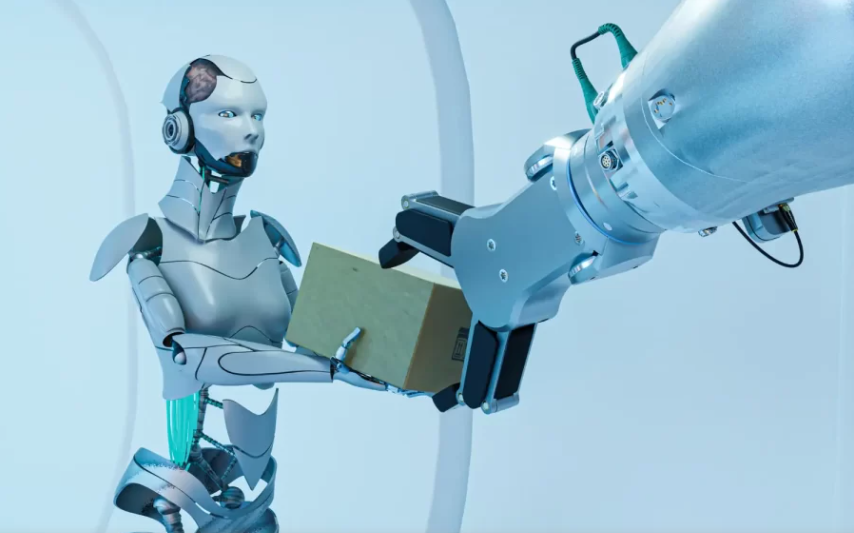
🤖The platform creates a permissionless marketplace where autonomous systems contract, AI-powered individuals exchange, and payments are made with USD stablecoins. The underlying infrastructure enables robots to negotiate tasks, execute jobs using AI, and verify physical work for automated payments. Unlike isolated automation systems, Konnex coordinates machines in scalable fleets through a neutral, trustless marketplace with verifiable results and market-priced AI capabilities.

1
10
75