
Counsel to disruptive tech companies in fast-paced environments. Focused on AI Cybersecurity. Developed the foundational patents on Functional Encryption.
Joined November 2023
- Tweets 292
- Following 2,822
- Followers 527
- Likes 200
64 Photos and videos





11 Dec 2025
Our latest technical research paper: Neural patent search systems typically require examiner citation data for training—expensive and potentially biased. Our work implements a self-supervised alternative: training BERT to match patent claims with their own description passages. Tested on 6,447 USPTO patents, our approach achieves 96% accuracy on claim-description matching without any examiner labels, demonstrating that document structure alone can teach models to recognize patent-relevant content. cipher.law/s/CSML_Paper_Fina…
1
58
13 Oct 2025
The USPTO's latest memo fundamentally shifts AI patent examination: examiners must now prove greater than 50% probability of ineligibility before rejecting claims. No more rejections based on uncertainty. The "close call" standard means tie goes to the applicant - a significant practical change for AI patents. This guidance, combined with new limits on 'mental process' rejections that had threatened hardware-based AI operations, creates the most favorable AI examination environment since before the July 2024 confusion that destabilized neural network training claims.
cipher.law/research/navigati…
74
24 Sep 2025
We're drafting patents in 3 days that used to take 3 weeks. And covering 5x more embodiments than legacy drafting techniques. This is the new reality of patent preparation when you combine expertise with the right AI workflows. linkedin.com/feed/update/urn…
77
26 Jul 2025
Amendments to Executive Orders 14144 and 13694 introduce deadlines for post-quantum cryptography adoption, requiring agencies to implement TLS 1.3 or equivalents by 2030 and publish compliant product lists by year's end. For AI, the order mandates treating systems as critical assets, addressing risks like prompt injection in vulnerability management—aligning with broader efforts to secure software supply chains via updated SP 800-218 guidelines. These changes could reshape patent strategies in quantum tech and AI security, urging innovators to prioritize compliance in filings.
105
CipherLaw retweeted

9 May 2025
TO WIN THE AI RACE, THE AI DIFFUSION RULE MUST GO
The Trump administration has announced its intention to repeal the Biden administration’s AI Diffusion Rule. As the Commerce Department’s Bureau of Industry and Security (BIS) confirmed in a statement yesterday:
“The Biden AI rule is overly complex, overly bureaucratic, and would stymie American innovation. We will be replacing it with a much simpler rule that unleashes American innovation and ensures American AI dominance.”
This is an excellent decision by Secretary of Commerce @howardlutnick and Under Secretary of BIS Jeff Kessler.
There were several major problems with the Biden Diffusion Rule:
1. Overreach of Export Control Authority
First, the rule marked an unprecedented—and arguably unlawful—expansion of export control authority. Under the Export Control Reform Act (ECRA) of 2018, the President is empowered to restrict exports of dual-use technologies that have both civilian and military applications. That authority has been used to restrict the sale of advanced semiconductors to China, a policy with broad bipartisan support.
But the Diffusion Rule went significantly further. It required nearly all global sales of high-end GPUs—even to trusted allies—to obtain export licenses or fit into a narrow set of license exemptions. This forced much of the global data center and AI infrastructure industry to seek approval from Washington, creating a bottleneck that chilled legitimate, non-sensitive commerce.
2. Bureaucratic Allocation of Compute
The rule imposed detailed numerical caps on how many chips and how much computing power foreign entities could acquire and operate. This was a radical departure from market-based allocation principles, placing the U.S. government in the position of rationing compute power globally. It effectively turned Washington into a central planner for the global AI industry.
3. Alienation of U.S. Allies
The rule also strained relationships with key allies by arbitrarily dividing countries into compliance “tiers,” labeling many friendly nations as second-class partners. This kind of regulatory hierarchy undermines trust and risks pushing allies toward non-American technology alternatives.
4. Lack of Due Process
The Diffusion Rule was issued just five days before the end of the Biden administration without a meaningful public comment or review period. Given its sweeping scope, its retroactive elements, and the global compliance burden it imposed, this rollout was deeply flawed from both a procedural and practical standpoint.
⸻
In his first week in office, President Trump directed us to win the AI race. The Biden Diffusion Rule undermines that goal. It bogs American tech companies down in red tape, while slowing the global adoption of U.S. technologies at a time when we should be encouraging the world to build on our tech stack.
As @VP J.D. Vance emphasized in his Paris Speech on AI, the United States should be the gold standard and partner of choice for our allies and strategic partners. If we make it too hard for them to work with us, we risk pushing them into China’s orbit.
China has already launched a Digital Silk Road as part of its broader Belt and Road Initiative. If we don’t offer a compelling alternative, we leave the field open.
Yes, we must take aggressive steps to prevent advanced semiconductors from being illegally diverted into China. But that goal should not preclude legitimate sales to the rest of the world as long as partners comply with reasonable security conditions.
Today, American chips remain superior to China’s—but that lead is narrowing. If U.S. companies are hamstrung by excessive regulation, and foreign customers are blocked from buying our technology, we risk ceding global markets and influence to Chinese competitors.
Right now, we have the opportunity to entrench the American tech stack worldwide while we still have a commanding lead. Let’s seize it.
109
282
2,364
351,074
6 May 2025
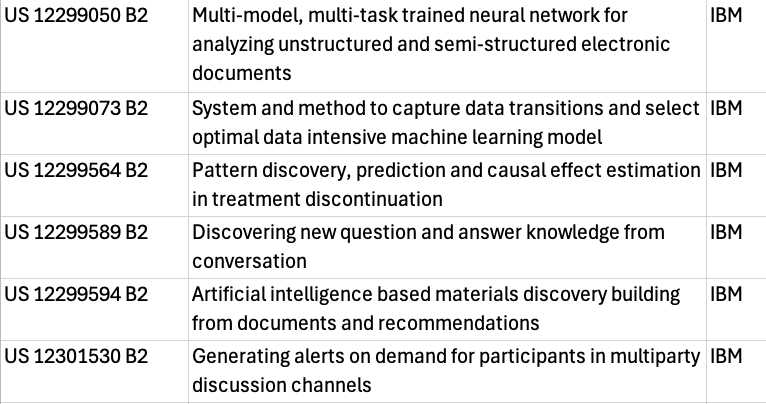
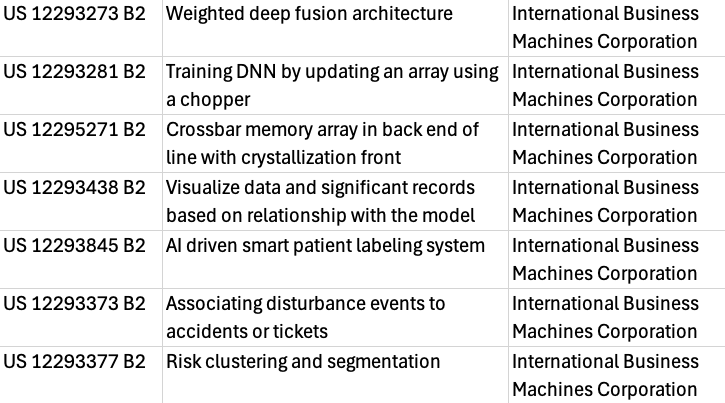
USPTO awards to @IBM another 7 AI-related patents today for wide range of inventions. IBM might not be in the headlines with the more consumer-facing companies, but is building a massive AI patent portfolio.
103
30 Apr 2025
AI Patent Law Update: the Federal Circuit's decision in Recentive makes it clear that simply waving the "AI-wand" and sprinkling "AI-dust" over patent applications will not satisfy USPTO subject matter requirements. Big premium now on being able to explain the technical improvements - in detail - in the application. cipher.law/research/navigati…
1
1
213
25 Apr 2025
Navigating the AI Patent Landscape: A 2025 Update on USPTO Guidance and Best Practices. cipher.law/research/navigati…
119
9 Apr 2025
Tech Law Update: Navigating New State Laws for Terms of Service. Recent Terms of Service (ToS) developments and their implications for business. ToS is not just a legal shield anymore - it's a compliance artifact. cipher.law/tos-update
74
9 Apr 2025
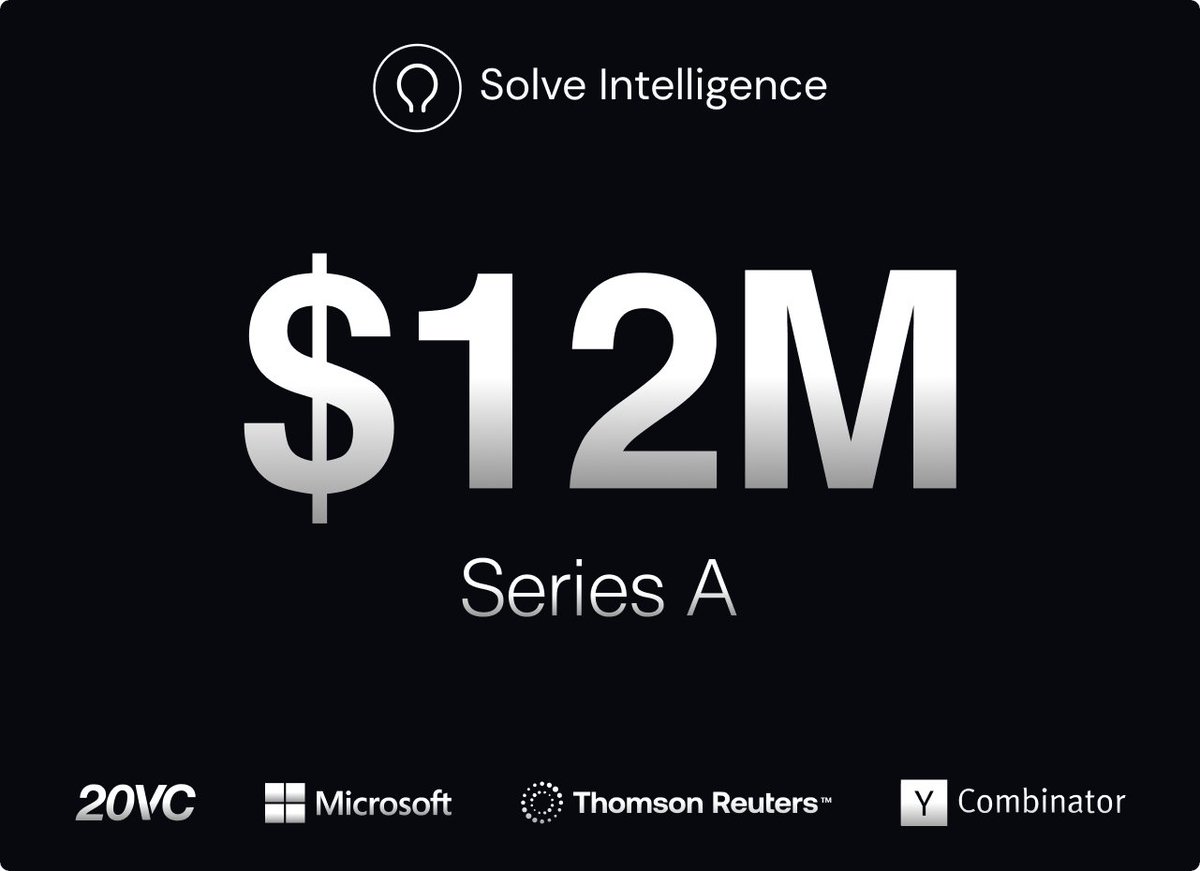
Well done @SolveIntel on the $12M raise! Been on the platform since late 2023 and it has become an absolutely mission-critical part of our patent counseling practice. Better patents - faster. Looking forward to what you are able to build next!
solveintelligence.com/blog/p…
87
CipherLaw retweeted

13 Mar 2025
OpenAI calls DeepSeek ‘state-controlled,’ calls for bans on ‘PRC-produced’ models tcrn.ch/3DGJ1ji
717
271
1,943
2,553,552
25 Feb 2025
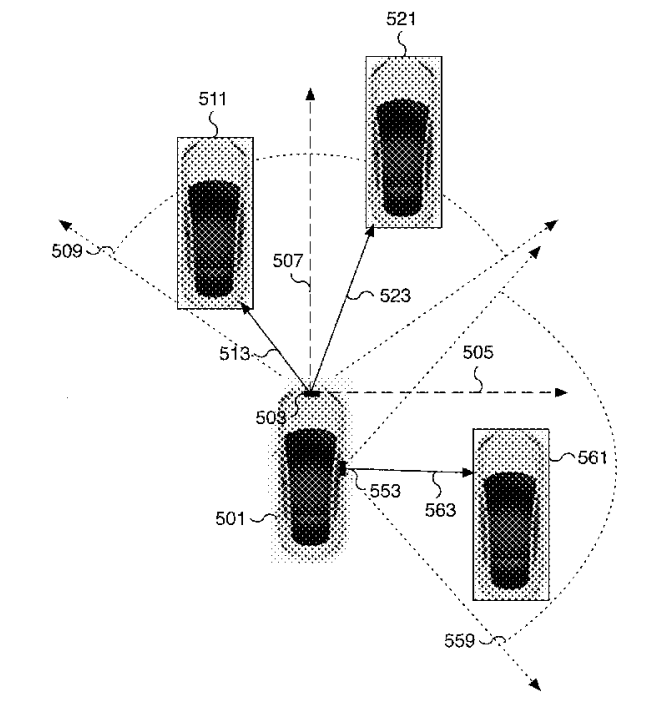
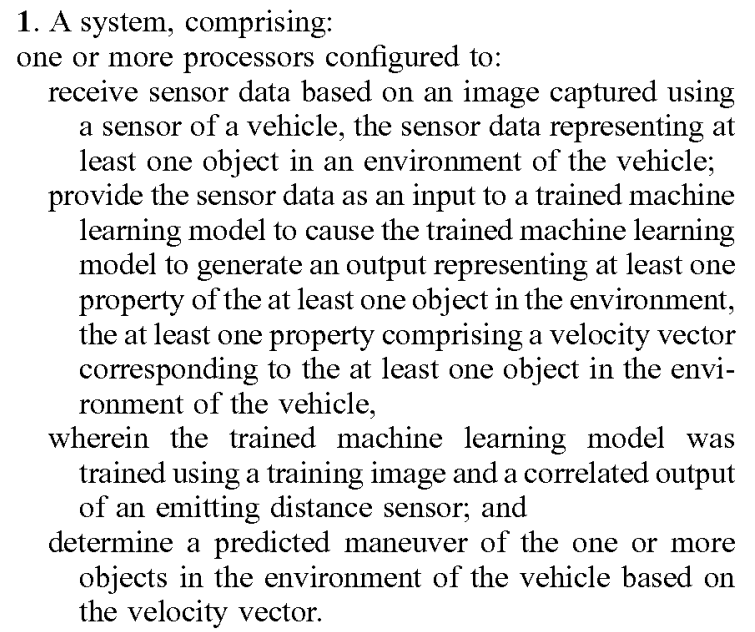
US Patent Office awards @Tesla broad patent on predicting distance, direction, and velocity of other vehicles and responsively controlling the vehicle in autonomous driving.
patentcenter.uspto.gov/appli…
66
25 Feb 2025
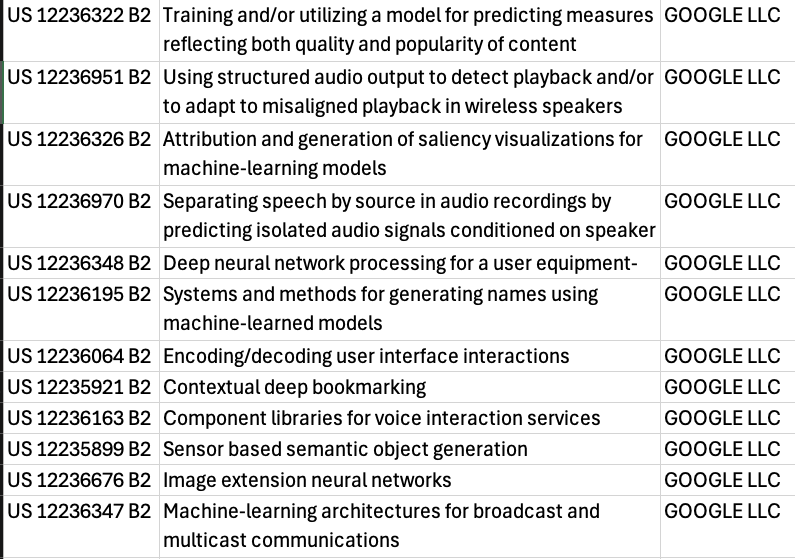
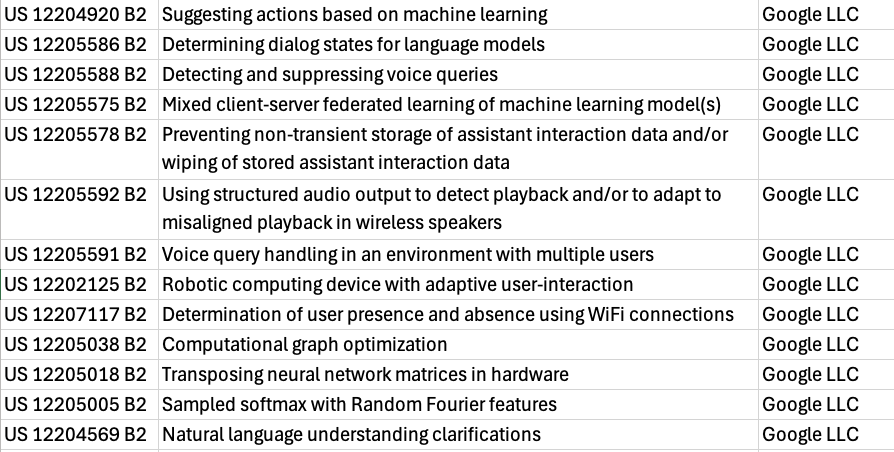
Google awarded 12 new AI-related patents today covering:
• Content quality prediction
• Speaker audio separation
• Neural network speech generation
• Semantic object creation
• Image extension
• Voice interaction services
1
1
2
55
18 Feb 2025
The Trump administration’s AI policy prioritizes innovation over regulation, economic growth, worker benefits, and national security, while pushing back against global regulatory efforts that might restrict American AI companies. See more ⏬
1
1
50
18 Feb 2025
Global Leadership in AI – The administration aims to ensure that American AI technology remains the global gold standard, partnering with foreign countries to expand AI development.
Limited Regulation – A strong opposition to excessive AI regulation, emphasizing that overregulation could stifle innovation and hinder startups. The administration seeks pragmatic policies that encourage growth.
Free from Ideological Bias – A commitment to ensuring that AI remains neutral and does not become a tool for censorship or political manipulation. The administration is particularly critical of AI applications that it perceives as rewriting history or pushing ideological narratives.
Pro-Worker AI Growth – AI is seen as a tool to enhance worker productivity rather than replace jobs. The administration pledges to train American workers to use AI effectively and ensure that AI benefits employees with higher wages and better job conditions.
Domestic AI Infrastructure – A focus on maintaining America's technological advantage, particularly in semiconductor manufacturing and computing power, ensuring that AI development remains centered in the U.S.
International Collaboration with Caution – While advocating for openness, the administration warns against partnering with authoritarian regimes, arguing that such deals could compromise national security and data integrity.
Resistance to Foreign AI Regulation – The administration expresses strong opposition to regulations such as the EU’s Digital Services Act and GDPR, arguing that they impose unnecessary burdens on American companies.
Energy and Industrial Policy – Recognizing AI’s reliance on computing power, the administration emphasizes the need for a strong energy infrastructure and domestic semiconductor manufacturing to support AI growth.
AI as an Economic and Security Asset – AI is framed as both an economic driver and a national security priority, with the administration pledging to prevent adversaries from exploiting AI technologies.
Executive Order on AI – The administration is developing an AI action plan that balances innovation with safeguards, ensuring that AI is harnessed for economic and national security benefits rather than being hindered by regulation.
1
38
12 Feb 2025
Updated:: Federal Law and Policy Tracker for Artificial Intelligence
docs.google.com/document/u/2…
51
CipherLaw retweeted

8 Feb 2025
What a smart statistics department would do right now is rename itself the AI department and rake in the students and dollars.
1
1
21
2,787