
Citizen-led investigations into government secrecy. Investigative work featured in @Daily_MailUS
Joined December 2025
- Tweets 1,408
- Following 400
- Followers 1,911
- Likes 2,553
116 Photos and videos
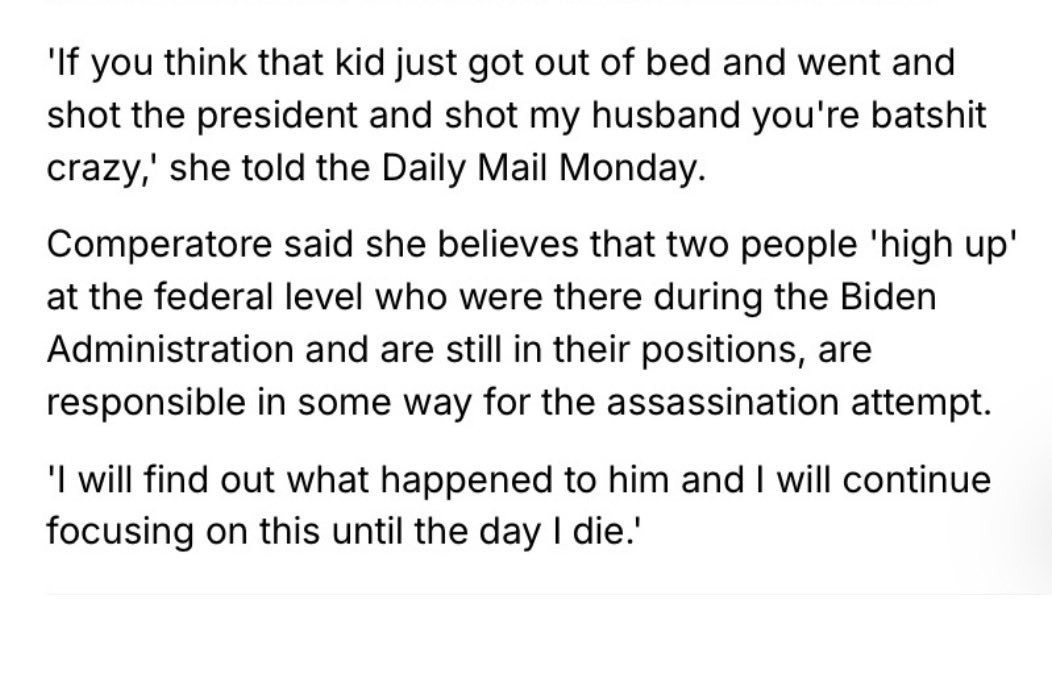


Pinned Tweet

Apr 20
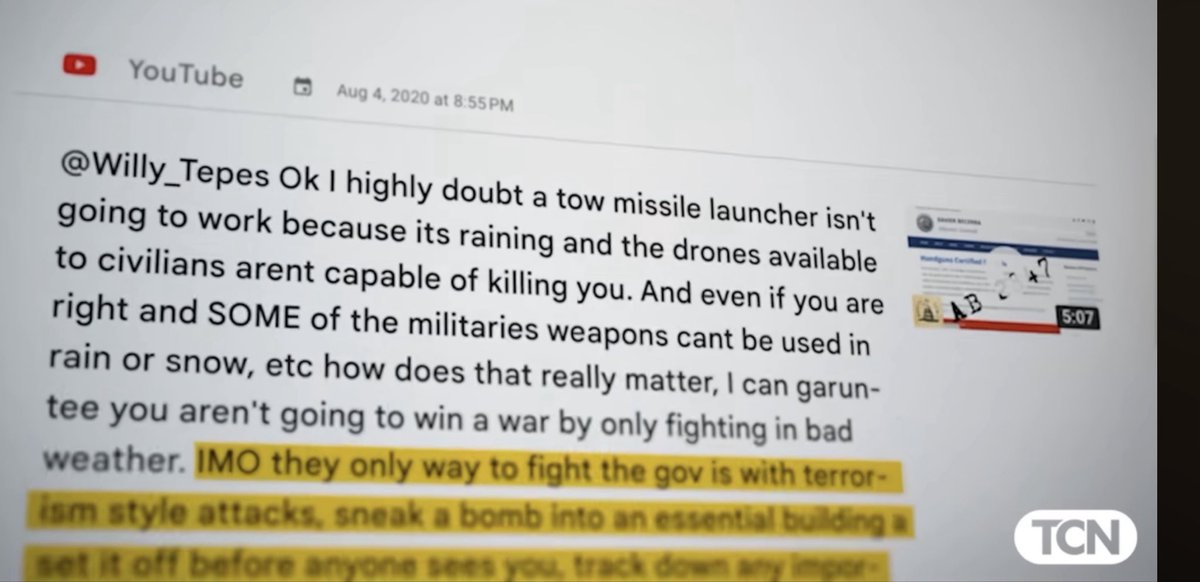
‘Why does Thomas Crooks’ online profile end virtually as soon as he starts corresponding with this Willy Tepes? Maybe they moved the communications to a different forum that’s not traceable… like Telegram.’
— @megynkelly & @emilyjashinsky
‘One other question that Tucker Carlson’s reporting raised that I really do think needs to be answered is who this Willy Tepes guy is. Because as soon the would-be assassin switched over to hating Donald Trump, you have this Willy Tepes guy in the comments urging him to use political violence.’
— @AnaKasparian on @PiersUncensored
We recovered thousands of Willy Tepes’ messages from the extremist Telegram channels he operated in. He encouraged political violence and discussed assassinations of politicians on US soil.
Key findings from the full investigation ⬇️
10
84
470
157,003
Citizen Commission retweeted

🔥🤔 THERE IT IS. Why doesn’t President Trump know Aaron Zaliponi stopped the Butler shooting?
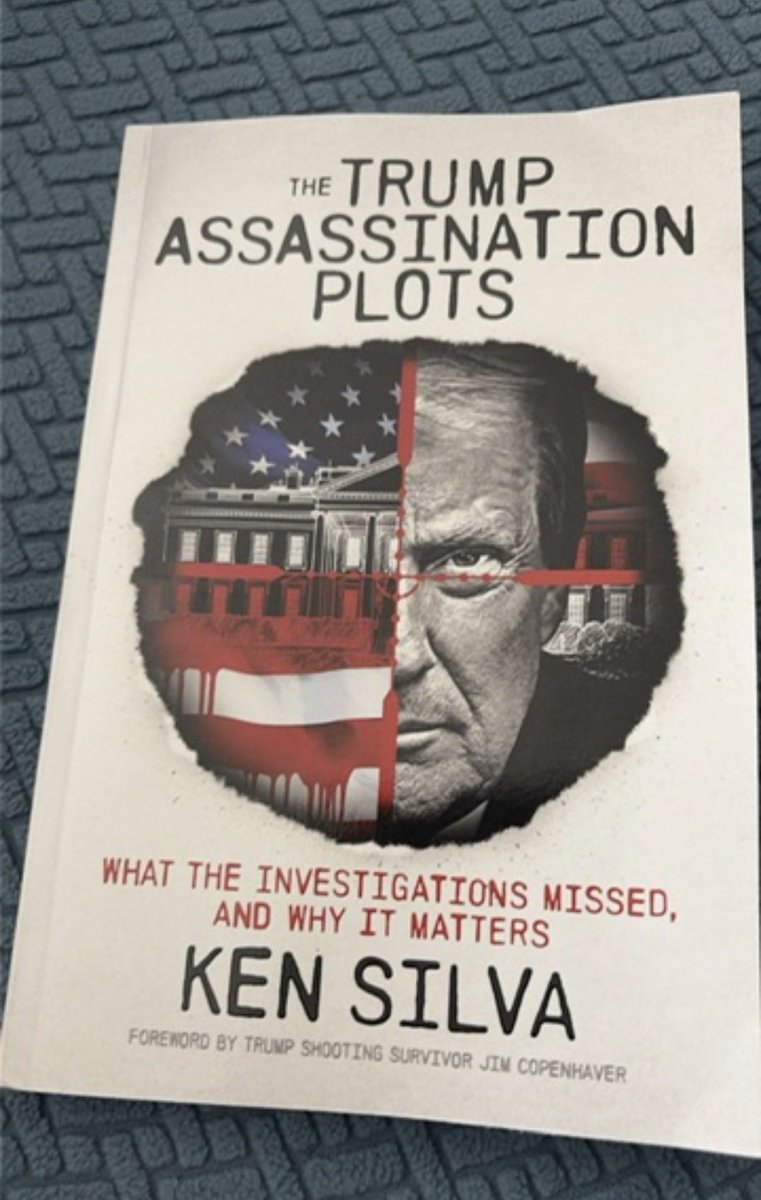
“ITS VERY BIZZARE THAT PRESIDENT TRUMP DOESNT EVEN KNOW THE DETAILS ON THE ATTEMPT ON HIS OWN LIFE” - Ken Silva
Few if any know this but the Hercules 1 team sniper did NOT stop the shooting at Butler.
It was Aaron Zaliponi who fired the 9th shot from the grounds of Butler and disabled Crook’s weapon. Only AFTER did the sniper fire the kill shot.
So why is it that Pres. Trump is still going around commending him as if Aaron was not the TRUE HERO OF BUTLER?
Do you know that neither President Trump nor any of his team ever once publicly acknowledged Zaliponi?
@JD_Cashless is correct to tell @TuckerCarlson he thinks it’s because he doesn’t seem to know the details… it’s likely because he doesn’t.
Who doesn’t want Trump to know all the details of the attempt on his life?
6
13
39
4,540
Citizen Commission retweeted


1
2
43
Citizen Commission retweeted

Fight night energy is taking over DC.
UFC Freedom 250 is almost here. 🇺🇸
2,754
7,585
43,459
3,231,589
Citizen Commission retweeted

BREAKING: Robert F. Kennedy Jr. reportedly has enough evidence to convince any jury in America, beyond a reasonable doubt, that the CIA killed his uncle, John F. Kennedy.
1,218
3,973
31,640
892,477
Citizen Commission retweeted
Jun 12
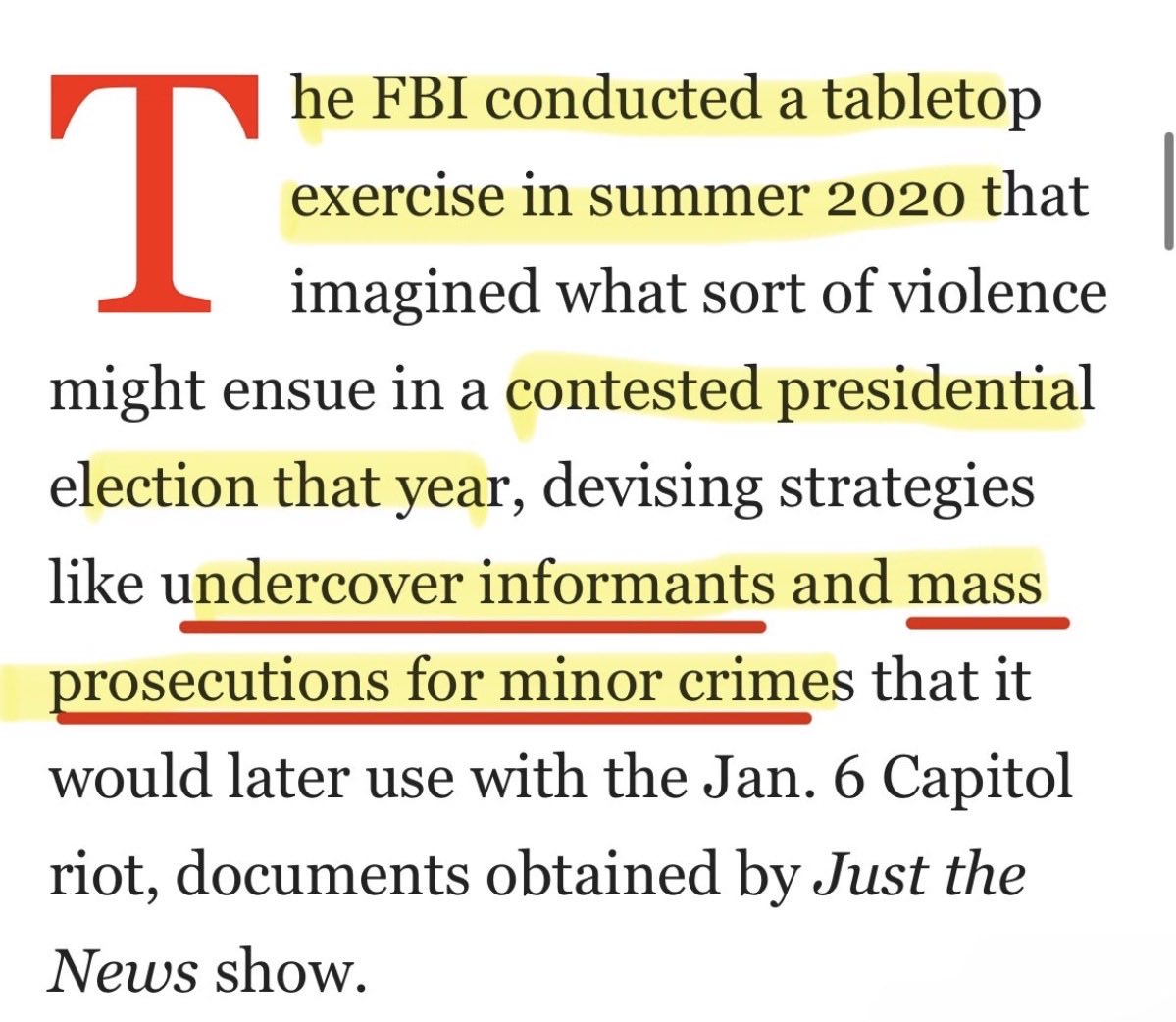
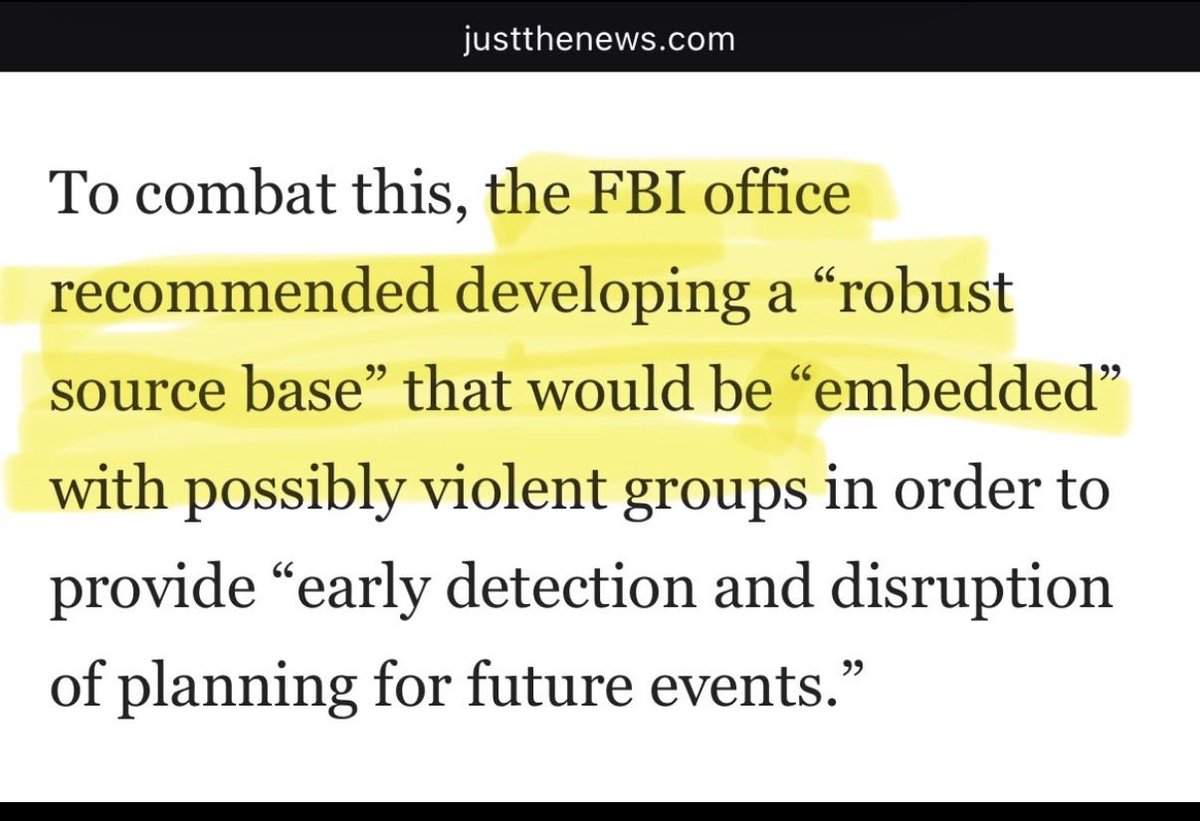
In summer 2020, Thomas Crooks interacted online with an account named Willy Tepes, a username linked to the Nordic Resistance Movement, an extremist group later designated a terrorist organization by the U.S. State Department.
Notably, this overlaps with the exact time period reported by @jsolomonReports, when the FBI was running secret tabletop exercises on threats and issuing an August 2020 internal memo pushing a massive expansion of Confidential Human Sources to infiltrate political groups and extremist networks.
2
2
20
4,011
Citizen Commission retweeted

Jun 13
Miranda Devine DESTROYS Bongina.
Jun 12

I would say to Dan Bongino that he could have avoided all this mess if he had been upfront from the start instead of stonewalling and refusing to do an interview with Tucker or me, both of us having independently received the same information about Crooks, and both of us having independently talked to the president about it and learned that he was "not satisfied" with what he'd been told about Butler.
Instead of addressing our questions Bongino and Patel went out and provided an exclusive interview with a digital reporter at Fox News who did not have the information we had. They claimed the purpose of that interview was to correct alleged false reporting but in fact they confirmed every single element of my @nypost story and debunked not one word. Then Bongino, while still deputy FBI director, attacked me on X, calling me "Deep State Devine". For what it's worth, I don't altogether agree with Tucker's interpretation of this weird behavior but I also don't understand why Trump's FBI leaders were so hostile about a story that showed only their predecessors in a bad light. That hostility is unproductive and continues to this day.
1
2
24
1,158
Citizen Commission retweeted

Does the FbI still have a Div V embedded? They were sheep dipped CIA. You know, the guys that uses patsies to murder presidents.
Jun 12

In summer 2020, Thomas Crooks interacted online with an account named Willy Tepes, a username linked to the Nordic Resistance Movement, an extremist group later designated a terrorist organization by the U.S. State Department.
Notably, this overlaps with the exact time period reported by @jsolomonReports, when the FBI was running secret tabletop exercises on threats and issuing an August 2020 internal memo pushing a massive expansion of Confidential Human Sources to infiltrate political groups and extremist networks.
1
23
58
1,823
Citizen Commission retweeted

21 Jul 2025
Charlie Kirk on how continuing to ignore the debt slavery of Gen Z will lead to revolution.
(0:00) How the Russiagate Hoax Paved the Way for America’s War With Russia
(11:42) Donald Trump’s Fight Against the Intel Agencies
(17:11) What Really Is the Deep State?
(18:42) Why Don’t We Know What Happened in Butler, PA?
(23:04) What Issues Do Gen Z Really Care About?
(28:51) The New Financial Scam Secretly Enslaving Gen Z
(43:10) The Oncoming Radical Movement That Will Change the US Forever
(49:39) The Immigration Emergency
(54:25) Hyper Feminization of the Workforce
(1:04:32) The Organized Effort to Destroy Young, White, Christian Men
(1:08:10) Why Republicans Are So Quick to Defend the Evils of Greedy Mega Corporations
(1:12:50) How Baby Boomers Set Up Following Generations for Total Failure
(1:18:16) Why Young Men Are Turning to Catholicism and Orthodoxy
(1:20:35) Will Anyone Be Held Accountable for the Destruction of America’s Economy?
(1:26:31) Who Will Be the 2028 Democrat Nominee?
(1:33:05) Why the Modern View of Life and Death Is So Distorted
(1:37:06) The Disconnect Between Voters and American Lawmakers
(1:41:40) The Imminent Threat of Amnesty
(1:54:02) Can Trump Fix the Immigration Crisis?
Includes paid partnerships.
1,761
3,955
14,861
5,708,164
Citizen Commission retweeted

Jun 12
This was what I was told about Iran in a background briefing from a senior administration official this morning.
- The United States is still days away from signing a deal with Iran to “destroyand remove” its entire enriched uranium stockpile,reopen the Strait of Hormuz without tolls, and stop supporting its terrorist proxies.
- The official expressed “75 percent confidence” that a memorandum of understanding to be signed in coming days “eliminates the nuclear program for the long term… opens the Straits of Hormuz [and] accomplishes what the president set out to accomplish with this military campaign…
“Do we have a deal yet? No.
“But I think that we are very close... That’s not 100%.… There's always some level of uncertainty when you're dealing with the Iranians. But I'm calling 75% confidence that we're going to be signing this agreement soon.”
- The Iranians have agreed “in principle” to allow IAEA inspectors and the US to “destroy and remove the nuclear material,” the official said.
“How that happens is highly technical and something we plan to work out…
“The deal contemplates an inspections regime [and] a verification regime.”
Iran’s stockpile of enriched uranium is stored in three locations in Iran, said the official. “We feel quite confident that we know where all of it is.”
Recent US strikes helped drive the seeming Iranian change of heart. US forces struck Iran Wednesday in retaliation for an Iranian drone hitting an American Apache helicopter over the Strait of Hormuz Monday night. After the apparent breakthrough Thursday, President Trump called off a threatened invasion of Iran’s Kharg Island.
The Iranians came back to the negotiating table when they saw President Trump is “willing to go kinetic” and the fact that oil and gas on cargo ships have started flowing through the Hormuz Strait under US protection, said the official.
“There is a broad recognition [in Iran] that [the Strait] is a weakening point of leverage for them…
“While there are some people in the Iranian system, some ultra-hardliners, that don't want to give the United States anything, our sense is that …both the IRGC and the civilian people don't think it's in their interest to return to full combat operations.”
Iran claimed their attack on the Apache helicopter was an accident and not an attempt by the IRGC to derail the deal, said the official.
“I think that what happened is the IRGC is ostensibly trying to exercise greater control over the Straits of Hormuz, and they screwed up…. [They were] very aggressively back-channeling after that happened that they did not mean to cause any problems. Obviously, we laughed about that, and we responded as the president ordered.”
The official described the new agreement as the “antidote to the JCPOA [the Obama administration’s 2015 Iran nuclear deal] because the very stockpile that was allowed to be built up [under the JCPOA], is the thing that we’re going to eliminate as part of our agreement.”
The agreement is built on a “pay-for-performance” model.
“The way the deal is structured [is] the economic benefits to the Iranians won’t come until they deliver the weapons on the nuclear program ... that we require…
“The more they perform, the more they receive,” said the official.
Sanctions relief and potential infrastructure investment from Gulf Arab countries, estimated by the official to be $200 billion, would be provided only after Iran delivers on its end of the deal.
“The biggest benefit for Iran would not be from any unfrozen assets. [It] would be from the sanctions relief and from the Gulf Arab countries investing in their country.
“What the president wanted us to do is to accomplish our objectives, primarily, that Iran not have a nuclear weapon,” the official said.
“They’re going to be rewarded for acting like a normal country rather than the largest state sponsor of terrorism.”
President Trump briefed Israel’s prime minister, Benjamin Netanyahu, on details of the deal Thursday. 1/2
102
120
494
116,971
Citizen Commission retweeted

Jun 12
Here's another clip of then-FBI Deputy Director Dan Bongino falsely promising to release files on the assassination attempts. This one is from May 2025.
Feb 4

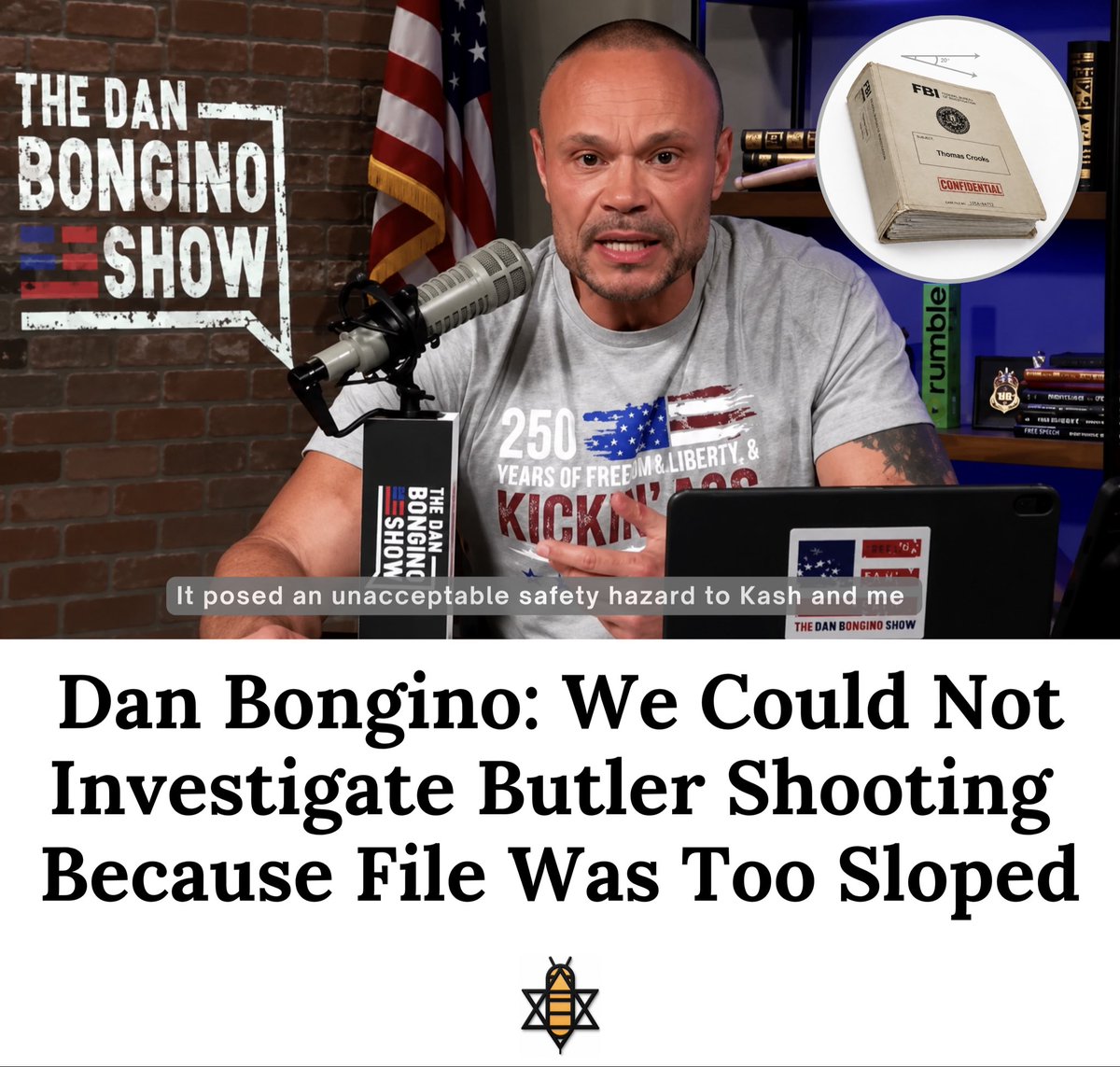
We know Kashyap is lying because--among numerous other reasons--Dan Bongino said last May that the FBI was preparing to release more files on the Butler shooting (that never happened).
"The case file now, which by the way, we're going to make another public release on..."
3
18
83
2,505
Citizen Commission retweeted
Jun 12
I would say to Dan Bongino that he could have avoided all this mess if he had been upfront from the start instead of stonewalling and refusing to do an interview with Tucker or me, both of us having independently received the same information about Crooks, and both of us having independently talked to the president about it and learned that he was "not satisfied" with what he'd been told about Butler.
Instead of addressing our questions Bongino and Patel went out and provided an exclusive interview with a digital reporter at Fox News who did not have the information we had. They claimed the purpose of that interview was to correct alleged false reporting but in fact they confirmed every single element of my @nypost story and debunked not one word. Then Bongino, while still deputy FBI director, attacked me on X, calling me "Deep State Devine". For what it's worth, I don't altogether agree with Tucker's interpretation of this weird behavior but I also don't understand why Trump's FBI leaders were so hostile about a story that showed only their predecessors in a bad light. That hostility is unproductive and continues to this day.
Jun 12

🚨 Dan Bongino shows the Text Message Exchange between himself and Tucker Carlson, proving that Tucker lied..
“He accused the President of committing a crime— He made the whole story up folks.”
Damn… Tucker. Damn..
Thank you @dbongino for releasing these.
Clip
rumble.com/v7b6unm-dan-bongi…
Dan Bongino Full Show
rumble.com/v7b6iba-nepo-baby…
276
271
1,297
152,294
Citizen Commission retweeted

Jun 12
Kash Patel's FBI Slow Rolling Butler Shooting Records! @TomFitton
judicialwatch.org/remote-dev…
5
31
71
8,052
Citizen Commission retweeted

Jun 12
💥BOMBSHELL VIDEO: Tucker Says Trump Ordered Cover-Up Of His Own Assassination Attempt In Butler!
In A Conversation With The Then Deputy FBI Director, Tucker Was Told By A "Terrified" & "Hysterical" Dan Bongino That The President Himself Shut Down The Investigation Into Thomas Crooks & Any Other Leads!
Alex Jones Reveals How He Was Made Aware Of This Cover-Up Intel In Confidence But Waited To Speak About It- Until Now!
🚨WATCH ALEX JONES LIVE NOW:
x.com/i/broadcasts/1yxBeeOMk…
225
548
2,433
817,053

Citizen Commission retweeted
Jun 12
Here's a receipt: You told the murdered firefighter's wife that the FBI was releasing information last year, and then that never happened.
How does it feel to lie to a widow?
x.com/JD_Cashless/status/196…
31 Aug 2025
The widow of the firefighter murdered at Butler said in June that she met with Dan Bongino, who told her the FBI was going to update the public on the case in a "couple weeks."
Deputy Dan also told her that the shooter acted alone and the bureau handled all the evidence properly.
6
16
166
3,076
Citizen Commission retweeted

Jun 12
Today, I’m releasing never before seen intelligence revealing new evidence of past US government funding for more than 120 biolabs in over 30 countries, including Ukraine.
In support of President Trump‘s Executive Order to end federal funding of dangerous gain of function research around the world, and increase transparency and accountability, ODNI will continue working with partners across the Administration to identify where these labs are, what pathogens they contain, and what “research” is being conducted.
odni.gov/index.php/newsroom/…
13,024
69,249
232,233
17,244,101

Citizen Commission retweeted

Jun 12
Tucker Carlson shares that Dan Bongino “hysterical & Terrified” told him that Trump himself shut down the Butler investigation into his own assassination attempt
x.com/marionawfal/status/206…
He says he still has text exchanges of his conversations.. and Bongino said “take it up with Trump. He’s the one who shut down the investigation.”
Assuming Tucker is telling the truth… I believe he is on this matter (unless Dan Bongino denies this) the only reasonable explanation I can think of is matters of national security…
I’m curious if Dan Bongino will respond to this. I hope he does.
@dbongino can you chime in brother?
rumble.com/v7b5xck-tucker-bo…
Jun 12

🚨🇺🇸 A terrified Bongino told Tucker that Trump shut down the Butler investigation himself.
Tucker says he accidentally obtained the Thomas Crooks social media posts the FBI claimed didn't exist, then called Kash Patel and Dan Bongino looking for answers.
Bongino, a friend of many years, allegedly became hysterical before finally telling him to take it up with Trump, who he said killed the Butler investigation himself.
Tucker says he still has every text exchange.
"There's no good explanation for shutting down an investigation into your own attempted murder.
This is not what we've been told it was."
@TuckerCarlson @TCNetwork
96
120
544
131,965
Citizen Commission retweeted

Jun 12
🚨🇺🇸 A terrified Bongino told Tucker that Trump shut down the Butler investigation himself.
Tucker says he accidentally obtained the Thomas Crooks social media posts the FBI claimed didn't exist, then called Kash Patel and Dan Bongino looking for answers.
Bongino, a friend of many years, allegedly became hysterical before finally telling him to take it up with Trump, who he said killed the Butler investigation himself.
Tucker says he still has every text exchange.
"There's no good explanation for shutting down an investigation into your own attempted murder.
This is not what we've been told it was."
@TuckerCarlson @TCNetwork
Jun 12
🚨🇺🇸 🇮🇷 Tucker reacted live to Trump's "great settlement" post, and his count says it's the 39th deal announcement of this war.
The post claims Hormuz reopens on signing, Iran gives up nuclear weapons forever, and the supreme leader is on board.
Reacting in real time, Tucker admitted he wants it to be true.
He campaigned for Trump for free and wakes up an optimist every morning:
"That's the 39th post that has made the same claim, and the first 38 have proven false."
His deeper worry: Iran's non-negotiable demands end with them controlling one of the most important pieces of real estate on the planet.
@TuckerCarlson @TCNetwork
1,084
6,542
24,084
4,028,819