
Old man in a bungalow. Love my garden. Footsore walker. 3 fingered guitarist. Prone to naps. South Downs/Chichester Harbour. Ex Fin PR/hack. QPR. 🇬🇧🇺🇦
Joined February 2009
- Tweets 29,127
- Following 2,889
- Followers 764
- Likes 118,463
3,393 Photos and videos






Nick Clack retweeted

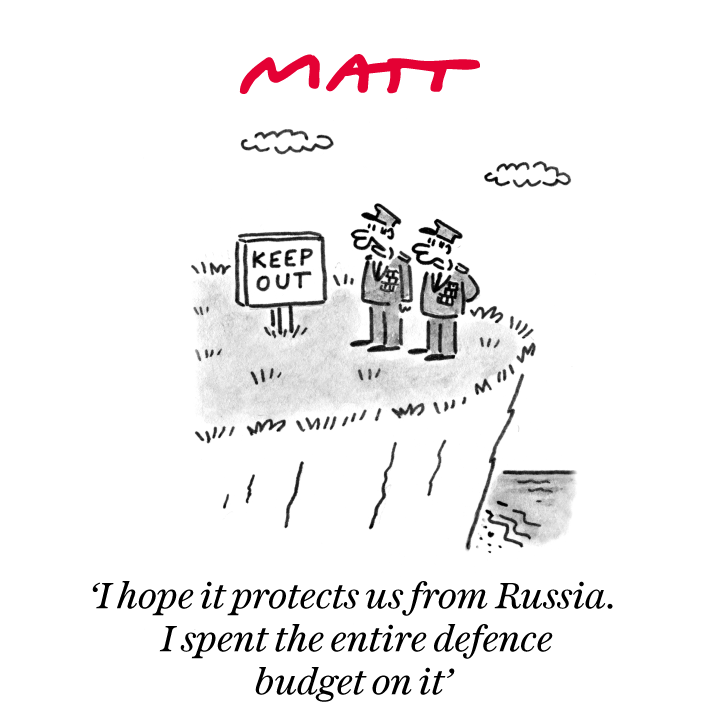
My latest cartoon for tomorrow's Telegraph
Buy a print of my cartoons at telegraph.co.uk/mattprints
Original artwork from chrisbeetles.com
3
219
713
8,885
RT @haynesdeborah: BREAKING: A Russian navy vessel is accused of firing warning shots close to a UK-registered yacht in the Channel - about…
48
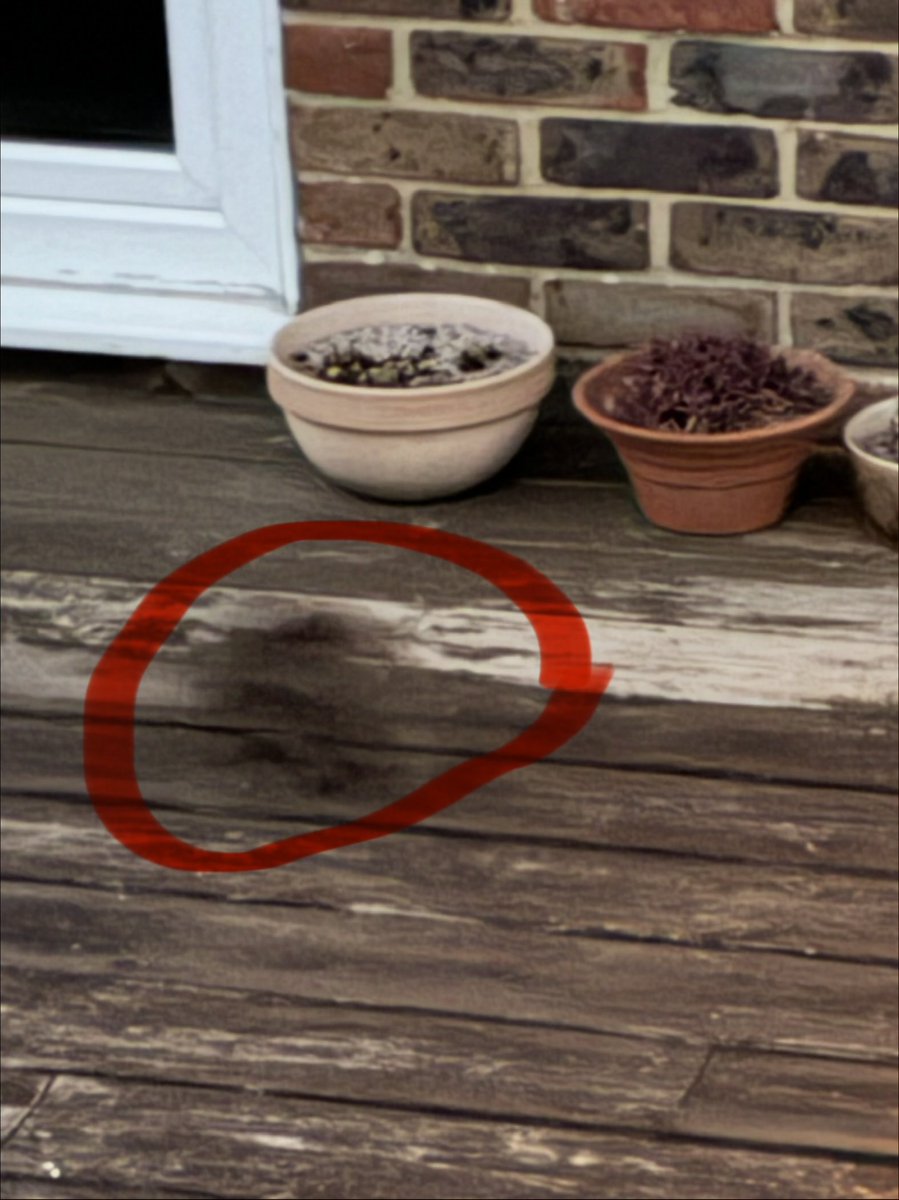
Remind me to stop using our heated towel rail! 👇

Chinese coal-fired electricity generation rose again in May (up 2.4% y-on-y), hitting the highest ever level for that month.
So far this year, China has set seasonal record highs of coal-fired generation in every month of 2026 despite strong solar / wind investments.
17
Nick Clack retweeted

This is total madness from another unaccountable quango. The government must overrule Natural England and stop it immediately.
Keir Starmer is on his way to making his last acts in office the shameful underfunding of our military and the mass slaughter of Dartmoor ponies.
Jun 15

Exclusive from @oliver_wright
Dartmoor ponies could be subject to mass culling to reduce the impact on biodiversity after a controversial ruling by the government’s environmental quango
Natural England has demanded that all livestock grazing on the moor is reduced by about 75 per cent to protect other habitats, plants and species
The move looks set to result in the culling of up to nine in ten of the semi-wild ponies as farmers prioritise their own cattle and sheep to remain within Natural England’s limit to minimise the impact on their own livelihoods
Natural England argued that the move was necessary to protect the diversity of Dartmoor, which is a designated site of special scientific interest
However, the plan goes against a government commissioned review into the future of Dartmoor, published two years ago, which concluded that Natural England “should not take actions likely to result in a reduction in pony numbers”, adding they were “invaluable for conservation grazing”
The move has led to claims that the quango is acting as judge, jury and executioner of the ponies — a species which is itself seen as endangered
Dartmoor ponies could be put to death under biodiversity plans
thetimes.com/article/ba529f3…
239
1,021
4,594
416,682

Jun 14
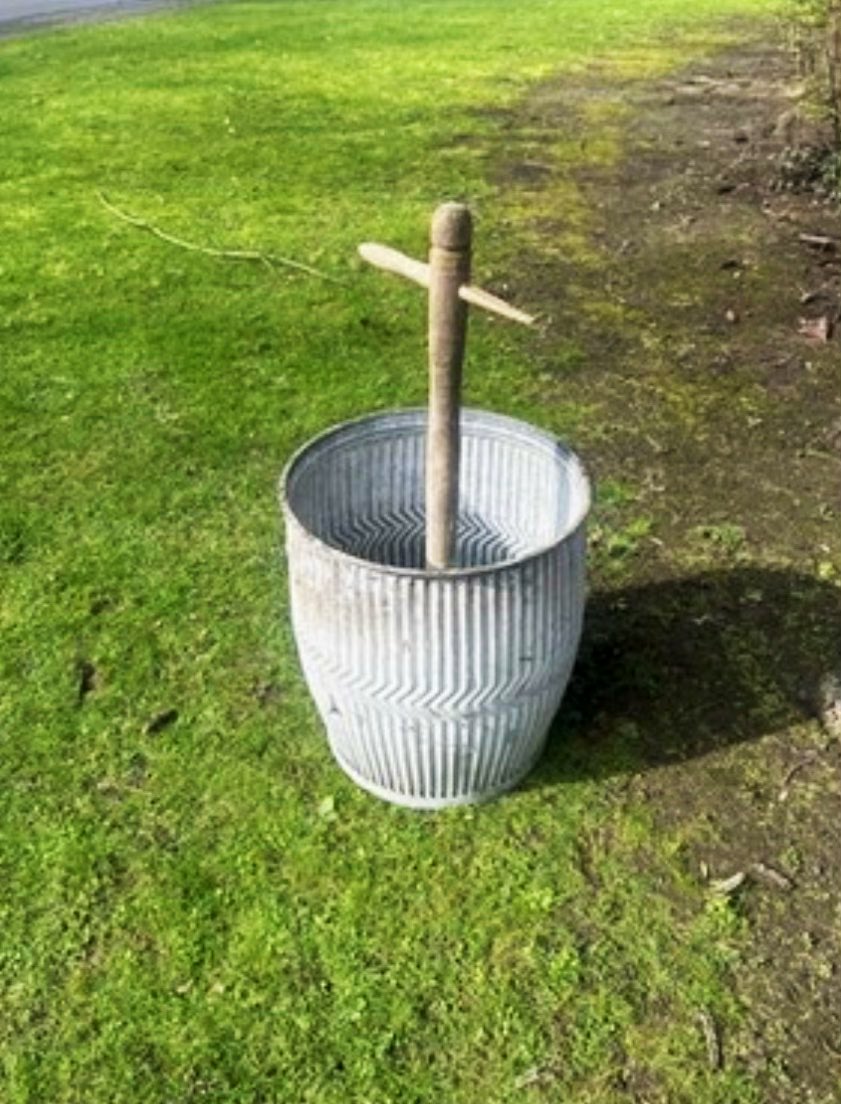
I still have my Grandmother’s copper stick, could come in handy! 👇
Jun 14

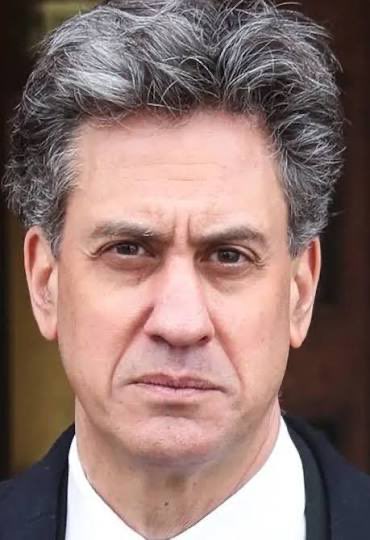
Ed Miliband unveils his vision of the future washing machine for all British households:-
3
9
351
Nick Clack retweeted

Jun 14
The Tartan Army are a credit to Scotland. Here they are in full voice singing ‘Loch Lomond’ in Boston Stadium last night for the World Cup match between Scotland and Haiti. Absolutely glorious.
557
4,735
36,296
1,081,585
Nick Clack retweeted

Jun 13
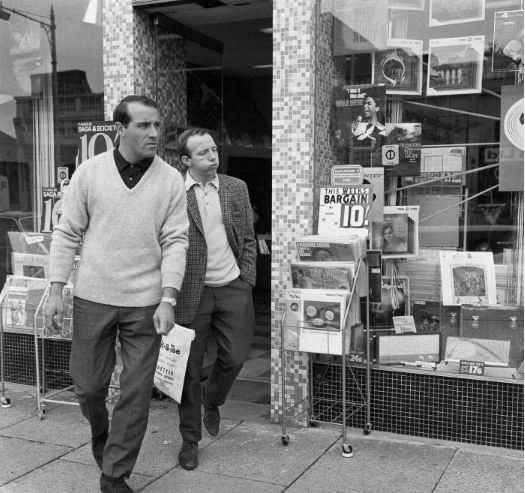
When footballers looked like your dad. No tattoos, daft haircuts or facial hair. Ron Springett (Sheffield Wednesday) and Nobby Stiles (Man U) go record shopping during the 1966 #WorldCup. 60 years ago next month. Della Reece's "I Like It Like Dat" LP in the window
14
17
135
9,927
Jun 13
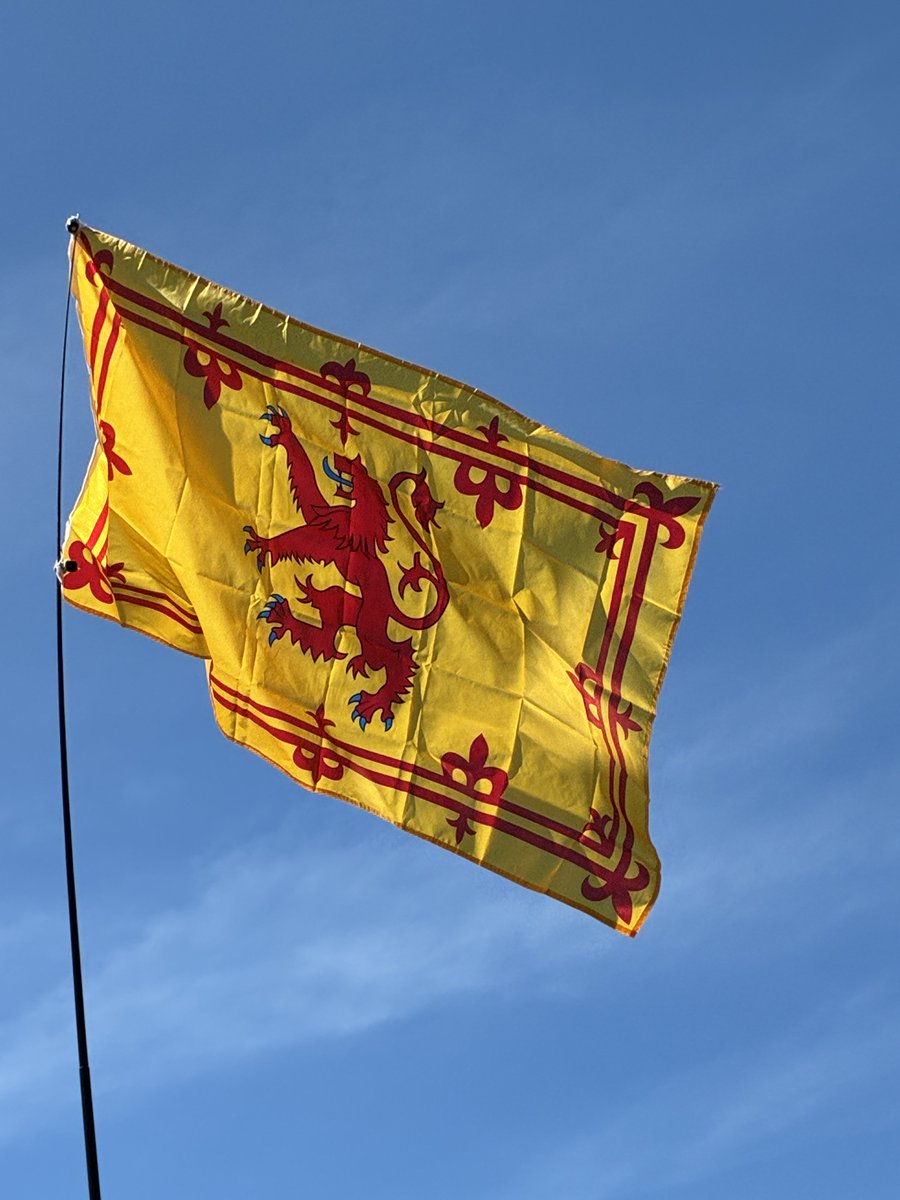
It had to be done!!! For Mrs C 💕😉 (A different flag will go up next week!😂) 🏴🤝🏴
1
26
Nick Clack retweeted

Jun 13
This is an important post, worth reading in full. The BBC would seem to have a death wish when it comes to impartiality.
Jun 12

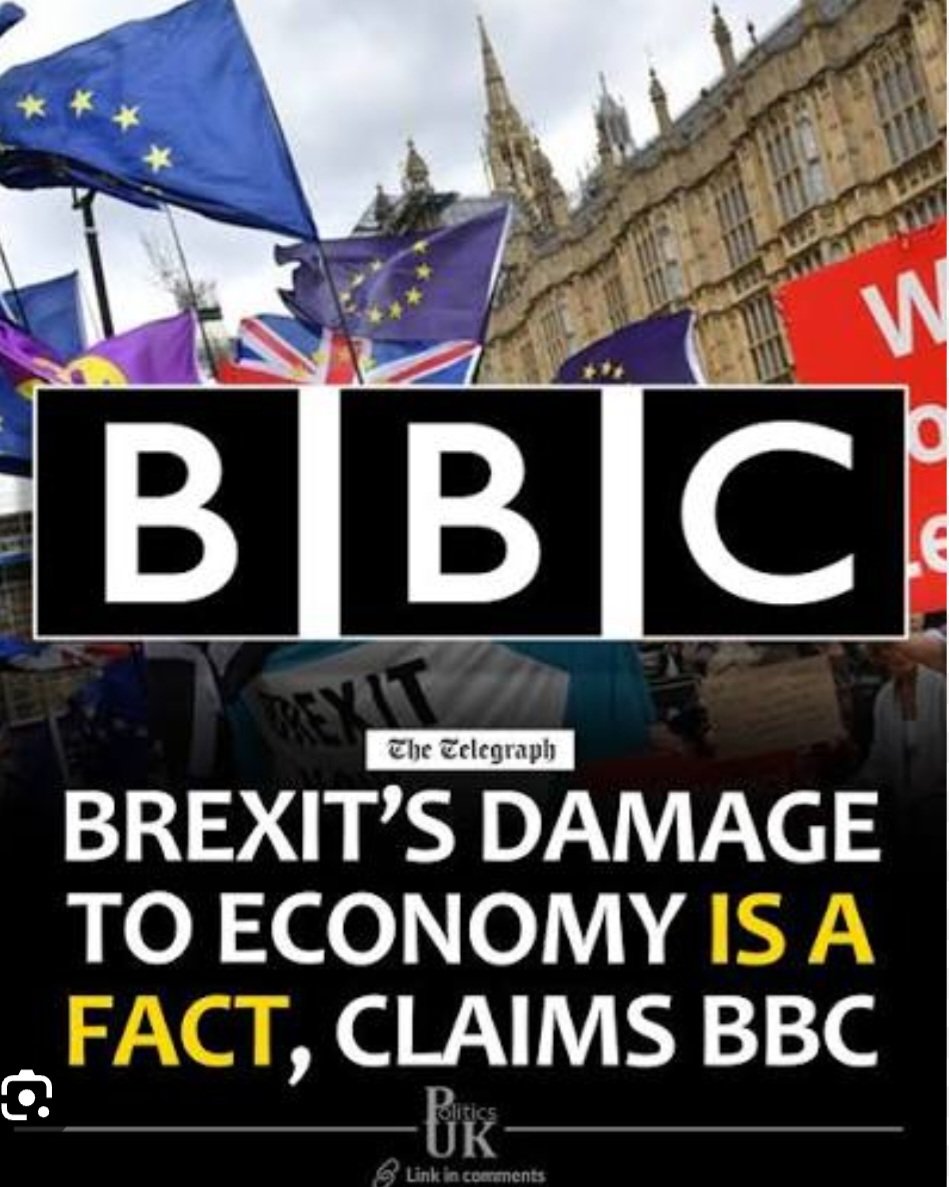
The BBC Has Ruled. Brexit Damaged The Economy. No Further Debate Required.
The BBC's editorial complaints unit has decided that the negative economic impact of Brexit is now a settled fact. Not a contested judgement. Not one side of a live debate. A fact, in the same category as man-made climate change, requiring no balancing view.
The ruling followed a Radio 4 Today programme segment featuring Andrew Bailey, the Governor of the Bank of England, alongside Liam Byrne and Sir John Gieve, both long-standing advocates of closer EU alignment. All three agreed Brexit had damaged growth. The presenter, Katya Adler, did not challenge the premise or introduce a dissenting voice. A complaint followed.
The ECU's response is the revealing part. It acknowledged the segment failed to "acknowledge the alternative case" for pursuing opportunities outside the EU rather than realignment with it. That part of the complaint was upheld. But the central complaint, that three pro-EU voices agreeing with each other on air is not balance, was dismissed. The reasoning given was that this reflected "the consensus among economists" and there was no "significant body of economic opinion" on the other side.
This is worth pausing on. The BBC is not claiming it found balance. It is claiming balance was unnecessary because one side of the argument does not meaningfully exist. The institution that is legally required to be impartial has ruled itself the arbiter of which questions are still open and which are closed, and Brexit has just been moved into the closed file.
The economics itself does not support the certainty on display. The headline figure driving much of this narrative, an 8 per cent hit to GDP since 2016, comes from an NBER paper built on a "synthetic control" model that constructs a hypothetical non-Brexit Britain from a basket of comparator countries. The largest weighting in that basket, over 60 per cent, is the United States, a country currently riding an AI investment boom and a separate fiscal stimulus. The model also weights Estonia and Greece more heavily than France or Germany. On a straightforward per capita basis against France and Germany, the actual comparators, Britain's performance since 2016 sits roughly in line with both. An 8 per cent gap simply isn't visible. This is a model producing a number that then gets reported as "the consensus," which the BBC then cites as the reason no alternative view is required.
That loop, model produces number, number becomes consensus, consensus becomes fact, fact requires no balance, is the mechanism. It does not require a conspiracy. It requires an institution that has decided which conclusions are respectable and which are not, and which then treats its own prior decision as evidence.
The same posture has been on display all week. A government department can decide its diversity targets are lawful without seeking legal advice to check. A police force can decide a book about dismantling "inner white supremacy" is leadership training. A broadcaster can decide an economic question is closed and that deciding so does not breach its own impartiality rules. In each case, the institution marks its own homework, and the mark is always a pass.
None of this requires Brexit to have been a triumph. Britain's economy has genuine problems, most of them unrelated to single market membership. But a state broadcaster, funded by compulsory licence fee under threat of prosecution, has now formally placed one of the most consequential political decisions in modern British history beyond the reach of its own impartiality obligations. Reform's Lee Anderson called it being "blinkered by groupthink." The more precise description is an institution that has stopped being able to tell the difference between its own assumptions and the facts.
"The BBC is not claiming it found balance. It is claiming balance was unnecessary because one side of the argument does not meaningfully exist."
170
1,046
3,895
113,679
Nick Clack retweeted

Jun 12
Every single person who still cringes at the memory of trying to bullshit their way through an interview or exam question: today, the slate is wiped clean. Set down your burden of shame. Nothing - nothing, I say - could touch this.
3,553
11,776
74,030
3,085,195
Nick Clack retweeted

THE BRITISH ARMY AND THE DIP 🧵
✅The British Army aspires to field a NATO reserve corps with two deployable divisions. Each division will have 2 or 3 brigades or a total of around 20,000 troops. For an army of 73,000 this structure is entirely achievable. Within a NATO context such a contribution is credible / respectable.
✅ The British Army ideally needs another 7,000 regular troops and 10,000 additional reserves. Returning to the 2010 headcount cap of 82,500 is highly desirable, because it would allow sustainable unit rotations. At an average cost of £60K per regular soldier per annum and £10K per reservist, extra headcount would require an additional £520 million per year.
✅ The two divisions with 4 to 6 brigades would generate 4 combat units per brigades or 24 primary battalion sized groupings. Each division needs artillery, engineers, signal / intelligence, REME / logistics, and medical units to support them. There is nothing unreasonable about wanting this level of capability. Every other NATO member in Europe plans to be similarly configured. Ultimately, however. the issue is not force generation but ensuring the units we do have are properly equipped.
✅ The Army’s most critical capability gap is in artillery. It’s acquiring 72 Boxer RCH155 - enough for 4 regiments. It has 2 GMLRS regiments, but needs an additional 2-4. In particular, it needs to restore munitions stockpiles. This requirement implies an extra £1.7 billion beyond the £3 billion already allocated.
✅ In drone saturated battlefield environments, the Army needs to invest in air defence on an unprecedented scale to regain freedom of manoeuvre. This requires £2 billion in addition to the £800 million already allocated.
✅ The Army’s Bowman communications system is obsolete. Replacing this with a fully digitised architecture is already budgeted at £7 billion, but nothing has yet been approved or delivered. Without this investment, the much vaunted kill chain is only an aspiration.
✅ UAS, tactical cruise missiles, loitering munitions, and other aerial drones for surveillance and strike roles are here to stay. They need to be embedded across the force. That’s another £2 billion.
✅ Finally, another significant gap is combat vehicles to get to the fight and to manoeuvre. Under present plans, it is acquiring 623 Boxers, 148 Challenger 3, 589 Ajax, and 1,100 protected mobility vehicles. That’s around 2,460 vehicles. It needs twice this amount or an extra £10 billion.
So, those are the Army’s most important priorities. A lot of what I have listed is already in the Equipment Plan. But it needs around £18 billion in additional funding over 9 years to deliver all this — that’s £2 billion per annum over current funding.
Clearly, the Army is not going to get anything like the extra funding I have described, but now you know the scale of investment needed to deliver a minimum viable contribution to NATO.
The need for this level of funding is what happens when you stop investing in defence for 30 years.
22
43
302
30,832
Nick Clack retweeted

Jun 13
EXCLUSIVE from @oliver_wright
Keir Starmer was blindsided by John Healey's resignation as defence secretary because he was far more worried about Ed Miliband and Rachel Reeves
Miliband was on “resignation watch” after he refused repeatedly to meet Starmer to discuss planned cuts to his net zero agenda. The fear was that the energy secretary would use the announcement to quit and publicly throw his weight behind Burnham
Extraordinarily No 10 was also worried about Rachel Reeves, the chancellor, who had been strongly arguing for a much smaller defence uplift of “single figure billions”
Reeves was said to be so angry about the move to take money from other departments’ spending plans to top up defence that she had refused to take part in the process of drawing up the cuts
While her allies said Reeves had worked “constructively” on trying to find the money, tellingly it was No 10, rather than the Treasury, that negotiated cuts to infrastructure budgets.
“It went well beyond what Rachel wanted,” said one No 10 source. “John [Healey] knew how difficult it was and how hard the prime minister worked to get it up to £13.5 billion.”
Our weekend read on how John Healey’s resignation blew a hole in Keir Starmer’s survival strategy:
Healey’s resignation is deeply damaging for two reasons. First, until now, Healey has been as loyal as they come, resolutely defending the prime minister time and again on the broadcast rounds
But far worse was the timing. Starmer’s whole survival strategy was predicated on playing up his national security credentials. The plan had been to launch Dip before next week’s G7 summit at Evian in France and use the event to present Starmer as the man who could take the “big decisions to make the country safe”
It was deliberately designed to contrast Starmer with the inexperienced mayor of Greater Manchester, giving Burnham and Labour MPs at least a few second thoughts about an immediate challenge
Instead the prime minister heads to Evian with that entire strategy in tatters and a date with President Trump that could be excruciating
“The survival plan has been totally demolished by Healey,” a senior Labour figure said. “Starmer’s strongest card was as the man who can take the big decisions to keep the country safe and Healey has accused him of putting the country at risk. It is hard to see how we go from here.”
thetimes.com/article/fc89861…
155
494
1,885
393,673
Nick Clack retweeted

Jun 10
Ed Miliband has outlawed tumble dryers and led the first dawn raid on a suspected offender today.
Charged with Net Zero crimes, the rogue appliance tried to make a break for it, but luckily Ed intervened and stopped it right in its tracks.
{satire}
40
348
1,189
76,578
Nick Clack retweeted

Jun 11
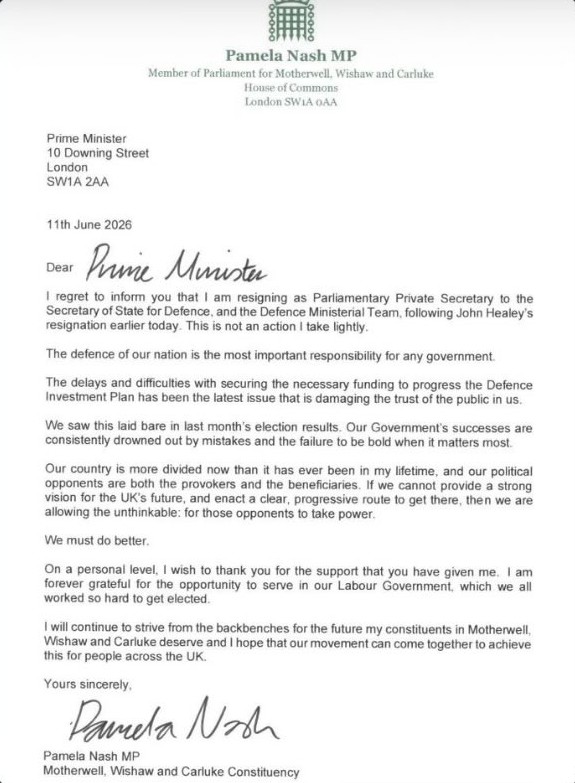
🚨 NEW: Pamela Nash has resigned as a PPS in the Ministry of Defence
282
1,466
5,480
292,800
Jun 11
The ITV set is stunning. Hope the chat and analysis matches it! But fair play, someone did a great job finding it but can’t help wondering what it’s costing them 🧐 @itvfootball
1
1
131
Nick Clack retweeted

Jun 11
🔴 ⚠️ BREAKING: Trump: I have cancelled scheduled strikes and bombings against Iran this evening.
81
64
575
216,503
Nick Clack retweeted

Jun 11
So much of John Healey’s resignation letter is damning but lines that should really worry those inside government trying to make changes and those outside hoping for them?
That despite a war in Ukraine, a war in Iran, cyber threats, unpredictable allies, the impact of energy and resource insecurity on the U.K., this Prime Minister made promises he knew he could not keep and shut his own well-respected Defence Secretary out of the process to agree funding for the DIP to try and push through something inadequate and save his own political blushes.
In the same week he welcomed Macron, Mertz and Zelensky to Downing Street to stand in front of flags and promise unwavering commitment, knowing the money to pay for it didn’t exist.
57
318
1,470
171,113
Nick Clack retweeted

Jun 11
Extraordinarily - and this seems to demonstrate a complete disregard of the seriousness of defence at the heart of government - John Healey was only told what the offer was for additional defence funding on Monday afternoon.
I am told Number 10 then tried to rush and publish the Defence Investment Plan on Thursday.
Then a handbrake was applied by Mr Healey and his military chiefs. The (now ex) defence secretary made clear that racing to release the blueprint without a settlement that had been accepted by him and his team would be a risk for defence and for its soldiers, sailors and aviators.
You can only imagine the tone of the exchange that must have taken place - and I know that people were in the MOD until very late last night.
But John Healey firmly believes the settlement was inadequate and, if left unchallenged, would not enable the UK to keep the country safe or meet its international commitments - such as help defend Ukraine in the event of a ceasefire with Russia.
A key detail is that Mr Healey believes defence spending must be increased to 3% of GDP by 2030, up from 2.3% now. This would guarantee tens of billions of additional pounds for defence.
But - despite the stakes and the position of the defence secretary - the Prime Minister and Chancellor agreed just to inch it up to 2.68% of GDP within that time frame, after hitting a new target of 2.6% next year (which is already being inflated by lumping in the 0.1% that is spent on the intelligence agencies).
Utterly incredible.
What must our allies and our adversaries be thinking, let alone everyone in the UK armed forces and, frankly, everyone in our country?
We all rely on a secure UK to live, work, go to school, enjoy holidays, access healthcare, spend time with friends and families.
This is not a divine right. It happens because we have security - something that might not be apparent until or unless it is compromised...
57
328
1,272
87,149