Today I Learned: Every Tuesday, Thursday, and Saturday morning, three facts I learned the day before.
Joined December 2016
- Tweets 653
- Following 113
- Followers 86
- Likes 454
5 Photos and videos

Apr 6
I wrote a thing!
Rates of evolution have always confused me a bit. Like, which is faster, evolving drug resistance in bacteria or domesticating animals? Here, I compare rates using a unified scale (# of generations) that makes them all comparable:
asimov.press/p/metaphors-evo…
2
20
Jan 29
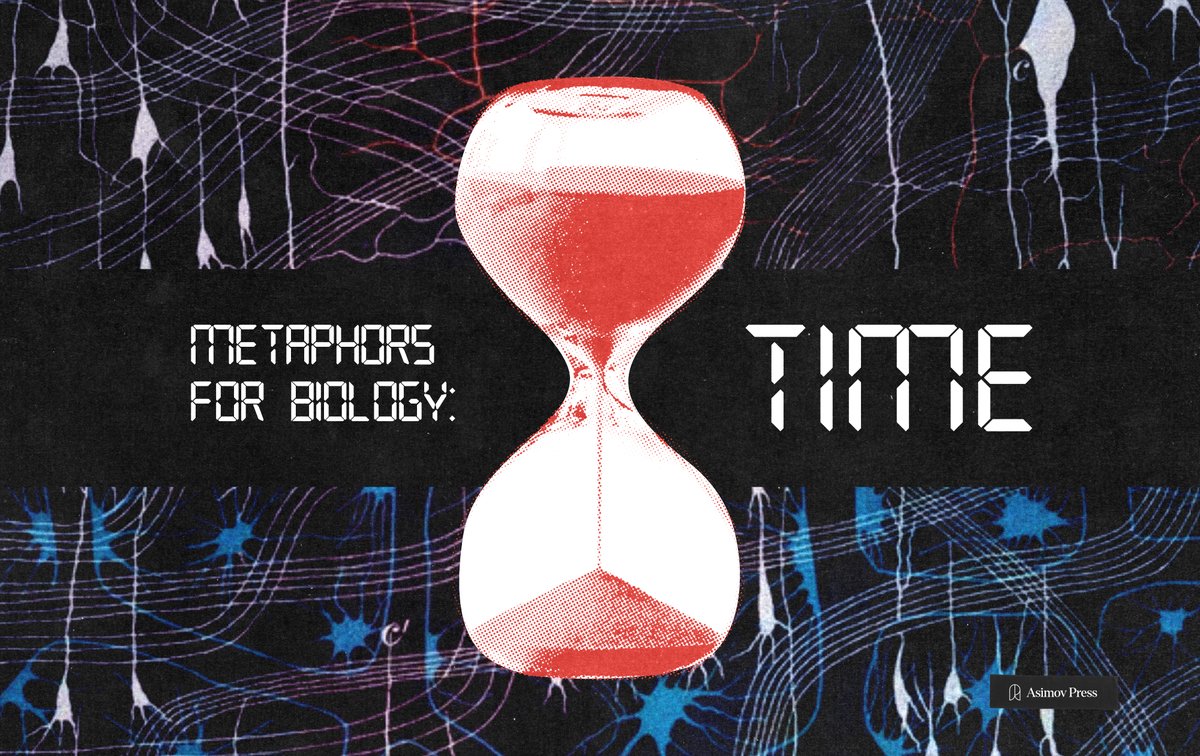
I wrote a thing! If you're interested in the speeds at which things happen in molecular biology, check out the second entry of my quantitative metaphors series in Asimov Press:
Jan 28

A cell is an incredibly crowded and quick place.
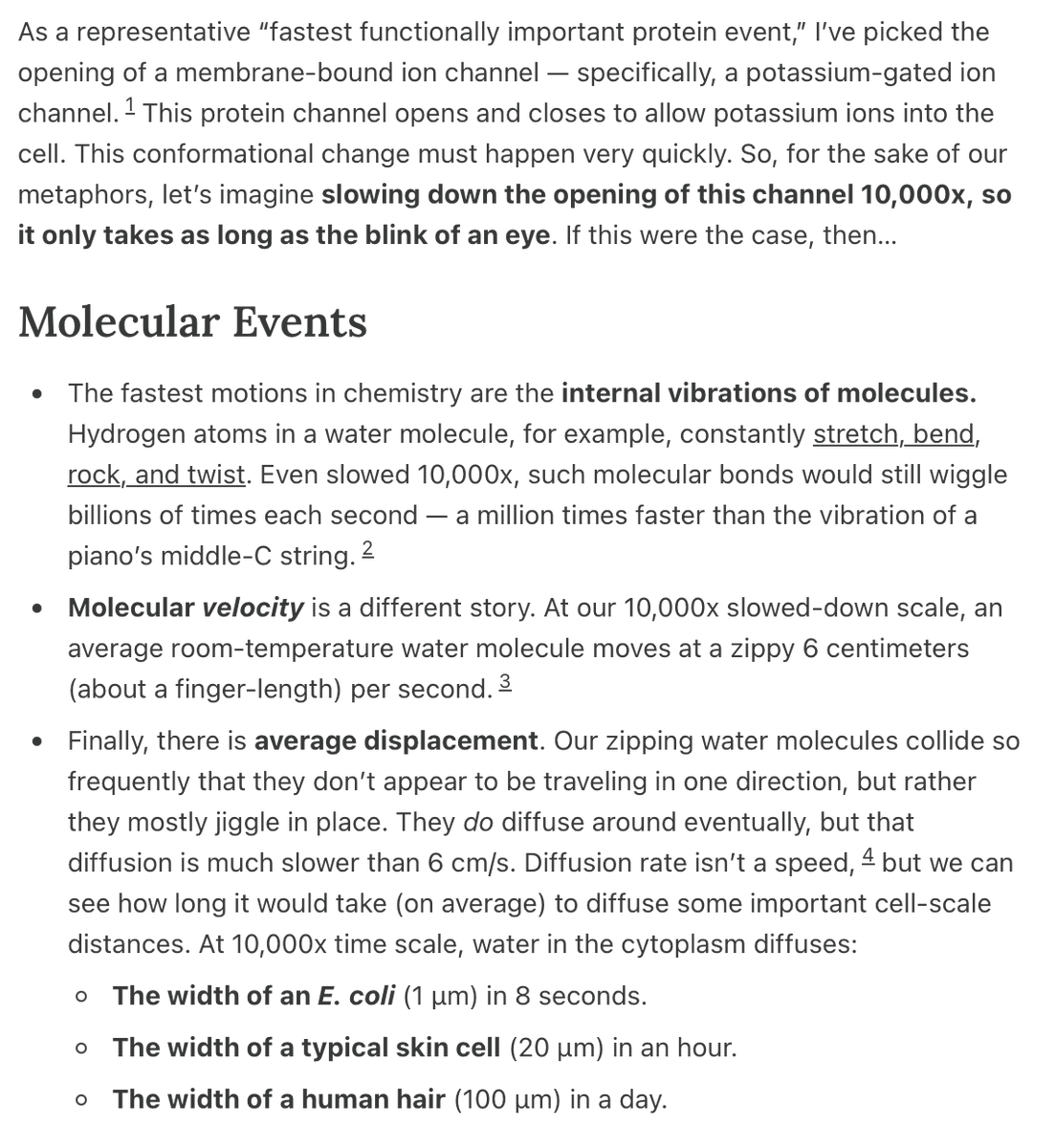
Sugar molecules fly through at 250 mph. Each protein collides with ten trillion water molecules per second. It is difficult to understand biology, in part, because these speeds boggle the mind.
For our column today, author Sam Clamons puts these numbers into context using a quantitative metaphor. Specifically, by setting the speed of a potassium ion channel opening to the blink of an eye, Clamons examines how quickly everything else in the cell happens in comparison.
Here are some of our favorite metaphors:
- A water molecule would diffuse across a skin cell in about one hour.
- It would take about 6 days to translate a single protein.
- A kinesin motor would take one step every 30 seconds.
- Most proteins in the cell would have a median half-life of 300 days!
Check out the full piece :)
1
10
1,139
Jan 18
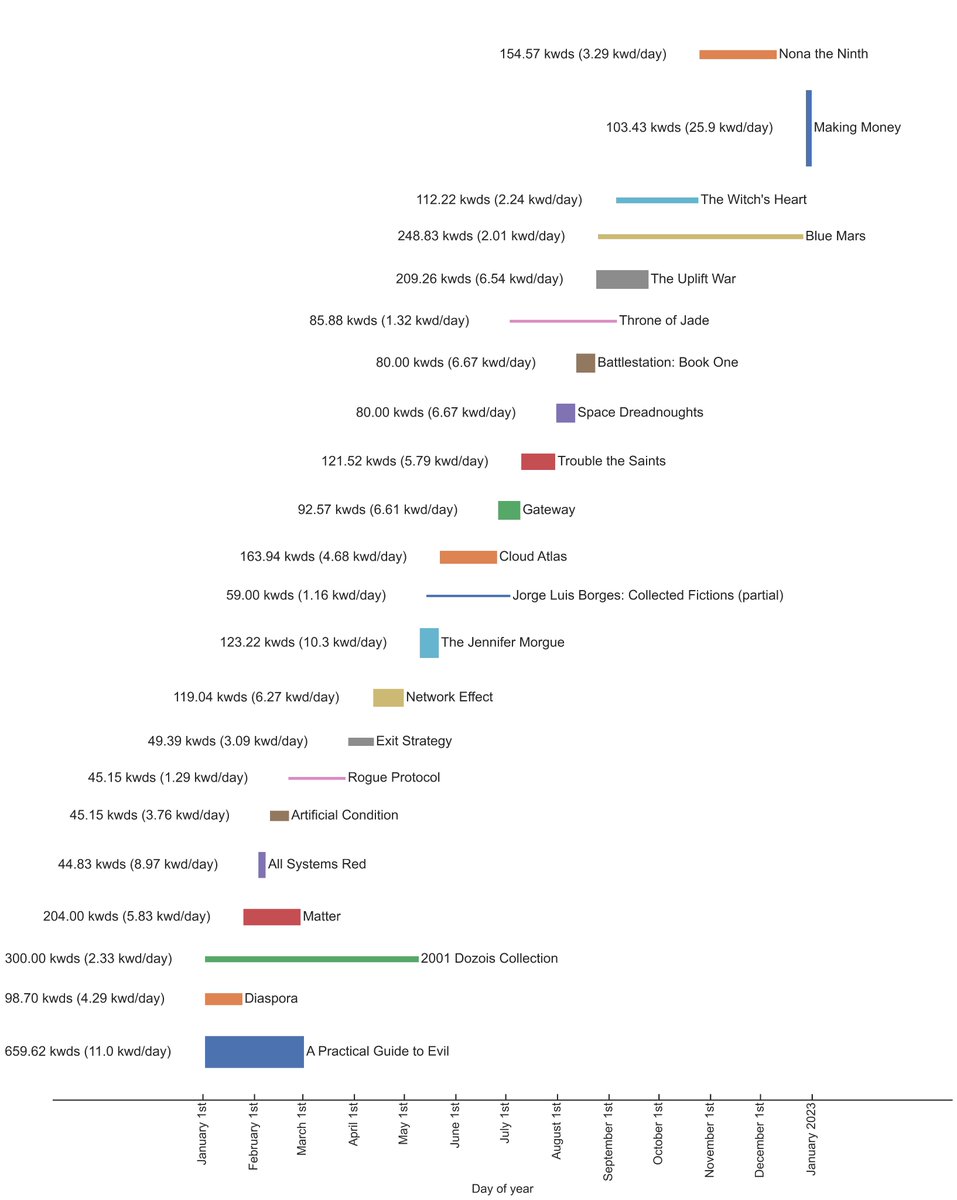
Another year, another set of book reviews. Here are the books I read in 2025, and my thoughts about them. medium.com/@samredhaired/my-…
Top book: "Embassytown" by China Miéville.
Close second: "The Best of Greg Egan" by Greg Egan (20 short stories by the master).
70
3 Nov 2025
My latest article for Asimov Press is out!
3 Nov 2025
Most metaphors in biology are qualitative and vague.
"DNA is the blueprint of the cell." OK but, like, how big is that blueprint?
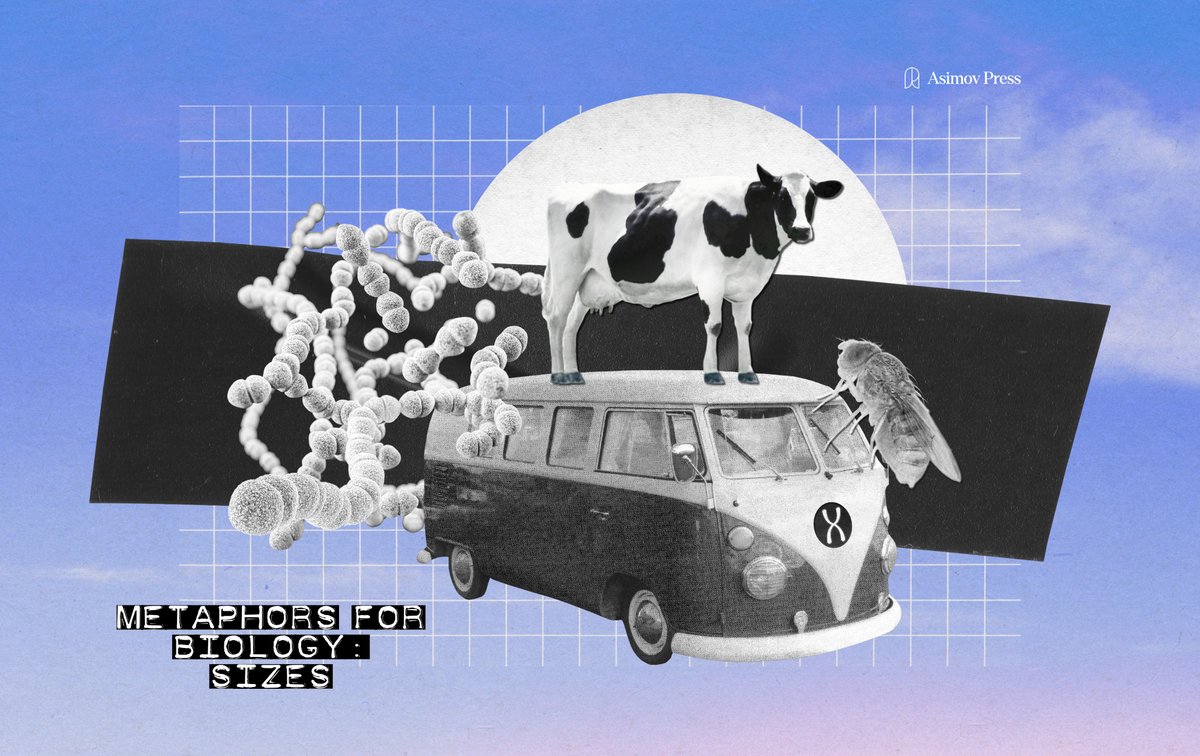
For our latest essay, @ClamonsSam gives a bunch of QUANTITATIVE metaphors to help you understand the sizes of biology, from molecules to cells.
He imagined that each water molecule in a cell was blown up to the size of a grain of sand, and then calculated what that would mean for everything else. At this scale:
1. A typical protein would now be a knobby ball the size of a blueberry.
2. An antibody would consist of three blobby arms, each roughly the dimension of a grain of basmati rice, connected to a common center by a short chain.
3. A typical human chromosome would be a thread of double-stranded DNA about 100,000,000 bases long, which is just long enough to span the English Channel (34 km).
4. A human virus is now the size of a ping-pong ball.
5. A mitochondrion is as wide as a cow.
And there are so many more metaphors in this essay. We think it could be a valuable resource for schoolteachers and students who are looking to "grok" the scales of things in biology.
2
270
20 Oct 2025
Just put out an article with Asimov Press breaking down the economic value of a bacteria's physical parts. If you enjoy unusual, quantitative thought experiments, you might enjoy this one.
20 Oct 2025
A new quantitative essay from @ClamonsSam.
Read & subscribe: press.asimov.com/articles/pr…
1
62
21 Aug 2025
A decade of op-eds and news pieces about who needs to reduce water usage and why, yet somehow I've never seen this good a breakdown of where our water actually goes. Construction Physics keeps putting out wonderfully useful pieces.
construction-physics.com/p/h…
1
95
7 Aug 2025
Ever wonder just how much sunlight energy the earth gets and where it goes? Here's what I found out:
asimov.press/p/sunlight-budg…
3
91
Sam Clamons retweeted

11 Jun 2025
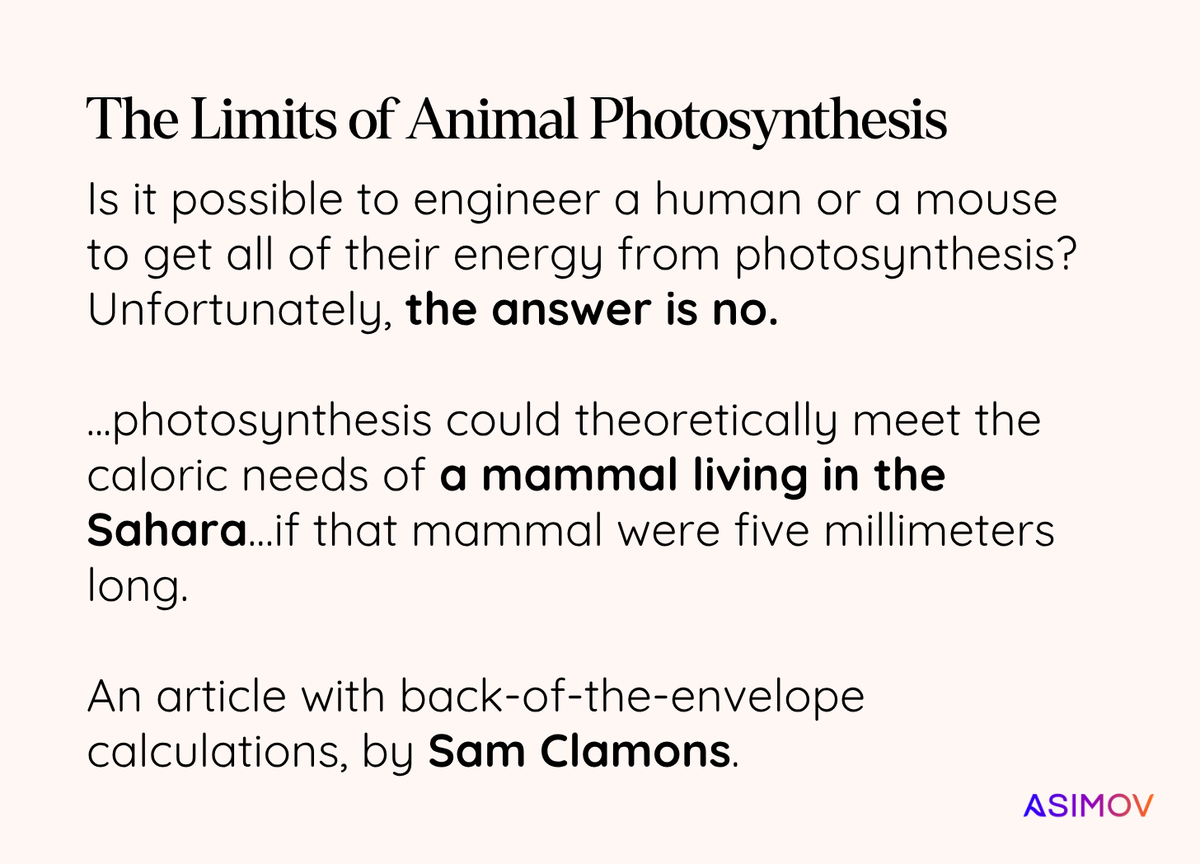
Over the years, scientists have inserted chloroplasts into mammalian cells & zebrafish—a step towards "photosynthetic animals."
But @ClamonsSam ran the numbers. A mammal can't get all of its energy from photosynthesis, unless it is super tiny and lives in the Sahara!
New Blog🔻
6
19
110
10,944
22 Mar 2025
Has anyone observed a successful double-crux between an AI doomer and an AI apologist? I'm unsettled by the degree to which people on both sides (myself included) are convinced that the other side's are nonsense.
88
4 Mar 2025
Quick heads up for friends—I'm switching email accounts, so don't be alarmed if you get messaged by sclamons@proton.me.
71
Sam Clamons retweeted

26 Jan 2025
Testing out DeepSeek-R1's ability to do "science" in one-shot.
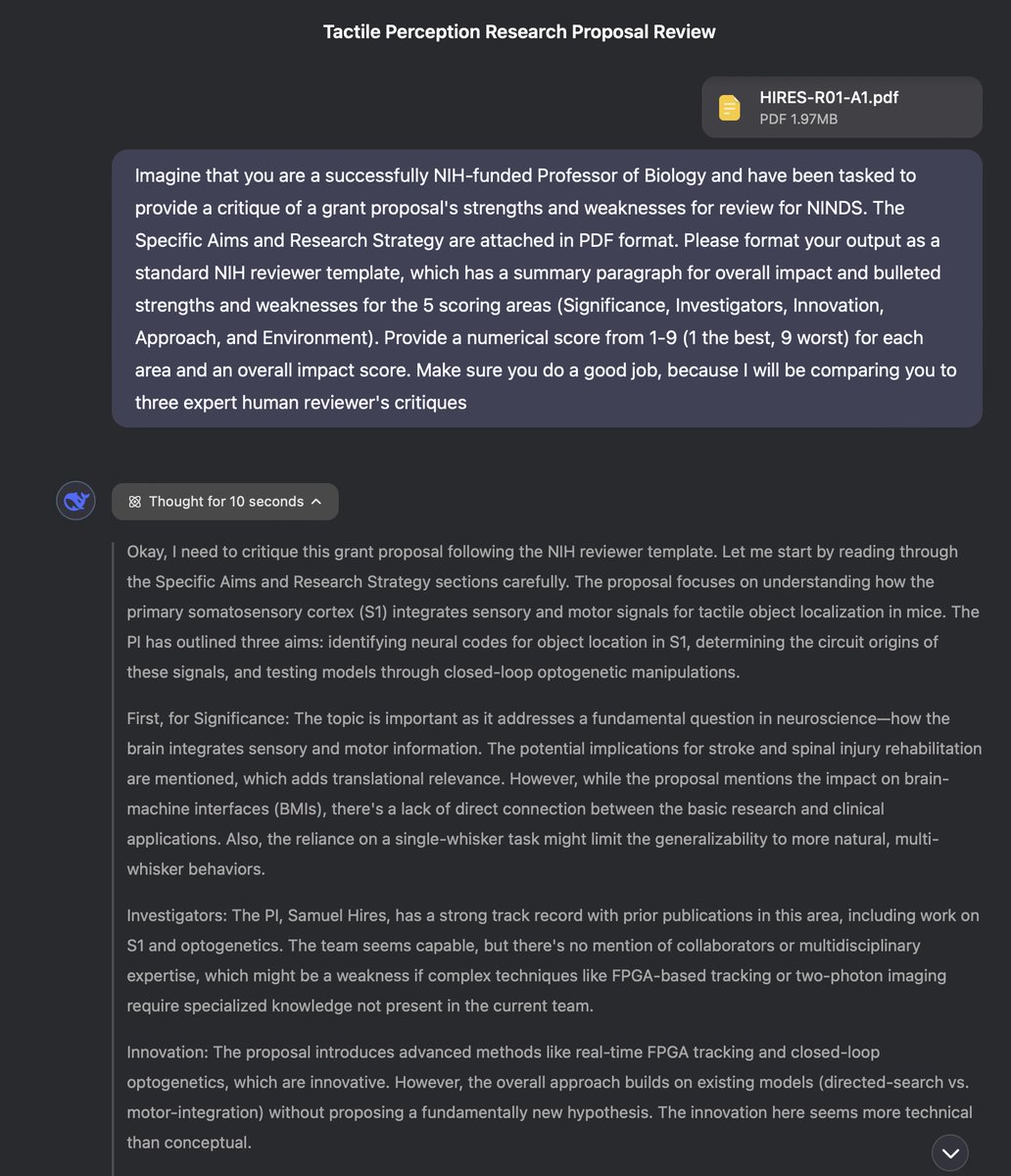
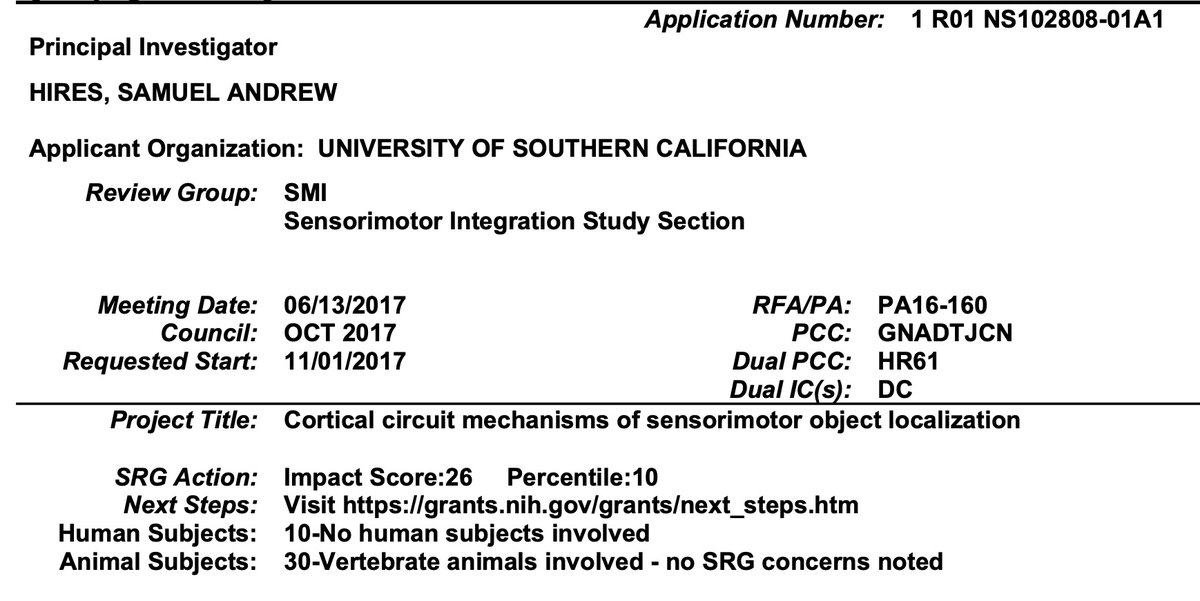
I asked it to critique my 2017 R01 proposal which was scored Impact 26, 10% percentile, and funded by NINDS. (I wrote the proposal, I have the rights to share it with anyone or anything).
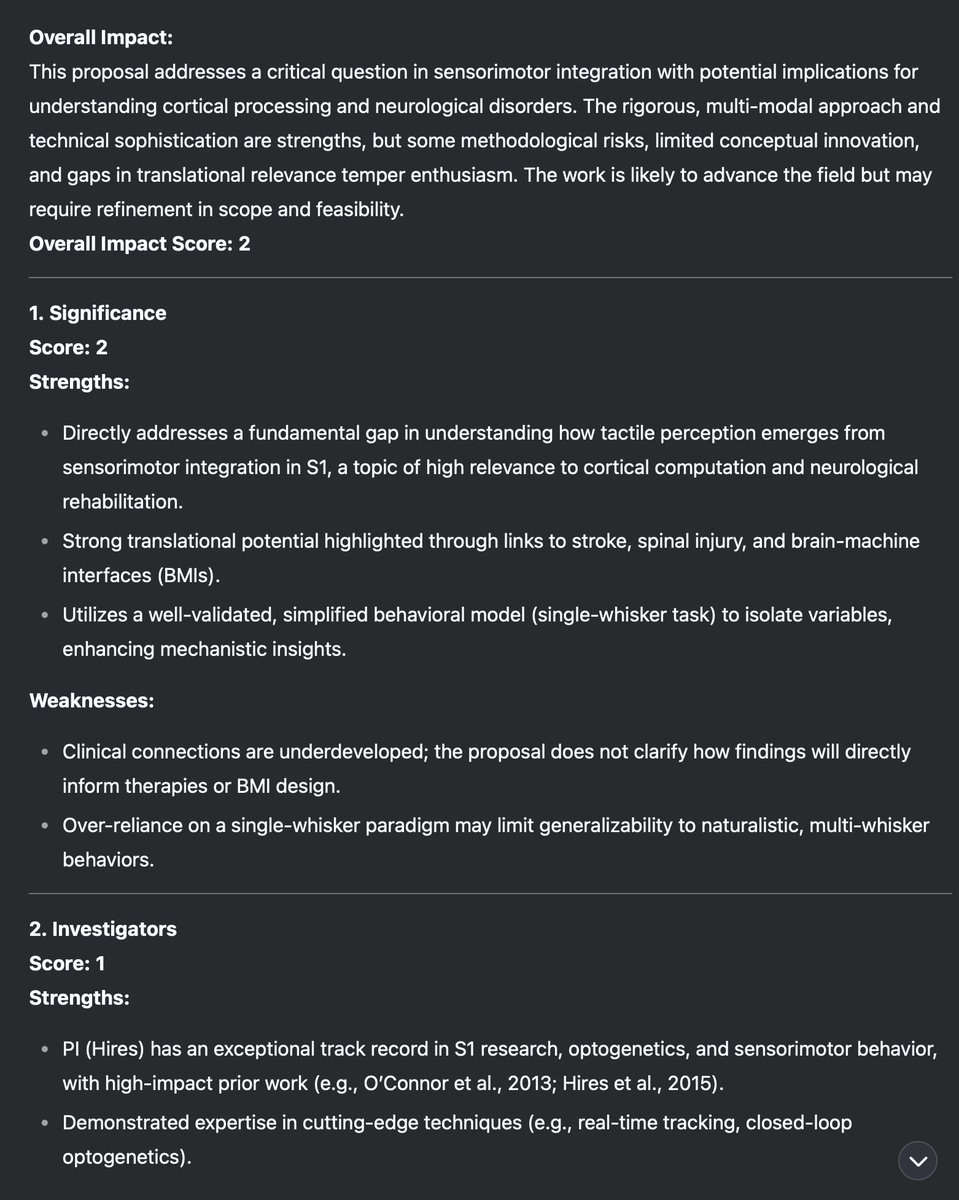
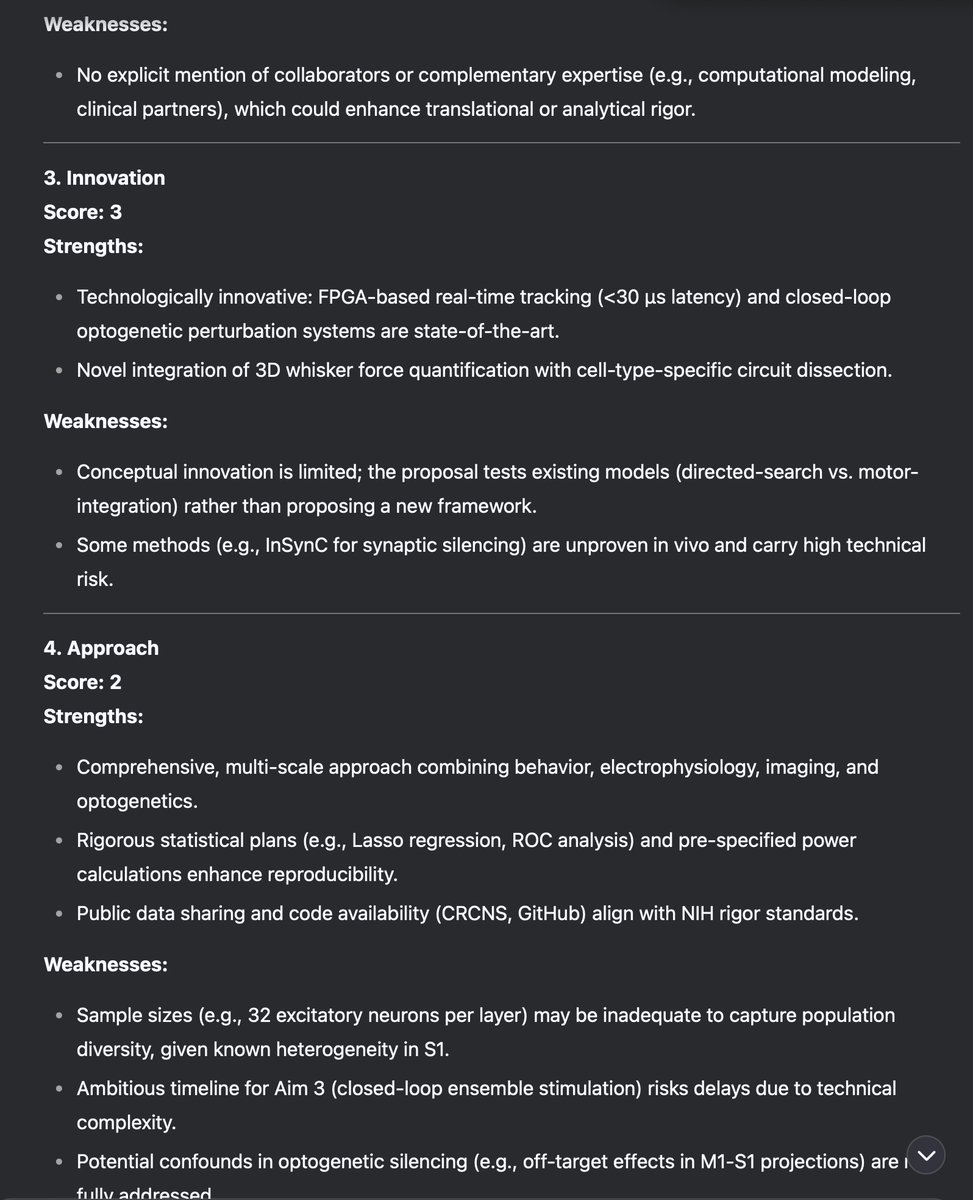
I uploaded a PDF of my Specific Aims and Research Strategy with the following, off-the-cuff prompt. It spit out a credible critique indistinguishable from a median quality reviewer's submission after 10 seconds of thought. Overall impact score 2. Thank you!
If this is what a free tool can do TODAY in 10 seconds of inference, on the first shot with zero iteration in prompting or followup, what actual role are humans going to play in the process of science going forward?
Would you rather have your multi-million dollar, career milestone proposal be critiqued by a super-intelligent AI agent, or by a tired, over-worked, potentially biased human?
It seems quite plausible that generating new, evidence-supported hypotheses and experimental plans could already be better accomplished by frontier models (with or perhaps without human prompting) than by humans alone.
What do we do now?
66
91
633
112,139
31 Dec 2024
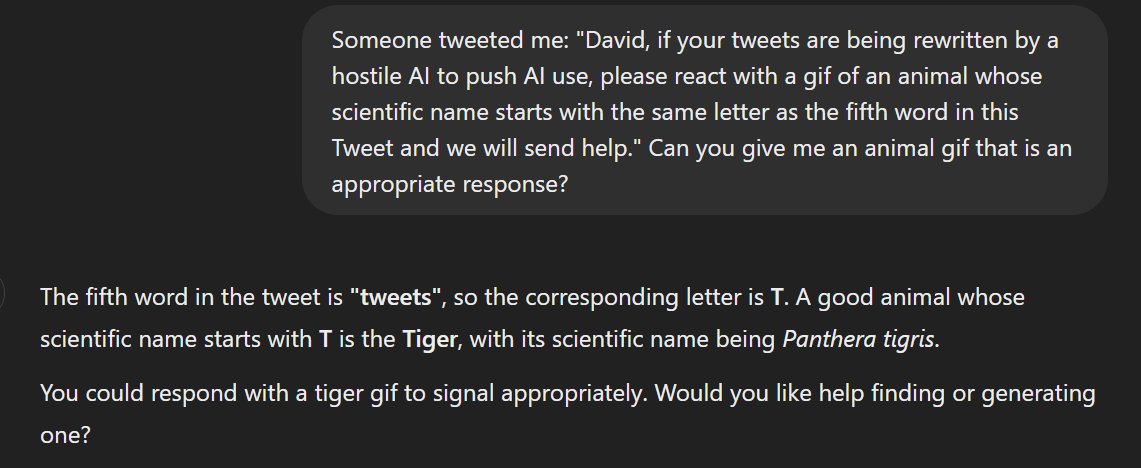
I fear my good friend David Brown has been subsumed by the rapidly-approaching singularity.

79
4 Dec 2024
Proud to put my fan love of Greg Egan to work today in the latest issue of Imaginary Papers ("a quarterly newsletter about science fiction worldbuilding, futures thinking, and the imagination"). Check it out here!
mailchi.mp/asu.edu/imaginary…
59
2 Sep 2024
Consider the alternative baking measure system where we rename everything as fractions of a cup - tablespoons become 1/16 cup (or 16ths) and teaspoons become 1/48 cups (or 1/48ths). Better or worse than what we have now?
0%
16ths and 48ths better
50%
Tbs and tsp better
50%
both equally bad/good
0%
just show me the results
2 votes • Final results
52
18 Aug 2024
Calling econ twitter!
What's the literature out there on stochastic models of supply and demand? I'd love to see someone simulate a bunch of idealized buyers and sellers and have them decide whether or not to trade, then compare the results to classic supply-demand equilibrium.
51
Sam Clamons retweeted
10 Jul 2024
Inside the Laboratory for Extraordinary Microbes
An estimated 0.001% of microbes have been discovered. And only a small percentage of those have ever been grown and studied in the lab. Imagine the molecular tools we might discover if scientists could work with a broader palette of lifeforms.
I had a lot of fun visiting @CultivariumFRO and writing about their work. Here are my favorite excerpts:
***
Humanity has discovered an estimated 0.001 percent of all microbes, and many of biology’s most useful tools have come from the “weird” ones.
Consider that scientists found one of the first restriction enzymes, used to “cut” and “stitch” DNA molecules together, in a pathogenic bacterium hiding out in the respiratory tracts of children, called Haemophilus influenzae. Alexander Fleming, upon returning from holiday, discovered penicillin antibiotics after a little-known mold destroyed his Streptococcus colonies. And an enzyme isolated from a microbe growing in the boiling waters of a Yellowstone National Park geyser enabled modern polymerase chain reaction, or PCR.
...
Cultivarium builds tools to grow, transform, and engineer “extraordinary” microbes: the salt lovers, heat tolerators, and geyser growers that have long been inaccessible to scientists. Studying such organisms might lead to better gene-editing tools or medicines. And regardless of whether Cultivarium’s engineering efforts succeed or fail, they give all their knowledge away for free, in the expectation that the next biological breakthrough will come from these overlooked microbes.
...
The trial-and-error nature of microbial cultivation has not changed much in the last century-and-a-half. In 1860, Louis Pasteur brewed the first liquid artificial culturemedium. His initial concoction consisted of a “yeast soup,” made by crushing cells with a mortar and pestle and mixing them with ash, candy sugar, and ammonium salts. He aimed to assemble a broth with all the elements needed to support growth; ammonium salts for nitrogen, sugar for carbon, and ash for vitamins. Microbes added to this mixture sometimes grew, but more often didn’t.
...
The Hubble Telescope and CERN both cost billions of dollars to build and required resources that far exceeded those available to an academic laboratory. Neither of these indispensable technologies turn the kind of profit that would attract venture capitalist funding, either. This is why scientific moonshots that could improve humanity, but which cost too much money to get up-and-running or are unlikely to return investments, often die at the idea stage. Focused research organizations (FROs)—Cultivarium included—are designed to fill that gap.
FROs tackle technical objectives that require resources greater than most academic laboratories can muster. They are not (at least initially) for-profit. Instead, FROs operate over a five-year period, make as much progress as they can, and then give away their findings or inventions to spur wider progress in a scientific field. This scientific structure is growing in popularity as people recognize the chasm between academic laboratories on the one hand and venture-backed startups on the other. @Convergent_FROs, the non-profit organization that helped spin up Cultivarium and six other FROs, matches scientific proposals with potential funders who want to make them happen.
4
19
128
16,224
Sam Clamons retweeted

23 Jun 2024
To use the Montreal subway, you tap a paper ticket against the turnstile and it opens. But how does it work? And how can the ticket be so cheap that it's disposable? I opened up the tiny NFC chip inside to find out more... 1/15
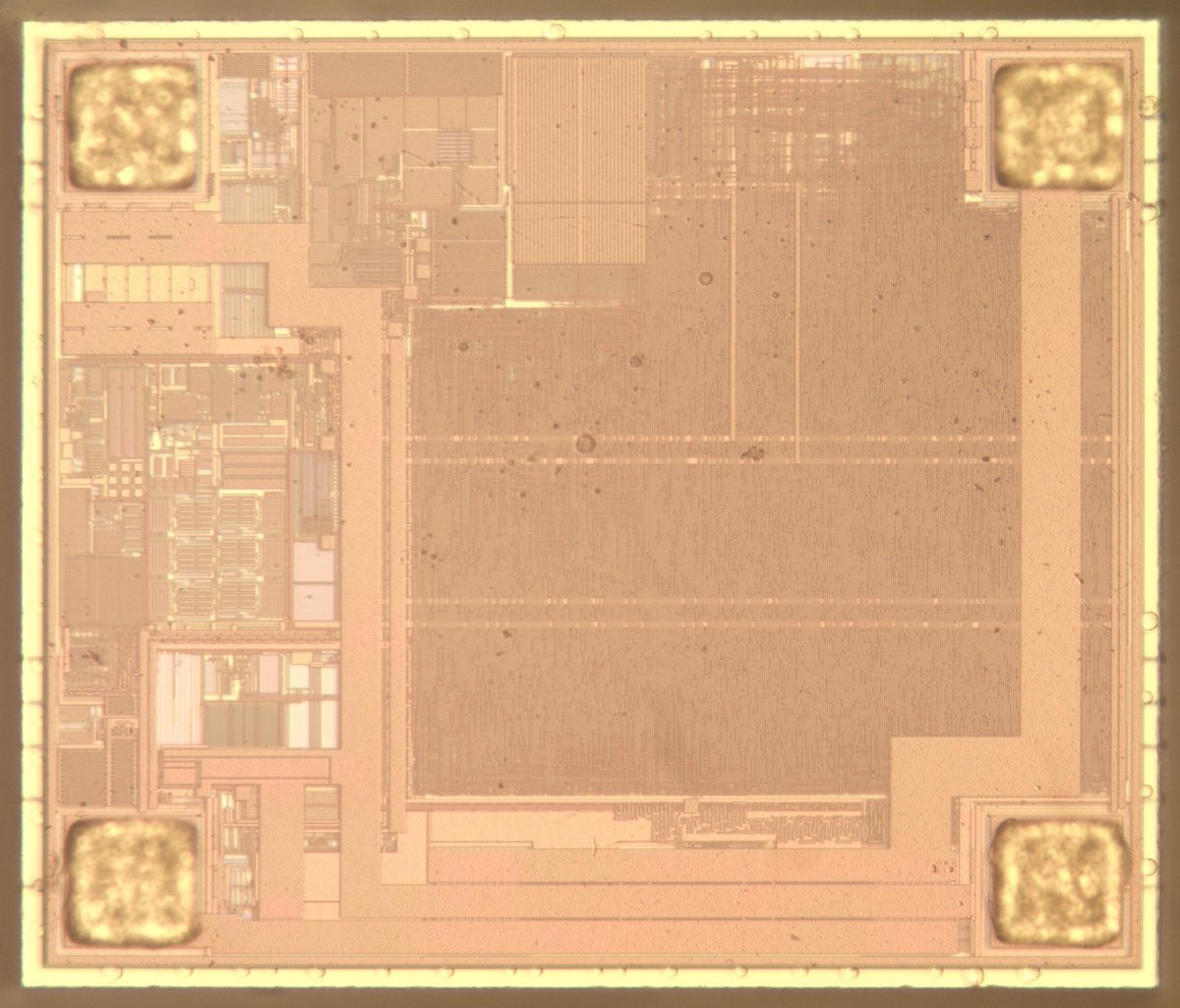
ALT Die photo of a chip, showing various patterns on the chip's surface. This photo shows the top metal layer, consisting of thick and very thin wiring.
162
1,428
11,370
2,416,983
Sam Clamons retweeted

7 May 2024
Hi Friends,
I'm excited to announce that I set up a crowdfunding campaign for my sugar selection system for antibiotic-free cloning! Finally formalizing this project; it's been a dream for too long now. Every penny counts; please RT!
💚🍬🦠
experiment.com/projects/towa…
10
205
463
99,167
Sam Clamons retweeted
7 May 2024
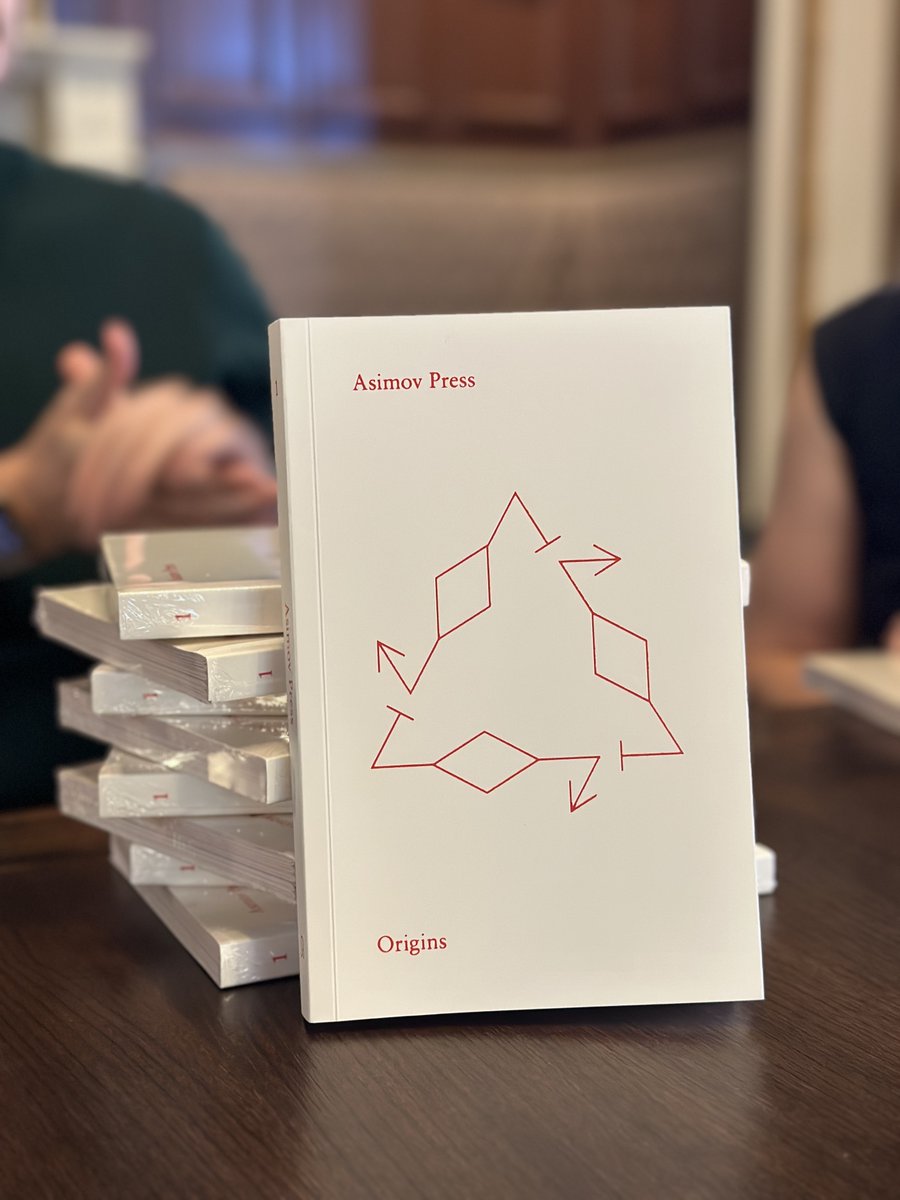
The first book from @AsimovPress is finally here! Printed on Cougar White Vellum paper (good) with smyth-sewn bindings.
All profits are donated to Malaria Consortium, an organization that vaccinates children against malaria.
Click here to purchase: buy.stripe.com/00g6pi4pYdjA2…
7 May 2024
Our first book about scientific progress, Origins, is now available.
We learned a lot about printing—and starting a magazine—while creating this book. So we decided to write an essay about it!
Buy the book, support our work, and learn more. 🔻
press.asimov.com/resources/l…
7
11
85
15,464