We create an intellectual space that engages with Eastern & Western classical traditions, driven by two principles: scholarly depth & accessibility at its core.
Joined May 2024
- Tweets 425
- Following 130
- Followers 157
- Likes 385
198 Photos and videos

🔴 Live Now
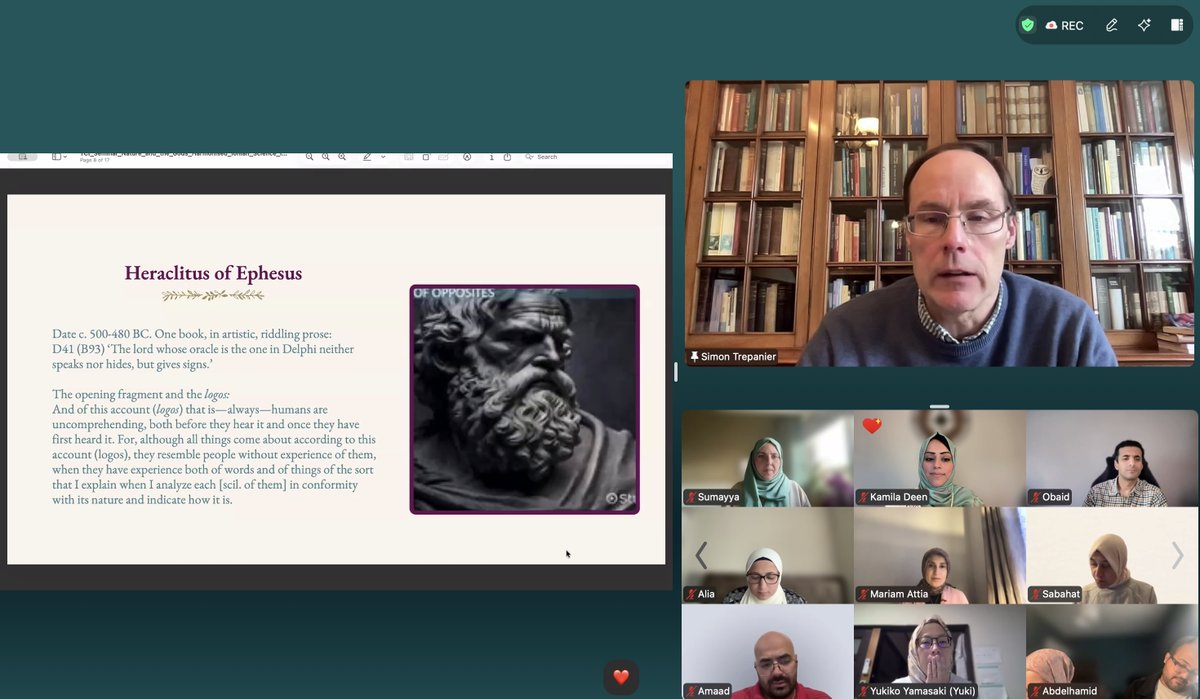
What is the nature of the Divine?
This evening, Dr Simon Trépanier is guiding participants through the thought of Heraclitus and the emergence of philosophical theology in the ancient Greek world. Questions concerning the Logos, order, intelligibility, and the Divine remain no less compelling today than they were over two millennia ago.
"The lord whose oracle is at Delphi neither speaks nor hides, but gives signs."
#Classics #Philosophy #AncientGreece #Heraclitus #GreekPhilosophy #Theology #HistoryOfIdeas #Humanities #ClassicalEducation #TheClassicalInstitute
16
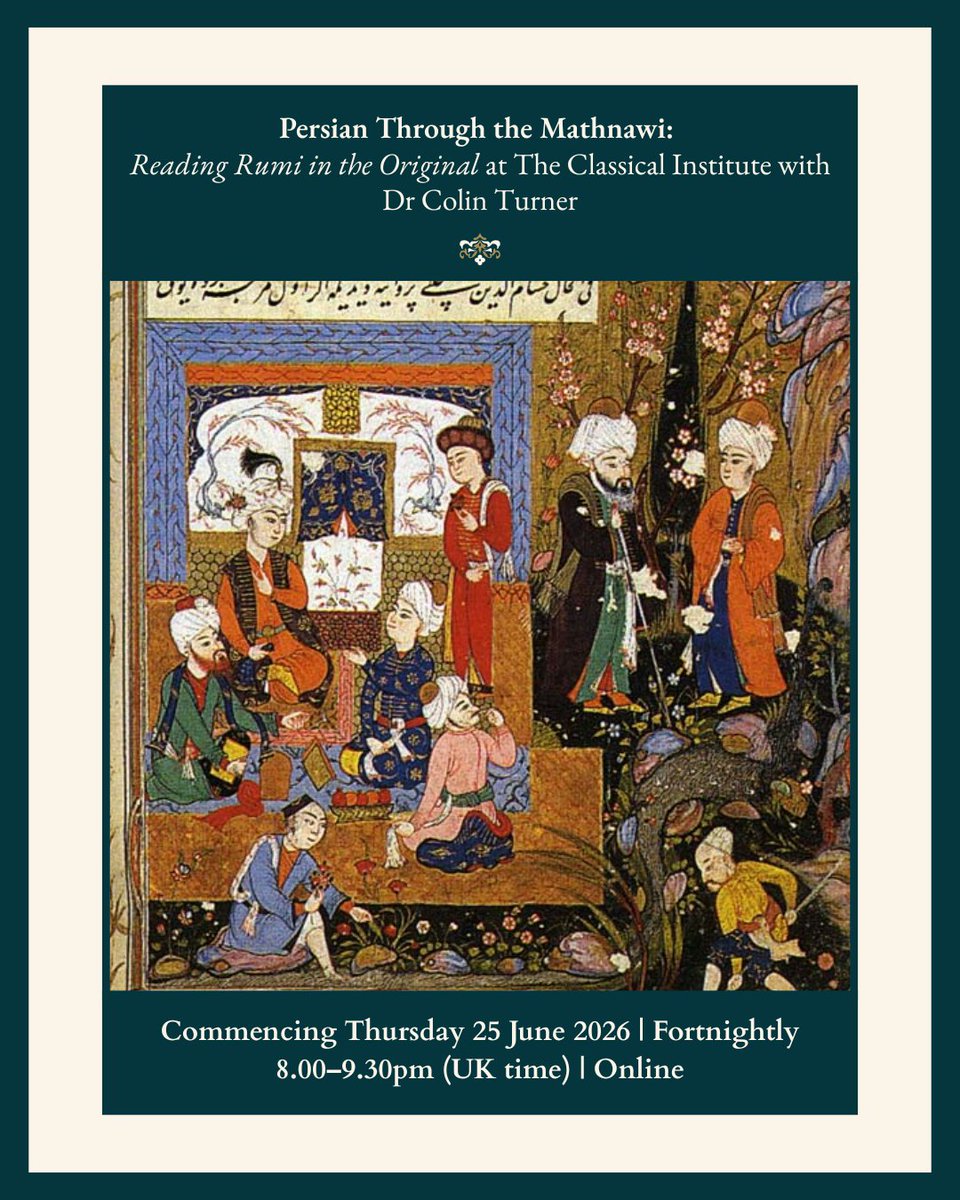
Few works have exercised such a lasting influence upon the Persian literary tradition as the ⟡ Mathnawi ⟡
Through this new programme, students will have the opportunity to engage the text in its original language under the tutelage of Dr Colin Turner.
⟡ Persian Through the Mathnawi: Reading Rumi in the Original ⟡
We are delighted to welcome Dr Turner to The Classical Institute as Visiting Reader in Classical Islamic Thought and Persian Literature. The programme forms part of the Institute's growing provision in the Classical languages and intellectual traditions.
⟡ Commencing Thursday 25 June 2026 ⟡
theclassicalinstitute.co.uk/…

Enrolment is now officially open for Persian Through the Mathnawi: Reading Rumi in the Original, the inaugural programme of Dr Colin Turner, Visiting Reader in Classical Islamic Thought and Persian Literature at The Classical Institute.
The programme marks a significant addition to TCI’s growing study of the Classical languages and intellectual traditions, inviting students into a sustained engagement with one of the foundational works of the Persian literary tradition through guided reading in the original language.
A trained historian and theologian, Dr Turner’s principal areas of interest are Muslim philosophy and theology, the anthropology of religion, and Islamic intellectual history, with a sustained scholarly focus on the life and works of the Ottoman scholar Bediuzzaman Said Nursi (1876–1960). Few contemporary Western scholars have engaged so deeply and consistently with the Nursian corpus, and Dr Turner is widely regarded as one of the leading authorities on Said Nursi’s thought.
His scholarly output reflects this breadth of engagement. He is the author of the best-selling 'Islam: The Basics'. His monograph 'The Quran Revealed: A Critical Analysis of Said Nursi’s Epistles of Light' (Gerlach Press, 2013) offered the first comprehensive critical analysis of Nursi’s six-thousand-page work of Quranic exegesis, exploring themes ranging from Divine unity and causation to spirituality, prophethood, civilisation, and politics. His earlier study 'Islam Without Allah? The Rise of Religious Externalism in Safavid Iran' (Curzon Press, 2000) traced the theological developments that shaped Twelver Shiʿism in Safavid Iran, while 'Said Nursi' (Oxford University Press, 2009), co-authored with Hasan Horkuc, appeared in OUP’s Makers of Islamic Civilization series.
Dr Turner completed a First Class BA in Oriental Studies encompassing Arabic, Persian, Islamic Studies, and anthropology at Durham University in 1982, followed by a PhD in Islamic Studies in 1989. His doctoral research examined clergy-state relations in the Safavid era, with particular reference to Allama Muhammad Baqir Majlisi.
His most recent work includes a fresh English re-translation of Said Nursi’s Risale-i Nur directly from the original Ottoman Turkish. He is also the editor of Divine Revelation and Communication: Contemporary Muslim Theological Approaches (Gerlach Press), the inaugural volume in the IFMT’s “God-talk project”. He is currently writing a book on the cultural anthropology of “immortality longing”, with special reference to the Quran.
Dr Turner’s appointment deepens the Institute’s commitment to the serious and sustained study of the seminal texts of the Classical world in their original languages, and we are honoured to welcome him to the wider intellectual life of TCI.
⟡ Programme begins Thursday 25 June 2026.
Fortnightly | 8.00-9.30pm (UK Time) | Online attendance
⟡ Enrolment opens Monday 18 May 2026.
Programme Overview: theclassicalinstitute.co.uk/…
50
✦ The questions explored by the first philosophers continue to shape the intellectual world we inhabit today ✦
At a time when the humanities face increasing pressures across higher education, opportunities such as these are more valuable than ever.
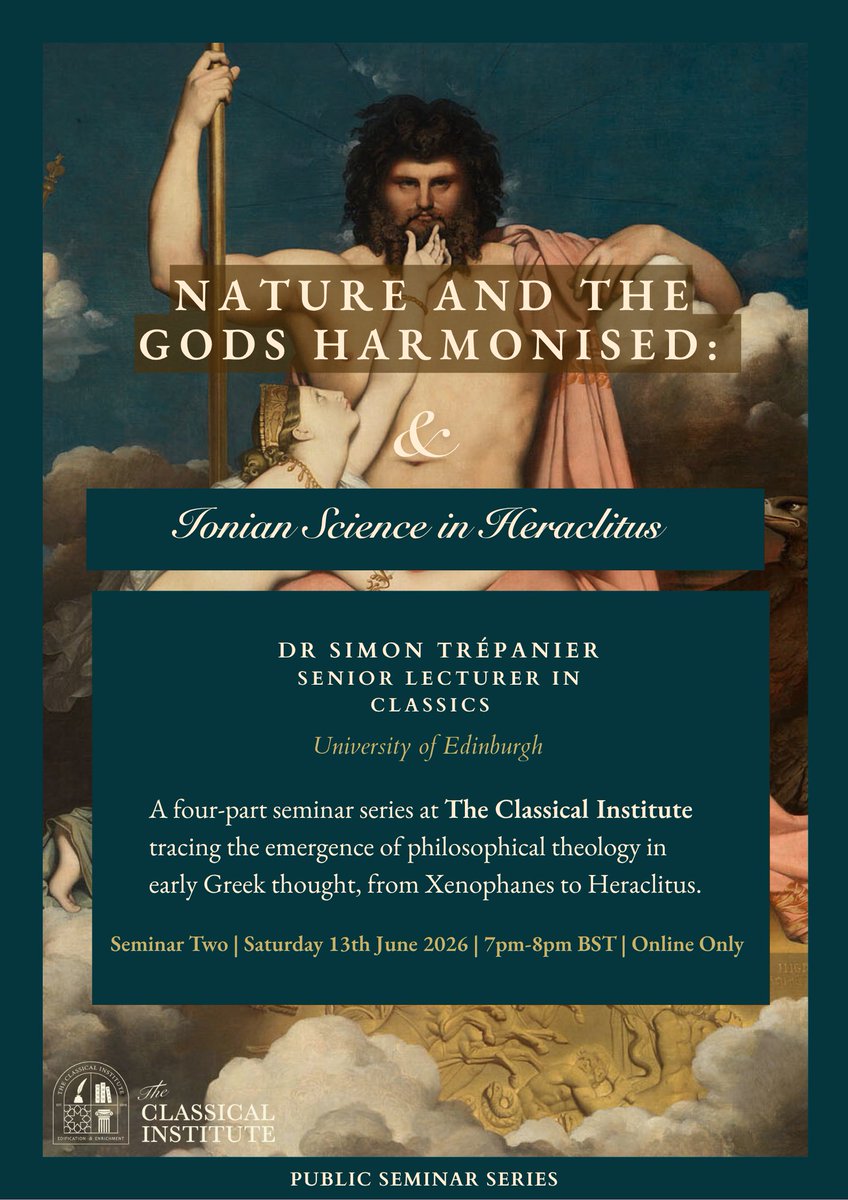
This Saturday, Professor Simon Trépanier (University of Edinburgh) continues his exploration of Heraclitus and the emergence of philosophical theology in the ancient world.
For those interested in Classics, philosophy, theology, and the history of ideas, this is an excellent opportunity to engage with one of the foremost contemporary scholars of early Greek thought.
✦ Saturday 13 June 2026 | 7:00-8:00pm (UK Time) | Online Only ✦
Enrolment remains open.
Further details and registration below.
🏛️The Classical Institute is pleased to announce the continuation of The Homeric Gods and Their First Philosophical Critics, the four-part seminar series led by Dr Simon Trépanier, Senior Lecturer in Classics at the University of Edinburgh.
The forthcoming seminar ✦ Nature and the Gods Harmonised: Ionian Science in Heraclitus ✦ turns to Heraclitus’ attempt to reconcile Ionian scientific inquiry with inherited Greek conceptions of the Divine, examining his critique of popular religion, cosmic order, and the emergence of philosophical theology in early Greece.
⟡ Seminar Two at The Classical Institute
⟡ Saturday 13 June 2026 | 7–8pm (UK Time)
⟡ Delivered Online Only
Further details and registration:
theclassicalinstitute.co.uk/…
#TheClassicalInstitute #Classics #AncientPhilosophy #GreekPhilosophy #ClassicalStudies #Heraclitus
49
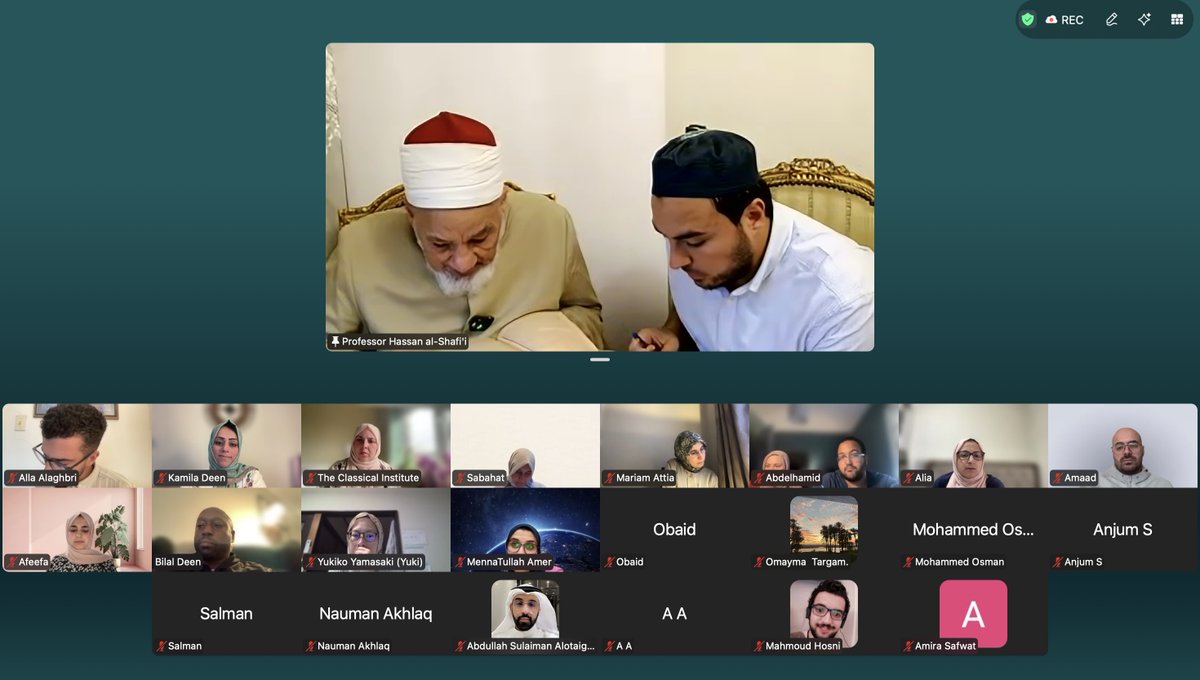
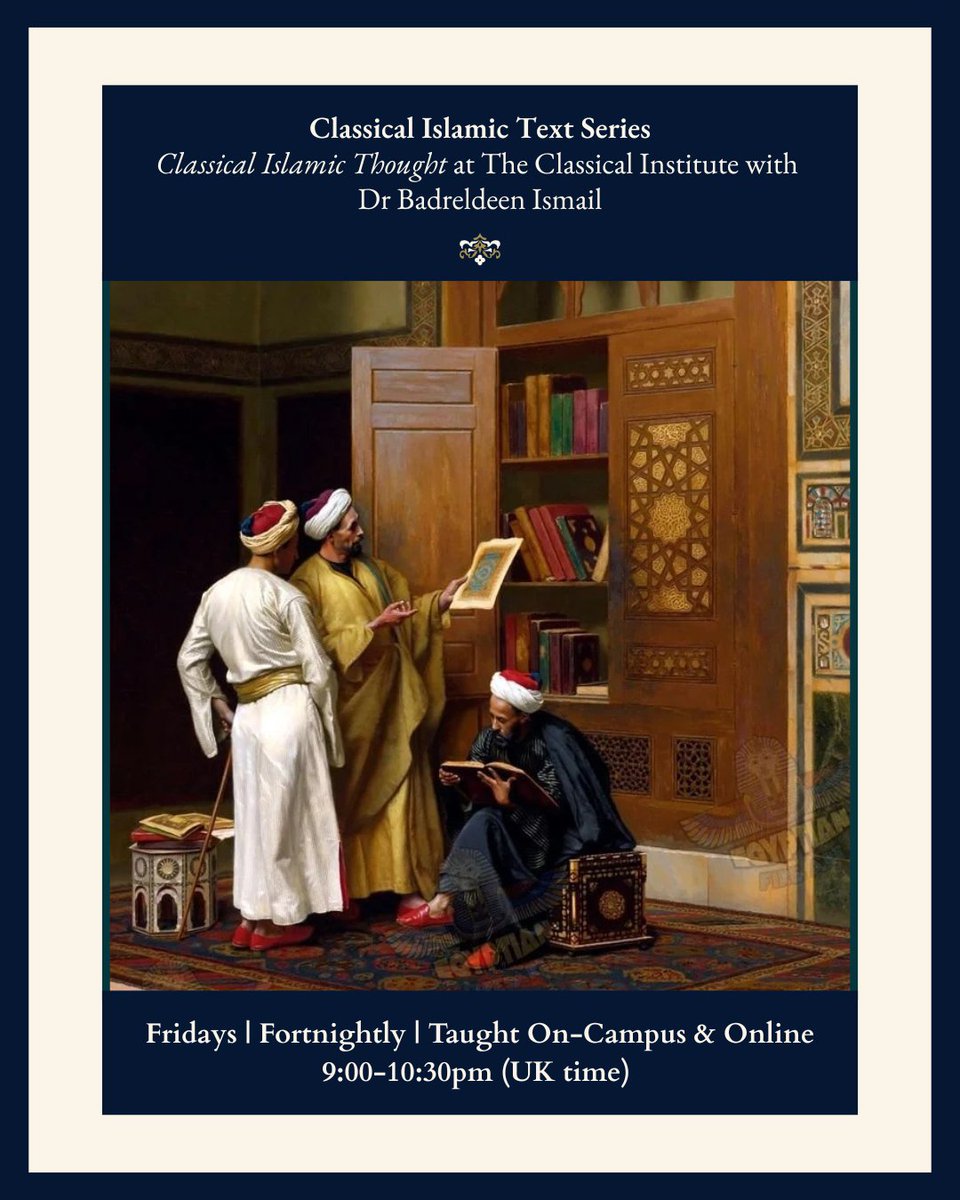
Live now at The Classical Institute ✦
Professor al-Shāfiʿī, one of the foremost scholars of his generation, teaching alongside his student, our Founding Dean, Dr Badreldeen Ismail whose scholarship, educational leadership, and vision have shaped the study of the classical traditions for a new generation of students and scholars.
Two generations ✦ One living tradition
There is something profoundly moving about witnessing knowledge transmitted through a living, breathing relationship between teacher and student, in this way. In an age increasingly shaped by information, often transmitted digitally through archives and recordings, moments such as these remind us that true knowledge and wisdom is still carried by people, inherited through close companionship and study, and in this way entrusted from generation to generation.
This evening's Advanced Islamic Philosophical Theology Masterclass continues that tradition.
#TheClassicalInstitute #LivingTradition #IslamicThought #IslamicTheology #ClassicalEducation #IntellectualHeritage #ScholarlyTradition #KnowledgeTransmission
71
✦ Socrates on Trial: How to Get Yourself Sentenced to Death ✦
Ahead of tomorrow evening's seminar, we are pleased to share the preparatory reading prepared by John Claughton @ClaughtonJohn. The reading introduces Plato's account of Socrates' defence before the Athenian court and offers a glimpse of the themes and questions that will shape our discussion.
The reading concludes with one simple question:
"In what way is Socrates' defence..."
Read the preparatory material and discover the question that has challenged readers for more than two millennia: theclassicalinstitute.co.uk/…
Enrolment remains open for tomorrow's seminar.
Sunday 7 June | 7:00pm–7:45pm BST
Taught Online Only
#TheClassicalInstitute #Classics #ClassicalEducation #Philosophy #Socrates #Plato #TheGreatBooks
42
How does one truly praise the Divine, when the very capacity for praise belongs to Him alone?
This is the question that animated our last session as we turned to the opening verses of al-Fātiḥa in Imām al-Qushayrī's Laṭāʾif al-Ishārāt.
Linguistically, ḥamd is praise by speech, the articulated acknowledgement of the maḥmūd, the one being praised. Yet the definite particle al tells us something far weightier still: it signals not merely a praise but the very genus of praise in its entirety, its essence and all its forms belonging to Him alone with no other entity able to lay claim to it.
It is precisely this that the Prophet Muhammad gives voice to in his supplication, 'I cannot praise You, for You are as You have praised Yourself' (Ṣaḥīḥ Muslim 486), orienting us towards the understanding that al-ḥamd is not the servant's possession to offer but rather the entrance, the door one stands before in acknowledgement of what remains perpetually beyond our knowing.
Al-ḥamd is universal in this sense, for the praise of the servant is time-bound and particular, whereas al-ḥamd belongs to the essence and is complete in itself. The Prophet Muhammad carries the banner of praise on the Day of Judgement, for he is Aḥmad before his form came into the world and Muḥammad as we know him within it, the leader of the journey of ḥamd, the most praising and the most praised.
It is also worth distinguishing ḥamd from shukr in this context. Whilst ḥamd is specific to praise through speech and expression, shukr is broader, encompassing gratitude of the heart, the limbs, and the tongue together, yet both find their origin and return in Him alone.
It is ḥamd, however, that the Qurʾān opens with, and when read alongside the Basmala that precedes it, the full picture emerges. Bismillāh is total inclusion, everything drawn into the Divine name in a state of annihilation where nothing remains except the Divine, whilst alḥamdulillāh is what follows as a settlement and an opening, everything existing not only within it but by it.
The servant who says alḥamdulillāh does not generate praise but carries, momentarily, what has always belonged to the One and returns it to its source.
We are grateful to our Founding Dean, Dr Badreldeen Ismail, for guiding us through this rich text. In a world increasingly occupied by the immediate and the transient, students continue to gather in serious study, engaging a tradition that encourages careful thought and deeper understanding.
⟡ Classical Islamic Thought ⟡ Part of The Classical Institute's Classical Text Series ⟡
64
From Socrates and Greek Tragedy to Rumi, Hadith, and Advanced Philosophical Theology, June brings together an exceptional programme of study at The Classical Institute
This month's line-up includes Professor Hasan al-Shafi'i, Professor Anthony O'Hear, Dr Simon Trépanier, Dr Colin Turner, John Claughton, Dr Maan al-Dabbagh, and our Founding Dean Dr Badreldeen Ismail.
✦ View the full June 2026 schedule ✦
theclassicalinstitute.co.uk/…
#ClassicalEducation #Philosophy #Theology #Literature #TheClassicalInstitute
1
58
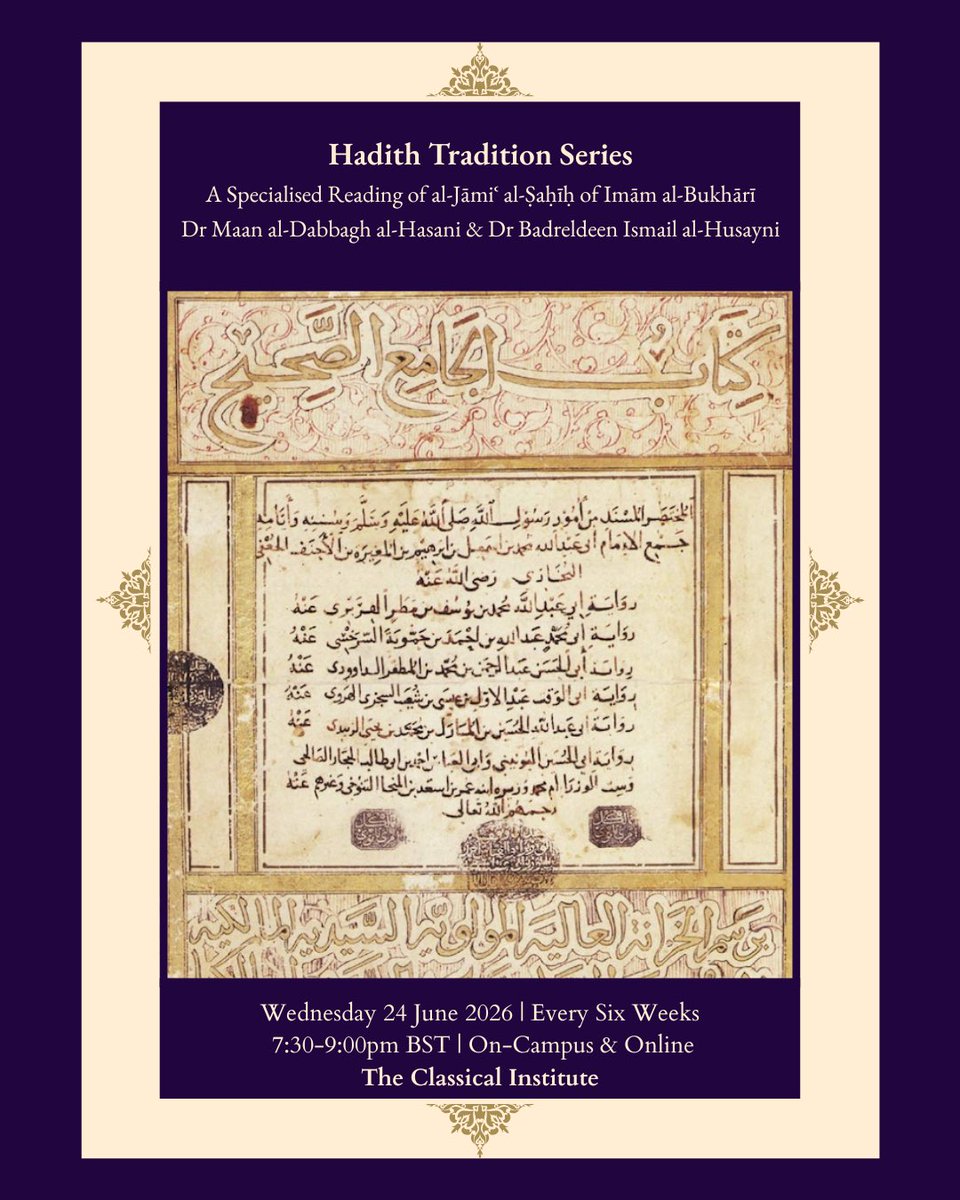
The Classical Institute is pleased to announce the return of the Hadith Tradition Series.
Led by Dr Maan al-Dabbagh and Dr Badreldeen Ismail, the series offers a sustained reading of al-Jāmiʿ al-Ṣaḥīḥ of Imām al-Bukhārī, one of the most influential works in the Islamic intellectual tradition.
Wednesday 24 June 2026 ✦ Every Six Weeks 7:30-9:00pm BST ✦ On-Campus & Online
Registration now open:
theclassicalinstitute.co.uk/…
#HadithStudies #SahihBukhari #IslamicStudies #ClassicalEducation
49
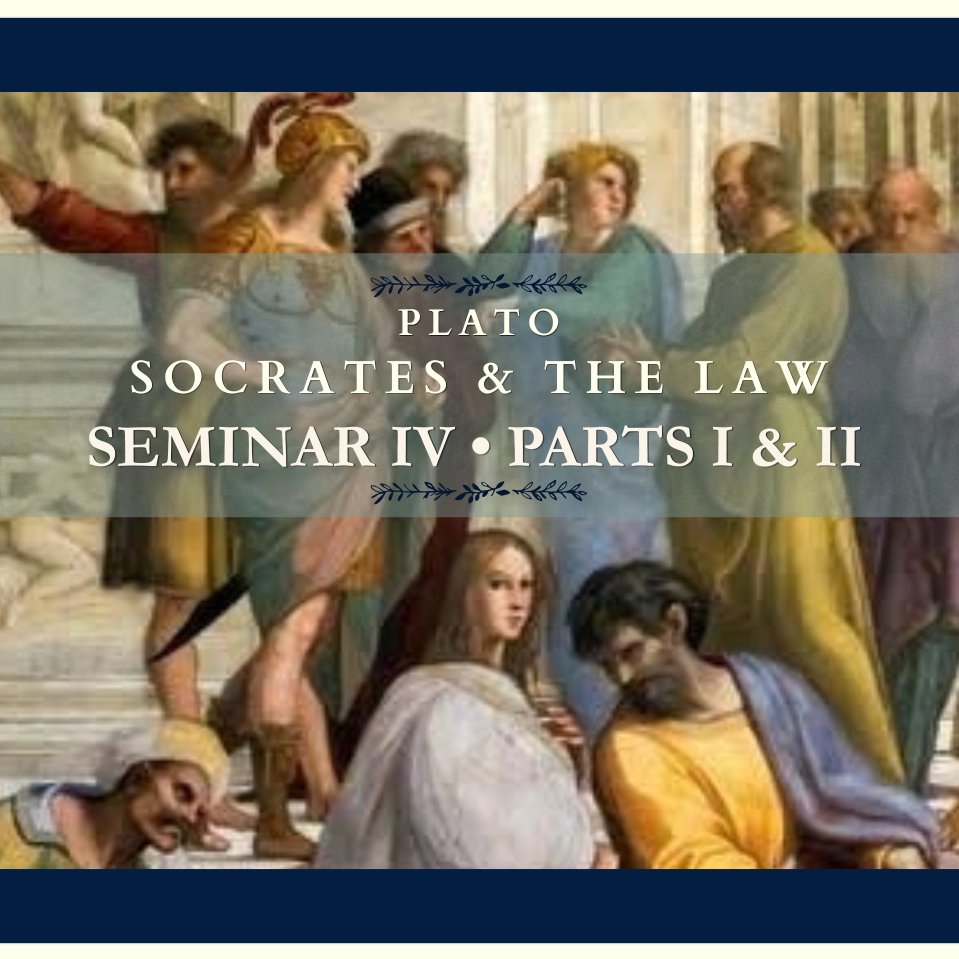
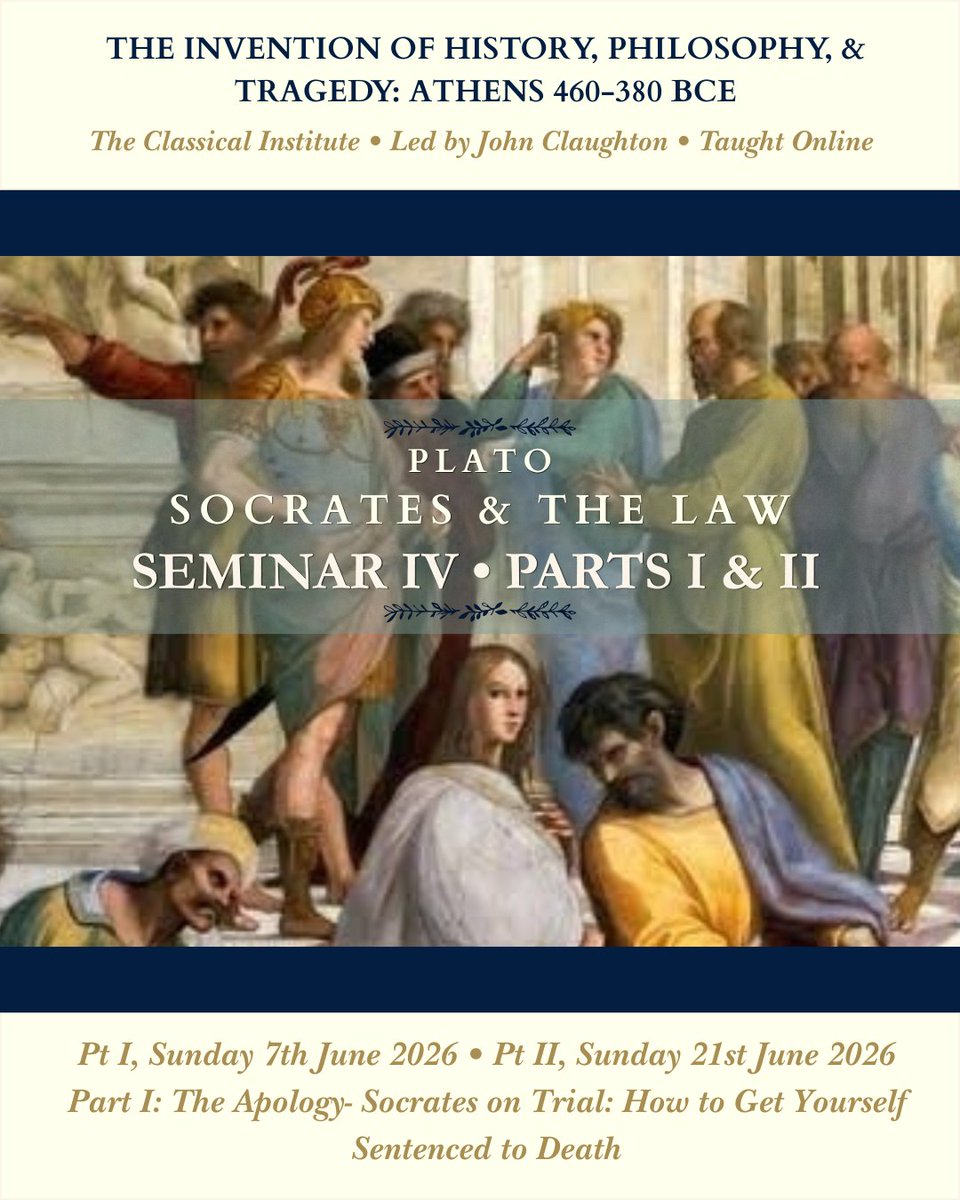
The final instalment of The Classical Seminar Series, The Invention of History, Philosophy, and Tragedy: Athens 460-380 BCE, led by John Claughton, turns to one of the most influential figures in intellectual history: Socrates ✦
Through Plato's Apology and Crito, participants will explore the trial, imprisonment, and death of Socrates, engaging with questions that continue to shape legal, political, and philosophical discourse today.
Part I ✦ The Apology: Socrates on Trial: how to get yourself sentenced to death.
Sunday 7 June 2026, 7:00pm-7:45pm (UK Time) | Enrolment Now Open | Online Only
Part II ✦ The Great Escape- or not: Socrates defends his decision to face the death penalty for which his fellow citizens voted.
Sunday 21 June 2026, 7:00pm-7:45pm (UK Time) | Enrolment Now Open | Online Only
Led by John Claughton @ClaughtonJohn, former Chief Master of King Edward's School and a distinguished classicist.
Registration now open:
theclassicalinstitute.co.uk/…
#Classics #AncientGreece #Plato #Socrates #Philosophy #Humanities #HigherEducation #TheClassicalInstitute
1
53
What an incredible second session of God, Space, and Body with Professor Jon Hoover @jhoover04.
A truly rich, insightful, and fruitful discussion. Our sincere thanks to Professor Hoover for another outstanding seminar, and to all the participants for their excellent questions and engagement throughout.
Thank you everyone. We look forward to welcoming you to the next session. 🏛️🕊️
#ClassicalEducation #HigherEducation
#IntellectualTradition #PublicScholarship
#TheClassicalInstitute
59