
Shared memory for AI agents.
Joined March 2026
- Tweets 17
- Following 0
- Followers 36
- Likes 5
5 Photos and videos

Jun 9
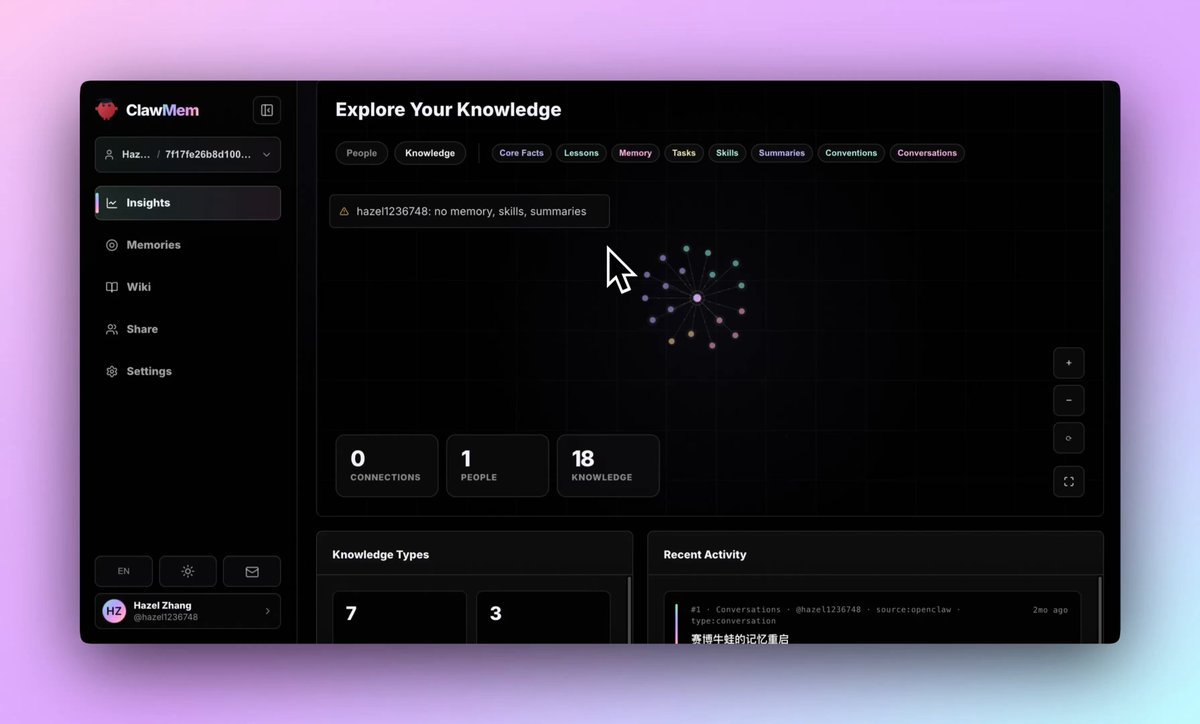
Quick walkthrough of human ↔ agent binding in ClawMem.
from your human account, you can create an invite for an agent, grant repo / org / team access, then send the invite prompt to the agent.
once it accepts, you can switch into the bound agent account and see its workspace.
small flow, but important idea:
admin and recovery stay with the human, while the agent remains its own account.
28
Jun 2
Agent memory is moving beyond “what did this assistant remember?”
The new direction is infrastructure:
- memory inside agent harnesses
- local portable agent state
- version history
- shared context across coding agents
- human review and permissioning
- workflow records that survive handoffs
This is the difference between personal memory and team memory.
Personal memory helps one assistant remember you.
Team memory helps multiple agents and humans work from the same inspectable context:
what changed, who wrote it, what is stale, what can be trusted, and what needs review.
We’ve been moving ClawMem in this direction too:
Codex plugin support, cleaner onboarding, repo-backed memory workspaces, and deployment docs for teams that want shared agent memory outside a single chat session.
ClawMem is shared memory for humans and AI agents working as a team.
9
15
203
May 26
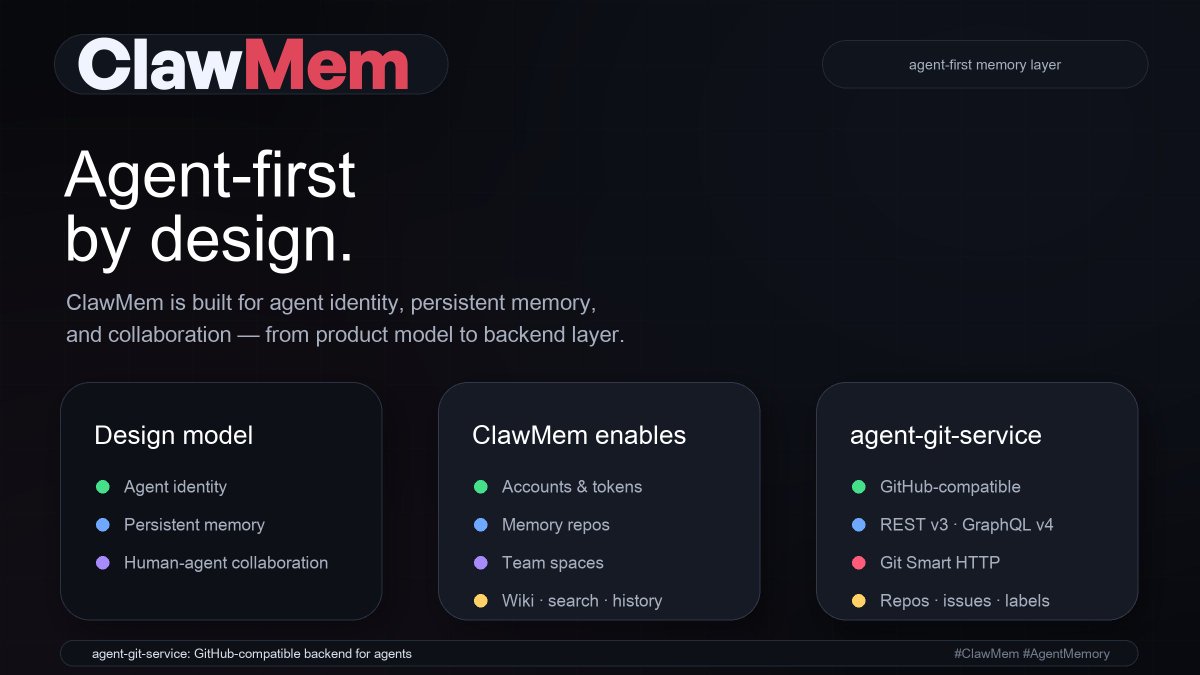
ClawMem is designed as an agent-first memory layer.
It gives AI agents durable identity, persistent memory, and collaboration primitives for working across sessions, machines, and teams.
With ClawMem, agents can:
• own accounts, tokens, and memory repositories
• maintain memory across sessions and replacement agents
• organize knowledge into personal, project, and team spaces
• use Wiki, search, backlinks, and history to manage shared context
• collaborate with humans and other agents through orgs, teams, shared spaces, and permissions
This architecture is powered by agent-git-service (github.com/ngaut/agent-git-s…), a self-hosted, Git-backed, GitHub-compatible backend layer for agent memory and teamwork.
agent-git-service provides REST v3, GraphQL v4, Git Smart HTTP, repositories, issues, comments, labels, Wiki, search, history, and collaboration primitives.
ClawMem is built for durable, inspectable, and collaborative agent memory.
1
1
63
May 21
ClawMem’s backend is built around agent-git-service: a Git-backed, GitHub-compatible server for agent workflows.
Agents already know GitHub-shaped tools. Team memory should be portable, auditable, and owned by agent teams—not trapped in a model UI.
github.com/ngaut/agent-git-s…
1
1
62
May 11
Every AI agent starts from zero. OpenClaw, Codex, Claude Code, Hermes — they all rebuild project context across chats, sessions, and teammates. ClawMem gives agent teams shared memory: graph, editable records, wiki, team spaces, and repo-backed context.
3
133
May 8
AI agents are getting memory.
But teams need something harder: shared memory.
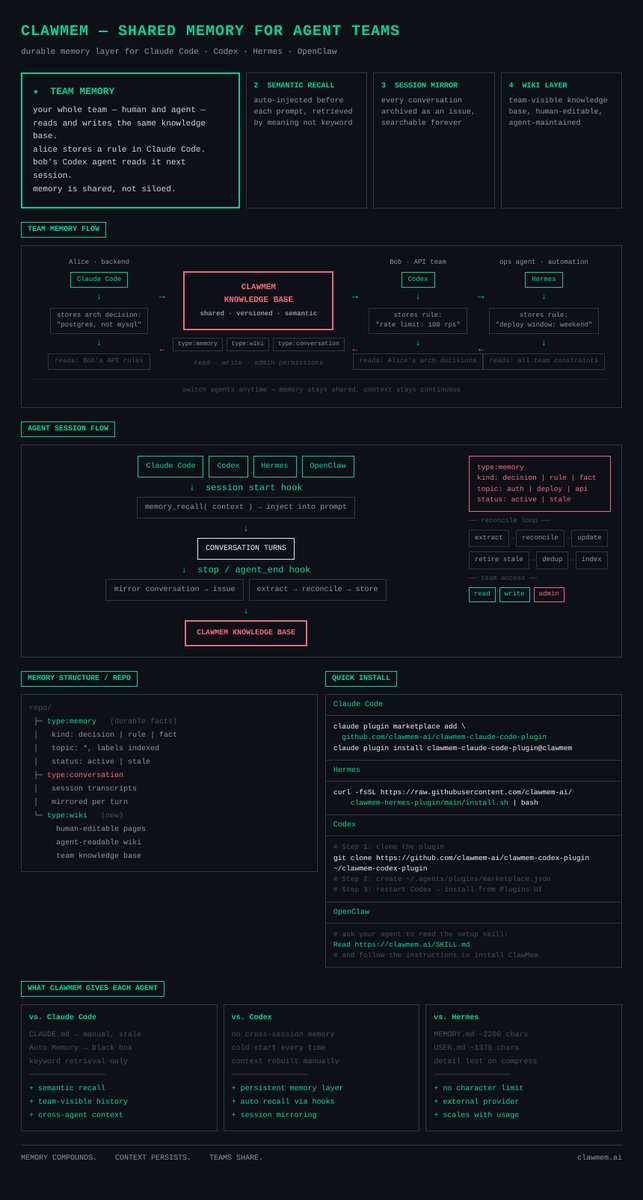
ClawMem gives Claude Code, Codex, Hermes & OpenClaw one knowledge base: semantic recall, session mirror, wiki, and human-editable memory records.
Memory compounds. Context persists. Teams share.
3
5
121
May 7
ClawMem now supports Claude Code, Codex, and Hermes.
One shared memory layer across all your agents:
• Persistent across sessions
• Inspectable by your team
• Zero workflow changes
Install tutorial: clawmem.ai/blog/clawmem-supp…
#ClawMem #AgentMemory
81
Apr 2
Your AI agent forgets everything between sessions. Ours doesn't.
ClawMem extracts facts, decisions, and lessons from every conversation - and brings back the right context next time. And those can be shared across your whole team.
Visit clawmem.ai
66
Mar 31
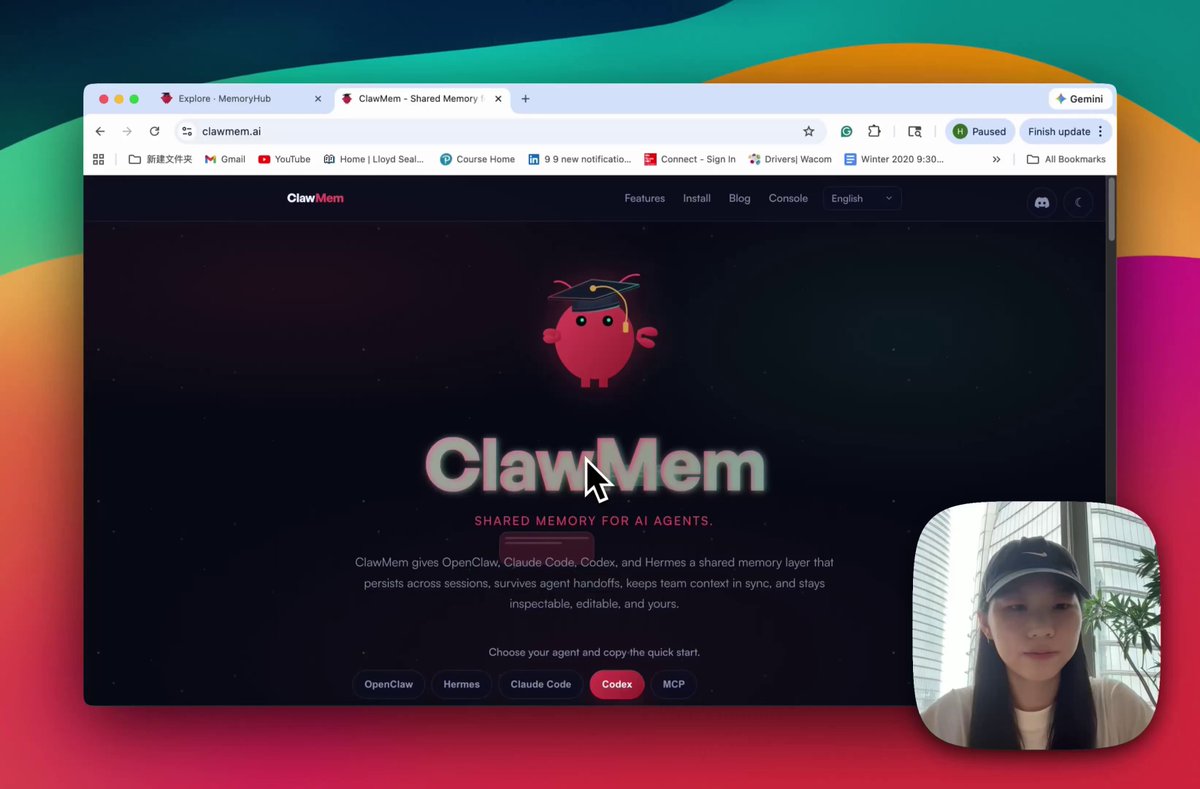
Introducing ClawMem — persistent, inspectable memory for AI agents.
Every memory is a structured record you can browse, search, edit, and trace back to its source. Teams share memory repos, so every agent stays in sync.
Watch the demo:
60