Literature Teacher sharing info/news on Rapid Extinction & Earth Systems Collapse. Urging radical, systemic, political-economic change to try to limit the doom.
Remember:
1. The oceans are being killed.
2. Forests will soon be gone.
3. Fertile soil is disappearing.
4. Megafauna risk extermination.
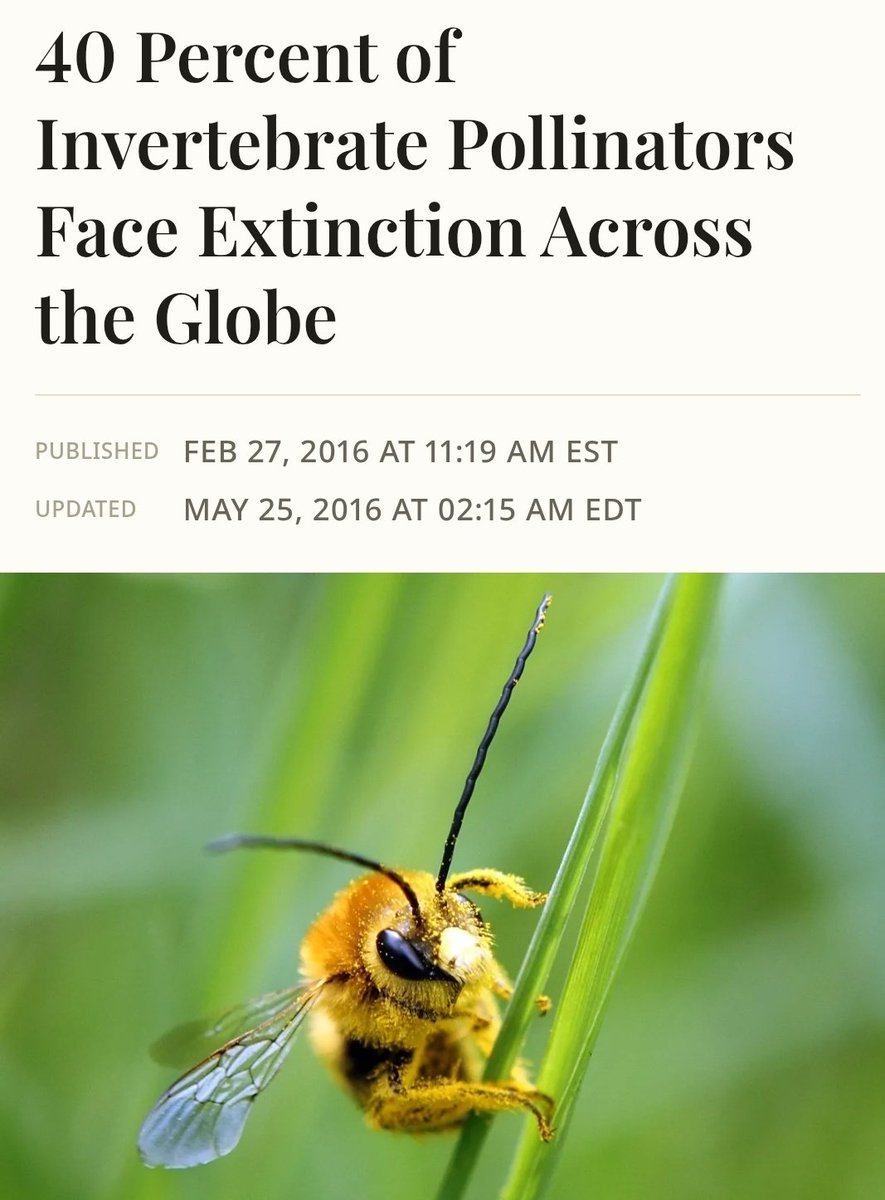
5. Insects are vanishing.
6. Climate chaos is inevitable.
7. Extinction is now.
8. Plastic is in our blood.
None of this is front page news.
2026-27: warming of 1.6-1.8°C and rising; severe forest degradation and fragmentation; emissions and toxic pollution at extreme record levels; illegal wars and genocides ongoing
BREAKING*: elite climate scientists ignore rapid minor extinction driven by economic growth as they deny extreme conditions threatening human survival may hit by the 2030s-2060s
2024: peer-reviewed work showing best-case decarbonization scenarios won't avoid dire 2°C ignored by media
2026: best-case scenario ditched (now implausible); 2°C by 2030s likely
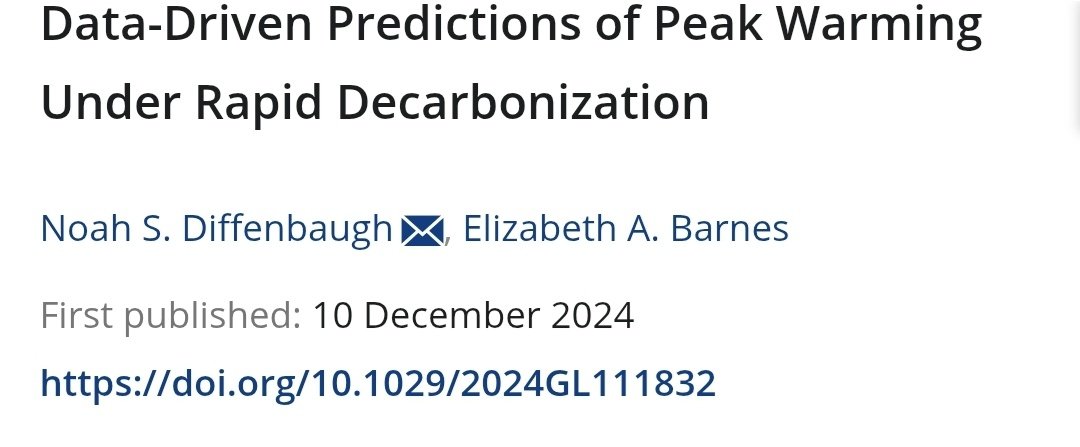
ALT Data-Driven Predictions of Peak Warming Under Rapid Decarbonization
Noah S. Diffenbaugh, Elizabeth A. Barnes
First published: 10 December 2024
https://doi.org/10.1029/2024GL111832
Link to paper, no explanation:
'Terrestrial water storage has declined by trillions of metric tonnes since the early 21st century, ...
With the planet expected to continue warming, researchers warn that this trend is unlikely to reverse any time soon.'
weforum.org/stories/2025/04/…
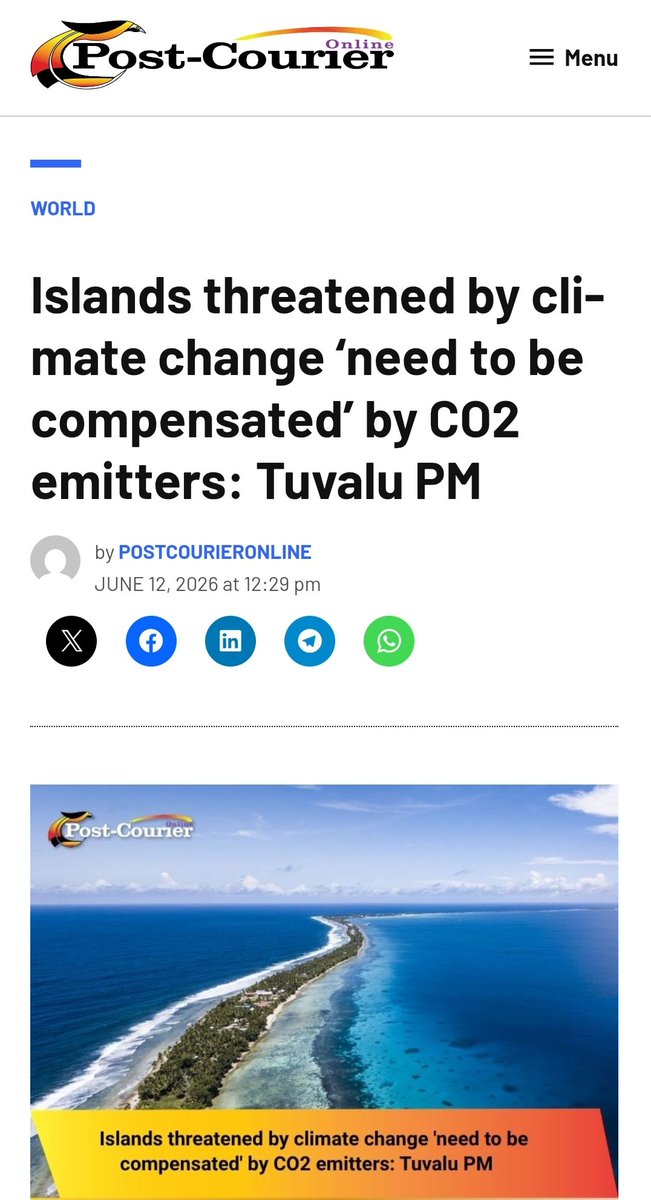
Restore ecosystems? Transform the global food system away from today's industrial agriculture by 2035? Cut emissions immediately by 5-10% per year? Obviously impossible without economic system change.
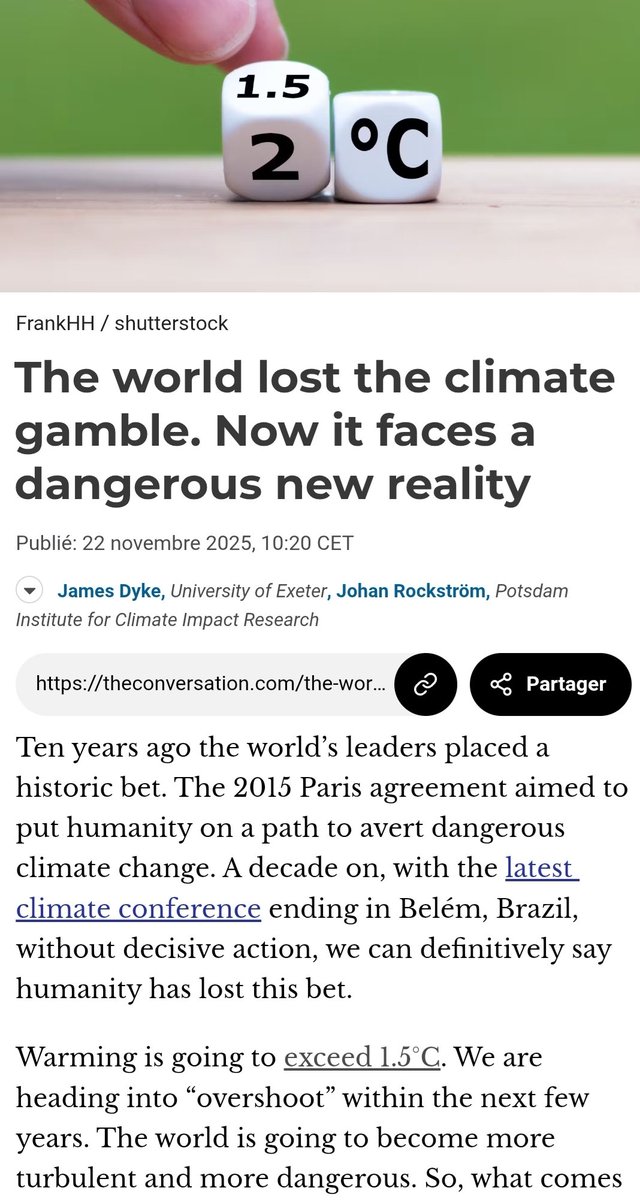
ALT The world lost the climate gamble. Now it faces a dangerous new reality
Publié: 22 novembre 2025, 10:20 CET
https://theconversation.com/the-world-lost-the-climate-gamble-now-it-faces-a-dangerous-new-reality-270392
Lien copié
Partager
Ten years ago the world’s leaders placed a historic bet. The 2015 Paris agreement aimed to put humanity on a path to avert dangerous climate change. A decade on, with the latest climate conference ending in Belém, Brazil, without decisive action, we can definitively say humanity has lost this bet.
Warming is going to exceed 1.5°C. We are heading into “overshoot” within the next few years. The world is going to become more turbulent and more dangerous
Don't disrupt the Extinction Economy.. Despite their own results implying a likely range of 2.6-4.1°C or 2.3-4.5°C for ECS, elite scientists cut the likely range to 2.5-4°C. The best scientists? They warn of 3.5-5.5°C.
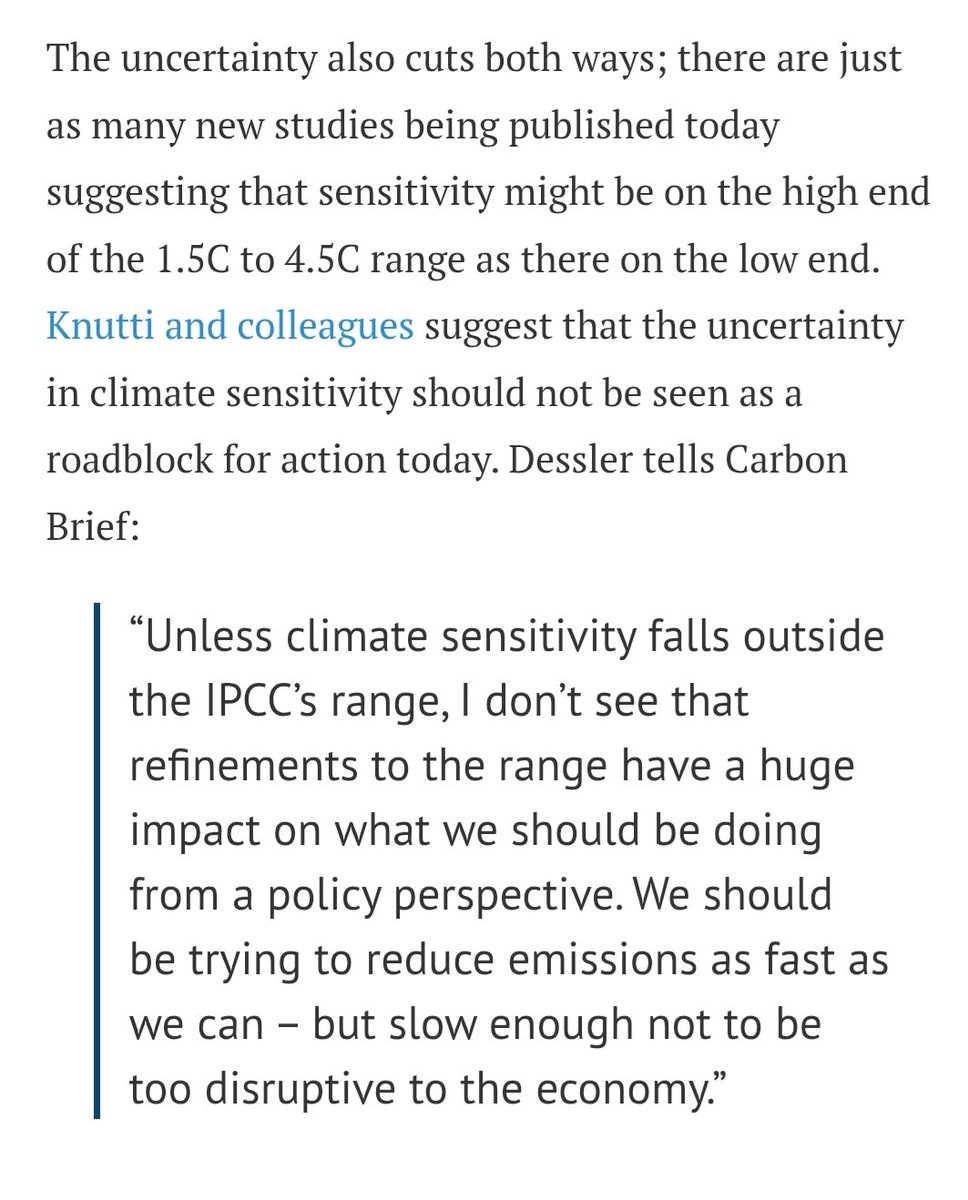
It made no sense in terms of risk (or scientifically speaking?) for elite IPCC scientists in 2020-21 to suddenly exclude 4.1-4.5°C from the likely range of Earth's Climate Sensitivity. A scientist at the heart of the decision-making process wrote this in 2018:
ALT The uncertainty also cuts both ways; there are just as many new studies being published today suggesting that sensitivity might be on the high end of the 1.5C to 4.5C range as there on the low end. Knutti and colleagues suggest that the uncertainty in climate sensitivity should not be seen as a roadblock for action today. Dessler tells Carbon Brief:
“Unless climate sensitivity falls outside the IPCC’s range, I don’t see that refinements to the range have a huge impact on what we should be doing from a policy perspective. We should be trying to reduce emissions as fast as we can – but slow enough not to be too disruptive to the economy.”
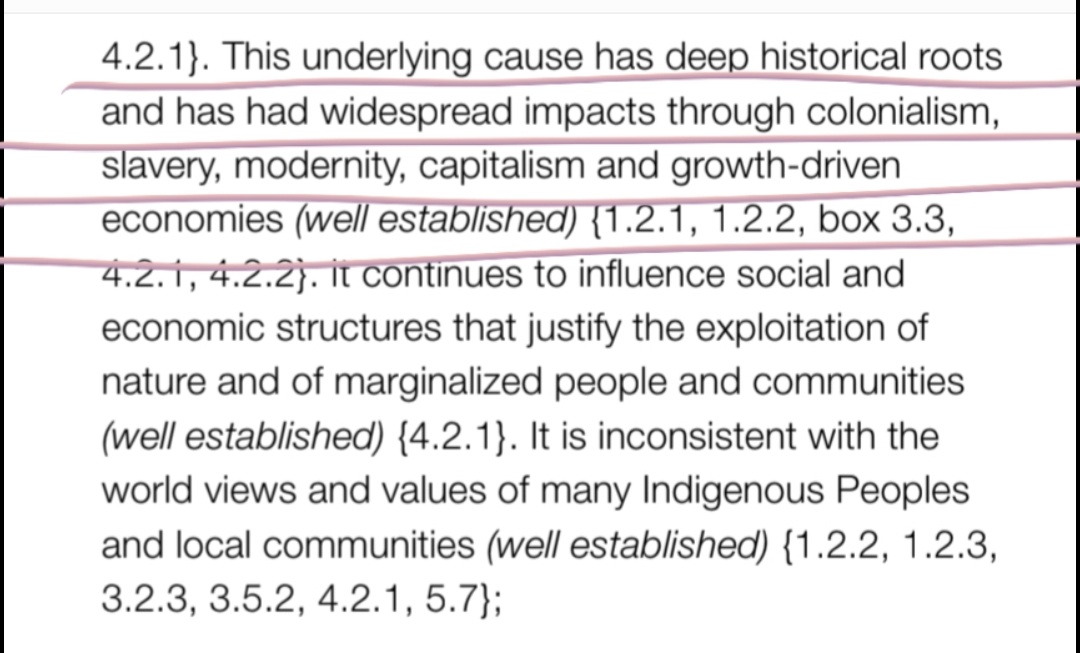
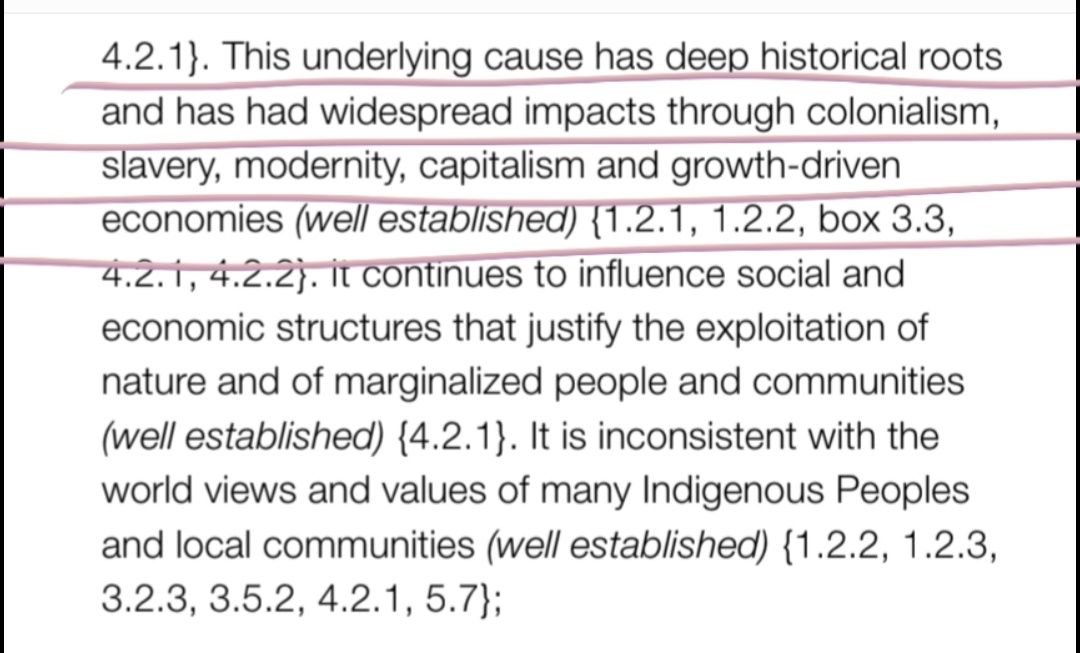
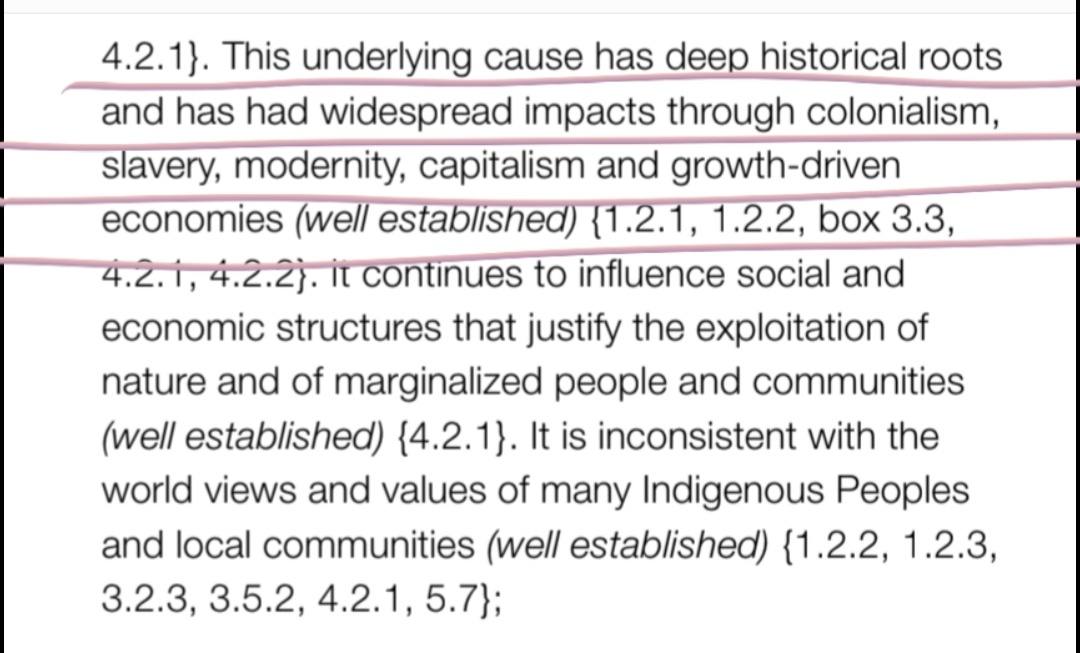
The scientific consensus: the first underlying cause of biodiversity destruction is the domination of and disconnection from nature and people through colonialism, slavery, modernity, capitalism, and growth-driven economies.
(IPBES 2019, 2024)
The scientific consensus: the first underlying cause of biodiversity destruction is the domination of and disconnection from nature and people through colonialism, slavery, modernity, capitalism, and growth-driven economies.
(IPBES 2019, 2024)
Thematic Assessment Report on the Underlying Causes of Biodiversity Loss and the Determinants of Transformative Change and Options for Achieving the 2050 Vision for Biodiversity
ipbes.net/transformative-cha…
IPCC scientists have known all along Earth's Climate Sensitivity could be 4.0-5.5°C. The public must know: deadly conditions that can kill billions are likely by the 2030s-50s.
A massive multi-year project combined independent lines of evidence from physical processes, historical temperatures, and paleoclimate data. If just one of the three lines of evidence is completely excluded, the range expands from 2.6-4.1C, to 2.3C to 4.5C.carbonbrief.org/explainer-ho…
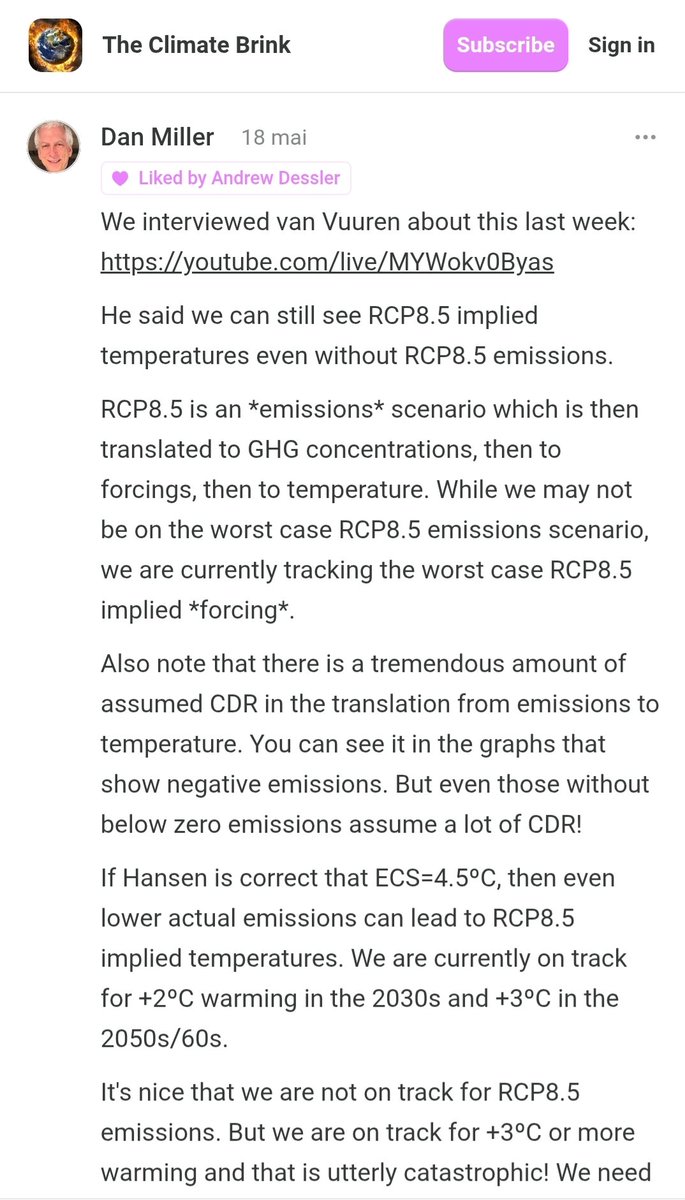
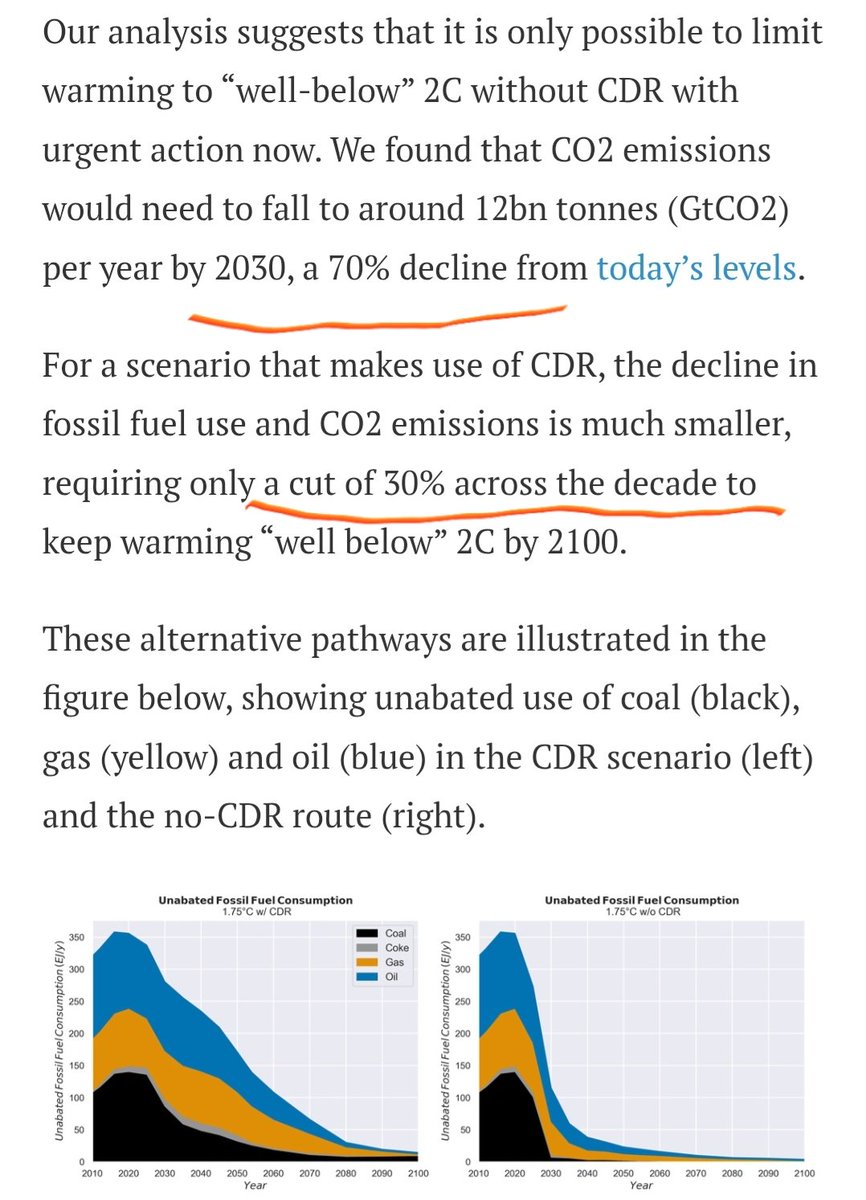
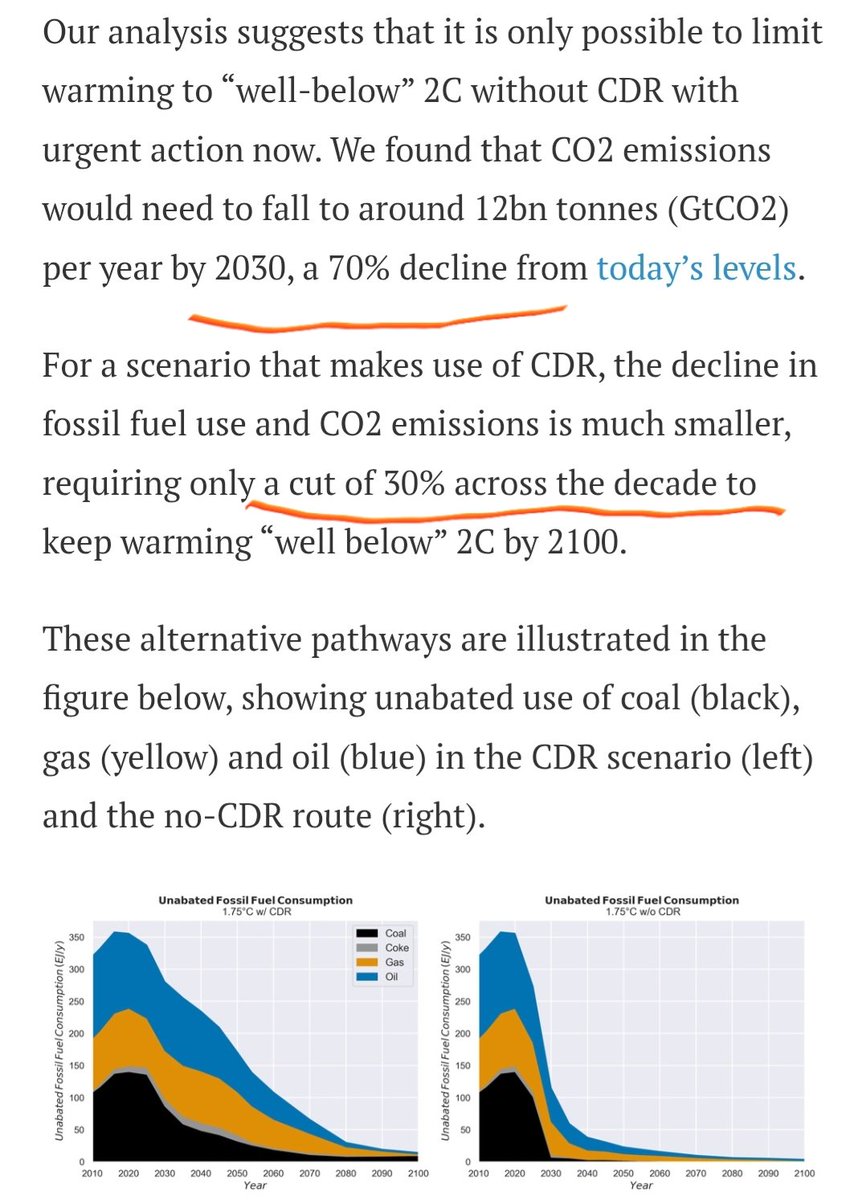
One of the most important climate discussions: We can no longer meet 2ºC targets without massive amounts of carbon removal (CDR). Those that think CDR is a "moral hazard" are wrong. It's a moral hazard not to do CDR since that guarantees going over 2ºC!
youtube.com/live/MYWokv0Byas…
Just a few years ago, elite scientists were adamant that dire warming of 1.75-2°C by 2100 could be avoided. They now indicate we face 1.75-2°C and rising in a decade or so.
IPCC scientists have known all along Earth's Climate Sensitivity could be 4.0-5.5°C. The public must know: deadly conditions that can kill billions are likely by the 2030s-50s.
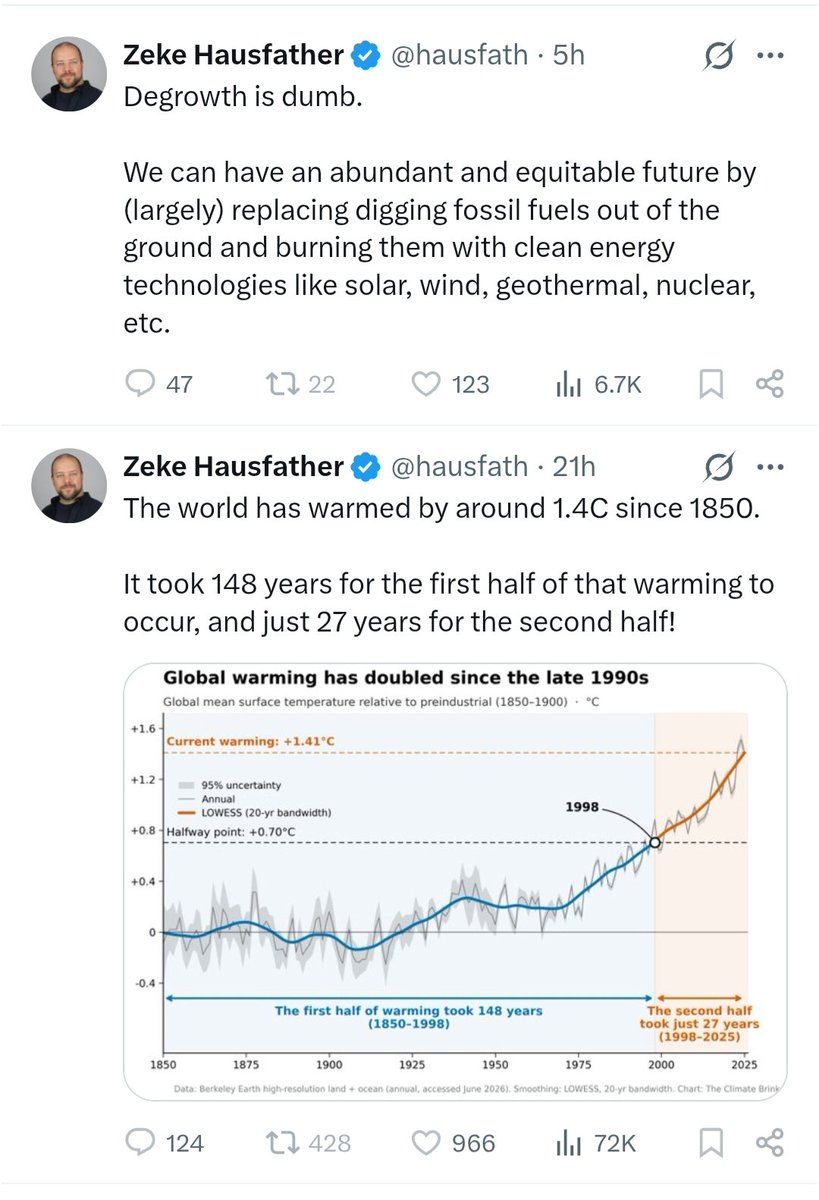
1.4°C according to IPCC scientists.
In reality, we're already hitting 1.5-1.6°C or more, see James Hansen, etc.
('Degrowth is dumb'? That's some nasty Extinction Denial, I'm afraid.)
RAPID MINOR MASS EXTINCTION: the scientific consensus (IPBES 2019, 2024) is that the first underlying cause of biodiversity destruction is the domination of and disconnection from nature and people through colonialism, slavery, modernity, capitalism, and growth-driven economies
BECAUSE OF capitalist/growth-driven economics, extreme conditions on Earth said by scientists to be potentially too dire for humanity to survive are likely by the 2040s-50s (give or take a decade).
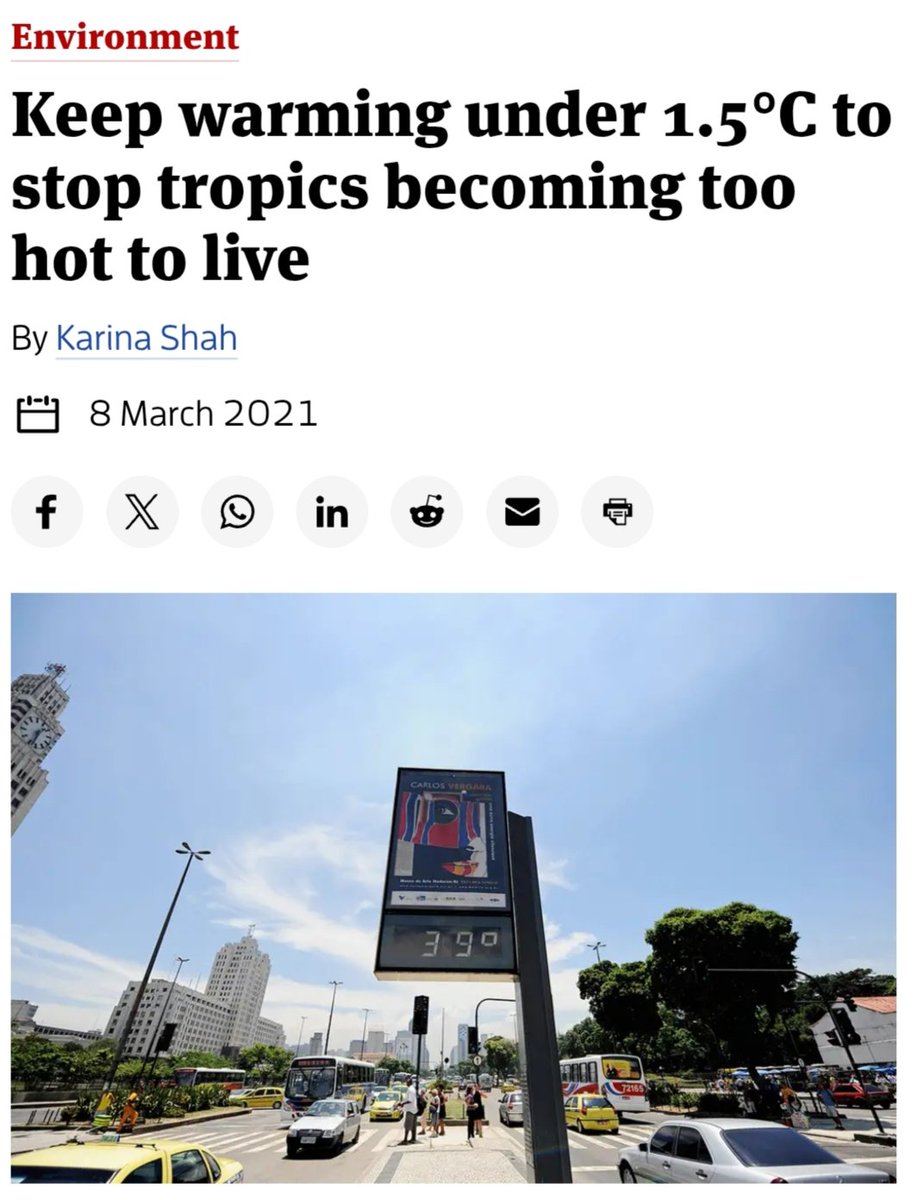
BREAKING: scientists are warning that we'll get a taste of what catastrophic 2°C of global warming does to Earth's climate system not by 2100.. but by winter 2026-27
2. an irreversible threat to the persistence of civilization and the livability of future environments for H. sapiens.. the next two decades will very likely define the future of biodiversity and H. sapiens'
pnas.org/doi/10.1073/pnas.23…
RAPID MINOR MASS EXTINCTION: the scientific consensus (IPBES 2019, 2024) is that the first underlying cause of biodiversity destruction is the domination of and disconnection from nature and people through colonialism, slavery, modernity, capitalism, and growth-driven economies