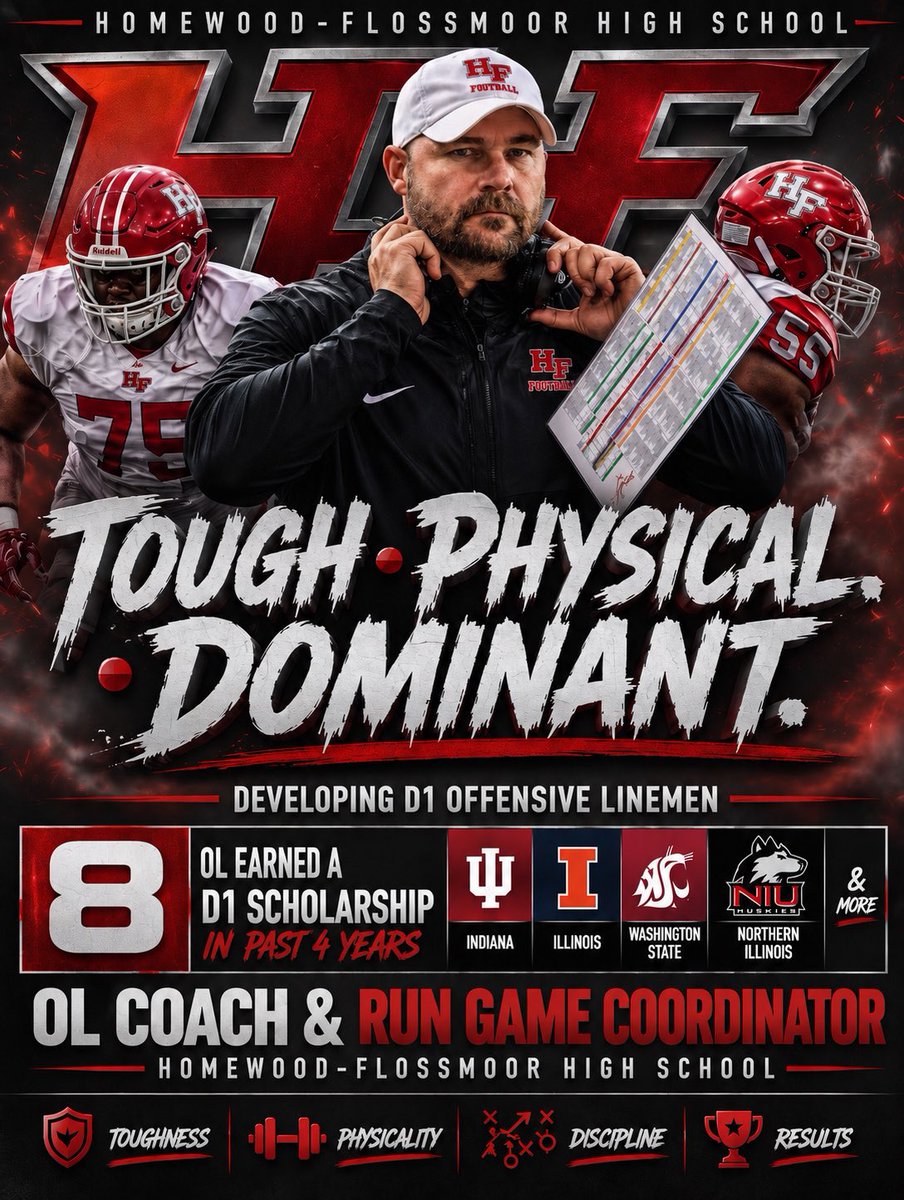
Varsity OL Coach/Run Game Coordinator Homewood-Flossmoor l Schaumburg High School Head Water Polo Coach
Joined June 2012
- Tweets 3,313
- Following 1,836
- Followers 1,191
- Likes 7,769
228 Photos and videos



Tyler Clark retweeted

Jun 13
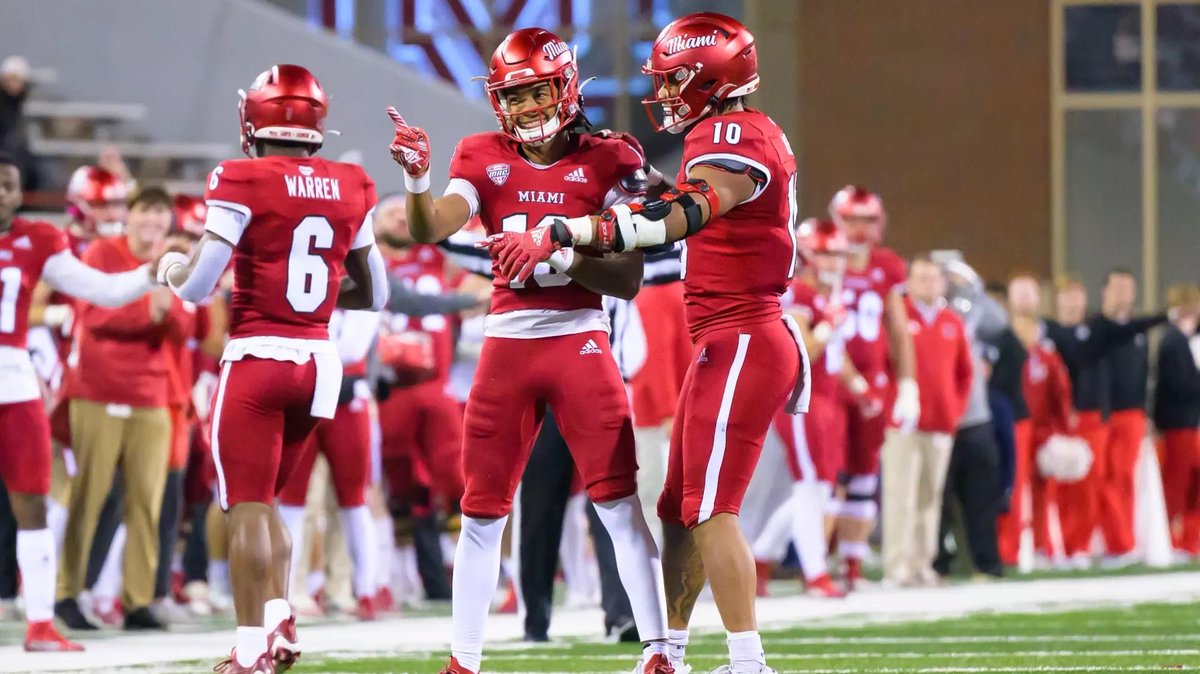
After an amazing camp and coaching from @DBCoachWhite and @CoachZaneRies at @MiamiOHFootball, I am extremely grateful and appreciative to announce I have received my second D1 offer from the Miami University Ohio!!
@miamiuniversity @Martin_Miami_HC @HFHSAthletics @HFVikingFTBL

2
13
34
2,036
Tyler Clark retweeted
Jun 9
I’m extremely grateful and exited to announce I’ve received my first D1 offer from the University of North Dakota @UND_hawksnation It was great talking to the staff at the Northwestern camp and excited for the future
@CoachWilk0 @UNDfootball @On3 @PrepRedzoneIL @CoachWilkHF
10
26
101
8,479
Tyler Clark retweeted

Jun 3
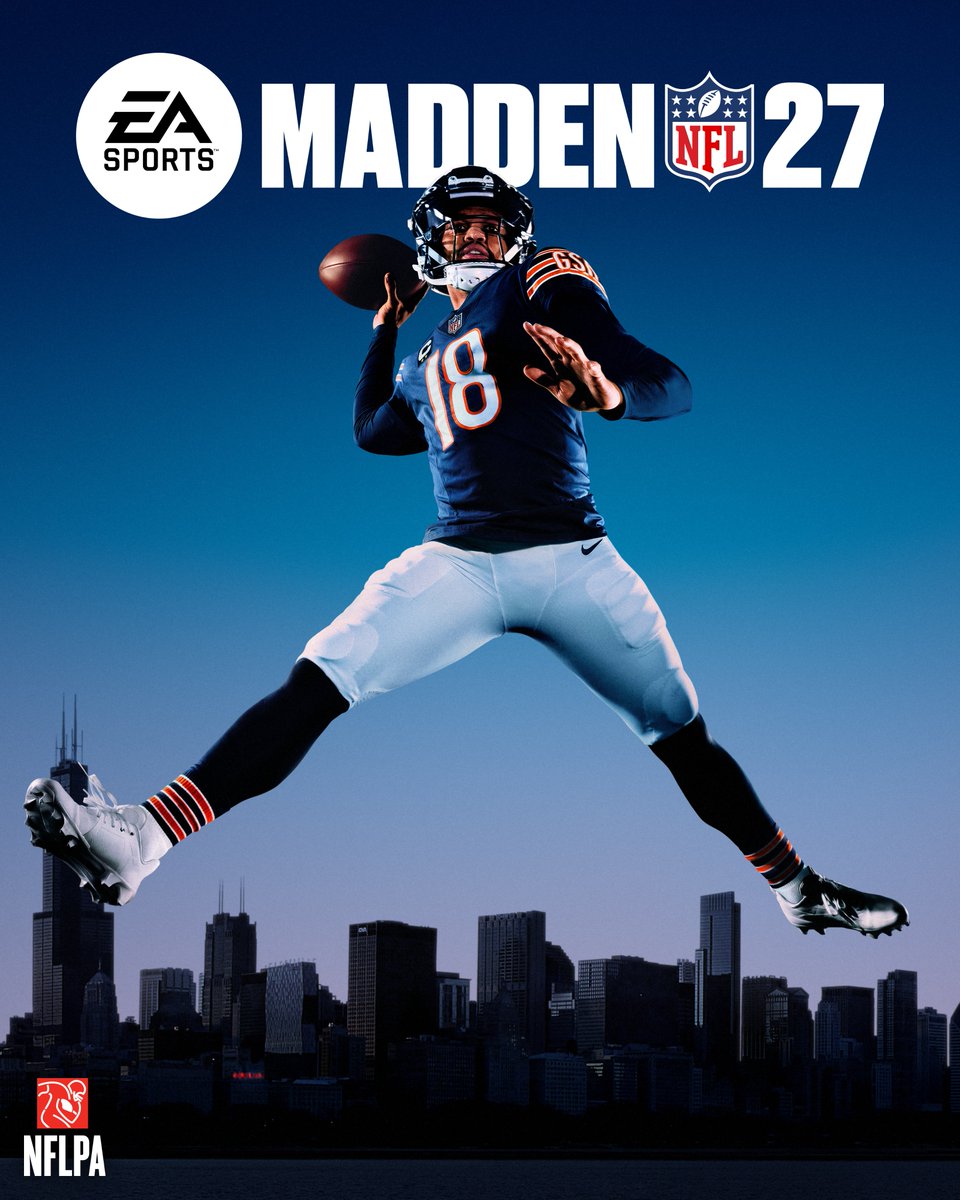
He's in the game 🎮

598
6,070
33,330
1,172,605
Tyler Clark retweeted

Jun 2
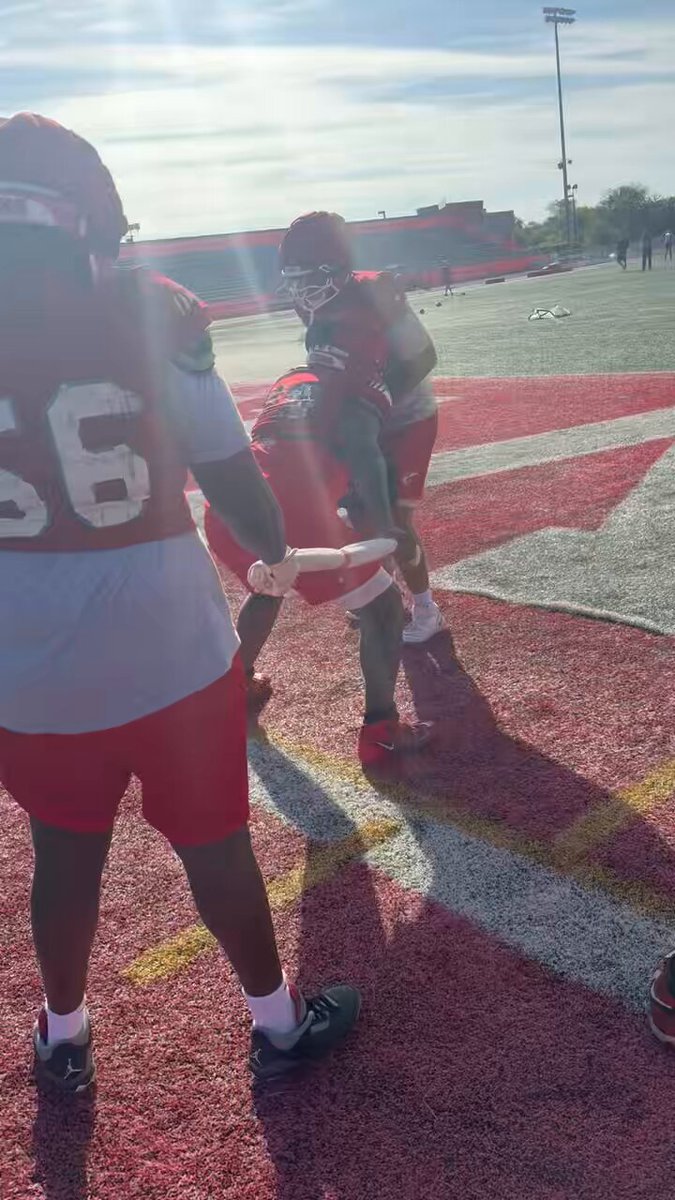
Yes, We also did our Sprints before lifting!
Sprints and 2 sets of Wickets and acceleration work. About 200yd of max effort (high speed distance)
2
5
48
5,446
Tyler Clark retweeted

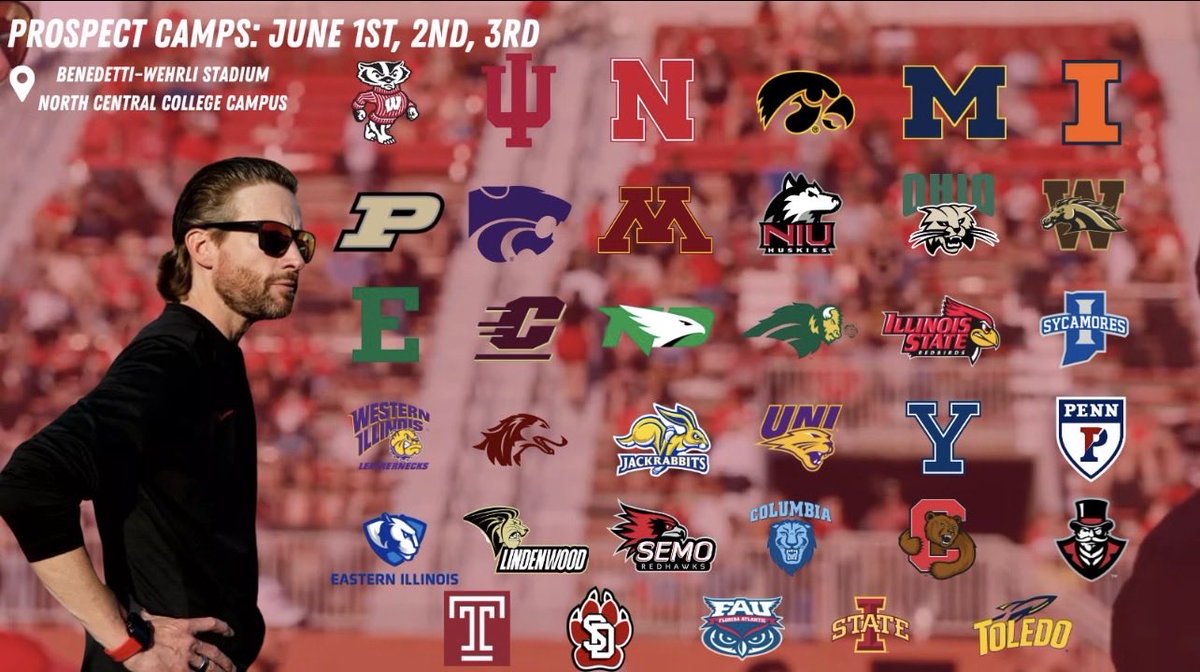
In just 2 days, I will be competing at the Naperville Championship camp.
I will be at the 1st session on June 1st, working at Safety — ready to compete, learn, and get better.
Looking forward to performing in front of coaches and continuing to develop.
@HFVikingFTBL @tjmcallister07 @LeeAnnHerringOM @EDGYTIM
#RecruitMe #DB #OLB #Football #readytowork
5
9
979
Tyler Clark retweeted

May 28
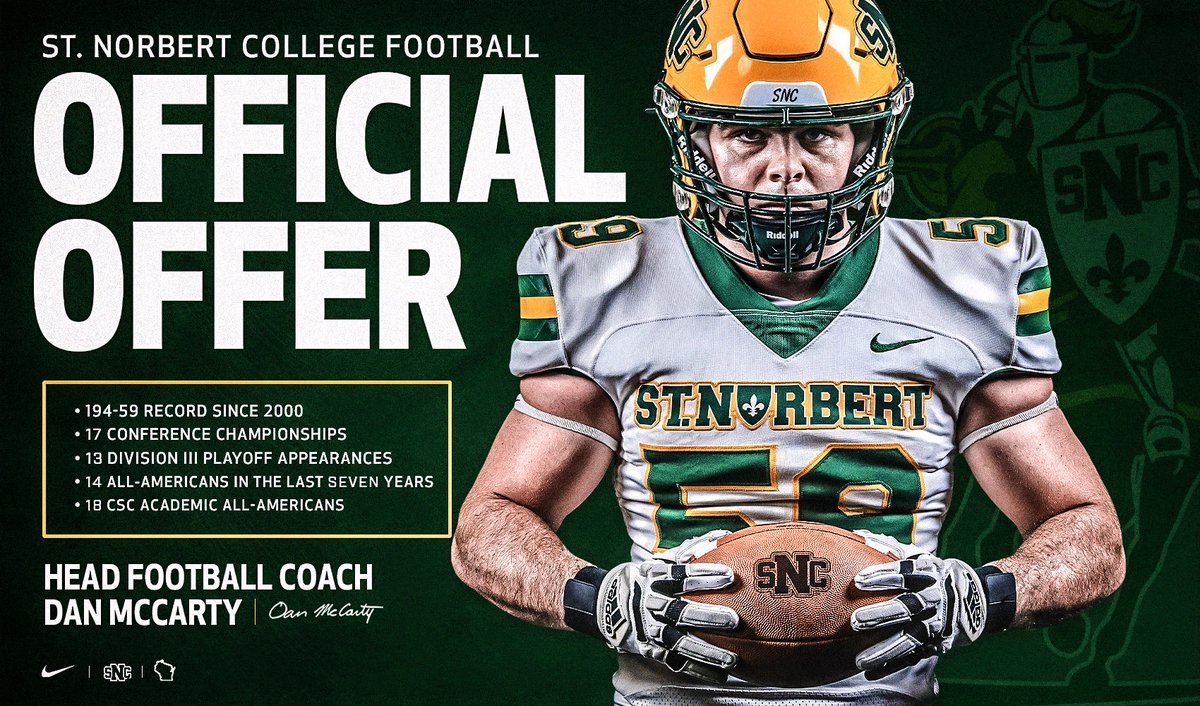
Blessed to revive a offer from St Norbert university @QBHitList @PrepRedzoneIL

1
13
31
3,951
Tyler Clark retweeted
May 24
Gamespeed works for lineman too! @tonyvilani will tell you WR and Dline are the same whereas DBs & OL are the same keeping protection. Get good with your footwork!
1
15
1,882
Tyler Clark retweeted

May 19
🚨Calling all Offensive Line Coaches🚨
The #TrenchMob Summer Clinic has everything you need for the summer!
📅 June 27, 2026, Online
⏰ 8 AM – 6 PM EST
💰 100% FREE
High School & College Coaches, wanna speak? DM me!
Coaches, DM me for the details to register!

4
39
110
19,396


Tyler Clark retweeted

May 14
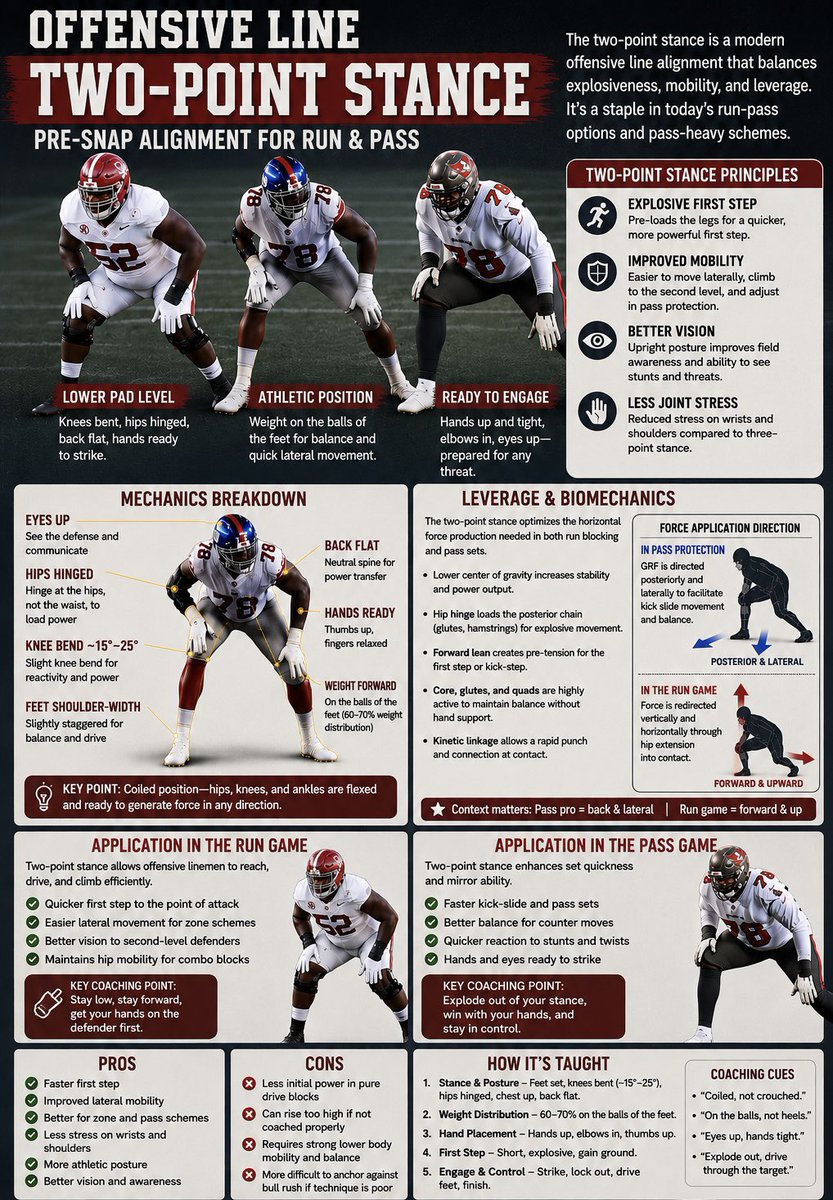
Always thought this was an interesting topic for offensive lineman in a two point stance, and by no means am I an expert in biomechanics, but the science behind how offensive linemen generate force and movement out of a two point stance is fascinating
The two point stance has become a major part of modern football because it allows offensive linemen to play with better vision, balance, lateral mobility, and pass set efficiency while still maintaining the ability to generate power in the run game. With more spread concepts, RPO systems, wide alignments, and pass heavy offenses, offensive linemen are constantly being asked to operate in space and react quickly to movement post snap
What stands out is how different force application becomes depending on the situation
✅ In pass protection, offensive linemen are generating posterior and lateral force to create depth, maintain balance, and execute kick slides against speed rushers, stunts, twists, and changing launch points
✅ In the run game, force is redirected vertically and horizontally through hip extension, lower body drive, and force transfer to create displacement at the point of attack
📌 Ground Reaction Force (GRF) is essentially the force the ground gives back to the athlete when they apply pressure into the turf. Offensive linemen are constantly using GRF to generate movement, maintain balance, recover posture, and transfer power through the hips, core, and hands
The force direction itself changes depending on the situation:
➡️ Pass Pro:
Posterior and lateral force application helps create depth, balance, and efficient kick slide movement
⬆️ Run Game:
Forward and upward force application helps generate vertical displacement, drive power, and movement at contact
There is far more science involved than people realize:
📌 Hip hinge
📌 Knee bend
📌 Weight distribution
📌 Ground reaction force
📌 Core stability
📌 Foot pressure
📌 Leverage and pad level
📌 Kinetic linkage through the hips and hands
The stance itself may look simple, but small changes in posture, balance, foot pressure, and body positioning can completely affect power output, movement efficiency, recovery ability, and strike timing
3
31
241
20,290

May 13
Let’s gooooooo ‼️‼️‼️
May 13

After a great showcase and talk with @CoachLA73 im blessed to receive my first DIVISION 1 offer from @chicagostatefb #AGTG @CoachClark_65 @tjmcallister07 @OLMafia

168
Tyler Clark retweeted

May 13
After a great showcase and talk with @CoachLA73 im blessed to receive my first DIVISION 1 offer from @chicagostatefb #AGTG @CoachClark_65 @tjmcallister07 @OLMafia
20
36
4,866
May 13
LETS GO‼️

After a great camp and conversation with @CoachLA73 blessed to receive my first d1 offer from Chicago state!!!
@tjmcallister07 @CoachClark_65 @OLMafia @EDGYTIM

141
Tyler Clark retweeted
May 12
Here’s how we hone our footwork before going into our agility and decision making. Common mistakes: 1. Running to high (stay in Accelerative Position 2. Running too fast (run under control, one hard step for every 5 yards 3. Slowing down after the turn (burst out, create separation)
4
25
3,986
Tyler Clark retweeted
May 6
May 13th I’ll be competing in the South Suburban Football Showcase on the O-line. Ready to compete, improve my skills, and learn from great coaches while going against top talent. Excited for the opportunity to showcase what I can do.
@CoachClark_65 @tjmcallister07 @OLMafia

3
10
1,013
Tyler Clark retweeted

May 13th, I’ll be competing on the O-line ready to get better, learn, and compete at a high level. Looking forward to showing what I can do in front of coaches.@tjmcallister07 @CoachClark_65

3
6
342
Tyler Clark retweeted
May 3
Some recaps from some recent RED DAWN. Stations are 6min (avg time of possession) 6-9 reps (avg # of plays within possession) 2-6 sec bouts (avg sec per play)
Stations: Max Velo, COD, Agility, Acceleration, Contact Prep. We attempt to hit loads similar to position groups adding 10-5% (12%) weekly.
1
2
21
2,345