
Former D1 coach and Recruiting Coordinator. Coaching athletes through the recruiting process. Investor @SoftbalAmerica.
Joined February 2012
- Tweets 2,952
- Following 993
- Followers 5,717
- Likes 9,402
249 Photos and videos











Jun 8
👀👀👀

Who caught our eye in Georgia this weekend? Our Zoom into June East Notebook highlights a handful of recruits making a name for themselves.
on3.com/softball/news/zoom-i…
@triplecrownspts | #ZoomintoJune
8
3,398
Jun 4
Good perspective as the recruiting window opens this weekend 👇🏼@SoftbalAmerica @triplecrownspts Zoom Into June East Camp- Monday, June 8
Jun 4

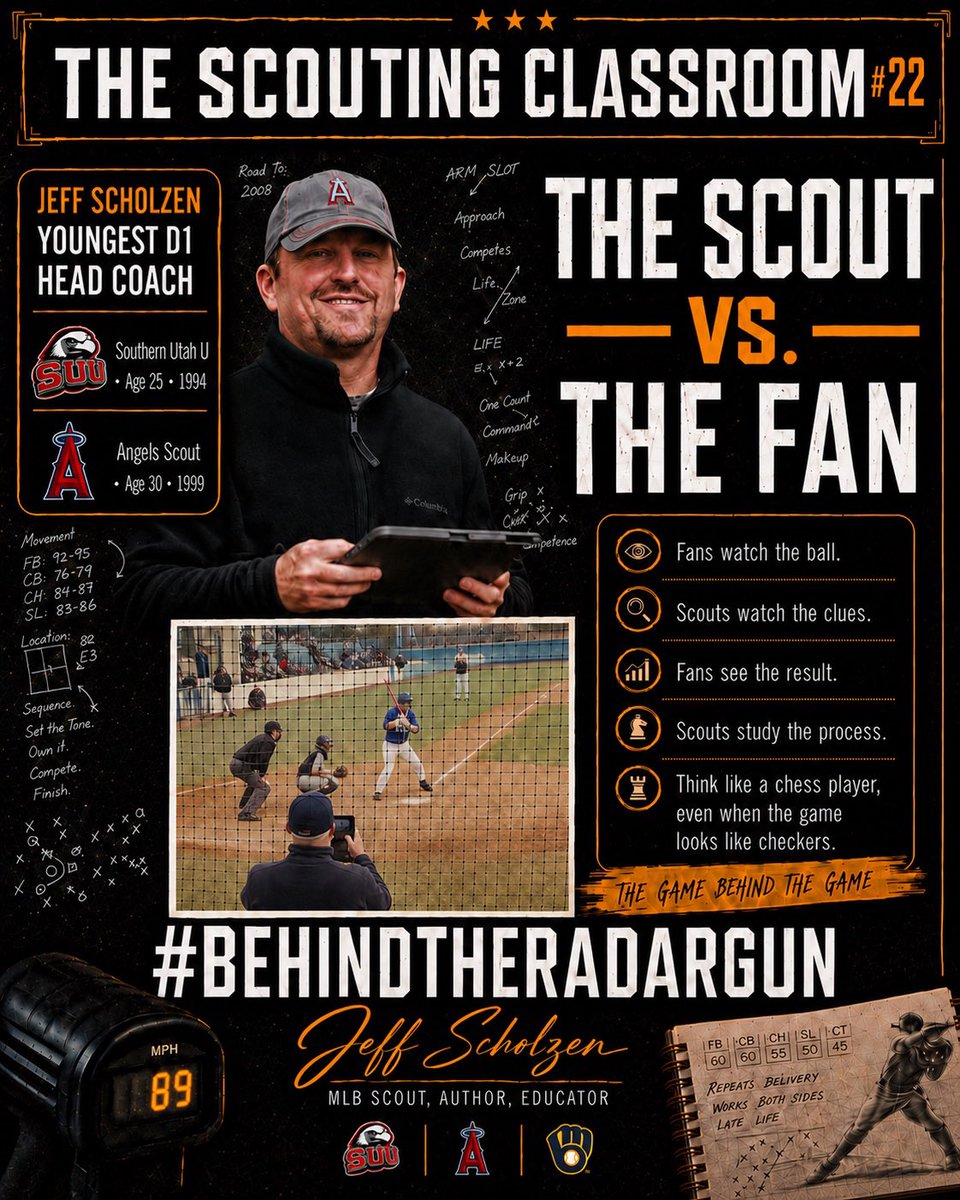
The Scouting Classroom #22
The Scout vs. The Fan
A fan watches baseball for the result.
• A scout watches baseball for the reasons behind the result.
That is the biggest difference!
Fans watch the ball. Scouts watch for the clues. Scouts always are running it back in their mind, watching through a trained eye.
A fan sees a home run and reacts to how far it went. A scout wants to know how it got there. Was the hitter on time? Was the swing under control? Did he recognize spin? Did the barrel work through the zone? Did the ball carry because of real bat speed, strength and backspin, or was it a mistake pitch that ran into the bat?
A fan sees a strikeout and thinks the pitcher dominated. A scout asks a different set of questions. Was it velocity? Life? Angle? Deception? Command? Did the breaking ball have late finish, or did the hitter chase a bad pitch? Was the changeup sold with arm speed? Did the fastball play above the number on the radar gun?
A fan sees a stolen base. A scout studies the jump, the first step, the route, the catcher’s exchange, the pitcher’s time to the plate, the infielder’s tag and the runner’s instincts.
The stolen base is the headline. The scout is reading the whole paragraph.
A fan sees an error. A scout asks why it happened. Were the feet late? Were the hands stiff? Did the body get out of sync? Did the arm action break down? Did the player rush because the internal clock was off? Did the field expose something the stat sheet never tells you?
Surface vs. Depth
•Fans see the surface.
•Scouts dive underneath it.
Baseball can look bland to some people from the top, the same way the ocean can look like nothing but a flat sheet of water from the surface.
But once you dive below, everything changes. You see the movement, the life, the layers, the detail. The things that were there the whole time, but hidden from an untrained eye.
That is baseball
Most people watch the surface of the game
Scouts learn to live below it
Learning to See More
The more you understand what to look for, the more the game opens up. A routine ground ball is not just a routine ground ball. It is footwork, rhythm, angles, hands, exchange, arm strength and body control. A foul ball is not just a foul ball. It may tell you timing, direction, barrel accuracy and whether the hitter is getting closer. A 1-2 take may tell you more about a hitter than the double he hit earlier.
Scouting is not about watching more baseball
It is about seeing more while you watch
That is why a scout can sit at a field for nine innings and see an entirely different game than the people around him.
Thinking Like a Scout
A scout is thinking like a chess player, even when the game looks like checkers.
He is watching the present, but thinking about the future. He is watching the body now, but asking what it becomes in three years. He is watching the fastball today, but asking if the delivery, arm speed and frame allow more to come. He is watching the swing today, but asking if it will hold up against better velocity, better spin and better sequencing.
The fan asks, “What happened?”
The scout asks:
• Why did it happen?
• Will it happen again?
• Will it happen against better competition?
• Is it real?
• Is it projectable?
• Is there something here to build on?
The Game Behind the Game
That is the game behind the game.
And once you learn to watch baseball through that lens, you never see it the same way again.
The Goal of This Series
That is the goal of this series, not to make the game more complicated, but to make the game come alive.
Because when you start seeing the clues, the process, the adjustments, the body language, the tools, the instincts, the movement patterns and the projection, baseball stops being slow.
It becomes a classroom!
#BehindTheRadarGun
1
5
2,112
Jun 1
East Coast Prospects…Zoom Into June East Monday Camp | Triple Crown Sports and Softball America
Want a chance to work with elite coaches AND have an opportunity to be seen and evaluated by @softbalamerica? Register now for the last couple spots! triplecrownfastpitch.com/eve…
3
1
11
951
Jen McIntyre retweeted

May 30
At some point, developing a better swing stopped being about becoming a more complete hitter and harder to get out. It started being about having a “right” swing.
Things are completely off the rails.
4
2
20
2,084
Jen McIntyre retweeted

May 28
Continuing to grow and fully committed to getting more eyes on athletes to better evaluate talent all across the country.
On every field, at every level.
@CoachJenMac | @triplecrownspts
May 28
NEW: Softball America teams up with @triplecrownspts for an elite East Coast evaluation camp👀
June 8 in Cumming, Georgia — major recruiting opportunity for East Coast players
on3.com/softball/news/softba…
2
11
2,778
May 28
Attention recruits!!!! Major recruiting and evaluation opportunity as @SoftbalAmerica teams up with @triplecrownspts for the first East Coast evaluation camp! 👇🏼
May 28
NEW: Softball America teams up with @triplecrownspts for an elite East Coast evaluation camp👀
June 8 in Cumming, Georgia — major recruiting opportunity for East Coast players
on3.com/softball/news/softba…
20
4,793
May 25
We said the news was going to be BIG! Recruits, want to get verified metrics? Have an opportunity to be seen by @SoftbalAmerica ? Check out the sport’s first camp combine series across the nation! See below…🥎
May 25
Softball America and @ondecksoftball just announced the sport's first national camp combine series👀
Four regional events in 2026 — verified metrics, national ranking consideration, and college coach exposure.
on3.com/softball/news/softba…
1
2
42
16,689
Jen McIntyre retweeted

May 12
I am once again saying this, but recruits and or transfers, please be careful putting your phone number out on this website as there is a lot more people than softball coaches on here.
Coaches will find that info through other channels if needed.
10
119
9,750
Jen McIntyre retweeted
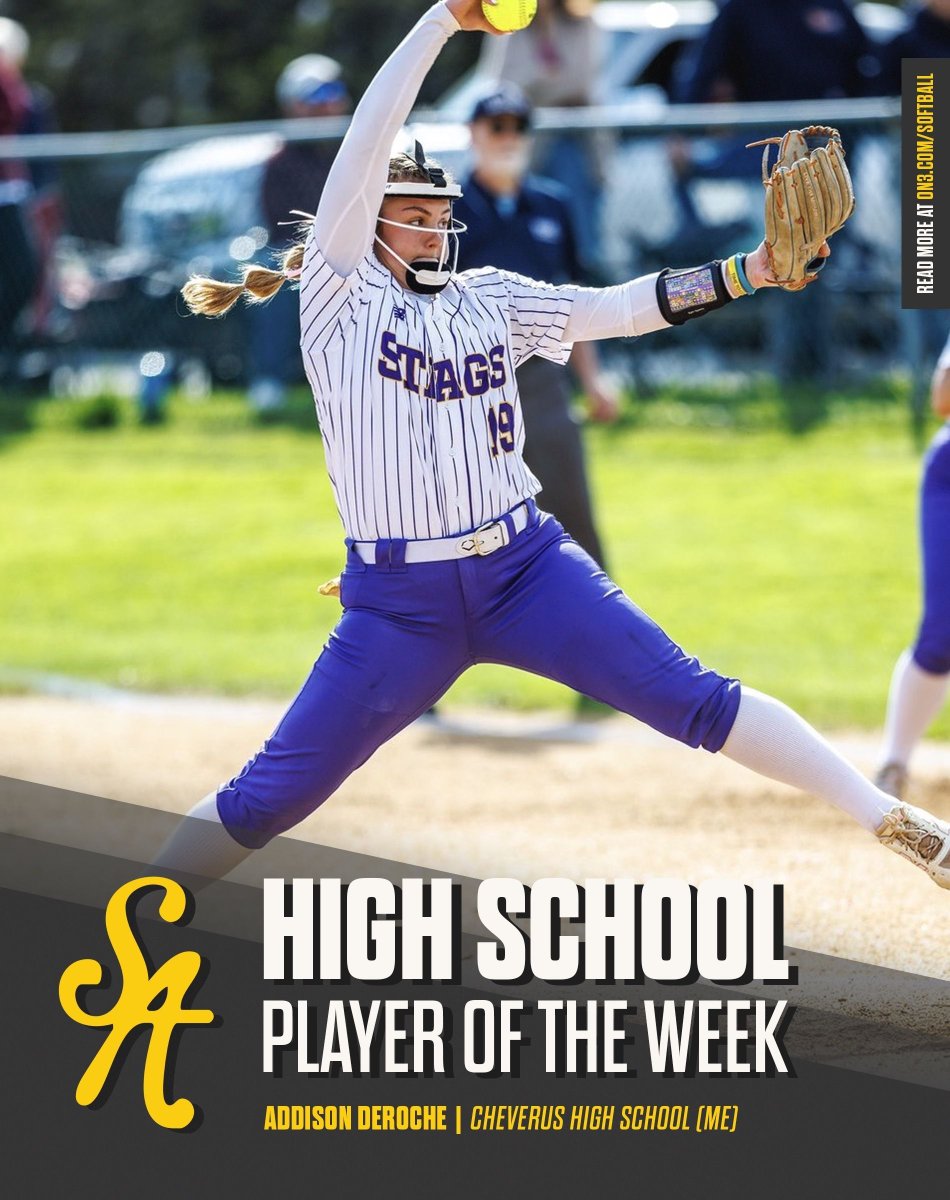
Florida State commit Addison DeRoche was a strikeout machine this past week, racking up 46 Ks in three wins for Cheverus.
🔗 on3.com/softball/news/softba…
@AddisonDeroche | @Cheverus_Stags
6
25
179
6,547
Jen McIntyre retweeted
Want to be the next High School Player of the Week? Fill out the form here: docs.google.com/forms/d/e/1F…
Apr 28
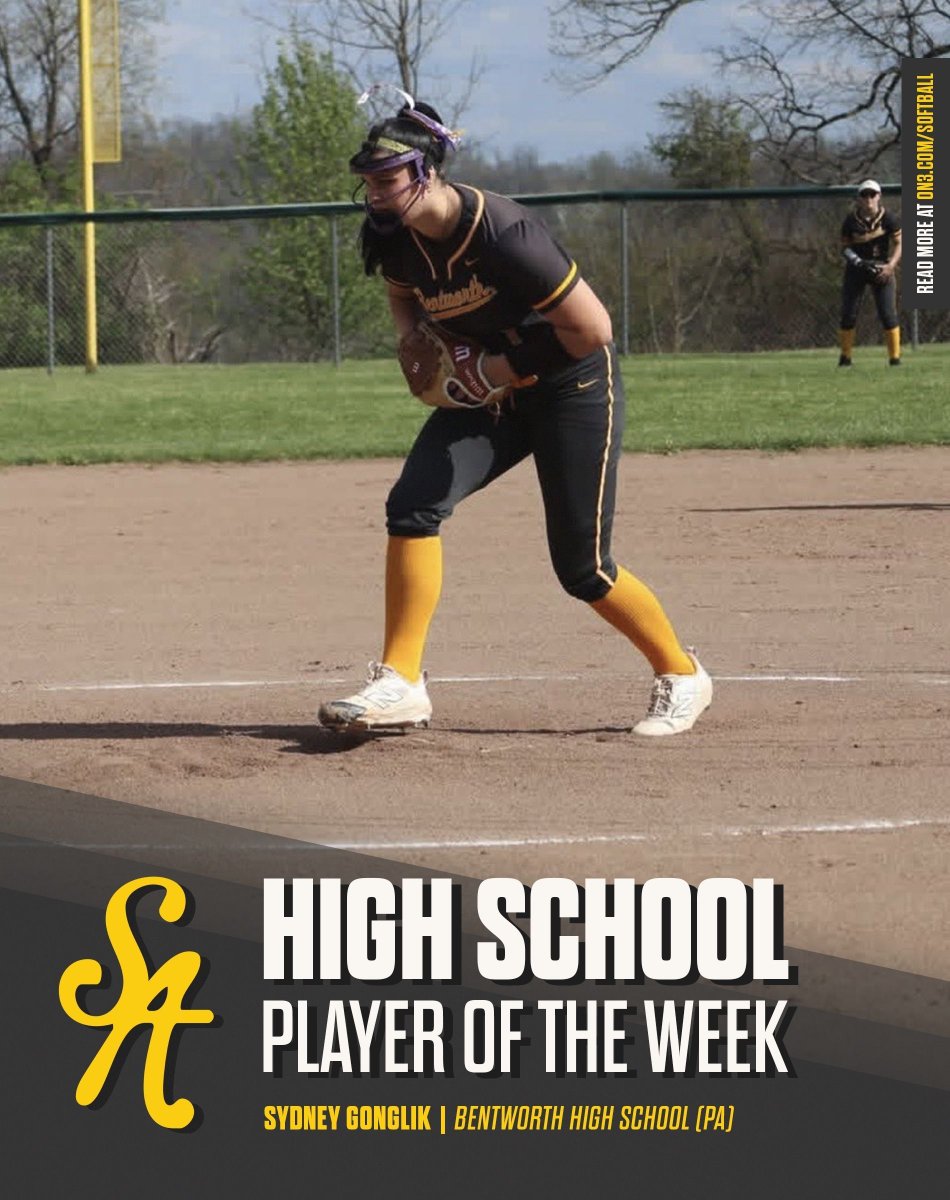
Five-star LSU commit Sydney Gonglik is absolutely dominating — 41 strikeouts over 18 innings, including a no-hitter with 17 Ks🔥
She's our High School Player of the Week: on3.com/softball/news/softba…
@SydneyGonglik1 | @LSUsoftball
2
14
4,484

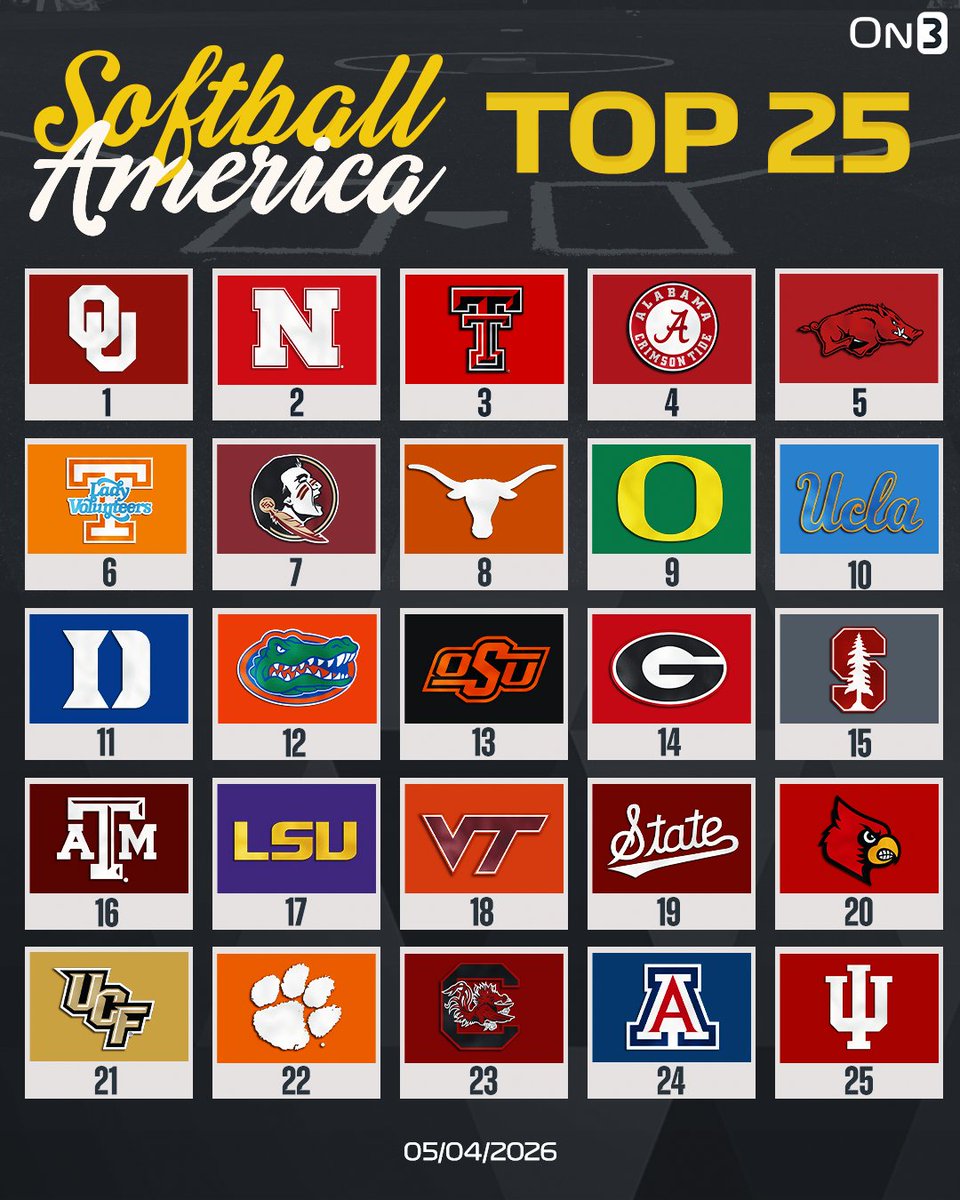
NEW: College Softball Top 25 via @SoftbalAmerica🥎
Do you agree?
on3.com/softball/news/softba…
57
187
1,942
125,565
Jen McIntyre retweeted

Apr 28
Five-star LSU commit Sydney Gonglik is absolutely dominating — 41 strikeouts over 18 innings, including a no-hitter with 17 Ks🔥
She's our High School Player of the Week: on3.com/softball/news/softba…
@SydneyGonglik1 | @LSUsoftball
7
52
13,961
Jen McIntyre retweeted
Apr 24
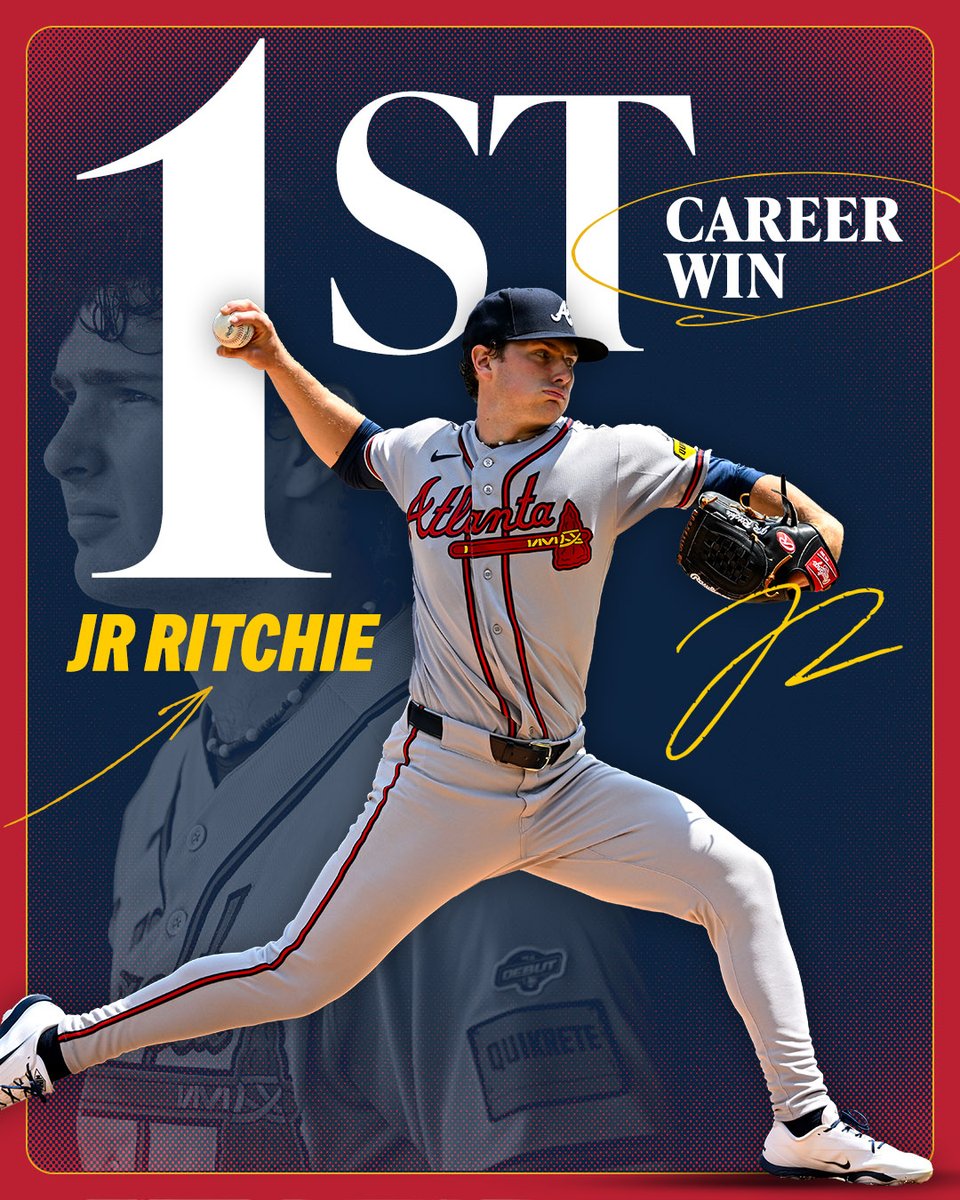
Congrats to Softball America investor JR Ritchie on making his Major League debut on Thursday.

4
21
4,029
Jen McIntyre retweeted
Apr 24
Tennessee has some ELITE softball talent right now 👀
The Kenzie White power surge is unreal (18 HRs as a sophomore) and Lela Byrd has a sub-zero ERA with 250 strikeouts.
on3.com/softball/news/11-sta…
9
29
8,412
Jen McIntyre retweeted
Apr 22
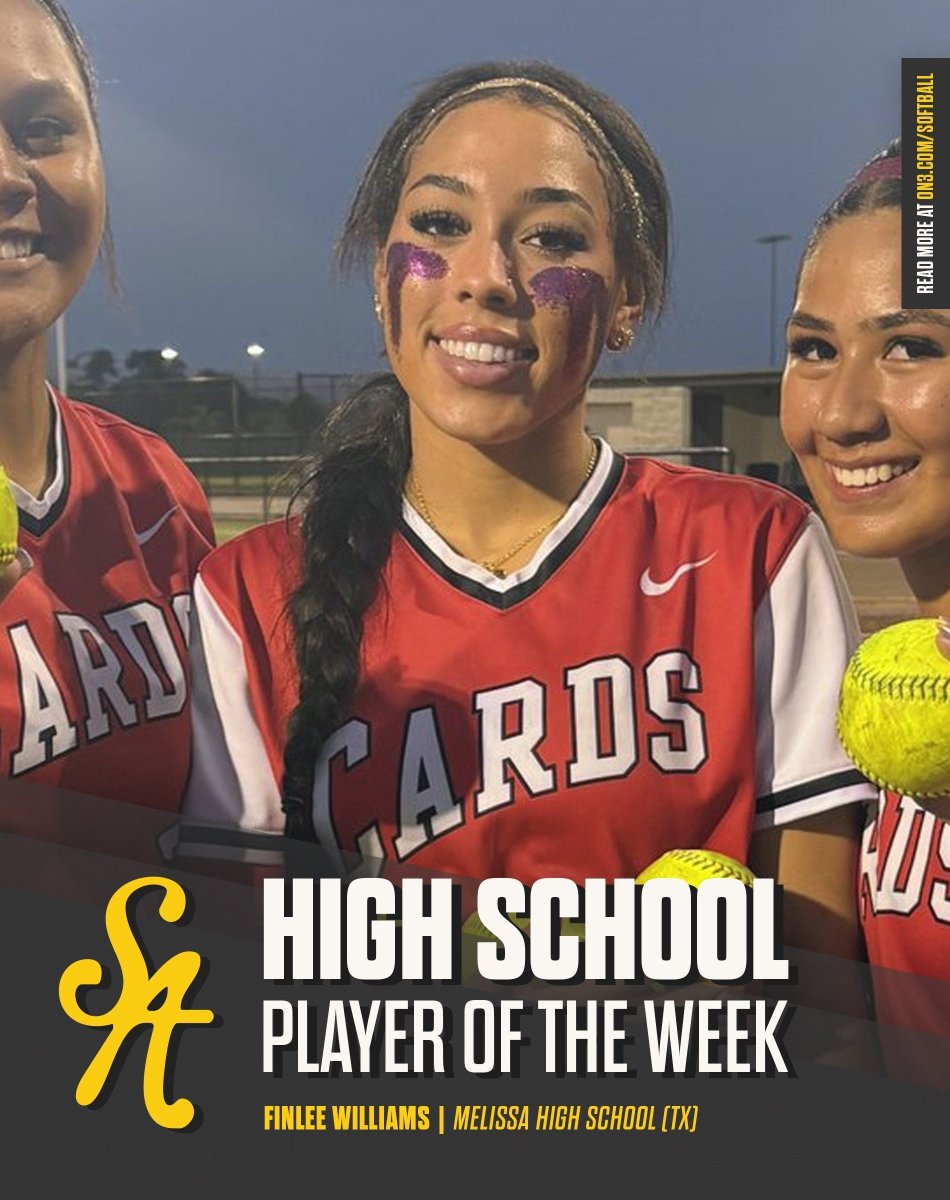
Finlee Williams is our High School Player of the Week. The OU commit went a perfect 7-for-7 at the plate, hitting two doubles, a triple, and four home runs while driving in 13 runs.
🔗 on3.com/softball/news/softba…
@FinleeWilliams | @SoftballMelissa
24
79
687
120,277
Jen McIntyre retweeted
Apr 20
Did you have a standout week for your high school? Let us know and you could be this week's player of the weel: forms.gle/N32Gky6cf5242SHp6
Apr 14
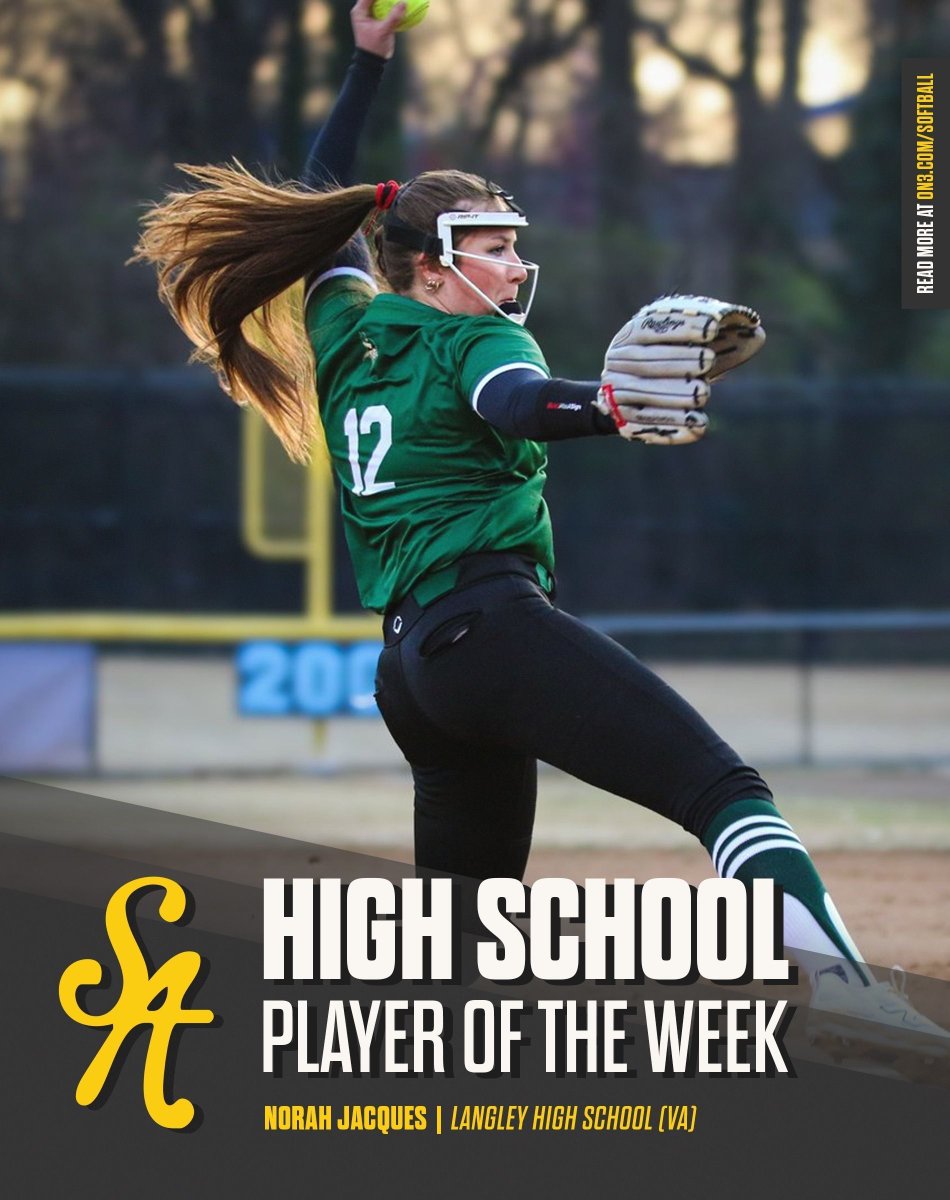
What a week for Norah Jacques, your Softball America High School Player of the Week
- No-Hitter
- 32 Ks
- 1.000 BA
- 2 HR
🔗 on3.com/softball/news/softba…
@NorahJacques12 | @LangleySoftball
3
13
5,792
Jen McIntyre retweeted
Apr 14
What a week for Norah Jacques, your Softball America High School Player of the Week
- No-Hitter
- 32 Ks
- 1.000 BA
- 2 HR
🔗 on3.com/softball/news/softba…
@NorahJacques12 | @LangleySoftball
1
5
37
13,160
Jen McIntyre retweeted
Mar 31
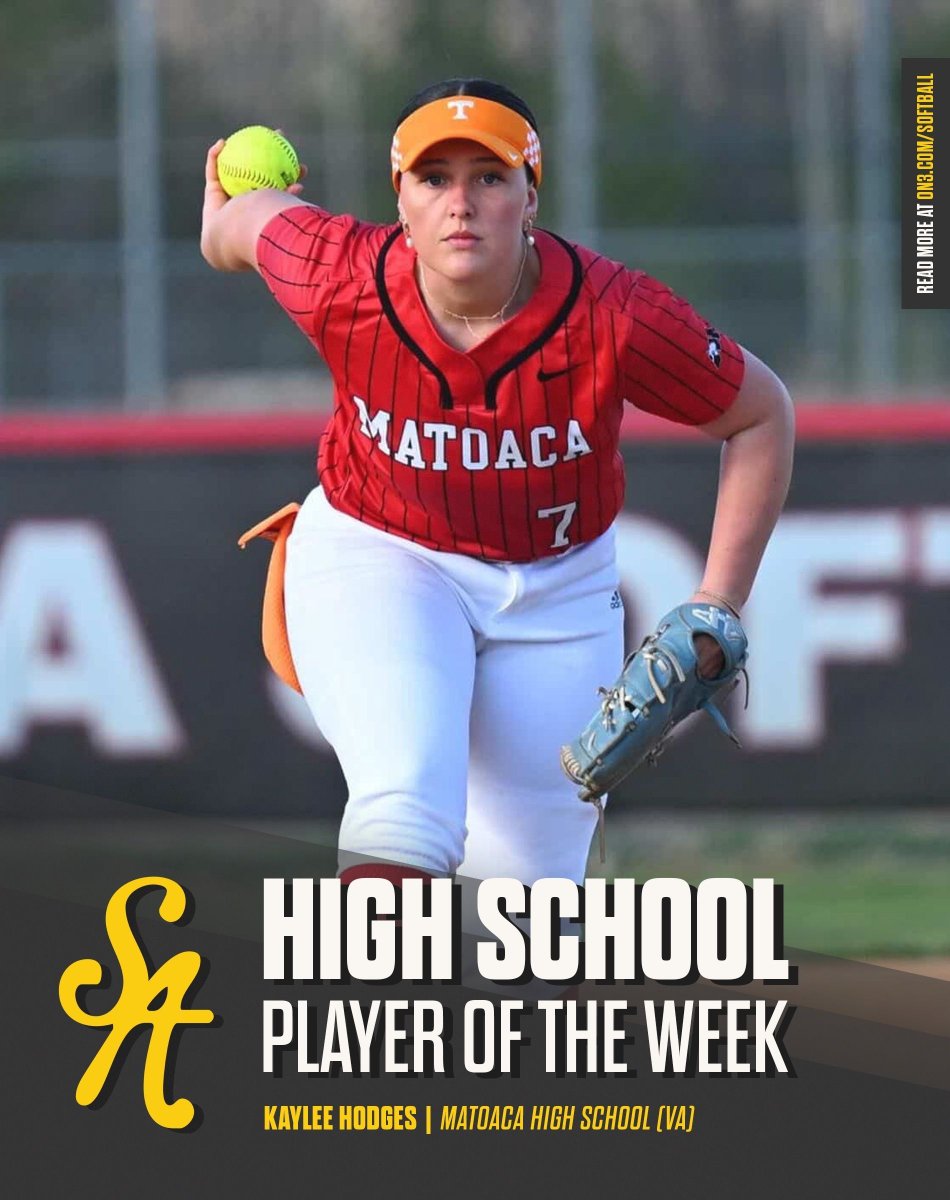
Kaylee Hodges was absolutely dominant last week 🔥
The Tennessee commit struck out 39 of 44 batters she faced in her first two games, threw a no-hitter, and homered in both contests.
🔗 on3.com/softball/news/softba…
@KayleeHodges14 | @MatoacaSoftball
4
12
85
4,541
Jen McIntyre retweeted
Mar 31
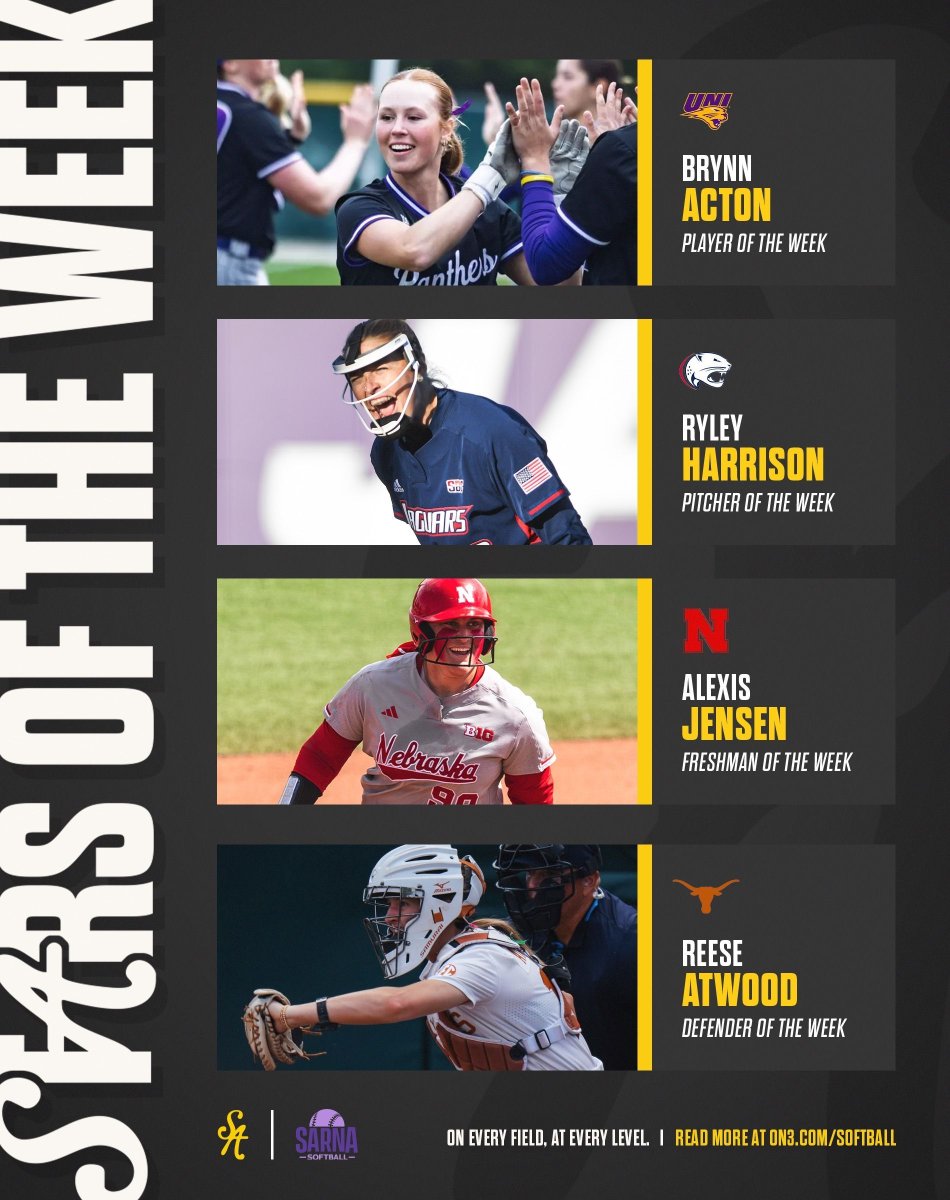
The Sarna Softball America Stars of the Week 🌟
Brynn Acton (UNI): 6 HRs, 15 RBIs in 4 games
Ryley Harrison (South Alabama): 16 innings, 0 ERs
Alexis Jensen (Nebraska): Beat UCLA twice
Reese Atwood (Texas): No-look pickoff magic
Read: on3.com/softball/news/sa-sta…
3
12
68
6,501
Jen McIntyre retweeted
Mar 31
Read more about our latest partnership with @SarnaBaseball
on3.com/softball/news/sarna-…
2
4
1,045