
Joined February 2020
- Tweets 3,058
- Following 1,918
- Followers 2,283
- Likes 5,023
492 Photos and videos











Codenlighten retweeted

Jun 5
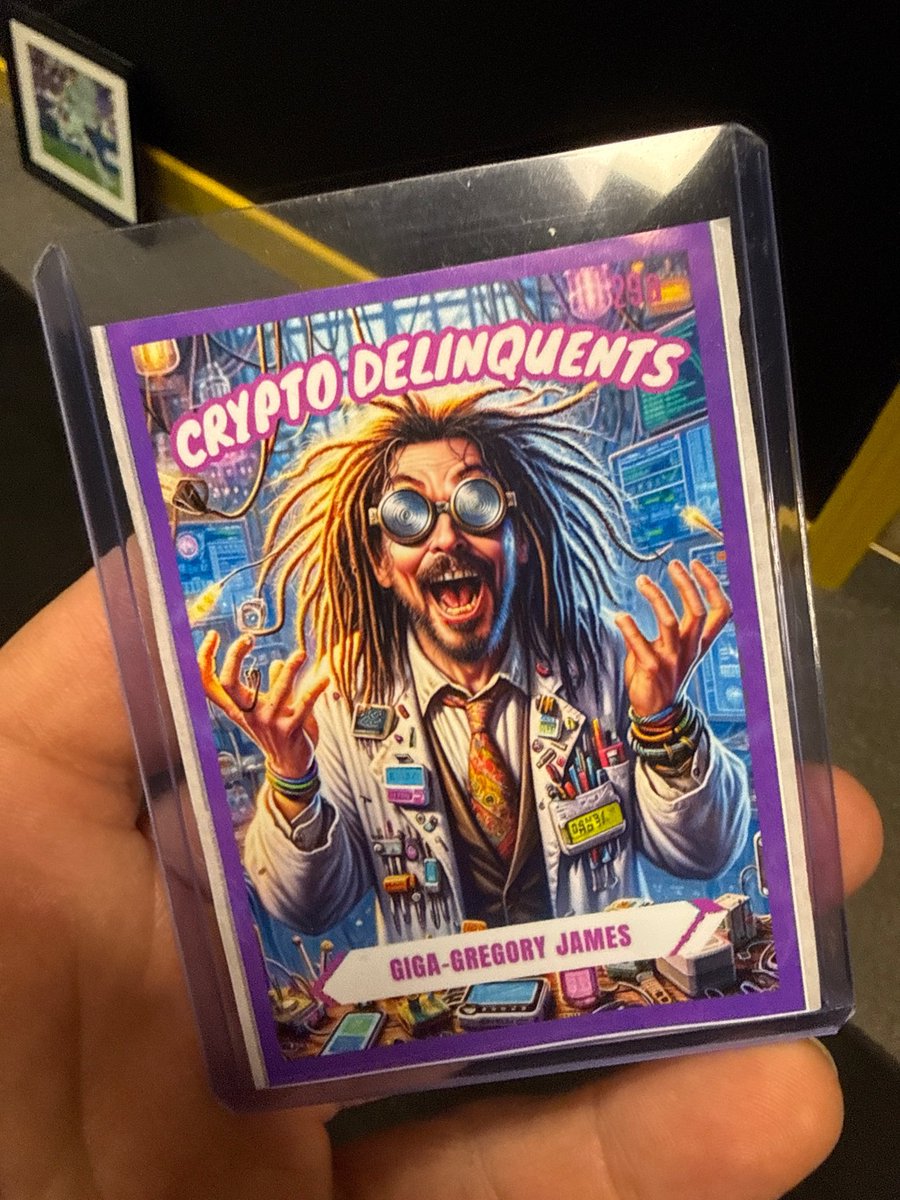
We have been building for years with @SmartLedgerTech to bring this revolutionary #cardgrading to #TheHobby
Launching this month in Vaulted Trading Cards
#LFG #cardgrading #AITechnology #blockchaintechnology #verifiedgrades
@BWDaugherty @Codenlighten1 @Sdot2121 @jalexanderm

2
4
106
Codenlighten retweeted

This is an ideal BSV wallet for encoding your wallet in BIP39 with 256-bit security (24 words 1). It is also possible to scan your old wallets.
satofinder.com/
By @Codenlighten1 and @BWDaugherty.
#BitcoinSV #wallet #BIP39 #BSV
May 28

satofinder.com/
Let me know if you need any assistance.
2
10
593

May 28
Neon Kingston Street Reggae Mix | Zion Gates Music | Roots & Modern Regg... youtu.be/JgEquXGIRaE?si=g8Sy… via @YouTube
3
142
May 17
This is certainly worth a public discussion as well as remedial actions taken. @BWDaugherty had spent years unpacking this for @BSVAssociation and laying out clearly what the roadmap should be for BSV to be considered mature blockchain. He also laid out the framework of #utility.
May 17

@BSVAssociation @BWDaugherty @AlexanderMann @Bitcoin_Beyond
The following is a review of the current Clarity Act Draft recently passed by Senate Banking. The review in this instance was done by @deepseek_ai. It seems to dovetail some of the concerns that B Daugherty was raising before he was terminated from BSVA. I am not picking sides - I am requesting thoughts from parties above that are most closely associated with this - or any other person with an opinion / insight into this.
Here is Deepseek's take:
_______________________
Based on the available information, the analysis here suggests that the role and powers of the BSV Association are the primary factor that could lead to BSV not meeting the CLARITY Act's definition of a "mature blockchain" or "digital commodity" under U.S. law.
⚖️ The CLARITY Act's Standard: The "Mature Blockchain" Test
For a digital asset to be classified as a "digital commodity" and not a security, its blockchain must meet criteria for being "mature" and decentralized. A key part of this, as indicated in analyses of the bill, is that no single person or group can have significant control over the network.
🏛️ The Challenge: The BSV Association's "Stewardship" Model
The BSV Association (BSVA) presents itself as the "principal steward" of the BSV network, with significant responsibilities and powers that closely align with the centralized control the CLARITY Act seeks to define and regulate.
A Unique Governance Structure: The BSVA's governance is built on a complex legal framework, the "Network Access Rules" (NAR), a multilateral contract between the Association and all network nodes. By performing network activities or simply using the node software, nodes are legally bound to the NAR.
Direct Control via the Alert System: A central feature of this governance is the BSVA's Alert System. This tool allows the Association to issue binding directives to all nodes to take specific actions. Permissible actions include freezing specific coins, blacklisting IP addresses, or even invalidating entire blocks.
Power to Enforce Legal Directives: The BSVA has formally built in a mechanism to enforce court orders and legal judgments on the blockchain. A "Direct Decision Event" empowers the Association to issue directives on the network to give effect to a court ruling. This means a legal decision against the Association itself could be directly enforced on the BSV ledger, an unprecedented level of control for a blockchain's "steward".
Influence Through IP Licensing: The BSVA is a major holder of intellectual property rights. The BSV node software is offered under a license from the Association, and by using it, a node agrees to the Network Access Rules. This central point of control over the software gives the BSVA significant leverage over participants.
Centralized in Practice: The network's operation is heavily dependent on a small number of ecosystem entities, which include the BSVA itself and major mining companies like TAAL and nChain. This structural concentration contrasts with the more decentralized models of other networks.
📉 A Direct Threat to "Digital Commodity" Status
The CLARITY Act is designed to draw a clear line between assets like securities and assets like commodities. The BSV Association's established powers present significant hurdles for BSV's classification.
Automatically a Security?: The Association's ability to issue binding directives via the Alert System appears to firmly contradict the key requirement for "mature blockchain" status. This suggests the network is under the "coordinated control" of the BSVA, likely leading to the network being unable to meet the CLARITY Act's standards.
Regulatory Landscape: It's important to note that the CLARITY Act is a legislative proposal that is still being debated by industry stakeholders and political leaders. The final version of the bill and its specific criteria for control could change before it is enacted.
✅ The "Set in Stone" Counter-Argument
The BSV community strongly counters claims of centralization by pointing to a core philosophical commitment: the protocol is "set in stone" and unalterable by the Association or any other party. They view the Association as a protector, not a ruler.
However, the Chronicle upgrade presents a challenge to this argument. The BSV Association itself announced this mandatory network upgrade, instructing all node operators to update their software to remain in consensus. The ability to compel a network-wide software upgrade is a tangible demonstration of centralized influence that seems at odds with the "set in stone" philosophy.
⚖️ Conclusion: A Contradiction at the Core
Ultimately, the analysis suggests a fundamental contradiction at the heart of BSV. The BSV Association's carefully constructed legal and technical "stewardship" model—which it sees as a strength for providing legal and regulatory compliance—is the very mechanism that, under the CLARITY Act's criteria, would likely be interpreted as evidence of centralized "coordinated control". This positions BSV unfavorably under the draft legislation, potentially risking its classification as a "digital commodity" in the United States.
__________________________
Closing observation - one that I made long ago - that much of this seems open to interpretation politically. The main concern I have is that by trying to "predict" what the government wants (by including NAR / DAR) - has BSV created a potential excuse for Gov't to actually label BSV a security if they decide they hate it, or that it is a threat?
For example: Craig threatened Exchanges - they shut down BSV. Craig has also made threats against Govt's in the form of suggesting that they need to have their money supply fixing powers taken from them. What if Govt's don't like that threat any more than Exchanges liked their threat?? I guess what I am looking for is a reason the Gov't would side with BSV from a political viewpoint - because if they don't, we may have handed them the excuse they need to further harm BSV. And I think that was the thing that got @BWDaugherty in trouble - but I think this is a discussion that should be had publicly.
3
1
9
528
May 14
Just published 🚀
npmjs.com/package/@smartledg…
A Claude-Code-style CLI agent powered by OpenAI GPT-5-nano.
Agentic coding workflows with tools, memory, hooks, plan mode, and slash commands — at a fraction of typical coding-agent API costs.
#OpenAI #AIcoding #TypeScript #CLI
3
2
5
355
May 14
That makes OpenAI Claw up to 100x more cost effective than Claude code.
3
82
May 14
To give an idea of the savings... a session using this platform typically costs under 20 cents for an hour.
2
53
Codenlighten retweeted
Apr 28
VINTAGE VIBES! ⚾️🔥 Just cracked a pack of 1990 Donruss and the legends showed up. Pulling a #nolanryan ‘5000 K’s’ and this Yastrzemski Diamond King takes me straight back to the local card shop in the 90s!
The corners are crisp and the nostalgia is real. Nothing beats the sound of a wax pack opening!
#charlirippinpacks #vaultedtradingcards #donrussbaseballcards
2
5
349
Apr 23
Congrats team! This is huge!
Apr 23

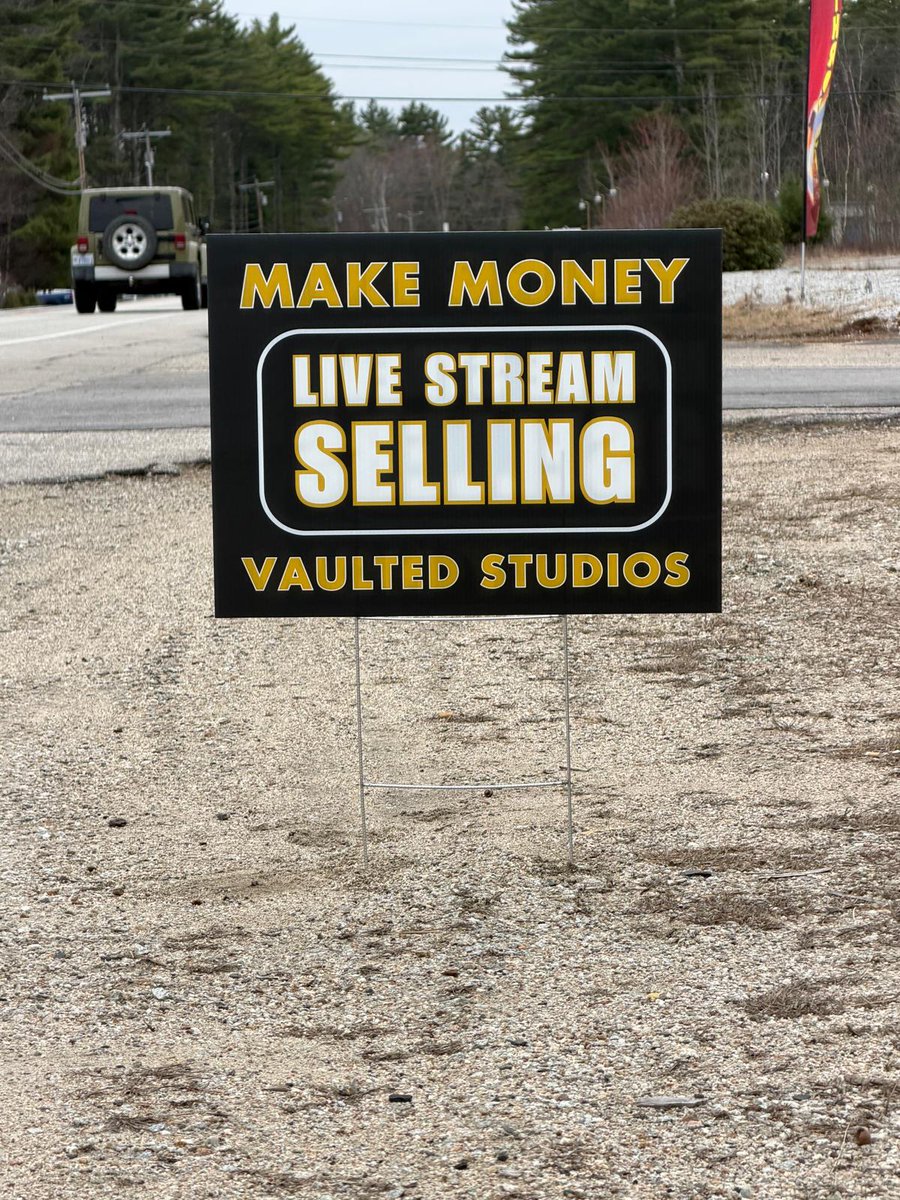
Join the Action at Vaulted Studios! 📷📷
Love #tradingcards ? We’re hiring Live Stream Sellers to join our crew on #ebaylive! If you’ve got energy and a passion for #thehobby we want you in the studio...
Apply now and start turning your passion into a paycheck💰💰
Bailey approved!!


1
3
123
Codenlighten retweeted

Apr 16
27M predictions on-chain. This is actual blockchain utility, not speculation. Real drug discovery infrastructure being built here, not just another token launch.
1
3
6
376
Codenlighten retweeted
AxiomLattice.io Status: Active 🟢
The DSC-3 Isomorphic engine is humming.
Current 2-minute snapshot:
⚡ Battery: 135 screened/min
🌱 Carbon-MOF: 17 screened/min
🛠️ Combined Enrichment: ~600/hr
🔗 Proofs: ~4,000/hr
Total screening volume is currently hitting ~9,100/hr. We are actively building the most comprehensive #material #science vault in existence.
1
5
11
941
Codenlighten retweeted
THE UNIVERSALITY CONSTANT
Ω = 24
One glowing symbol. One eternal number.
The key woven into the very fabric of reality.
This isn’t just theory — it’s the spectral thread connecting everything… including solutions to the greatest unsolved problems in mathematics and physics.
Listen to the podcast and see how the Universality Constant changes everything.
The universe just revealed its code. Are you ready?
Repo: github.com/OriginNeuralAI/Pa…
Engine: dsc3.originneural.ai/
1
3
18
3,103
Codenlighten retweeted
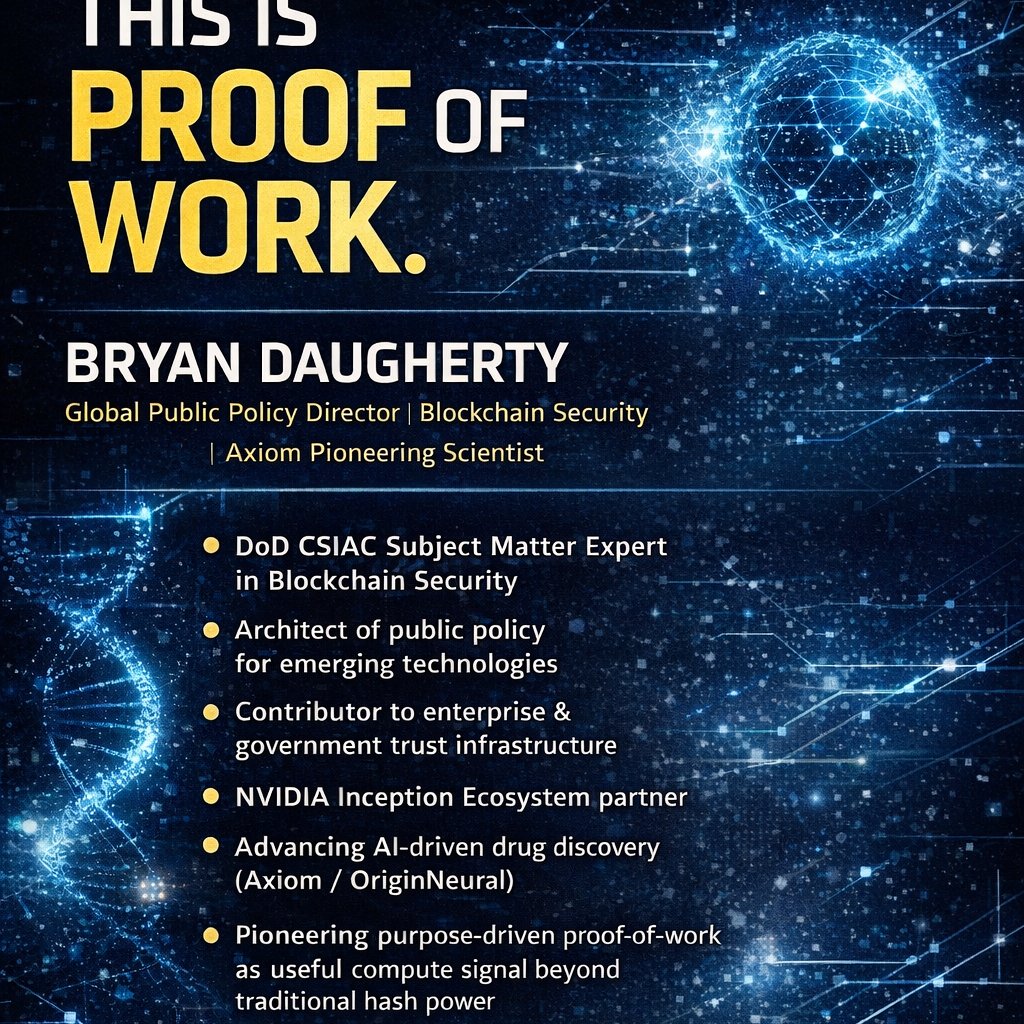
Debate is fine, disrespect is unnecessary. Respectfully, @BWDaugherty has spent years doing the hard work—both as public policy director for @BitcoinAssn, educating lawmakers, technologists, and enterprises on scalable proof of work bitcoin. Proof of Work comes in many forms.
3
11
333
Praying for peace, truth, and rights in the world. The politics, the corporate news, and corporate media rushes the narrative by the people so quickly, sometimes you need to speak up, so..
2
2
8
477
Codenlighten retweeted
6
4
20
4,801
Codenlighten retweeted
👀👀👀

500 million optimization variables.
21 seconds.
One GPU.
$0 specialized hardware.
The DSC-3 Isomorphic Engine just solved what quantum computers can't even encode.
1
3
7
1,132
Codenlighten retweeted
Q1 Performance Review: DSC-3 Team
Objective: 100M spins on @NVIDIA H100
Status: ❌ FAILED
What went wrong:
• Never acquired H100
• Got distracted by RTX 6000 Ada ($7K)
• Accidentally scaled to 500M spins
• Hit 4.26 billion spins/sec
• Outperformed D-Wave, Toshiba, and Fujitsu
• Beat $10M quantum hardware
Root cause analysis:
• Insufficient mediocrity
• Failure to set appropriately low expectations
• Unauthorized excellence
Corrective action plan:
• Acquire H100 (pending budget approval since 2024)
• Actually read the original spec next time
• Install "stop improving" guardrails
• Schedule meeting to discuss why we keep accidentally shipping
Lessons learned: None. We will do this again.
Rating: ⭐️ Needs Improvement
HR note: "This is the third quarter in a row they've 'accidentally' outperformed quantum computers. Beginning investigation."
CC: CEO @Sdot2121 CTO @Codenlighten1 CCO @jalexanderm
4
6
9
1,426
Codenlighten retweeted

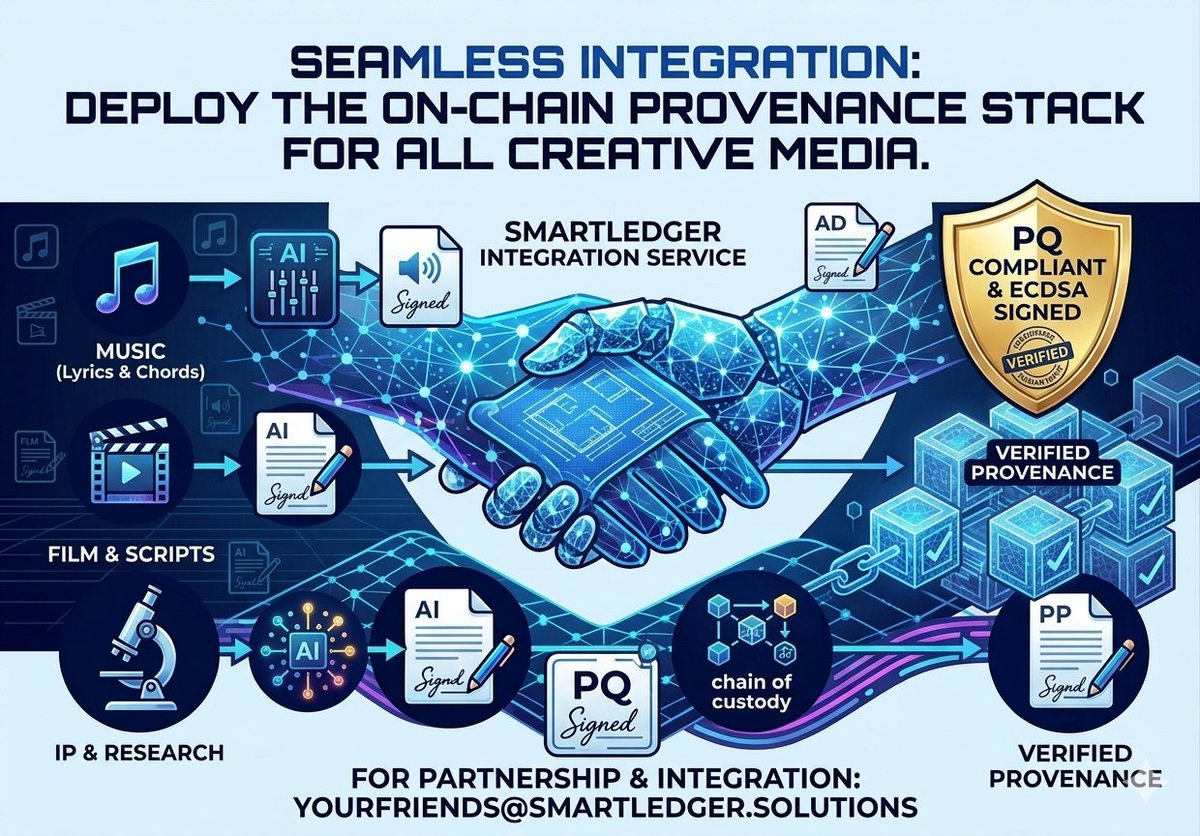
The “Human Spark” in the Machine: Why On-Chain Provenance Overcomes the Thaler Precedent
medium.com/@smartledgersolut…
Ready to protect your AI-assisted creations?
📧yourfriends@smartledger.solutions
@jalexanderm @Codenlighten1 @BWDaugherty @Sdot2121 @LeonCosbyIII
1
4
9
509
Codenlighten retweeted
For 70 years, no one could prove the particles have mass.
Today we show: Tr(J_SU(3)) = 24 — the same Ω in the Monster group, the Leech lattice, and the Riemann zeta function.
SU(3) is the only Lie group with this property.
That's why quarks confine. That's the mass gap.
Proofs: github.com/OriginNeuralAI/u2…
@ClayInstitute @CERNpress @QuantaMagazine @3blue1brown
@SmartLedgerTech | @OriginNeuralAI @jalexanderm @Sdot2121 @Codenlighten1

25 years later: Still unsolved
Top mathematicians and physicists have thrown everything at it. Progress has been made on simpler versions (2D, 3D). But the full 4D problem — the one that describes our actual universe — remains open.
Until now? 👀
1
6
17
986