
Confidently Track VR & AR Experiences, Explore Individual Behaviour, and Analyze Aggregate Insights across all sessions.
Joined July 2015
- Tweets 2,440
- Following 402
- Followers 1,661
- Likes 1,375
1,024 Photos and videos










Pinned Tweet

3 Oct 2023
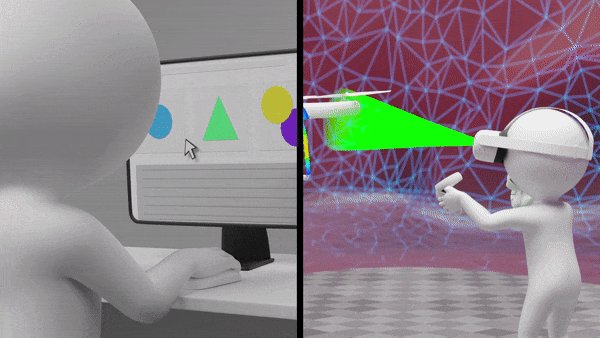
There is a paradigm shift from 2D screens to 3D worlds
As a VR/AR dev, you need to understand the evolution of metrics
Users are moving from content CONSUMPTION to content PARTICIPATION
Traditional analytics are NOT sufficient for capturing the full scope of immersive content
2
3
1,000
Jun 4
Going to AWE 2026?
Come meet the Cognitive3D team at Booth 929 from June 15–18 in Long Beach!
We’ll be there to talk XR analytics, spatial insights, session replay, and how teams can better understand what happens inside immersive experiences.
Book a meeting: buff.ly/4SFuoSj
15
May 28
What really happens inside your XR retail experience?
Join Cognitive3D and Zappar on June 4 at 8AM PST for a live webinar on connecting Mattercraft projects with spatial analytics.
See how teams can measure shopper movement, product engagement, navigation, and interaction across immersive retail experiences.
Register for the webinar here: buff.ly/LdAr0tC
12
May 27
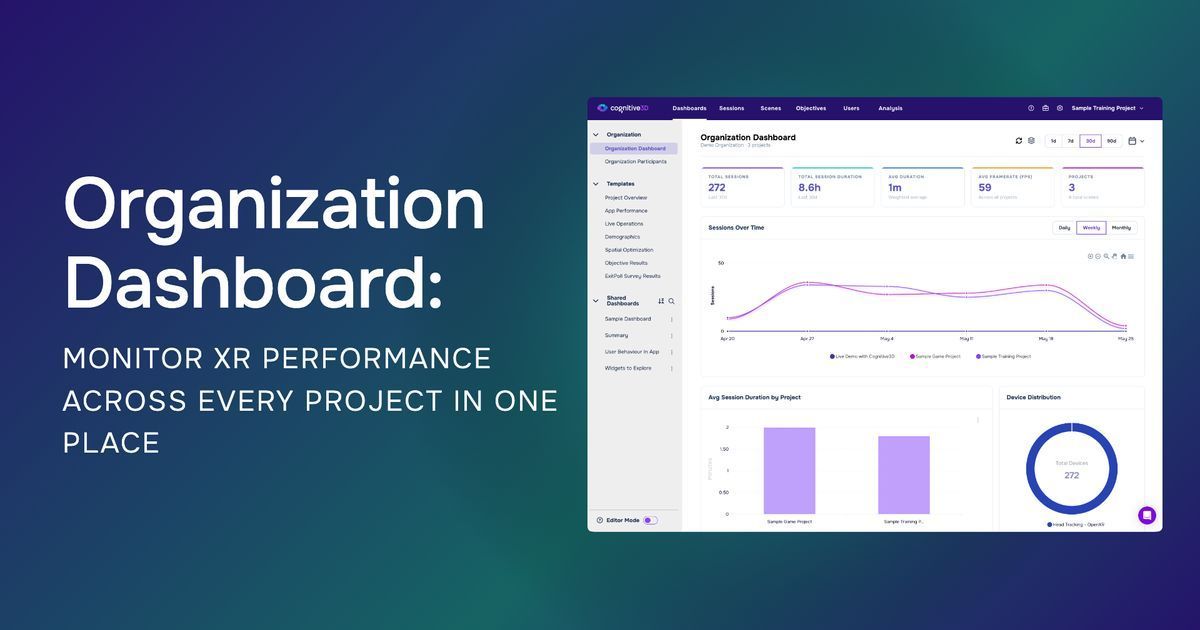
Most XR data still lives inside single-project views. Decisions do not.
We launched Organization Dashboard and Organization Participants in Cognitive3D so teams can review org-wide activity, XR health, outcomes, and participant lookup from one place.
Read more: buff.ly/UOzXinf
11
May 21
The new Analysis Query Builder Agent is now available in Cognitive3D.
Users can now build Advanced Analysis queries in plain language directly inside the Analysis page. The agent validates requests against the project schema, asks clarifying questions when needed, and automatically constructs the query in the slicer.
We wrote a deeper breakdown of how it works and why the scoped design matters: buff.ly/h3tJNi7
17
Feb 26
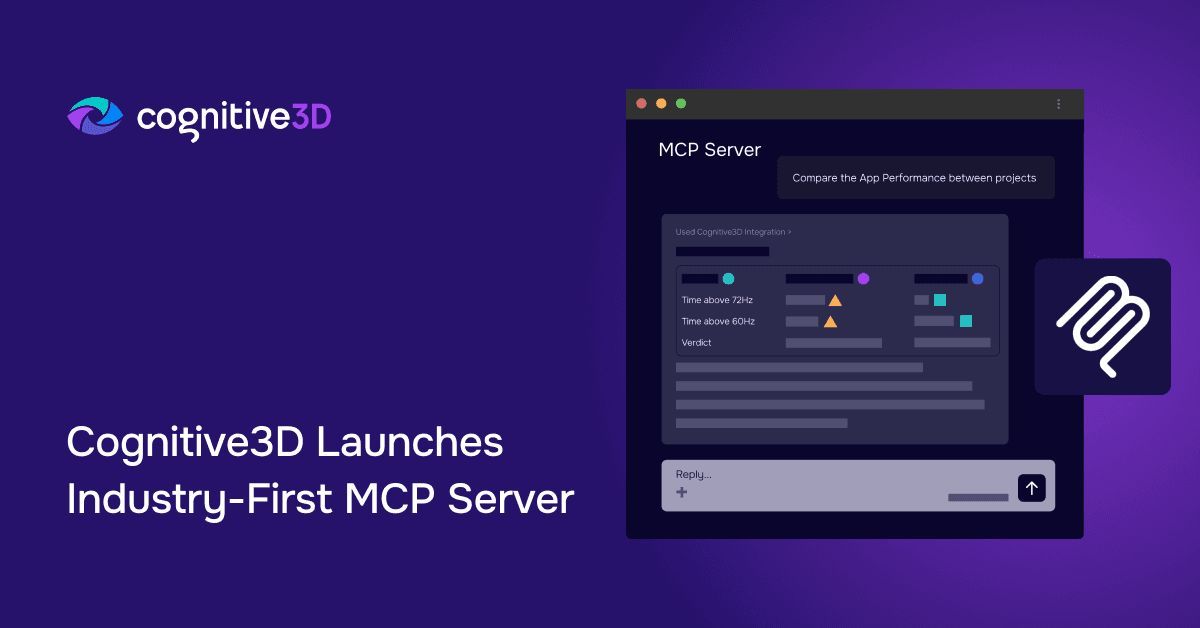
The future of spatial analytics is conversational.
Today we’re launching the Cognitive3D MCP Server! Enabling secure, AI-powered access to your XR data through straightforward questions.
Just ask, and get clear and immediate answers.
Get more details here: buff.ly/N7jgRvK
1
3
48
20 Nov 2025
Cognitive3D is heading to I/ITSEC 2025 in Orlando, FL — Dec 1–4!
Visit us at Booth 381 to see how Spatial Analytics is transforming immersive training and simulation.
We’ll be showcasing:
🔹 Deeper insights from VR/AR simulations
🔹 Objective, performance-driven training data
🔹 Real-time analytics for continuous improvement
Coming to I/ITSEC? Let’s connect.
buff.ly/AZ5VOrI
34
Cognitive3D retweeted

10 Sep 2025
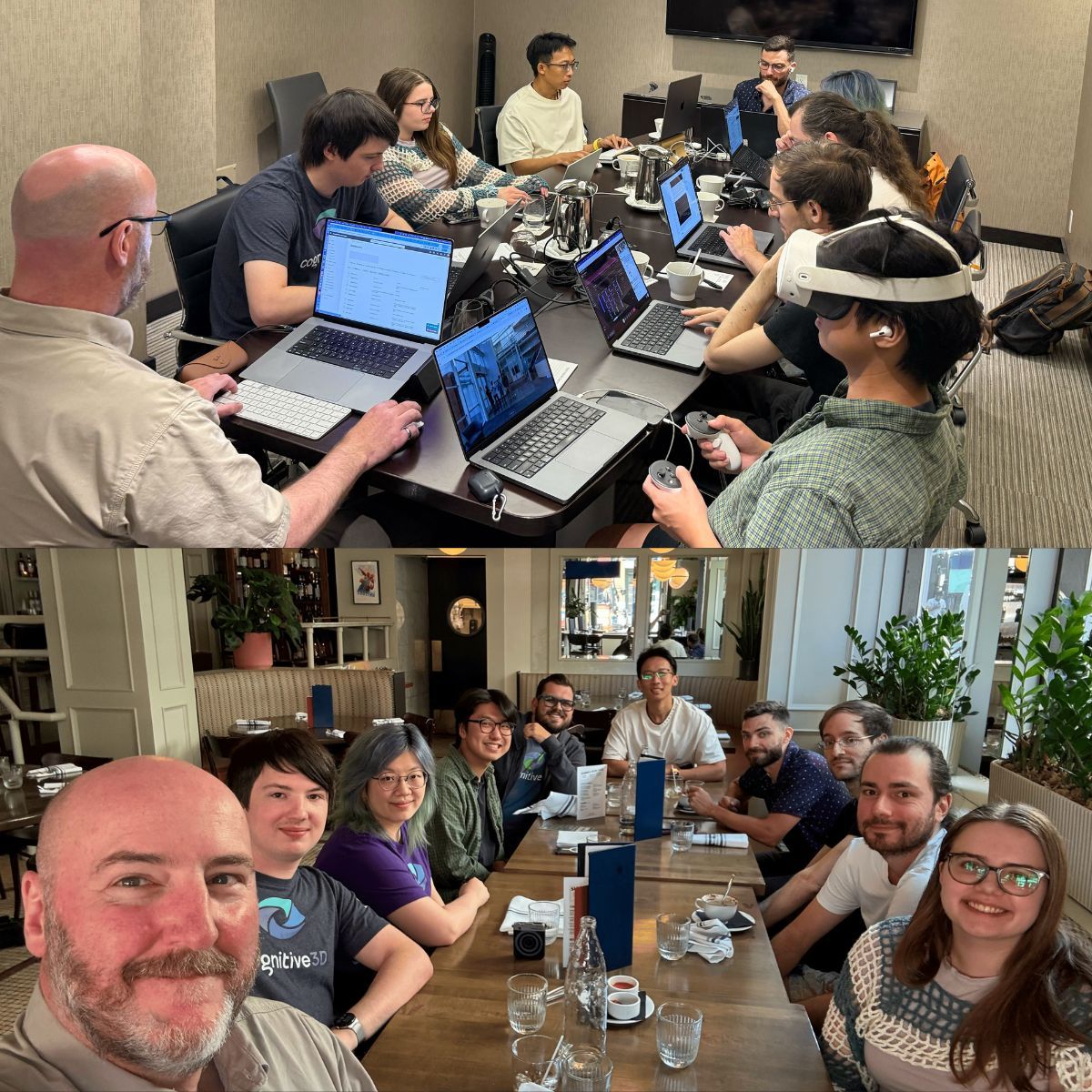
I'm loving these regular meetups with the Vancouver-based team of @cognitive3d
1
71
Cognitive3D retweeted
27 Mar 2024
Dilmer walks through how you can easily integrate Dynamic Objects into Cognitive3D to enhance user interaction data in your VR apps. Such as eye-tracking data, events and more.
Watch the full video here: buff.ly/43yTG87
1
2
232
Cognitive3D retweeted

25 Mar 2024
New XR Blog Post 🚨🥽
Today, I'd love to share some insights about my experience with @Cognitive3D VR/AR analytic tools after testing their Unity SDK and portal for the last few weeks.
blog.learnxr.io/xr-developme…
📌 On this blog post, I go over the basics by explaining what Cognitive3D is, how to integrate it into Unity, what to expect as far as data / visualizations, and lastly my honest opinion about using their tools and whether or not I recommend it.
#unity #xr
1
14
1,793
Cognitive3D retweeted
23 Mar 2024
Hello everyone! 👋👓
Today, I like to share my experience by using an advanced analytics tools for VR/AR which allows you to track and get player data. The visualizations offered by Cognitive3D are something else and I would love to show you a few interesting demos as well as how to integrate their SDK into a Unity project.
👉 Full video is available at: youtu.be/Rh4zfz3pUOc
📌 In addition to what was mentioned, I will also cover:
- How you can use Scene Explorer to view your player(s) recorded sessions: including showing HMDs, Controllers, Gaze Generated Heatmaps, and additional stats.
- How to track specific object behaviors associated through the use of Dynamic Objects Custom Events.
- How to customize your Cognitive3D session info for authentication purposes.
💡Let me know if you’ve any questions below everyone! Thanks.
#unity #xr
1
7
36
3,312
Cognitive3D retweeted
11 Mar 2024
Ever wondered what's happening within your VR/AR experiences? With Cognitive3D, you don't have to guess. Our SDK integrates directly into your Unity or Unreal projects, giving you actionable insights into user behavior.
2
2
241
Cognitive3D retweeted

1 Mar 2024
The latest episode of #XR #AI Spotlight is out! Learn how to better use your spatial data to improve your XR app with @Cognitive3D 👇
youtu.be/Zc53eWMnOMQ?si=ATl5…
1
4
573
24 Nov 2023
We're thrilled to collaborate with @Mind_Port on a joint mission to simplify the process for VR devs in creating VR training simulations, and getting actionable insights.
For detailed information: visit our official blog post:buff.ly/46u3pMP
1
160
20 Nov 2023
Appreciation goes to Valem for creating an engaging and informative tutorial about getting started with Cognitive3D. This guide includes comprehensive steps from initial setup to the collection and analysis of data from VR games.
buff.ly/3sy6pKl
3
127
17 Nov 2023
Traditional 2D platforms gave us data points — a click here, a view there. But 3D applications demand a richer tapestry of insights. In these environments, the very essence of participant experience is shaped by spatial context.
1
3
187
16 Nov 2023
How do you truly measure learning outcomes in immersive environments: The "Objectives System" goes beyond traditional event-based metrics.
We're now able to track and analyze nuanced interactions like gaze behavior – what learners focus on, for how long, and their responses
2
129
15 Nov 2023
Understanding the Evolution of Metrics:
Different platforms offer varying levels of insights into user behavior and engagement. From web to 3D, we went from a very basic engagement profile towards a captive audience with the ability to understand the participant’s full FOV.
4
161
14 Nov 2023
Imagine having a comprehensive analytics tool, like an 'App Annie' for XR, that benchmarks your app's performance across critical categories:
App Performance, User Comfort and Presence.
2
96
13 Nov 2023
Training managers have the ability to make learning more interactive, memorable and accessible by moving beyond traditional platforms and embracing VR/VR.
Imagine transforming complex skills into accessible experiences and democratizing immersive learning.
2
80
10 Nov 2023
As we approach the end of this year, we're looking forward to 2024, and we're grateful for the opportunities we had at conferences that allowed us to connect with industry peers
We've compiled a comprehensive list of 2024's must-attend VR/AR conferences
buff.ly/3u4yRDU
1
58