
Joined May 2026
- Tweets 167
- Following 74
- Followers 431
- Likes 3,096
50 Photos and videos
Pinned Tweet

May 28
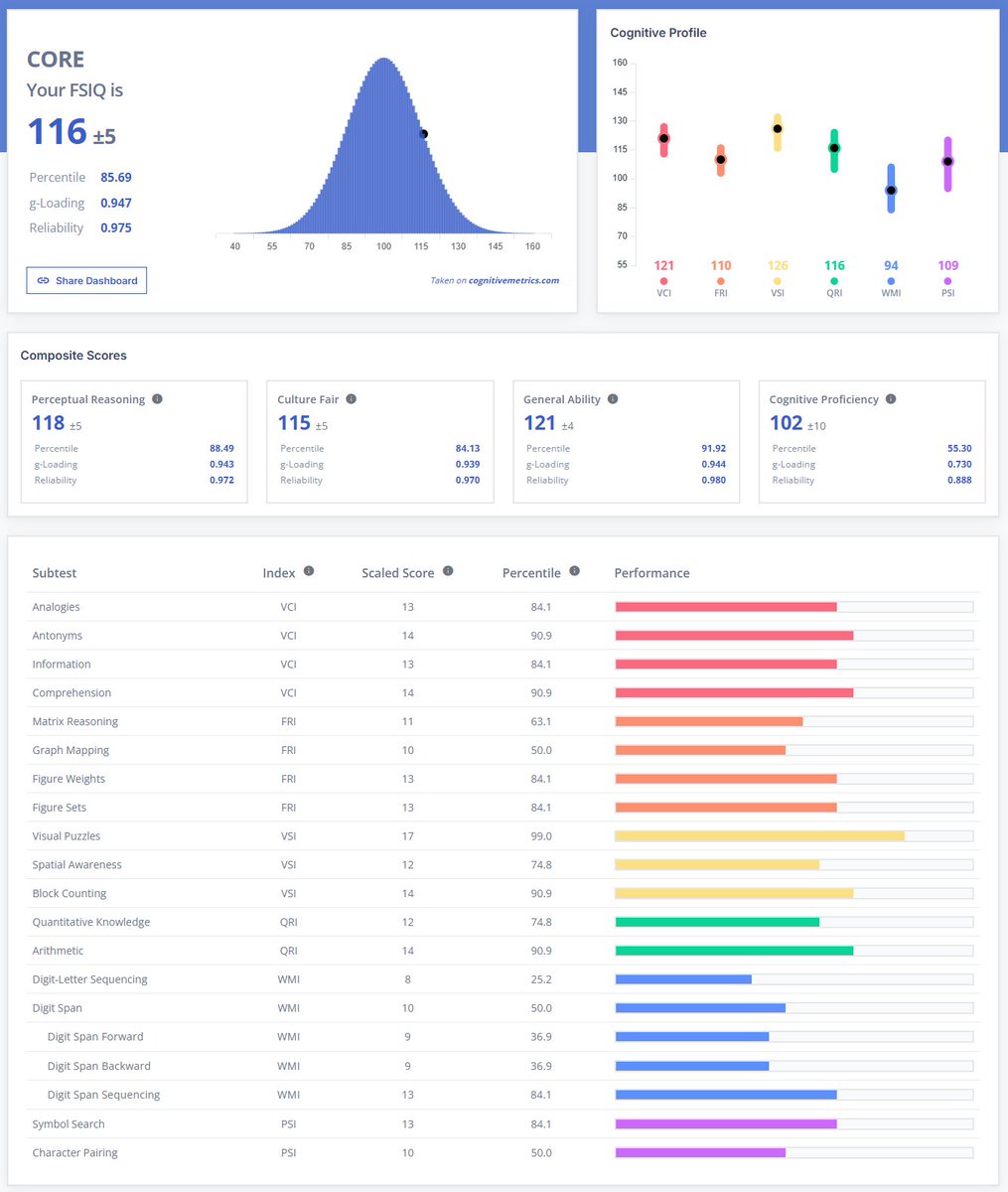
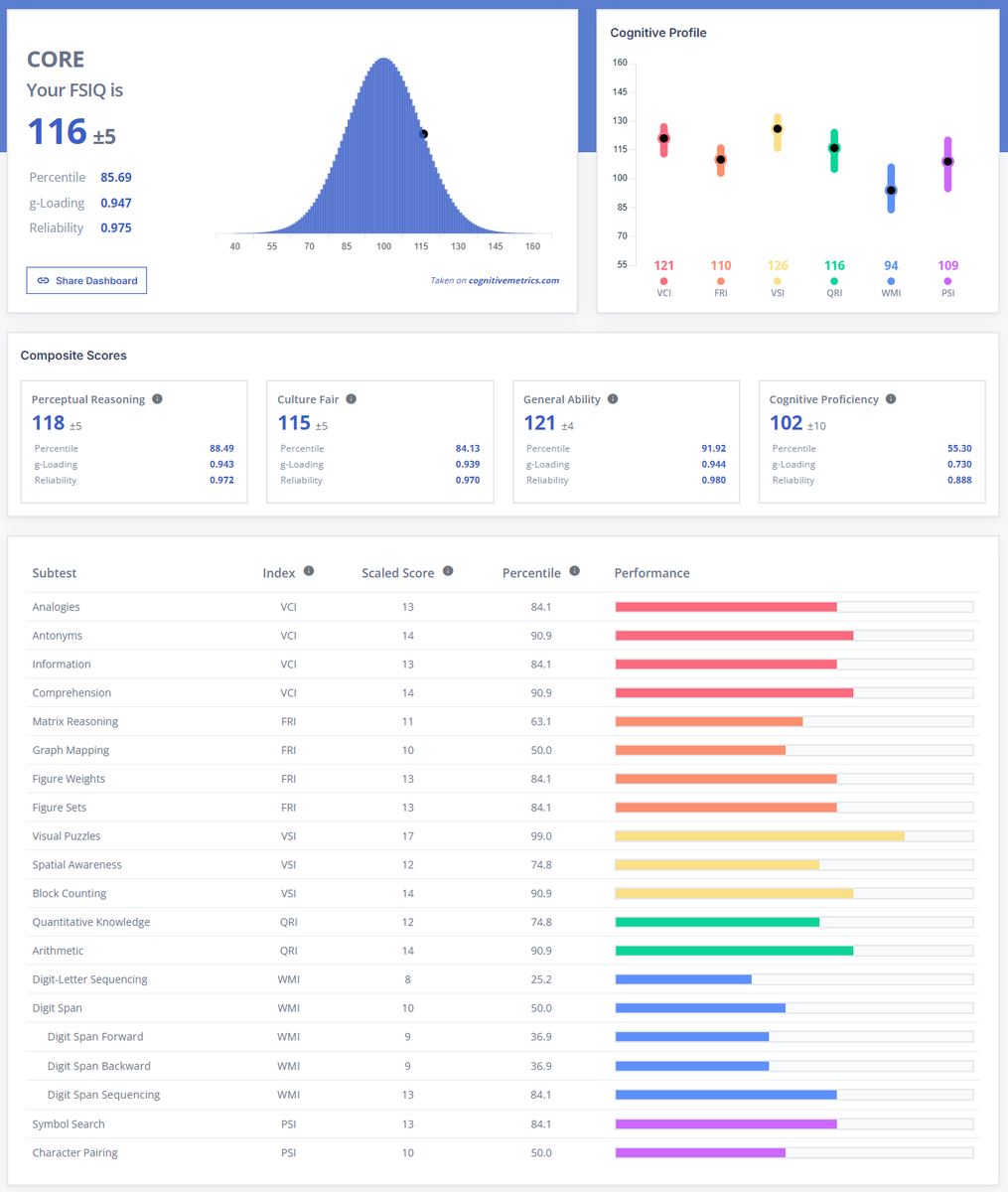
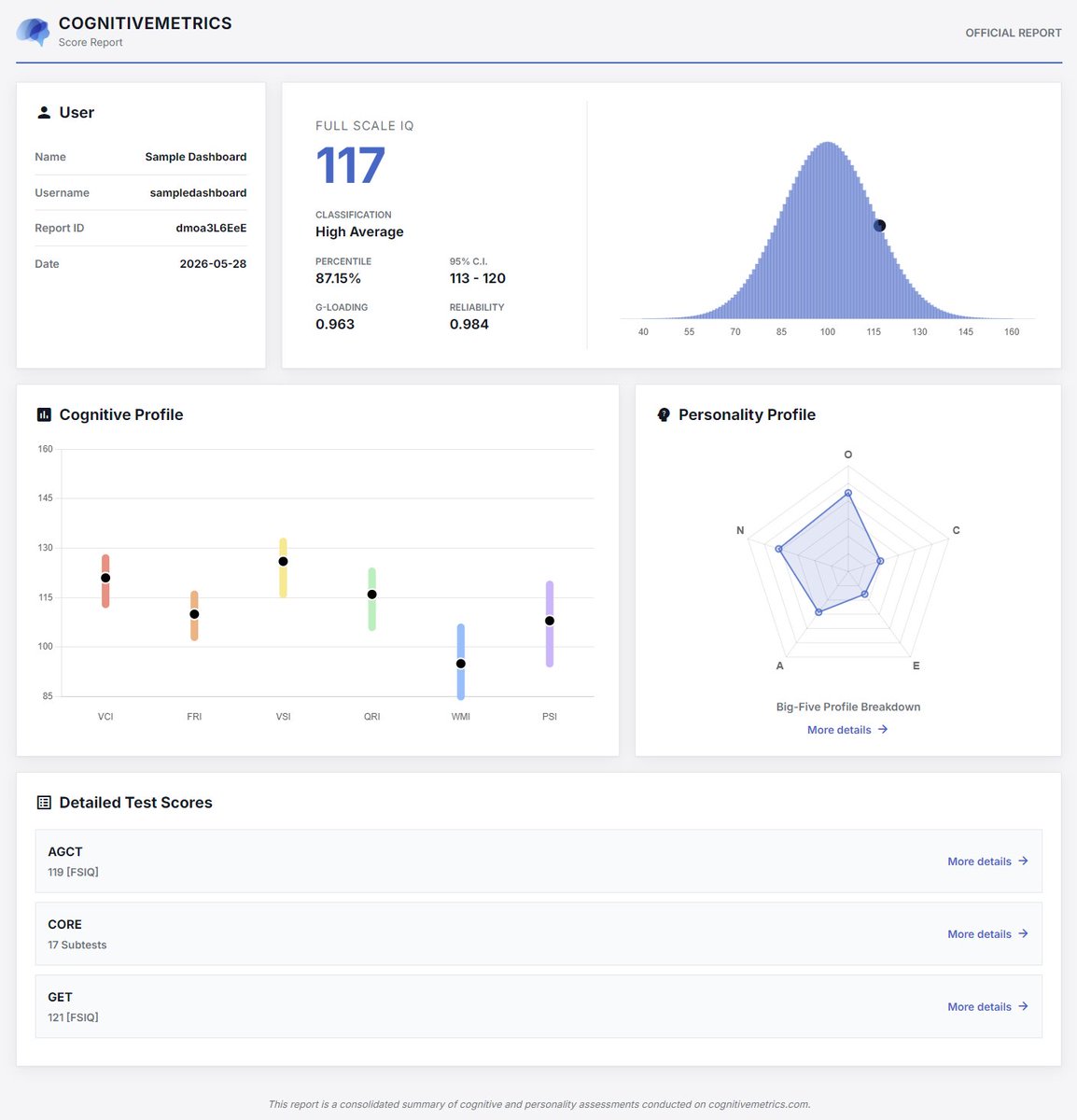
Dashboard links on CognitiveMetrics can be shared.
Take a tour of what the score report for the CORE looks like: cognitivemetrics.com/dashboa…
3
1
13
3,134
Jun 15
Are the SAT and ACT still good IQ tests?
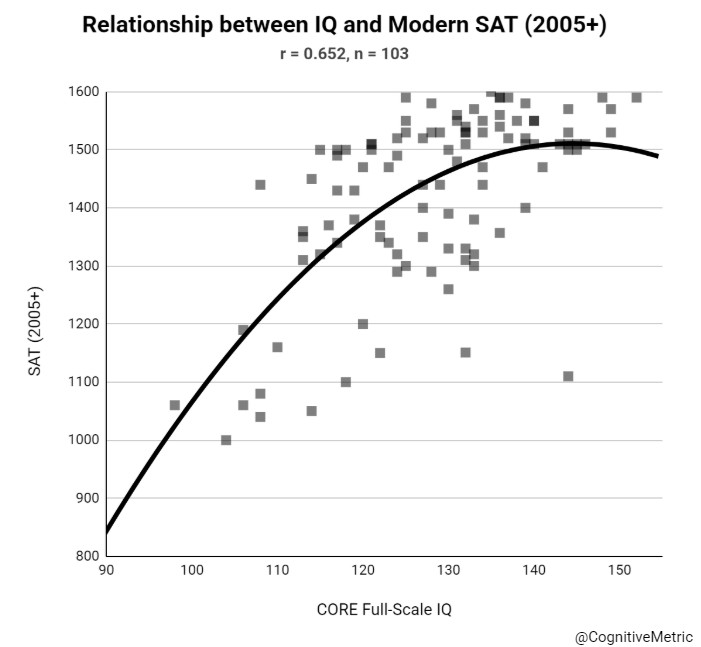
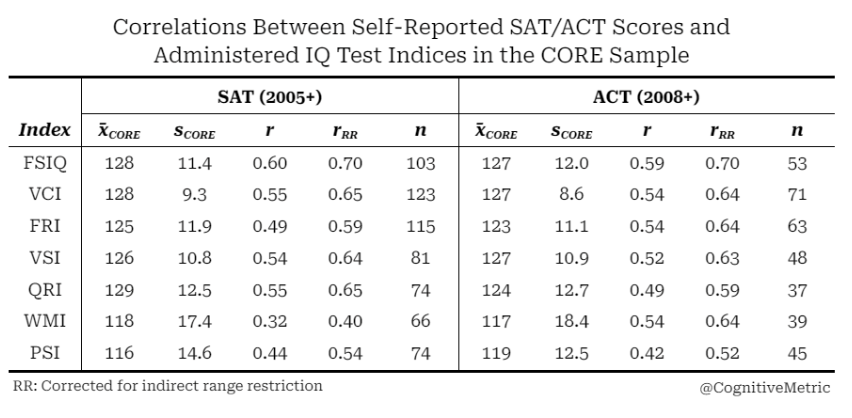
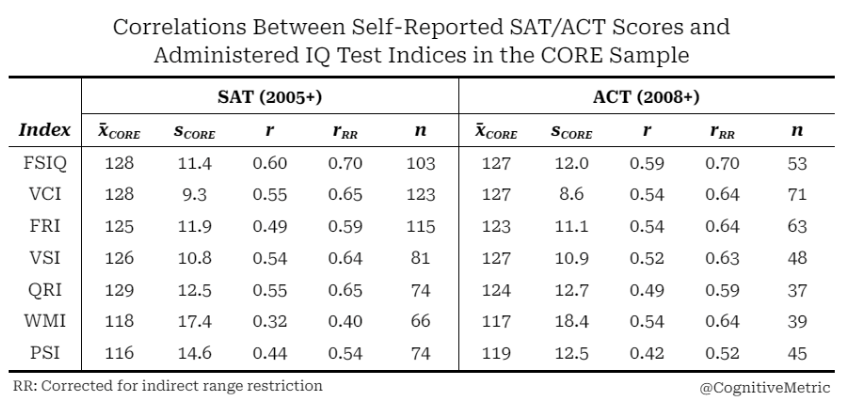
We did a survey of high-ability people who were administered an IQ test (CORE) and asked for their modern SAT/ACT scores and found the following:
1. It is much easier to hit the 1600 ceiling on the modern SAT compared to the pre-1994 version.
- After fitting a second-degree polynomial regression, we found that scores begin to plateau at approximately 130 FSIQ. Quantile regression estimates the ceiling at around 138 IQ. Visual inspection of the scatter plot also suggests that 1600 scorers begin appearing around the 120-125 FSIQ range and above.
- Contrast this with older SAT forms, whose ceilings were far higher, roughly 166 FSIQ. For example, College Board data from the 1984 National College-Bound Seniors cohort showed that only 5 out of 964,739 students earned a perfect 1600.
2. The modern SAT seems to be a slightly worse measure of general intelligence.
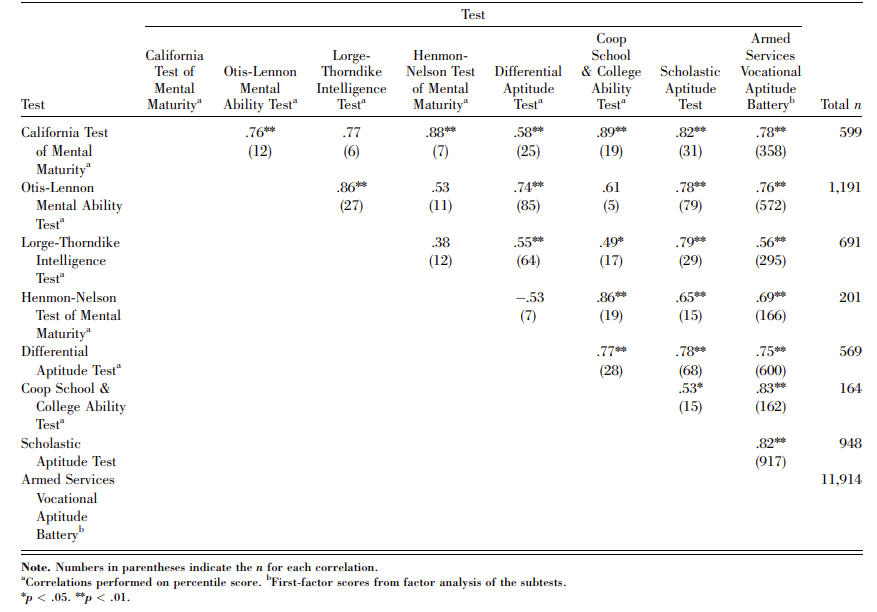
- The modern SAT was slightly less correlated with IQ compared to older forms, but still a strong proxy (r = ~0.70 with FSIQ after correction for range restriction). Older forms correlated with FSIQ a bit higher, with Frey and Detterman (2004) finding a 0.82 correlation with the ASVAB g-score.
- Take this with a bit more caution, considering the sample size is smaller and range restricted.
Some caveats though:
- The SAT scores are voluntarily self-reported (although the FSIQ scores are not)
- The sample size is lower than we'd like and we are still collecting people.
17
17
128
8,627
Jun 15
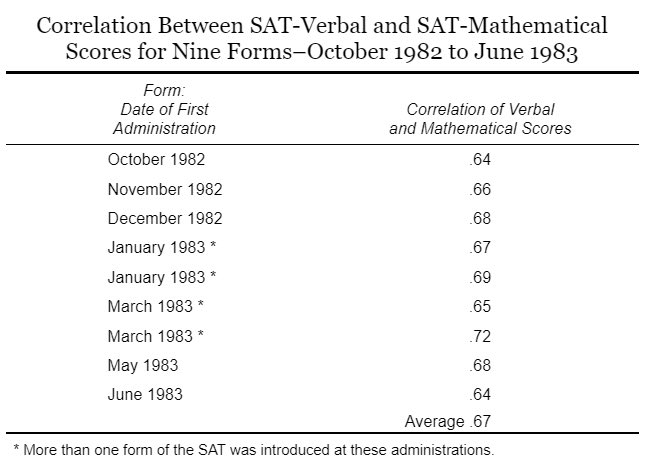
We also found a correlation of 0.66 between the modern SAT-V and SAT-M in our sample, which is directly in line with what was observed by College Board on the old SAT.
1
9
717
Jun 13
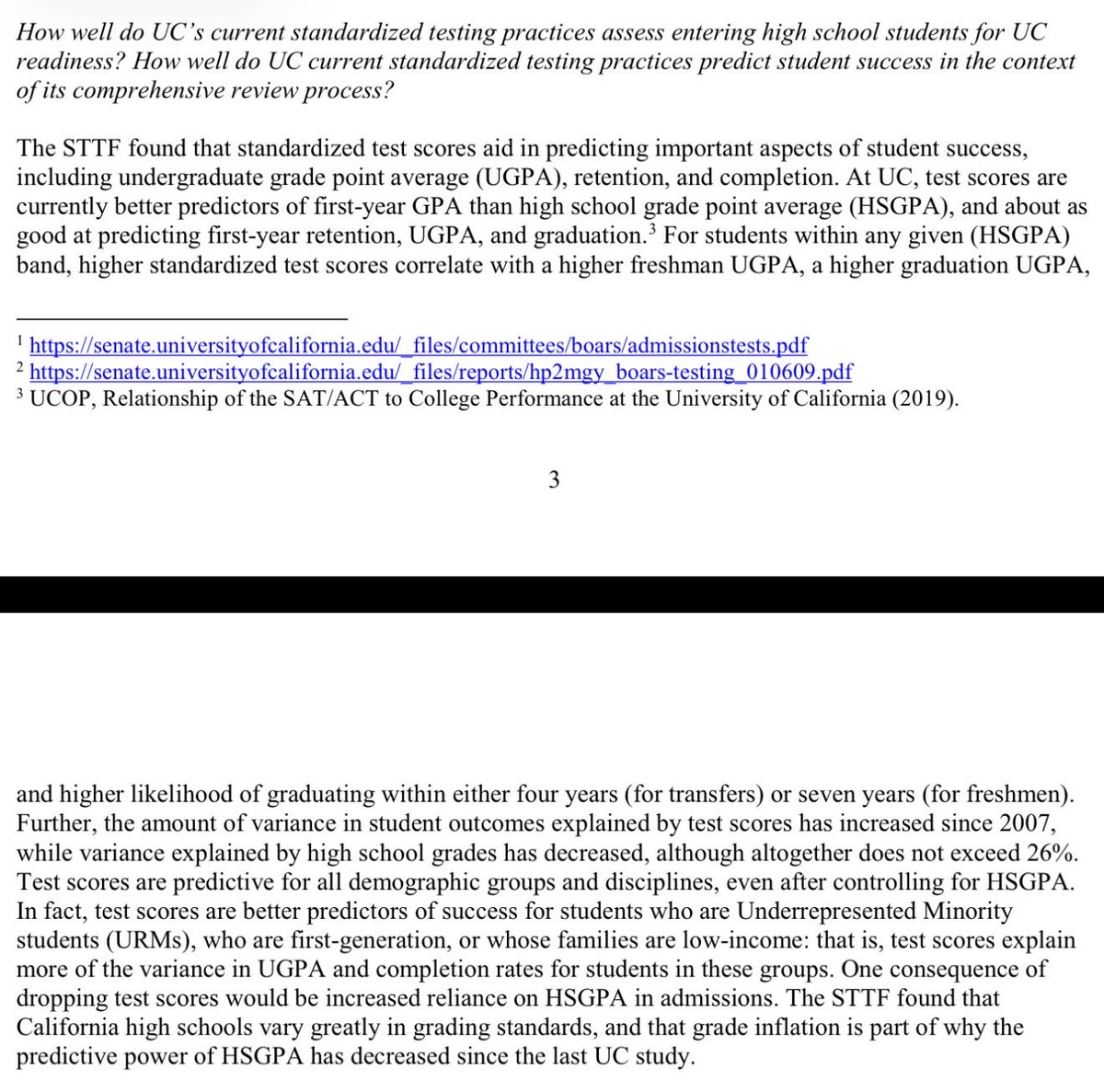
The faculty review at the University of California found that the SAT and ACT were useful predictors of academic success and were not biased against any social group:
“Test scores are predictive for all demographic groups and disciplines, even after controlling for HSGPA.
In fact, test scores are better predictors of success for students who are Underrepresented Minority students (URMs), who are first-generation, or whose families are low-income: that is, test scores explain more of the variance in UGPA and completion rates for students in these groups.”
Ultimately, the faculty committee recommended against going test-optional.
1
17
571
Jun 13
Standardized tests like the SAT and ACT help identify disadvantaged students who might otherwise not meet admissions criteria. They improve equity by providing a common metric that partially offsets grading variability and school quality differences.
The 2020 UC report: senate.universityofcaliforni…
8
219
Jun 11
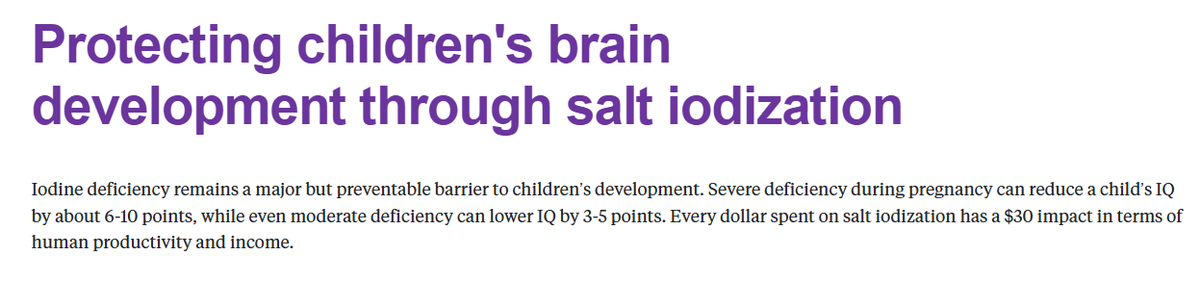
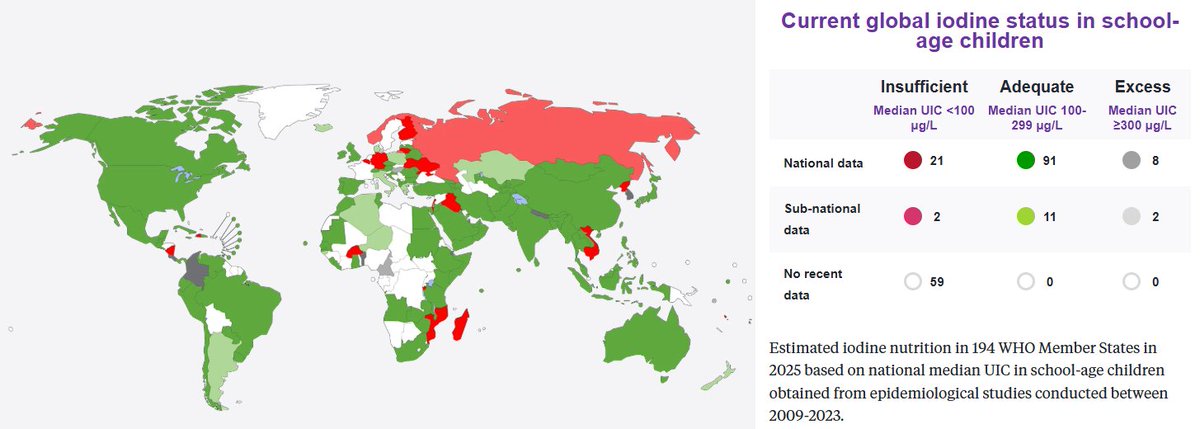
The leading cause of preventable mental impairment in the world is iodine deficiency. The World Health Organization estimates that nearly 50 million people suffer some degree of mental impairment due to iodine deficiency.
The good news is that iodine deficiency is inexpensive to cure, costing about 2 to 5 cents per person per year. Eliminating iodine deficiency worldwide is an ongoing project, largely through the introduction of iodized salt (see Iodine Global Network).
Iodine supplementation during pregnancy or infancy can raise average IQ by 12 points in severely deficient populations. Ultimately, treating iodine deficiency is one of the most cost-effective ways to raise intelligence and contribute to economic and social development (Zimmermann et al., 2008).
2
7
29
1,354
Jun 11
Image from IGN: ign.org/
Iodine Global Network (IGN, formerly ICCIDD) is a nonprofit organization focused on reducing iodine deficiency by advocating salt iodization programs at the national and global levels.
Referenced study: pubmed.ncbi.nlm.nih.gov/1867…
Note: There is no evidence that providing iodine to people who already have enough of the nutrient will raise intelligence. In fact, too much iodine in a person’s diet can cause health problems, though these are less severe than the problems arising from an iodine deficiency.
8
347
Jun 10
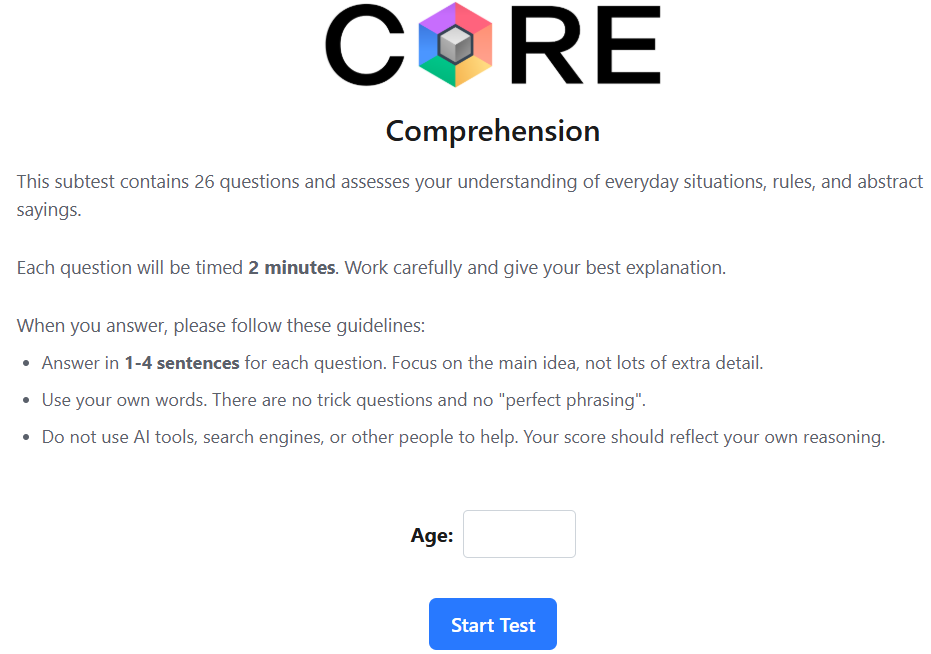
Little-known fact: Some IQ tests include questions about real-life common sense.
One Wechsler subtest, Comprehension (CO), presents questions that assess practical judgement, understanding of social norms and proverbs, and the reasoning behind everyday rules.
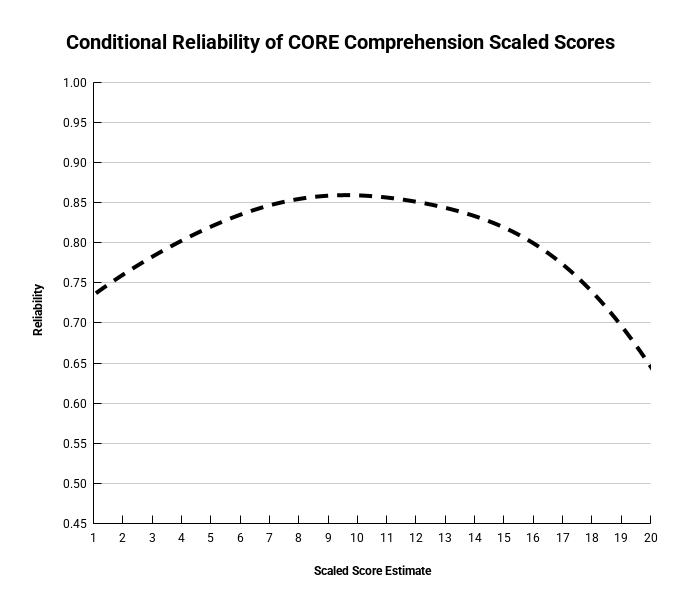
For our Full-scale IQ test (the CORE), we created our own Comprehension subtest. Rather than being read aloud by a proctor, examinees read the questions on screen and type their responses freely.
The 0-, 1-, or 2-point partial scoring has been retained; however, for efficiency, an AI scorer has been implemented that compares user responses against a comprehensive rubric defining an acceptable answer and multiple common example responses for each point threshold.
Rigorous manual testing and the high internal reliability of this subtest (0.8975) indicate that the AI scoring system is functioning effectively. Moreover, we have found CORE CO's g-loading to be 0.656 (corrected for SLODR), while CO's g-loading on the WAIS-V is 0.66.
4
1
17
1,059
Jun 10
If you are interested in taking CORE Comprehension, check it out here: cognitivemetrics.com/test/CO…
3
362
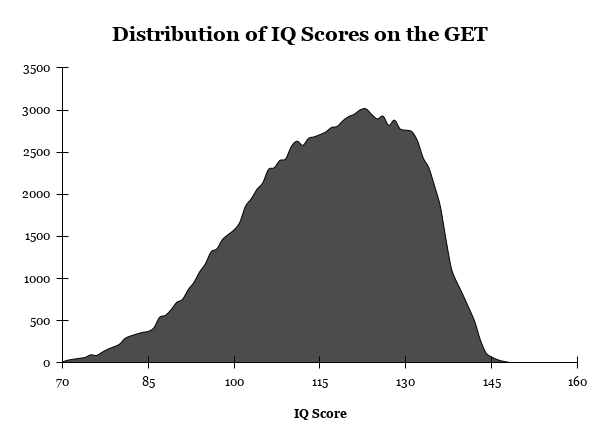
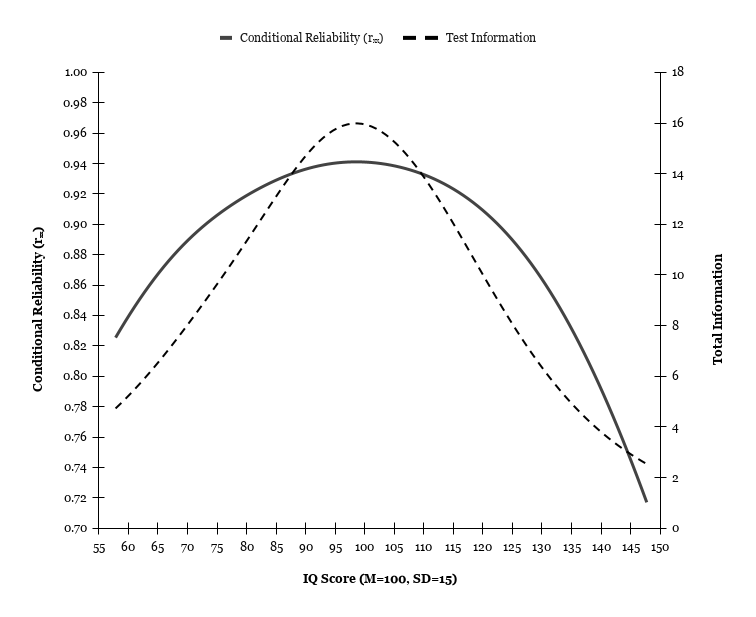
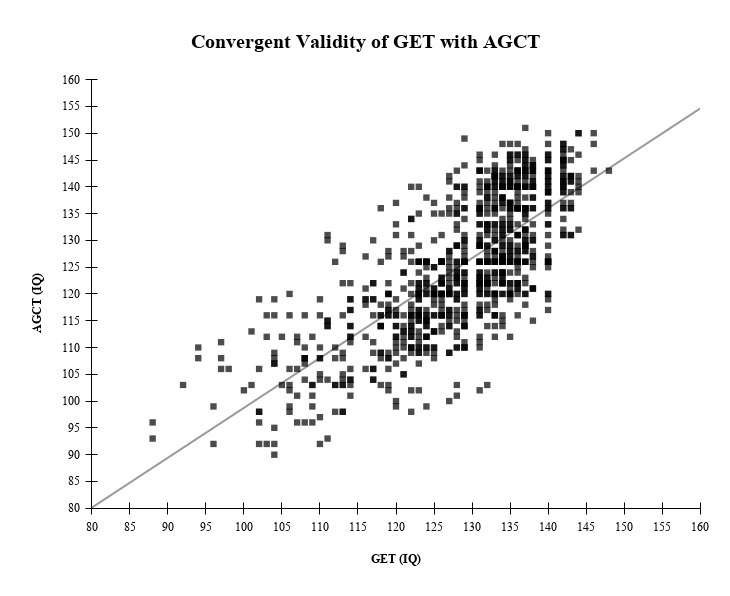
We recently released a technical report evaluating the psychometric properties of the Gifted Entry Test (GET), a modernized adaptation of the Otis Gamma, using a large online sample (N = 76,009). Famously, several US presidents took the Otis Gamma, including John F. Kennedy and Richard Nixon.
Overall, the GET demonstrated excellent reliability (α ≈ .93), substantial loading on general intelligence (λ = .81), strong convergent validity with the AGCT (r ≈ .82 after correction for range restriction), and strong measurement precision across a wide range of ability.
Despite limitations related to sample self-selection and ceiling effects, we find that the GET is a reliable, valid, and efficient measure of general intelligence suitable for large-scale online testing.
Read the GET technical report here: cognitivemetrics.com/wiki/ot…
4
41
1,819
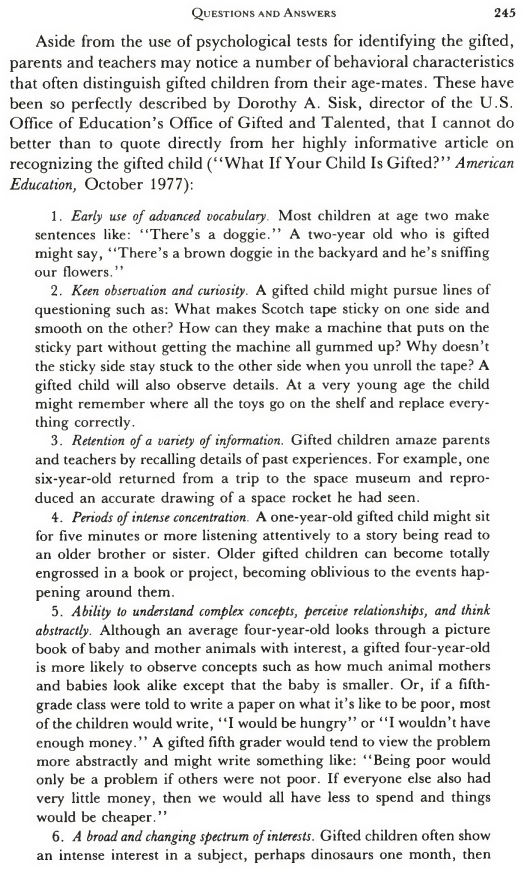
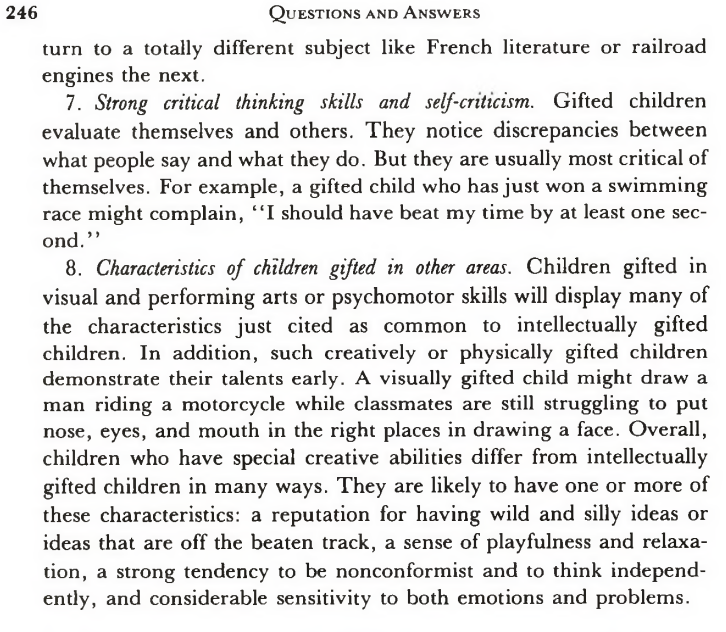
"Q: How can we know if our child is intellectually gifted?
A: So-called gifted children are not a distinct category of children, set apart from all the rest. Giftedness is part of the total continuum of mental abilities, including both general intelligence and special abilities or talents. Where one draws the line on this continuum to distinguish those one would characterize as “gifted” is fairly arbitrary.
In identifying the intellectually gifted, most school systems use the criterion of obtaining an IQ of between 130 to 140 [recte: 120-140 IQ], or higher, on an individual IQ test.
... Aside from the use of psychological tests for identifying the gifted, parents and teachers may notice a number of behavioral characteristics that often distinguish gifted children from their age-mates."
Arthur Jensen then quotes directly from an article, describing it as a "highly informative article on recognizing the gifted child".
1
2
46
2,260
From Straight talk about mental tests (1981) by Arthur Jensen (p. 244-246): arthurjensen.net/wp-content/…
8
587
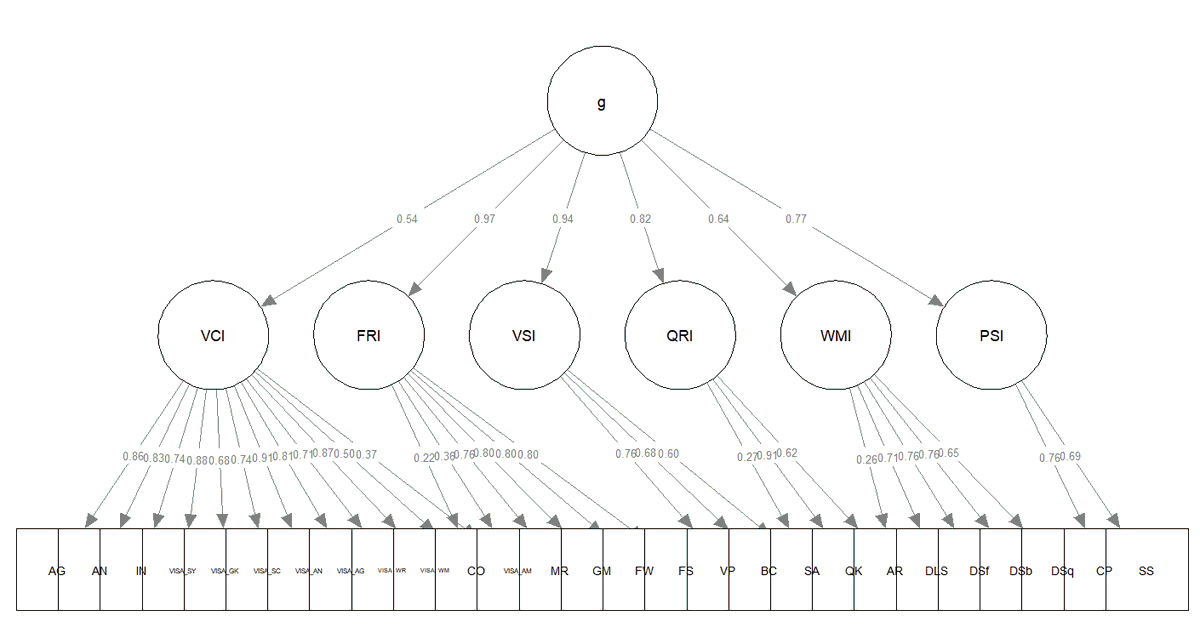
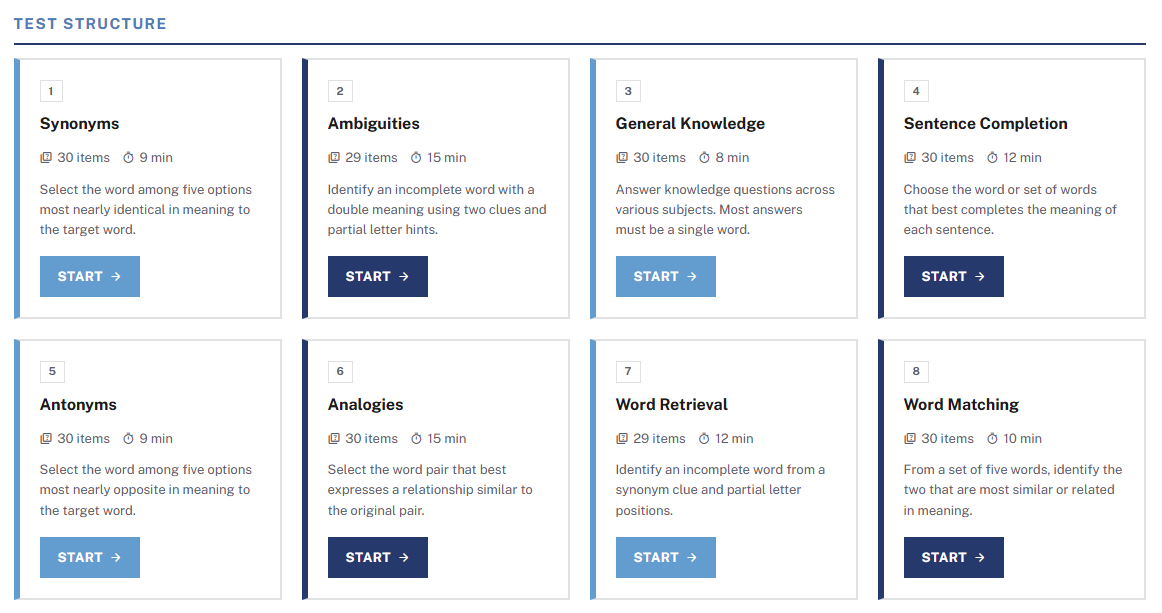
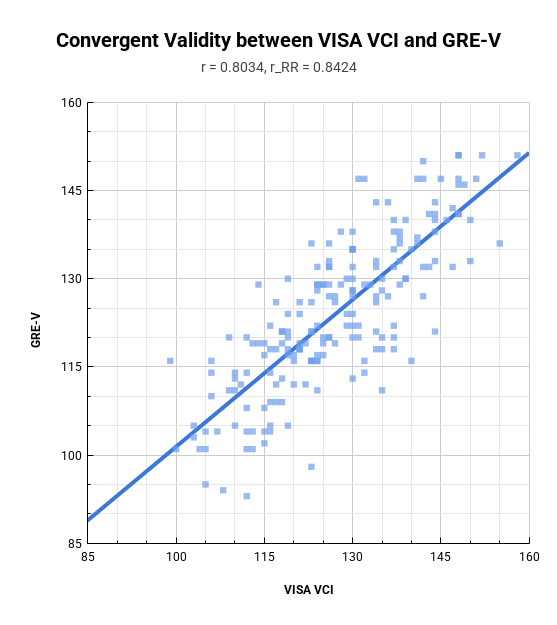
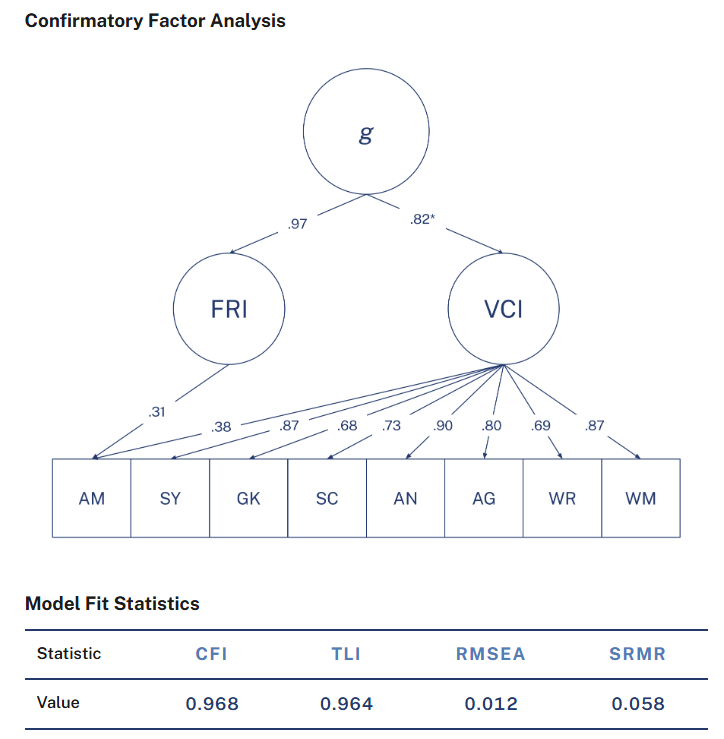
The Verbal Intelligence Scale for Adults (VISA) is a battery of eight subtests designed to assess general verbal intelligence. All subtests are composited into a single Verbal IQ score (the Verbal Comprehension Index; VCI), reflecting an individual's overall verbal ability.
By measuring verbal reasoning, abstraction, recall, and breadth of knowledge, the VISA aims to provide a highly accurate and comprehensive evaluation of verbal ability.
Validity data has now been released on the VISA (see attached figures). We found that VISA has a g-loading of .81 (corrected for SLODR). Additionally, the VISA has been renormed for the first time.
Overall, the evidence suggests that the VISA is a strong measure of verbal ability. You can take the VISA and check out its validity here:
cognitivemetrics.com/test/VI…
9
6
105
44,882
Common misconception: “IQ doesn't measure anything meaningful beyond 120 IQ and is only good for telling apart intellectual disability."
To the contrary:
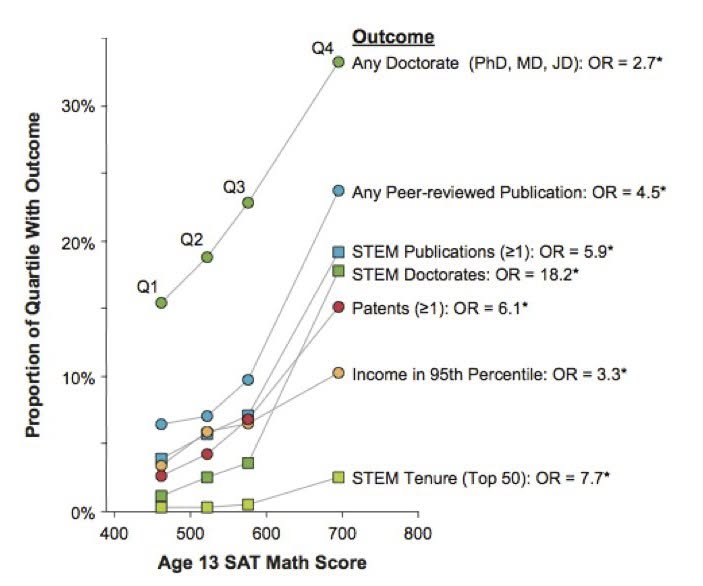
The Study of Mathematically Precocious Youth (SMPY) has tracked thousands of adolescents who scored in the top 1% (135 IQ; 390 or higher SAT-M at age 13) since the early 1970s.
The top quartile of this already-elite group went on, by their early 30s, to earn patents at roughly six times the rate of their peers in the bottom quartile, secure tenure-track jobs at top 50 research universities eight times as often, and have incomes in the top 5% of incomes nationwide three times as often (and more, as the attached graph shows).
These widening gaps, captured 20 years after the initial testing, show there is no loss in predictive power beyond some threshold of IQ, and that IQ can predict rarer and more prestigious accomplishments later on (Lubinski, 2009).
14
38
411
26,761
From our Common Misconceptions About IQ wiki article: cognitivemetrics.com/wiki/mi…
1
15
1,694
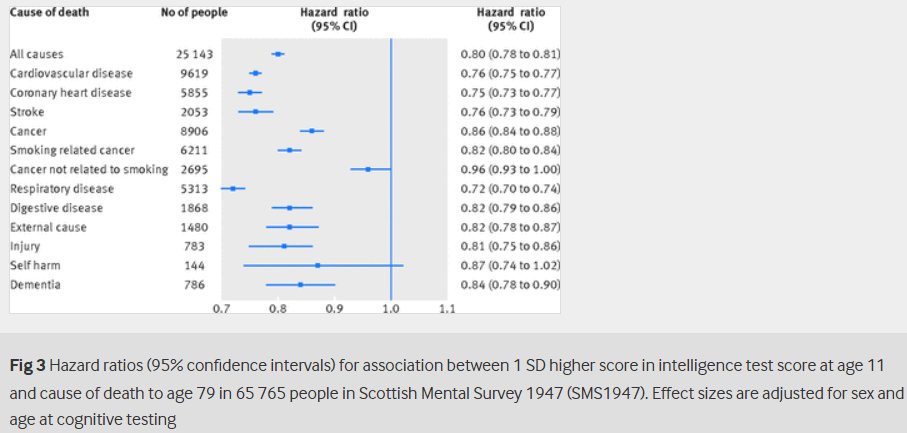
Higher intelligence predicts lower mortality from all major causes of death.
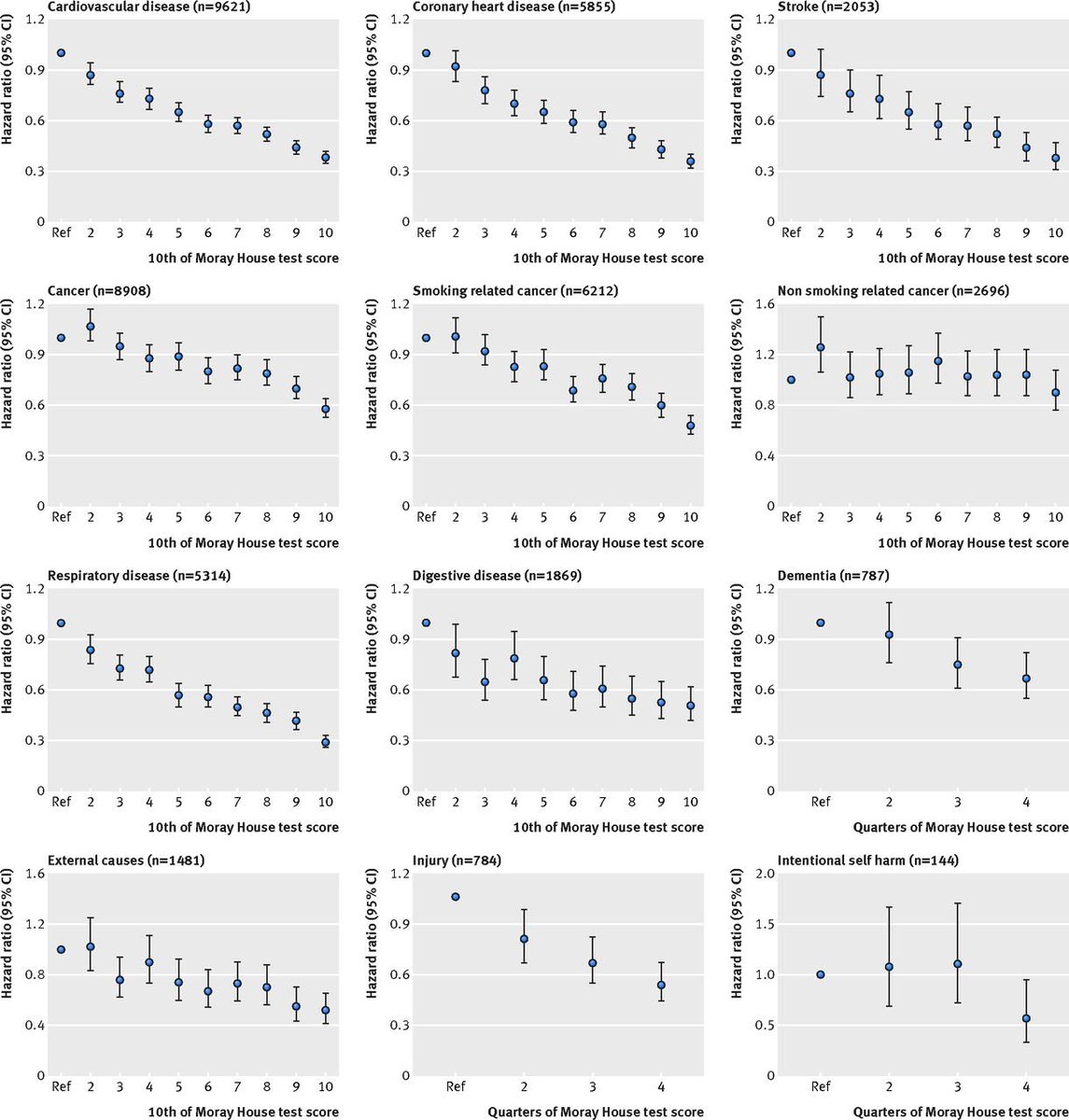
In a study that followed thousands of people for 68 years, higher scores on an intelligence test at age 11 were associated with lower risk of mortality ascribed to coronary heart disease and stroke, cancers related to smoking (particularly lung and stomach), respiratory diseases, digestive diseases, injury, and dementia.
There was a ~20% lower risk of all-cause mortality per 1 SD (15-point) increase in IQ.
The first figure below shows that the association is generally incremental across the full range of IQ scores. Controlling for confounders such as childhood socioeconomic status only slightly decreases the relationship. The causes of the relationship are not yet fully understood.
2
6
72
2,852
"Childhood intelligence in relation to major causes of death in 68 year follow-up: prospective population study"
Study (full text): bmj.com/content/357/bmj.j270…
4
466
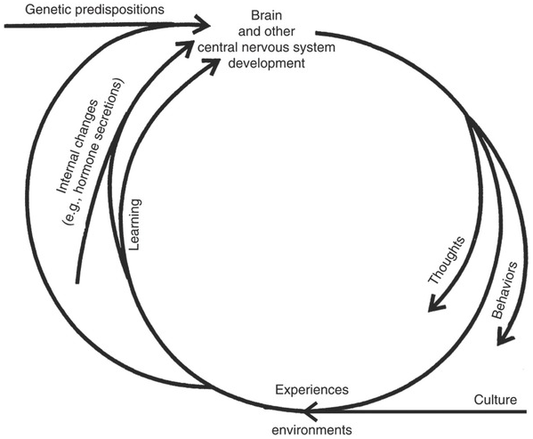
"Nature versus nurture" is an unwarranted oversimplification that does not align with what research has shown. In fact, nature and nurture are inseparably related in a continuous feedback loop.
Genes, hormones, and experiences contribute to brain development and to how individuals select pieces from the environment, guided by their predilections and past experiences. The latter also contributes to modifying their brains.
This is well-illustrated in Diane Halpern's Biopsychosocial model:
1
6
29
904
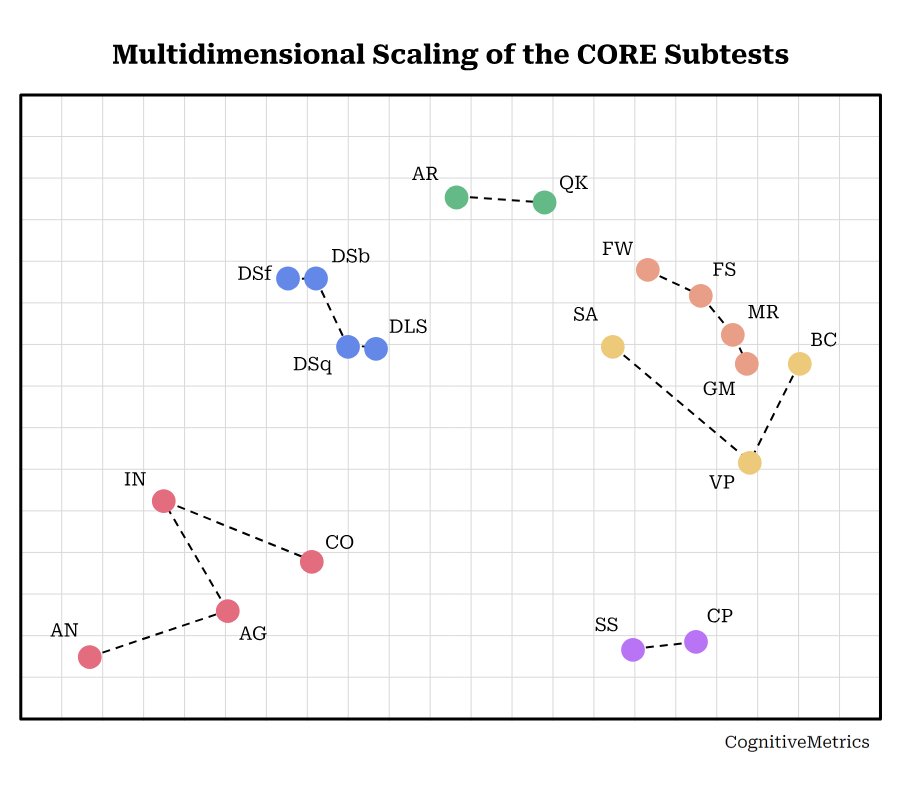
Multidimensional scaling (MDS) is a method for visualizing the similarity of a high-dimensional dataset by embedding it into lower dimensions. Similarity is converted into distances on a plane to visualize statistical clusters better.
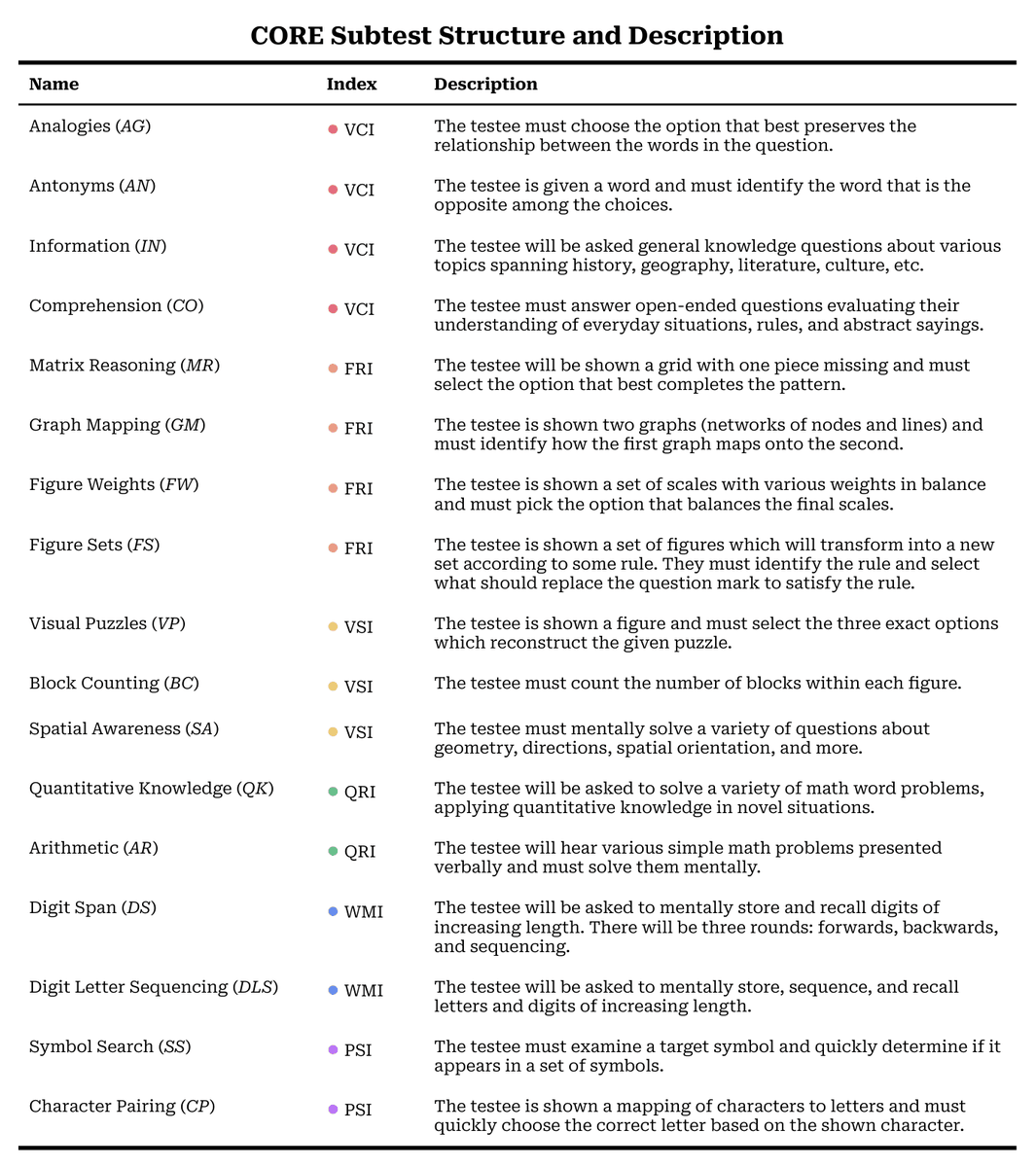
Below is a 2D MDS chart for CORE, as well as a brief description of each subtest.
1
1
16
742
May 31
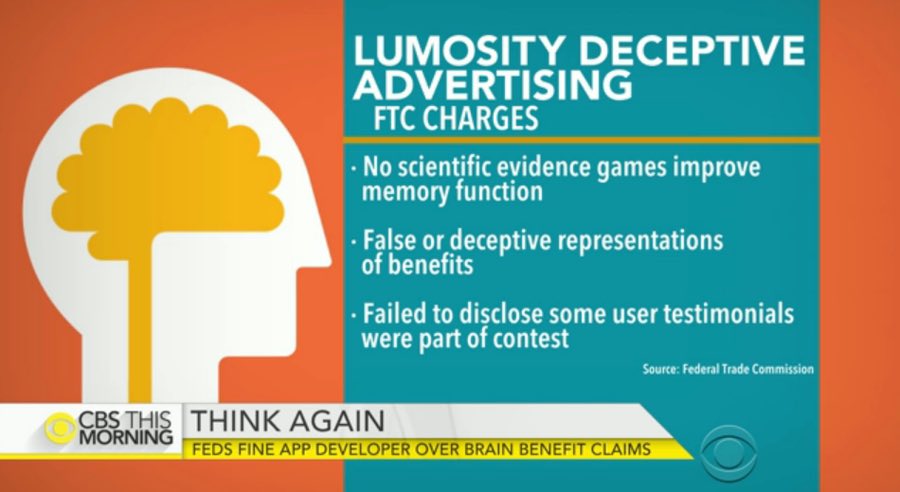
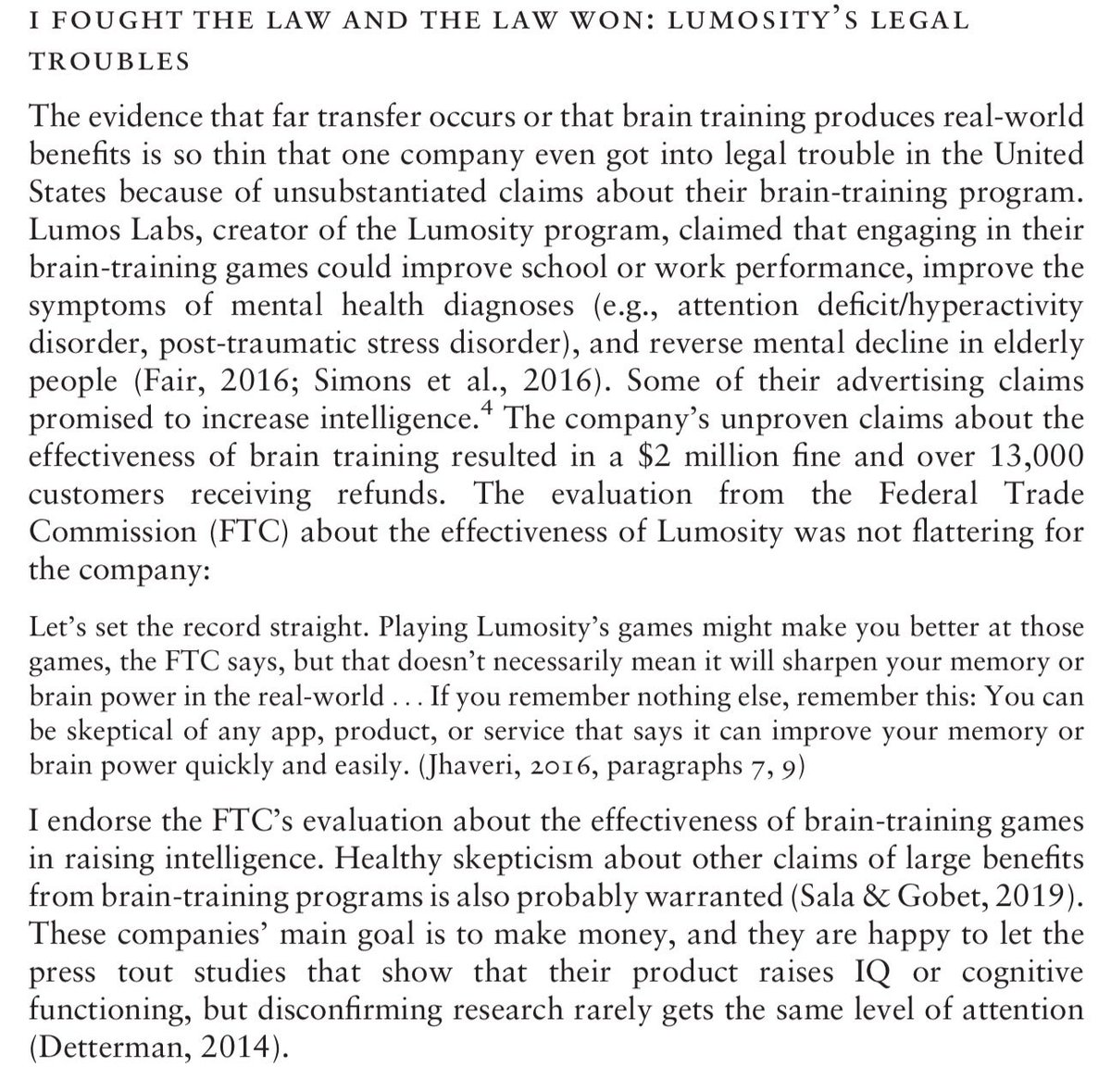
The evidence that brain-training games produce real-world benefits is so weak that one company (Lumosity) was fined $2 million for false advertising by the FTC. Over 13,000 customers were given refunds.
Lumosity claimed their games could improve school or work performance, ADHD symptoms, and protect against cognitive decline by mitigating dementia.
The Federal Trade Commission’s (FTC) evaluation (2016) sums the lesson up well:
“Playing Lumosity's games might make you better at those games, the FTC says, but that doesn't necessarily mean it will sharpen your memory or brain power in the real-world.
... If you remember nothing else, remember this: You can be skeptical of any app, product, or service that says it can improve your memory or brain power quickly and easily.”
3
2
32
1,027
May 31
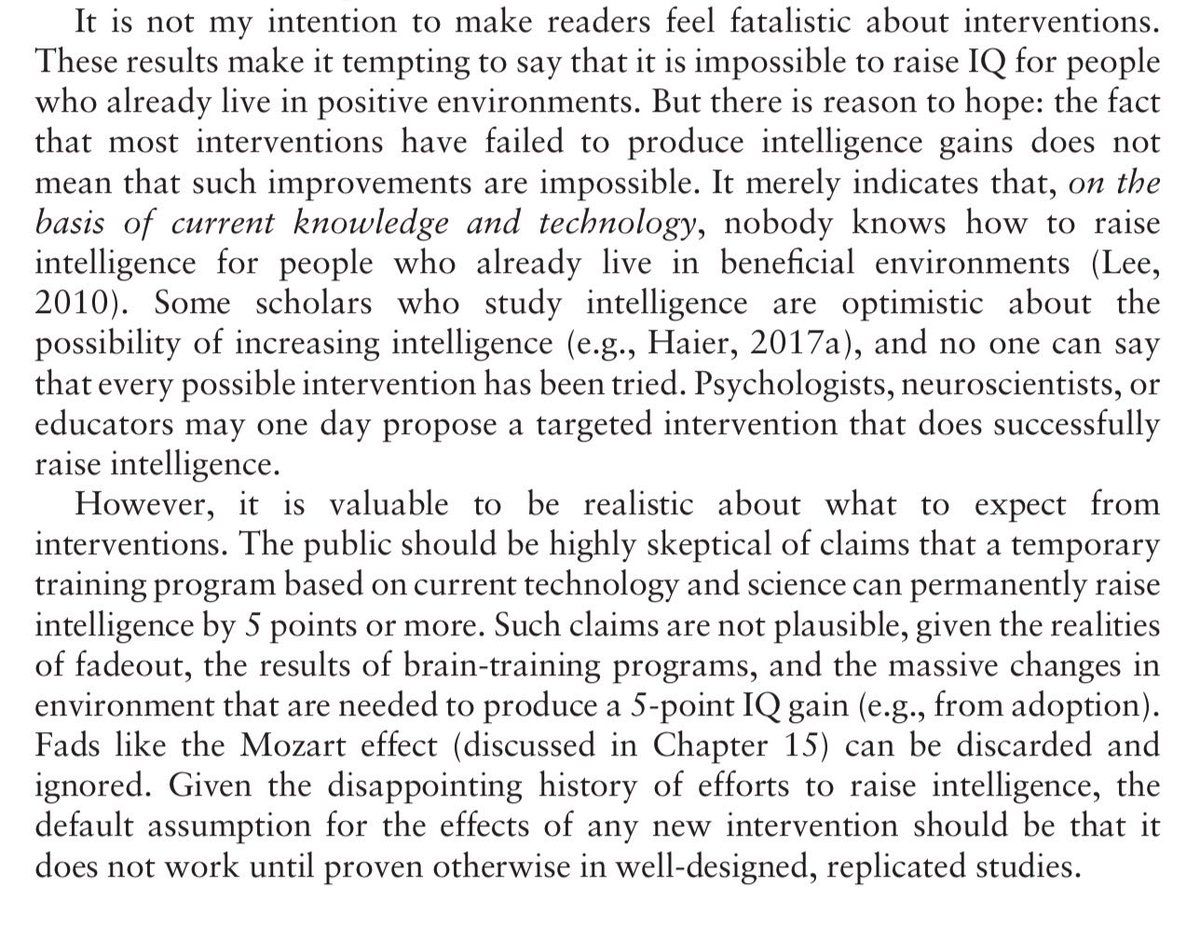
Excerpt from p. 147 of Russell Warne’s great 2020 book, In the Know: Debunking 35 Myths about Human Intelligence.
Avoiding fatalism and leaving room for hope, here is what Warne said at the end of his chapter on brain training programs:
14
501