
Joined May 2018
- Tweets 1,654
- Following 72
- Followers 45,623
- Likes 1,916
412 Photos and videos

Pinned Tweet

25 May 2023
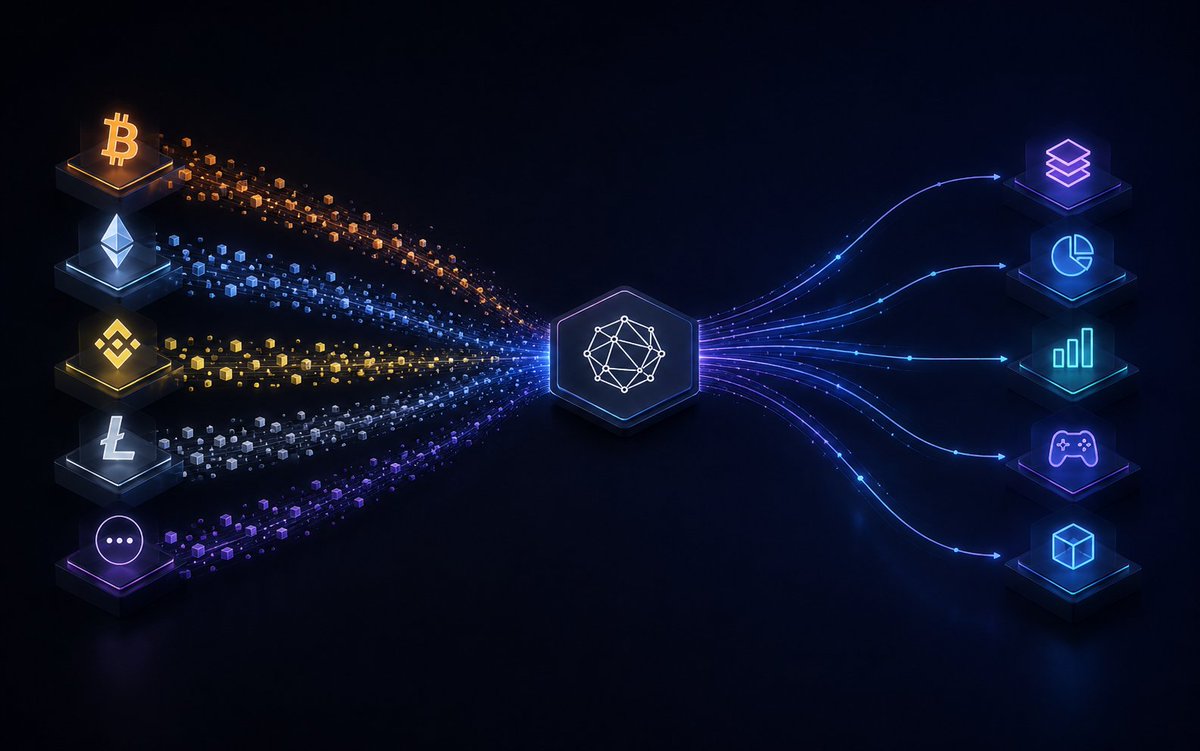
We are looking forward to closing the gap between blockchain and the traditional world. 🤝
Find out what Coinweb is capable of 🌏
$CWEB #Coinweb #Interoperability
299
523
612
88,455
May 31
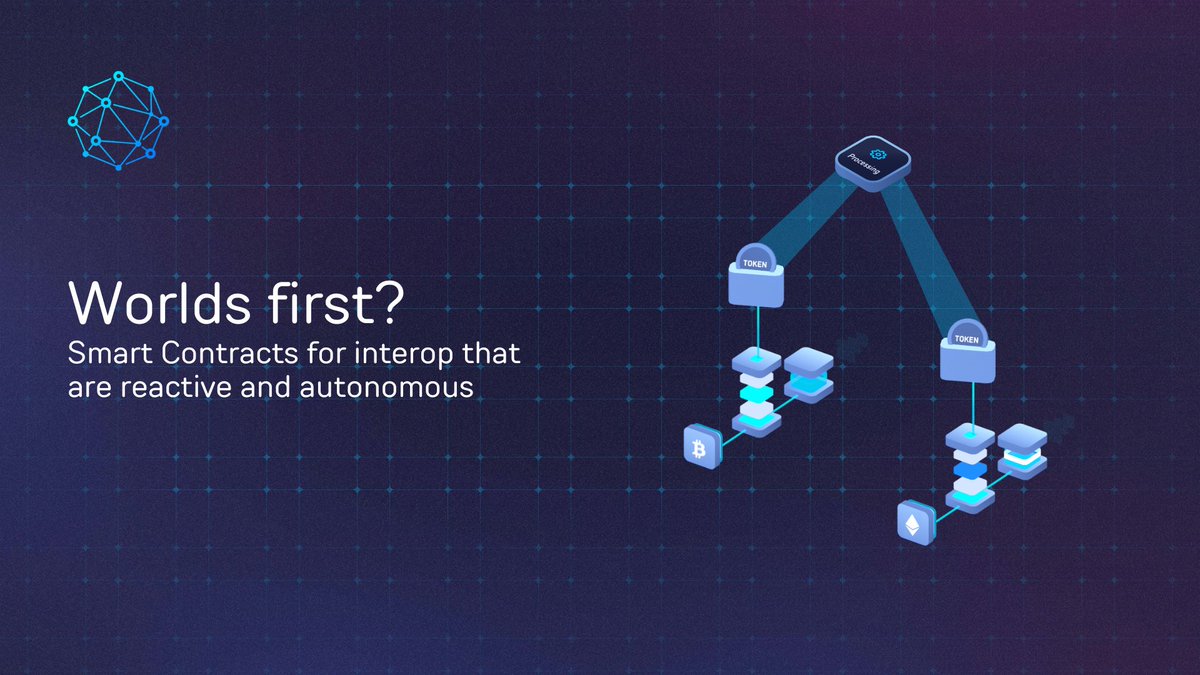
Coinweb’s Reactive Smart Contracts are like smart robots for blockchains.
They run on their own, can react autonomously to events, and work across all connected chains.
One gas token ( $CWEB ), self-managed fuel, no middlemen.
Perfect for cross-chain swaps: no validator sets, no idle capital, no 1000x collateral. Just-enough, just-in-time collateral management.
More trustless. Faster. Cheaper. Smarter.
11 Nov 2025

A reactive smart contract that lives across various chains.
No validators, just Pact.
10
12
31
1,259
May 24
Most dApps today are still confined to the blockchain they were built on.
Their data lives there.
Their logic executes there.
Their users are limited by it.
Coinweb changes that.
Instead of relying on its own consensus system to “agree” on what happened on another chain, Coinweb continuously parses and reacts to canonical L1 blockchain data directly from the source chains themselves, deterministically.
To date, we have parsed over 40,000,000,000 L1 transactions.
This gives developers building on Coinweb direct access to blockchain data across every connected ecosystem.
Directly from the underlying chains themselves.
That means developers can build dApps that react to real multi chain activity in deterministic ways.
A transaction either happened on the blockchain or it didn’t.
No subjective validator voting.
No probabilistic bridge consensus.
No federated trust assumptions.
This becomes especially powerful for emerging categories like autonomous AI agents.
An AI application built on Coinweb could monitor activity across multiple chains simultaneously and execute deterministic actions based on verifiable blockchain events:
• Rebalance treasury positions across ecosystems
• Execute cross chain liquidity strategies
• React to payment settlement events
• Coordinate multi chain gaming economies
• Trigger automated workflows based on real blockchain activity
All from a unified application layer with direct access to canonical L1 data.
Reactive Smart Contracts execute based on verifiable blockchain events, allowing applications to coordinate logic across ecosystems with predictable outcomes and reduced complexity.
This is a fundamentally different model for building multi chain applications.
11
18
41
953
May 18
We will have @AntonCoinweb representing Coinweb and contributing to this year’s Litecoin Summit in Amsterdam!
Looking forward to connect with the LTC community!

Thrilled to welcome @AntonCoinweb, the Chief Marketing Officer of @CoinwebOfficial & Contributor to @Pact_Swap, to the Litecoin Summit this year!
Join us, June 22-23, 2026 at the Tobacco Theater in Amsterdam to kick off Dutch Blockchain Week! 🇳🇱
⏩ litecoin.com/summit ⏪
4
20
47
4,303
Apr 27
This is exactly the direction we’ve been building towards.
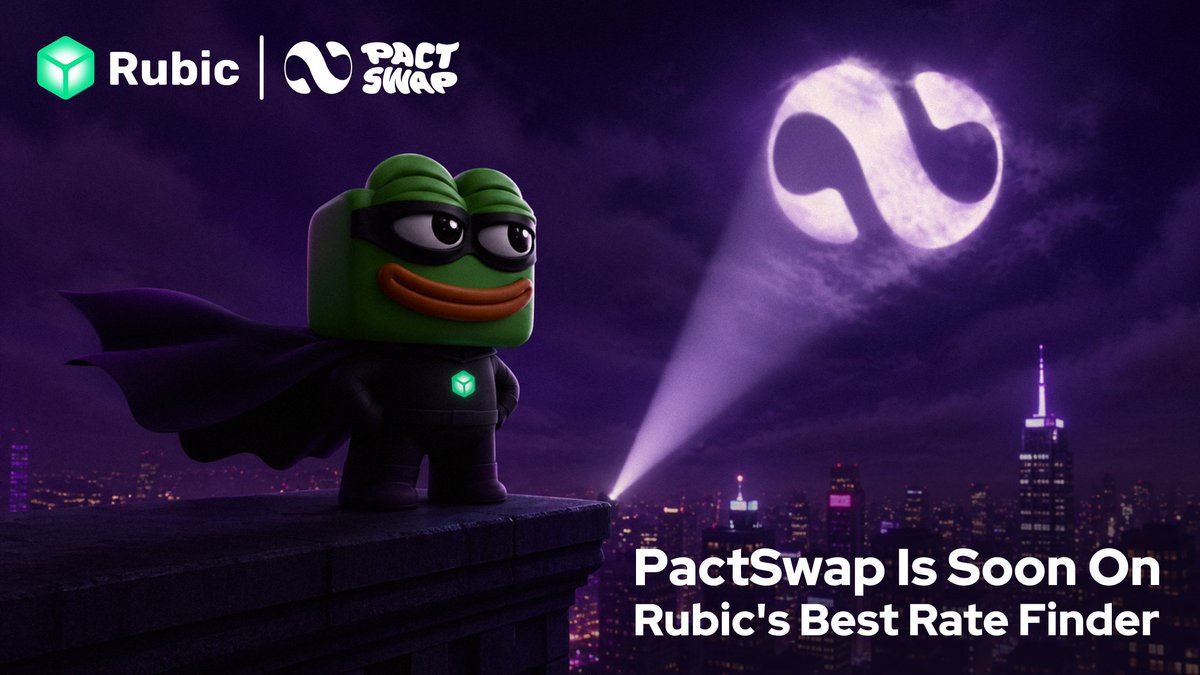
@CryptoRubic integrating @Pact_Swap means the PACT Framework will now be powering cross-chain execution inside major aggregator flows.
Higher capital-efficency → better quotes → higher conversion → more volume.
Distribution unlocked.
Apr 27

It’s always great to pay less, right?
@Pact_Swap gets it, offering fees from just 0.35%, up to 95% more cost-efficient than similar solutions.
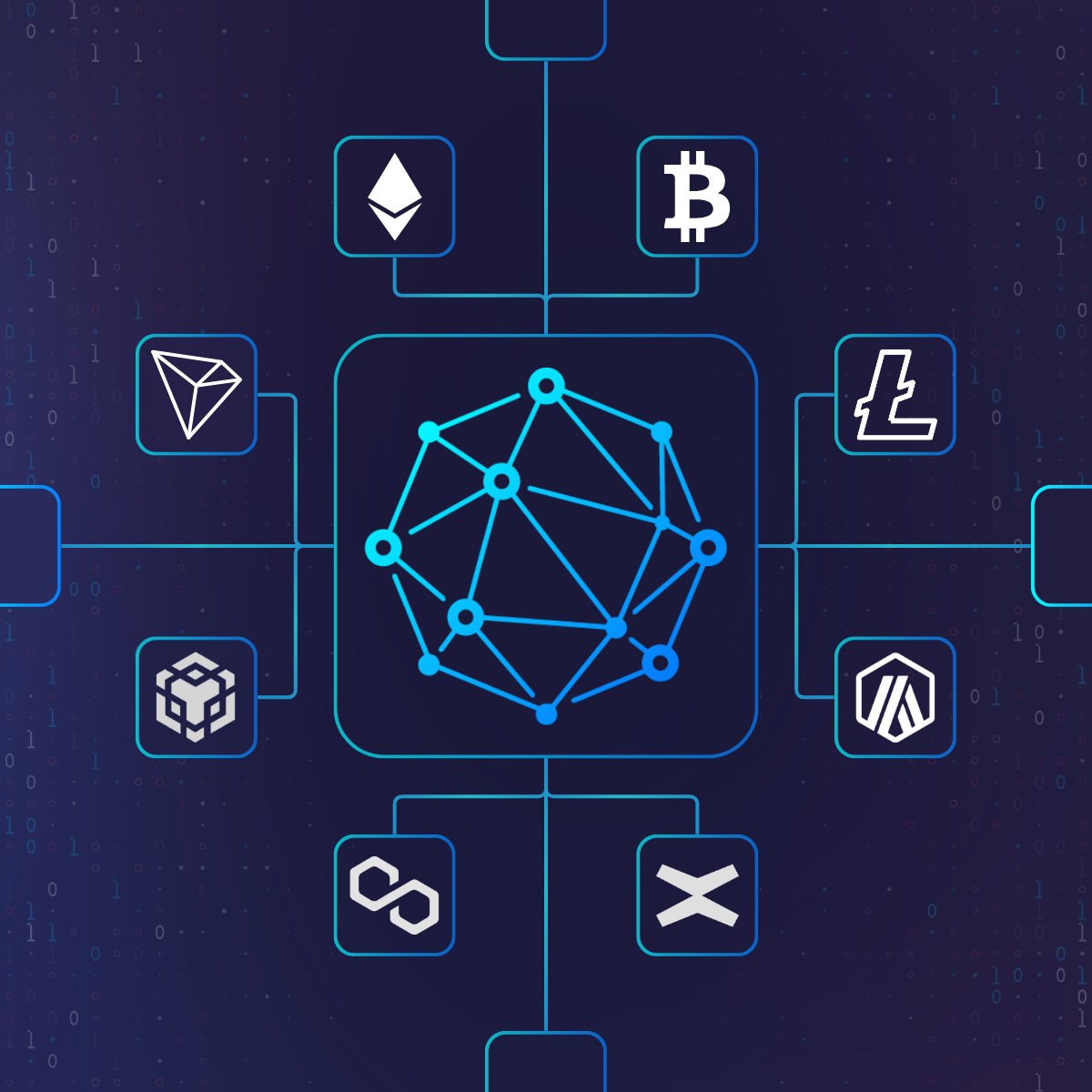
And soon, Pact Swap will be integrated into Rubic for cross-chain swaps across @BNBCHAIN, @0xPolygon, @ethereum, @trondao and @Bitcoin.
11
20
52
2,307
Mar 19
10B was just the start.
Now 21B and accelerating ⚡
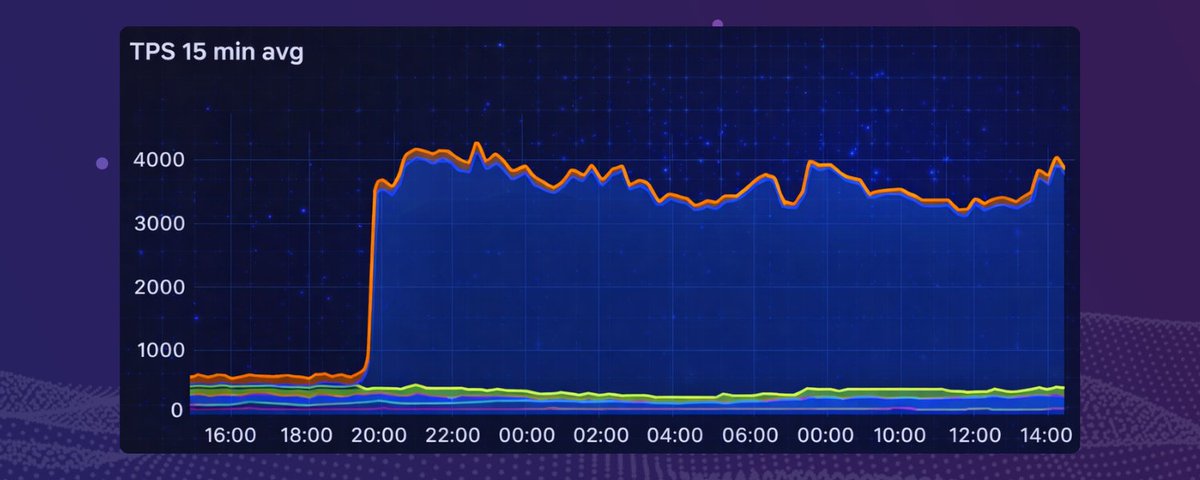
Solana integration injected serious throughput into the system, increasing the volume of data flowing through Coinweb and strengthening real time reactivity. This ultimately enables better applications and drives stronger network effects.
3 Sep 2025

Coinweb has now parsed 10,000,000,000 L1 transactions.
Every block. Every tx. Every event. All read across chains and made available to dApps in real time.
Best part? Coinweb smart contracts can autonomously react to any type of L1 events.
That’s full data availability autonomous reactiveness at scale.
The foundation for cross-chain apps that actually work.
4
12
32
1,448
Mar 17
In March we ship.
A number of major developer infrastructure upgrades have now been completed and released, significantly improving both the developer experience and the capabilities of the Coinweb stack.
┃
┣ 📂 Smart Contract SDK
┃ ┣ 📂 Promise based architecture
┃ ┃ ┗ 📂 (replacing callbacks)
┃ ┣ 📂 Improved developer experience
┃ ┣ 📂 More predictable execution flow
┃ ┗ 📂 Automatic fee recovery
┃
┣ 📂 Claims Tables SDK
┃ ┣ 📂 UI generation from configuration
┃ ┣ 📂 Reduced frontend complexity
┃ ┣ 📂 Faster dApp development cycles
┃ ┗ 📂 Standardised contract interfaces
┃
┣ 📂 Coinweb Price Oracle
┃ ┣ 📂 On-chain price data
┃ ┃ ┗ 📂 Native to Coinweb L2
┃ ┣ 📂 Enables new DeFi integrations
┃ ┗ 📂 Supports automation
┃ ┗📂 and dynamic logic
┃
┣ 📂 Solana Integration
┃ ┣ 📂 Live in production
┃ ┣ 📂 Stable performance observed
┃ ┣ 📂 ~10x increase in parsed txs
┃ ┗ 📂 Cross chain capabilities next
More functionality, more chains, and more use cases.
5
16
38
1,216
Mar 12
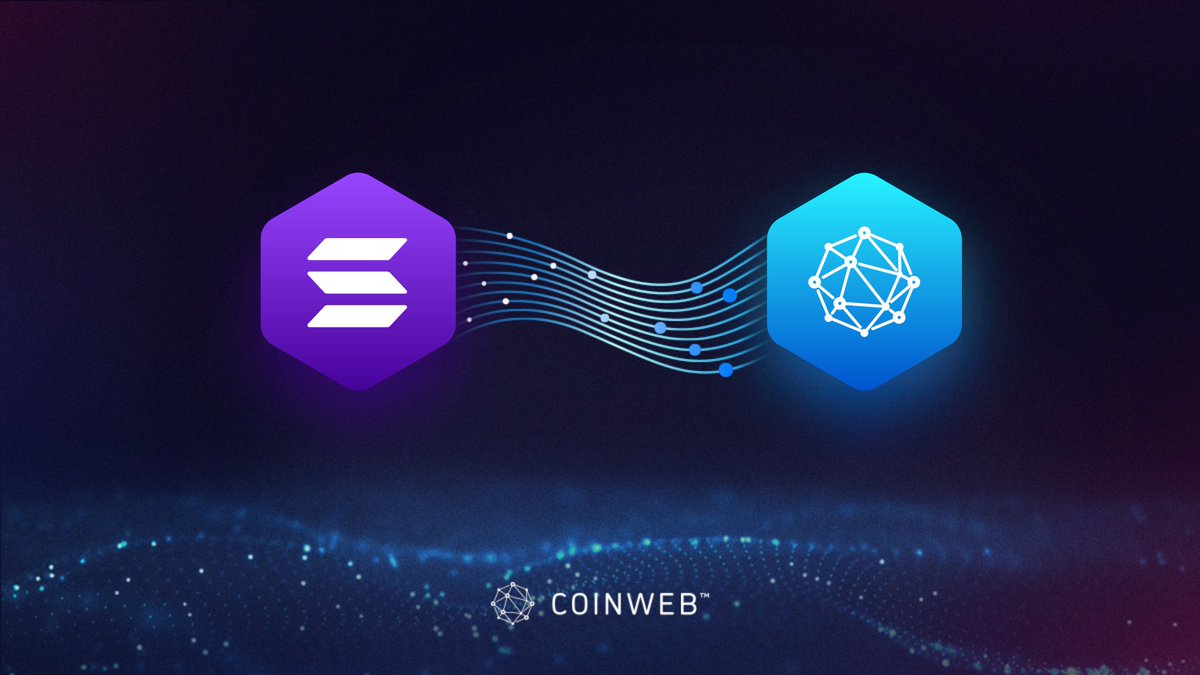
Solana is now live in production on Coinweb and visible in the explorer.
It is the leader of all chains in adjusted stablecoin volume. That momentum makes it an important network for the broader ecosystem.
With @solana connected, developers building on Coinweb can now access Solana’s on-chain data and infrastructure directly through our execution layer.
The next phase is enabling interoperability between Solana and other connected chains. We will soon support cross chain swaps between $SOL and SPL tokens with native Bitcoin, BNB Chain and additional networks in the ecosystem.
As more chains connect, applications built on Coinweb gain broader reach without needing separate deployments or additional integration layers.
One deployment. Multiple blockchains.
12
23
51
1,708
Coinweb.io retweeted

Feb 27
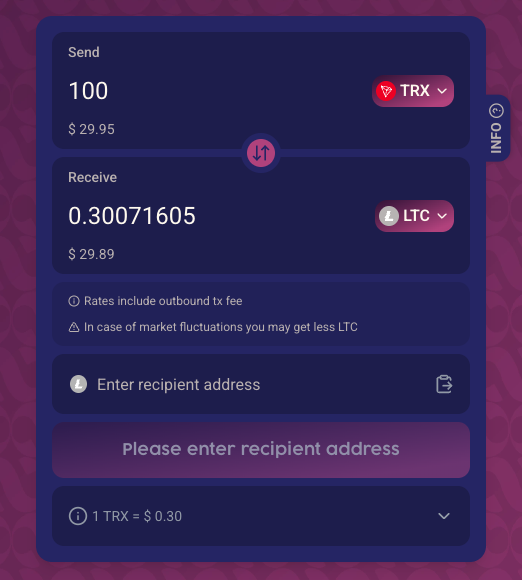
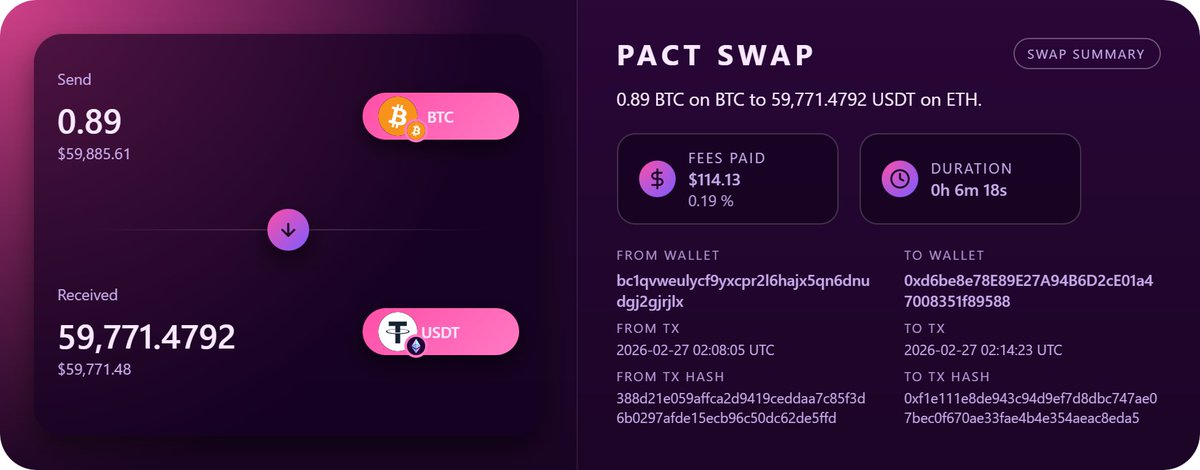
0.19% fees for a cross-chain BTC → USDT on ETH swap.
On @Pact_Swap someone swapped 0.89 BTC to 59,771.4792 USDT on ETH.
Fees paid: $114.13 (0.19%). 👀
Who said cross-chain has to be expensive?
#Defi done right!
22
29
140
9,816
Feb 13
People use the term “multi-chain” the wrong way.
Today, multi-chain usually means deploying the same dApp separately on different blockchains. Different contracts. Different liquidity pools. Different user bases. And very often, those deployments cannot even communicate with each other.
That is not unity. That is fragmentation.
Coinweb changes what multi-chain actually means.
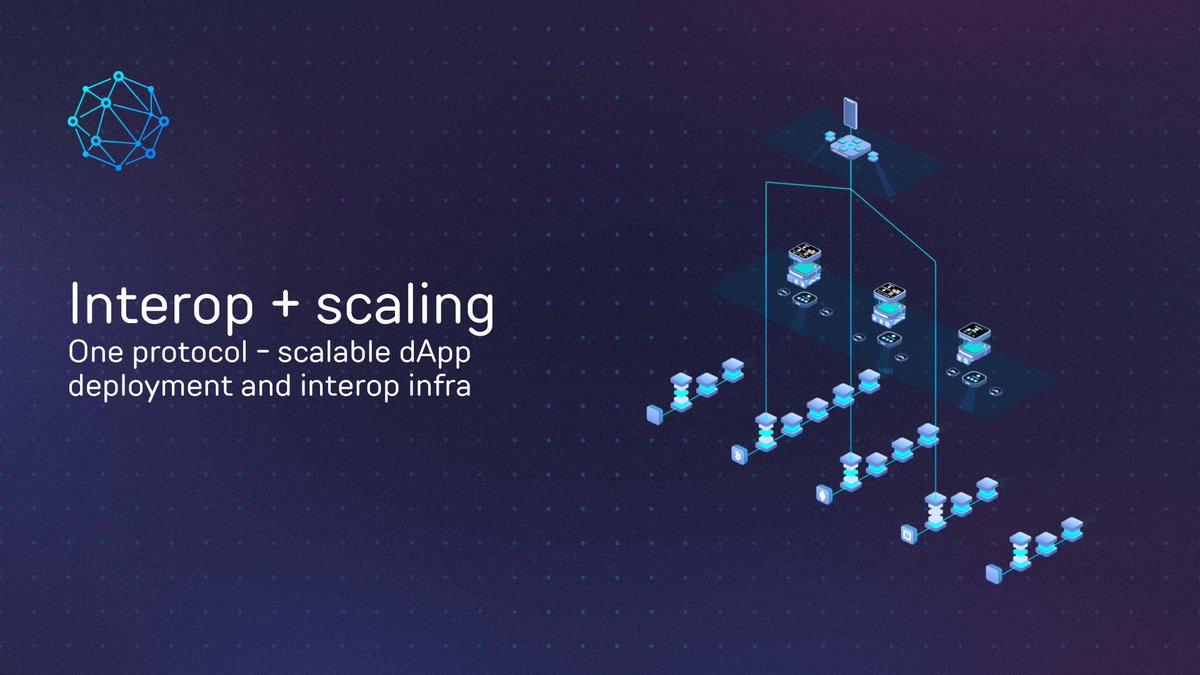
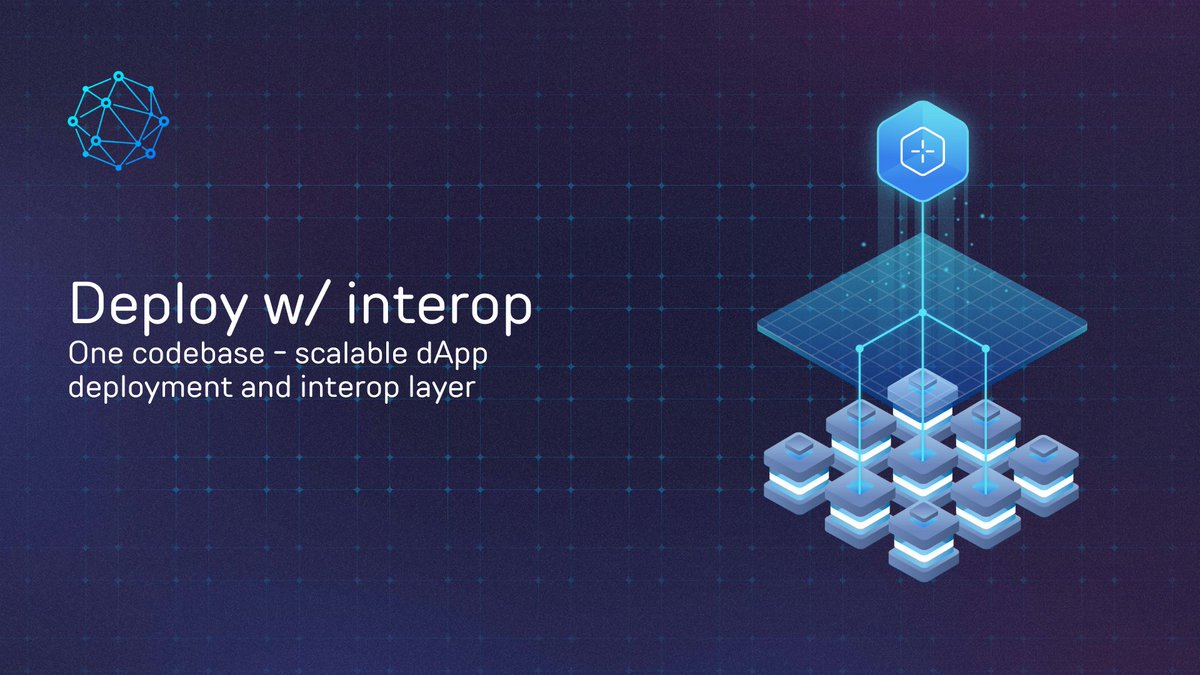
Instead of deploying multiple isolated instances, you deploy once on Coinweb’s execution layer. From there, your application gains access to every blockchain we connect to, with shared logic and cross-chain awareness built in.
Your dApp can read events from multiple L1s, trigger actions across them, and route activity where it makes the most sense, all without splitting users or duplicating infrastructure.
That is true multi-chain.
One deployment.
Multiple blockchains.
No fragmentation.
8
11
34
1,039
Jan 12
Litecoin has quietly done what most chains never manage. It has stayed fast, reliable, and unchanged through every market cycle.
That reliability is exactly why Litecoin was one of the first blockchains Coinweb connected to, and why Coinweb became the first Layer 2 built on top of Litecoin.
By extending Litecoin with Coinweb’s execution layer, $LTC gains access to cross-chain trading without wrapping, bridges, or added trust assumptions. Litecoin remains exactly what it has always been, now able to interact seamlessly with tokens on other blockchains.
Interoperability should amplify proven networks, not replace them.
@CoinwebOfficial makes that possible for @litecoin.
8
14
37
1,376
Coinweb.io retweeted

Jan 6
1,134
1,324
5,997
360,841
25 Nov 2025
Coinweb is the first interop protocol that also functions as a native L2 app layer, essentially combining both into one unified system.
Instead of only providing interoperability between blockchains, Coinweb provides an execution environment where smart contracts can run across chains, read their state, react to events, and commit results back using native L1 transactions.
Developers do not need to choose a single chain or integrate a separate interop protocol.
They deploy once on Coinweb and gain immediate access to all connected blockchains with deterministic behaviour and full data availability.
It is the first time an interop framework and an L2 have been fused into a single, coherent compute layer.
All powered by $CWEB.
7
20
43
1,608
12 Nov 2025
Coinweb isn’t just interoperability infrastructure.
It’s the first protocol that functions as both a Layer 2 and a cross-chain infrastructure at once.
Most “interop” projects stop at connection.
They let chains talk to each other, but that’s where it ends.
Coinweb goes further. We don’t just connect blockchains; we unify them into one scalable execution layer where dApps can live across chains instead of being trapped on one.
That means builders deploying on Coinweb don’t need to choose a single network or ecosystem.
They deploy once and instantly gain access to every blockchain we connect to, with full data availability across them all.
Your dApp can read events, state changes, and transactions from multiple L1s in real time.
It can react to those events, trigger logic, or route transactions to wherever it’s cheapest or fastest.
And it can do all of that while maintaining deterministic execution, meaning the same inputs always produce the same outputs, no matter which chains are involved.
This is how Coinweb turns interoperability into scalability.
Every new chain that connects doesn’t fragment the network. It expands it, and it increases our L2's max TPS.
More compute. More liquidity. More reach for builders.
Coinweb is not just a bridge between ecosystems.
It’s a scalable cross-chain Layer 2 that makes dApps composable, reactive, and future-proof.
The future of Web3 won’t be built on one chain.
It will be built across all of them, and on Coinweb, it already is.
Build once. Scale everywhere. Build on Coinweb.
6
13
34
1,720
Coinweb.io retweeted
30 Oct 2025
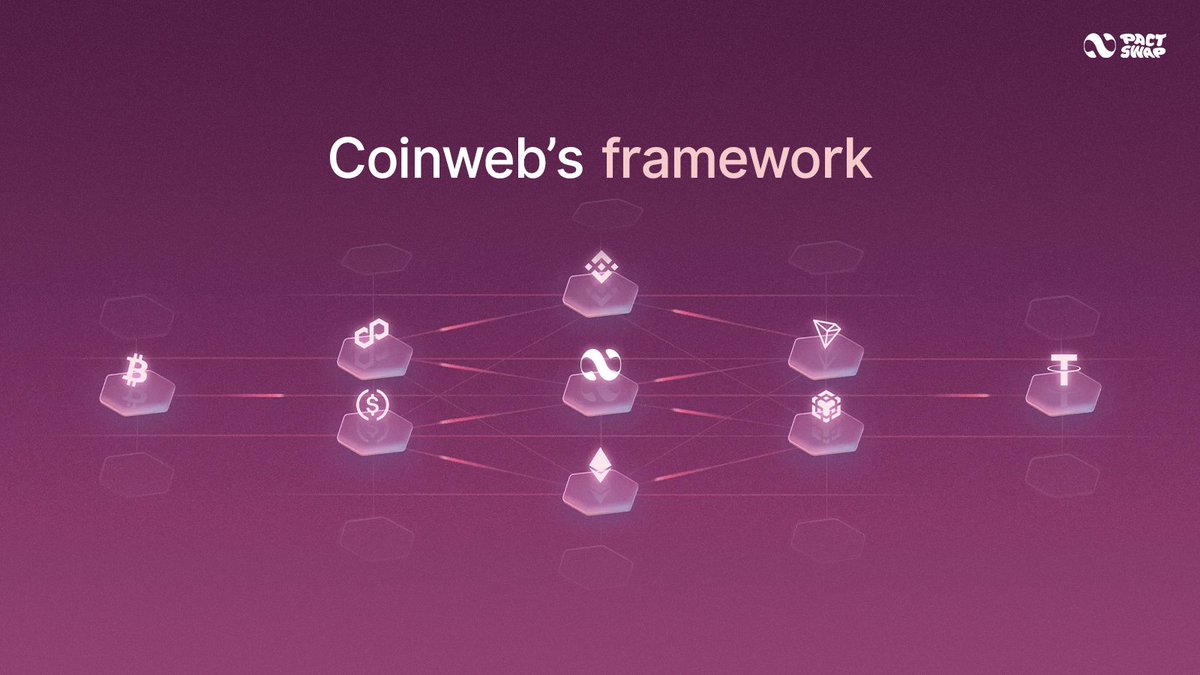
What @CoinwebOfficial lets us do:
- Swap across chains without bridges
- Settle trades directly on-chain
- Use collateral instead of validators
- Keep every transaction trustless
- Stay native from start to finish
Now that’s how you PACT 🔄
831
993
1,434
54,217
Coinweb.io retweeted

28 Oct 2025
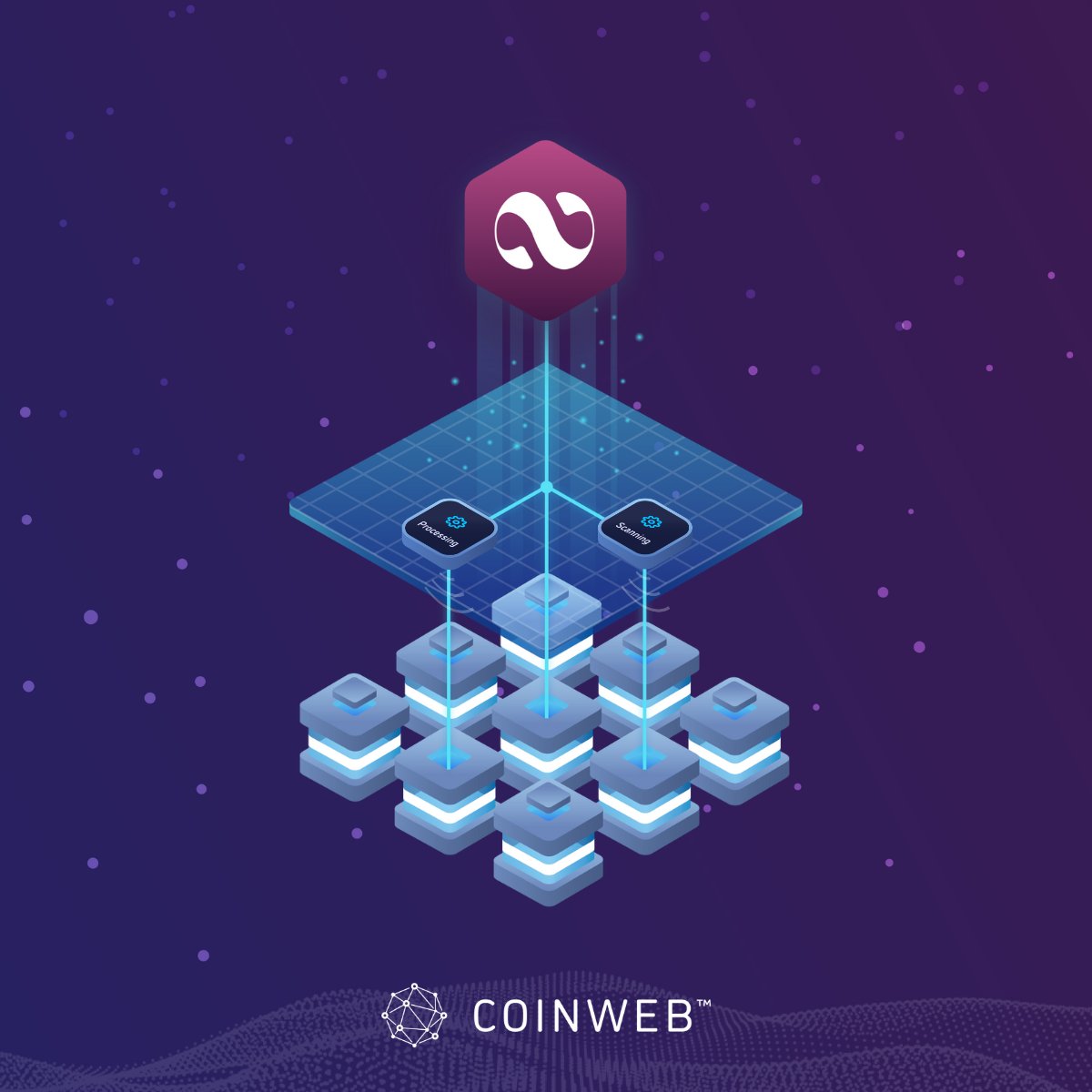
Interested in knowing about the relationship between @Pact_Swap as a dApp, @CoinwebOfficial as infra and $CWEB as infra token?
Coinweb is the base layer that every swap, fee, and settlement passes through.
Let's dive into it 👇
Each trade on Pact Swap pays a 10bps fee, collected in CWEB and directed into the fee pool. This pool is where the economic weight of the protocol builds over time. It holds the accumulated value of trading activity, secured directly on Coinweb’s layer.
When users burn $PACT, they gain access to a proportional share of that pool. The more trading that takes place, the more CWEB flows in, and the greater the value locked on-chain.
This system creates a natural loop. Every new trade adds another 10bps worth of CWEB to the pool.
To put it in perspective:
🔹 $10 million in daily volume adds roughly $10,000 worth of CWEB to the pool.
🔹 $100 million adds $100,000.
🔹 At $1 billion per day, the fee pool accumulates $1 million in CWEB daily.
It’s also important to note that liquidity providers post collateral (2x the value of each swap) for every order, in CWEB. When swaps are completed correctly, their collateral is released, minus the 10bps that went to the fee pool.
They then have to replenish that collateral to uphold the collateral requirement thresholds for the trades they are settling.
If a liquidity provider fails to deliver what was promised in the PACT, their collateral is first slashed and used to incentivize other liquidity providers to settle the trade. If this still doesn’t happen, users are automatically compensated from it.
This dual role, collateral and fee settlement, ties CWEB directly to the integrity and security of every trade on the platform. It is the core functionality of the consensus-less interoperability framework from Coinweb.
As volume scales, more CWEB is locked, more fees accumulate, and more value circulates between traders, liquidity providers, and the protocol itself.
CWEB is the asset that keeps the system secure, liquid, and self-sustaining. It is the backbone of trustless, cross-chain trading.
Built on Coinweb, powered by CWEB, and executed on Pact Swap.
17
29
54
12,177
Coinweb.io retweeted

20 Oct 2025
🎙️ Ep. 617 Toby Gilbert | Most Efficient Cross-Chain DEX with Pact Swap
— — —
For episode 617 of the BlockHash Podcast, host Brandon Zemp is joined by Toby Gilbert, Co-Founder at @Pact_Swap.
Toby Gilbert is a seasoned entrepreneur with a track record of building exciting technology ventures across telecom and Web3. Before co-founding PactSwap, a cross-chain DEX built on Coinweb and co-founded by Tether’s Brock Pierce, he launched and exited three telecom companies across Europe, Africa, and Asia, and later co-founded Coinweb, OnRamp, and Blockfort, advancing innovation in cross-chain infrastructure and decentralized finance.
🔗 Spotify: tinyurl.com/bdfxk5a7
🔗 Apple Podcasts: tinyurl.com/mtj7txsc
🔗 Amazon Music: tinyurl.com/34dswkbw
🔗 YouTube: tinyurl.com/rbyz95dx
⏰ KEY HIGHLIGHTS
(0:58) Who is Toby Gilbert?
(4:42) What is Pact Swap?
(10:33) What makes Pact Swap unique?
(13:22) Fragmentation
(21:38) Pace of innovation in Web3
(25:17) Threat of quantum computing
(31:10) Pact Swap roadmap
(33:08) Pact Swap website & socials
#BlockHashPodcast #PactSwap #DeFi #Web3 #DEX #Podcast

5
17
45
2,294
20 Oct 2025
Has Coinweb built the most advanced smart contracts to date?
We might have.
Coinweb’s Reactive Smart Contracts aren’t tied to one chain, they can be deployed to any blockchain we connect to.
They can communicate with each other across chains.
They can see every event happening on every connected blockchain like balances, transactions, governance votes, price shifts, you name it.
They can autonomously react to those events in real time, execute logic, move assets, rebalance, or trigger a dApp function instantly.
They can even manage their own gas, using $CWEB regardless of what chain they are deployed on, to stay alive indefinitely.
No oracles. No bridges. No external validators.
What this means for builders:
> dApps that live across chains, not on one
> Logic that’s composable and reactive at the protocol level
> Fully automated systems that don’t need off-chain keepers or cron jobs
> Real-time responsiveness, driven entirely on-chain
No one has built anything like this before.
This isn’t an iteration, it’s a new class of smart contracts.
They don’t just run. They react.
10
25
48
2,395
28 Sep 2025
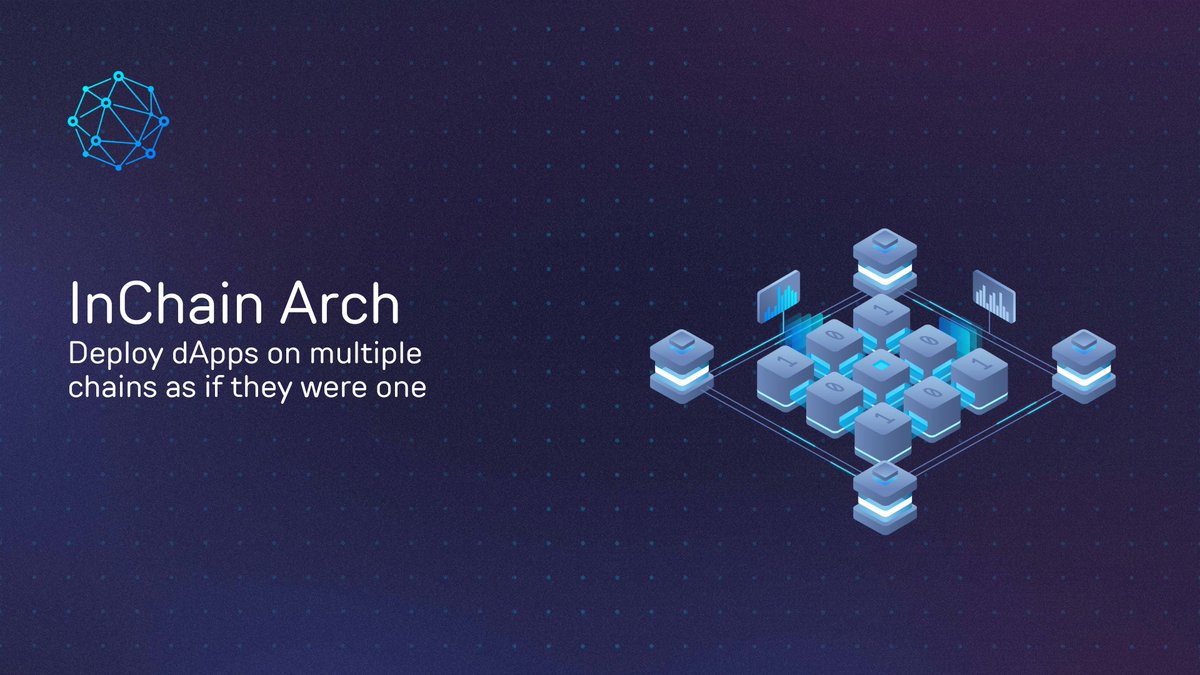
InChain Architecture TL;DR ELI5
Most dApps today live inside one blockchain.
If that chain slows down, forks, or goes offline—you’re stuck.
Coinweb’s InChain Architecture lets your app live across chains.
It reads every block, every tx, every event from all connected L1s.
It anchors data natively into those L1s for security.
It treats chains as one unified environment, not silos.
So your dApp can survive outages, route to cheaper chains, and stay consistent everywhere.
No chain lock-in. No fragile bridges. No duplicated consensus.
Not just interop. A new execution layer.
3
21
43
1,683
14 Sep 2025
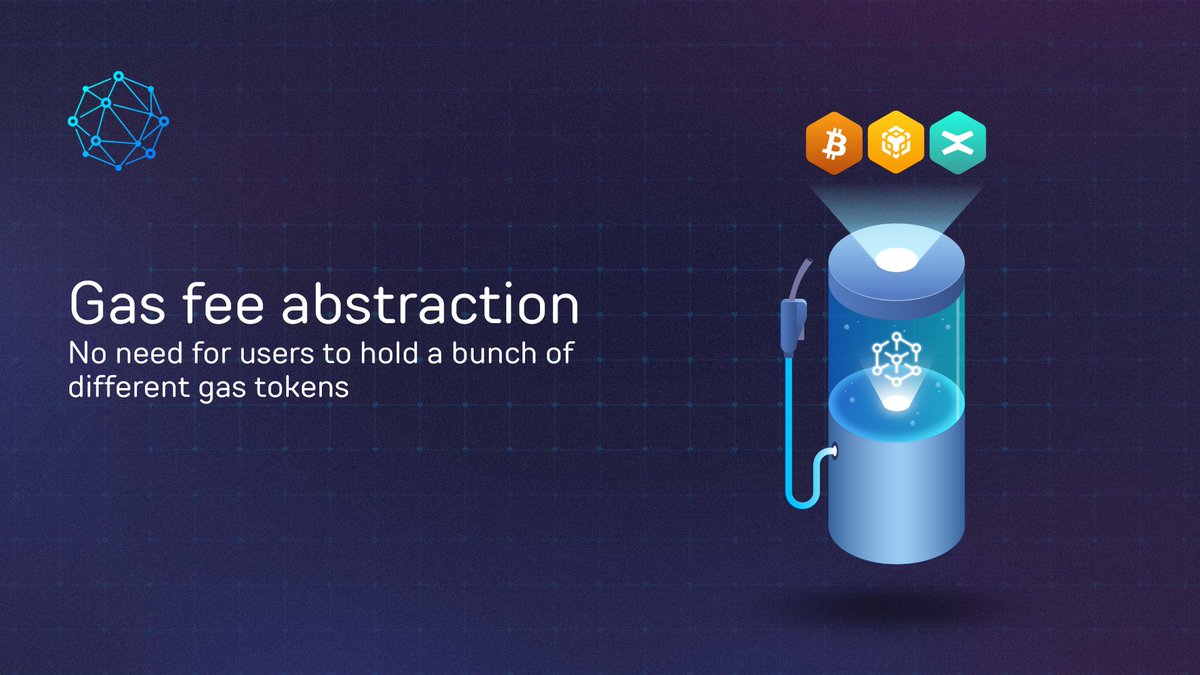
Gas fee tokens when building native cross-chain dApps doesn't need to create friction:
Most dApps make users hold ETH here, POL there, BNB somewhere else, then switch networks and bridge “gas” just to click a button.
That kills onboarding, causes failed txs, and bloats support.
Great product. Terrible UX.
Coinweb’s Gas Fee Abstraction fixes it.
Users only need your dApp’s token or $CWEB.
Behind the scenes, Coinweb atomically swaps to $CWEB and pays the L1 protocol fees for whatever chain the action touches.
No juggling wallets. No “insufficient gas” popups.
What this unlocks:
– One token → actions on any connected chain
– Consistent UX across networks (no chain-specific gas logic)
– Fewer failed transactions, higher conversion
– Dev-controlled models: sponsor fees, rebate, or pass-through
– Reactive smart contracts keep their own gas balance and route to the cheapest chain
Why it matters:
Ship once. Run everywhere. Let users bring one token and go anywhere.
That’s what cross-chain is supposed to feel like.
Build it on Coinweb.
8
30
61
2,627