
I talk about cybersecurity, personal growth, and how to live remarkably | Security Analyst
Joined May 2013
- Tweets 914
- Following 188
- Followers 188
- Likes 1,296
103 Photos and videos




Pinned Tweet

22 Jun 2024
Curious about the cybersecurity industry or how to live a more remarkable life?
Then you might find my stuff interesting. Right now, I'm focused on sharing insights and experiences around two key topics:
Topic #1: Breaking into Cybersecurity
My learning style mirrors Peter Drucker's quote: "No one learns as much about a subject as one who is forced to teach it.”
My current goal is to break into the cybersecurity industry and land my first role. Beyond the learning value, there are a few more reasons I want to share the journey: Help others on a similar path, connect with like-minded people, and entertain those who are curious about the field.
I’ll curate ideas that are most valuable or engaging to me.
Topic #2: Living a Remarkable Life
I’ve always been fascinated by productivity, human optimization, and self-development.
We have limited time to play the game of life. We can choose to achieve meaningful goals, enjoy life experiences, and reach our fullest potential. Or we can squander our opportunities, leaving behind a trail of regrets.
As I continue exploring how to live a remarkable life, I’ll showcase ideas worth sharing.
If any of these topics resonate with you, send a DM & let's connect🙌
2
367
19 Sep 2024
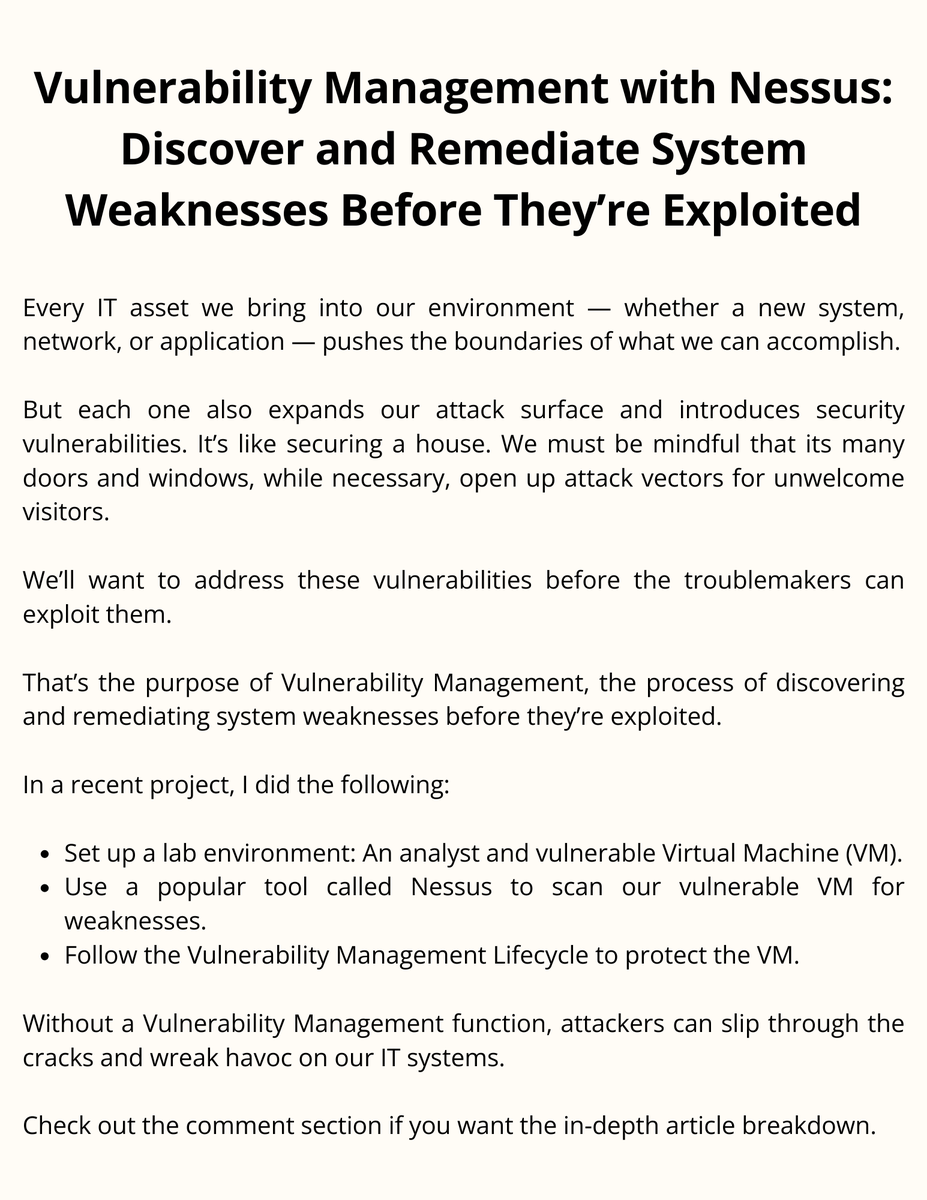
Vulnerability management is the process of finding and fixing weaknesses in a system.
In an organization, the goal is to reduce risk to an acceptable level and keep it that way. Vendors do this all the time with automatic updates for our phones and computers. They’re fixing vulnerabilities on our behalf.
But what if we wanted to handle vulnerabilities ourselves?
1
135
19 Sep 2024
Vulnerability Management with Nessus: Discover and Remediate System Weaknesses Before They’re Exploited: coltonhicks.medium.com/vulne…
1
1
71
12 Sep 2024
Imagine hackers trying to breach your network, and you’re watching their every move—knowing you’ve set the perfect trap.
That's the power of a honeynet.
Here's how I used Azure Cloud to lure malicious actors, detect live threats, and respond to SOC incidents.
1
68
12 Sep 2024
Summary:
Here are the 4 things I did in Azure Cloud to lure malicious actors, detect live threats, and respond to SOC incidents:
1. Create a honeynet.
2. Build a cloud SOC.
3. Apply NIST SP 800-61.
4. Implement security controls.
1
47
12 Sep 2024
If you’re curious to see the full project breakdown, check out my article: coltonhicks.medium.com/heres…
60
23 Aug 2024
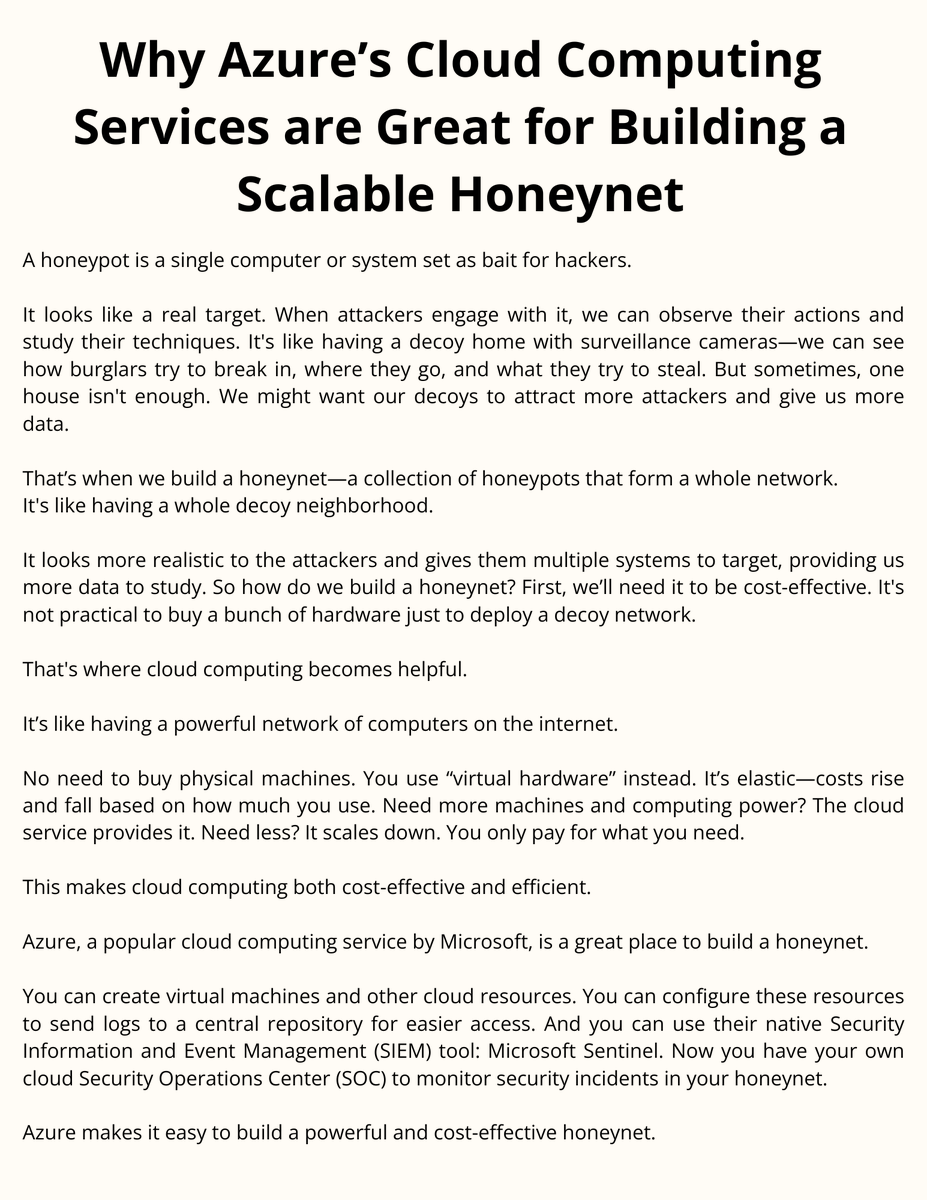
A honeypot is a single system set as bait for hackers.
It looks like a real target, letting us study attackers' techniques. But sometimes one decoy isn’t enough.
That’s when we can build a honeynet, which is a collection of honeypots for hackers to attack.
73
22 Aug 2024
Cloud computing is like having a powerful network of virtual machines on the internet.
No need for physical hardware.
It’s also elastic—scaling up or down based on what you need.
You only pay for the resources you use.
40
21 Aug 2024
The NIST Cybersecurity Framework (CSF) simplifies cybersecurity management with its five core functions:
1. Identify
2. Protect
3. Detect
4. Respond
5. Recover.
This framework is a practical tool for reducing risks and managing cyber threats.
34
20 Aug 2024
NIST SP 800-61 is a guide for responding to security incidents.
It outlines steps to prepare for, detect, and recover from breaches.
Using this guide helps organizations handle incidents more effectively.
24
19 Aug 2024
NIST 800-53 offers a catalog of security controls tailored to an organization's needs.
These controls cover areas like access control and incident response.
Adopting NIST 800-53 strengthens your security posture.
1
5
32
16 Aug 2024
NIST 800-37 is a framework for managing risk in information systems.
It helps organizations choose the right security controls and ensure continuous monitoring.
Knowing this framework is crucial for managing cybersecurity risk.
1
24
16 Aug 2024
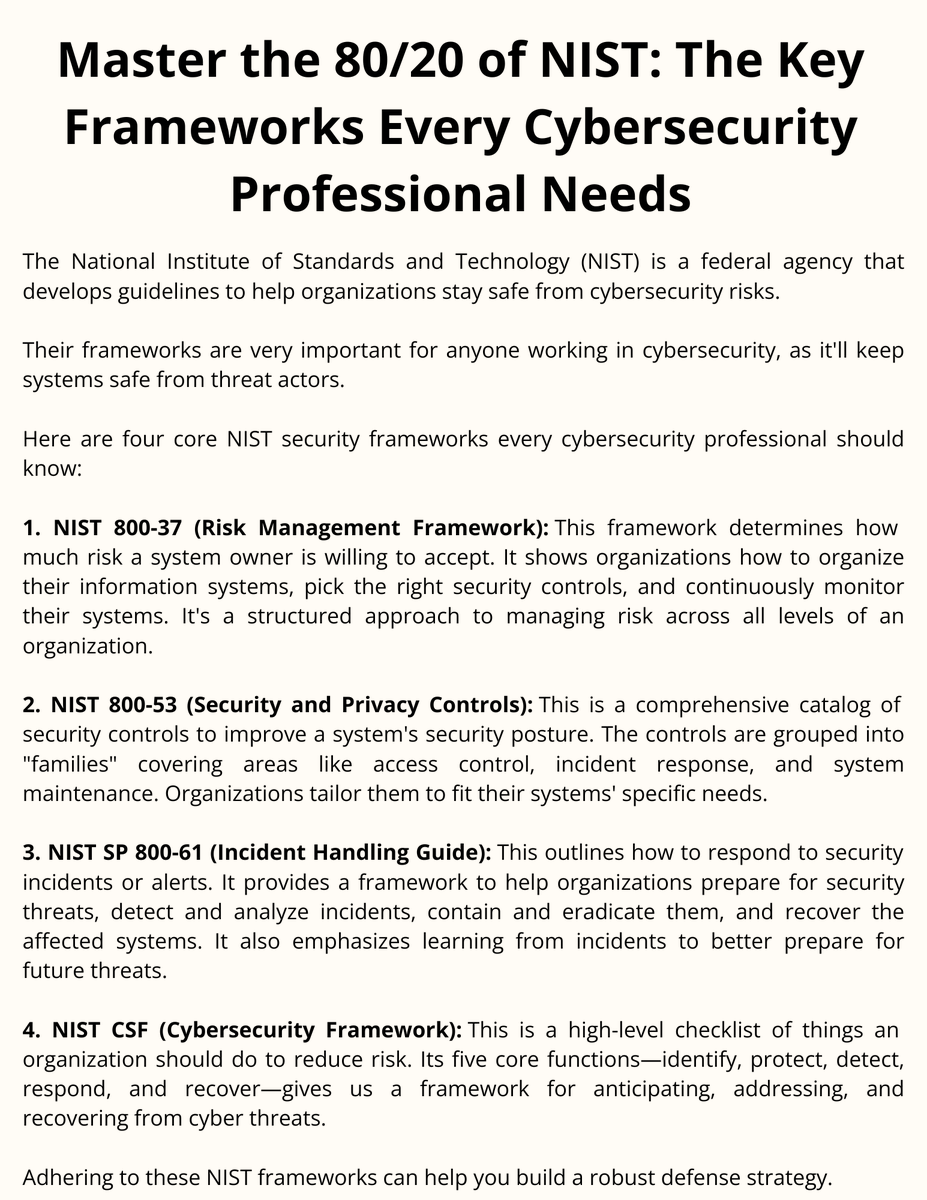
NIST provides essential guidelines for cybersecurity professionals to follow.
Their frameworks help protect systems from threats and vulnerabilities.
Understanding NIST's guidelines helps build a strong, secure defense strategy.
31
15 Aug 2024
A honeynet is a collection of decoy systems for hackers to attack.
We can observe their actions and study their techniques when they engage with them.
Here's why Azure’s cloud computing services are great for creating a scalable honeynet without the costly hardware.
45
14 Aug 2024
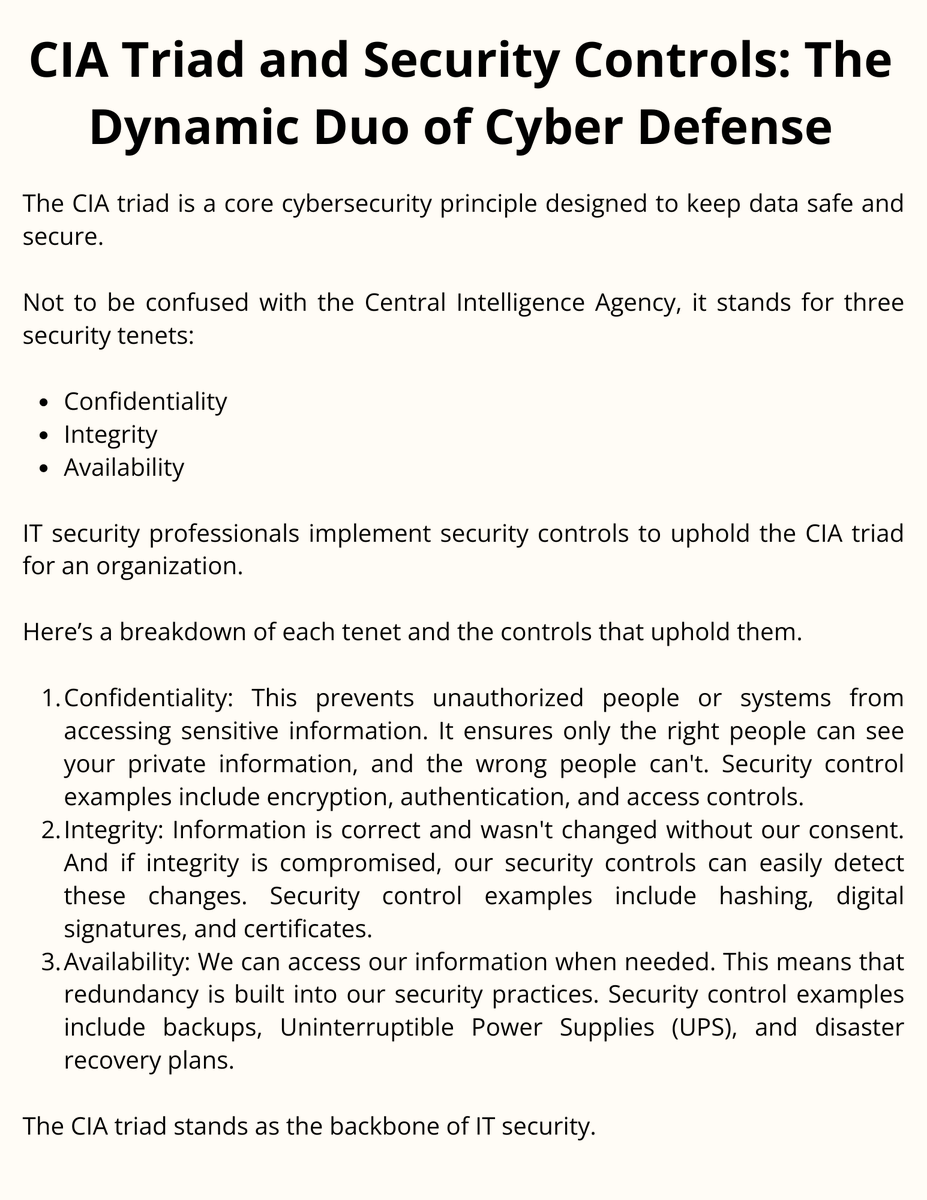
Knowing your vulnerabilities is crucial in IT.
Identifying and fixing weaknesses strengthens defenses against attacks.
Regular audits and assessments help organizations stay ahead of potential threats.
1
19