Joined May 2023
- Tweets 15,698
- Following 368
- Followers 20,132
- Likes 15,278
8,036 Photos and videos


Pinned Tweet

Feb 21
The Vozdukh-1 video has finally been uploaded. Make sure to check it out!
4
24
179
23,670

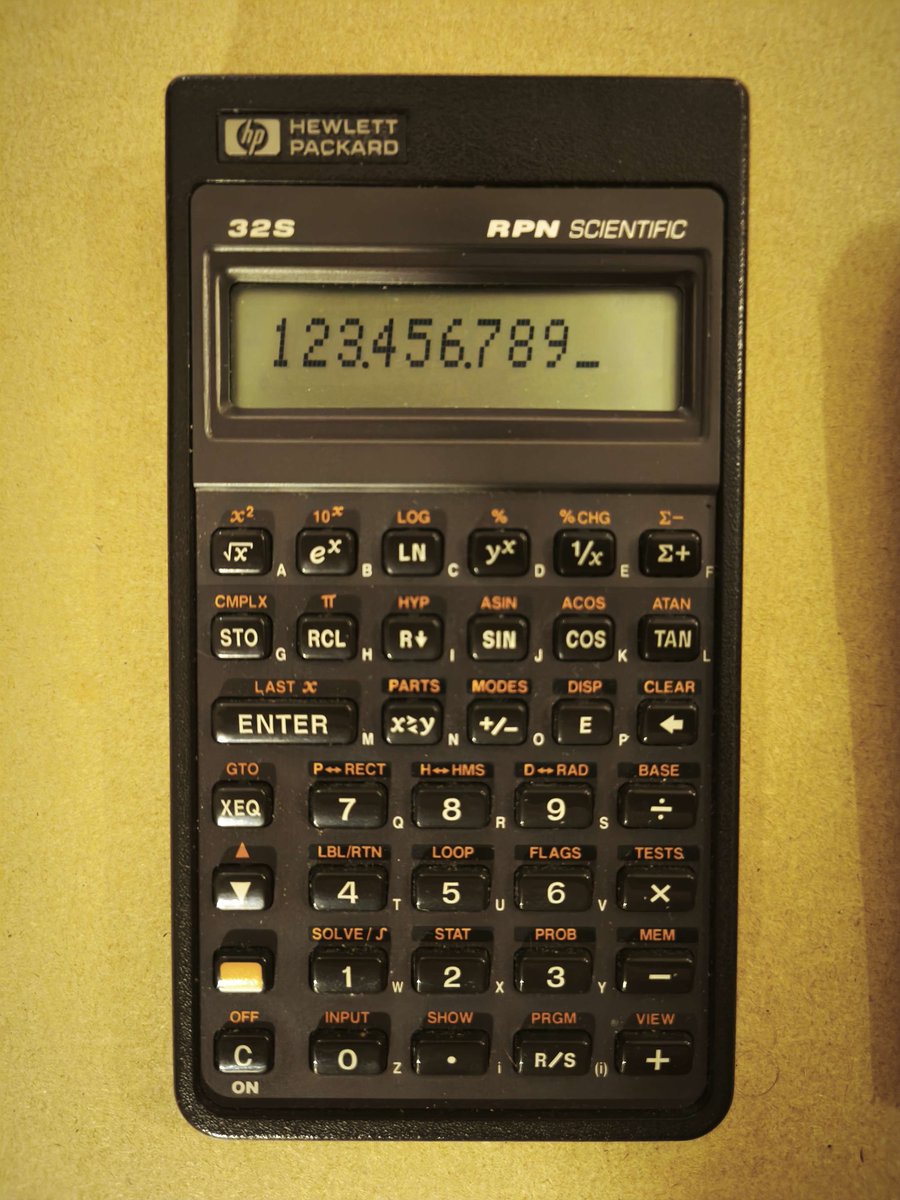
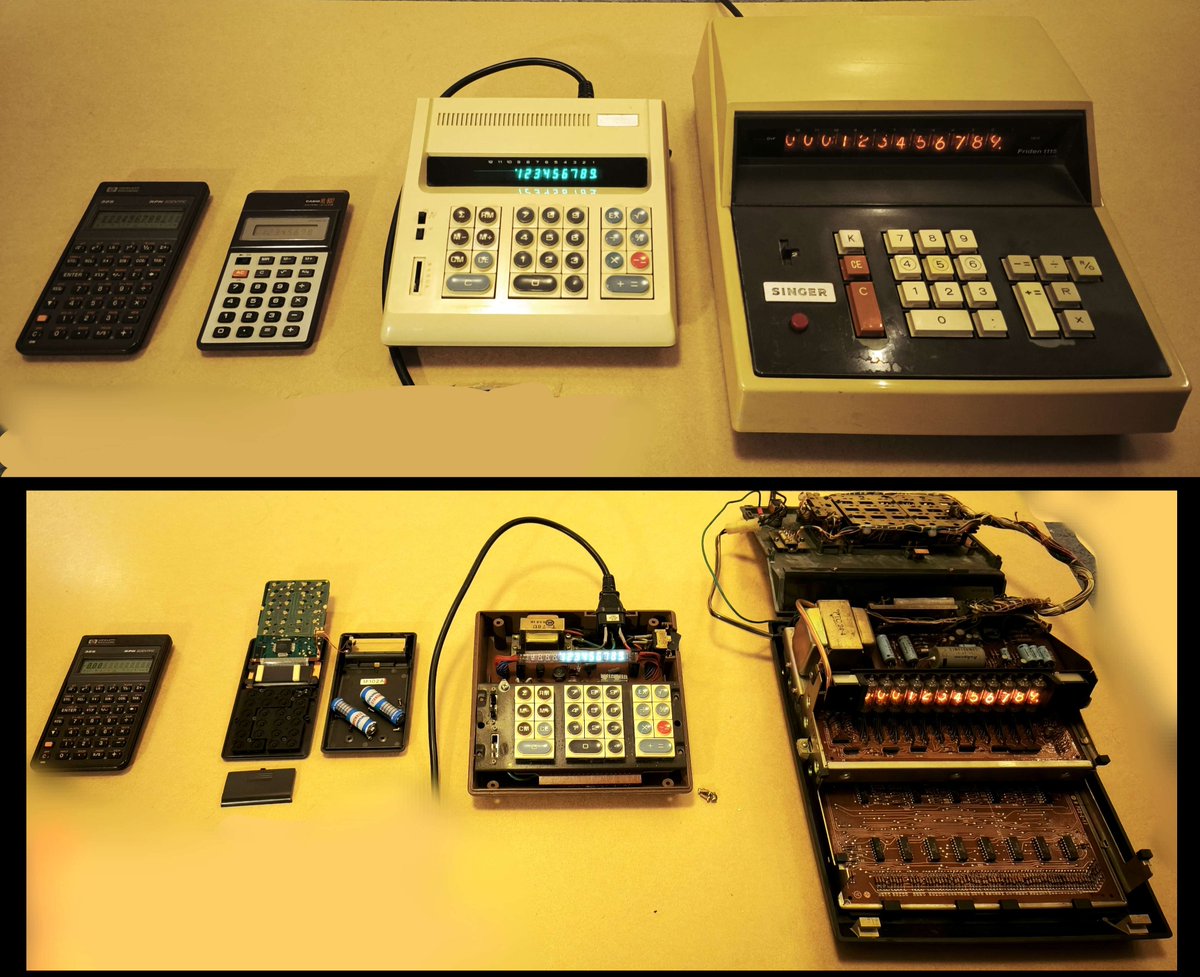
(5/6) Final example in this comparison, HP 32S (manufactured in 1987). It is a pocket calculator with a similar form factor to the prior one, and while it was more expensive (70$ at introduction) it represents a *huge* leap in capabilities. It's a fully capable, programmable scientific calculator with a variety of calculus, statistical and trigonometric features - effectively a whole compact computer with a 640kHz CPU and a small user program RAM, for custom programs written in a BASIC dialect.
1
3
14
664
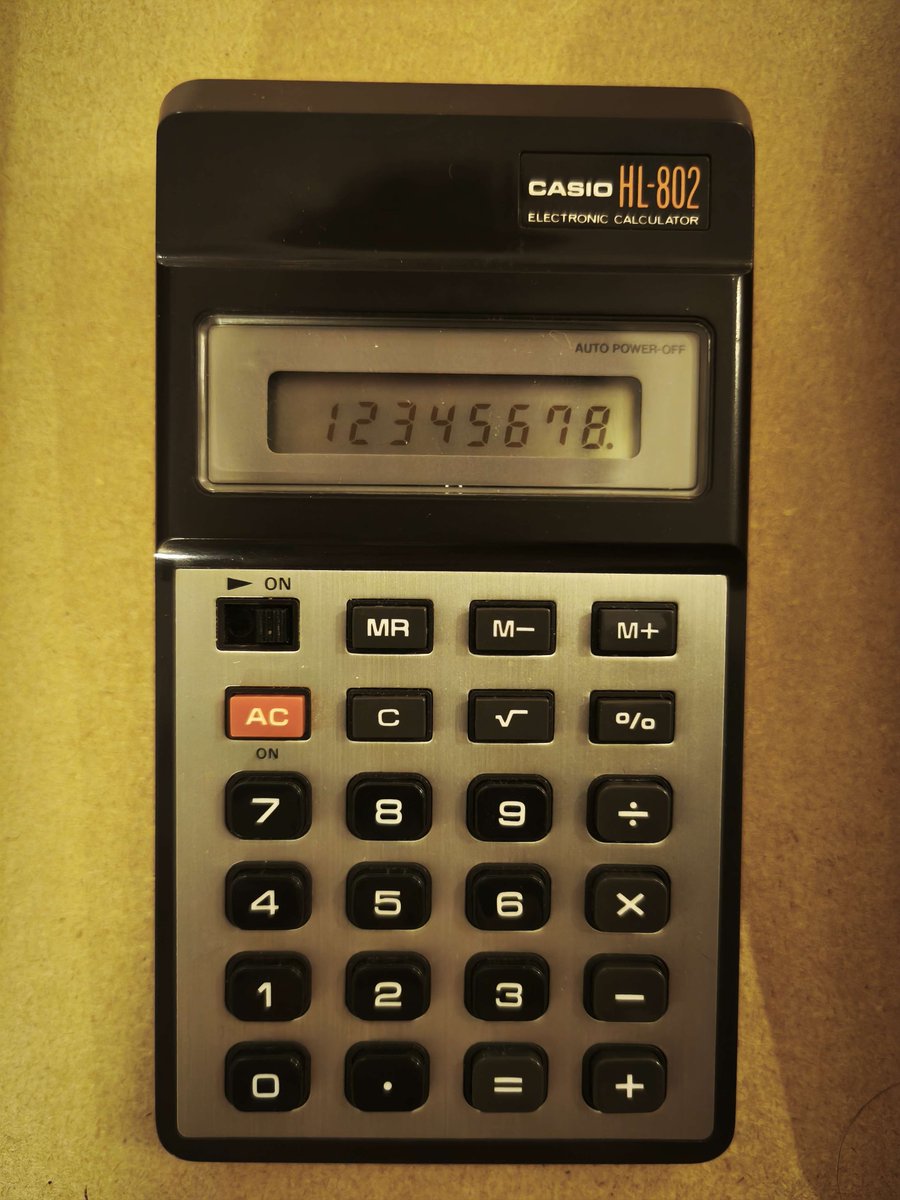
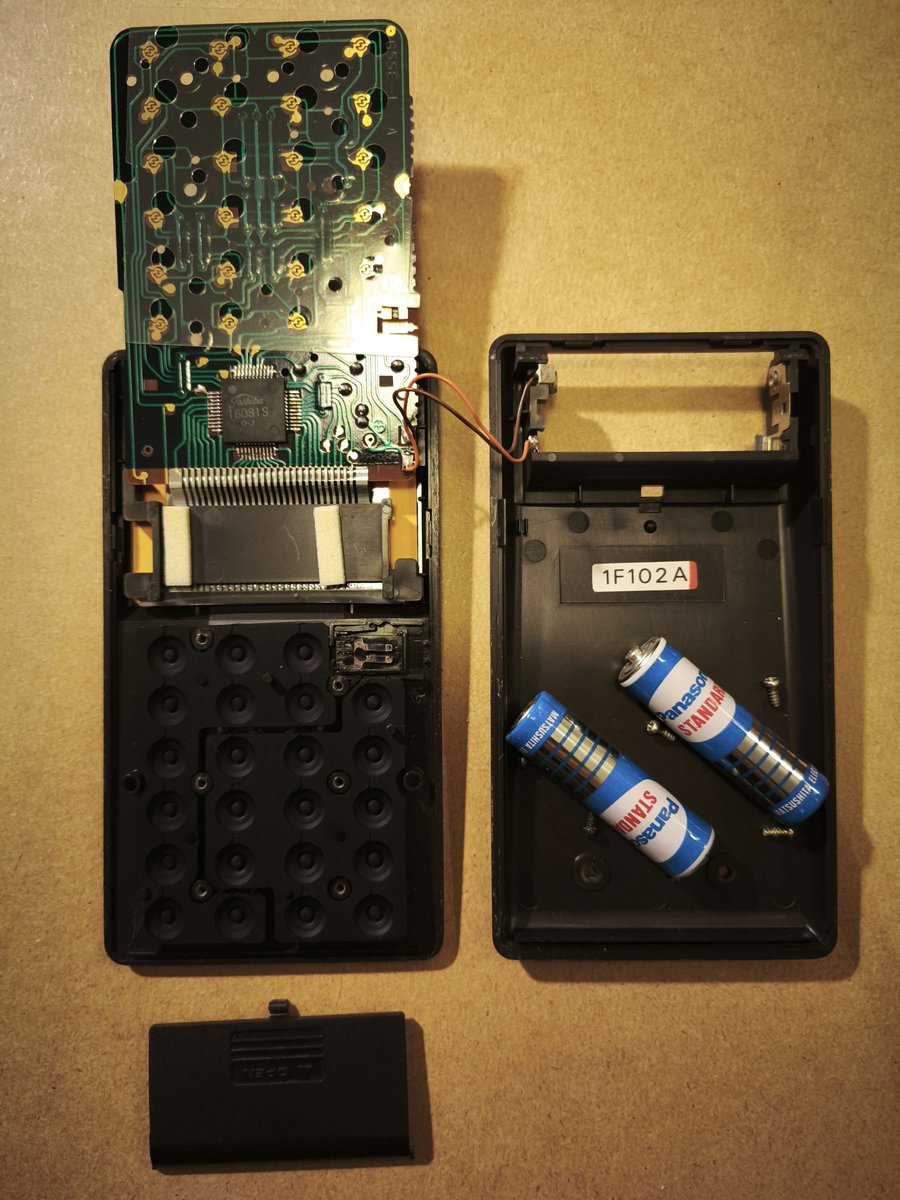
(4/6) First pocket calculator in the collection, Casio HL-802 (produced in 1981) represents another huge leap, again just 5 years apart. Again, from example to example the weight dropped by nearly an order of magnitude, the price by more than an order of magnitude, and functionality remained similar.
The VFD displays were replaced by compact and much lower power LCDs, the entire calculator is still contained in a single chip but its significantly furhter minaturized. The whole assembly is now machine printed and assembled with SMD components, replacing manual through-hole assembly and soldering.
1
1
10
648
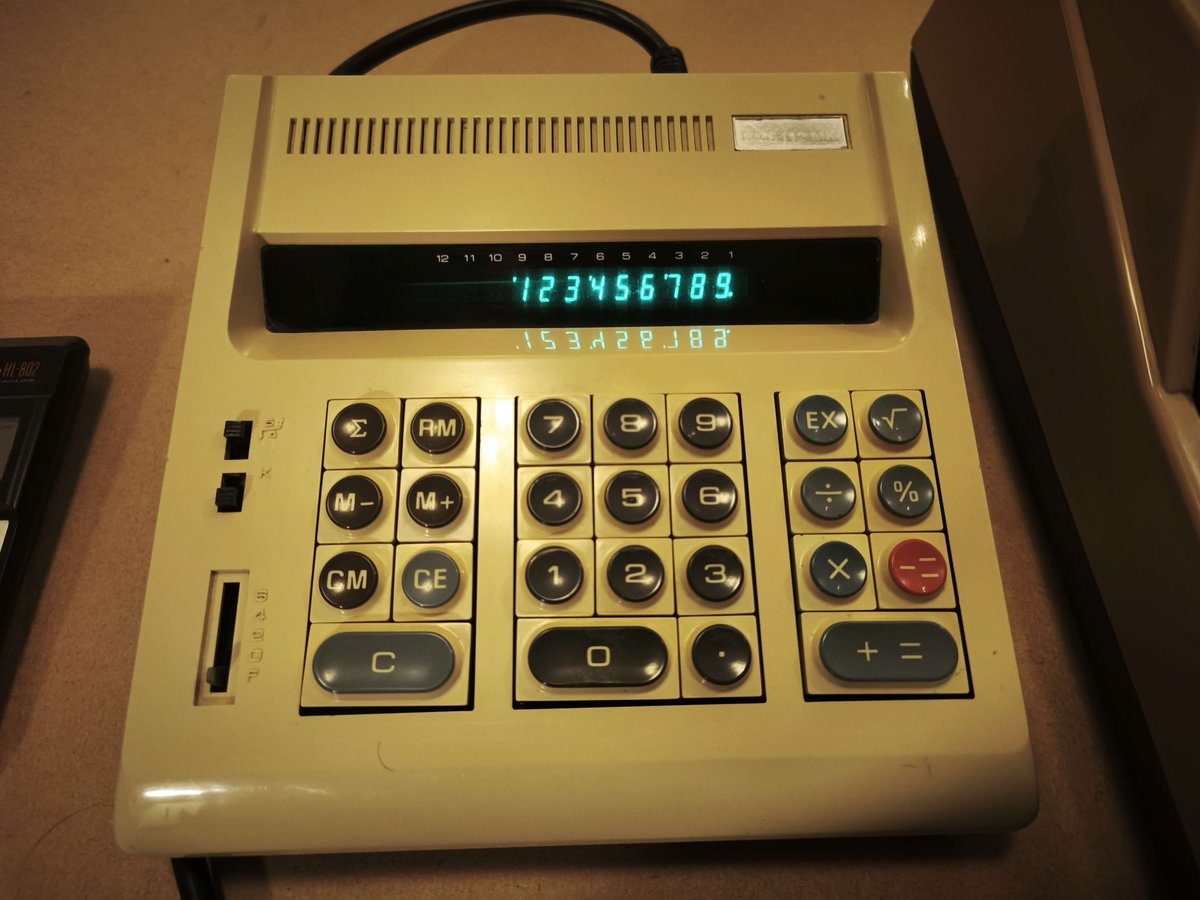
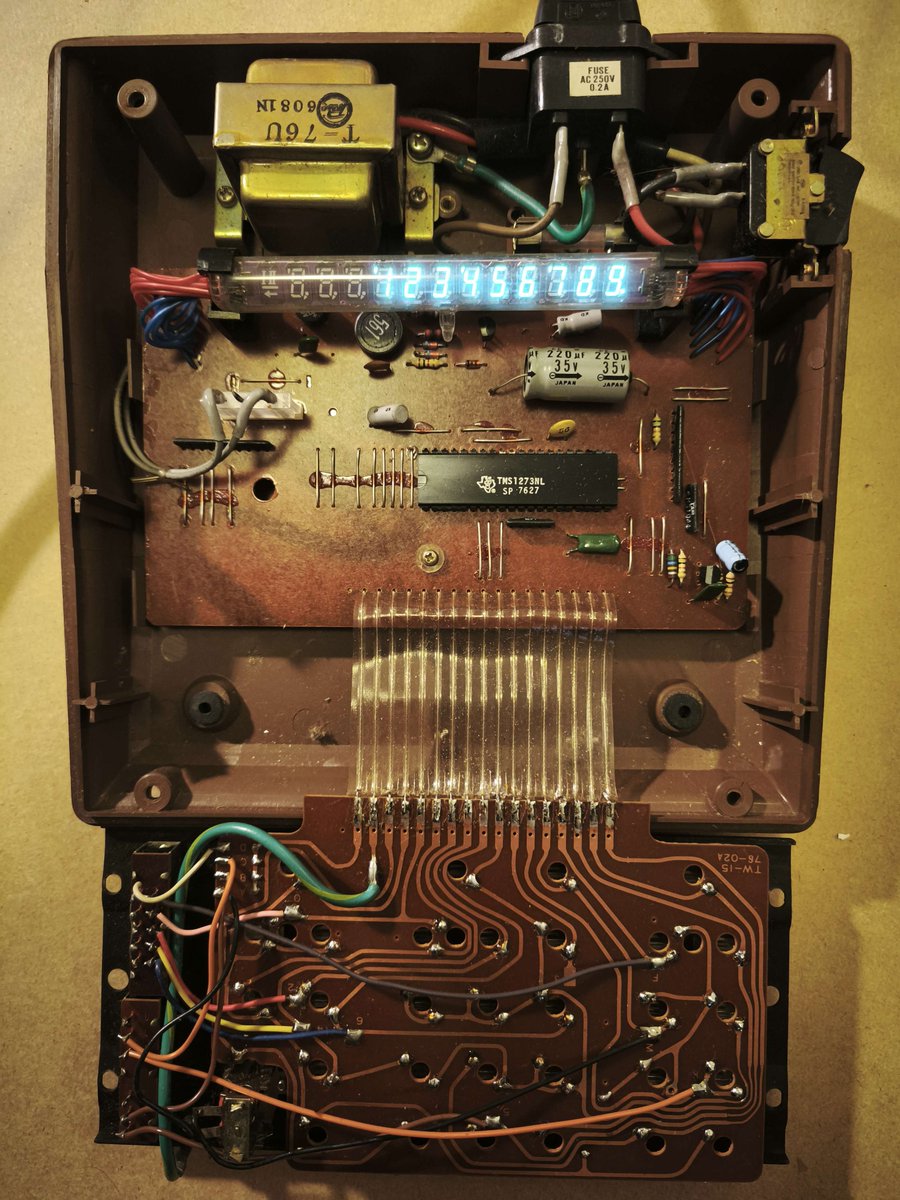
(3/6) The next example, Silver-Reed 121M (rebadged Tokyo Electric TEAL Lab 7601A) from approx. 1976, represents a major leap while retaining a similar form factor and functionality.
The cost and complexity of all components is vastly reduced, the calculator weights several times less and is much more compact. The 12 individual nixie tubes were replaced with a single enclosure VFD unit. Multiple PCBs with 45 ICs are reduced to just one IC integrating all the functions and a small amount of peripheral discrete components.
This component simplification drastically reduced sticker prices in mid to late 70s and started the first major electronics miniaturization boom.
1
1
13
533
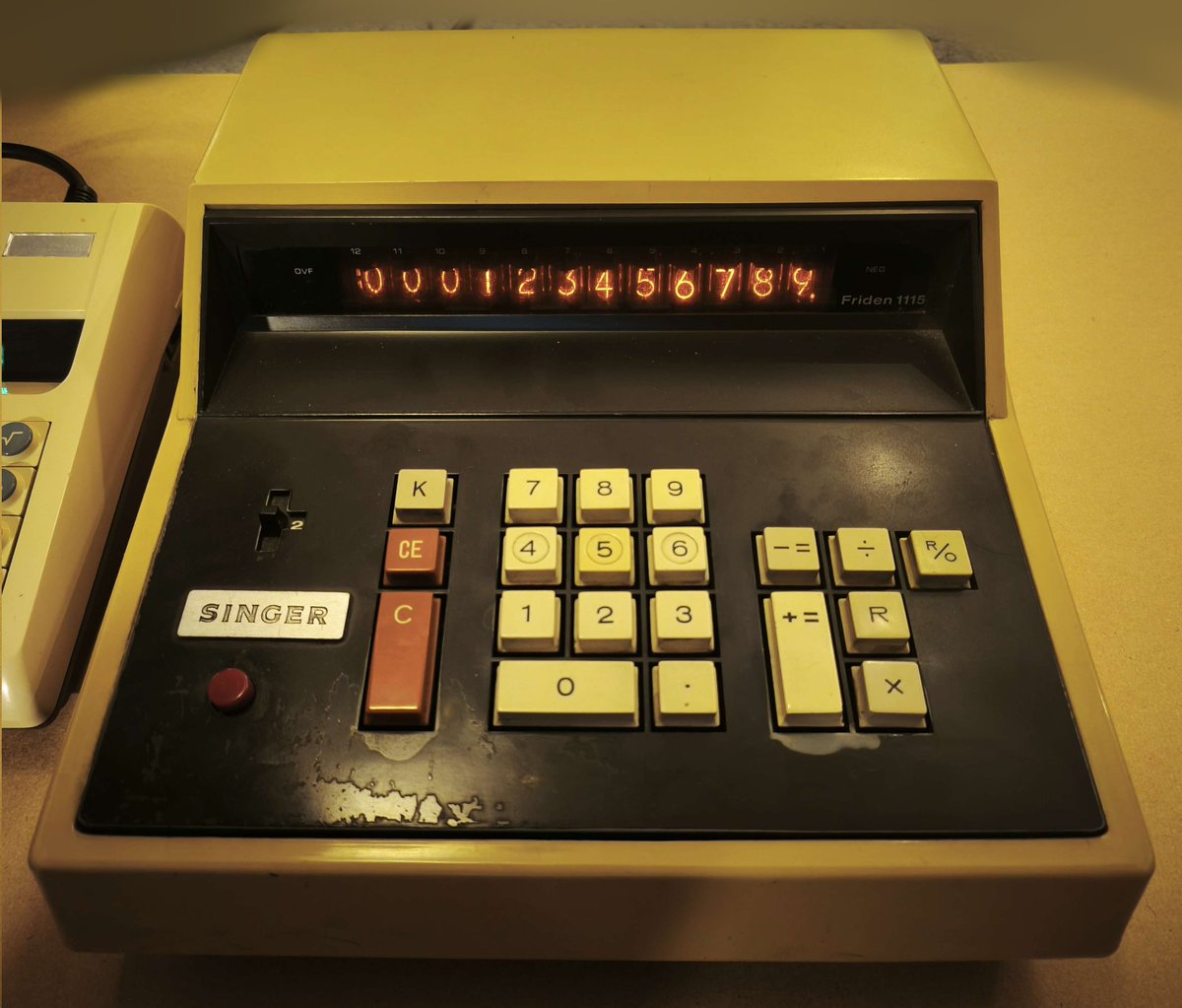
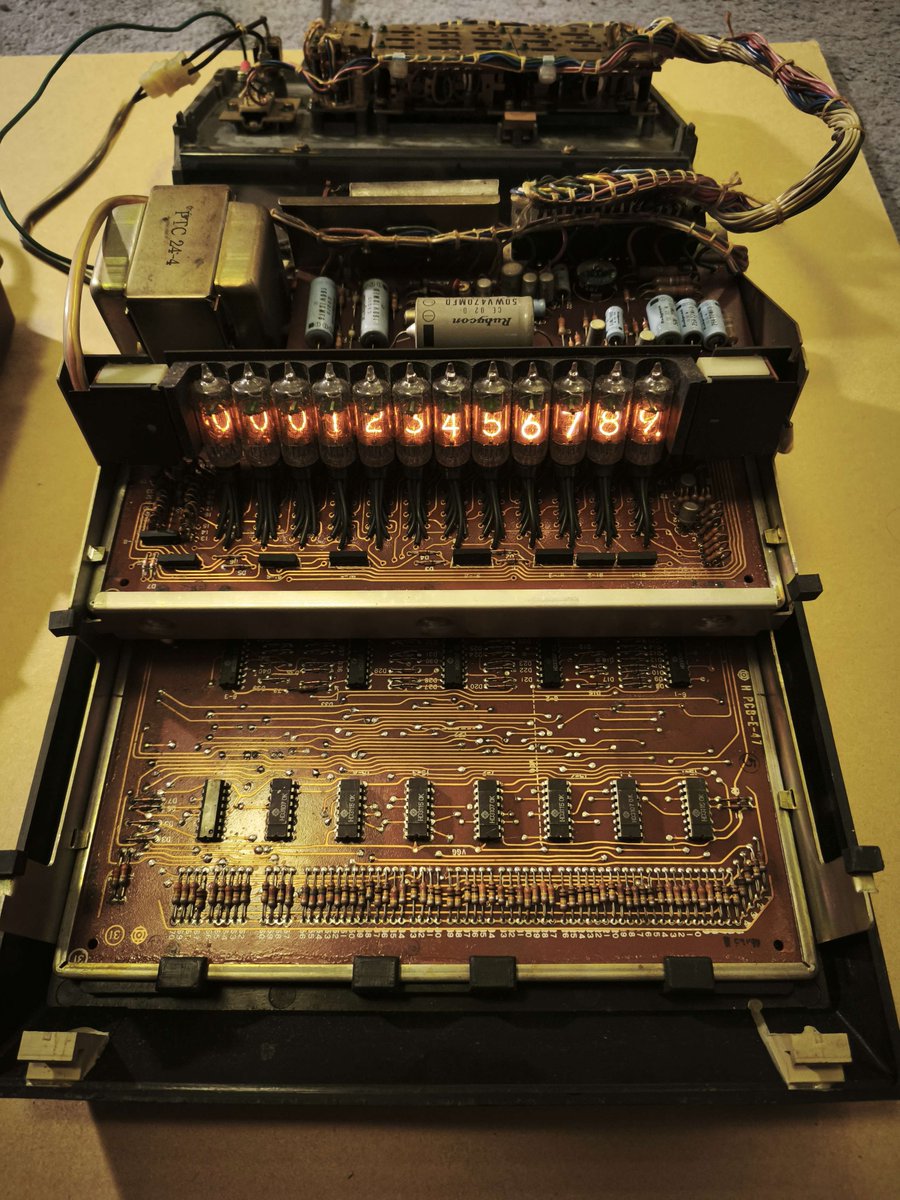
(2/6) The first fully electronic example I have is Singer/Friden 1115 (actually a rebadged Hitachi ELCA-32)
It was manufactured in the early 1970s, and despite being the "cost reduced" and "lightweight" (5kg) model for the time it would still cost approx. 6000$ in 2026 money.
It's built using 45 PMOS technology integrated circuits running at 8kHz, which for the time represented a large reduction in component count (compared to earlier discrete ones). The display is built using 12 Hitachi nixie tubes, which was common but expensive at the time.
1
1
13
533
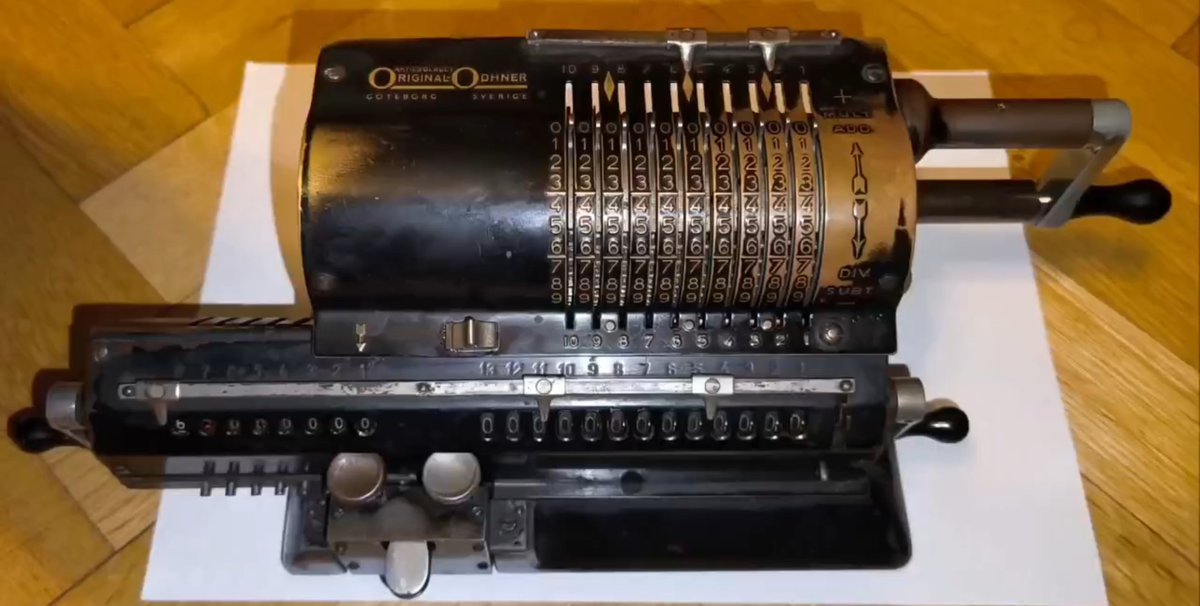
(1/6) Starting out with the oldest, Odhner Arithmometer (uncertain subvariant) - one of the most successful fully mechanical pinwheel calculators. It entered production in late 19th century and continued being sold in nearly unchanged form until early 1960s. Many clones and derivative designs were created, due to lack of better technology there was little to innovate on at the time, which is why it survived for so long in this basic form. From modern standpoint many elements are very antiquated, even in terms of manufacturing - nearly all parts (even structural) are individually machined rather than cast/stamped, with many unnecessary reinforcements and form complications that surely inflated the price (and it was not cheap at the time).
1
1
15
649
Jun 12
Another Marathon edit I have hastily created as a result of enjoying this game a considerable amount
Mar 9

Deviating from standard posting to state that Marathon is incredible and you should play it immediately
3
1
45
2,884
Combination K retweeted

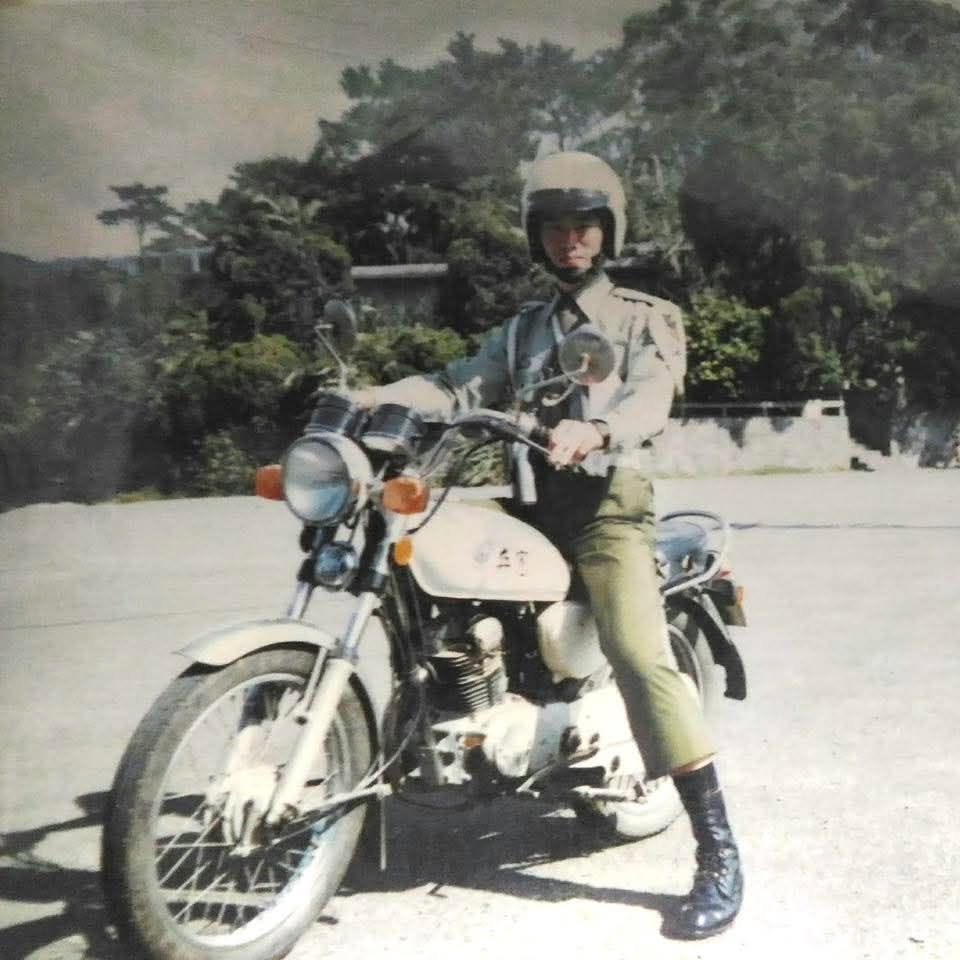
"Thirty-eight years ago, while on active duty, I served as the S-1 (personnel clerk) for the 1st Infantry Battalion, 676th Brigade, 226th Division (stationed at the Badouzi Coastal Defense Battalion). I made dozens of trips to Division Headquarters for official business, always following the same route: Badouzi to Keelung, then to Taipei Main Station, on to Zhuwei, up the mountain road, and finally to Headquarters. A single phone call meant a day of rushing about, followed—upon my return to base—by the inevitable 1:00–3:00 AM or 2:00–4:00 AM guard shift.
Back then, before leaving the base with a pass for official business, the standard warnings were always the same: don't lose your supply card, and watch out for Military Police (MP) logging infractions. The roar of a "White Wolf" motorcycle engine was inextricably linked to the dread of being confined for a disciplinary violation...
In reality, the hundred-mile journey from Badouzi to Zhuwei—enduring wind, rain, and scorching sun while mentally juggling bus schedules and official paperwork—left no time to tidy one's uniform or polish brass fittings and heavy leather boots. On a packed bus, you could barely lift your legs, let alone bend down to shine your shoes!
When the bus pulled into the Zhuwei stop, a crowd of soldiers would hop off. Though they walked in twos or threes at varying paces, they shared a common goal. They appeared casual, yet the situation was fraught with hidden danger, for this route was the hunting ground of the Division Headquarters MP platoon!
One morning, baked by the sweltering sun, I was sweating as I hurried toward Headquarters from Zhuwei. Suddenly, I heard the rapid clatter of leather boots from another soldier in olive-drab fatigues who had disembarked with me. Being somewhat oblivious, I had already lost the race before it began; a "White Wolf" motorcycle roared loudly and cut me off, and an MP—wearing the signature white helmet—barked sternly: "What are you running for?" With my short legs, I could only come to a sudden halt, snap to attention, and salute. Thinking fast, I claimed, "I don't know; I just ran because I saw them running," while hurriedly handing over my leave pass and ration card. It turned out the Military Police were after the whole flock and had little interest in a lone, foolish sheep; they urgently demanded, "Which way did they go?"—a case of "forced conscripts preying on their own kind." So, I pointed vaguely in the opposite direction of their escape route, and the two "white wolves" gunned their engines and sped off in pursuit. Once I regained my composure, I immediately ducked into a side alley to save my own skin..."
1
8
54
2,575
Combination K retweeted
10
61
1,393