Joined February 2018
- Tweets 359
- Following 403
- Followers 909
- Likes 84
78 Photos and videos
Pinned Tweet

29 Sep 2023
Register today!
Register by October 1st, 2023 👉
easychair.org/my/conference?…
Details: comco23.github.io
4
5
739
27 Oct 2023
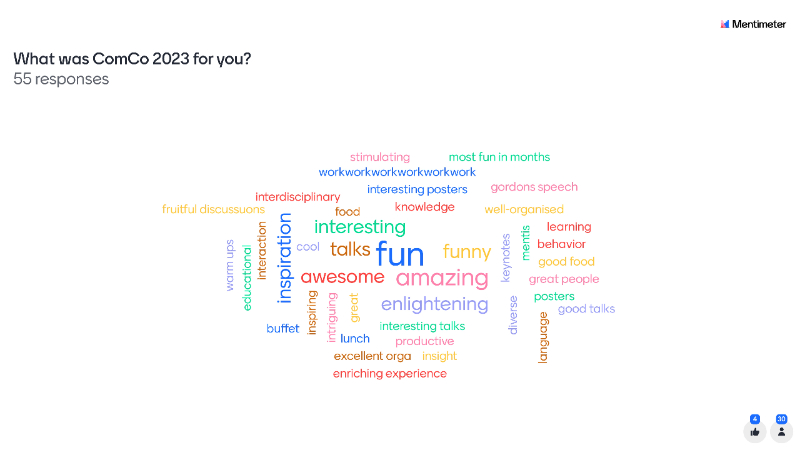
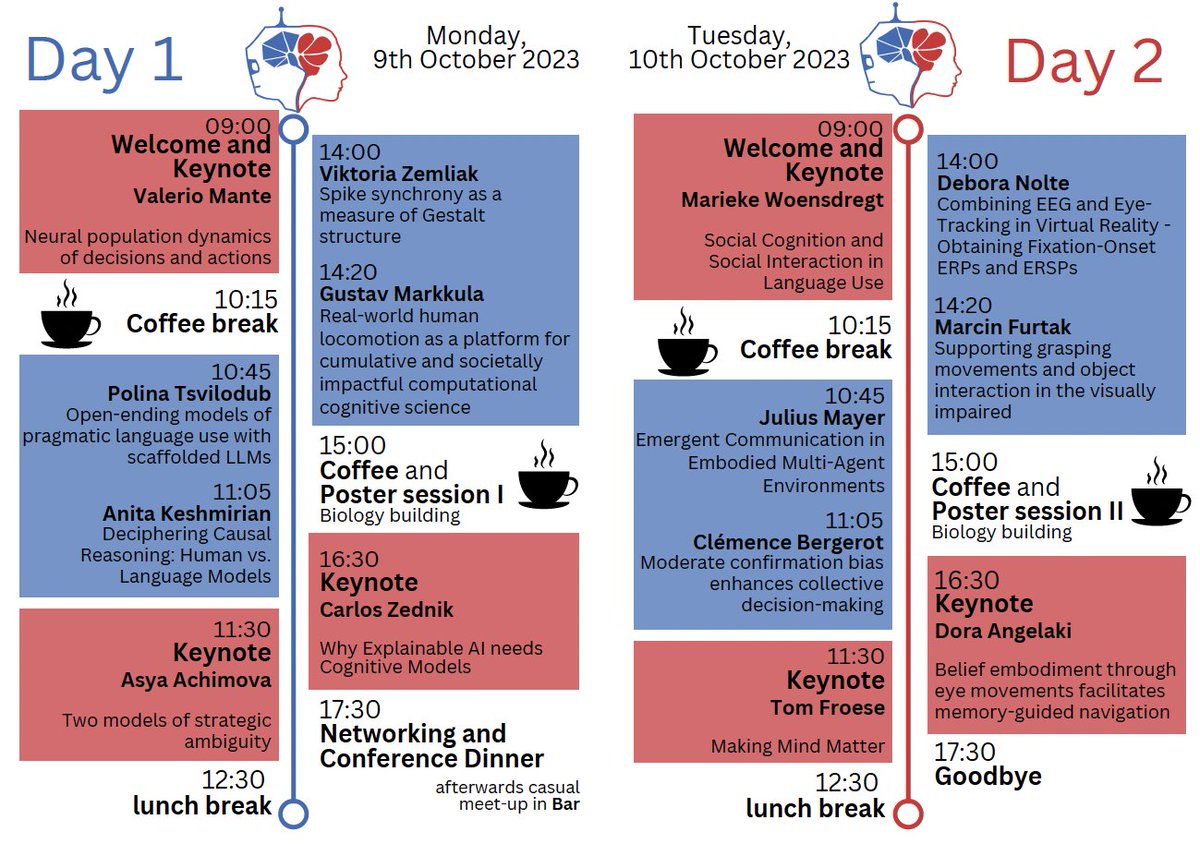
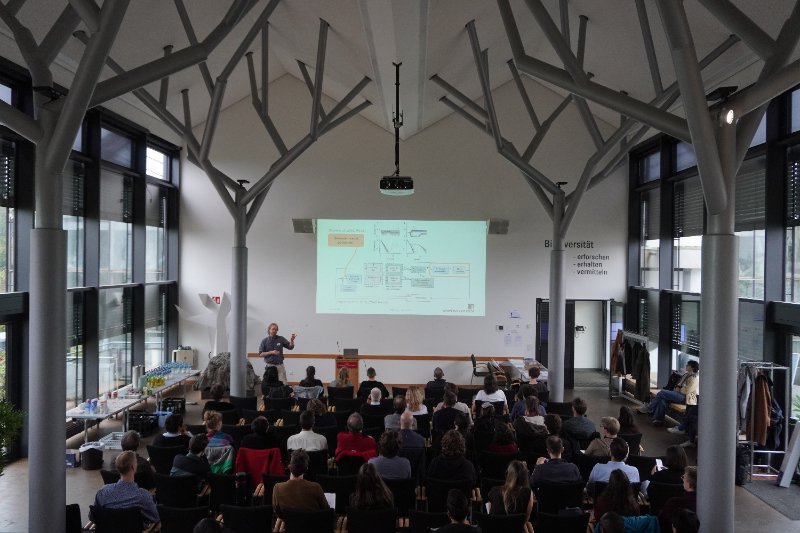
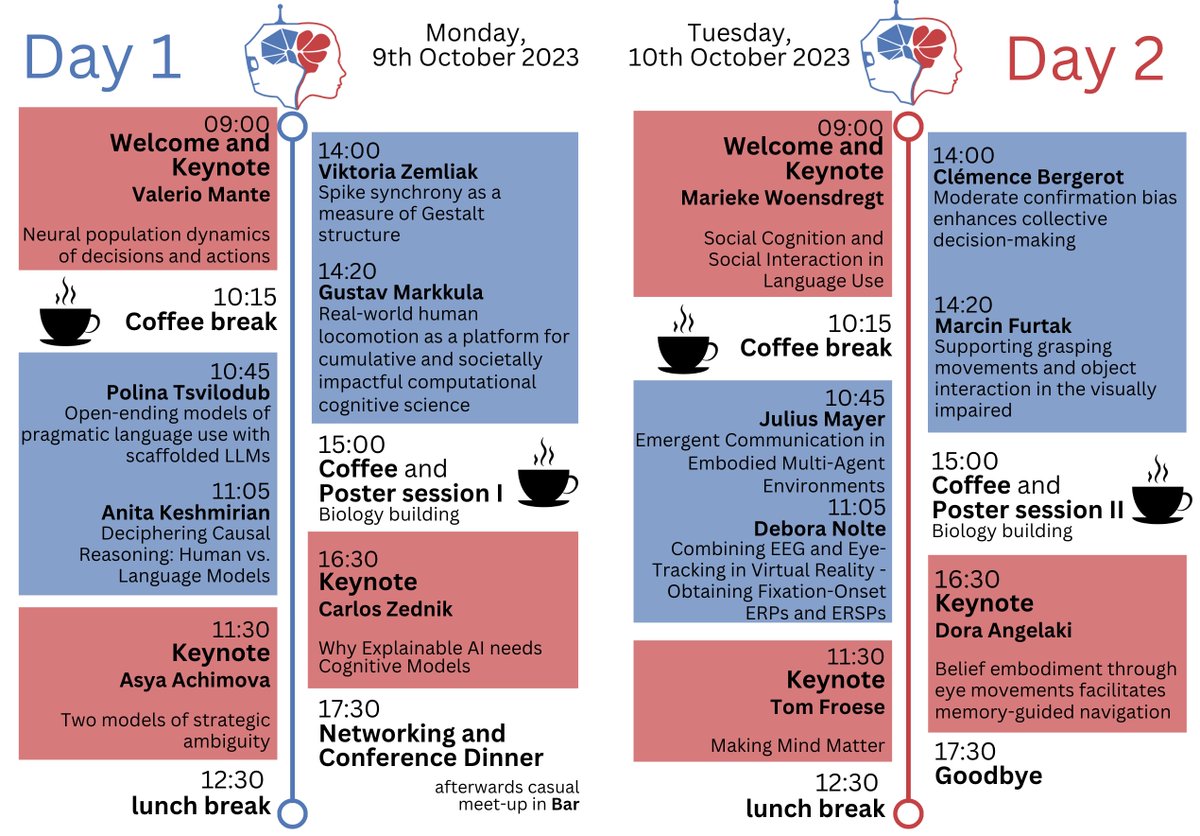
#ComCo2023 was a blast! Two days packed with exciting research: six keynote talks, eight contributed talks, two poster sessions and countless awesome interactions after the sessions, during the lunch/coffee breaks, at the bar and during our networking and warm up sessions!
1
3
375
27 Oct 2023
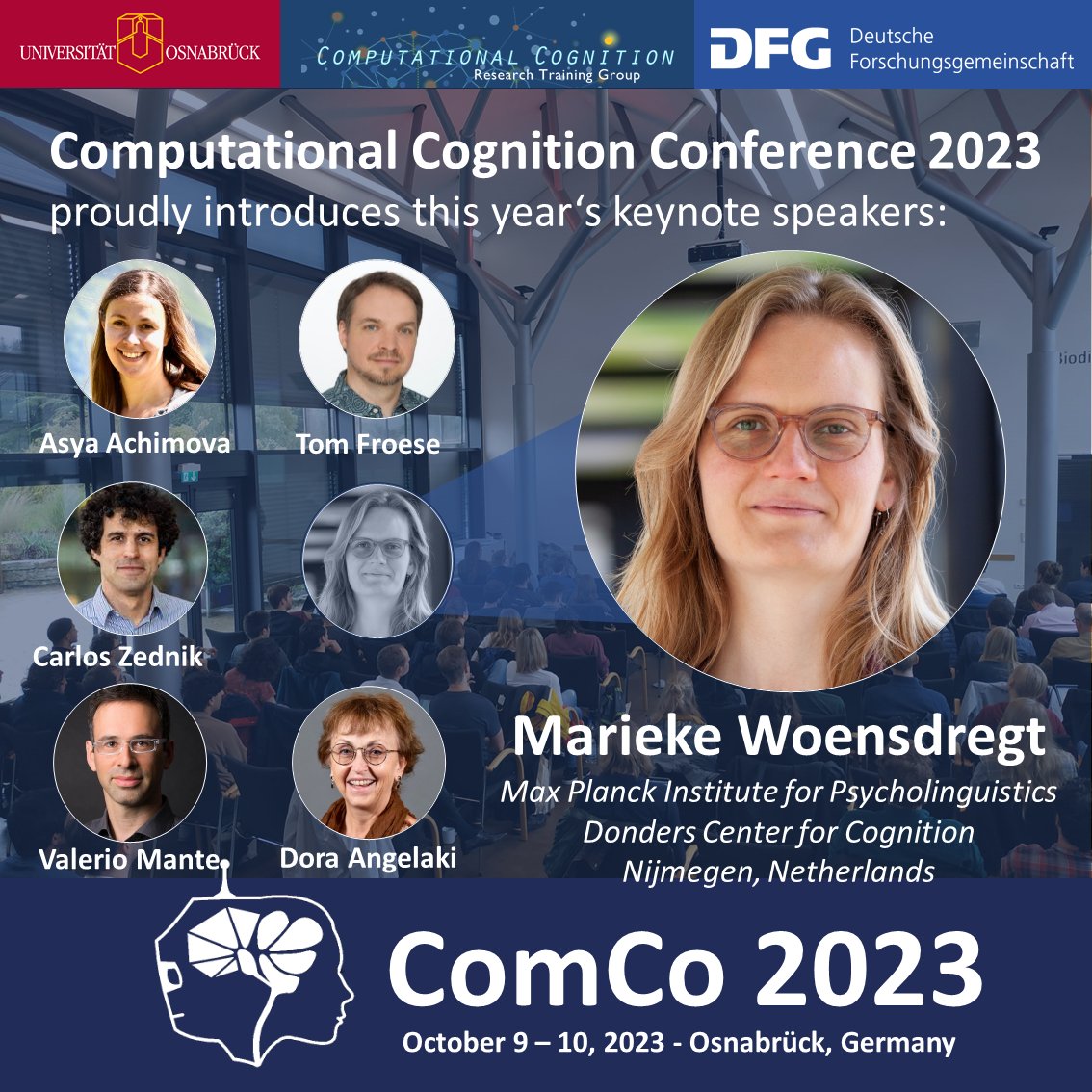
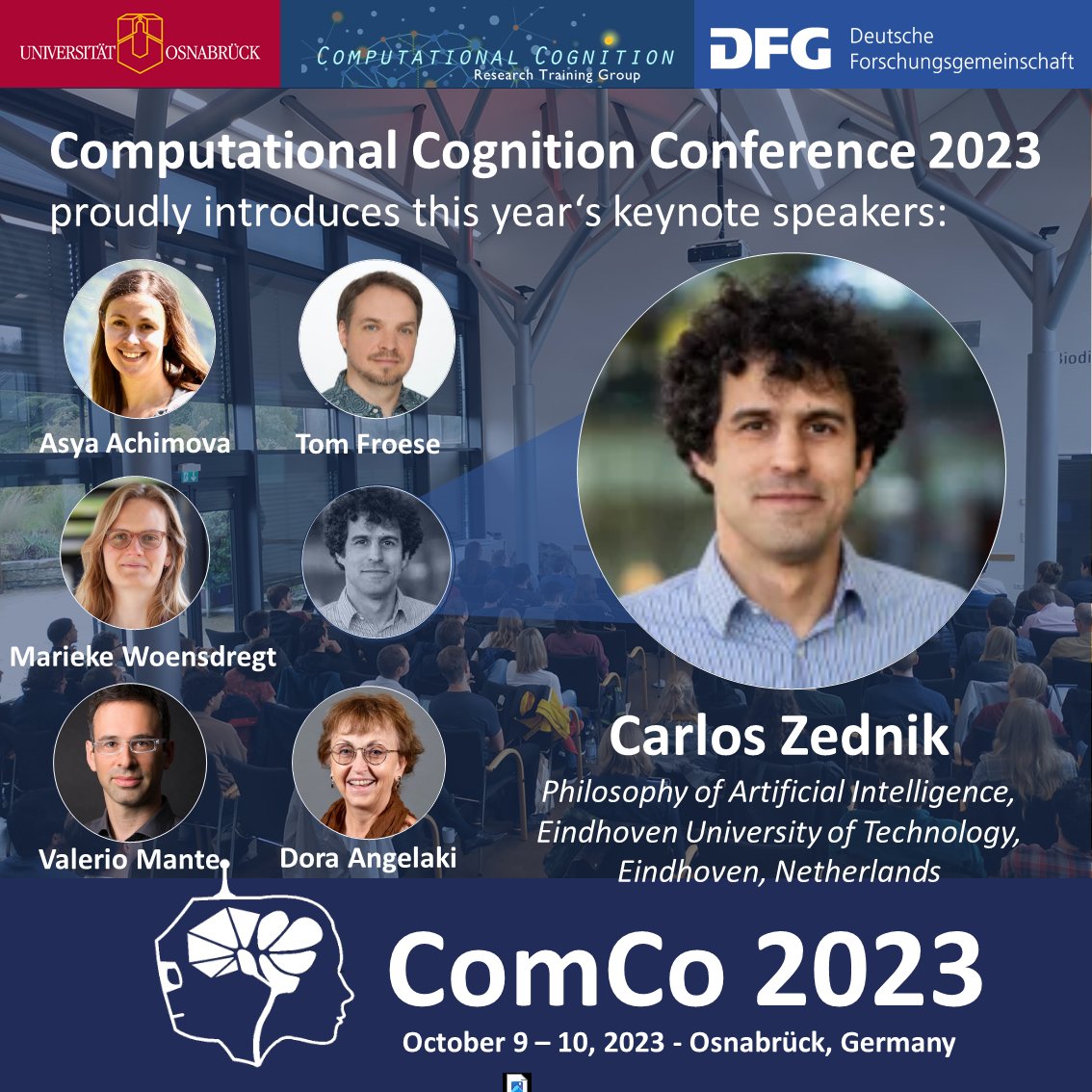
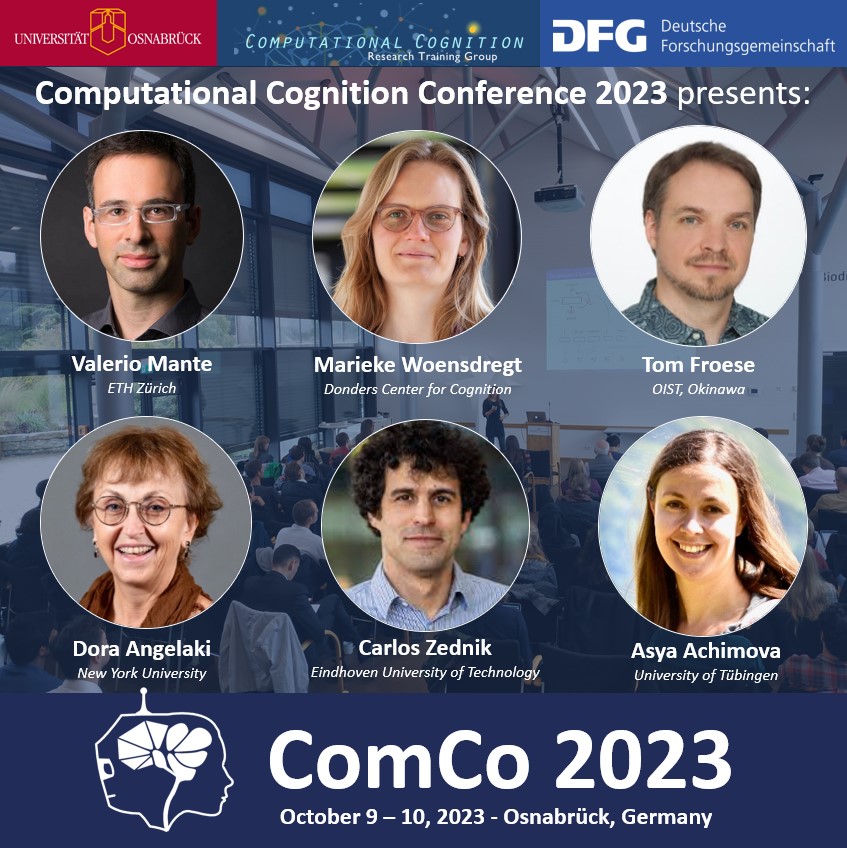
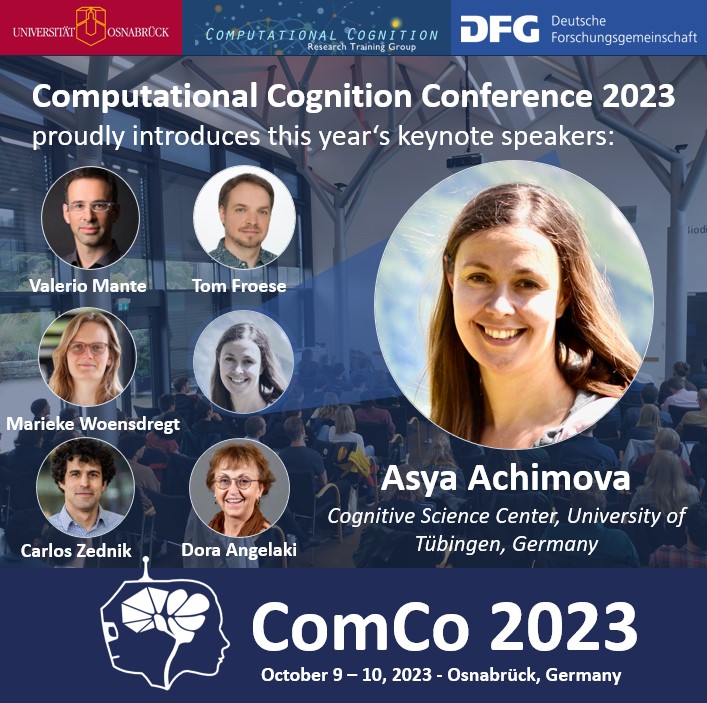
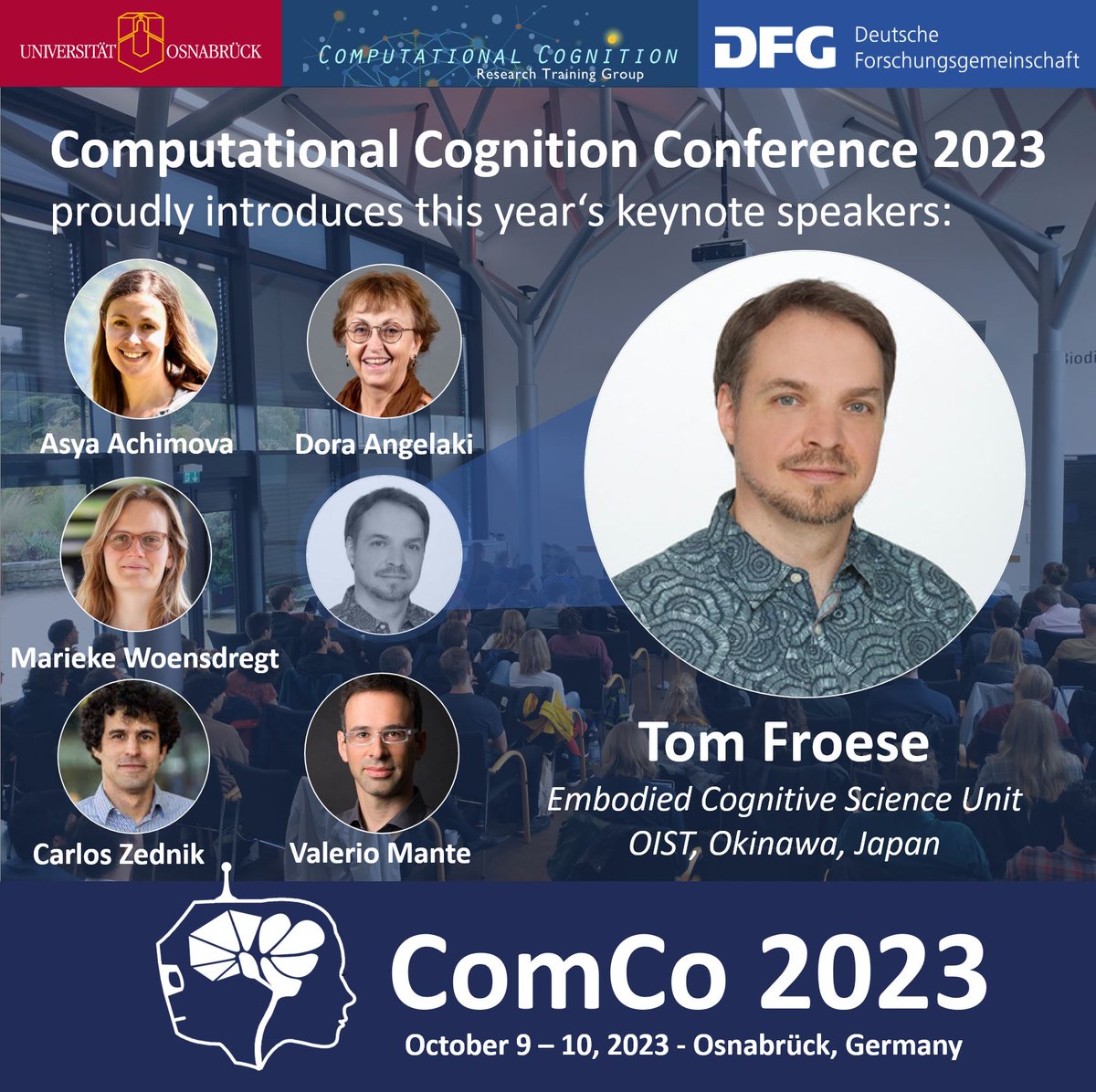
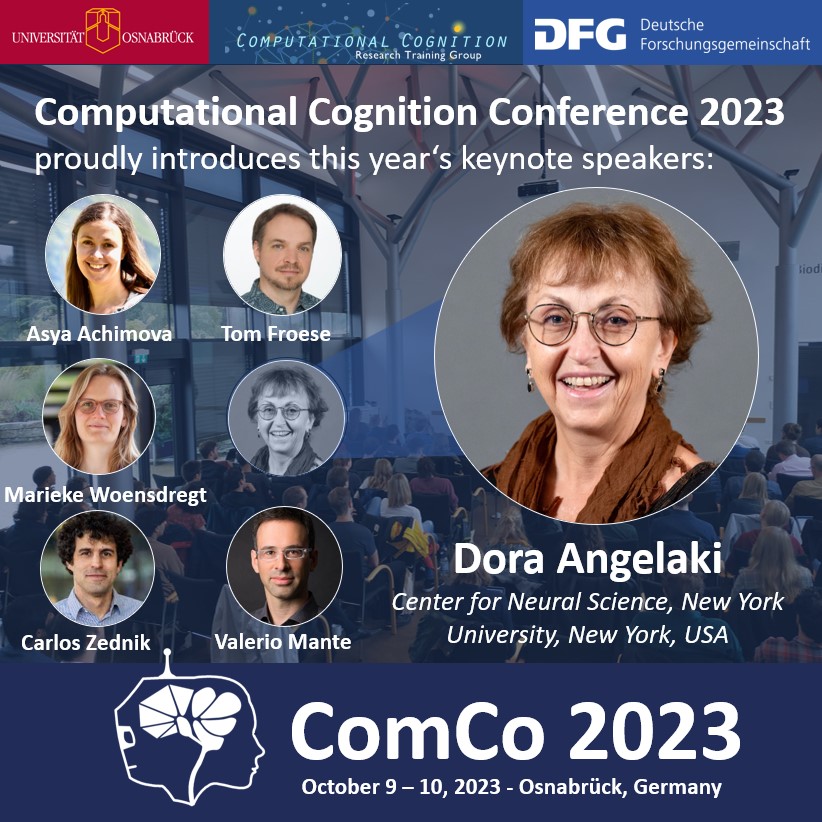
Special thanks go to our keynote speakers: Valerio Mante, Asya Achimova, Carlos Zednik, Marieke Woensdregt, Tom Froese and Dora Angelaki. Thank you for coming and sparking so many exciting discussions - your talks were an inspiration.
1
145
27 Oct 2023
See you all again hopefully soon!
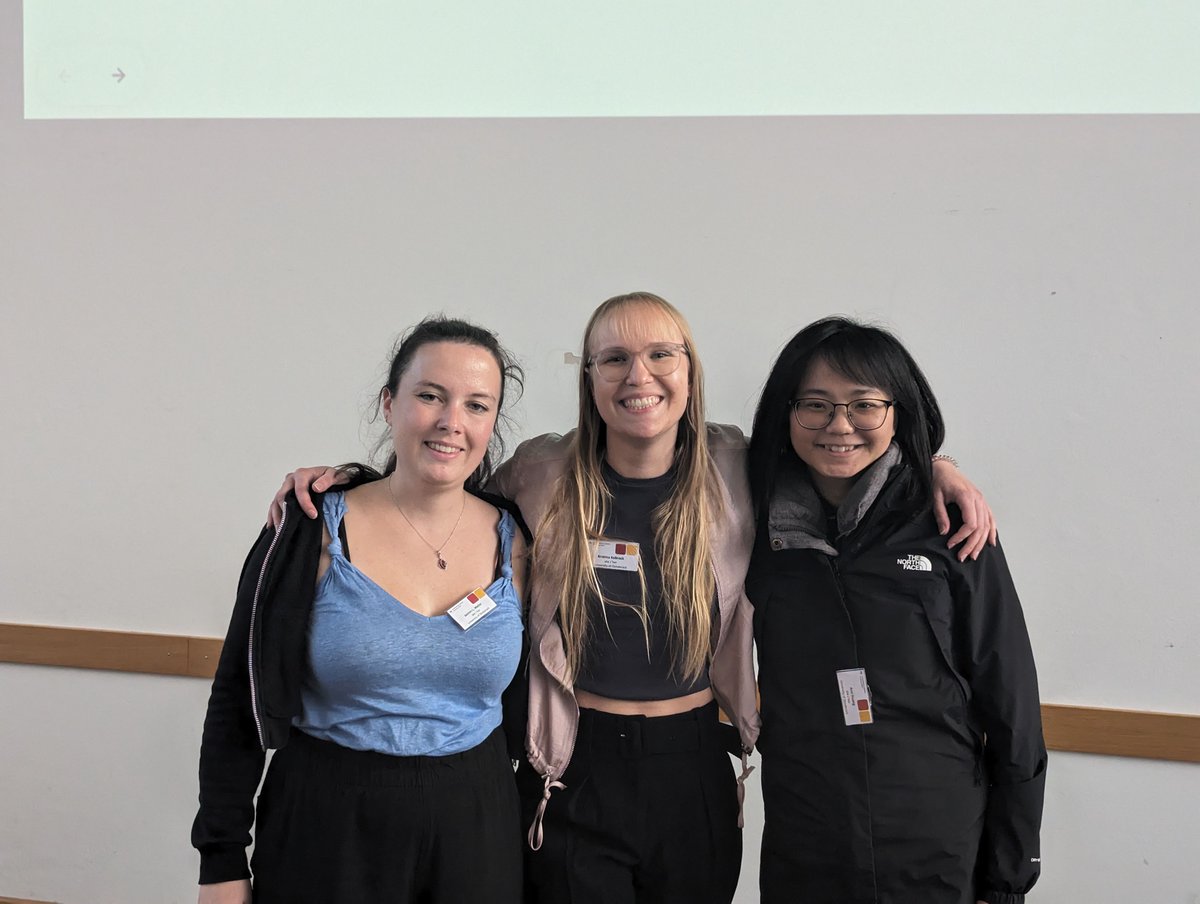
- Jasmin, Ann, Kristina and Gabriela
139
10 Oct 2023
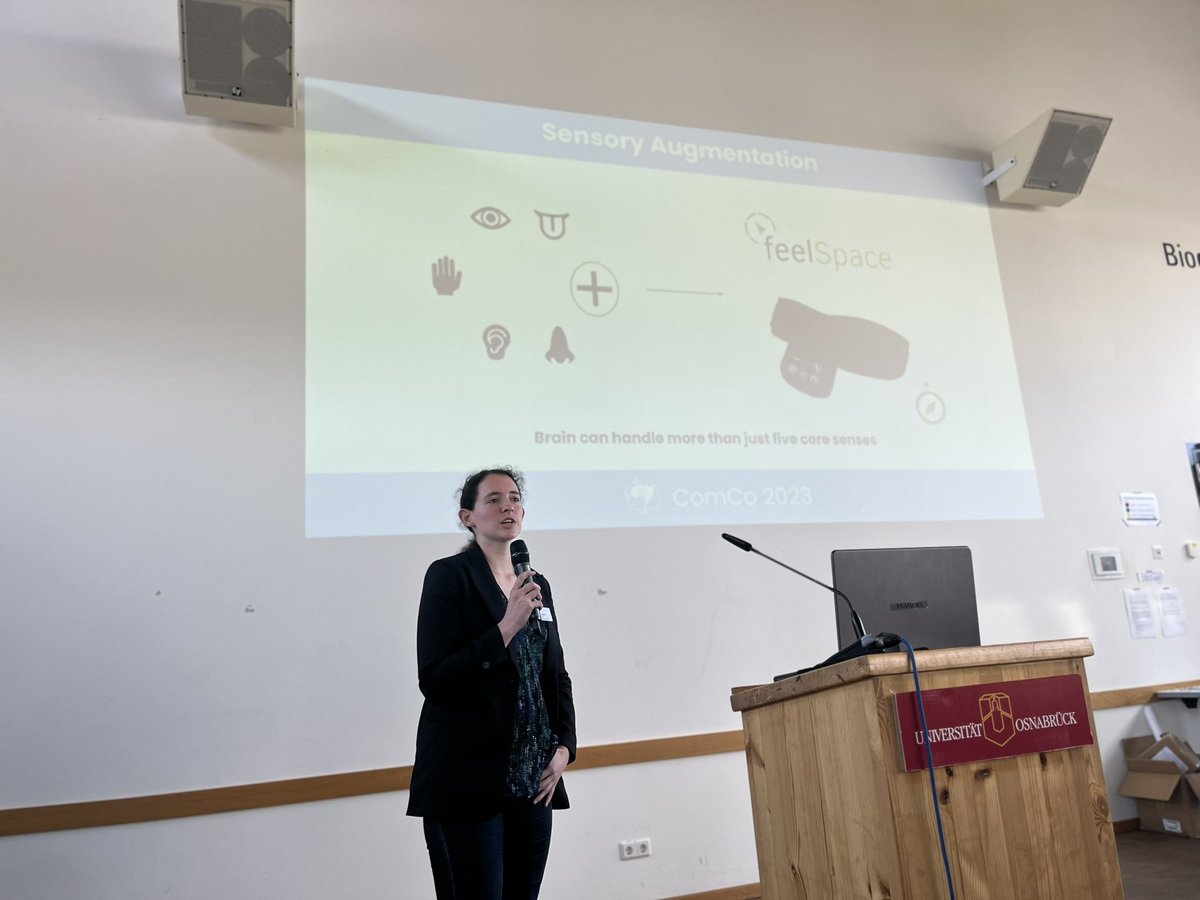
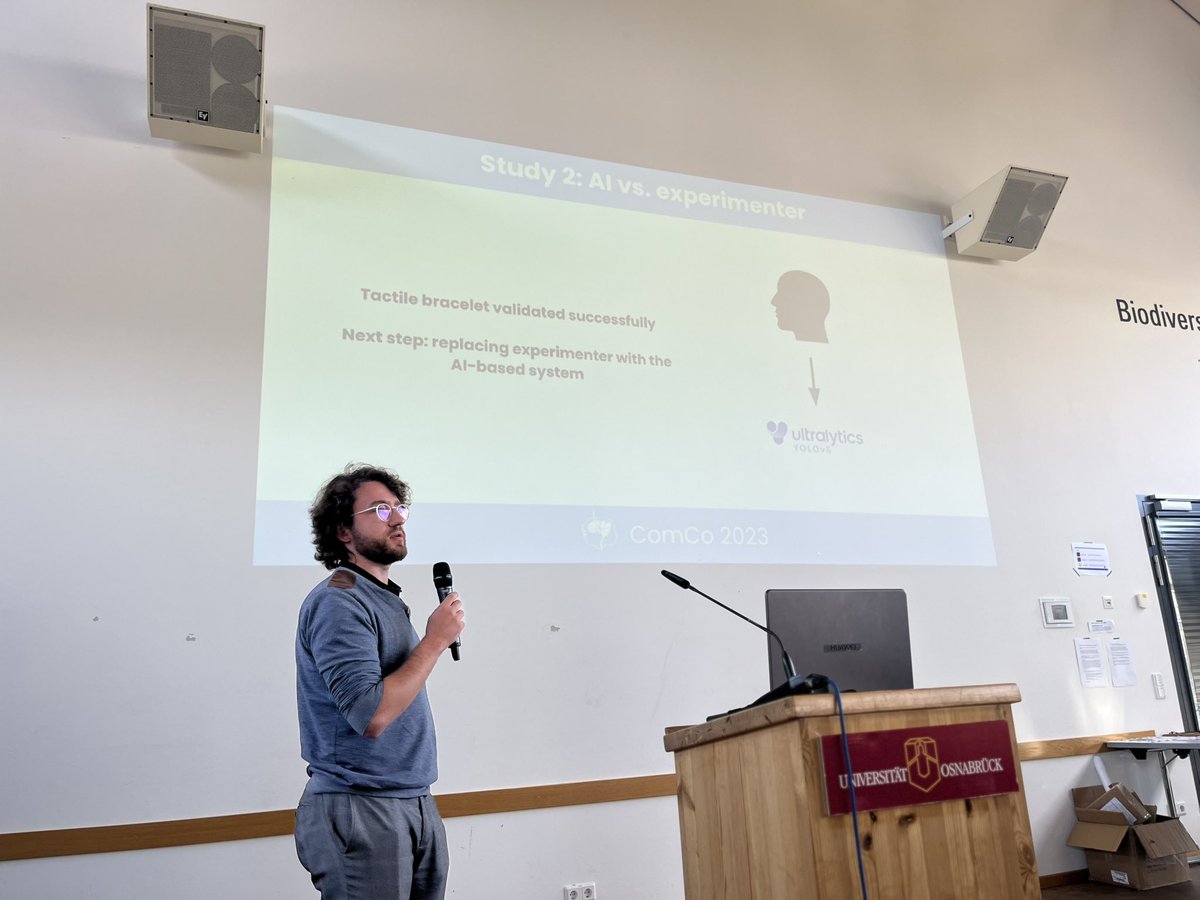
Piper Powell and Marcin Furtak presenting on supporting grasping movement and object interaction in the visually impaired. #ComCo23 @feelSpaceBelt
3
292
10 Oct 2023
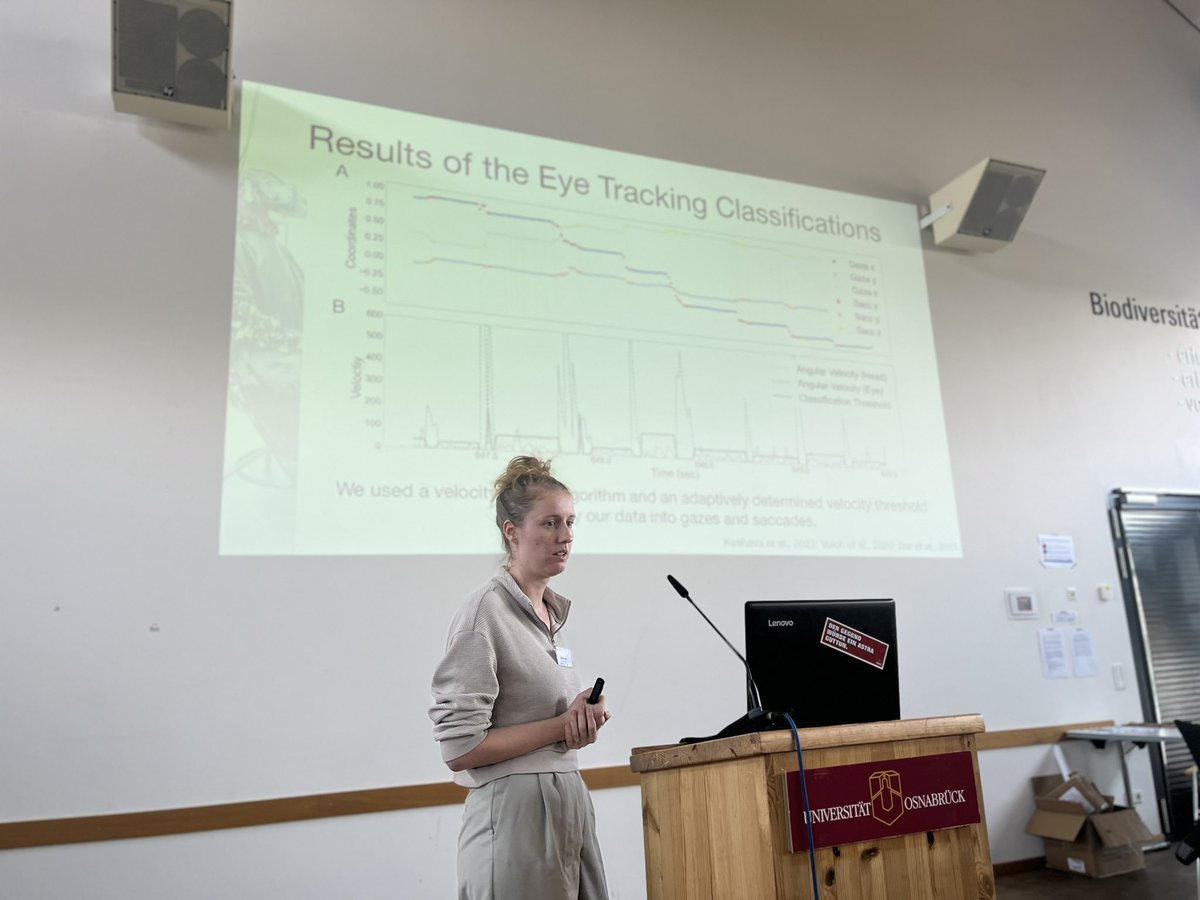
Nice methodological work testing a velocity-based algorithm which showed accurate classification of eye movements into gazes and saccades, and that ERSPs are better suitable to study behavior in free-viewing experiments as they are less time-sensitive.
1
95
10 Oct 2023
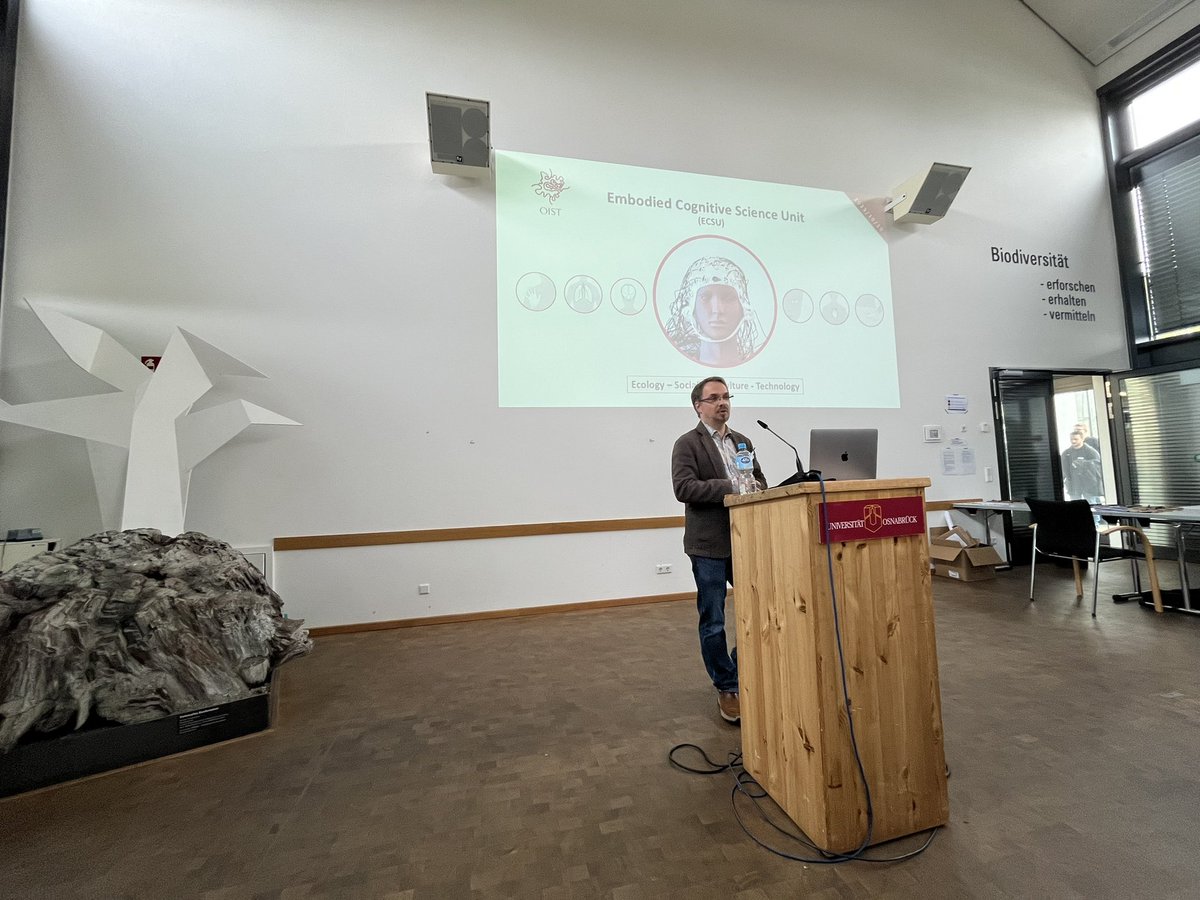
Keynote talk by @DrTomFroese from @OISTedu on Making Mind Matter. Lots of food for thought! In this talk the irruption theory was presented, which is a novel approach to conceptualize the enactive account of motivated activity.
1
3
9
720
10 Oct 2023
In essence, it was propsed that cognitive science has been misguided by focusing on observables that are in principle fully explicable in terms of other observables.
1
2
115
10 Oct 2023
Practically there needs to be a switch of focus and a development of the cognitive science toolbox for identifying those observable changes that are inexplicable in terms of observables.
3
902
10 Oct 2023
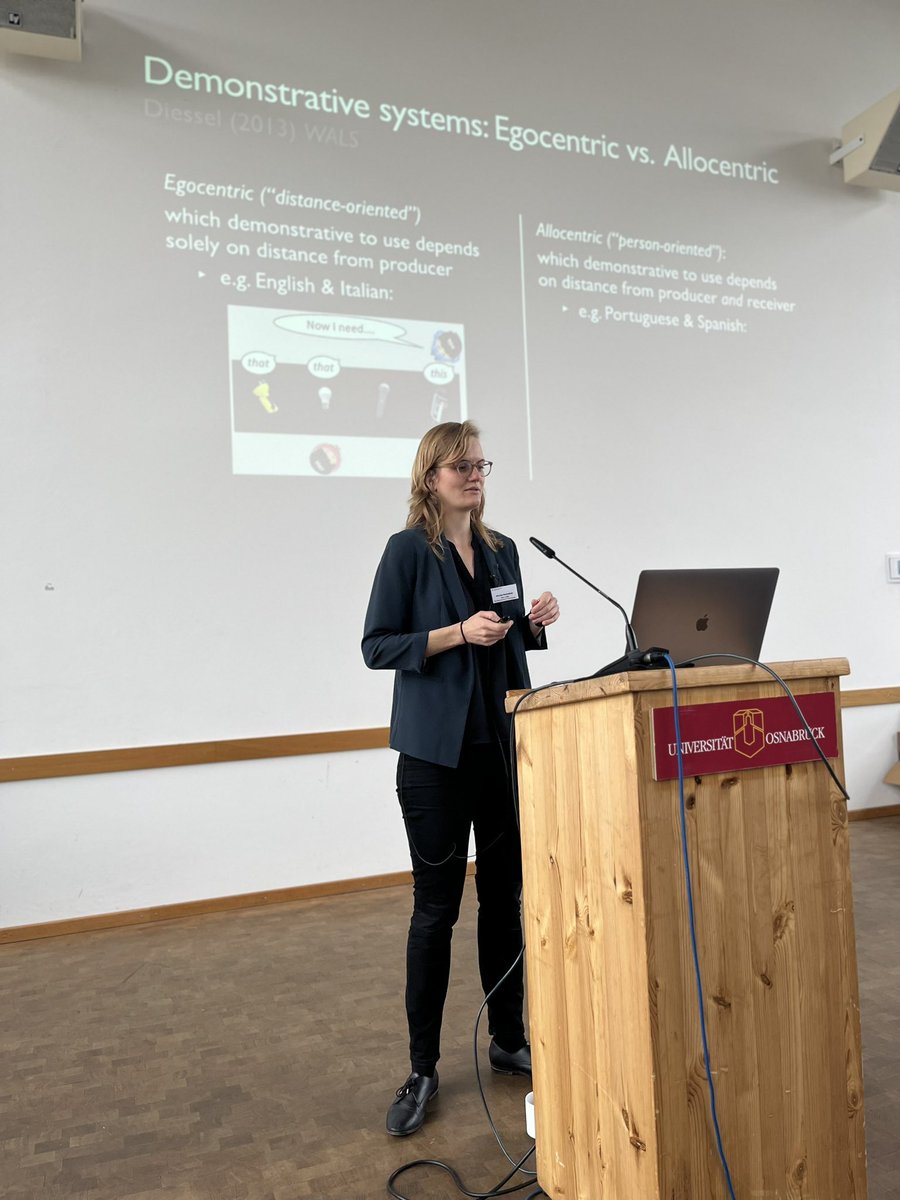
Day two of #ComCo23 starts with @mariekewoe talk on how social cognition is applied in language use?
1
1
4
399
10 Oct 2023
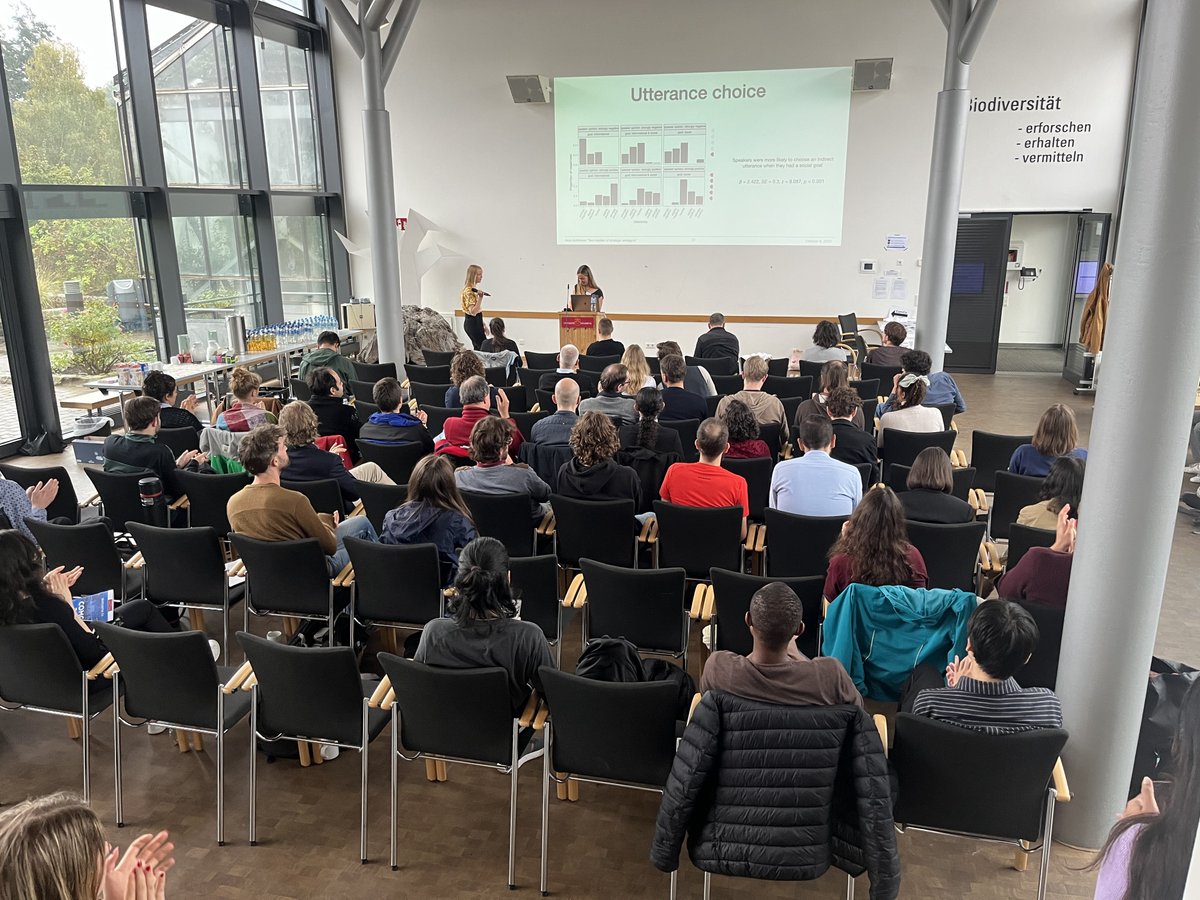
Discussion included the two experiments conducted using demonstratives to extract a computational model which accounts for the visual search cost of the receiver with softmax rationality parameter.
1
2
74
10 Oct 2023
Models were compared and results showed no difference between the attention-correction model versus baseline. Additionally the talk included strategies for resolving ambiguity, and future work could focus on how humans manage resource demands.
#pragmaticreasoning #languagemodels
2
70
9 Oct 2023
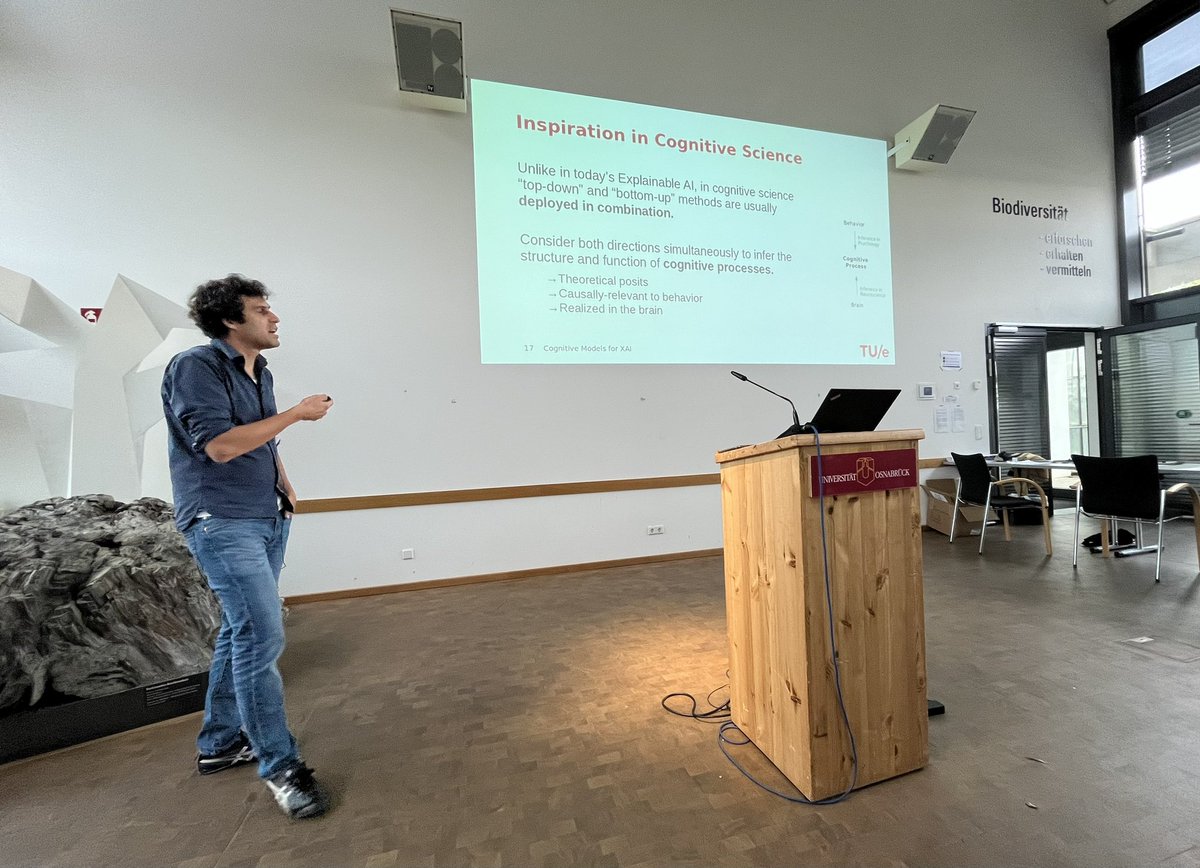
Does explainable AI needs cognitive models? last keynote of the day by @CarlosZednik who discusses the advantages and limitations of “top-down” and “bottom-up” explainable strategies.
1
3
186
9 Oct 2023
Importantly both strategies are limited to promote trustworthiness in AI. This begs the question whether we could seek inspiration and adopt an explanatory strategy from the field of cognitive science.
1
93
9 Oct 2023
Specifically also the challenges of the cognitive modeling approach including interpretability, scalability, etc. #ExplainableAI #cognitivemodels #AItrust
88
9 Oct 2023
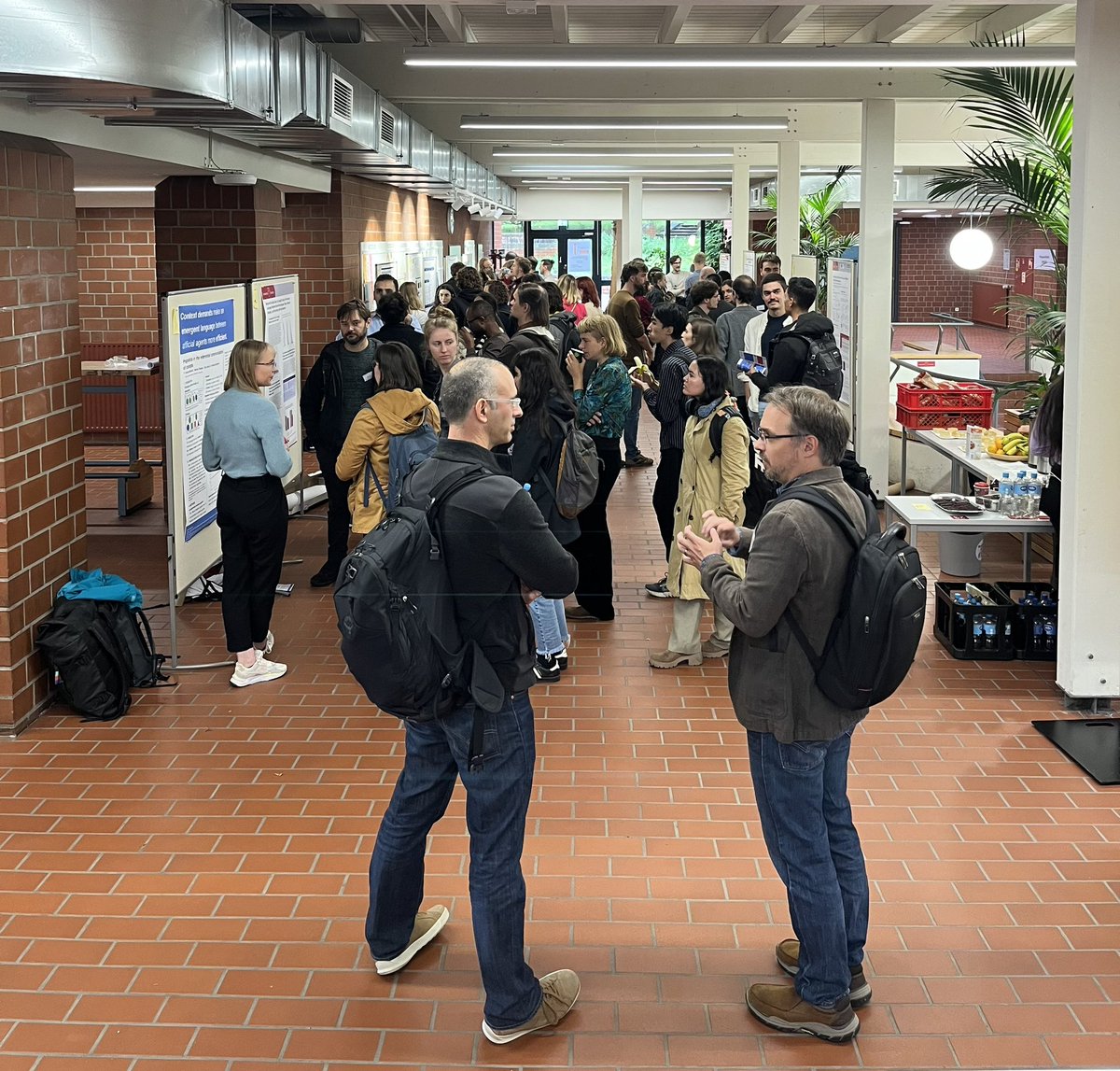
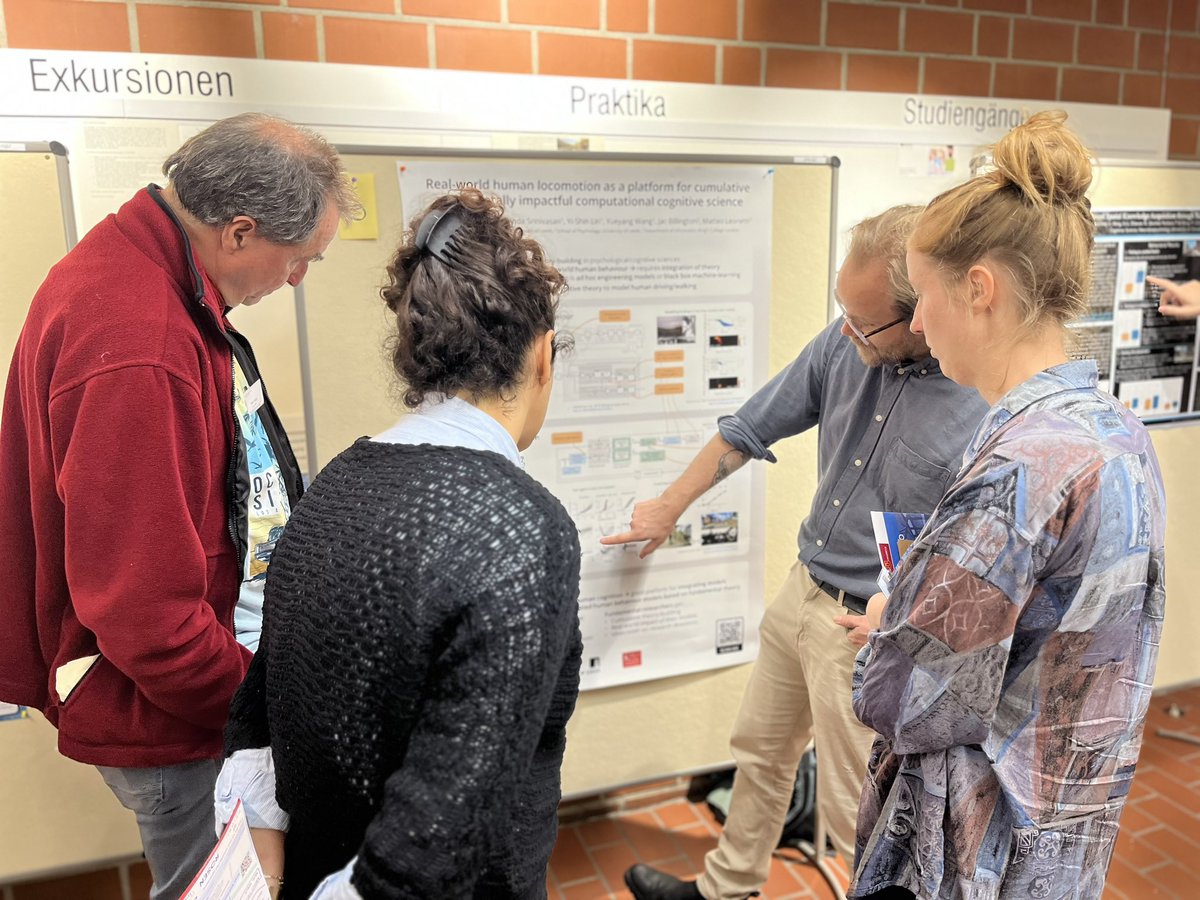
from neural spiking synchrony (@Vik_Zemliak) to applying computational cognitive models to real-world driving scenarios (Gustav Markkula) to now poster session with some nice ☕️&🍰 #ComCo23
5
381
9 Oct 2023
looking forward to it!

Exciting start to #ComCo2023 - what is the link between decisions and neural activity? I will revisit this topic during my talk on Tuesday.
2
372
Computational Cognition retweeted

Exciting start to #ComCo2023 - what is the link between decisions and neural activity? I will revisit this topic during my talk on Tuesday.
1
1
9
1,419
9 Oct 2023
Exciting kick-off to #ComCo23 this morning: Using recurrent neural networks to translate neural dynamics of primates to decision behavior (Valerio Mante), discussions on pragmatic language use with GPT-3 (Polina Tsvilodub),
1
5
284
9 Oct 2023
and how to model ambiguities in conversations within the rational Speech Act framework (@AAchimova )…stay tuned for more presentations to come!
1
1
95
9 Oct 2023
Special thanks and shout-out to our sponsors (ROSEN Technology and Research Center, PSIORI, @dfg_public for their support in making this conference happen.
#computationalcognition #braindynamics #languagemodels #neuralnetworks
93