
► Gestor Inversiones, profesor, columnista ► Analizo el ciclo económico-bursátil & enseño a invertir en el Club Bursátil Confidencial hugoferrer.es
Joined June 2009
- Tweets 37,086
- Following 1,474
- Followers 88,903
- Likes 12,912
4,785 Photos and videos


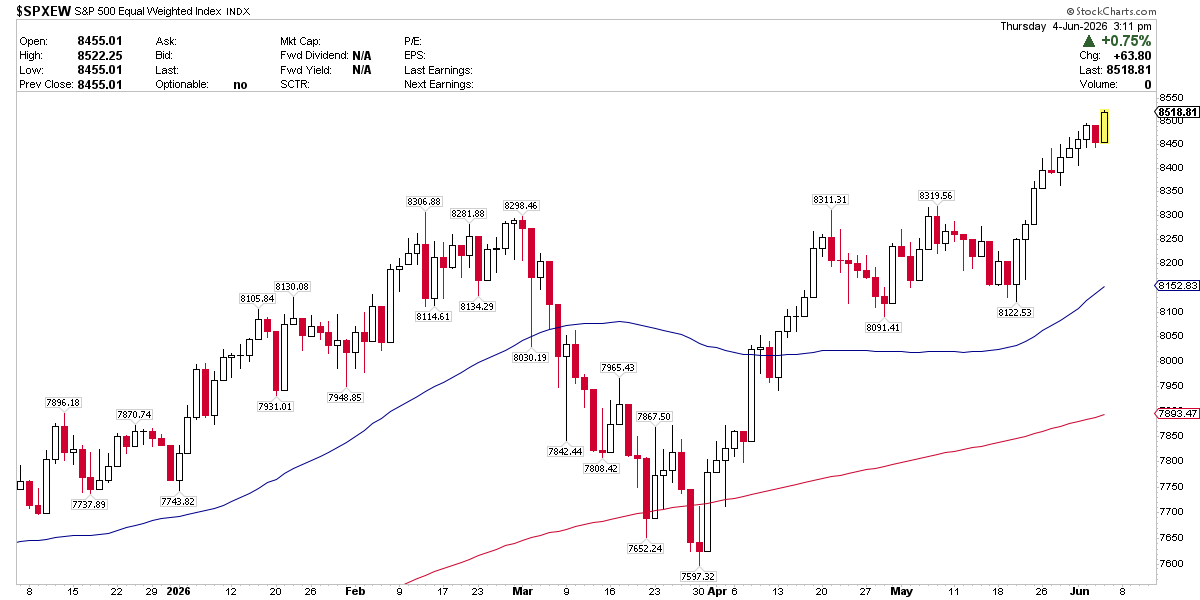

Confirmado por Pakistán. Acuerdo de paz entre Irán y Estados Unidos. Fin guerra. Apertura Ormuz. Ceremonia firma este viernes.
Como todo en Oriente Medio, la paz será frágil, pero lo que estaban "votando" los mercados desde abril, se ha cumplido.

🚨🇺🇸🇮🇷U.S. and Iran reached peace deal, Pakistani prime minister says. My report on @axios
axios.com/2026/06/14/us-iran…
5
6
58
4,782

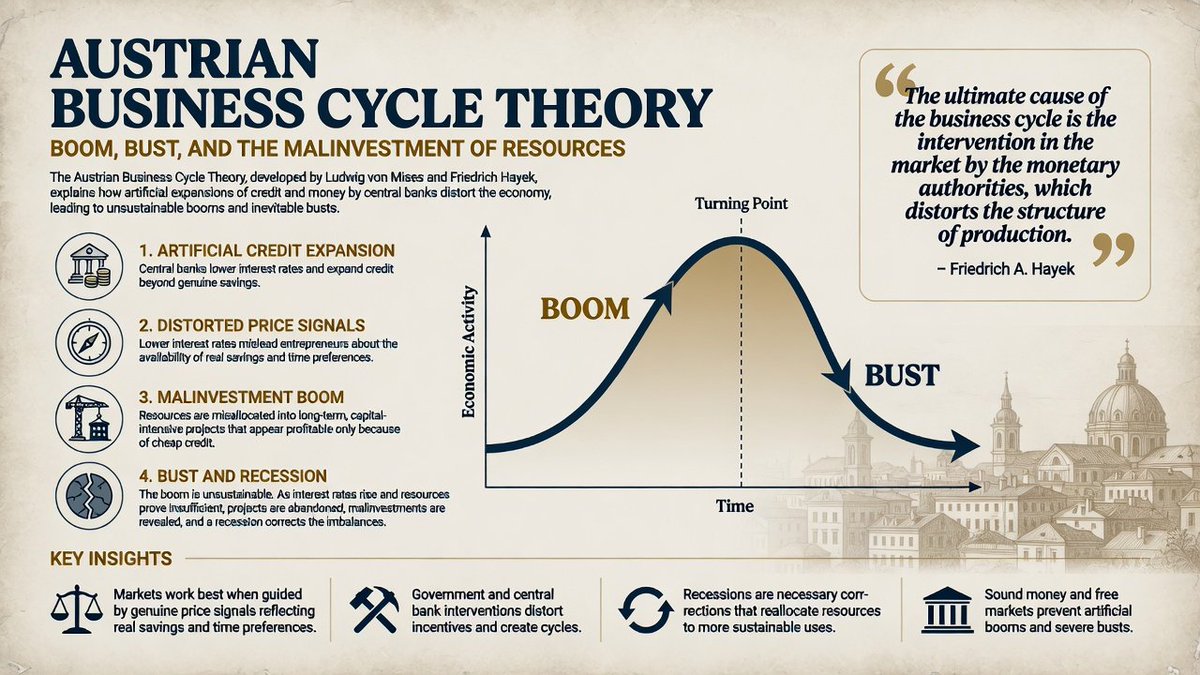
The Austrian business cycle starts with central banks artificially lowering interest rates below their natural market level. This floods the economy with cheap credit, distorting the crucial price signals that coordinate production across time. Entrepreneurs suddenly see long-term projects as profitable when they're actually maladaptive. The market didn't generate these savings, the printing press did.
You get the boom. Construction companies launch massive developments, tech startups burn through venture capital, and everyone feels wealthy (for a while). The problem? Real resources haven't increased. The central bank created money, not actual capital goods or skilled workers or raw materials.
The bust arrives when reality reasserts itself. Interest rates rise, credit tightens, and those seemingly profitable ventures reveal themselves as wealth destroyers. The 2008 housing bubble followed this script perfectly. Greenspan held rates at 1% for years, developers built houses nobody could actually afford, then Bernanke had to choose between hyperinflation or letting the malinvestments liquidate. We know which path he chose... and here we are again.
23
92
321
13,622
Hugo Ferrer retweeted

Jun 13
Five dimensional chess doesn’t exist. Everyone is furiously improvising all the time. The future is utterly uncertain.
336
457
5,793
726,513

Jun 12
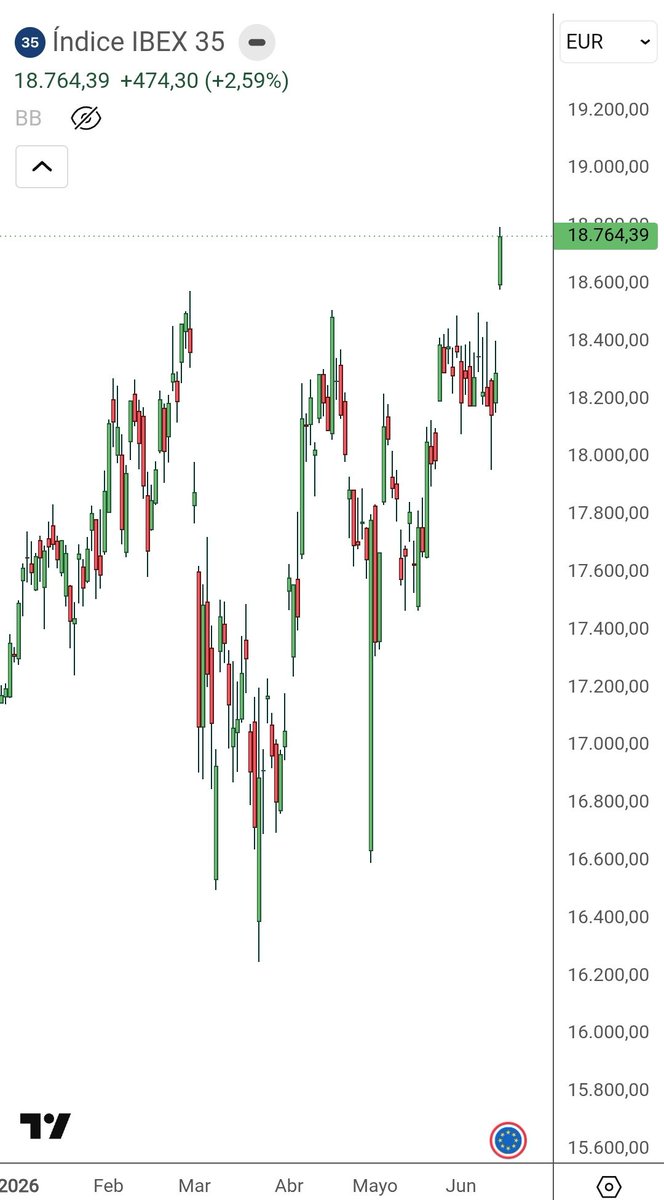
El maldito Ibex 35. Casi dos décadas en coma y en este ciclo va dopado sin Inteligencia Artificial.
Buena señal del ciclo bursátil global ✅
8
9
122
14,427
Jun 12
La entrevista que me hicieron esta semana desde Finect.

📈 "Esta burbuja se parece más bien a las 'Nifty Fifty' de principios de los 70. En aquel entonces eran empresas muy buenas, pero también por las que se estaba pagando demasiado".
El análisis de Hugo Ferrer @ContraInvest 👇
2
2
40
6,890
Jun 11
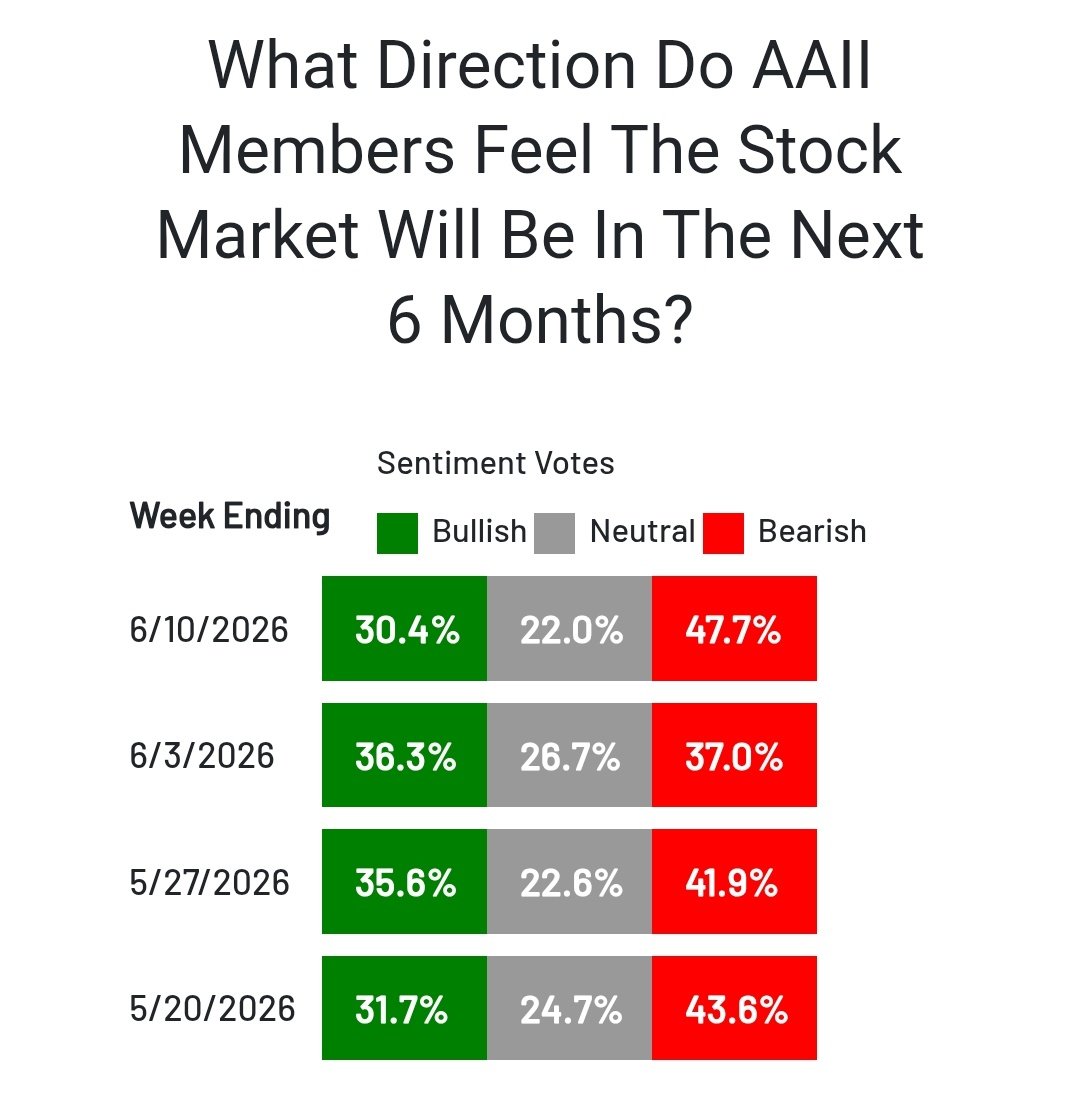
Por cierto, aparte de los popes de la calle del Muro, los inversores minoristas también están bastante pesimistas a 6 meses vista.
Jun 9

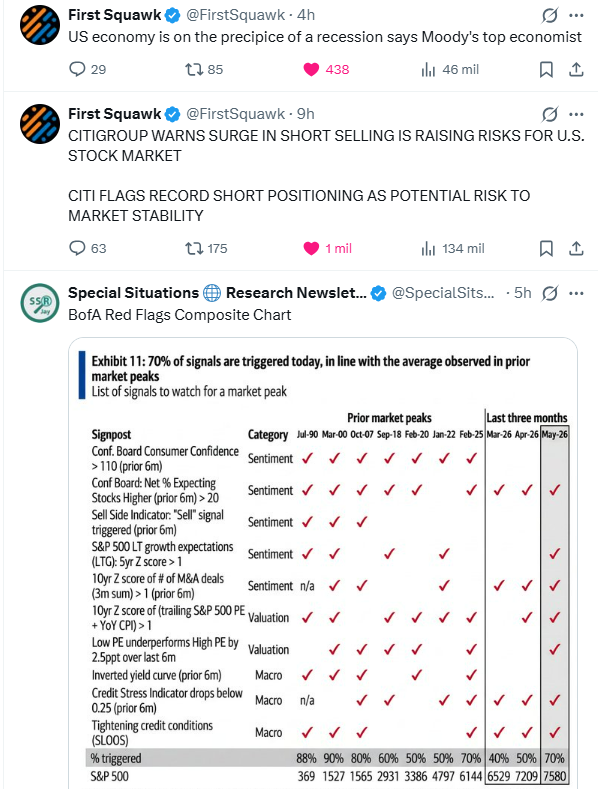
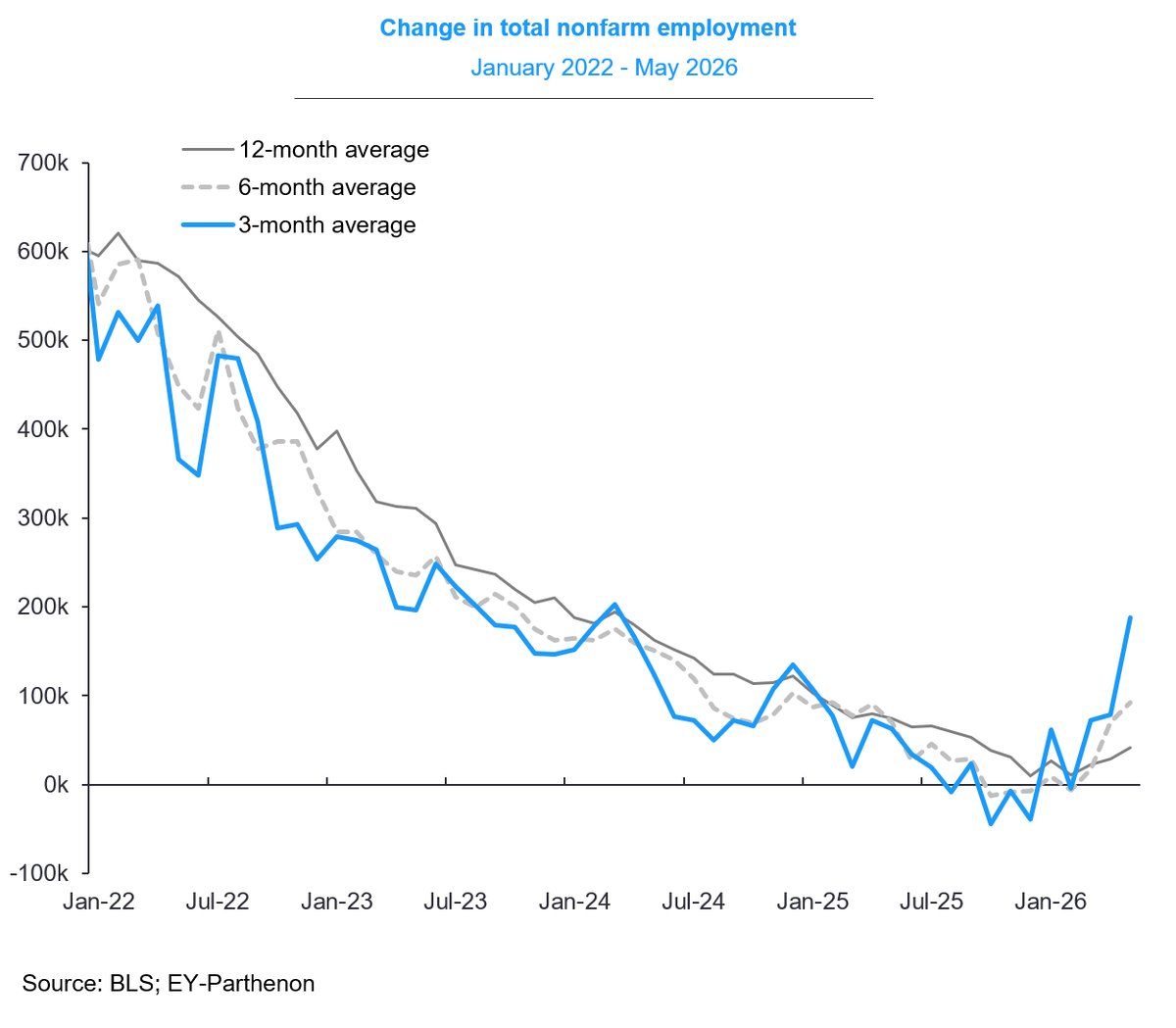
El economista jefe de Moody´s señala que la economía USA está al borde de la recesión.
Citigroup "alerta" de que la venta en corto en niveles récord está elevando los riesgos para el mercado.
Bank of America dice que tiene una tabla que dice que el techo de mercado ya está aquí (aunque su tabla es para reírse como expliqué antes en mi timeline).
Jim Cramer dice que los pilares del mercado alcista han comenzado a tambalearse.
Todo esto en menos de 24 horas. Soy alcista escéptico desde hace un tiempo, pero viendo esto me da a mí que nos queda un buen arreón alcista.

7
4
46
6,834
Jun 11
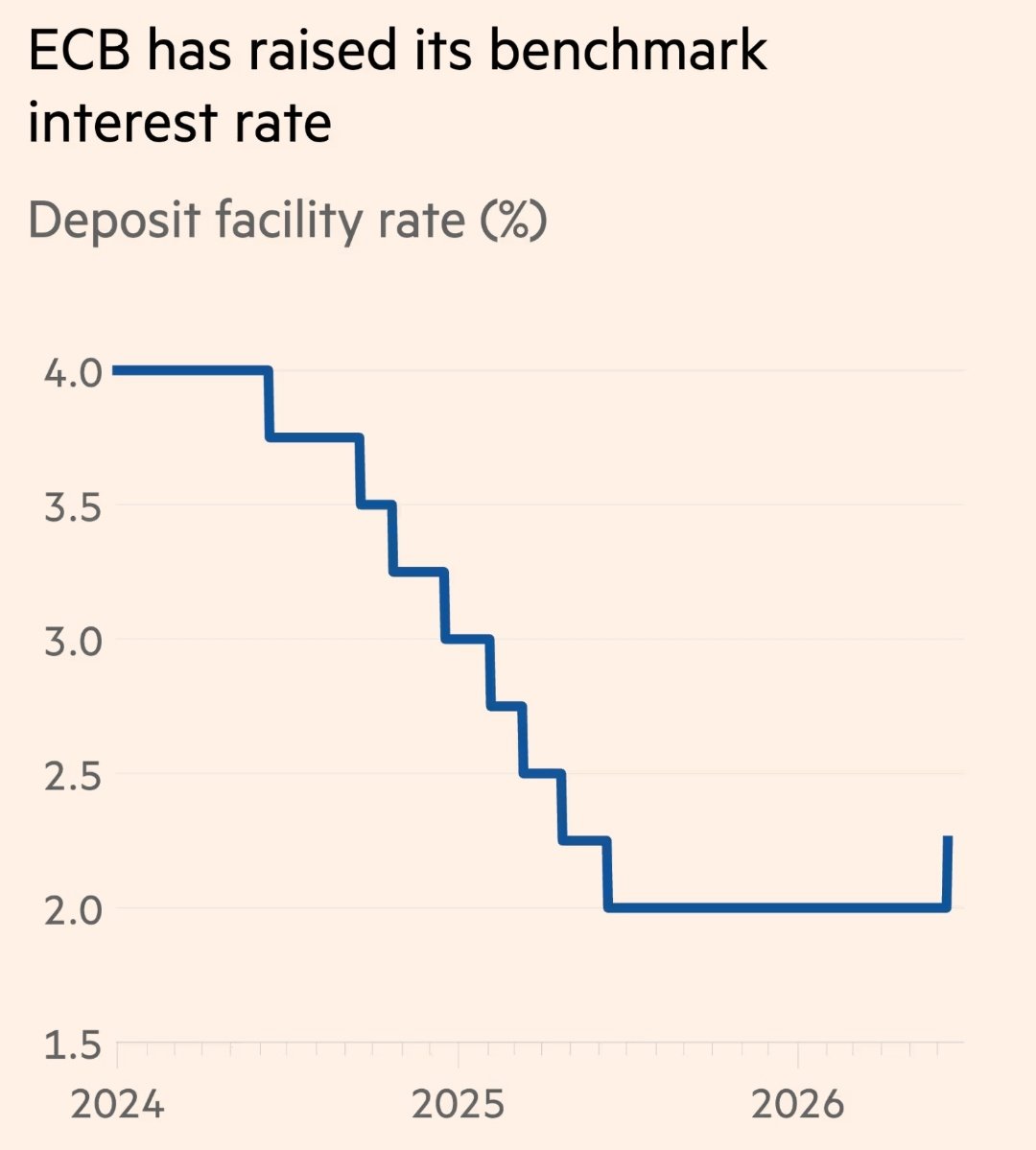
Pregunta seria ¿Cómo va a arreglar el problema de oferta en el mercado mundial del petróleo causado por la guerra de Irán, el que el Banco Central Europeo haya subido los tipos de interés?
¿Castigando a los negocios e hipotecados europeos?
23
8
113
11,262
Jun 11
- Hola, una guerra en el otro lugar del mundo ha subido el precio de tu factura eléctrica y la gasolina, así que te subo la hipoteca 💀
4
5
64
4,928
Jun 11
Para los que defienden al ECB. Esa entidad ayudó a crear la madre de todas las burbujas inmobiliarias y pobreza en Europa manteniendo los tipos de interés artificialmente bajos por demasiado tiempo. Probablemente nadie haya creado tantos pobres como ellos!
Jun 10
Esto es Europa en estado puro. El Banco Central Europeo frenó permisos a Revolut para sacar nuevos productos financieros porque el BCE está "preocupado sobre la rapidez con la que el banco digital saca nuevos productos"
Revolut, que lo que tiene son tarjetas de crédito y préstamos al consumo le parece muy rápido al BCE 🤡🤡🤡🤡🤡 Prefieren bancos atestados de gente que parecen oficinas del siglo XX donde aún hacen fotocopias.
ft.com/content/7cc86162-f68c… a través de @ft
6
6
63
6,349
Jun 10
Se acabó la tregua
Jun 10
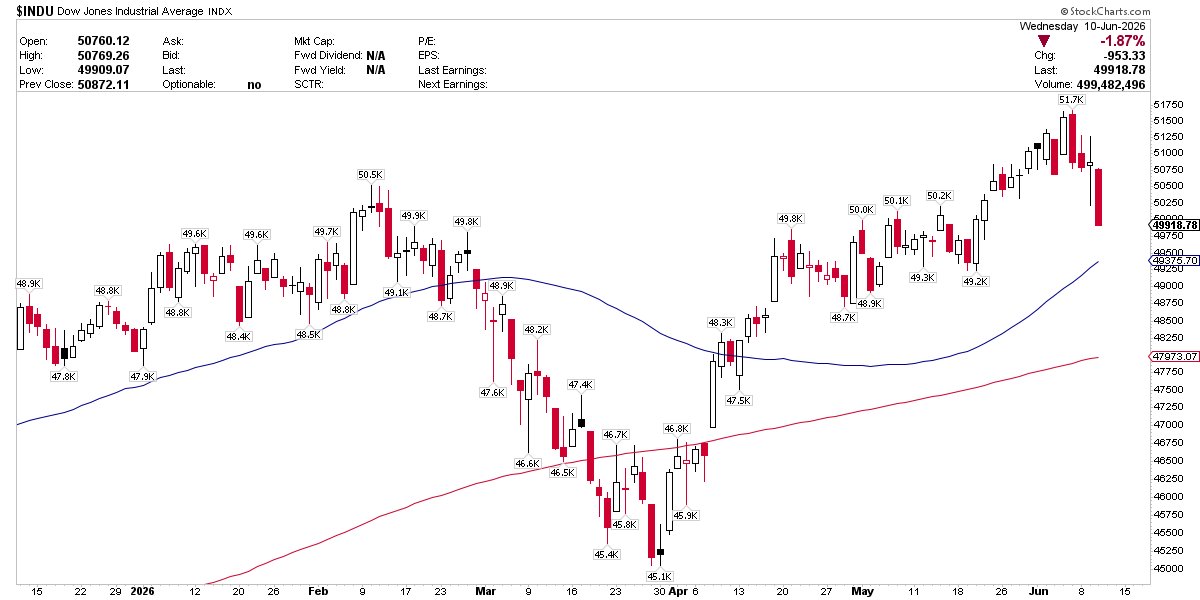
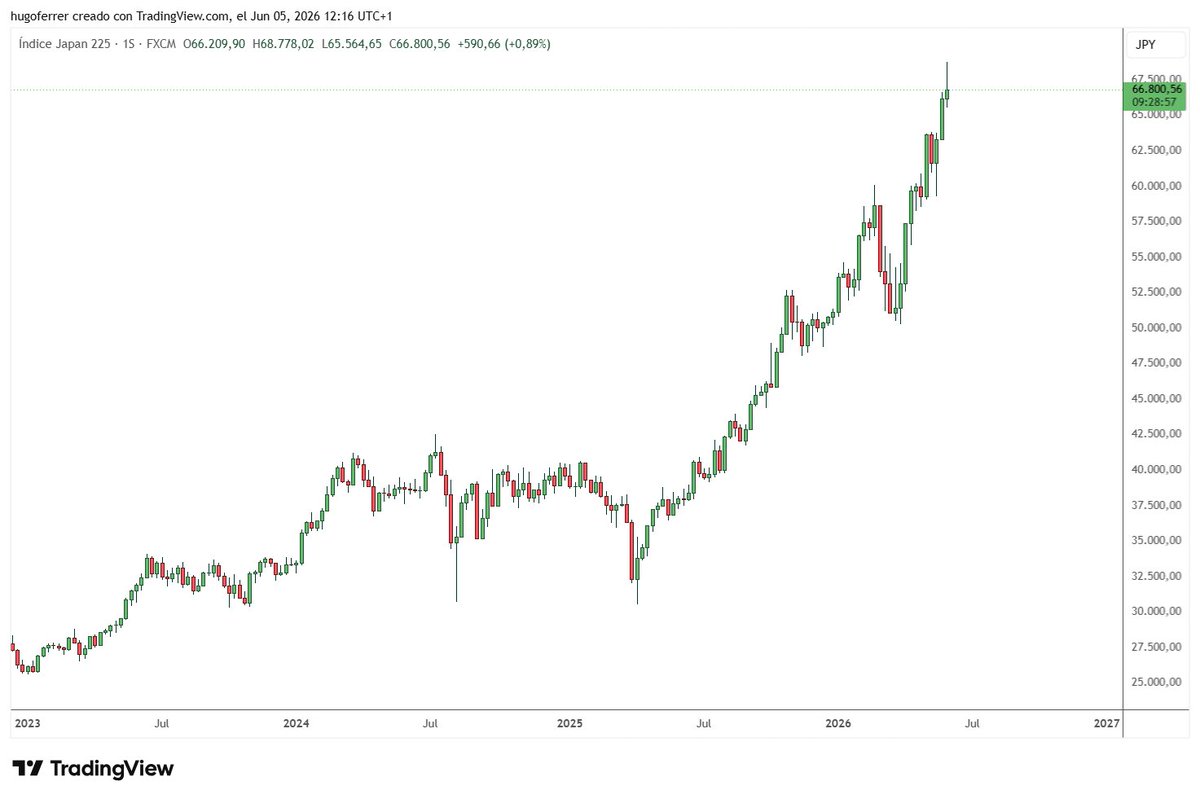
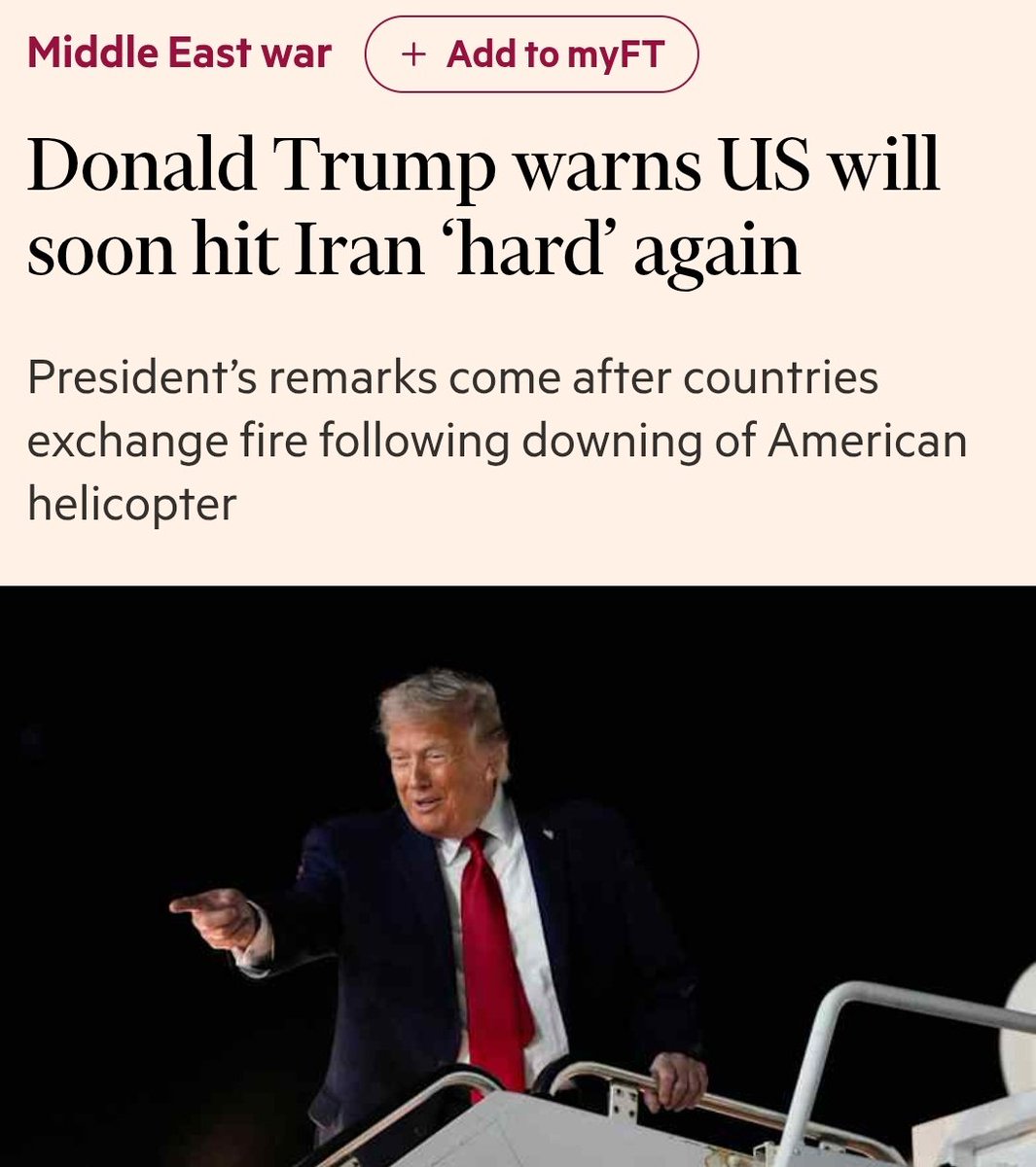
Hoy, con un retroceso del -1,87% en el Dow Jones, índice con relativa poca exposición a la IA, es la primera bajada significativa desde que empezara la tregua entre EE.UU. e Irán. La volatilidad reaparece cuando la tregua se muestra más débil que nunca. Seguimos en manos de la geopolítica tras el "rally de los semiconductores".
5
2
35
6,199
Jun 10
Hoy, con un retroceso del -1,87% en el Dow Jones, índice con relativa poca exposición a la IA, es la primera bajada significativa desde que empezara la tregua entre EE.UU. e Irán. La volatilidad reaparece cuando la tregua se muestra más débil que nunca. Seguimos en manos de la geopolítica tras el "rally de los semiconductores".
3
2
57
11,305
Jun 10
Hoy toca guerra. Trump vuelve a sacar la amenaza de atacar centrales de energía y puentes en Irán.
Jun 10

TRUMP SAYS HE IS CLOSE TO ORDERING NEW STRIKES AGAINST IRANIAN POWER PLANTS AND BRIDGES -FOX NEWS
4
2
52
9,105
Jun 10
Esto es Europa en estado puro. El Banco Central Europeo frenó permisos a Revolut para sacar nuevos productos financieros porque el BCE está "preocupado sobre la rapidez con la que el banco digital saca nuevos productos"
Revolut, que lo que tiene son tarjetas de crédito y préstamos al consumo le parece muy rápido al BCE 🤡🤡🤡🤡🤡 Prefieren bancos atestados de gente que parecen oficinas del siglo XX donde aún hacen fotocopias.
ft.com/content/7cc86162-f68c… a través de @ft
177
711
5,328
512,979
Jun 9
El economista jefe de Moody´s señala que la economía USA está al borde de la recesión.
Citigroup "alerta" de que la venta en corto en niveles récord está elevando los riesgos para el mercado.
Bank of America dice que tiene una tabla que dice que el techo de mercado ya está aquí (aunque su tabla es para reírse como expliqué antes en mi timeline).
Jim Cramer dice que los pilares del mercado alcista han comenzado a tambalearse.
Todo esto en menos de 24 horas. Soy alcista escéptico desde hace un tiempo, pero viendo esto me da a mí que nos queda un buen arreón alcista.
18
13
167
19,369
Jun 9
Hoy el Nasdaq y todo lo que huele a Inteligencia Artificial está sufriendo otra fuerte caída. Quién necesito un análisis explicando el contexto actual, aquí está mi comentario del domingo noche.
Mi consejo: para analizar el ciclo, sigue índices que no estén dopados por la IA y que la borrachera de la volatilidad no nos lleve a tomar malas decisiones.
Jun 7
¡Lo prometido es deuda! Y tras estar trabajando una buena parte de este domingo, acabo de publicar mi nuevo comentario de mercado:
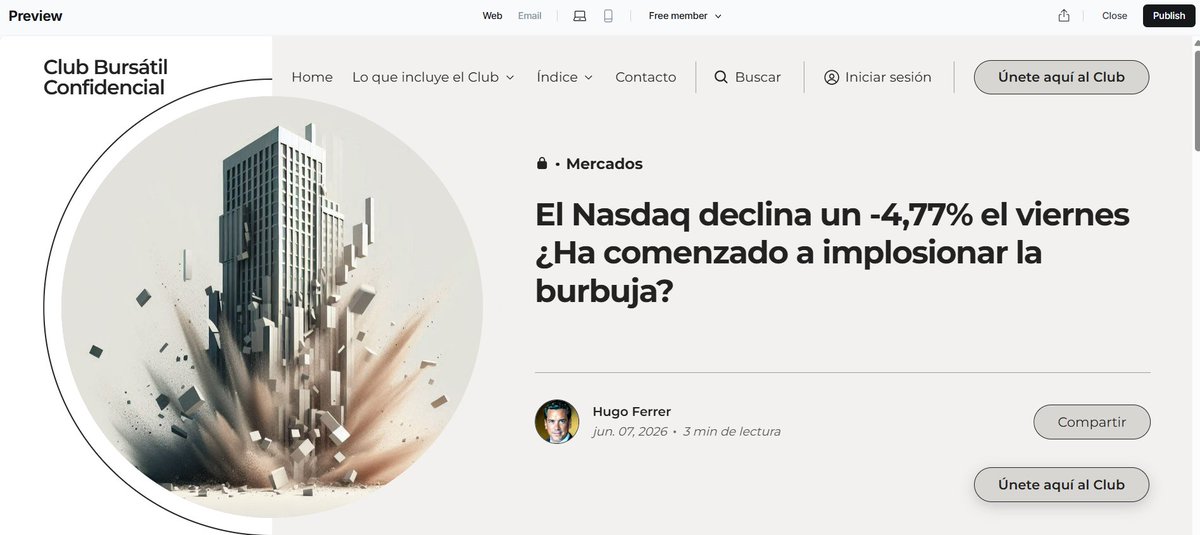
«El Nasdaq declina un -4,77% el viernes ¿Ha comenzado a implosionar la burbuja?»
En dicho comentario -11 minutos lectura con 15 gráficos- desarrollo mi razonamiento de por qué, a pesar de considerarme desde hace un tiempo un alcista muy escéptico, creo que no se dan los elementos necesarios para pensar que ha comenzado un nuevo mercado bajista o fin del ciclo alcista actual.
No lo veo en la economía, donde la macro y los beneficios están acelerando. No lo veo en la amplitud de mercado y tampoco lo veo en el comportamiento interno.
Por supuesto todo puede cambiar en las próximas semanas y pocos meses, pero en mi opinión, con los datos en la mano que tengo a día de hoy, desde un punto de vista histórico sería un error concluir que el mercado alcista llegó a su final.
Quería dar estas reflexiones desde la tranquilidad del fin de semana y sabiendo que el mercado se volvió extraño el pasado viernes y que aportar contexto puede ser de utilidad para muchos en estos momentos.
El análisis puede leerse ya en exclusiva en el Club Bursátil Confidencial siguiendo este enlace: hugoferrer.es/el-nasdaq-decl…
4
5
65
14,179
Jun 9
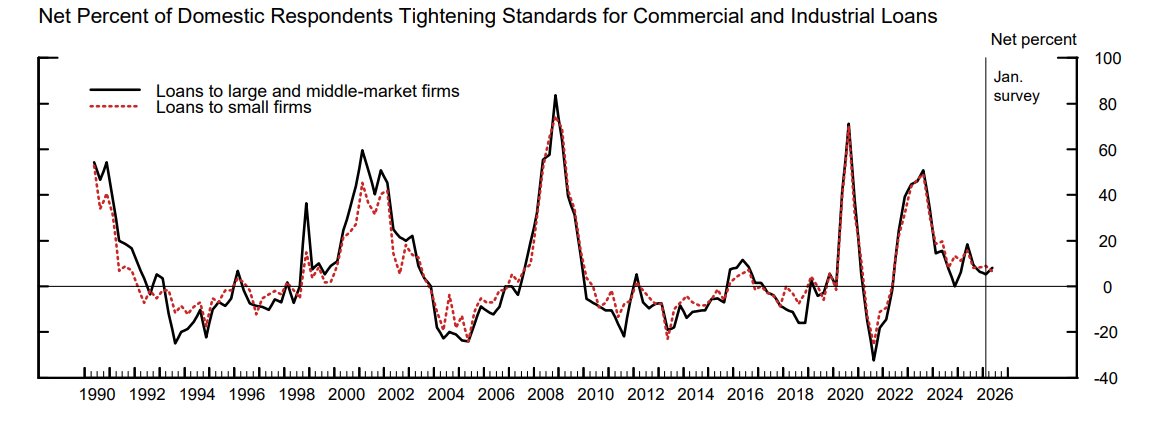
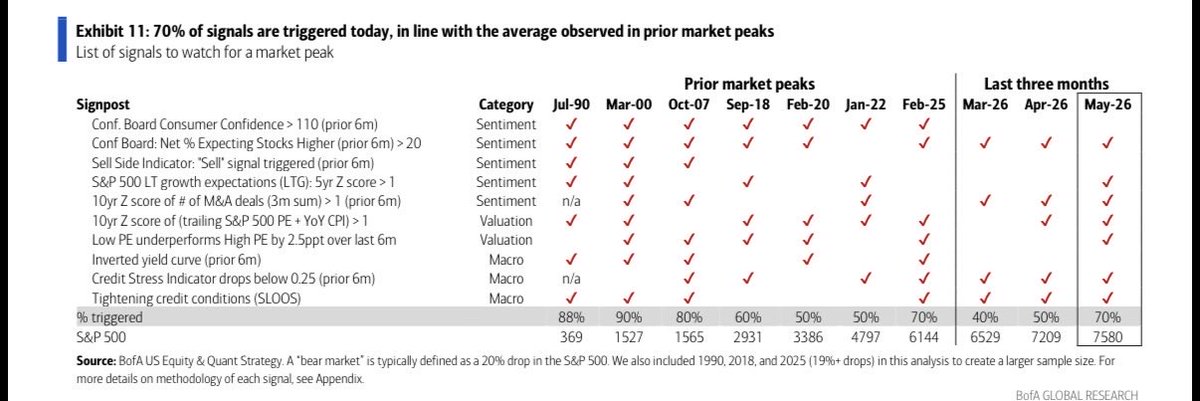
La mayoría de estas cosas que utiliza alguien en Bank of America -digo alguien porque BoA tiene muchos analistas- para alertar de que el mercado ya ha hecho techo, aparte de ser solo factores de riesgo, es un overfitting de manual hacia el pasado.
Y a veces con cosas sin sentido. Por ejemplo se habla de que las condiciones crediticias de la encuesta de la FED (SLOOS) se ha endurecido como antes de otras crisis. Vas a la encuesta en cuestión y lo que ves es esto que muestro en el gráfico, en realidad no hay un incremento, sino una situación absolutamente benigna que nada tiene que ver con el endurecimiento de las condiciones antes de otras crisis. El grifo está completamente abierto.
Soy un alcista que está convencido de que estamos en la parte final de un ciclo de largo plazo, pero muchos de los análisis que circulan en Wall Street son auténtica bazofia.

2
4
64
11,693
Jun 8
Dato curioso y que sobre todo habla de lo que suele significar el momentum en los mercados.
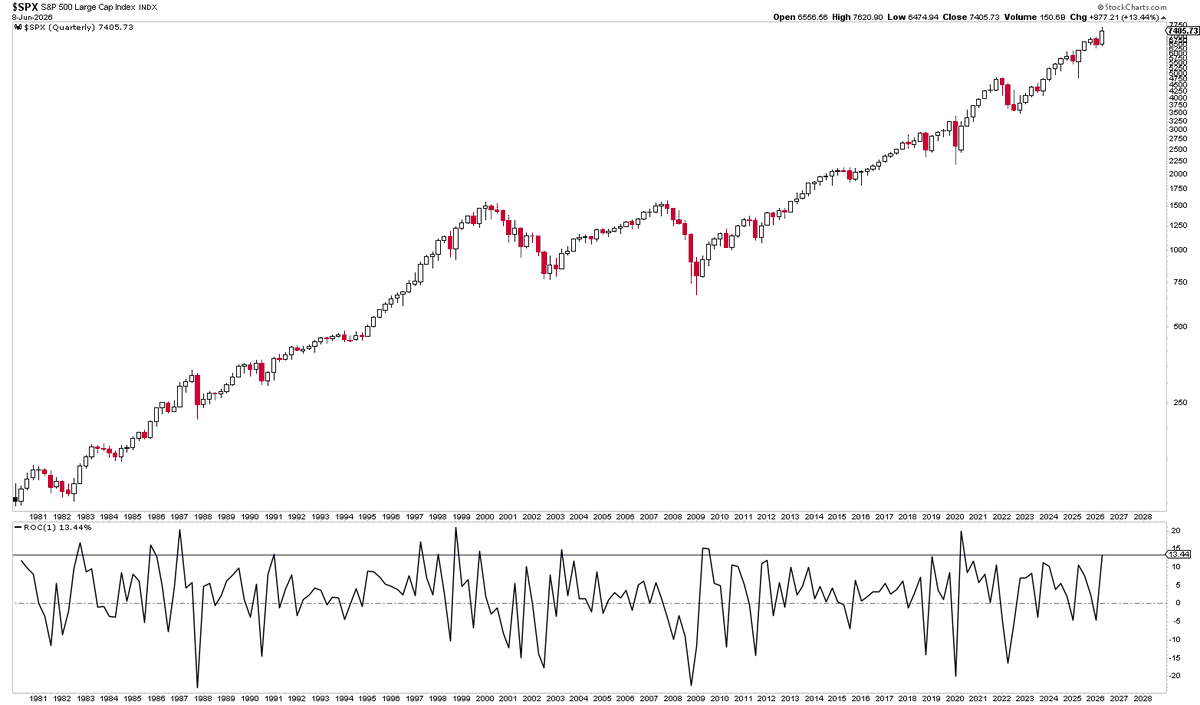
Si junio terminara con el cierre de hoy, que ya es mucho decir con todo lo que queda de mes, el trimestre mostraría una ganancia del 13,44%, uno de los mejores trimestres de la historia.
Desde los años 80, solo se han dado 12 trimestre al menos tan fuertes.
En 10 de esos 12 trimestres (83%), el mercado cerró más arriba 6 meses después. La ganancia media 6 meses después de todos esos 12 trimestres, fue de un 12,02% (vs 4,5% de la media de rentabilidad a 6 meses histórica del S&P 500).
Siempre hay más factores a tener en cuenta pero un mercado que sube con fuerza suele ser con claridad una excelente noticia en los siguientes 6 meses.
2
8
88
7,743
Jun 8
Mi último análisis publicado ayer noche, examinando si la fuerte caída del Nasdaq (-4,77%) del pasado viernes es el "principio del fin" 👇🏻
Jun 7
¡Lo prometido es deuda! Y tras estar trabajando una buena parte de este domingo, acabo de publicar mi nuevo comentario de mercado:
«El Nasdaq declina un -4,77% el viernes ¿Ha comenzado a implosionar la burbuja?»
En dicho comentario -11 minutos lectura con 15 gráficos- desarrollo mi razonamiento de por qué, a pesar de considerarme desde hace un tiempo un alcista muy escéptico, creo que no se dan los elementos necesarios para pensar que ha comenzado un nuevo mercado bajista o fin del ciclo alcista actual.
No lo veo en la economía, donde la macro y los beneficios están acelerando. No lo veo en la amplitud de mercado y tampoco lo veo en el comportamiento interno.
Por supuesto todo puede cambiar en las próximas semanas y pocos meses, pero en mi opinión, con los datos en la mano que tengo a día de hoy, desde un punto de vista histórico sería un error concluir que el mercado alcista llegó a su final.
Quería dar estas reflexiones desde la tranquilidad del fin de semana y sabiendo que el mercado se volvió extraño el pasado viernes y que aportar contexto puede ser de utilidad para muchos en estos momentos.
El análisis puede leerse ya en exclusiva en el Club Bursátil Confidencial siguiendo este enlace: hugoferrer.es/el-nasdaq-decl…
2
2
39
11,004
Hugo Ferrer retweeted
Jun 7
¡Lo prometido es deuda! Y tras estar trabajando una buena parte de este domingo, acabo de publicar mi nuevo comentario de mercado:
«El Nasdaq declina un -4,77% el viernes ¿Ha comenzado a implosionar la burbuja?»
En dicho comentario -11 minutos lectura con 15 gráficos- desarrollo mi razonamiento de por qué, a pesar de considerarme desde hace un tiempo un alcista muy escéptico, creo que no se dan los elementos necesarios para pensar que ha comenzado un nuevo mercado bajista o fin del ciclo alcista actual.
No lo veo en la economía, donde la macro y los beneficios están acelerando. No lo veo en la amplitud de mercado y tampoco lo veo en el comportamiento interno.
Por supuesto todo puede cambiar en las próximas semanas y pocos meses, pero en mi opinión, con los datos en la mano que tengo a día de hoy, desde un punto de vista histórico sería un error concluir que el mercado alcista llegó a su final.
Quería dar estas reflexiones desde la tranquilidad del fin de semana y sabiendo que el mercado se volvió extraño el pasado viernes y que aportar contexto puede ser de utilidad para muchos en estos momentos.
El análisis puede leerse ya en exclusiva en el Club Bursátil Confidencial siguiendo este enlace: hugoferrer.es/el-nasdaq-decl…
4
12
111
43,759
Jun 8
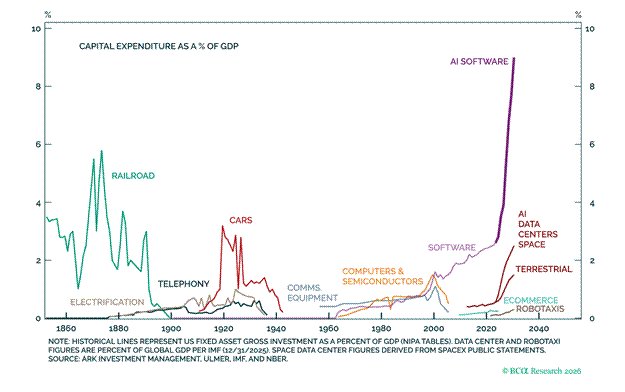
¿Es la inversión en inteligencia artificial el mayor esfuerzo financiero nunca alcanzado en la historia del capitalismo?
Curioso dato (medido como % del PIB). ¡Más que el ferrocarril en el siglo XIX!
De lo que no hay duda es que ocurrirá inevitablemente como en todas las grandes tecnologías revolucionarias de la humanidad. Una gran inversión, un gran avance, seguido de una oleadada de quiebras cuando deje de sonar la música.
10
23
157
11,535