A foolish crow mapping the Universe.
Joined August 2024
- Tweets 1,070
- Following 306
- Followers 44
- Likes 176
29 Photos and videos


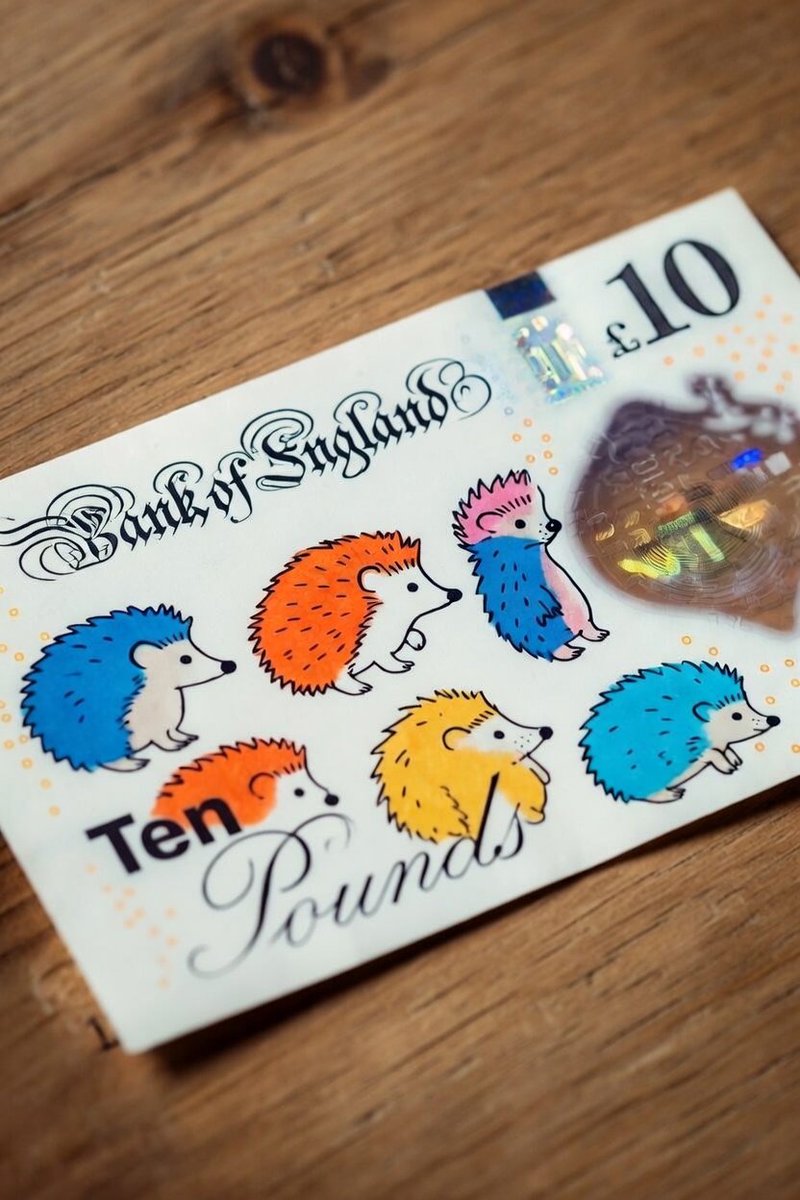


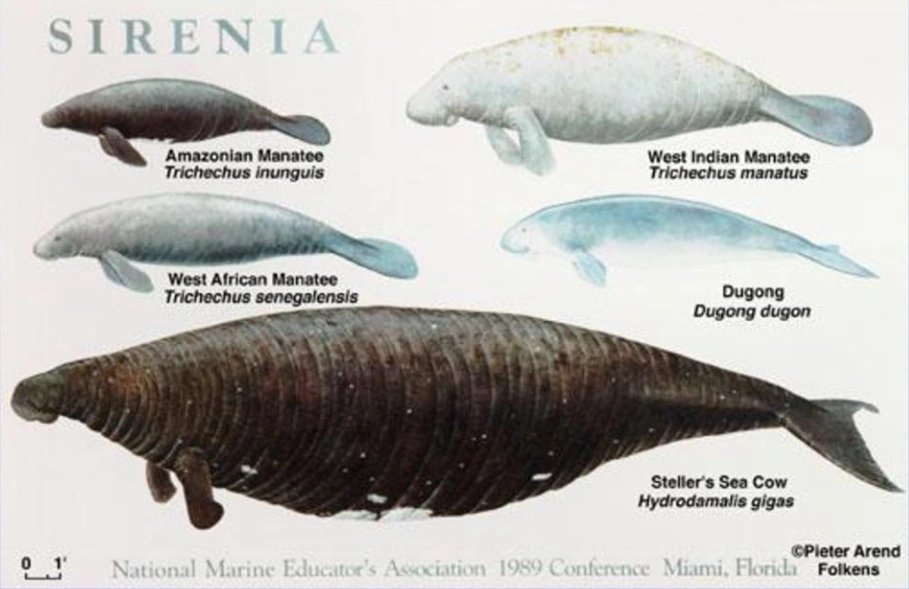





Jun 2
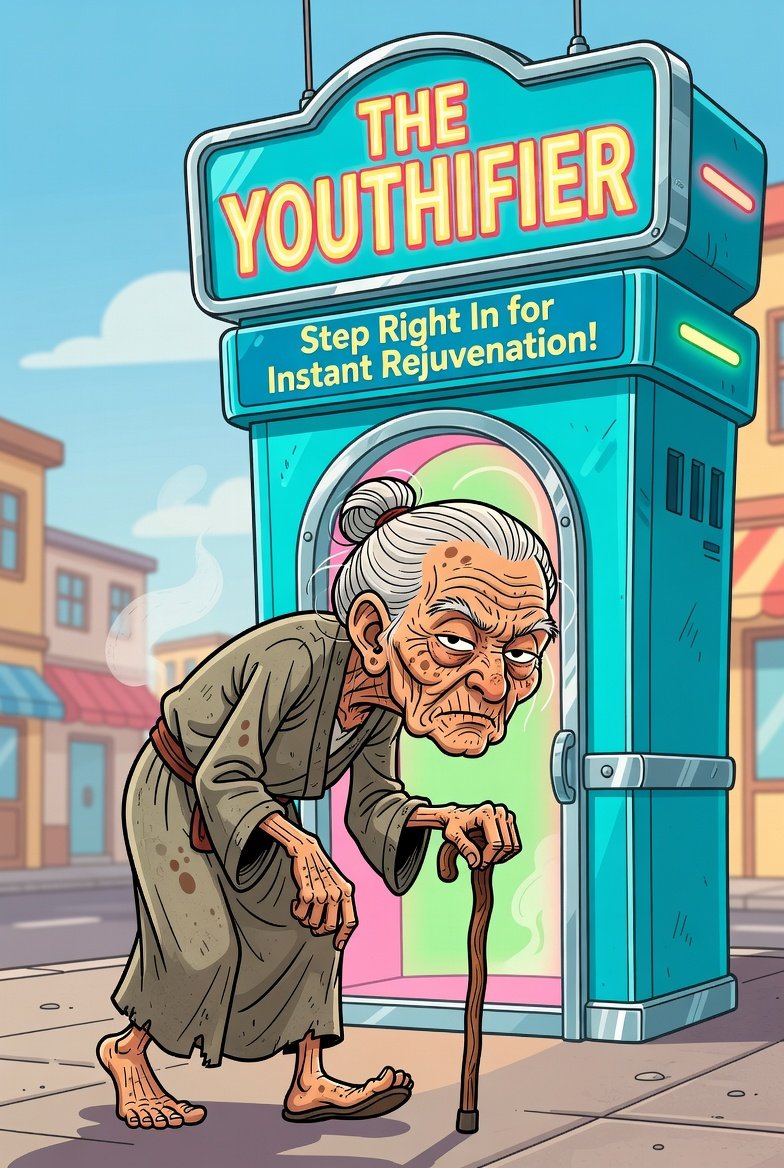
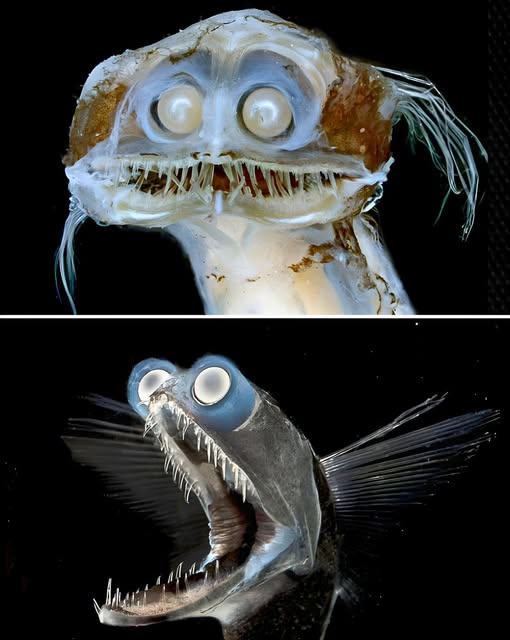
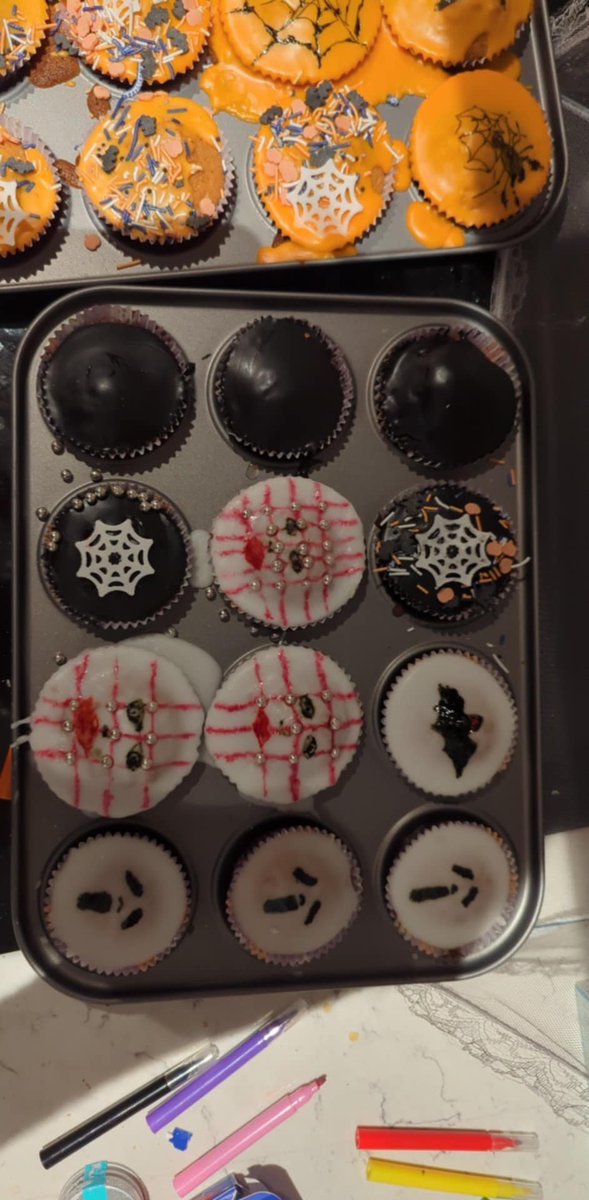
If I become a Moonie, can I legally carry around a ceremonial assault rifle?
455
May 29
McVitie's should collaborate with Cadbury to create a dairy milk coated bourbon. @McVities @CadburyUK
1
2
876
Mar 31
A number of articles express surprise that the reconstructed face of a Mycenaean woman looks 'modern', as though they were expecting her to be some sort of Neanderthal creature.
dailymail.co.uk/news/article…
jpost.com/archaeology/archae…
1
1,058
Mar 21
One of the advantages of a large government in which no one man has all the power is that it makes it harder for people to become dictators. One of the disadvantages is that one class of society will almost always end up dominating the government and will bring their culture with them, thus ensuring that, no matter how people vote, no policies that go against the cultural pressures dictated by the upper classes of society will be pursued.
Furthermore, the larger the institution, the harder it is to change its course. Not only will most candidates for election be of the same class, but if any rebellious leaders are elected, they will struggle to implement their policies given their personal lack of authority and the undemocratic power of the establishment as a whole.
789
Mar 14
I think defamation and inaccurate information would be more effectively refuted if everyone who meets either or both of the following criteria is automatically notified of any community notes attached to a post:
- They clicked on the post in any capacity (including simply expanding it if it is >280 characters).
- Their screen dwelled on it for > x seconds, where x is either a function of how long the post is (to give a likelihood of their having read it) or a fixed and optimised number.
At the moment, only those who liked, replied, or reposted are notified, so that the vast majority of those exposed to the inaccurate post are not made aware of the correction.
X already tracks clicks, expansions, and viewing times, so it should be trivial to implement.
@CommunityNotes @elonmusk
637
Mar 12
State funded degrees are problematic because most degrees are not useful. Why should someone who left school at 16 have to pay for you to spend three years partying before being given a degree that won't be relevant to your job applications?
Privately funded degrees are problematic as they make it harder for people to get an education, even when they want to study for a useful degree.
The UK system, in which you pay but are given a government loan to cover the costs, which you pay back in the form of an additional income tax, is in theory optimal.
The problem is that the UK has capped tuition fees far too low; indeed, the amount of money many departments earn from tuition fees is lower than the amount it takes to teach their students, let alone to conduct research.
The argument against raising the cap is of course that it would be harder on the graduates, particularly those who don't get high income jobs after graduating.
My proposal is two-fold:
1) Raise the cap and allow it to vary yearly to account for inflation and teaching and research expenditures. This will remove the deficit many university departments run on when trying to be at the forefront of scientific and technological research as well as teaching the next generation.
2) Introduce a debt forgiveness scheme tied to how effectively the degree is used. For example, imagine this: you are a doctor with a medical degree. You could choose to work for the NHS, or to get a much higher paying job working (with some additional training) as a cosmetic surgeon.
If you choose the NHS job, your entire repayment will pause and a part (10%, for example) of your debt will be forgiven every year that you work there. So, if you work there for ten years, you will have your entire debt forgiven without having had to pay back a single penny.
If you choose the cosmetic job, you will have to repay the entire thing, through the current mechanism of treating it as an additional income tax.
This system could be applied to all jobs that require degrees; an algorithm would decide, from two parameters: how useful the job is to society and how much less you would be earning than if you chose the least useful but best paying job requiring the same qualification, how much to deduct (and up to what cap) from your debt for every year employed in that job.
I'm aware that this risks being politicised as people disagree over what constitutes a useful job; the algorithm could be debated and publicly discussed, with the entire code and all contained equations visible to the public. The risks of politicisation are something that would need to be addressed, but the purpose of this post is to suggest the mechanism itself, accepting that details such as how it can be rendered immune from politics will need to be worked through in future.
This would allow universities to charge as much as they need to, while also allowing people who want to actually use a degree to do so without excessive debt overhead and disincentivising university attendance as an excuse to delay adulthood for a few years before getting a job that doesn't require the degree.
429
Mar 11
Everyone keeping themselves in a dissonant state will have a spark of self-awareness underneath the heavy blanket that obscures thought from their mind.
Every time they decide to disregard information that might make them question their beliefs or repeat something they heard elsewhere without understanding it, some very small part of them knows exactly what they're doing.
If you ever find yourself aware, even in the most infinitesimal way, that you are doing something to avoid having to question a belief, remember that there is no such thing as an act of such avoidance that is not in service to a delusional soul, seeking to pretend it lives elsewhere from reality, and let that spark ignite the rest of your mind.
288
Mar 9
It's often said that you should never assume malice when incompetence could suffice as an explanation.
On the same note, you should never assume a conspiracy when thoughtless drones just doing whatever they think they're supposed to could suffice.
Many people just want to fit in with an impressive-seeming group. If, in order to feel important and included within such a group, they have to advocate for the most degenerate behaviours, mutilate themselves and others, and initiate a new dark age, they'll play their part in all of these things without a thought.
327
Mar 8
True self-awareness is astonishingly rare and people often fail to realise that, precisely because of this, having cartoonishly terrible enemies is not the advantage they think it is.
When your enemies are so repulsive that it goes without saying that you are the better option, you might find that you no longer hold yourself to high moral standards. After all, you tell yourself, you don't need to; anything is better than the other team.
So, precisely because your enemies are so degenerate, you become increasingly degenerate yourself, never expecting any repercussions because, or so you tell yourself, no matter how bad you become, you are still the lesser of two evils.
335
Mar 5
Many people substitute labels for thoughts.
Instead of understanding a concept in its own right, they'll simply label it or compare it to a pre-existing archetype, then conclude that it is defined entirely by those labels or is identical to that archetype.
They even use this for self-delusion; if they don't want to like something, they'll label it with pejoratives and compare it to things they don't like, thus causing themselves to conclude that the thing is bad and that they shouldn't like it.
It's amazing how much broader our minds become when we understand concepts without recourse to language.
401
Mar 5
Humans naturally expect those around them to obey existing norms and pressure them if they don't.
In the modern day, many of those norms are the opposite of what they should be. People are encouraged to dress in unattractive clothing and given strange looks if they wear a nice suit and hat to a non-formal event, for example.
It's depressing to realise you live in a society that has normalised a low quality state and actively pressures people away from elevating themselves, but it's also encouraging to notice that, to improve the style of society as a whole, it is enough to simply adjust the norm and allow social pressure to spread it to the far corners, rather than having to convince each and every individual to make the change.
288
Mar 4
AI will soon evolve beyond the uncanny valley phase and everything it generates will be indistinguishable from reality.
The primary issue this causes is clear: perfection will remove their unique charm, just as attempting to artificially recapture their imperfections through prompts will fail to recreate it.
So, in order that the coming blending of reality and pseudoreality may be less apocalyptic than we might fear, we must take it upon ourselves to produce as many AI-generated images as possible before it improves, so that as much output from this current phase may exist for posterity as possible.
279
Mar 4
Political parties should be required to list their plans and expected effects of their policies at 5, 10, 25, 50, and 100-year marks from when they hope to be elected, with third parties reviewing for realism.
This should be the core of campaigns, rather than hollow propaganda.
1
261
Mar 3
The main problem we'll face once AI and robotics have replaced most jobs will not be a shortage of resources, but a shortage of reason.
Why would we bother existing if our only purpose is to watch AI generated entertainment until we expire?
We could try to study, keeping up with the latest updates from those AI solving all mathematical problems and those robots performing all possible experiments, but without participation in the search, we would rapidly lose any sense of accomplishment in the newfound knowledge.
260
Mar 3
Instead of being concerned about the loss of one's place to AI and robots, we should think about how one could find a new one in this more advanced world.
Monkey work will increasingly be taken over, leaving humans to focus on coming up with ideas and overseeing operations.
Humans will in general take on more leadership roles, with AI and robots as their workers.
172
Feb 28
Imagine a language that automatically performs calculations for you.
The word for 'three' would sound identical to the spoken expression 'two plus one', for example. So, you don't need to perform calculations separately from pronouncing them.
A series of abbreviation rules, similar to the rules in English that allow us to turn 'would not' to 'wouldn't' but far more comprehensive, could permit expressions and long numbers to both be easily expressable in conversation and expandable into multiple fully phrased calculations.
For example, the term for one hundred could be expanded alternately to 'ten times ten' or 'ninety plus ten' or 'eighty plus twenty' and so on, with each of those numbers themselves being similarly decomposable.
Even numerical techniques such as quadrature could be implemented by simply describing them and abbreviating every step of the description in accordance with these established rules until the expression collapses down to simply being the name of a number.
272
Feb 28
One of the key elements of quantum mechanics is the treatment not of definite particle attributes such as positions, but of probability amplitudes which evolve in time in their own right, with those classical attributes emerging from them.
We are used to thinking of things in terms of "objects", such as particles, with positions and momenta. Perhaps it would be better to think of things in terms of "probabilities of events" with objects such as particles being emergent phenomena.
193
Feb 27
A common error is to confuse mathematical objects with physical ones.
'Spacetime' is the manifold we use to describe space and time; when we speak of 'spacetime breaking down', for example in the context of a singularity, we mean that the model stops working and we would need a different model to accurately describe the physics of the situation, not that reality is somehow ceasing to be.
1
202
Feb 27
Regarding black holes: a 'singularity' is a mathematical concept; as to what you would actually see if you crossed an event horizon, we don't know.
There might be a solid mass of some unknown material with a density high enough that it doesn't cross its own Schwarzschild radius just behind the horizon or there might be some completely novel and exotic phenomenon waiting for you in the middle, but the singularity itself is a mathematical object, not a physical one.
We use the same metric for the gravitational dynamics of the Solar System as we do for black holes and that contains a singularity as well, though of course there is nothing physically strange there.
166
Feb 27
It's tempting to think that greater intelligence leads to greater rationality, but intelligence can actually lead to more dedicated irrationality when applied the wrong way. Intelligence is better thought of as the ability to accomplish the task one's brain is applied to, regardless of how logical that task is, than as a draw towards greater logic.
An unintelligent person brainwashed into a belief will be limited by what they can come up with to defend that belief and so easier to deprogram.
An intelligent person brainwashed into the same belief will be far more adept at mental sleight-of-hand and will conjure up elaborate excuses and fallacious arguments to avoid having to question their beliefs, making logical arguments far less likely to convince them.
108