
Joined May 2019
- Tweets 5,037
- Following 1,794
- Followers 3,002
- Likes 5,004
940 Photos and videos
Cosmic Validator ⚛️ retweeted

May 20
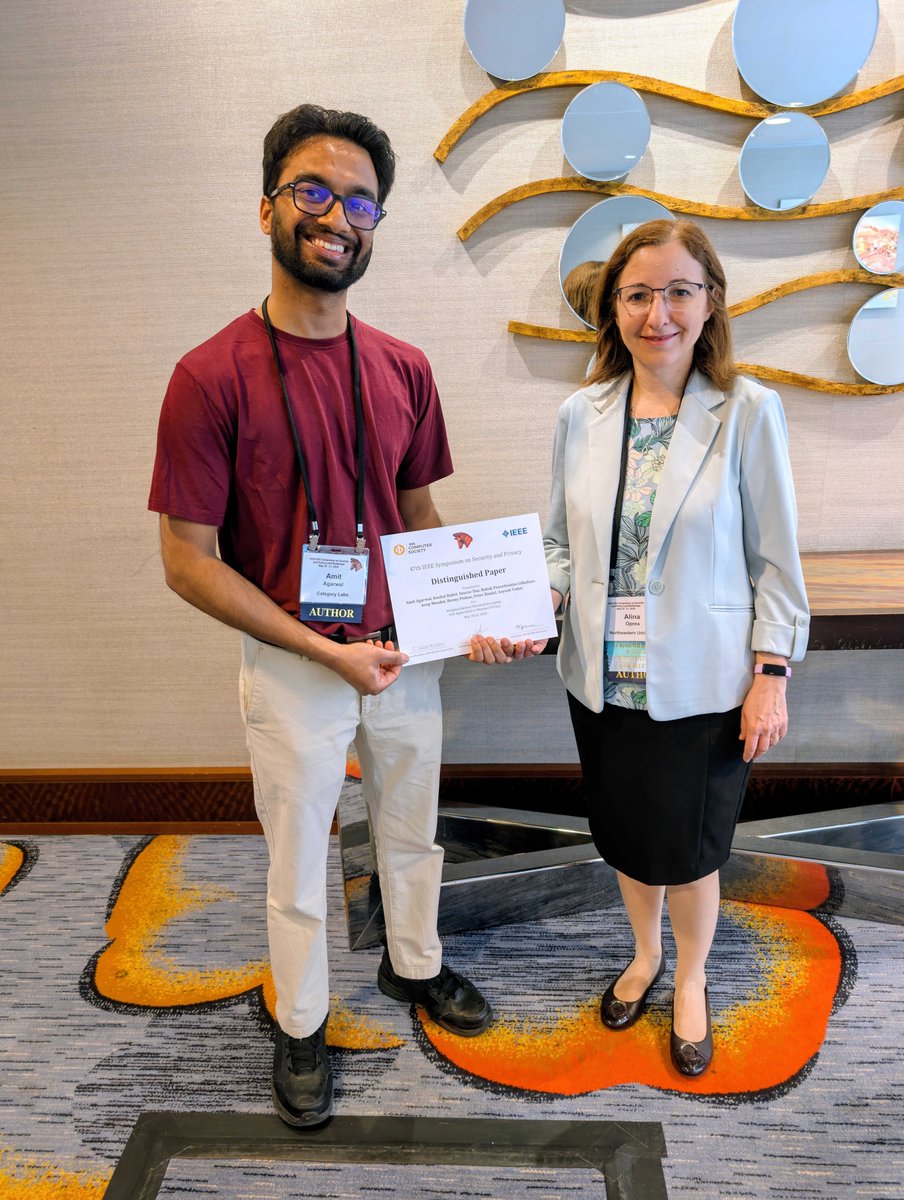
Category researchers and collaborators received a Distinguished Paper Award at IEEE S&P conference (@IEEESSP) for their paper related to private mempools.
The techniques introduced were ultimately leveraged in BTX, our latest state-of-the-art Batched Threshold Encryption (BTE) scheme.
Congratulations to our researchers: Amit Agarwal, Babak Poorebrahim Gilkalaye, @KushalBabel, @sourav1547, @PeterRindal
57
50
284
60,240

The UFO files are crazy: gmonads.com
May 8

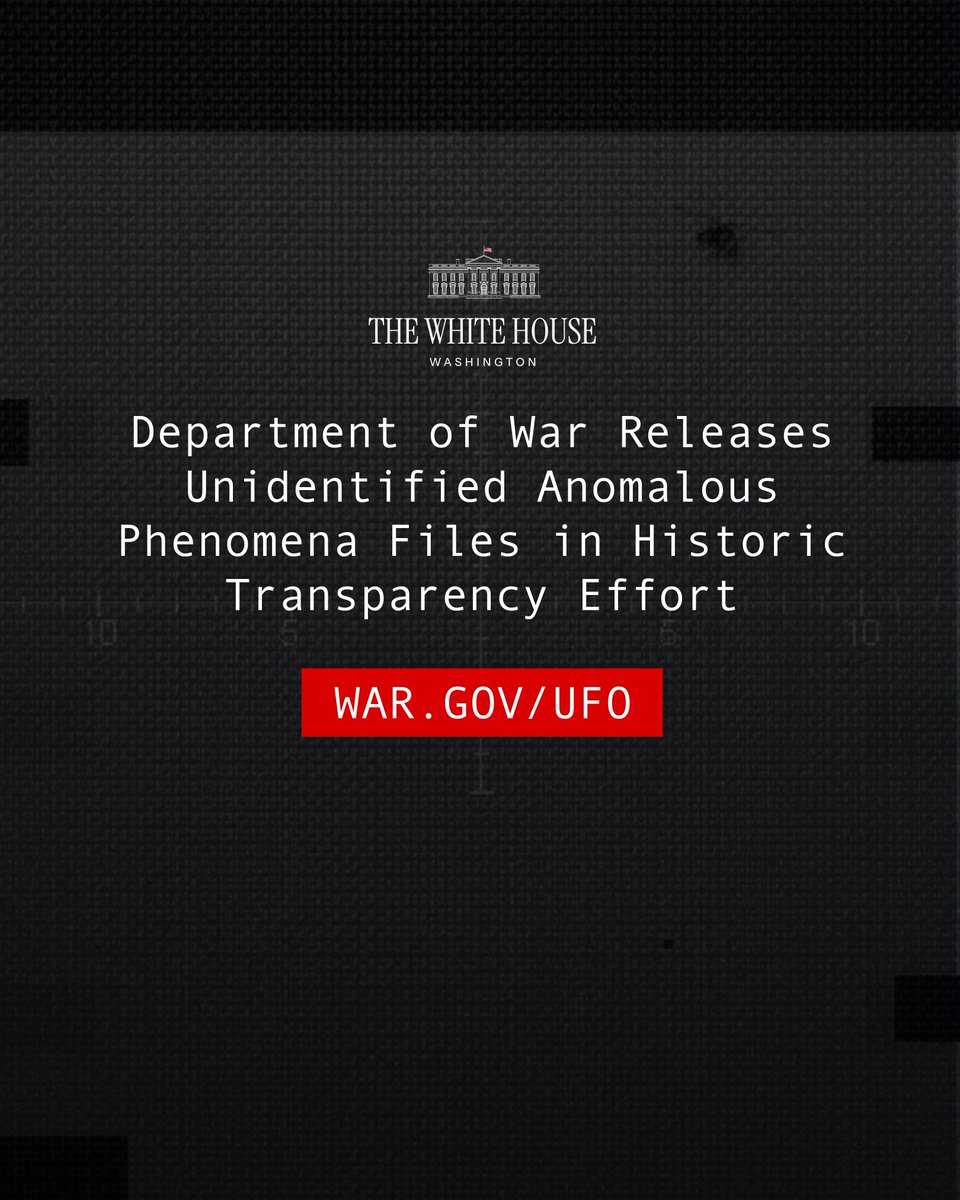
PRESIDENTIAL UNSEALING FOR UAP ENCOUNTERS.
Per President Trump's directive, the @DeptofWar has declassified & released unresolved UAP records. This is an unprecedented level of transparency, no other admin has gone this far.
Files now live on WAR.GOV/UFO — additional files will be released by the Dept. of War on a rolling basis.📂
116
92
613
40,928


A recent viral clip showed Don Wilson of DRW criticizing public blockchains for their lack of MEV-resistance. Wilson argued that, as a result of this, public blockchains are not suitable for financial markets.
This critique isn't going to go unanswered. Last night, Category Labs published a frontier research result for encrypted mempools. This is a significant result that leads the way to practical MEV resistance, and is how our industry will prevail against the private blockchain crowd.
Background
When you submit a transaction on a blockchain, it sits in a pending state where it may be frontrun by a bot.
The cleanest fix would be for users to encrypt transactions until they're included in a block, but doing that efficiently is very hard: you need a committee of servers that can jointly decrypt only the transactions that make it into each block, fast enough to keep up with block times.
Up to now, this idea hasn't been practical, as the best threshold encryption schemes are too slow, introduce censorship attacks, or introduce impractical operational steps for users or validators.
Category Labs has a solution: BTX, a new scheme for Batch threshold encryption (BTE) that is actually practical and performant. This leads the way to encrypted mempools on Monad.
The result
Batched Threshold Encryption (BTE) lets a committee of servers jointly decrypt a specified set of encrypted results from a pool while keeping the rest private.
Prior BTE schemes each had a drawback:
- some required per-block MPC setup
- some bound each ciphertext to a specific block or epoch (limiting rollover and enabling censorship)
- some required users to pick an index from a small namespace (resulting in occasional collisions)
- and the ones that avoided all these issues were either computationally prohibitive or required a common reference string (CRS) that grows with the number of sessions.
BTX, the new mechanism proposed in the paper, is simultaneously:
- epochless
- collision-free
- computationally efficient, and
- compact
In the paper, the authors implement BTX and benchmark it against the strongest two prior schemes (PFE from Boneh et al. and BEAT from Agarwal et al.). (BEAT is a prior result by most of the authors of the present paper.)
BEAT is fast but has a censorship-enabling design flaw; PFE is clean but slow and has bigger ciphertexts; and Fernando et al. (a third leading scheme) is clean but doesn't scale to long-lived deployments. BTX is the first construction that's simultaneously collision-free, epochless, compact, and fast.
BTX is a significant result solving a huge problem. Check out the paper in the next post.
Apr 17

Check out BTX, our new Batched Threshold Encryption (BTE) scheme, which achieves:
⚡️Shortest ciphertext (same as ElGamal)
⚡️Epochless and collision-free properties
⚡️Fastest decryption (<1 ms per core per ciphertext with our AVX implementation)
⚡️Computation scales with ACTUAL (as opposed to MAX) batch size
Some of the key ideas are inspired by the recent BTE paper by Boneh et al. (eprint 2026/674) and our prior work (eprint 2025/2115).
Hitting your nearest eprint server soon!
59
78
569
53,962
Cosmic Validator ⚛️ retweeted

The Interchain Foundation delegations have begun!
Validators should expect 50% of their delegations to be deployed by end of day today, with the remaining 50% to follow next week.
Learn more about the Q1 delegation set and the selection criteria below 👇

4
8
54
5,176
Cosmic Validator ⚛️ retweeted

Mainnet now moves to having a full 200 active validators!
The following operators have been allocated their VDP delegation and are up for active set selection!
Welcome to Mainnet!
JustANode
BitCtrl
Nodeify
Decentra
blocash
BlockPro
LI FI
Metatarz
Paradise Nodes
SpeedyNodes
POSTHUMAN
MSC industries
Phase Stake
Unity Nodes
Inotel
Validexis
Cosmic Validator
Obelisk
Unity farms
LootGO
TServices
Cointelegraph Decentralization Guardians
Point Group
Kiln
CHAIN DIGITAL
Etherfuse
Astrosynx
GlobalStake
AiNodes
Data Nexus
Lunar Strategy
InfraSingularity
LuckyResearch Labs

New Mainnet validators incoming..
26
14
113
10,118

'TVL in the Monad blockchain currently stands at around $355 million, up more than 55% since the beginning of Feb.
This figure makes Monad the fastest L1 to reach $300 million TVL in the last few years, crossing the threshold roughly 4 months after its Nov. 2025 mainnet launch.'
Apr 1

Monad tops $350 million TVL milestone as low fees, falling FDV signal caution theblock.co/post/395732/mona…
2
1
120
Cosmic Validator ⚛️ retweeted
MIP-9: Active Set Increase - is up for discussion amongst the Monad Ecosystem Participants.
The current active validator set is capped at 200.
This MIP proposes increasing the cap by 50 (~25%) to 250.
forum.monad.xyz/t/mip-9-acti…
10
8
90
8,825
Cosmic Validator ⚛️ retweeted

Mar 26
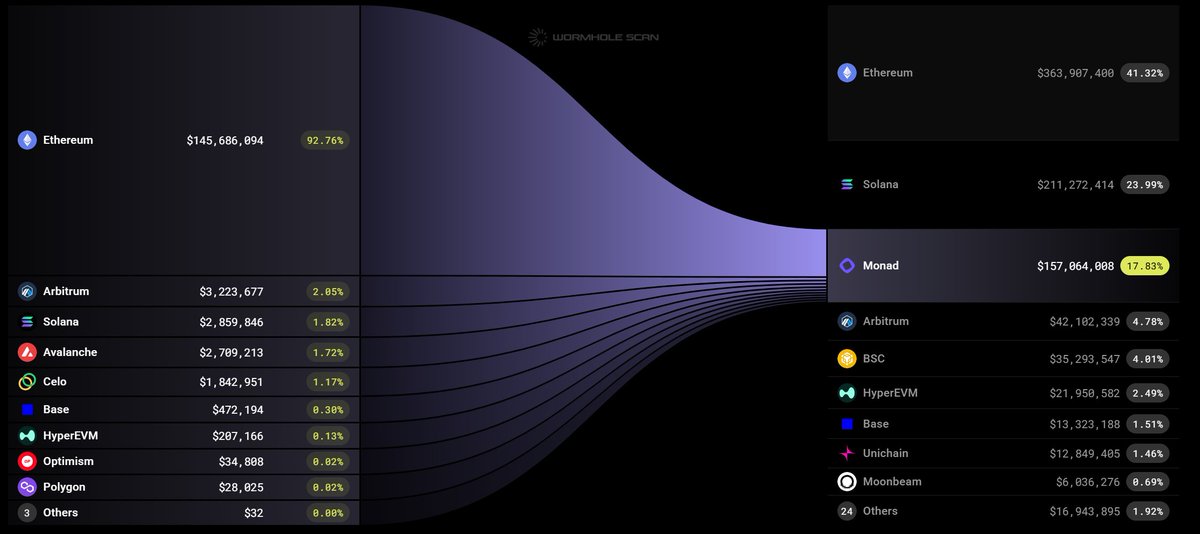
top 3 chains by inflow over the past 30 days
pretty cool tbh
17
10
148
3,658
Cosmic Validator ⚛️ retweeted

Mar 18
25
7
153
6,408
Cosmic Validator ⚛️ retweeted

Mar 11
🧵
1/6 The validator set has been the backbone of @BitwayOfficial journey, investing in high-performance infrastructure and technical expertise from testnets to mainnet. However, we have reached a critical friction point regarding network sustainability @shaneqiu
28
24
44
4,204
Cosmic Validator ⚛️ retweeted

Feb 27
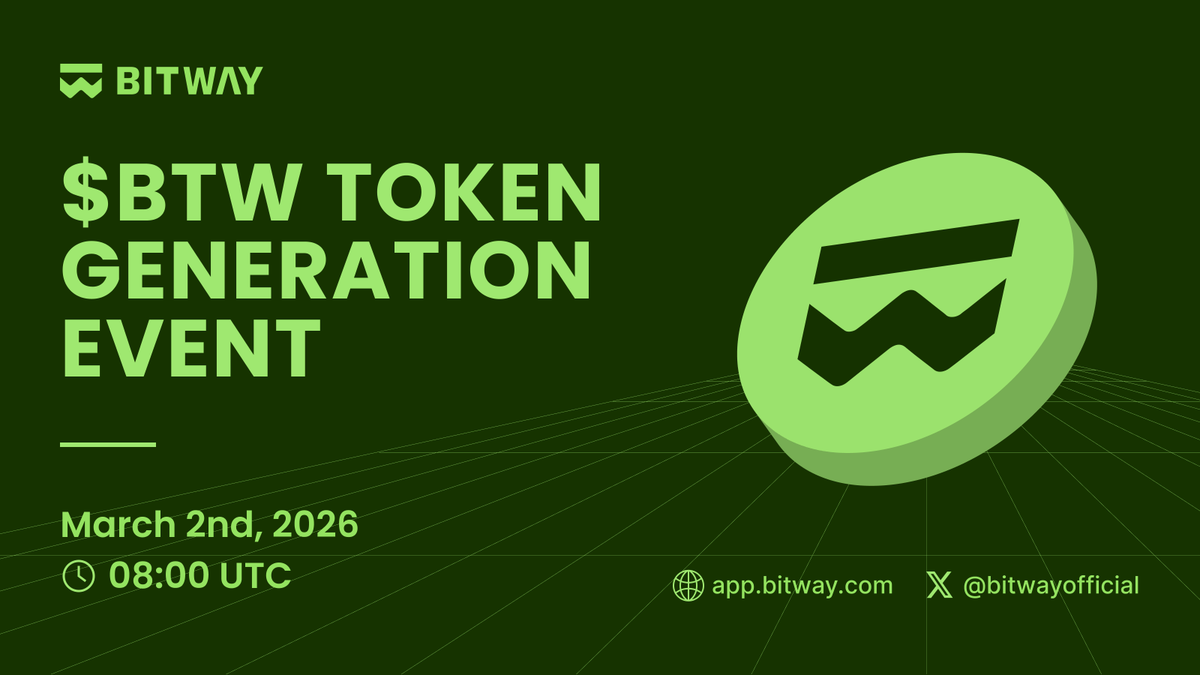
The wait is over
$BTW goes live: March 2nd, 08:00 UTC
Mark your calendars and fasten your seatbelts
Feb 27

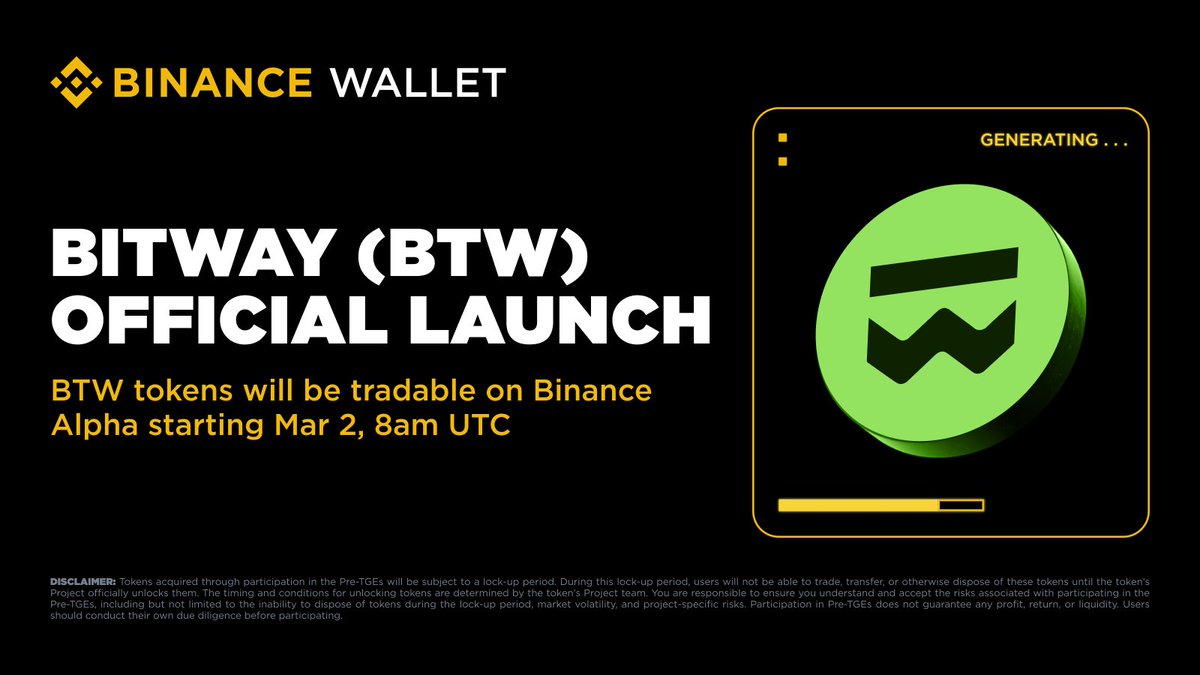
🎁 @BitwayOfficial BTW token circulation will begin on Mar 2nd, 2026, at 08:00 (UTC).
Users who participated in the Bitway Pre-TGE can trade BTW tokens on Binance Alpha.
Winners of the Phase 1 Booster Campaign can claim and trade their BTW tokens within 8 hours after the token circulation starts.
88
16
167
50,324
It is very cool to see the “strawmap” for Ethereum but also worth noting that the end state after a bunch of changes is 8s finality, 10x the current finality of Monad
A lot of these problems are solved already. People will slowly realize
Feb 25

A very important document. Let's walk through this one "goal" at a time. We'll start with fast slots and fast finality.
I expect that we'll reduce slot time in an incremental fashion, eg. I like the "sqrt(2) at a time" formula (12 -> 8 -> 6 -> 4 -> 3 -> 2, though the last two steps are more speculative and depend on heavy research). It is possible to go faster or slower here; but the high level is that we'll view the slot time as a parameter that we adjust down when we're confident it's safe to, similar to the blob target.
Fast slots are off in their own lane at the top of the roadmap, and do not really seem to connect to anything. This is because the rest of the roadmap is pretty independent of the slot time: we would need to do roughly the same things whether the slot time is 2 seconds or 32 seconds
There are a few intersection areas though. One is p2p improvements. @raulvk has recently been working on an optimized p2p layer for Ethereum, which uses erasure coding to greatly improve on the bandwidth/latency tradeoff frontier. Roughly speaking: in today's design, each node receives a full block body from several peers, and is able to accept and rebroadcast it as soon as it receives the first one. If the "width" (number of peers sending you the block) is low, then one bad peer can greatly delay when you receive the block. If width is high, there is a lot of unneeded data overhead. With erasure coding, you can choose a k-of-n setup, eg: split each block into 8 pieces so that with any 4 of them you can reconstruct the full block. This gives you much of the redundancy benefits of high width, without the overhead.
We have stats that show that this architecture can greatly reduce 95th percentile block propagation time, making shorter slots viable with no security tradeoffs (except increased protocol complexity, though here the performance-gain-to-lines-of-code ratio is quite favorable)
Another intersection area is the more complex slot structure that comes with ePBS, FOCIL, and the fast confirmation rule. These have important benefits, but they decrease the safe latency maximum from slot/3 to slot/5. There's ongoing research to try to pipeline things better to minimize losses (also note: the slot time is lower-bounded not just by slot latency, but also by the fixed-cost part of ZK prover latency), but there are some tradeoffs here.
One way we are exploring to compensate for this is to change to an architecture where only ~256-1024 randomly selected attesters sign on each slot. For a fork choice (non-finalizing) function, this is totally sufficient. The smaller number of signatures lets us remove the aggregation phase, shortening the slots.
Fast finality is more complex (the ultimate protocol is IMO simpler than status quo Gasper, but the change path is complex). Today, finality takes 16 minutes (12s slots * 32 slot epochs * 2.5 epochs) on average. The goal is to decouple slots and finality, so allow us to reason about both separately, and we are aiming to use a one-round-finality BFT algorithm (a Minimmit variant) to finalize. So endgame finality time might be eg. 6-16 sec.
Because this is a very invasive set of changes, the plan is to bundle the largest step in each change with a switch of the cryptography, notably to post-quantum hash-based signatures, and to a maximally STARK-friendly hash (there are three possible responses to the recent Poseidon2 attacks: (i) increase round count or introduce other countermeasures such as a Monolith layer, (ii) go back to Poseidon1, which is even more lindy than Poseidon2 and has not seen flaws, (iii) use BLAKE3 or other maximally-cheap "conventional" hash. All are being researched).
Additionally, there is a plan to introduce many of these changes piece-by-piece, eg. "1-epoch finality" means we adjust the current consensus to change from FFG-style finalization to Minimmit-style finalization.
One possible finality time trajectory is: 16 min (today) -> 10m40s (8s slots) -> 6m24s (one-epoch finality) -> 1m12s (8-slot epochs, 6s slots) -> 48s (4s slots) -> 16s (minimmit) -> 8s (minimmit with more aggressive parameters)
One interesting consequence of the incremental approach is that there is a pathway to making the slots quantum-resistant much sooner than making the finality quantum-resistant, so we may well quite quickly get to a regime where, if quantum computers suddenly appear, we lose the finality guarantee, but the chain keeps chugging along.
Summary: expect to see progressive decreases of both slot time and finality time, and expect to see these changes to be intertwined with a "ship of Theseus" style component-by-component replacement of Ethereum's slot structure and consensus with a cleaner, simpler, quantum-resistant, prover-friendly, end-to-end formally-verified alternative.
66
32
337
42,151
Cosmic Validator ⚛️ retweeted
Feb 25
Introducing $BTW Token: Powering the Internet Capital Gateway
Bitway is the Internet Capital Gateway for on-chain finance. As the native utility and governance token, $BTW is the heartbeat of the ecosystem - securing products, driving governance, and aligning economic incentives across Bitway’s yield, payment, and financing suites.
Token Utility & Value Prop
Exclusive Access
Stakers move to the front of the line. Holding $BTW unlocks "members-only" opportunities, including early access to new product launches, capped-capacity vaults, and high-alpha programs unavailable to the general public.
Boosted Rewards & Fee Benefits
Maximize your capital efficiency. $BTW stakers enjoy enhanced yield rates in "Earn" products and significant fee discounts across Bitway’s financing and on-chain service modules.
Ecosystem Alignment
$BTW is the glue of our network. From liquidity incentives to partner rewards, the token is designed to drive user adoption while ensuring sustainable, long-term growth for all stakeholders.
Governance
Shape the future of finance. $BTW holders exercise voting power over protocol upgrades, treasury management, and strategic direction across BSC, Bitway Ledger, and future multichain expansions.
Staking & Delegation
$BTW secures the Bitway Ledger, our sovereign PoS chain. Whether you are running a validator node or delegating tokens to earn rewards, you are protecting the network. $BTW also functions as the native gas token for all transactions on the Bitway Ledger.
81
19
128
55,698