
Space Education & Cosmos Awareness Advocate • Space Science & Technology Advances and Space Exploration,Tourism & Industry Proponent • NSAI/MMCO President & CEO
Joined July 2021
- Tweets 134
- Following 95
- Followers 17
- Likes 323
Photos and videos


May 27
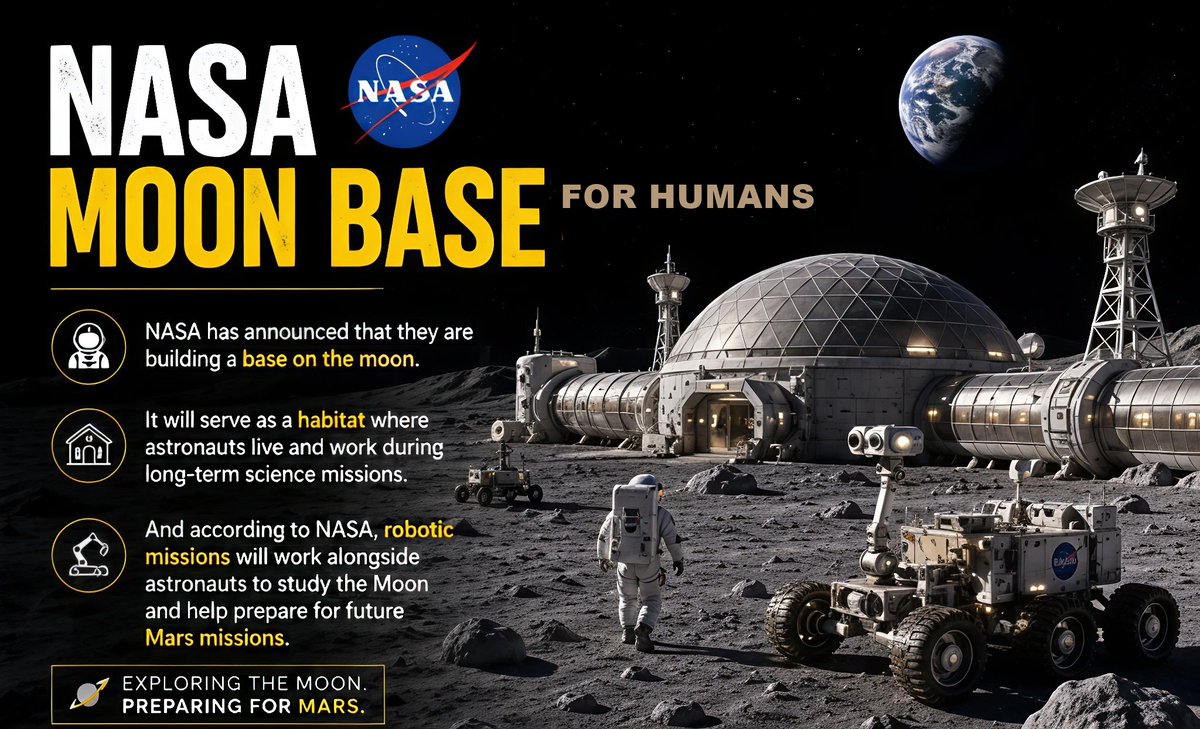
Wow! So awesome and fascinating!
We, humans, are now truly becoming a space-faring, inter/multi-planetary, and even (who knows?) interstellar or intergalactic species and civilization in the future! 🌏🚀🌖🫓🪐🌌
With the ongoing Space Race (or Moon Race), humanity is now continuously advancing, creating amazing Space technologies and engineering, enabling us humans to make the impossible possible and doable in Space explorations.
Indeed, the exciting Future and Destiny of Mankind is the Space, the Cosmos 🌌...
1
1
34
I mean deep space faring or traveling as the Moon and Mars are not located in our Outer Space but they are already in Deep Space.
10
May 24
HUMANITY CELEBRATES THE SUCCESSFUL ARTEMIS 2 MOON MISSION
A very huge congratulations to NASA and the 4 ARTEMIS 2 Astronauts! Mission completed and accomplished!
Yes, the Artemis 2 Moon Mission was completed successfully on April 10, 2026, marking the first crewed lunar flyby in 54 years.
Astronauts Reid Wiseman, Victor Glover, Christina Koch, and Jeremy Hansen splashed down safely in the Pacific Ocean after a 10-day journey, paving the way for future lunar landings.
youtube.com/watch?v=4i5K2vLs…
1
49
May 24
The ARTEMIS 2 MISSION Launches Astronauts To The Moon! (Official NASA Recap)
youtube.com/watch?v=4m5f2XRn…
1
36
May 24
THE ARTEMIS 2 MOON MISSION (Official Launch Trailer): Around The Moon For All Humanity
Action! Wonder! Adventure! The Artemis 2 Mission has got it all! Watch the very exciting moment when our crewed Moon mission was launched on April 1, 2026!
Under Artemis 2, NASA sent 4 astronauts on increasingly difficult mission that explored more of the Moon for amazing, scientific discoveries, economic benefits, and to build on our foundation for the first crewed mission to Planet Mars!
1
44
May 24
The ARTEMIS 1 MOON MISSION: From Launch to Return-to-Earth Splashdown Highlights
Ride along with the Orion capsule on the Artemis 1 mission around the Moon and back.
At a.m. on Nov. 16, 2022, NASA’s Orion spacecraft launched atop the Space Launch System (SLS) rocket from historic Launch Pad 39B at NASA’s Kennedy Space Center on a path to the Moon, officially beginning the Artemis I mission. Over the course of 25.5 days, Orion performed two lunar flybys, coming within 80 miles (129 kilometers) of the lunar surface. At its farthest distance during the mission, Orion traveled nearly 270,000 miles (435,000 kilometers) from our home planet. NASA’s Orion spacecraft successfully completed a parachute-assisted splashdown in the Pacific Ocean at a.m. as the final major milestone of the Artemis I mission.
Artemis 1 was the first integrated test of NASA’s deep space exploration systems – the Orion spacecraft, SLS rocket, and the supporting ground systems – and the first in a series of increasingly complex missions at the Moon. Over the course of the flight test, flight controllers tested Orion’s capabilities in the harsh environment of deep space to prepare for flying astronauts on Artemis II. Through Artemis missions, NASA will establish a long-term lunar presence for scientific discovery and prepare for human missions to Mars.
1
19
May 24
INTERESTING FACTS ABOUT THE 5 ARTEMIS MOON MISSIONS OF NASA
Mankind's very first Moon Mission was the APOLLO PROGRAM, also known as PROJECT APOLLO, the United States human spaceflight program led by NASA, which landed the first humans on the Moon in 1969. Apollo was conceived in 1960 in the Dwight D. Eisenhower presidency during Project Mercury and executed after Project Gemini.
NASA named its current Moon program "ARTEMIS" because she is the Greek goddess of the Moon and the twin sister of Apollo, symbolizing a direct link to the original Apollo missions that first landed humans on the lunar surface. The name highlights the mission's goal to land the first woman and first person of color on the Moon.
As of May 2026, NASA has 5 main Artemis missions (I-V) formally planned or executed to return humans to the Moon and establish a long-term presence. Following the successful uncrewed Artemis I in 2022, the crewed Artemis II flew in April 2026, with further missions scheduled annually to land astronauts, including the first woman and person of color, on the lunar surface starting by 2028.
2
1
24
May 24
TESTING LONG-TERM SURVIVAL TECHNOLOGIES
Life Support Systems:
Astronauts will test water recycling, carbon dioxide scrubbing, and oxygen generation systems on the Moon before relying on them during a multi-year round trip to Mars.
Habitat Sustainability:
NASA plans to build the Artemis Base Camp on the lunar surface to learn how humans can live and work on another world for extended periods.
Spacesuit Durability:
Next-generation spacesuits will be field-tested against harsh, abrasive space dust and extreme temperatures.
UTILIZING LUNAR RESOURCES (IN-SITU RESOURCE UTILIZATION)
Water Ice Extraction:
Artemis missions targeting the lunar South Pole aim to harvest water ice.
Fuel Production:
This water can be split into hydrogen and oxygen to produce rocket propellant. Mastering this process on the Moon is essential for refueling a spacecraft on Mars for its return journey to Earth.
OPERATIONAL & INFRASTRUCTURE PREPARATION The Gateway Station:
The Lunar Gateway—a small space station that will orbit the Moon—will serve as a staging point for deep space transit. It allows NASA to simulate long-duration deep-space transit environments.
Heavy-Lift Capabilities:
The Space Launch System (SLS) rocket and Orion spacecraft establish the core transit foundation required to push heavy payloads into deep space. Commercial Landers:
Testing large-scale landing systems, like SpaceX's Starship HLS and Blue Origin's Blue Moon, directly advances the vehicle concepts intended to eventually land humans on Mars
18
May 24
The ARTEMIS MISSIONS are explicitly designed as the primary testing ground and stepping stone for future human exploration of Mars.NASA operates the program under a formal ["Moon to Mars" architecture],, utilizing lunar operations to minimize the immense risks of interplanetary travel. The Moon serves as a critical sandbox for Mars explorations and landing humans on the Red Planet.
13
May 5
1
11
Don Moral retweeted

16 Sep 2024
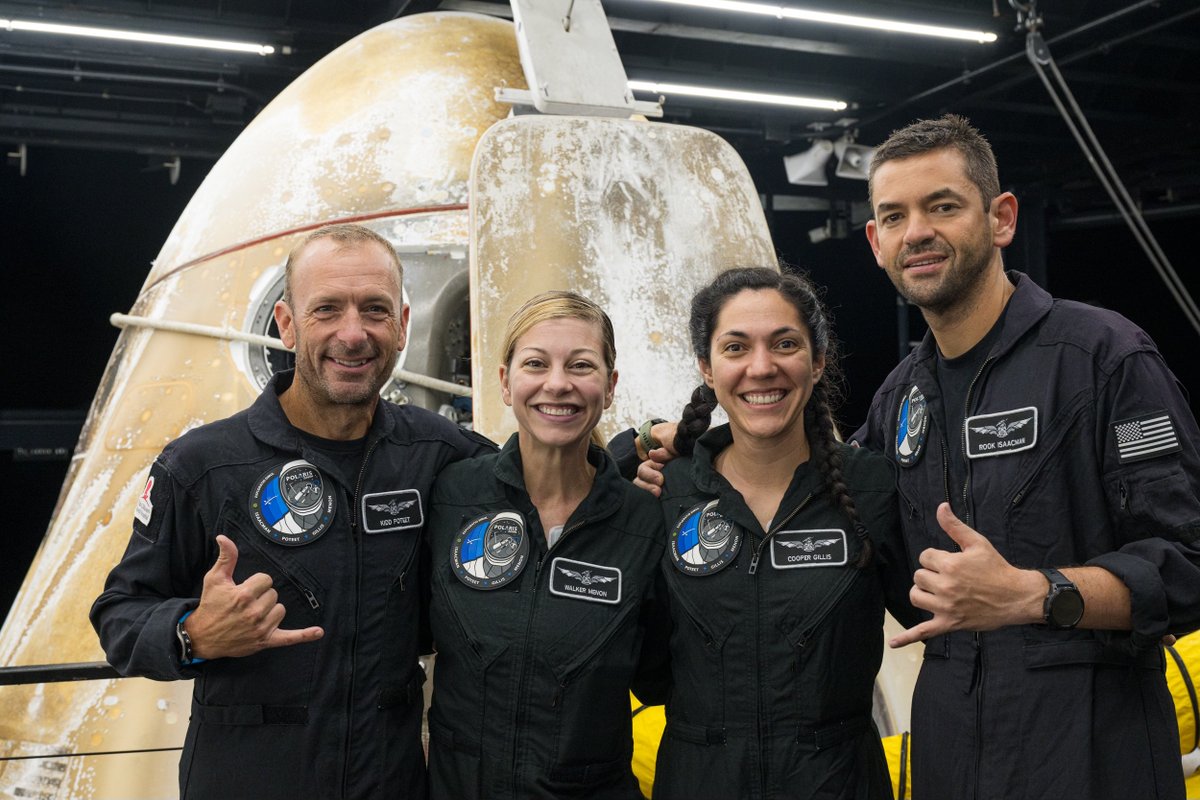
We are back on Earth and look forward to sharing the results and our experiences with all of you. The scientists and doctors rightfully own all of our time for the next few days, but I did want to share a few thoughts as I reflect on our mission and what we set out to accomplish.
We deeply care about the world we live in today and making it better. That’s why we wear the @Stjude patch on our flight suit and why we dedicate so much time to raising funds and awareness for their vital work. It’s why we partnered with @ElSistemaUSA to show how the beauty of music can bring people together all over the world. It is why we’ve brought Starlinks to various corners of the world to help connect people and provide access to information—building blocks for solving many of the world’s challenges.
As we work to address today’s problems, we must also look to the future we want our children to grow up in. As a crew, we have always believed in humanity's destiny among the stars—a belief that’s only been reinforced by our recent journey. We had very specific mission objectives, some familiar from the past, but in many ways, they were different today.
We took our spaceship farther than any human has gone since the last Apollo mission over 50 years ago, and along the way, two of our crewmates became the women who have journeyed farthest from this planet. Now, if we have been there before, why is it significant? The better question might be: Why haven’t we gone back? It’s not easy to travel that far into space. It requires immense energy to send a human-rated spaceship to such a height, and if a rapid deorbit is required, dissipating that energy is not easy. The environment is harsh, with increased radiation, more micrometeoroid debris, and no nearby safe havens in case of trouble. We went there to study the radiation environment, gather data on its impact on systems and human health, and to explore areas we know less about, where we can learn new problem-solving methods that will help in future missions. Records are meant to be broken, and we are so excited for @Artemis to take us ALL to even greater heights.
We conducted an EVA (spacewalk) and tested a new-generation spacesuit. There have been over 300 spacewalks in the 60-year history of human spaceflight, the most famous being those of the Apollo moonwalkers. By any standard, what we did was basic in comparison. The difference is that those spacewalks were conducted by government agencies—NASA, ESA, Russian Cosmonauts, Chinese Taikonauts—with the full backing of their nations' resources. In the future, tens of thousands of people will be working in space on multiple space stations, lunar bases, and Mars outposts and not all of them will be government astronauts. Space belongs to everyone, and it’s essential that both commercial and government efforts work together to make that future a reality. It is critical for the commercial industry to have the tools and experience for spacewalk operations and the suit we tested is just the first step in that journey. By opening up new frontiers, we’re building a future for all of humanity, not just a select few. Along the way, we’ve learned a lot about the technical disciplines related to EVA operations, which will only accelerate the iterative design process that @SpaceX executes so masterfully. I will personally treasure the experience my crew and I shared, but I am most excited about future generations of the suit and where they might be used someday.
We tested new laser-based Starlink communications, using it primarily as an alternative communication pathway to Mission Control, but also to put together a very special moment: my crewmate @Gillis_SarahE playing the violin in space. This wasn’t about being first at something, but about showing the world a different perspective through the power of music. To maybe think a bit less about the differences that dominate daily discourse and a bit more about our shared humanity and what we can achieve through some measure of unity.
Beyond what we hope to learn from these technical objectives or the ~40 science and research experiments, there is always a fundamental requirement of any space mission: to cast the widest possible inspirational message. There were many firsts on our mission, but just as important were the things that were simply different from what people are used to seeing. These differences can spark all sorts of creative thinking and maybe inspire the next generation to dream about what they can accomplish among the stars. Because if we’re going to realize humanity’s destiny to reach out and unlock the mysteries of the universe, we are going to need a lot of inspired dreamers to join this grand endeavor.
I want to close by thanking everyone who worked so hard to make this mission safe and successful. Of course, that starts with the 14,000 @SpaceX employees, from top leadership like @elonmusk, @Gwynne_Shotwell, @jjfactorykat ,@skeech412 and @TurkeyBeaver to the SpaceX technicians inspecting our booster before flight. Special thanks to all the @PolarisProgram team that supported us throughout this journey over the last 2.5 years of training to the 24x7 on-orbit operations. I also want to thank @NASA for their foresight in creating the commercial crew program, which breathes life into initiatives like @PolarisProgram ..not to mention NASA's direct mission support and EVA suit testing. Thanks to the weather teams, recovery teams (including the @USCG), all the researchers, and everyone of our supporters that cheered us on and dreams of a brighter future✨. With our deepest appreciation and gratitude, THANK YOU!
762
1,701
12,602
928,936
22 Sep 2024
● THE FIRST-EVER PRIVATE SPACE WALK BY MR. JARED ISAACMAN
20 Sep 2024

Polaris Dawn has done the impossible: making history with private citizens conducting a spacewalk. "When you look at Earth, it's extraordinary," @rookisaacman
Watch @MorganLBrennan's full intv with Isaacman here: cnb.cx/3TF3Ikq
#manifestspace @SpaceX
1
106
22 Sep 2024
The New Space Age, Inc. (NSAI), also called the Mr. & Ms. Cosmos Organization (MMCO), is a nonprofit, scientific & philanthropic organization (in Manila, Philippines) that promotes Space Science Education & Cosmos Awareness in the Philippines & the World.
1
84
22 Sep 2024
NSAI/MMCO also promotes the further advancements of Mankind's Space Science, Space Technology & Innovations for the good Cosmic Future of us Humanity & our Planet in our place & position in our entire & infinite Cosmos or Universe.
2
90
22 Sep 2024
The NSAI or MMCO promotes, supports, and advocates all Space or Cosmos-related matters/concerns 🌎 📡 🔭 🛰 🚀 🌗🪐 🛸 👽 🌌
56
22 Sep 2024
This is my Meta-verified (AUTHENTIC) Facebook account as an Advocate/Proponent of all Space/Cosmos-related matters and concerns: facebook.com/SpaceandCosmosL… 🌎 🌌
81