
MD/PhD Candidate at Stanford with @jkpritch • Studying pleiotropy genetic architecture of complex traits • @KnightHennessy Scholar • Also runs a lot 🏃🏽♀️
Joined October 2018
- Tweets 70
- Following 650
- Followers 430
- Likes 392
16 Photos and videos
Pinned Tweet

31 Jul 2024
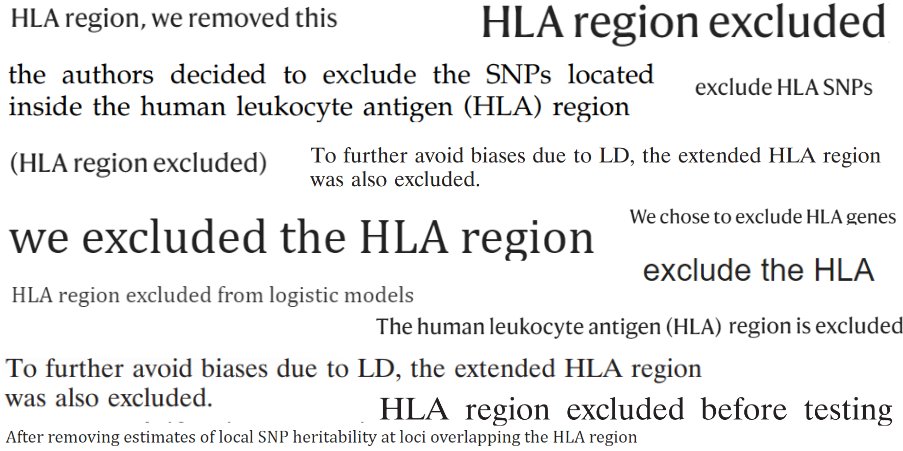
HLA is the locus that everyone loves to hate, so it rarely gets invited to the GWAS party... There’s good reason for this. The region has extensive LD, high gene density and high polymorphism. (Thread preprint link below ⬇️) (1/8)
ALT A collage of screenshots quoting variations on "we excluded the HLA region" from random papers.
5
48
171
31,320
Courtney Smith retweeted

12 Nov 2024
In a new paper with co-authors @Courtsmithrun, @Julie22875761, @spence_jeffrey_, and @jkpritch, I explore why this occurs: medrxiv.org/content/10.1101/…
1
2
18
997
Courtney Smith retweeted
12 Nov 2024
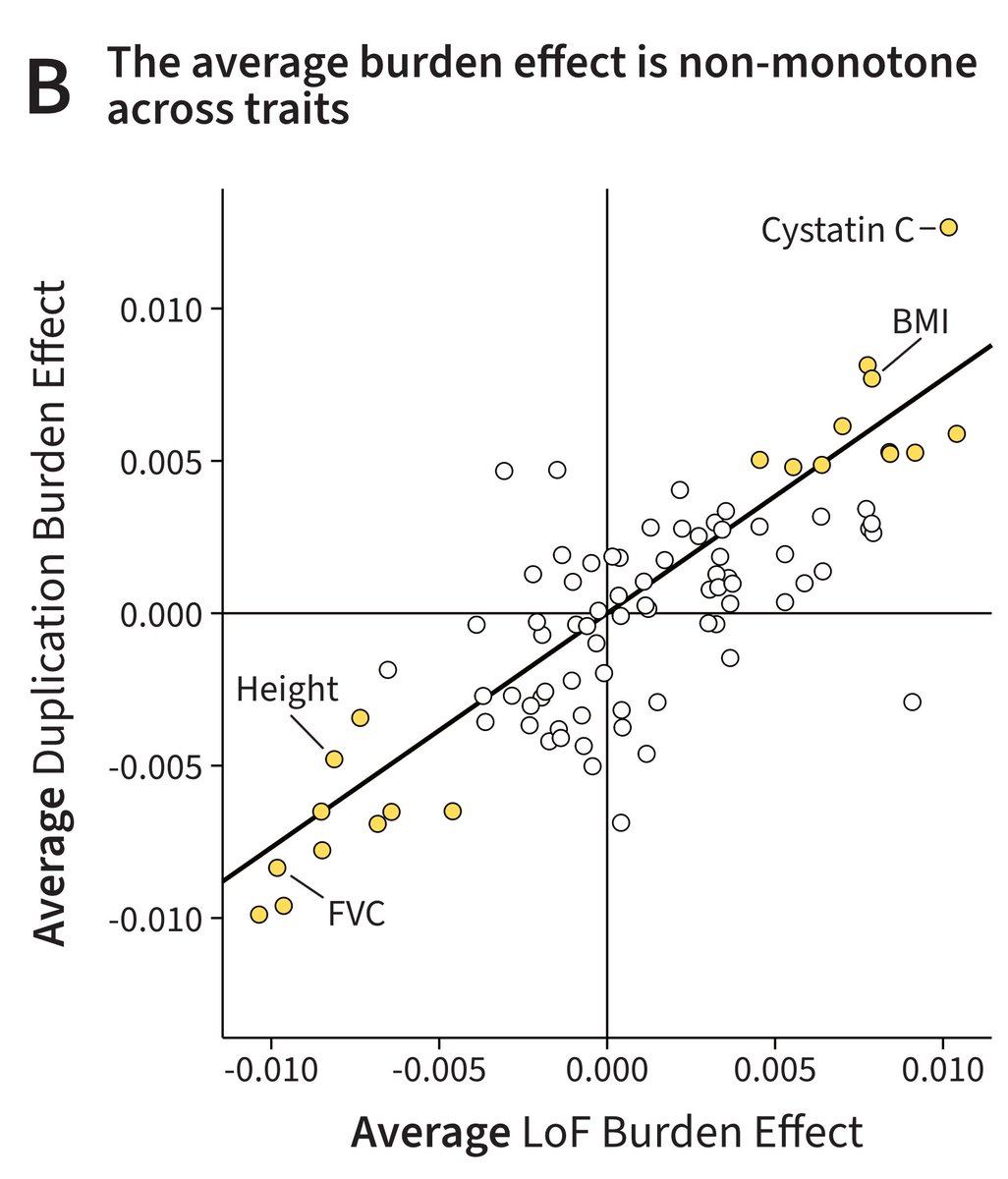
For many traits there is a correlation between the number of duplications or loss-of-function (LoF) mutations someone carries, and their phenotype. Curiously, for most traits, these effects are aligned in the SAME direction. Why?
4
42
109
18,835
Courtney Smith retweeted

7 Aug 2024
My postdoctoral work is finally out! Please consider retweeting.
I am very proud of this project. I want to thank my wonderful advisors @mbarnalab and @jkpritch and collaborators Theo Susanto, @xsui98, @WangXiaoLab, @spence_jeffrey_, and many others for a major team effort!
7 Aug 2024

1/9
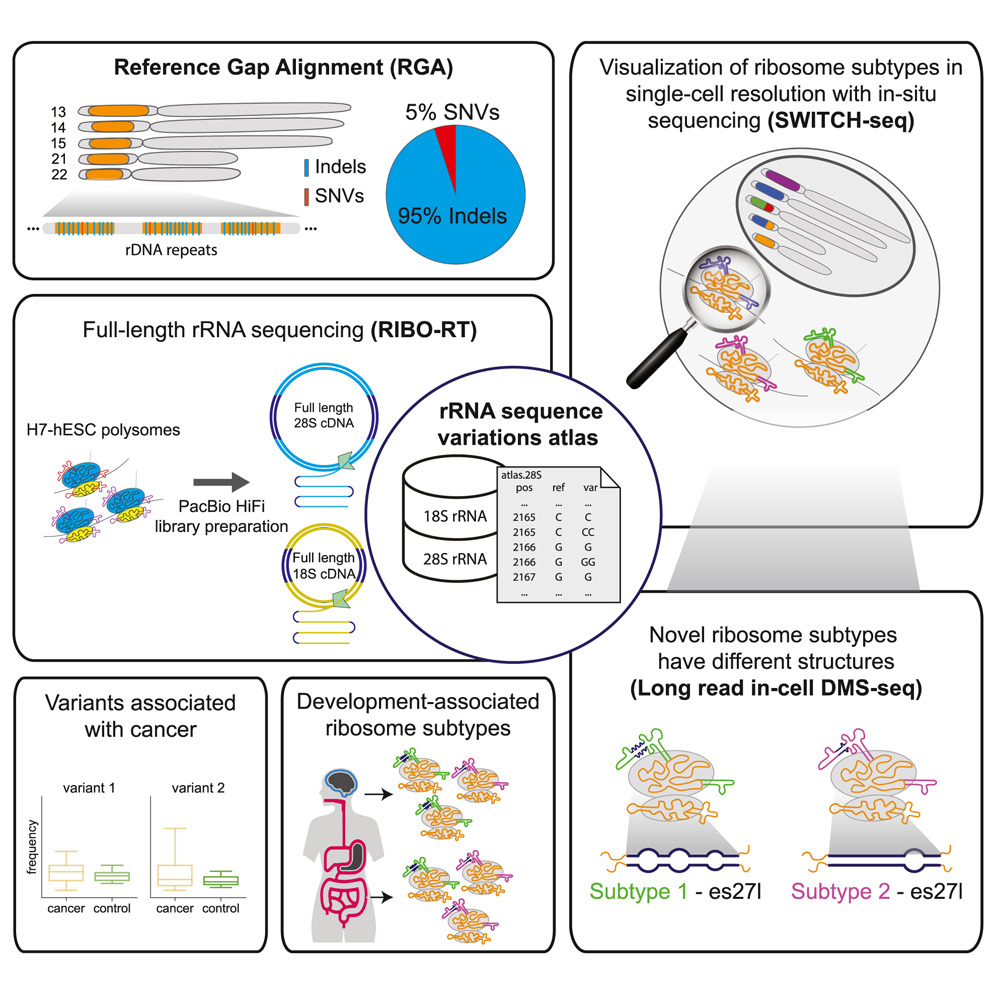
We show that Human ribosomes have different rRNA sequences, predominantly indels. These include abundant variants such as GGC indels, which form different structures. We visualize variants in single cells and associate them with development and cancer.
doi.org/10.1016/j.xgen.2024.…
7
26
80
17,585

31 Jul 2024
We also highlight examples of clinically-relevant findings from these results, including examples of haplotypes that differentially contribute to inflammatory bowel disease and one of its complications, primary sclerosing cholangitis. (7/8)
1
4
1,251
31 Jul 2024
In total, we identified 7,649 HLA associations across 647 traits. By releasing the association test results and code, we hope to provide a valuable resource with many interesting examples for future research and make the HLA region more accessible! (8/8) medrxiv.org/content/10.1101/…
1
3
22
1,502
31 Jul 2024
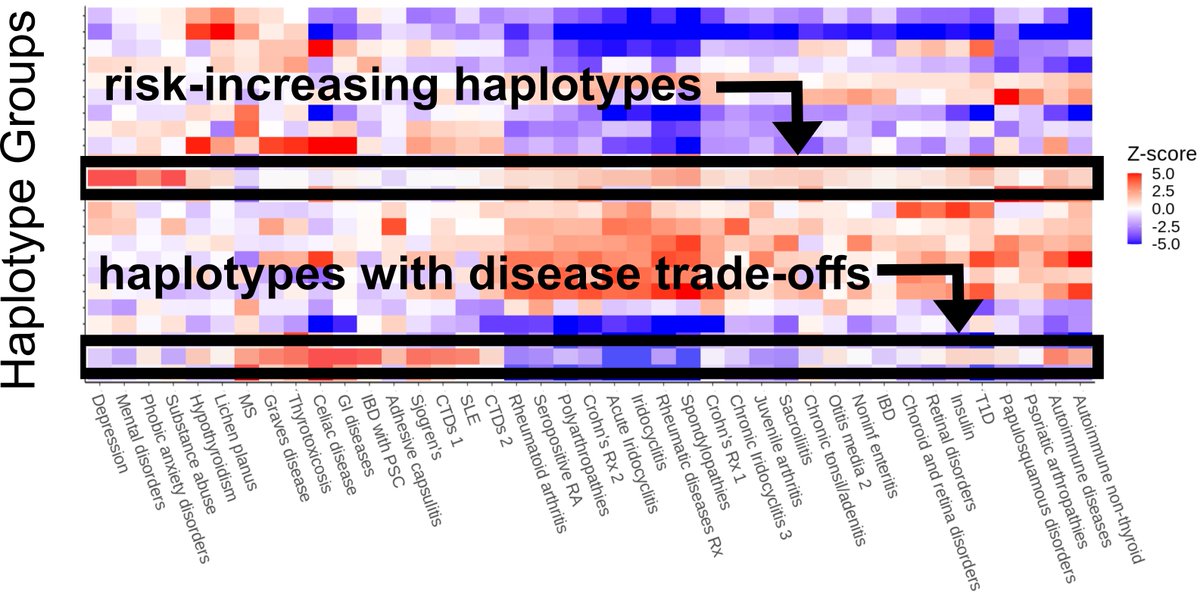
We found some haplotype groups had only risk-increasing effects across associated traits. We also identified haplotype groups that showed evidence of risk trade-offs for a breadth of diseases, with associations protective for some diseases and risk-increasing for others. (6/8)
ALT Heatmap showing the Z-scores from the haplotype regression analysis for each haplotype group - disease association
1
1
6
1,294
31 Jul 2024
HLA is the locus that everyone loves to hate, so it rarely gets invited to the GWAS party... There’s good reason for this. The region has extensive LD, high gene density and high polymorphism. (Thread preprint link below ⬇️) (1/8)
ALT A collage of screenshots quoting variations on "we excluded the HLA region" from random papers.
5
48
171
31,320
31 Jul 2024
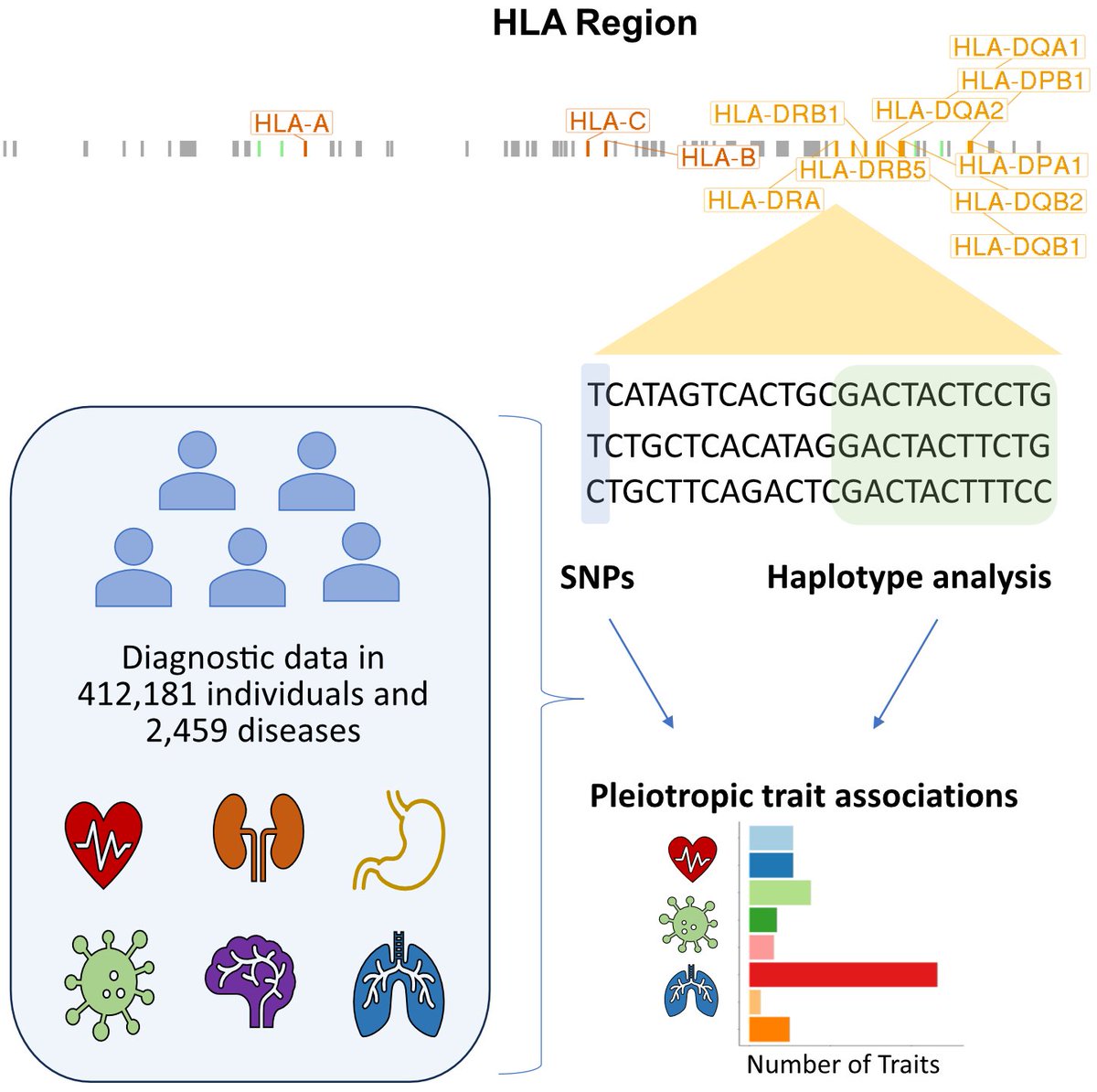
To investigate patterns of pleiotropy across diseases, we wanted a method that captures the full complexity of variation in the region. Therefore, we developed a haplotype-based association analysis, in addition to performing disease associations with SNPs and HLA alleles. (5/8)
ALT Overview schematic of the study
1
1
6
1,231
31 Jul 2024
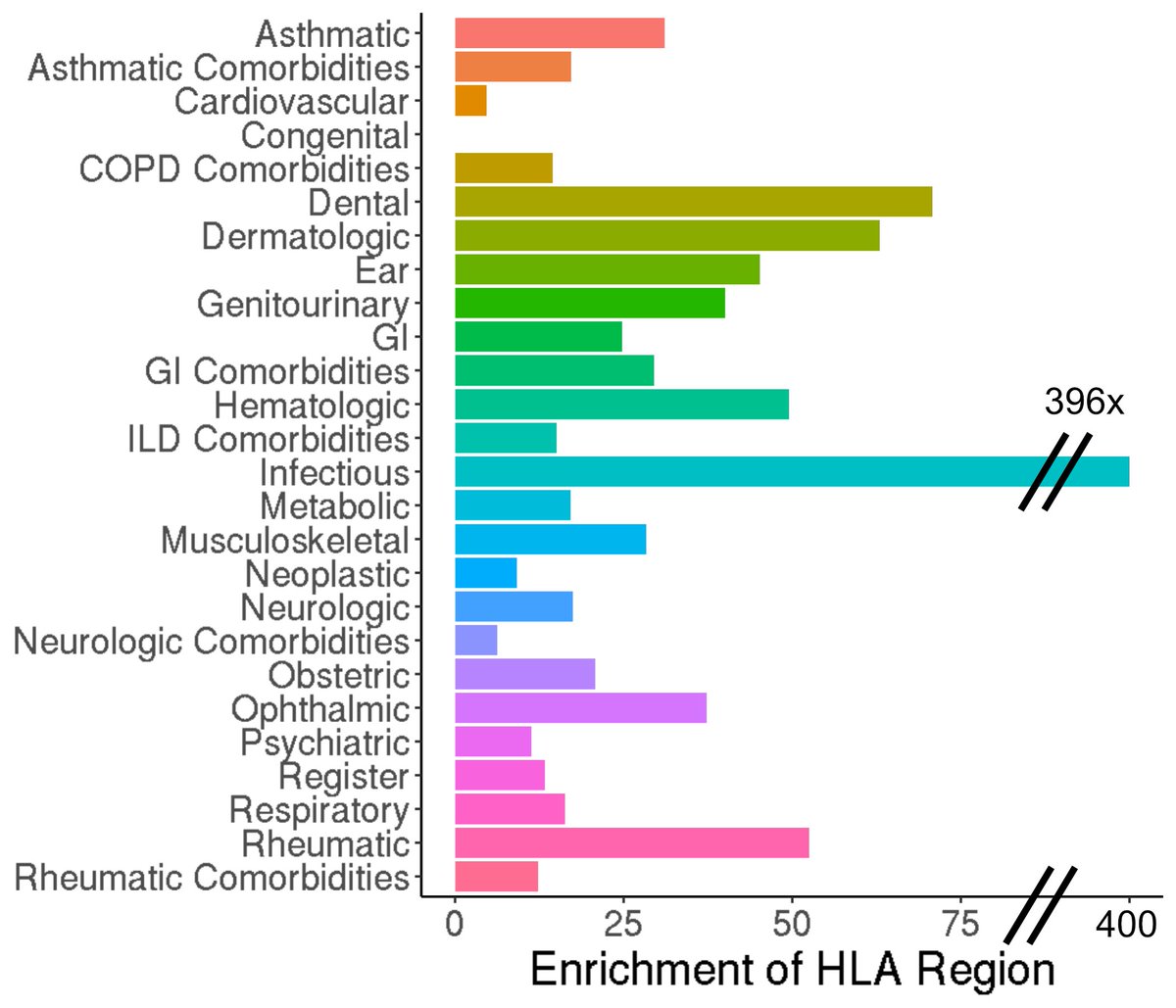
We all know HLA is highly enriched for GWAS hits, but this is rarely quantified. Looking phenome-wide across >2,000 diseases, we find large enrichment in a wide range of diseases, including many not obviously related to HLA. (4/8)
ALT Bar plot showing enrichments in the HLA region by disease group
1
11
1,319
31 Jul 2024
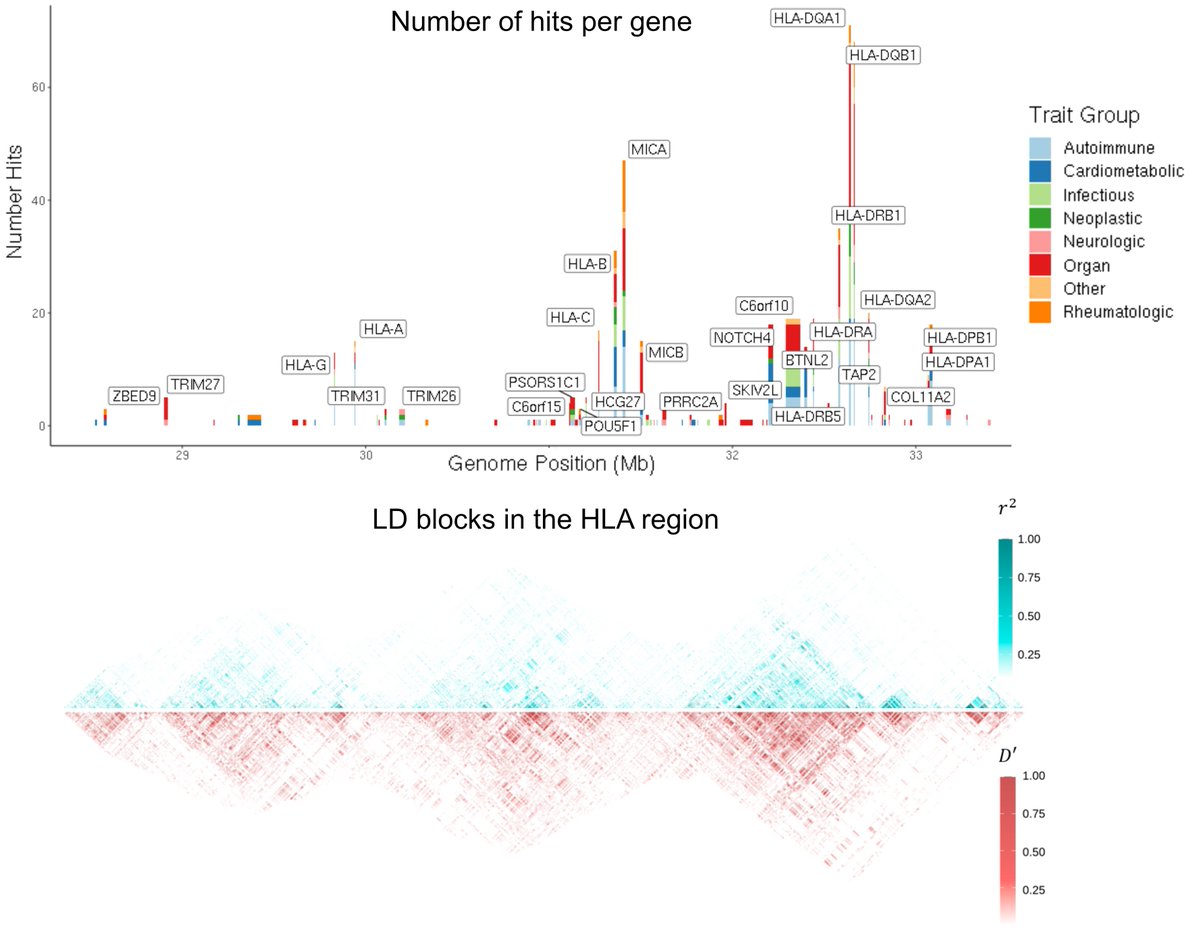
While we call it the HLA locus, there’s actually 100s of genes in the region, with LD spanning many genes. This makes it tricky to study trait associations, and also means we miss lots of genetic variation when we focus on protein-coding variation of HLA alleles. (3/8)
ALT Top plot is a bar plot binning the number of GWAS hits by nearest gene. Bottom plot shows the LD blocks across the HLA region, with r^2 and D'.
1
10
1,846
31 Jul 2024
In our new preprint, with @StrauszSatu, @spence_jeffrey_ , @HannaMOllila , @jkpritch , we investigate patterns of pleiotropy in the HLA region across thousands of diseases by developing a new method to perform haplotype-based association analysis. (2/8) medrxiv.org/content/10.1101/…
2
5
32
2,540
Courtney Smith retweeted

18 Jul 2024
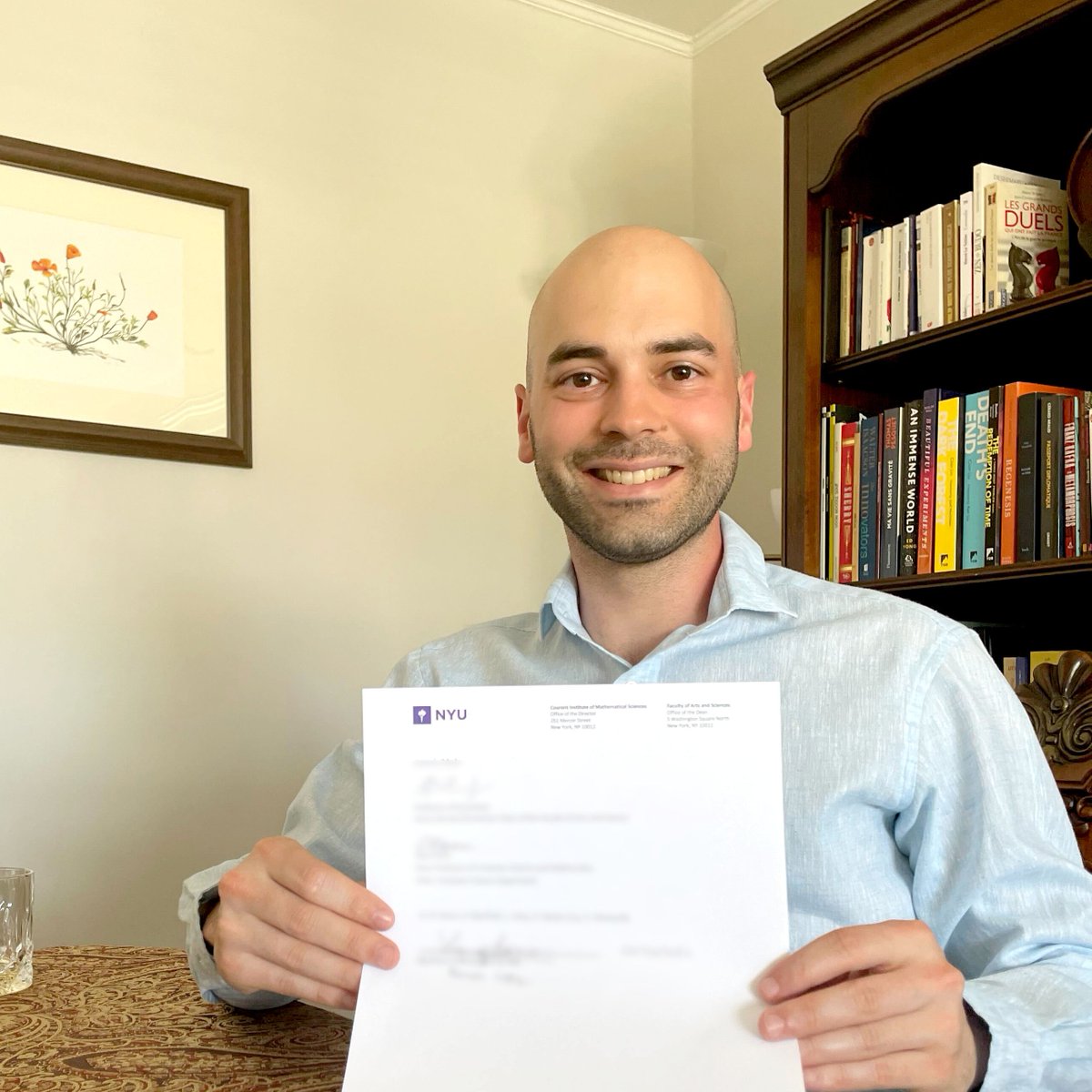
Happy to announce that in September 2025, I will open my research laboratory at @NYU_Courant 🏢🔬. As an assistant professor of CS & Biology 💻🧬, I will carry on my work on advancing ML research for molecular biology, and apply those methods for scientific discoveries 🌟🔍.
56
31
472
38,985
Courtney Smith retweeted

12 Jul 2024
I'm delighted that our GeneBayes paper reporting highly accurate and interpretable estimates of gene constraint (against LOF mutations) is out now!
GeneBayes builds on pioneering work on pLI LOEUF from groups at Broad, and work on s_het hs from Sunyaev and Przeworski labs.
28
118
17,527
Courtney Smith retweeted

12 Jul 2024
Thrilled to share the bulk of my PhD work, now up on bioRxiv!
This project brings together aspects of network theory, systems biology, and single cell genomics, towards understanding properties of gene regulatory networks (GRNs). Read on for more —> (1/)
doi.org/10.1101/2024.07.04.6…
2
60
223
43,859
Courtney Smith retweeted

6 Nov 2023
Beyond excited to share my first publication out of grad school (!!!). @RoshniAPatel, a bunch of amazing trainees, and I created a course on genetics, ethics and society. Read through Roshni's thread to learn more!
6 Nov 2023

@raungar and I are thrilled to share our paper on the trainee-led course on genetics, ethics, and society that was developed at Stanford: biorxiv.org/content/10.1101/… (1/9)
2
6
34
4,019
Courtney Smith retweeted

6 Nov 2023
@raungar and I are thrilled to share our paper on the trainee-led course on genetics, ethics, and society that was developed at Stanford: biorxiv.org/content/10.1101/… (1/9)
1
31
87
20,653
Courtney Smith retweeted

19 Oct 2023
Excited that our paper addressing the limited overlap between eQTLs and GWAS hits is now published in @NatureGenet! nature.com/articles/s41588-0…
6
109
370
110,317
Courtney Smith retweeted
1 Oct 2023
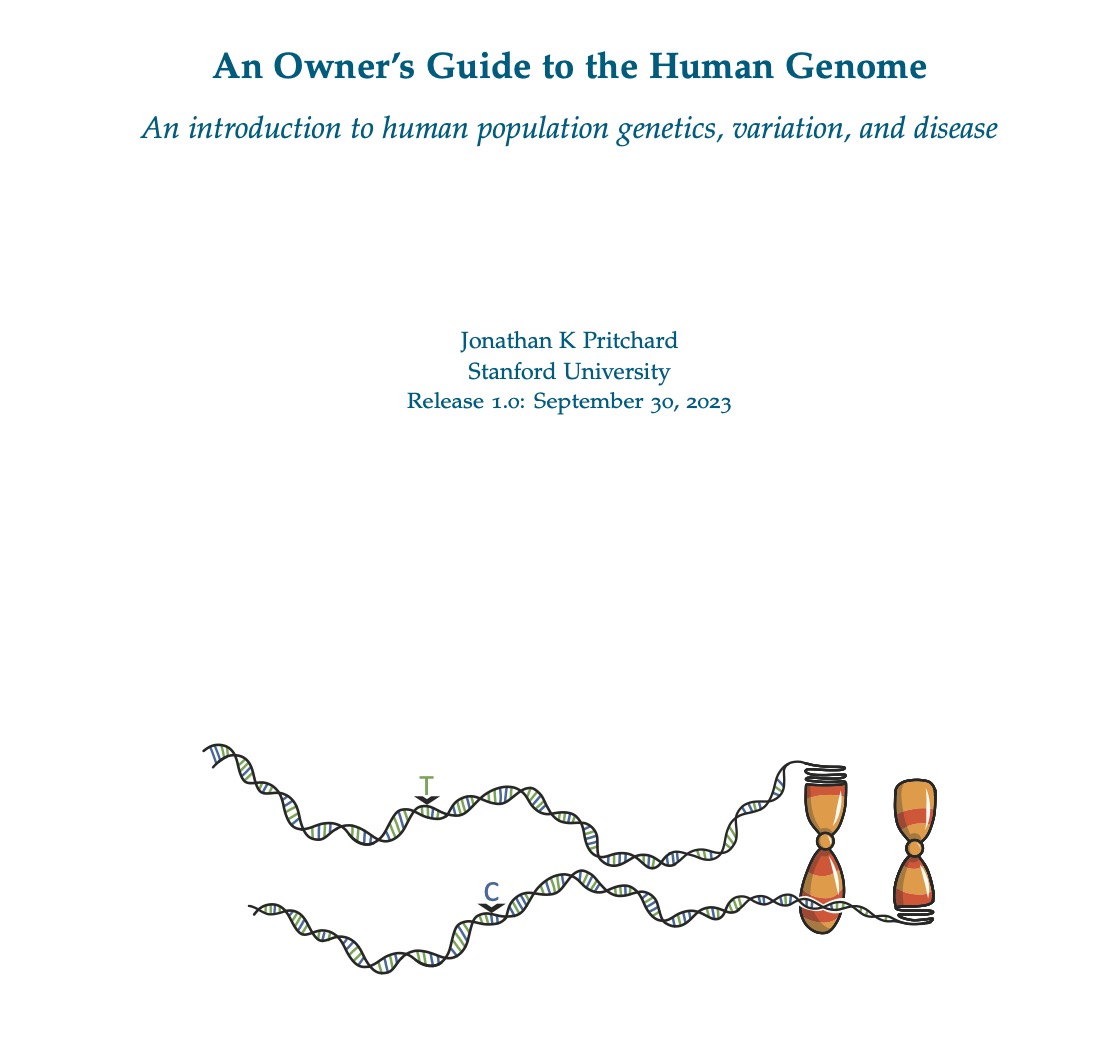
I'm delighted to release the first half of my new open-access online textbook in human population genetics:
web.stanford.edu/group/pritc…
59
1,051
3,659
682,542
Courtney Smith retweeted

7 Sep 2023
I'm thrilled to announce that I've joined the Section of Genetic Medicine at the University of Chicago as an assistant professor! The Simons lab is officially open!
yuvalsimons.org/
15
31
193
32,635