Reincarnated into Creativity 🧡🧩 | Creative Designer and Writer ✍️ | Member: @SSWEB5
Joined August 2024
- Tweets 36,580
- Following 2,379
- Followers 2,925
- Likes 112,481
805 Photos and videos

Pinned Tweet

Jun 9
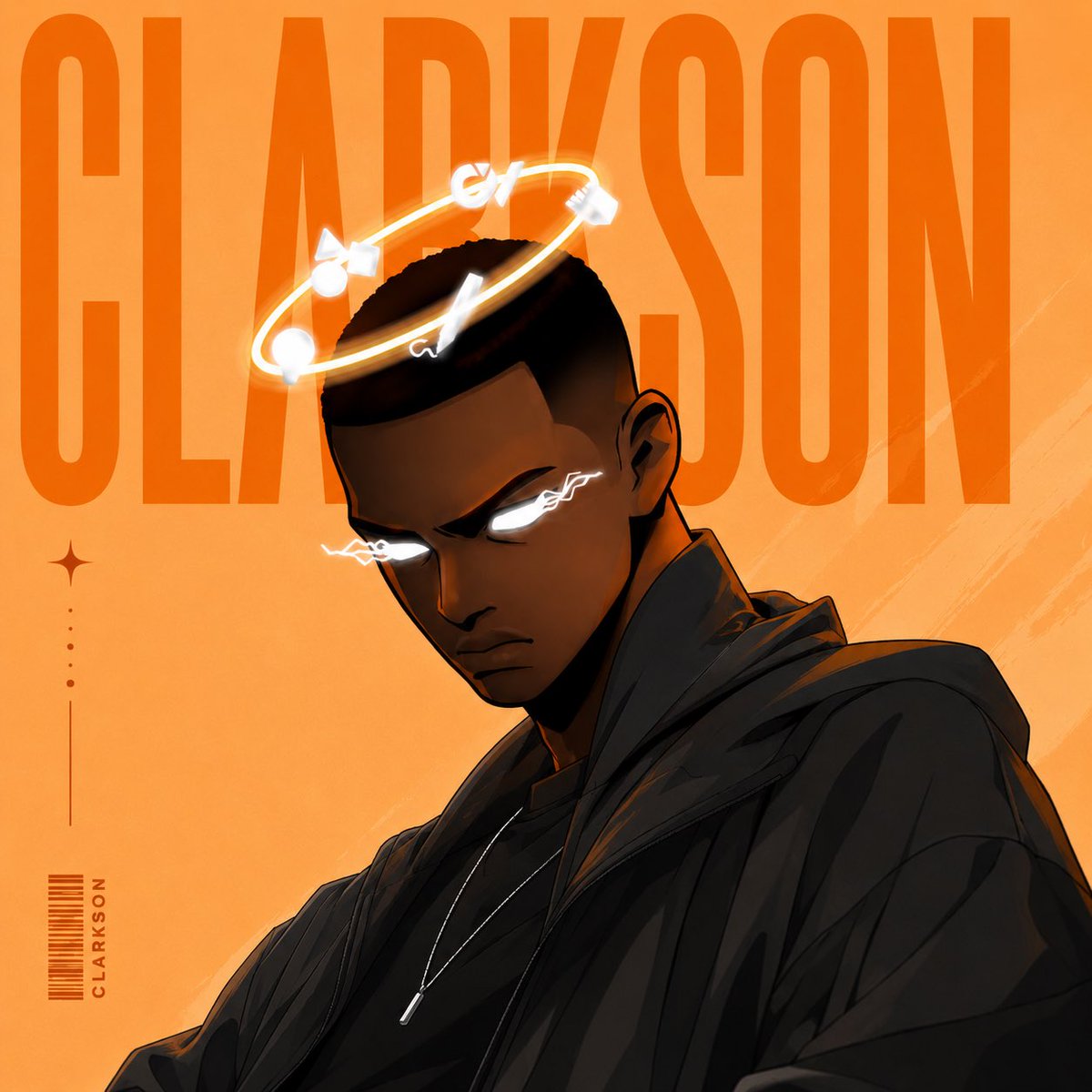
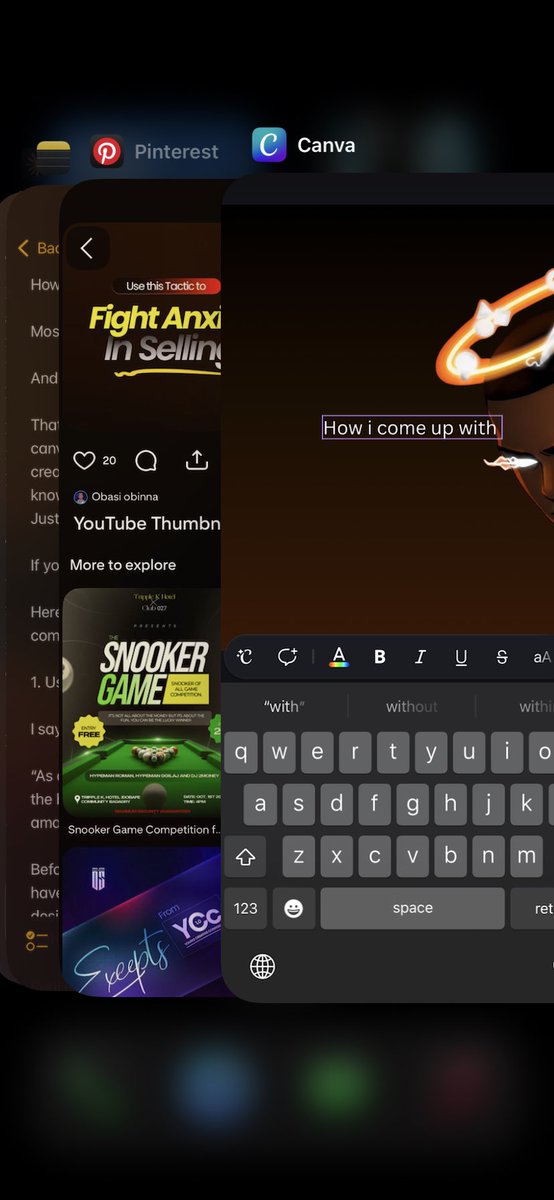
How Do I Come Up With Design Concepts?
Most designers struggle with this
And honestly? I’ve been there too
That feeling where you’re staring at a blank canvas and nothing is coming. It’s not even a creative block most times. It’s just you not knowing where to start. No direction, No idea Just pressure.
If you’re reading this, that ends today
Here are the three things that actually help me come up with design concepts 🧵
Jun 8

Designers struggling with design concepts?
I’m cooking something for y’all 👌
One of the biggest challenges for newbie designers is figuring out how to come up with unique concepts and develop their own style.
If that sounds like you, turn on notifications.
I’ll be dropping practical tips on sourcing inspiration, building stronger concepts, and creating designs that actually stand out.
Stay tuned 👀
42
18
131
2,774
Clark🧡🧩 retweeted
Jun 13
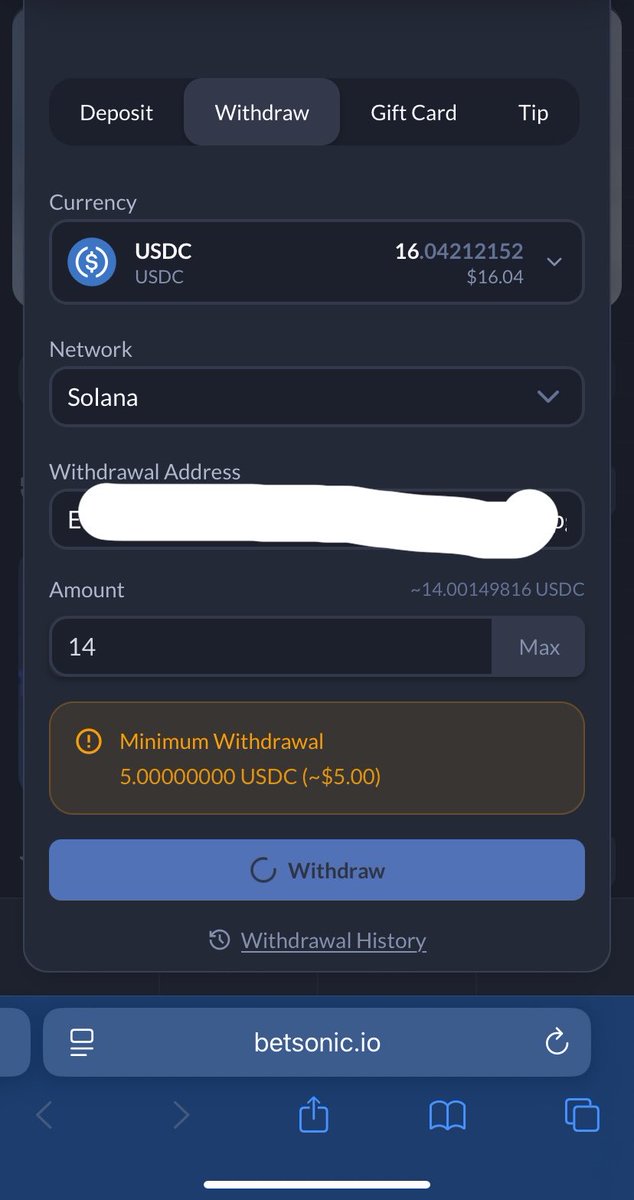
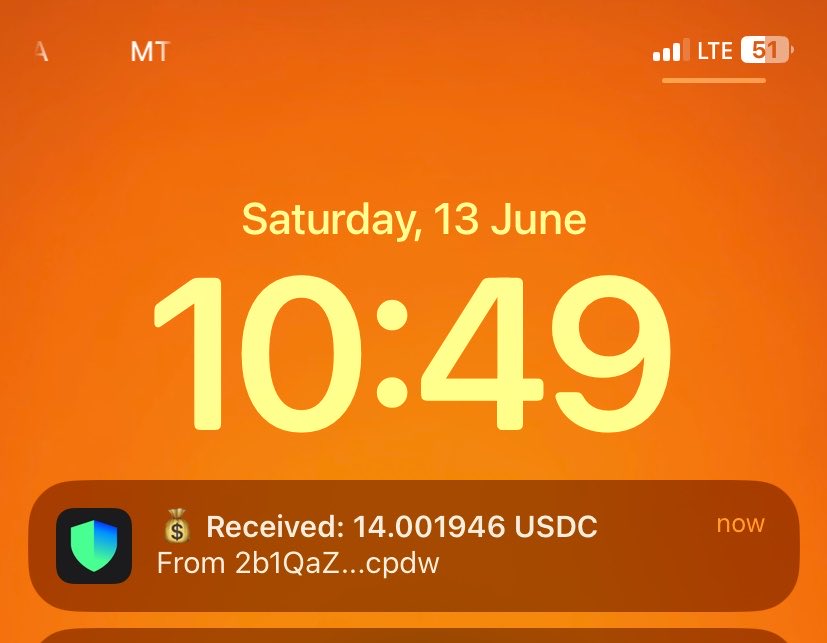
Just Got small gambling stimmy by playing mines on @betsonic_io
Flipped the $2 to $14 ( omor I no do again make I buy food fess)
Might raise it higher next time this was an experiment 😂😂
Thanks to @TheLordVibeZ for the alpha
15
1
26
369
Clark🧡🧩 retweeted
Jun 13
Happy Weekend Creatives
Touch Ass not Grass🫠
Highly recommended 🧡
80
1
100
1,157
Clark🧡🧩 retweeted
Jun 12
Late GM🧡
Woke up and decided to steal a prompt 👀
What did I miss 🤧


30
1
42
862

Clark🧡🧩 retweeted
Jun 10
Most Solana launches?
Snipers eat first, You get the leftovers.
@popiwtf built something different.
The Gacha phase puts real users in the fight before trading opens. You can push snipers out. Refund during bonding if a launch looks dead. Hold past graduation and compete for a jackpot.
That’s actual fairness built into the mechanism
Discord just went live. Early OG roles are on the table right now.
• Join the community → discord.gg/W3pyJAj89
• Register early → popi.wtf/early
Move now or watch someone else take your spot 👌

discord is open
claim your early role
gacha starts soon
discord.gg/yjgcKj5Mz
10
1
24
926

Clark🧡🧩 retweeted
Jun 10
Father please Guide me to make friends with the right people 🧡🧩
16
3
26
243
Clark🧡🧩 retweeted
Jun 10
Designers
Are you still fighting with AI or you are intergrating it into your workflow ?👀
Abi make I give @Ddeliveryguy mic to preach for Una 🌝
6
1
19
170
Clark🧡🧩 retweeted

Jun 10
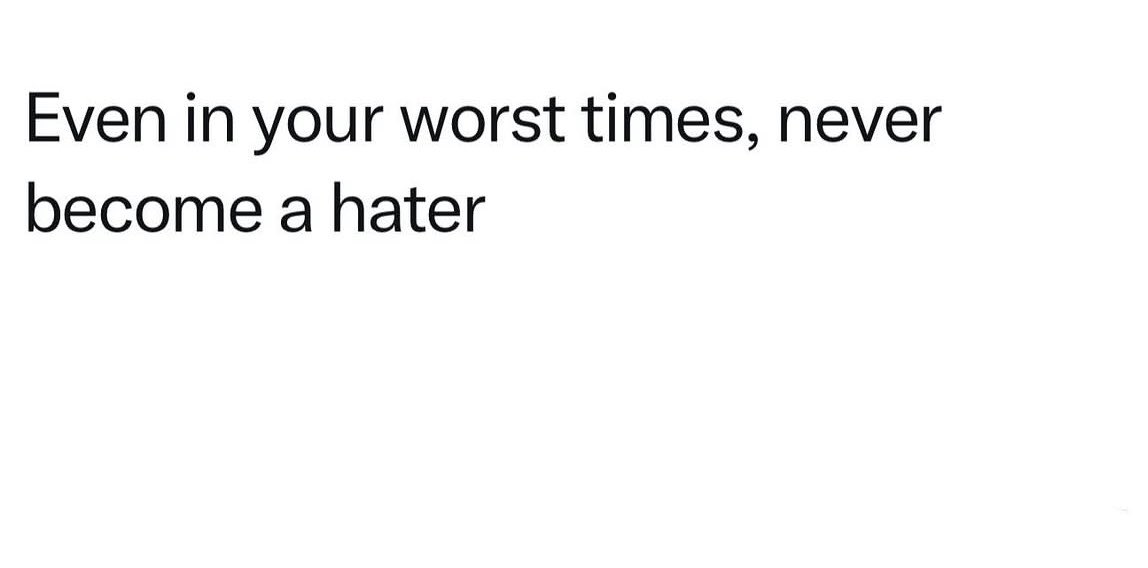
Sometimes the hardest battles are the ones nobody notices.
The person sitting quietly in the room may be carrying the weight of family problems, financial pressure, uncertainty about the future & a mind that never seems to stop racing.
They show up.
They smile when they can.
They respond when they have the energy.
But beneath the surface, they’re trying to hold themselves together.
Life has a way of testing people in silence.
With no announcements.
No warning signs. Just long nights of overthinking, moments of exhaustion & the constant effort of trying to stay strong when everything feels heavy.
That’s why it’s important to be careful with the assumptions we make about others.
Not every quiet moment means someone doesn’t care.
Not every change in behavior has a simple explanation.
Sometimes people are simply trying to survive a season that is asking more from them than they know how to give.
And maybe that’s why we should be more intentional about the roles we choose to play in people’s lives.
If you choose to be a friend, be a friend.
If you choose to support someone, support them.
Not because every relationship lasts forever, but because people remember who stood beside them when life became difficult.
Too many people begin journeys they never intend to finish.
They offer presence, loyalty & reassurance, only to disappear when things become complicated.
Yet some of the people left behind are already fighting battles nobody knows about.
A little consistency can mean more than grand promises.
A little patience can mean more than perfect words.
Because while the world sees another ordinary day, some people are carrying burdens in silence & sometimes, simply knowing someone stayed can make all the difference.
It's all love & light from here 🤍
To everyone going through tough times.
I'm sending virtual hugs .
4
2
16
277
Clark🧡🧩 retweeted

Jun 10
yesterday we said blockchain is a shared record no one owns.
today we open the box and see what's actually inside.
think of a block like a page in a notebook.
every page has a date, a list of things that happened that day, and a page number.
now let's say, each page also had a photo of the previous page stapled to it, so you could always prove what came before.
that's basically a block.
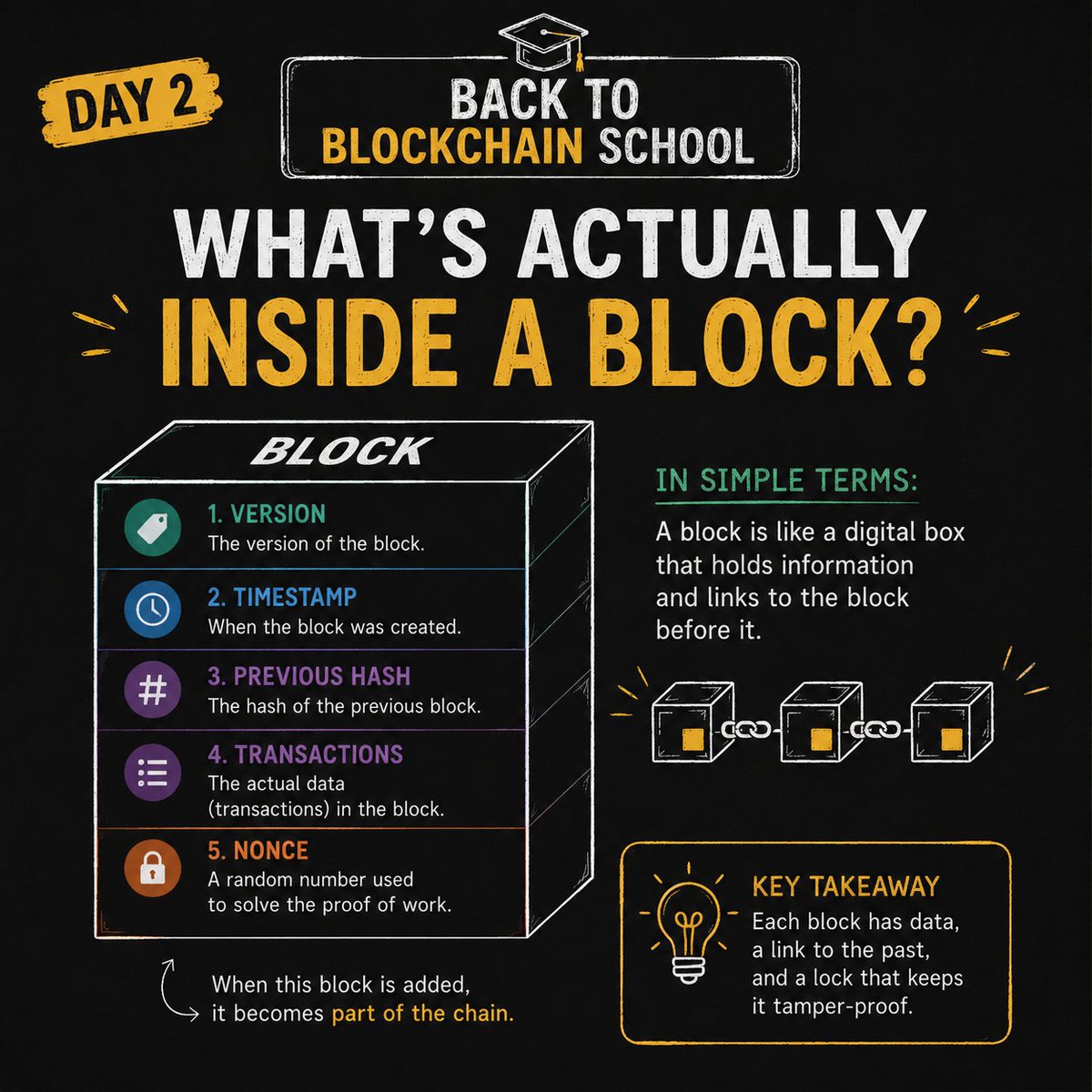
every block has 5 things inside:
> version: which set of rules this block is following. like knowing which edition of a textbook the class is using.
> timestamp: the exact date and time this block was created. everything on chain has a receipt.
> previous hash: this is the important one. a hash is a unique fingerprint. every block generates one, and the next block stores it. so every block is carrying proof of what came before it.
> transactions: the actual activity. who sent crypto to who, how much, when. this is the real content of the block.
> nonce: a special number the network had to figure out before this block could be created. think of it like a combination lock the computers had to crack. once it's solved, the block is sealed.
now why this important?
let's take for instance, your school has a notebook where every student's grades are recorded.
now imagine that notebook has 1000 pages, and each page has a photo of the page before it stapled to it.
if someone wanted to sneak in and change a grade on page 300, they'd have to reprint page 300 but now the photo on page 301 doesn't match anymore.
so they'd have to reprint 301 too and 302. and every single page after it, all the way to today.
and they'd have to do all of that faster than the entire school is watching.
that's why blockchain is so hard to cheat.
it's not just one record, it's millions of records, each one holding the fingerprint of the one before it.
change one thing and the whole chain exposes you.
each block has data, a link to the past, and a lock that keeps it tamper proof.
open, connected, and nearly impossible to fake.
✅ day 2 task
go to etherscan.io and click on any recent block. find the field that says "Latest Blocks."
that's the fingerprint of the previous block, the thing holding the whole chain together.
you just saw it with your own eyes.
see you tomorrow for day 3.
Jun 9

before blockchain existed, every time you moved money or data online, someone had to be in the middle.
your bank, payment app, or a platform.
they held the record, approved the transaction, and you just had to trust them.
that trust costs you in fees, time and control.
blockchain asked one question:
what if the record didn't belong to anyone?
what if thousands of computers around the world held the same copy at the same time and nobody could change it without everyone noticing?
think of it like a google doc
except instead of only your team seeing it, a million strangers have it open simultaneously.
every time someone adds something, copy updates and nobody, not even the person who wrote it can go back and erase it.
that's blockchain.
a shared, permanent record that no single person or company controls.
the "block" part is simple
every few minutes, new activity gets bundled into a package. that package is a block.
each block links to the one before it. chain of blocks called blockchain.
what separates it from a normal database?
no single company owns it. anyone can verify what's on it. and once something's recorded, it's almost impossible to tamper with. you don't have to trust the people running it, the system itself is the trust.
and this matters way beyond crypto.
think about how much of your life depends on institutions keeping honest records.
banks, governments, other platforms.
what happens when they fail, overcharge, or just exclude people entirely?
blockchain is the alternative infrastructure. a system where trust is built into the technology, not into whoever's in charge.
for those who've been in the space a while, yes, we'll get to consensus mechanisms, L2s, validator sets, and smart contracts.
but the reason most people still can't explain blockchain to someone new is because we skipped this part. fundamentals don't expire.
one thing to leave with today:
blockchain is a shared, permanent record no single person controls.
everything else (wallets, tokens, DeFi, protocols) is built on top of that one idea.
day 2 tomorrow, we go inside the block itself
what's in there, how they link, and why that structure makes the whole thing so hard to fake.
✅ your task for today
find one person who doesn't know what blockchain is and explain it to them using only the google doc analogy.
if you can explain it simply, you understand it.

57
10
103
7,894
Clark🧡🧩 retweeted
Jun 10
Good Morning Creatives
Another day to keep Creating 🧡👌
Designers, If you are yet to check this out please do 🙂↕️👇🏾
See ya 🤝
Jun 9
How Do I Come Up With Design Concepts?
Most designers struggle with this
And honestly? I’ve been there too
That feeling where you’re staring at a blank canvas and nothing is coming. It’s not even a creative block most times. It’s just you not knowing where to start. No direction, No idea Just pressure.
If you’re reading this, that ends today
Here are the three things that actually help me come up with design concepts 🧵
31
2
47
393

Clark🧡🧩 retweeted
Jun 9
How Do I Come Up With Design Concepts?
Most designers struggle with this
And honestly? I’ve been there too
That feeling where you’re staring at a blank canvas and nothing is coming. It’s not even a creative block most times. It’s just you not knowing where to start. No direction, No idea Just pressure.
If you’re reading this, that ends today
Here are the three things that actually help me come up with design concepts 🧵
Jun 8
Designers struggling with design concepts?
I’m cooking something for y’all 👌
One of the biggest challenges for newbie designers is figuring out how to come up with unique concepts and develop their own style.
If that sounds like you, turn on notifications.
I’ll be dropping practical tips on sourcing inspiration, building stronger concepts, and creating designs that actually stand out.
Stay tuned 👀
42
18
131
2,774