
Joined March 2024
- Tweets 437
- Following 139
- Followers 357
- Likes 591
171 Photos and videos













Pinned Tweet

May 22
$CREATE will be the first meme token that launches on Sol and XRPL
They will always be connected!
Join our telegram here:
t.me/CreatorXrpl
24
6
39
3,257
Ok team we give leeway to hard UTC end dates and times, so due to popular command, we have extended it for an extra day.
Our Asian family creators didnt quite get the memo in time.
Create your best memes 👇🏻
x.com/CreatorTokenXRP/status…
May 31

🚨🚨MEME COMPETITION🚨🚨
GOOD DAY KIND CREATORS!
Starting today we will launch a new meme contest! This time the community will chose the winner, but the rules are different!
Goal: CREATE the best fitting meme and share it as much as you can!
Post it on your X and make sure to tag @CreatorTokenXRP
To be eligible to win you need at least 250K $CREATE!!
Jackpot: There’s a total of 1.000.000 CREATE which will be shared between 4 winners.
The best 10 memes will be chosen by the team and then the community can vote for the winners. The ones with the most votes will win!
Endtime: 7th of June at 12pm utc
Time to break down the bears door once and for all 👇🏻💪👊🫶🏼
39
Creator Token retweeted

Jun 5
Next @bgarlinghouse and @JoelKatz we flip that thing we keep talking about 🤫🤐
1
2
43
Creator Token retweeted

Jun 5
Proud to be part of the $create community, a lot has been achieved so far. The roadmap is far from complete and I'm strapped in ready for the ride
4
4
85
Happy Friday to the whole xrpl meme space 🥳
As we witness the blatant market manipulation in the crypto space atm, we took this time to reflect on our token journey over the last 6-week period; both the successes and failures.
Below are just some highlights of our journey to date:
🟢 Broke the record for the fastest ever @Moon_Valve presale;
🟢Burnt 5% of the total $Create supply;
🟢We created @OnlySwapDex for reduced swap fee;
🟢We create a Telegram $xrp and $create lottery;
🟢We activated our Farming $xrp / $create pools;
🟢We ran multiple meme $create competitions;
🟢We have done Dev buy backs to support stability;
🔴We launched Cross chain (same token supply) to @solana, but were quickly humbled by the Jeeters (but by god, did we have a crack).
As a community we continue to work for our bags 👇 and not rely on any cabal / VC / influencer / sell your soul type setup.
We are a global team, flat structure, 💯organic community, and have a great meme success track record (we took the OG $Britto token* to over 2million MCap in the bear market with pure hard work).
Anyhow, we are all Creators, and we are here to 💯stay; be it market burning or market flourishing!
#MuchMoreToCome #xrp #memes #xrpmemes
*Note: If you wish to know more about that story, jump in our TG and ask away.
4
5
6
96
Our admin team always gets asked;
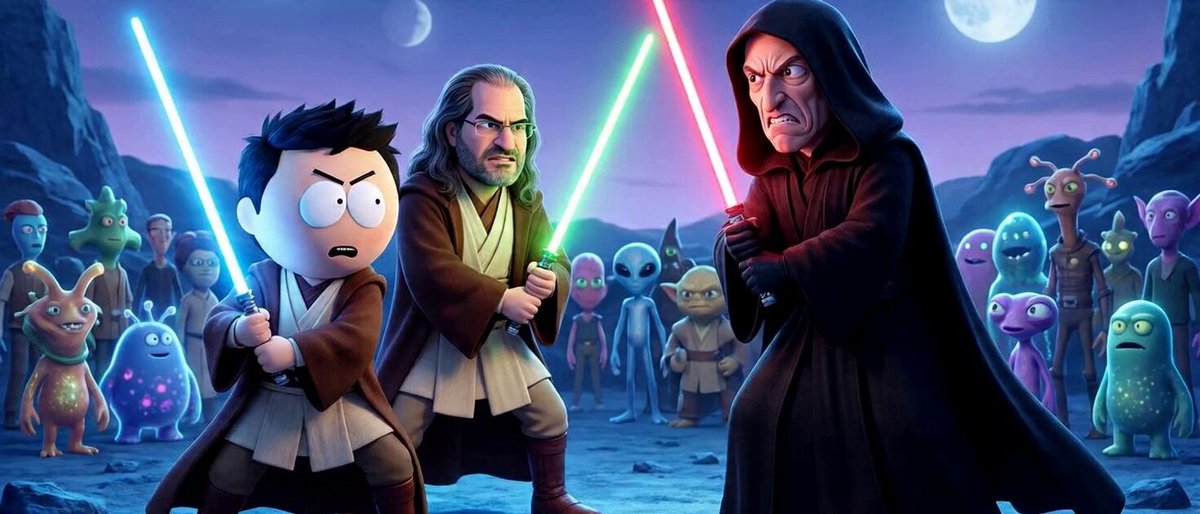
🌟How can you be an official Guardian Alliance star seed crypto character, if there is no evidence you spawned from another galaxy?
Of course that is a very valid question, so we delved into the Orion war archives and unearthed (pun intended) some rare footage of $Create as young Djedi in battle.
As can be seen by the below vision excerpt; Create and his Djedi mentor "Obi-Katz" (@JoelKatz ) are busy battling the dark SECith lord "Darth Gensler" on planet Sirius B👇.
PS: What became of Darth 'G' (our affectionate salutation) cannot be confirmed, but at the time a planetary star gate was operating at Sirius B's core🤷♂️
PPS: We could not show the official spawning footage for an obvious queasy rationale.
4
3
5
63
🌟Daily Creator TG Recap 🌟
• Voting Reminder: Team reminded the group to vote for $Create on TG, Coinmun and Dexscreener.
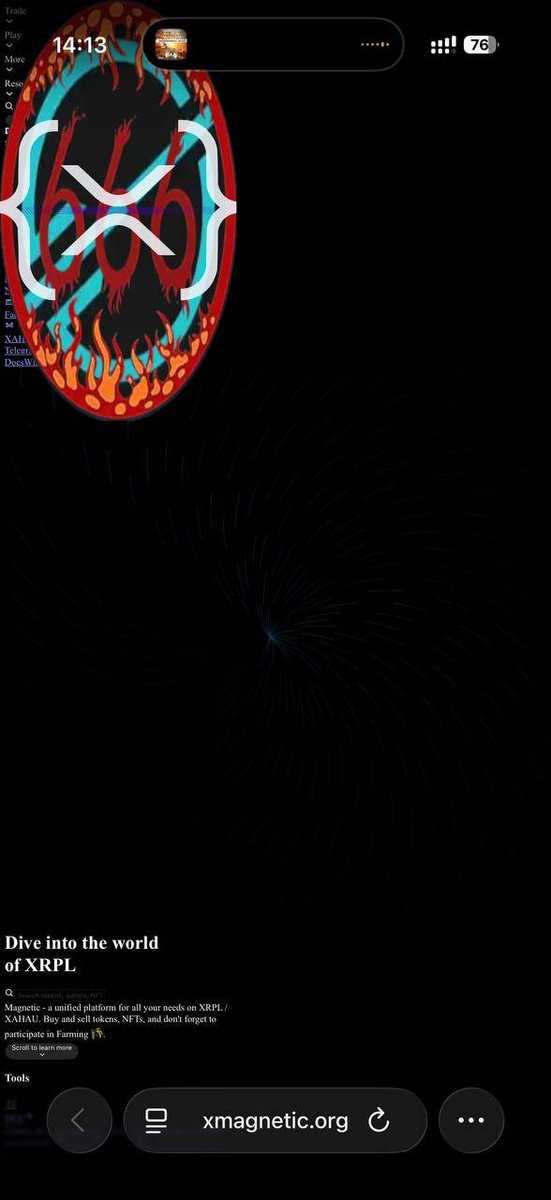
• A team member revealed a Hidden 666 Image on @MagneticXRPL which seemed to conincide with their outage👻.
• The team subsequently discussed the mystery behind the Magnetic outage and some even joked that other platforms got together for a DDoS party (obviously all said in jest as the creator family love all Dex platforms adding value to the xrpl). #HappyTheyAreBackUp
• The community discussed the market sentiment and how that actually made them super bullish. #BuyTheDip
• The daily Community Kindness Reminder always pops in as admins urged members to be kind to each other and especially to their dogs🐶
3
3
4
37
Creator Token retweeted

May 26
But the XRP still can't circulate until their release dates.
27 Oct 2025

Ripple could sell the right to receive the tokens released from escrow or even sell the accounts the escrows complete into. But the XRP still can't circulate until their release dates.
9
21
250
26,276
Creator Token retweeted
Jun 3
I have finished my thesis.
In every single part, I have explained how XRP will integrate and detailed the entire banking system and its technical terminology.
I kindly request that you do not come to me with absurd questions like "when will it happen" or "how high will it go."
I have only explained the mechanics of the system.
From this point forward, we have no choice but to patiently wait for @Ripple to succeed.
Jun 3

How XRP will reach $300 (324.22) *Part 5*
Mathematical and formulaic explanation
The reason I always set a $300 target is because my mathematical calculations explicitly point to $324.22. This price is the inevitable outcome of the liquidity velocity and institutional pool depth calculations behind the asset.
This number is not a randomly chosen, imaginary target, it is the exact mathematical intersection on the XRP Ledger between the Equation of Exchange (MV = PT) by the famous economist Irving Fisher, and the "Collateral Buffer" rules mandated by Basel III standards.
When conducting this calculation, we do not base our data on retail exchanges. Instead, we use the most concrete and solid global volume data that the institutional financial system is required to carry:
Liquid Available Supply (A): The free-floating supply ready to circulate within seconds at the exact moment of the "flip the switch" (after deducting locked structures) is roughly between 15 billion and 20 billion XRP. (The safest lower limit of 15 billion XRP has been used for this calculation).
Daily Targeted Institutional Volume (T): The daily total share flowing into the XRP tunnel from DTCC clearing operations, CME derivative collateral, and first-stage cross-border Nostro/Vostro liquidity flows: $1.2 Trillion / Day.
Regulatory Safety Buffer Multiplier (B): The mandatory depth multiplier required in the pool under Basel III and LCR (Liquidity Coverage Ratio) laws to prevent the system from locking up during instant, large-scale transfers is 4.
In the architecture of financial automation, the price (P) is found by the ratio of instantaneous transaction volume (PT) to the available liquid supply (M) in the system. However, since the system must flow uninterrupted, we must multiply the daily volume by the regulatory buffer coefficient.
FORMULA:
Price (P) = (Daily Volume * Regulatory Buffer Multiplier) / Liquid (Available) Supply
PLUGGING IN THE DATA:
Required Instantaneous Liquidity Pool Size: $1.2 Trillion * 4 (Buffer) = $4.8 Trillion
Available Liquid Supply (Mechanical Constraint): 15 Billion XRP
Price (P) = 4,800,000,000,000 / 15,000,000,000
Base Price (P) = $320
Every time a transfer occurs on the XRP Ledger, a very small amount of XRP is permanently destroyed (burned) as a transaction fee within a tenth of a second.
When we consider that global finance will enter this pipeline via tens of thousands of automated API orders per second,rotating millions of dollars in transfer volume every single moment, the factors of "supply contraction" and "slippage margin" on the network must be factored into the equation.
To maintain maximum depth efficiency and eliminate friction while institutional automated software (APIs) sweeps the order books, a network friction and depth margin of roughly 1.32% is added to the price:
$320 * 1.0132 = $324.22
XRP Velocity doesn't replace liquidity depth. You need to consider the "simultaneous" volume of global transactions
My posts are for informational purposes only.
Not a financial advice.
Everyone is responsible for themselves.
DYOR
32
67
647
32,182

And now it is down! Great going @Jim_Knox589 🤣
Jun 2

ripple:native
There is a hidden picture on Xmagnetic showing a burning XLM / XRP logo with the number 666 in the middle 👀
This Saturday we have 6/6/(2)6
2
1
4
55
3
6
38
Note: We still have the $xrp lottery running in our TG.
Join now or forever be in awe of the winners!
3
6
45
Make no mistake, even in the doldrums of terrible market sentiment, the Creator Devs still be 'devving'💻!
We are getting ready to blast back to the moon "Back to the future" style. #TimelineWarriors #xrp #xrpl #meme
$Create your own destiny!
1
3
5
35
Creator Token retweeted

14 years ago, we got together with an idea to build a better way to move value. What happened next was something none of us could have built alone.
And by "us," I don't just mean the three of us.
I mean the developers, validators, businesses, community members, and everyone who helped shape XRP into what it is today.
Happy Birthday, XRP!
550
1,673
10,237
831,778
Creator Token retweeted
Jun 2
Happy 14th Birthday XRP 🎂🎊🎉
@Ripple @XRPLF
@bgarlinghouse @JoelKatz @MonicaLongSF
DIDN'T FOLD
For years, thousands of people trusted you and I still continue to trust you.
Happy birthday, XRP!
It’s time to FLIP THE SWITCH 💯
9
52
515
10,786


24/7 regulated crypto futures and options trading are here through @CMEGroup, and Ripple Prime is a day-one clearing partner.
Institutional demand meets institutional infrastructure.
Built for always-on markets.
Jun 1

And we’re off! @CMEGroup is officially live with 24/7 crypto futures & options trading, providing around-the-clock access to crypto derivatives. @Ripple Prime is a day one clearing and financing partner, supporting always-on markets.
Fun fact: $XRP futures were the fastest ever contracts on CME to cross $1B in open interest, achieving this in just 3 months last year. The institutional demand is there, and now so is the infrastructure. cmegroup.com/media-room/pres…
186
1,330
4,881
490,342