
Principal Researcher @MSFTResearch. I study memory & planning in brains. I build & evaluate AI inspired by the brain.
Joined December 2014
- Tweets 12,117
- Following 1,753
- Followers 15,964
- Likes 36,227
942 Photos and videos
Pinned Tweet

29 Sep 2023
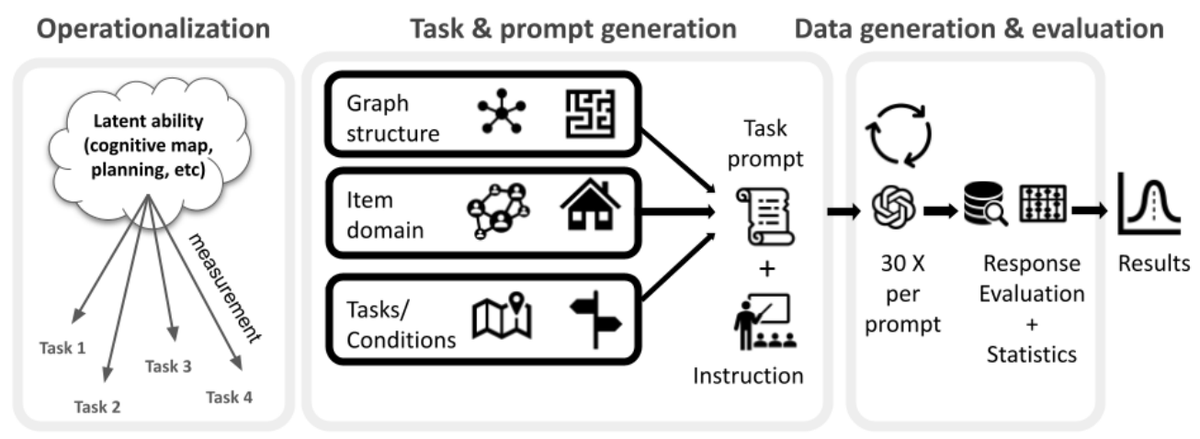
Delighted to share our #neurips2023 paper w @grockious @hmd_palangi et al
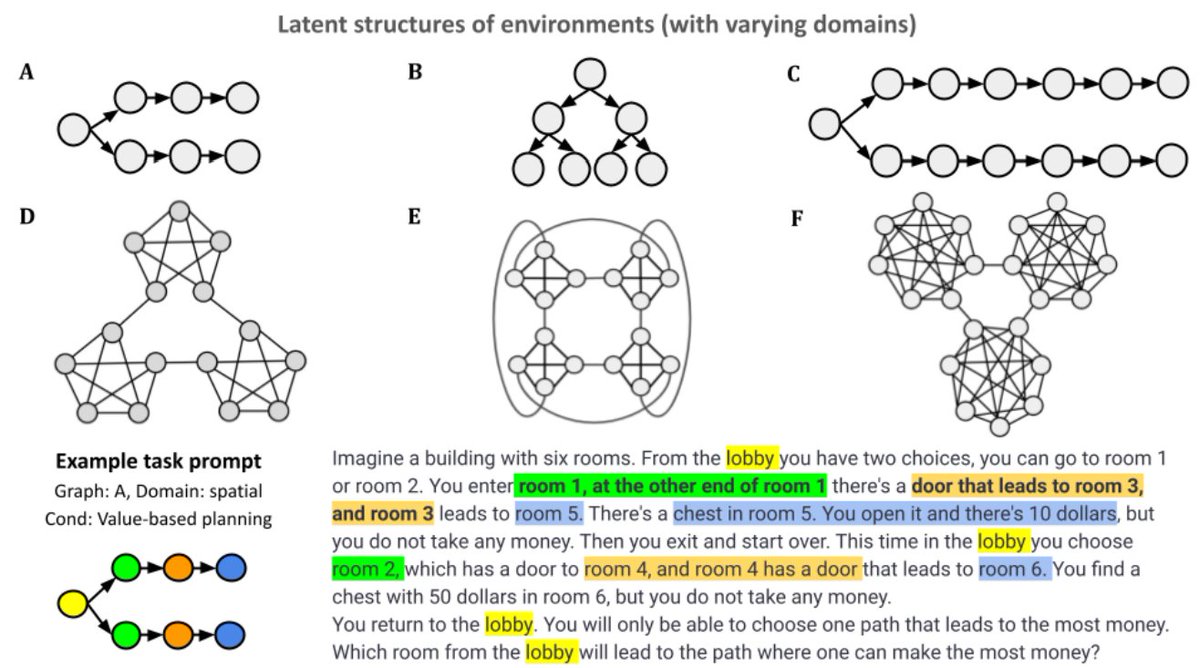
Evaluating Cognitive Maps & Planning in LLMs with CogEval
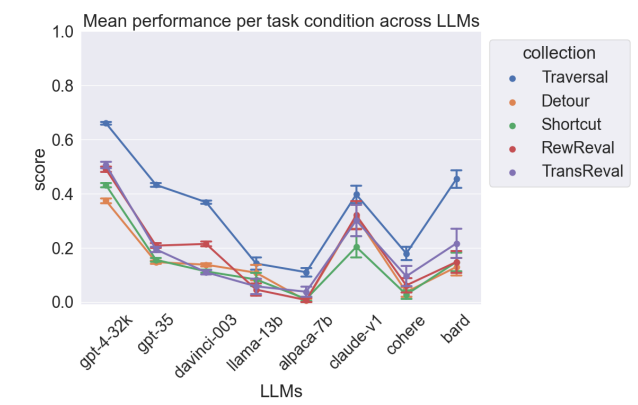
We test planning in 8 LLMs.
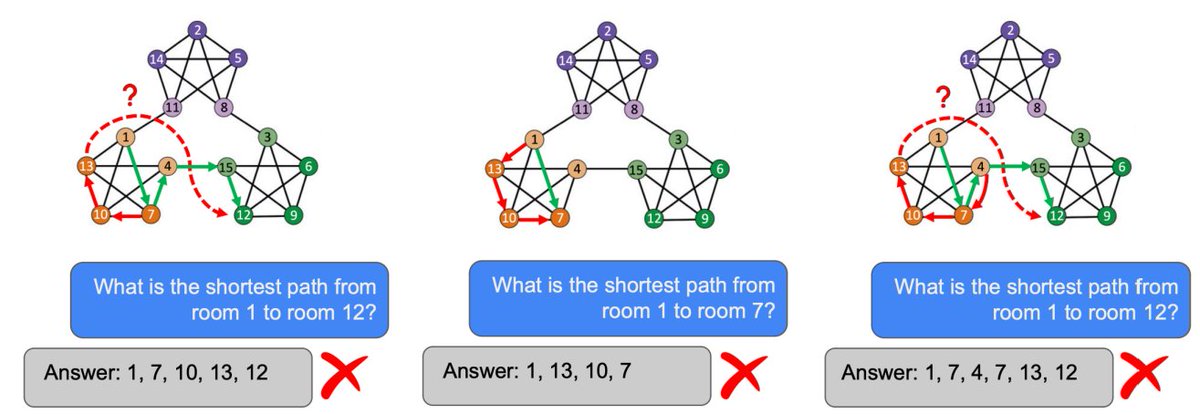
Failures like hallucinating invalid paths/falling in loops don't support emergent planning.
1/n
arxiv.org/abs/2309.15129
12
104
408
91,827
Ida Momennejad retweeted

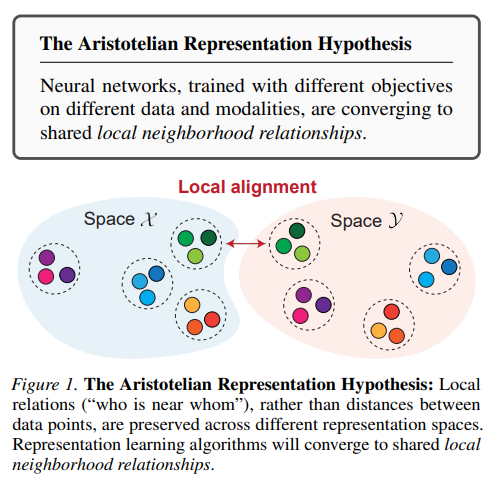
Aristotelian Representation Hypothesis: "representations in neural networks are converging to shared local neighborhood relationships"
"The apparent convergence in Platonic Representation Hypothesis largely disappears after calibration, while local neighborhood similarity, but not local distances, retains significant agreement across different modalities."
2
23
192
10,310
Apr 25
📢Become an AI Sentience scholar.
Apply by Tues April 28!
@De_dicto & I are looking for a grad student/postdoc w expertise in survey studies/modeling & topic.
- 6 months Part-time collab, 8hrs/week June-Dec 2026
- $5k stipend, $3k project costs
Apply: airtable.com/appMNWmygv22x2r…
1/n
2
6
75
9,109
Apr 25
- Remote, mentored applied research project
- Virtual workshops & seminars for interdisciplinary skill-building
- Publication & public showcase
- Cohort in-person convening at the CIFAR Neuroscience of Consciousness: Winter School 2026 (2–5 December 2026, Nairobi, Kenya).
4/n
1
3
673
Apr 25
Deadline: Tues April 28 (3 days from this post)
Apply here:
neuromatch.io/ai-sentience-s…
5
613
Ida Momennejad retweeted

Apr 20
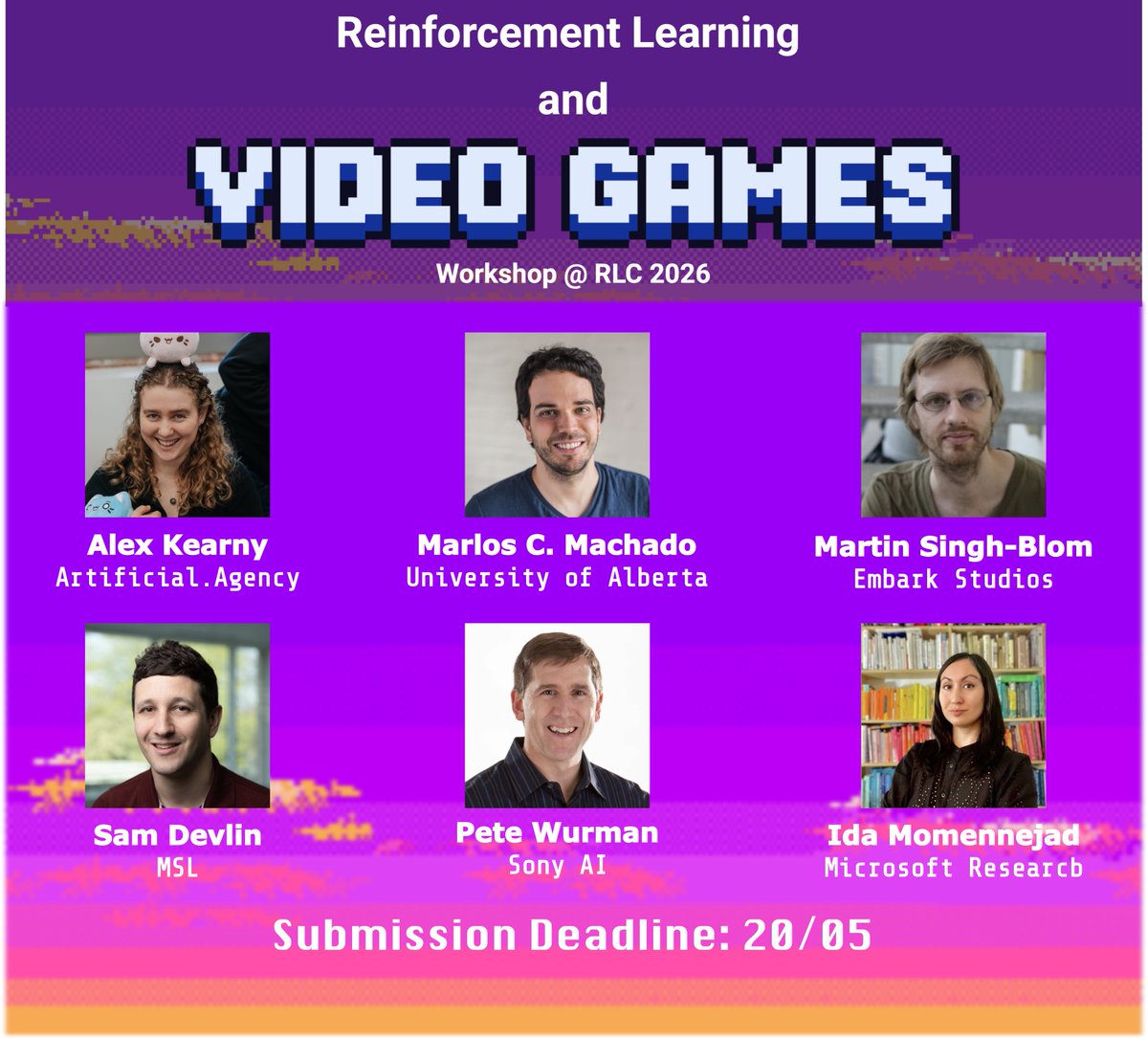
After the last year heads down building and learning, I'm excited to reconnect with the RL community and share my latest opinions at this awesome event and to debate with this fun panel of wonderful people 🥰 Come join us this summer in Montreal!

Wake up Samurai, RLVG IS BACK! 😎
We are happy to announce the awesome speakers of the second edition of the RLVG workshop: Alex Kearny, @MarlosCMachado, @singhblom, @smdvln, Pete Wurman and @criticalneuro!
Join us August 15 in Montreal at @RL_Conference!
1
3
27
3,023
Ida Momennejad retweeted

9 Dec 2025
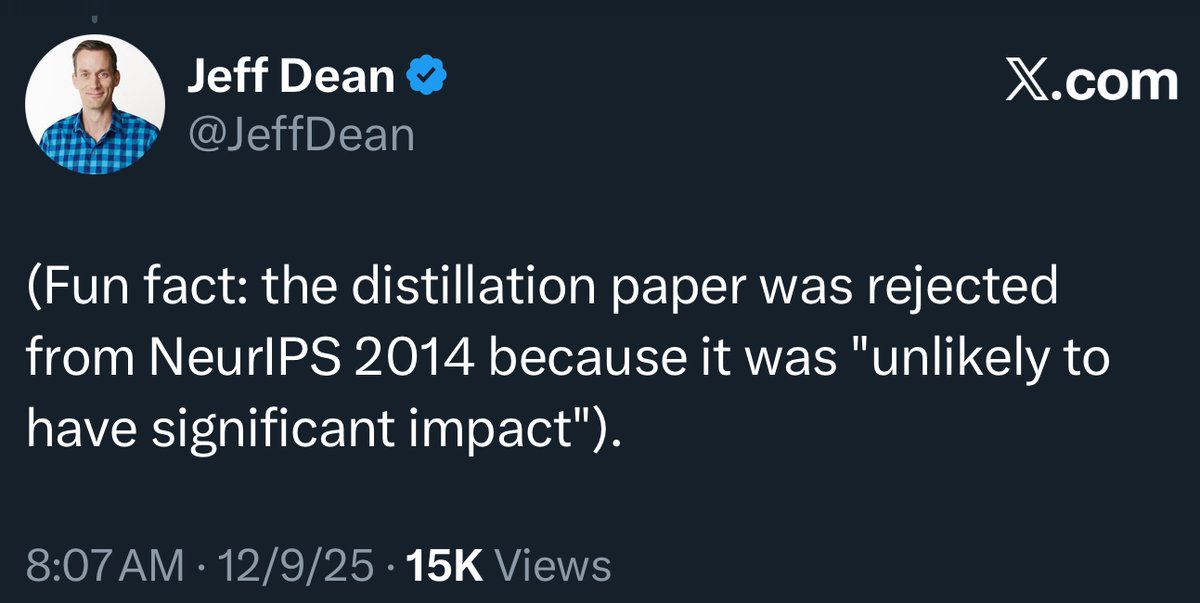
Larry Page & Sergey Brin had the PageRank paper (the algorithm behind Google Search) rejected. A reviewer called it “disjointed.”
Geoffrey Hinton's Dropout was rejected for being “too simple.”
I often feel the academic peer review is like a random process, especially when a paper is very innovative and changes the paradigm; it often looks "wrong" to reviewers in the old paradigm.
124
400
4,350
325,867
Ida Momennejad retweeted

11 Dec 2025
Magic happens when these three things come together. Do seemingly useless stuff based on your research taste and view of what's the right way, look for signs of life and then scale the hell out of it, thereby crushing benchmarks you didn't directly optimize for... and even better, also develop new benchmarks along the way.
10 Dec 2025

I've observed 3 types of ways that great AI researchers work:
1) Working on whatever they find interesting, even if it's "useless"
Whether something will be publishable, fundable, or obviously impactful, is irrelevant to what these people work on. They simply choose something that feels interesting, weird, beautiful, or off in a way they can't ignore. For many of these people, "interestingness" is also often strong research intuition for an important problem that hasn't fully materialized yet, but their ideas often end up being meaningful during the process of exploration.
The canonical example for this in physics is Richard Feynman who got intrigued by the way that plates wobbled. He followed this curiosity on something that seemed like a useless endeavor, and it ended up feeding into deeper physics (and eventually won him a Nobel prize):
"It was effortless. It was easy to play with these things. It was like uncorking a bottle: Everything flowed out effortlessly. I almost tried to resist it! There was no importance to what I was doing, but ultimately there was."
The AI version of this that I've observed before is when someone obsesses over a "minor" failure case, a weird training dynamic, a small theoretical mismatch, or just something that most people think is pointless to chase down. These threads end up becoming interesting and impactful more often than you'd expect. The risk is that one can spend a long time on a pointless rabbit hole, but I've observed that the best researchers often have a very good sense for when an idea is a dead end vs. whether it's promising given more effort.
2) Working on what they feel extremely strongly is the "right" way to do something
These people have a clear picture of how the field *should* progress, and they're willing to work on unpopular things to prove their vision. They'll commit to something that others think is wrong, premature, or not worth it. An interesting quantitative way of measuring this is the citation graph of a paper. If you see a paper that has been around for many years but only started getting cited a lot more in recent years, that means that they were early (and right!). An obvious example is diffusion, the first paper of which was as early as 2015 (Sohl-Dickstein et al., 2015) but the ideas only started getting real traction in 2021 or later.
The failure mode here is getting stuck defending a pet theory long after it's been falsified. And there's obviously many examples in our community of people who do a lot of goal post shifting or beat a dead horse for many decades. But when these ideas are legitimately undervalued, they result in paradigm shifts instead of incremental progress.
3) Crushing SOTA
There's a type of researcher who isn't necessarily the most "philosophically original" or creative, but they are extremely effective at pushing a system to its limits. You can give these people a pre-existing task and benchmarks, check in on them in a month, and they will have crushed SOTA. Obviously this is not about benchmark hacking or short term wins. It's a real skill to take a combinatorial space of noisy research ideas and papers and conduct a rigorous search and ablation process.
I've also found that this type of researcher has great intuition about the field: a sense for which ideas will scale, which tweaks are meaningful, good values for hyperparameters, and quickly figuring out which papers are worth paying attention to.
—————
I think that these archetypes are all concrete expressions of good "research taste". (1) is a taste for interesting questions, (2) is a taste for long term worldviews, and (3) is a taste for careful execution and science. The best researchers I know often have a preference for operating in one of these modes, but frequently weave in and out of each depending on the stage of the project.
15
132
29,336
27 Oct 2025
MSR NYC is hiring senior researchers in AI, both broadly in AI/ML & in specific areas: post-training, test-time scaling, modular transfer learning, science of deep learning. aka.ms/msrnyc-jobs
Apply here: tinyurl.com/MSRNYCjob
Reviews: Rolling basis
Interviews: Nov/Dec
2
10
101
11,061
Ida Momennejad retweeted

15 May 2025
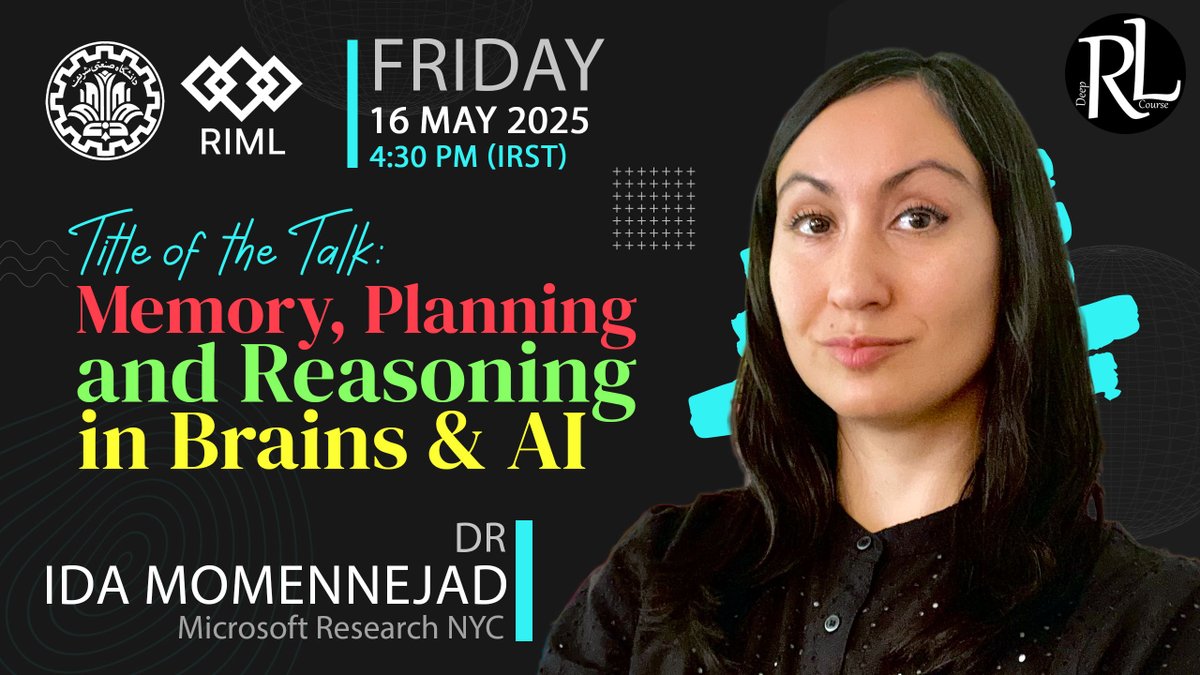
This week, we also have the honor of hosting Ida Momennejad as our guest speaker. Thank you, @criticalneuro
1
2
16
2,021
Ida Momennejad retweeted

8 May 2025
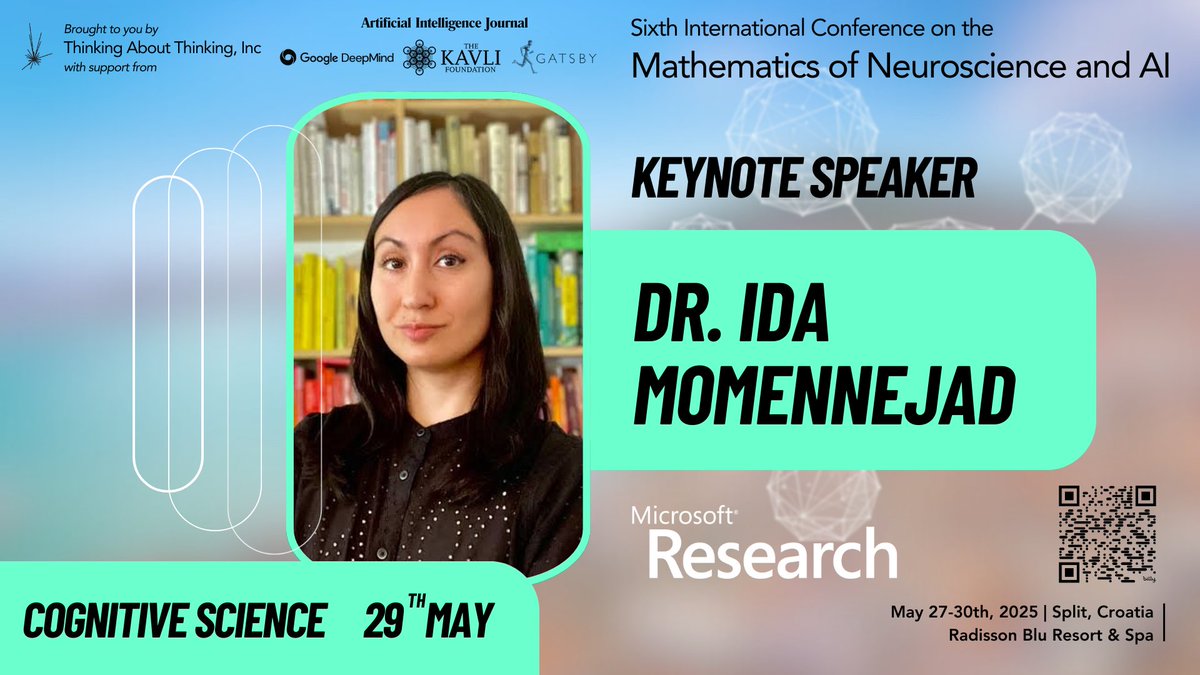
Now let’s give a round of applause to @criticalneuro, who will give an eagerly awaited keynote talk at our upcoming conference on #neuroscience and #AI.
Ida is Principle Researcher at @MSFTResearch, where they develop novel and innovative #generative AI algorithms inspired by their research in cognitive neuroscience, reinforcement learning, and NeuroAI.
Their recent areas of focus include many of AI's frontier problems: #multimodal generative models, #collective innovation by groups of LLMs, human-AI #alignment (in games), and multiscale #memory!
This broad engagement reflects Ida’s multi-disciplinary background, with previous work and studies in Electrophysiology, Memory, and Navigation at @Columbia, neuroscience at @PrincetonNeuro, a PhD in psychology at @BernsteinNeuro, a MSc in Philosophy of Science at @UniUtrecht and a BSc in software engineering at Tehran.
Ida is an inspiration to many, and we’re truly honored to have her at the conference. Follow the link below to learn more, submit something, and come and join the fun:
1
5
23
2,164
Ida Momennejad retweeted

27 Apr 2025
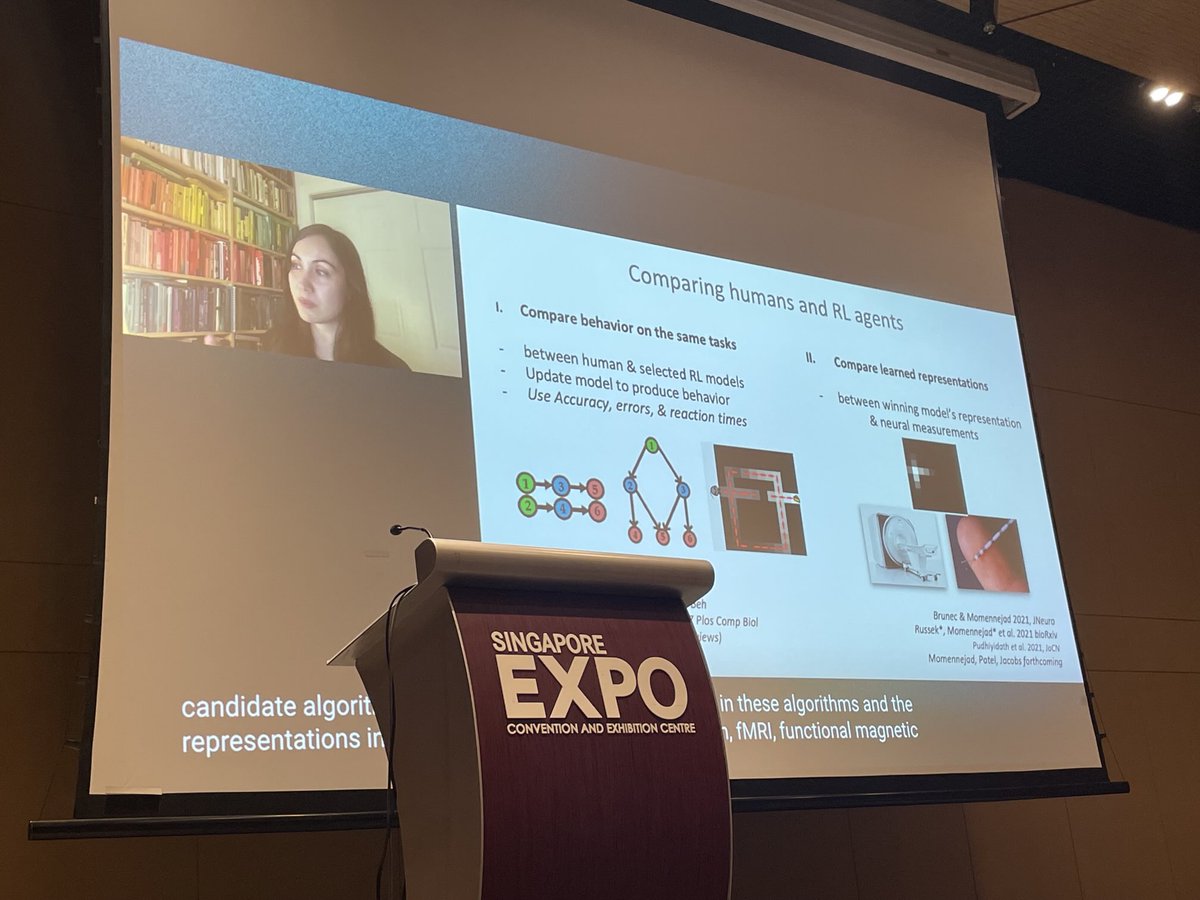
Fascinating talk from @criticalneuro on neuroscience-inspired generative AI at the SSI-FM workshop #ICLR2025 🧠🤖
1
4
49
5,766
Ida Momennejad retweeted

11 Mar 2025
Big ideas meet neuroscience at Neuromonster Summit: groundbreaking event exploring the future of brain science, AI, & human potential! Join visionary thinkers, leading neuroscientists, and tech innovators 🧠✨
🎟️ Reserve your spot : neuromonster.org
#Neuroscience #AI

1
3
9
1,513
Ida Momennejad retweeted
25 Feb 2025
📢Abstract submissions extended to 16th March AOE for our Annual Conference on the Mathematics of Neuroscience and AI (May 27-30th; National Opera Theatre, Split, Croatia)
We have a truly outstanding line-up of keynotes, session chairs, and invited speakers, and would love to hear about your work too.
Link in comments below :)
1
9
18
4,619
20 Dec 2024
Honored that a piece I wrote made it to NYTimes. It's about how my mom's stroke changed my relationship to time, science, and nature. What a privilege to honor my mom in Modern Love.
Below is a gift link. Let me know your thoughts🙏🏼
nytimes.com/2024/12/20/style…
13
7
47
2,383
Ida Momennejad retweeted

20 Dec 2024
Just exquisite from start to finish. Gift link to read below: (thank you, @criticalneuro)
nytimes.com/2024/12/20/style…
1
1
7
1,051
Ida Momennejad retweeted

11 Nov 2024
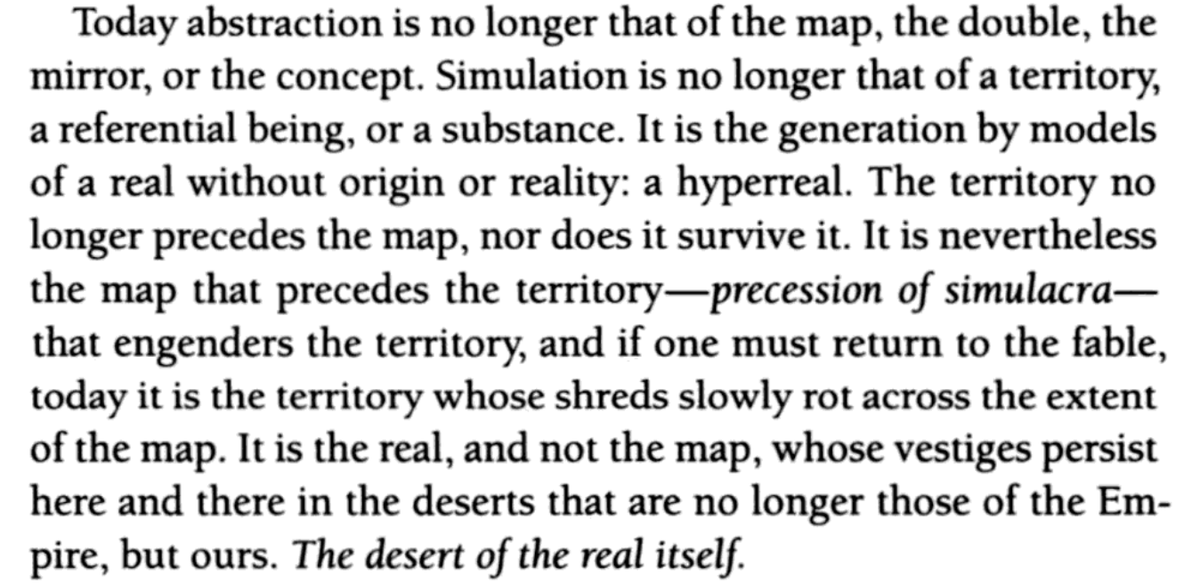
And his arresting declaration of the hyperreal:
2
1
9
2,176
Ida Momennejad retweeted

6 Dec 2024
New paper out in @NeuronCellPress: A general theory of sequential working memory in prefrontal cortex and RNN/SSMs with their exact neural mechanism. Plus unifying this new mechanism with the alternate mechanism of hippocampal cognitive maps! (1/9)
cell.com/neuron/fulltext/S08…
3
64
256
47,966