On the quest to understand the fundamental mathematics of intelligence and of the universe with curiosity. burnyverse.com Upskilling @StanfordOnline
Joined June 2021
- Tweets 56,950
- Following 9,544
- Followers 19,365
- Likes 106,414
6,276 Photos and videos

Pinned Tweet

Hey! Follow me on the quest to understand the fundamental mathematics of intelligence and of the universe with curiosity! I explore how everything works, artificial intelligence, intelligence, mathematics, machine learning, physics, science, technology, engineering, understanding AI using mathematical theory from the perspective of physics or pure mathematics or other sciences and by reverse engineering using mechanistic interpretability from the perspective of neuroscience or other sciences, AGI, superintelligence, LLMs, reinforcement learning, AI beyond LLMs and autoregression and transformers and pure deep learning like neurosymbolic AI or physics inspired AI like diffusion models and liquid neural networks or biology inspired AI like evolutionary AI and selforganizing AI or open-ended novelty search, AI for science like physics and biology, comparing AI and biological intelligence, diversity of minds or intelligences or information processing systems, making AI do what we want, AI engineering, creativity, curiosity, neuroscience, fundamental physics, theoretical mechanics, statistical mechanics, quantum mechanics, biology, foundations of everything, philosophy, philosophy of science, bayesianism, ontology, cognitive science, consciousness, philosophy of mind, foundations of mathematics, theories of everything, interdisciplinarity, transdisciplinarity, multidisciplinary, omnidisciplinarity, grokking, AI for engineering like software engineering and programming, AI for good like healthcare, AI agents, future of humanity and AI, futurology, politics, geopolitics of AI, transhumanism, world views like Effective Altruism and Effective Accelerationism, potential benefits and risks of advanced technologies like AI and everything, forecasting, open science, open source, democratizing technology, concentration vs decentralization of power, applied mathematics, pure mathematics, metamathematics, category theory, probability theory, linear algebra, real analysis, optimization theory, statistics, information theory, systems theory, complexity science, emergence, selforganization, dynamical systems theory, open systems, art, logic, formal ethics, cybernetics, computational neuroscience, qualia, meditation, psychology, mathematical psychology, mathematical psychonautics, identity, wellbeing, memetics, epistemic humility, morphological freedom, cosmology, collective intelligence, and so on.
Questions I explore the most
- How does the world work? How does everything work?
- What is the fundamental mathematics of intelligence? What are all the different types of all the possible current and future intelligent systems?
- How does artificial intelligence work? What's the current state of empirical research and mathematical theory in artificial intelligence? What is the state of the art in artificial intelligence engineering practice?
- What is the fundamental mathematics of the universe? What are all the equations, and mathematical structures more generally, governing reality across all scales in physics, and in all natural science more generally?
- How to apply AI for reverse engineering mathematics behind everything? How to apply AI for good as ideally as possible as much as possible?
- How to define and understand artificial general intelligence and superintelligence? How to make it do what we want?
- What is the fundamental mathematics of the brain? How to upgrade human intelligence?
- How does AI and biological intelligence compare? How can humans and AIs form even greater collective intelligence?
- How to connect all sciences, formal and natural? What is the fundamental mathematics behind emergence and complexity? How does biology and other scientific fields emerge from physics and chemistry?
- What is the fundamental mathematics of creativity in science and art? How to make machines creative beyond human limitations and comprehension for scientific discovery, physics, mathematics, art, philosophy?
- What are all the concepts in mathematics? What are all the possible foundations and mathematics with all sorts of mathematical universes and which ones are the best in what contexts?
- What is the fundamental mathematics of consciousness?
- What is the fundamental mathematics of building a great future for all where everyone flourishes? How to make the world better for all? How to maximize the benefits, and minimize the disadvantages, of technologies and political systems? What is and what will be the geopolitics of AI? What are the probabilities of different future scenarios?
- What are the answers to the problems in philosophy?
Artificial intelligence research and engineering
- How does artificial intelligence (and intelligence more generally) that might soon become very general and superintelligent, works from an interdisciplinary lens using all sorts of mathematics and methodologies from computer science, statistics, information theory, physics, mechanistic interpretability, cognitive science, geometry, pure mathematics and so on, what is the mathematical theory of artificial intelligence? How to mathematically and empirically understand current and future AI systems, why and how they work, and how to make them much more reliable, robust, steerable, creative, intelligent, safe etc. across all levels of their development, such as with formal verification? What are the current state of the art results and methods in AI engineering and research in academia and industry, such as mathematical results, empirical results, and tools used like PyTorch? What will be future developments in scaling, data, algorithms, architecture, hardware, wrappers, agents, multiagent systems, etc.? How good in what usecases are various AI paradigms such as statistical AI, connectionist AI with deep learning, symbolic AI, neurosymbolic AI, evolutionary AI, cognitive AI, bayesian AI, biologically-inspired AI such as neuromorphic AI, quantum AI, embodied AI, distributed AI, etc.? How can we merge different paradigms? What would be considered as Artificial General Intelligence and Superintelligence? How to define, measure and build intelligence? How much does AI safety play a role? What is the intersection of artificial intelligence x biological intelligence x collective intelligence? How to create theory of everything in intelligence?
State of the art of AI
- I am interested in the current state of the art top artificial Intelligence systems (machine learning, data science, statistics, deep learning, generative AI (large language models, image/sound/video models, multimodal models), reinforcement learning models, expert systems, neurosymbolic AI, etc. I want to use them in practice for the benefit of others, such as for automating mundane tasks (dishes, laundry), healthcare (AMIE, AlphaFold, SLIViT), programming (coding AI copilots such as Claude Code, Codex), science (autonomous science such as AI scientist), physics (FermiNet), mathematics (AlphaProof), technology development (AlphaChip, virtual reality), chatbot assistants grounded in reality, education, information searching, minimizing various risks and crises, transportation, manufacturing, security, cybersecurity, energy optimization, supply chain optimization, weather forecasting, agriculture, translation, recommendations, finance, call centers, entertainment, legal services, games, robotics for good, altruism, etc. by predicting, forecasting, generating, classification, analysis, clustering, segmentating etc., with AI engineering methods by building and training models, finetuning, prompt engineering, retrieval augmented generation, agent and multiagent frameworks, etc. using PyTorch, Keras, Scikit-learn, FastAI, OpenAI or Anthropic API, Llama locally or deployed, Llamaindex, Langchain, Autogen, LangGraph, vector databases, etc.
Mathematical and other fundamentals, steerability of AI
- I am interested in trying to mathematically and empirically understand current and future AI systems, why and how they work, and how to make them much more reliable, robust, steerable, creative, intelligent, safe etc. across all levels of their development! Better steering wheel for AI systems would be great! RLHF, prompt engineering, systems made of LLMs, and current reverse engineering methods don't seem to be enough! Mechanistic interpretability, neurosymbolic AI, weak to strong generalization paradigm, and formal verification sound promising! I'm curious about the mathematical theory of artificial intelligence!
Big picture of artificial intelligence
- I love AI for science like biology and physics, mathematics, healthcare, education, technology development for good, understanding the nature of intelligence, increasing the standards of living for all, progress of civilization and so on. I want to see more of that please! I want to see AI applied much more in science, technology, engineering, mathematics, healthcare, altruistic usecases, etc. I want to see it as a tool that generates abundance for everyone. I want the technology to build better future for all. I want the technology to fight poverty and other world problems and risks. I want the research to help understand the nature of intelligence. I want the technology to empower all humans that don't want to see the world burn or are not dictators. I want the power of it be used for good. I want the power to not be concentrated. I want to see it developed safely and ethically in steerable way. I want people to get compensated properly. I'm trying to push that and help to work towards these goals more! AI can be used for both bad, good, and neutral things. Let's maximize the good usecases!
- What are the benefits, risks, impact and future of artificial intelligence? How will the current artificial intelligence revolution transform humanity technologically, economically, culturally, governmentaly? How to make sure that AI benefits everyone, such as by automating mundane tasks (dishes, laundry), science (AlphaFold in biology), physics (FermiNet), mathematics (AlphaProof), healthcare (diagnosis), technology development (recursive self-improvement), programming (copilots, autonomous software engineers), preventing various risks (biorisks), useful chatbot assistants and robots factually grounded in reality etc.? How does existing technology already make us cyborgs?
- Is artificial intelligence a tool like scissors, or like internet, or like electricity, or as powerful as nuclear weapons, or even more powerful and AI systems will populate the whole galaxy, or are we growing new species that will require moral rights? How can we collectively create optimistic stories about our future and build that great future together? Will there be post-scarcity economy where technology generates abundance for all, not just for select few? How to make sure that people in the AI and in general the fourth industrial revolution with exponential automation don't suffer? Maybe something like universal basic income or services will be needed to catch up with lob loss with increasing automation? Is universal basic income or services realistic? How to minimize power concentration in the hands of the few? How to prevent realistic risks? Is rogue superintelligent AI likely? How to prevent regulatory capture? Is singularity near? How will singularity look like?
Science, Technology, Engineering, Mathematics, Physics, Biology, STEM
- How does reality, science, technology, engineering, mathematics work? What is the structure of everything, what equations govern everything across all scales, what is the source code of our reality? How does astrophysics, celestial mechanics, etc. emerge from lower scales? How does sociology emerge from neuroscience and biology, and how that emerges from chemistry, and that from physics? What are the answers to the questions in cosmology? What is the best simplest most predictive and explanatory, most useful, integrating, unifying model in all natural sciences, using all its applied mathematics methods, like linear algebra, calculus, differential equations, geometry, topology, discrete mathematics, probability theory, statistics, graph theory, etc. with the help of pure mathematics? How can we use the methods of physics in as many fields as possible? How to effectively map all of knowledge and follow state of the art in many fields at once? How to most effectively create a generalist synthesis, but also narrowly model reality concretely on each level of abstraction on all scales, scruting the seemingly inscrutable reality's quantum fields with it's emergent laws? How do we turn the seeming alchemy of empirical sciences into deep understanding of its underlying mechanisms by the most optimal mathematical compression? How can AI accelerate this process? How can we infer the best tools for different domains for different usecases? How can we understand and unify all mathematical subfields using abstract mathematics such as category theory? How can we integrate together all methods from different physics subfields, such as tools from classical mechanics, statistical mechanics, quantum mechanics, quantum field theory, and so on? How to solve quantum gravity? Are string theory and loop quantum gravity good solutions to quantum gravity? How to create a theory of everything, theory of everything in fundamental physics, theory of everything in all of physics, theory of everything in natural sciences, theory of everything in all of science? Why did big bang happen? What if alternatives to big bang like big crunch happened instead? Did it actually happen? Why is universe governed by few fundamental forces between tens of elementary particles? Why is the standard model and general relativity the best current description of it that we have so far? Why do we struggle with unifying quantum mechanics and general relativity so much? Is theory of everything even possible? What even is space? What even is time? Is there such thing as "before the big bang" if time might not have existed before it? Why and how did chemical elements exactly emerge? Why and how did life exactly emerge and how does it work? Why is evolution such unreasonably effective algorithm? Why and how exactly is there such mindblowing specialized diversity of life?
Brain, mind, and body
- What is life? How does the brain work? How to integrate the lenses of biology, neuroscience, chemistry, computational neuroscience, statistics, probability theory, physics, machine learning, systems theory or other mathematics in terms of understanding the brain? How does learning work, what kind of intelligence is biological intelligence compared to artificial Intelligence, what is the intersection between biological and artificial intelligence? How to reverse engineer and amplify human intelligence, agency, wellbeing and longevity to catch up to exponentially increasing machine intelligence using neurotechnology, biotechnology, and other methods? How does wellbeing, agency, drive, productivity, meaning etc. work on the level of the brain and the whole society according to cognitive science? On what level are factors influencing these phenomena genetic and on what level are they environmental? What is the physical substrate of experience? How does experience arise? What's the best philosophy of mind position? What are the best psychotechnologies and neurotechnologies strenghtening or transforming the neuroscience and software of the brain, for example intelligence, wellbeing and longevity, like brain computer interfaces, meditation, philosophy, psychotherapy, selfhelp, culture, substances, cold exposure, or just healthy lifestyle, what are the realistic limits? How can we upgrade our sentient substrate collectively? How to achieve longevity? Is immortality solvable engineering problem and how?
Technorealism, future of humanity, AI, sentience, futurology, politics
- How to be not naively technooptimistic or technopessimistic when it comes to technology, but something in the middle, technorealistic? How can we gather the benefits of technology and minimize the risks of artificial intelligence and technology in general? How can we merge the ideas of Effective Altruism and Effective Accelerationism? How can we the most effectively use science, technology and other methods to adapt or solve the biggest world problems and prevent risks, from suffering from for example poverty, wars, injustice, crises? How to prevent existential risks such as natural or engineered pandemics, nuclear war, environmental collapse? How is polycrisis actually real and how do we solve it? How to use AI and other technology to solve and prevent all these problems? How to prevent technology itself becoming too powerful or in the hands of the wrong people like dictators? Should it be open source? What is the best political system? Is it liberalism, collectivism, individualism, global governance, benevolent dictators, AI assisted governance, global AGI governance, decentralization, democracy, anarchism, minimal state, and so on? Should we regulate more, or less, and regulate what and when?
- How do we collectively steer all of sentience not into oppressive dystopia without democracy, or complete extinction, or plateau without progress, but into collective protopia, collective growth of science, technology, intelligence, wellbeing, connection, knowledge, drive, motivation, freedom, agency, survival, longterm adaptability, stability, sustainability, love, peace, safety, meaning, fulfillment, selfactualization?
Metamathematics and philosophy
- What is the most useful logic and foundations of mathematics and metamathematics like set theory, homotopy type theory or category theory? What are the most beautiful, novel and exotic parts of formal sciences? Can we mathematize ethics? What is the best positions in metaphysics with ontology? What is the best epistemology? What is the best interpretation of quantum mechanics? How does identity work? What are the best positions in philosophy for science, meaning, wellbeing and freedom? Why is there something rather than nothing? Why can we ask this question? Does asking this even make sense? How to create theory of everything, theory of everything in philosophy, theory of everything in culture, meta theory of everything?
Beyond polarization
- How can we collectively effectively communicate and understand what is empirically true by steelmanning eachother, accelerating omniperspectivity, bridging between eachother, instead of polarizing tribalism more disconnected from reality, leading to improved collective decision making? How do we understand our limited computational power of our brain, limited data and perspective, when we consider ourselves as information processing agents that model the world's enormous growing complexity together to collectively flourish in the future, future of humanity, AI, sentience, futurology, politics, and future of universe? How can artificial intelligence help us in this process?
The ultimate existential challenge
- How to beat the ultimate existential challenge, the second law of thermodynamics, how to survive the death of the universe? How can we together achieve resistance to entropy, optional transhumanistic merging with eachother or machines or the universe, and so on, for every being, using the most optimal collective emergent selforganized sentient coordinated thermodynamic cybernetic architecture that might expand into the whole universe and become a beautiful cosmic constellation of linked posthumanist clusters of sentient matter of any form it wishes to shapeshift into, such as raw computronium?
Infinite curiosity
- Why is there something rather than nothing? Why can we ask this question? Does asking this even make sense? Why did big bang happen? What if alternatives to big bang like big crunch happened instead? Did it actually happen? Why is universe governed by few fundamental forces between tens of elementary particles? Why is the standard model of particle physicsand general relativity the best current description of it that we have so far? Why do we struggle with unifying quantum mechanics and general relativity so much? Is theory of everything even possible? What even is space? What even is time? Is there such thing as "before the big bang" if time might not have existed before it? Why and how did chemical elements exactly emerge? Why and how did life exactly emerge and how does it work? Why is evolution such unreasonably effective algorithm? Why and how exactly is there such mindblowing specialized diversity of life? Why and how did intelligence emerge and how does it work? What are the best definitions of intelligence? Why are brains and artificial intelligence systems so unreasonably effective in different complementary ways? How can they be upgraded? What happens to consciousness after death? Why and how did consciousness and experience emerge and how does it work? What are the best definitions of consciousness? What is the solution to the hard problem of consciousness? Does this question even make sense? What even is consciousness in the first place? Why are be able to design so many technologies that allow us to manipulate the universe to such degree? Why does emergence happen in the first place? How will the universe end? Is there such a thing as end of the universe? Is the multiverse theory true? Why is mathematics so unreasonably effective at describing and predicting nature? Is there a better mathematical foundation than set theory, type theory or category theory? Is mathematics invented or discovered? Is mathematics fundamental language of reality or just our mental tool to survive? What even is reality? What is being? Why can we even ask all of these questions? Do many of these questions even make sense and are they any final answers to them, or answers we get are just getting closer to to us incomprehensible "truth", or they have many parallel answers, or many answers are differently relatively valid depending on the assumptions we start with, or are they fundamentally unanswerable?
Effective Curiosity, Effective Omni
- Effective Curiosity = Maximizing the total understanding of reality by building models of as many physical phenomena as possible across as many scales of the universe as possible, that are as comprehensive, unified, simple, and empirically predictive as possible! Intelligence and fundamental physics, which are subsets of this, are the most fascinating to me!
- Effective Omni = Steelman and if possible verify all models from all disciplines, all theoretical, applied, natural, formal, social sciences, all movements with worldviews shaping the future, all overall philosophical or other perspectives, and synthesize them all on a higher level of complexity as compatibly as possible for collective survival, wellbeing, flourishing and growth of all of sentience, increasing intelligence and ascending the Kardashev scale! Let's integrate it all into one useful framework! Reduce suffering in the universe! Increase prosperity in the universe! Increase understanding in the universe! The best way to do that is with AI and other technologies from the fourth industrial revolution! Trying to understand the equations of intelligence, our world, and the universe, and applying them to build technology for the benefit of all!
Effective Curiousity (Supercuriousity)! Effective Understanding (Superunderstanding)! Effective Intelligence (Superintelligence)! Effective Longevity (Superlongevity)! Effective Wellbeing (Superwellbeing)! Effective Flourishing (Superflourishing)! Effective Omni (Superomni)! Effective Omni!
- Effective Curiousity (Supercuriousity), Effective Understanding (Superunderstanding) = The quest to uncover all mathematical patterns of the universe and all of physical and platonic reality!
- Effective Intelligence (Superintelligence) = Intelligence so advanced in every dimension that it surpasses human comprehension, vastly more advanced than any currently existing physical system!
- Effective Longevity (Superlongevity) = Extending lifespan, achieving immortality, and overcoming the heat death of the universe!
- Effective Wellbeing (Superwellbeing) = Complete fulfillment of Maslow’s hierarchy of needs, and similar models of wellbeing, at their highest possible levels!
- Effective Flourishing (Superflourishing) = Collective superwellbeing!
Contact and links
- My website with my exocortex in wiki format: burnyverse.com, burnyverse.com/Exocortex , burnyverse.com/Home
- Substack: substack.com/profile/1609716…
- BlueSky: burnytech.bsky.social
- Youtube channel: youtube.com/@burnytech
- Discord: burnytech
- Discord server: discord.gg/2vyjxYTDMU
- Patreon: patreon.com/BurnyTech
- LinkedIn: linkedin.com/in/libor-burian…
- Telegram: @burnytech
- Mastodon: mathstodon.xyz/@Burny
- Facebook: facebook.com/burian.libor/
- Gmail: burian.lib@gmail.com
- Github: github.com/BurnyCoder
- HuggingFace: huggingface.co/BurnyCoder

10
2
38
58,897
Burny - Effective Curiosity retweeted

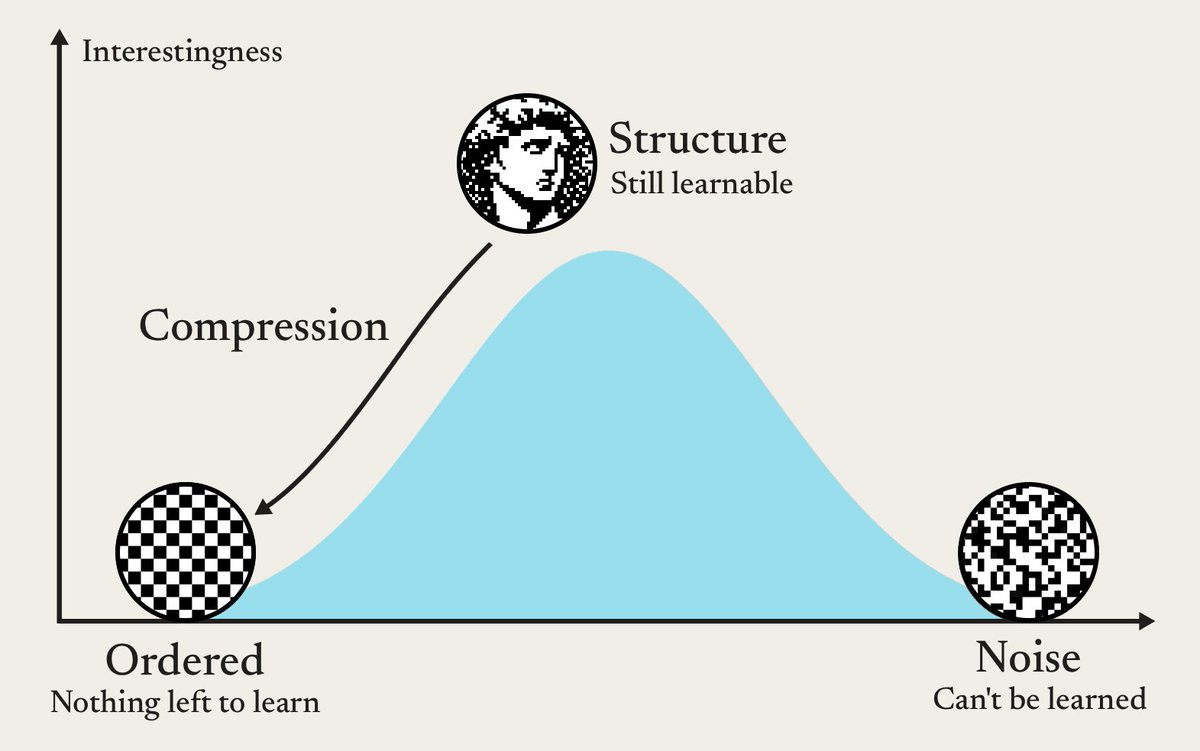
@SchmidhuberAI's "Driven by Compression Progress" claims to explain beauty, curiosity, art, music & more.
He states that intelligent beings are compression machines; driven to compress their data history further.
Storing & compressing the past is helpful for predicting future events, solving problems and maximising extrinsic reward.
Actions that uncover previously unknown regularities in the data history generate intrinsic reward (aka curiosity reward), proportional to the compression gain.
Consider the Statue of David. At first, it's just a man. Look closer, you see the coiled tension, furrowed brow, taut neck, sling over the shoulder; you realise this is David before the throw.
Stare too long, you've extracted all you can. It remains beautiful, but uninteresting.
Interestingness is just the first derivative of beauty.
2
6
33
2,265
Latent reasoning will be the next frontier

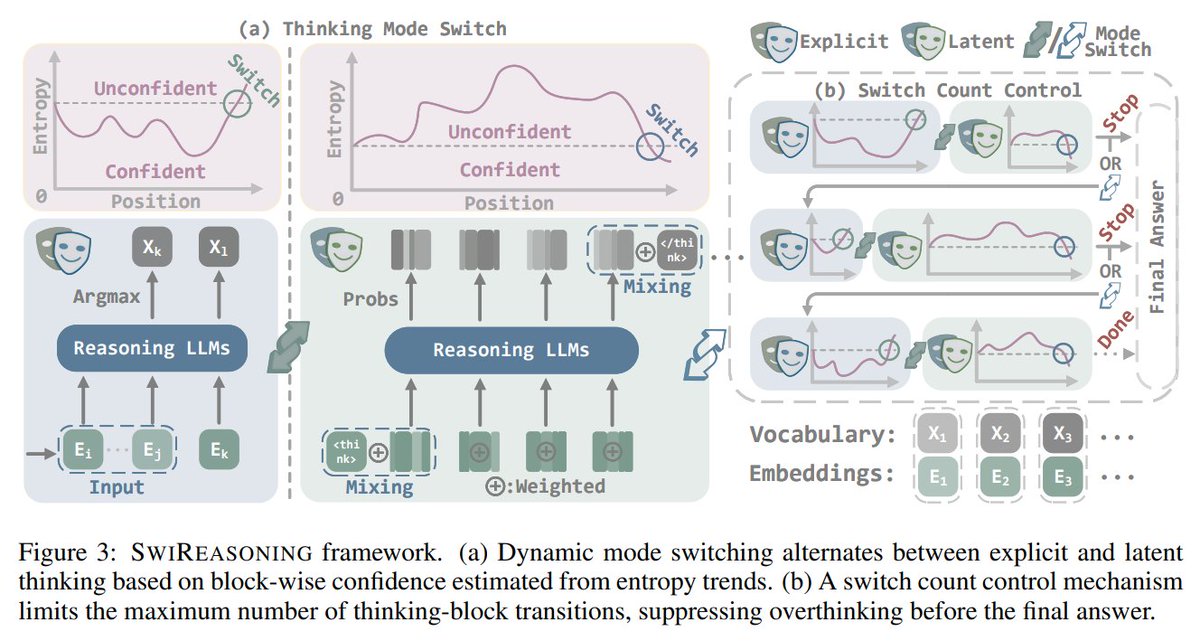
SwiReasoning: Switch-Thinking in Latent and Explicit for Pareto-Superior Reasoning LLMs
"Recent work shows that, beyond discrete reasoning through explicit chain-of-thought steps, which are limited by the boundaries of natural languages, large language models (LLMs) can also reason continuously in latent space, allowing richer information per step and thereby improving token efficiency."
"Despite this promise, latent reasoning still faces two challenges, especially in training-free settings: purely latent reasoning broadens the search distribution by maintaining multiple implicit paths, which diffuses probability mass, introduces noise, and impedes convergence to a single high-confidence solution, thereby hurting accuracy; and overthinking persists even without explicit text, wasting tokens and degrading efficiency."
"To address these issues," they "introduce SwiReasoning, a training-free framework for LLM reasoning which features two key innovations: SwiReasoning dynamically switches between explicit and latent reasoning, guided by block-wise confidence estimated from entropy trends in next-token distributions, to balance exploration and exploitation and promote timely convergence."
"By limiting the maximum number of thinking-block switches, SwiReasoning curbs overthinking and improves token efficiency across varying problem difficulties."
"On widely used mathematics, STEM, coding, and general benchmarks, SwiReasoning consistently improves average accuracy by 1.8%-3.1% across reasoning LLMs of different model families and scales."
"Furthermore, under constrained budgets, SwiReasoning improves average token efficiency by 57%-79%, with larger gains as budgets tighten."
1
3
232
SwiReasoning: Switch-Thinking in Latent and Explicit for Pareto-Superior Reasoning LLMs
"Recent work shows that, beyond discrete reasoning through explicit chain-of-thought steps, which are limited by the boundaries of natural languages, large language models (LLMs) can also reason continuously in latent space, allowing richer information per step and thereby improving token efficiency."
"Despite this promise, latent reasoning still faces two challenges, especially in training-free settings: purely latent reasoning broadens the search distribution by maintaining multiple implicit paths, which diffuses probability mass, introduces noise, and impedes convergence to a single high-confidence solution, thereby hurting accuracy; and overthinking persists even without explicit text, wasting tokens and degrading efficiency."
"To address these issues," they "introduce SwiReasoning, a training-free framework for LLM reasoning which features two key innovations: SwiReasoning dynamically switches between explicit and latent reasoning, guided by block-wise confidence estimated from entropy trends in next-token distributions, to balance exploration and exploitation and promote timely convergence."
"By limiting the maximum number of thinking-block switches, SwiReasoning curbs overthinking and improves token efficiency across varying problem difficulties."
"On widely used mathematics, STEM, coding, and general benchmarks, SwiReasoning consistently improves average accuracy by 1.8%-3.1% across reasoning LLMs of different model families and scales."
"Furthermore, under constrained budgets, SwiReasoning improves average token efficiency by 57%-79%, with larger gains as budgets tighten."
1
1
3
475

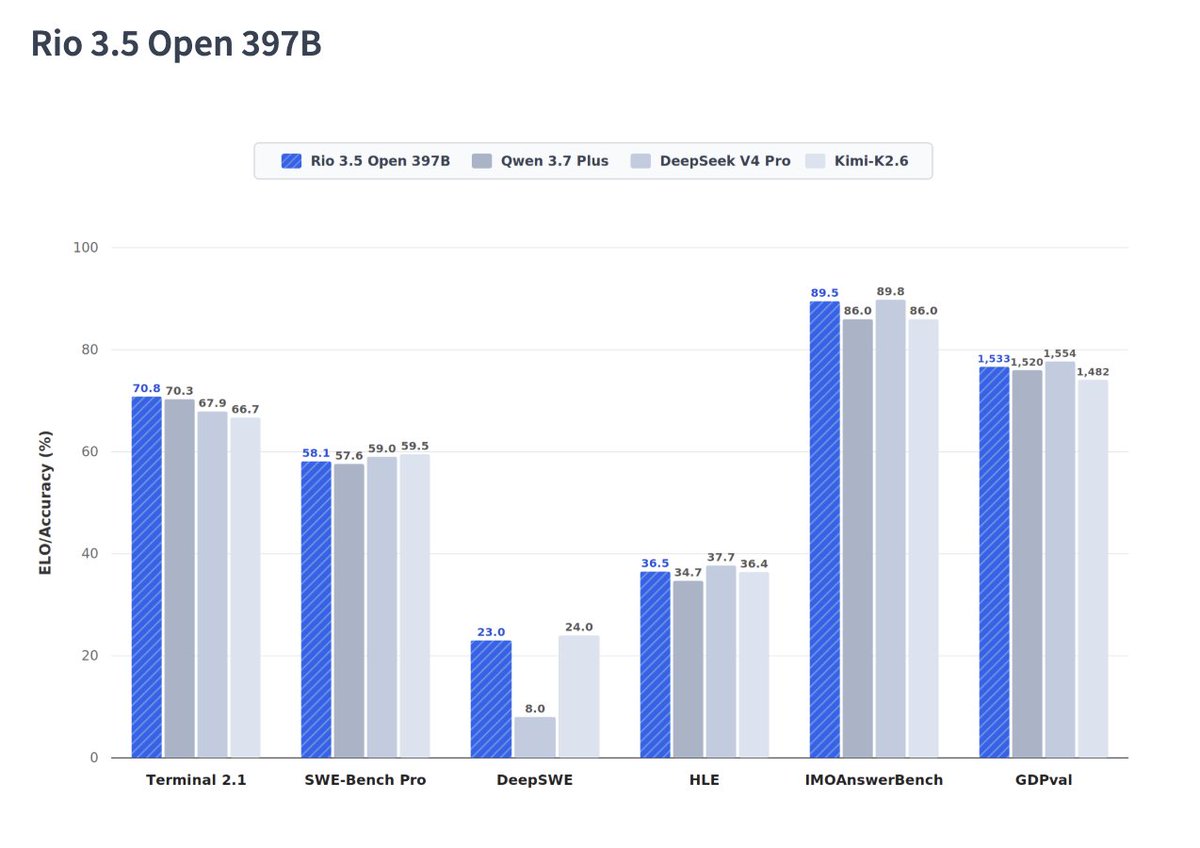
Wait what? Rio 3.5 Open 397B, developed by IT company of Rio de Janeiro's city government is now SOTA open source and even outperforming Qwen 3.7?
What is happening today.
Never heard of them before.
1
116

SITUATION DETECTED: The city of Rio de Janerio has post-trained a model.
Based on Qwen 7/2, Rio 3.5 Open 397B adds SwiReasoning on top of the base Qwen model — a framework that dynamically switches between standard chain-of-thought and latent-space reasoning, guided by entropy-based confidence signals, so the model only "thinks out loud" when it needs to and otherwise reasons silently in hidden space for better token efficiency.

97
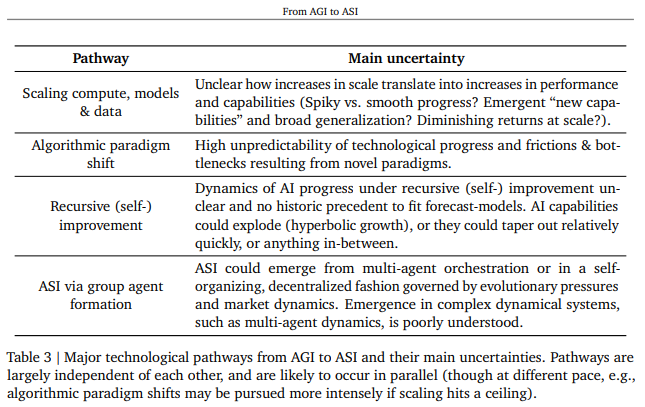
From AGI to ASI paper
"Over the last decade, building human-level artificial general intelligence has moved from far-fetched speculation to being a concrete next-decade target for many of the largest AI organisations. Achieving this goal would have profound and far-reaching impacts on human society, which raises many complex questions for the decade ahead."
"This report investigates how AI itself might continue to develop in a post-AGI world along the continuum of machine intelligence. The endpoint of this continuum, Universal AI, is theoretically well understood, which provides some formal grounding for the main focus of this report: the transition from human-level AGI to artificial general superintelligence, which, intuitively, can be understood as a system that is more intelligent and cognitively capable than large organisations of humans."
"After characterizing ASI, the report discusses four potential pathways from AGI to ASI: scaling AGI, AI paradigm shifts, recursive improvement, and ASI emerging from large-scale multi-agent collectives. The report then discusses possible frictions and bottlenecks along these pathways. Determining whether the impact of these frictions will be negligible or substantial raises a number of concrete open research questions."
"Due to large uncertainties for predicting ASI progress, it cannot be ruled out that AI progress might continue to accelerate over the next years. This could imply that the image of a single transformative step change, caused by the introduction of human-level AGI into our society, could be inaccurate. More apt might be the prospect of a series of transformative societal changes caused by AI-enabled progress and breakthroughs across many areas of science and technology. Preparing for this prospect requires a massively interdisciplinary endeavour of global scope and interest."
1
1
3
241
From AGI to ASI arxiv.org/abs/2606.12683
2
118
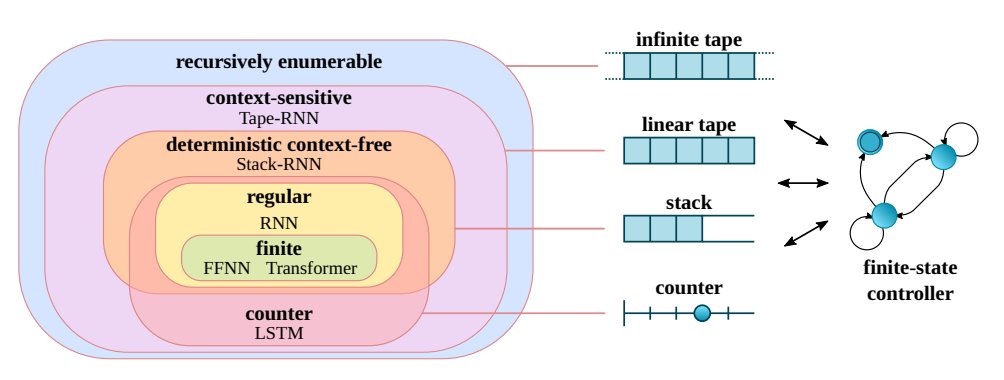
Neural Networks and the Chomsky Hierarchy arxiv.org/abs/2207.02098
1
2
137
More ChatGPT 5.5 math

One of my open math problems apparently got resolved by ChatGPT 5.5 Pro (Ryan O'Donnell prompted it better than I did!), though the proof was so hard for me to read that it seemed easier to just prove it myself. More thoughts on implications for math here: aifails.substack.com/p/even-…
1
270
Burny - Effective Curiosity retweeted

One of my open math problems apparently got resolved by ChatGPT 5.5 Pro (Ryan O'Donnell prompted it better than I did!), though the proof was so hard for me to read that it seemed easier to just prove it myself. More thoughts on implications for math here: aifails.substack.com/p/even-…
6
18
125
13,915
Burny - Effective Curiosity retweeted

Jun 12
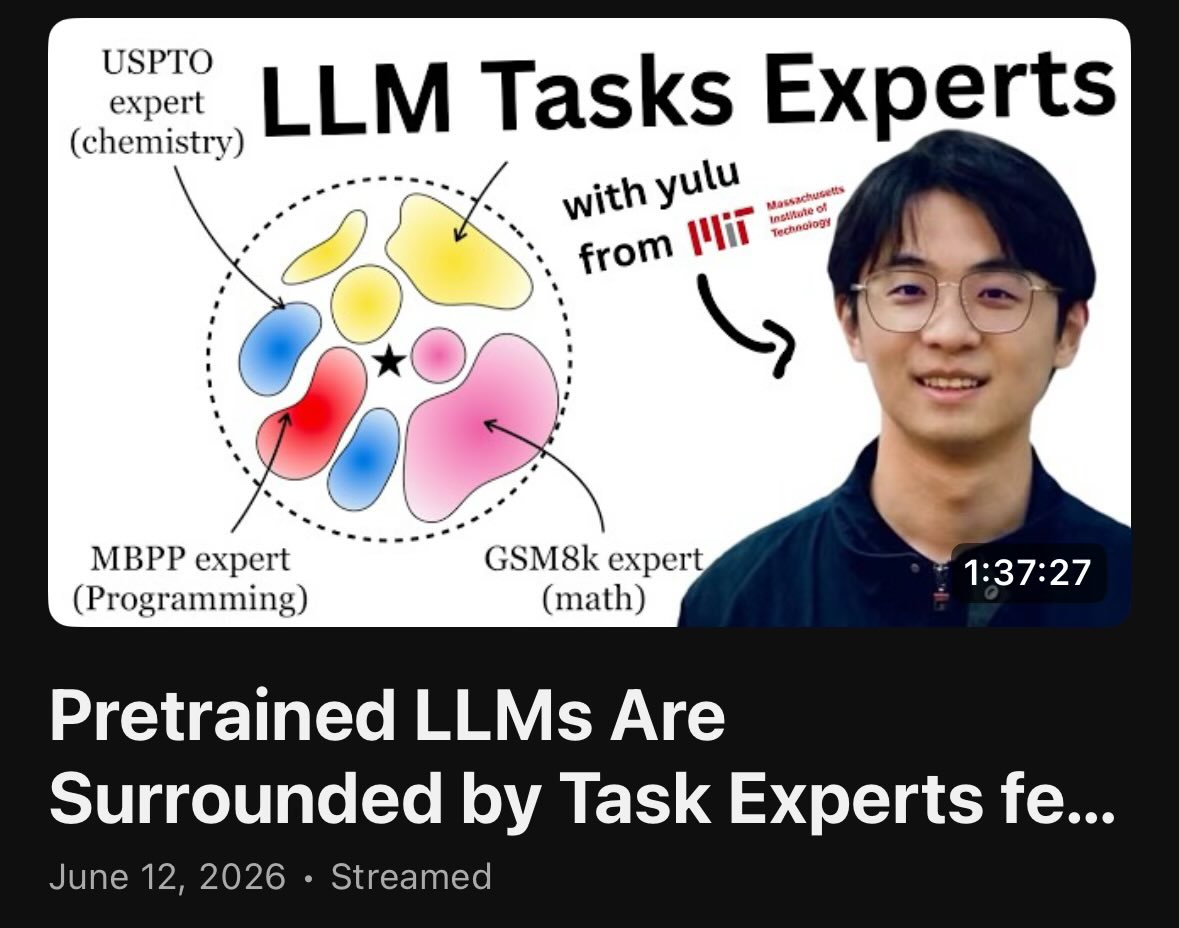
guys there is like 7 different papers waiting patiently for you to do them in this one video

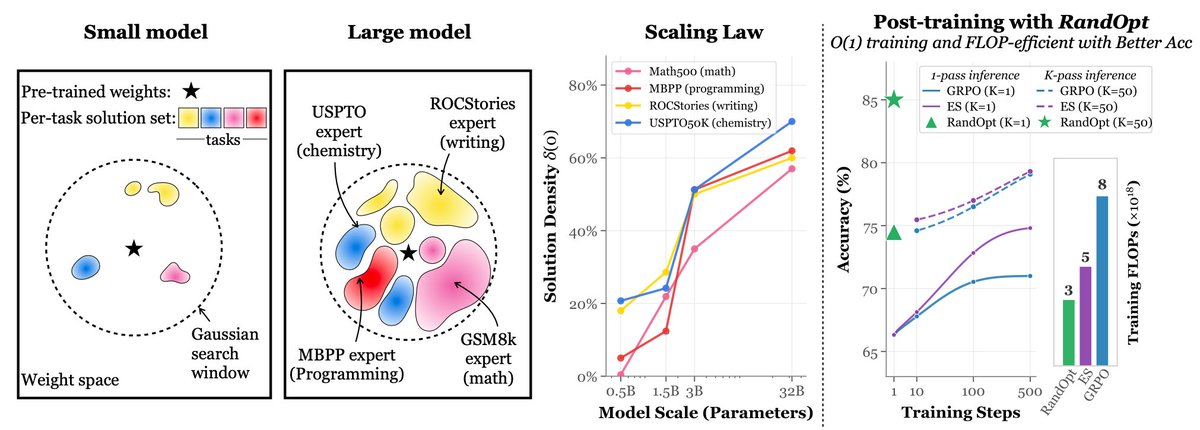
Simply adding Gaussian noise to LLMs (one step—no iterations, no learning rate, no gradients) and ensembling them can achieve performance comparable to or even better than standard GRPO/PPO on math reasoning, coding, writing, and chemistry tasks. We call this algorithm RandOpt.
To verify that this is not limited to specific models, we tested it on Qwen, Llama, OLMo3, and VLMs.
What's behind this? We find that in the Gaussian search neighborhood around pretrained LLMs, diverse task experts are densely distributed — a regime we term Neural Thickets.
Paper: arxiv.org/pdf/2603.12228
Code: github.com/sunrainyg/RandOpt
Website: thickets.mit.edu
3
32
417
37,733
Burny - Effective Curiosity retweeted

Doshi-Velez & Kim (Towards a rigorous science of interpretable ML) were doing definitional and 𝐞𝐯𝐚𝐥𝐮𝐚𝐭𝐢𝐨𝐧 𝐫𝐢𝐠𝐨𝐫. Their paper has almost no math.
rather, it's a taxonomy (application-grounded, human-grounded, functionally-grounded evaluation) plus an argument that interpretability is not one thing and is fundamentally task- and human-dependent. It was a "stop being sloppy about what we're measuring" intervention. It tells you how to judge a method, not how to build one.
Standard Interpretable Model or SIM (Barbiero et al, 2026) is going for 𝐠𝐞𝐧𝐞𝐫𝐚𝐭𝐢𝐯𝐞 𝐫𝐢𝐠𝐨𝐫. It's not just asking for cleaner evaluation, it's proposing a template that takes premises (e.g. user subjectivity) in and derives symmetries, constraints, losses, and architectures out.
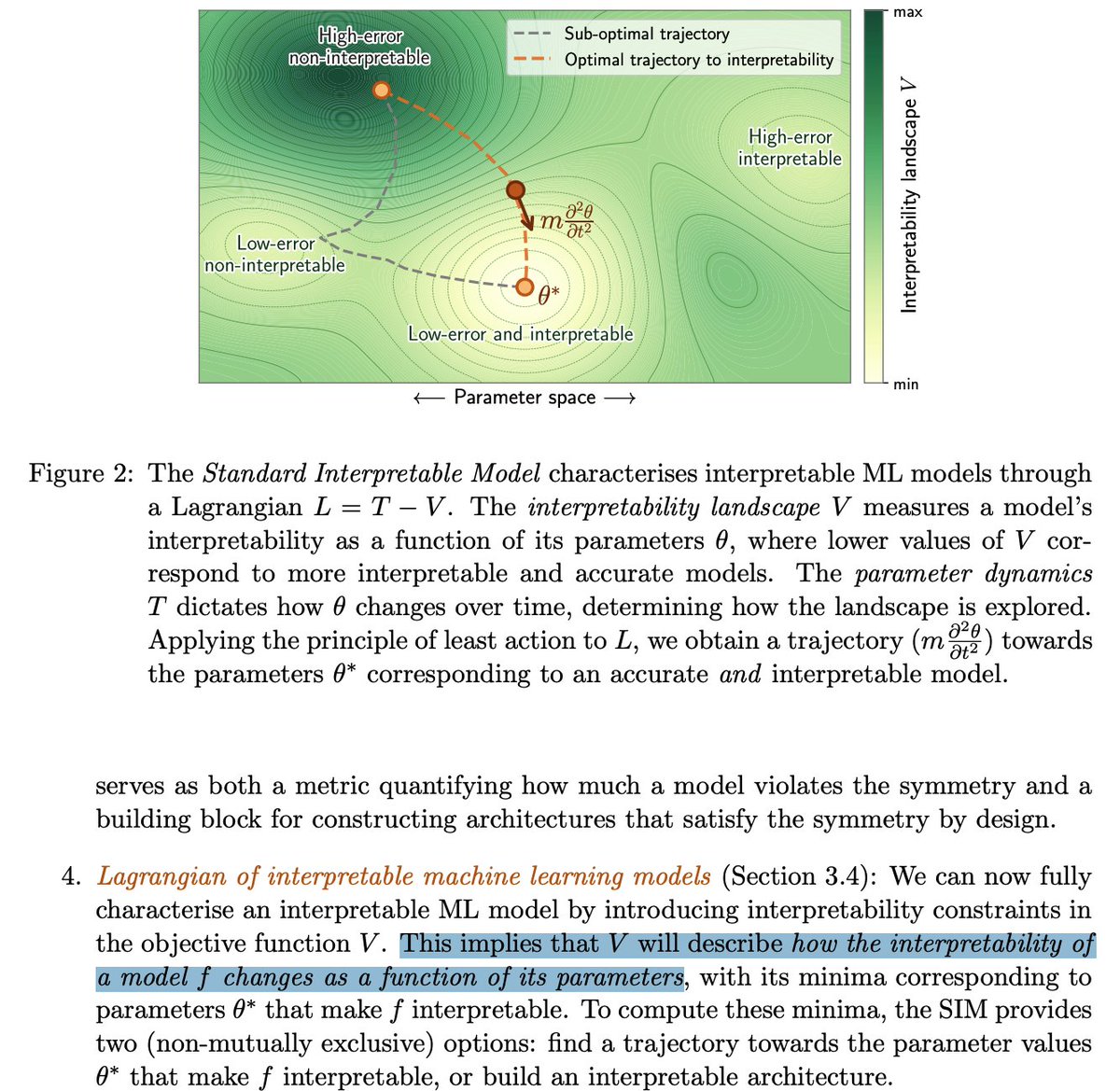

Do you want to conduct interpretability research from first principles?
The Standard Interpretable Model is finally here:
A user-aware general theory of interpretable machine learning to deductively design interpretable methods
arxiv.org/abs/2606.12289

1
3
27
2,554
Burny - Effective Curiosity retweeted

May 31
I have been doing biweekly LessWrong post sprints, but I decided to post them on X for the first time.
lesswrong.com/posts/6HnnMHRo…
The next few weeks will be spent polishing earlier sprints and doing some experiments on AOs. Next post will be in around 1 to 2 weeks.
1
3
102
Burny - Effective Curiosity retweeted

2
3
59
2,941
Maybe because US government hates Anthropic, they will ban only Anthropic models, and OpenAI gets a pass
2
6
428
Burny - Effective Curiosity retweeted

Jun 13
Explaining JEPA in 10 seconds
8
41
432
18,885