
Building Helix @zkhelixlabs | prev sold Monarch Wallet | Rehypothecatin’ since 2017 | NYC Based
Joined September 2017
- Tweets 1,101
- Following 1,889
- Followers 5,719
- Likes 889
106 Photos and videos














Pinned Tweet

22 Mar 2018
Next time you have to pay your Power or Water Bill
Call the office and say the SEC says there is no such thing as utilities and hang up
8
9
83
Sneh 🧬 retweeted

May 29
I'll be getting very tribal @proofoftalk June 2nd & 3rd.
Come learn about Minted at the @CantonNetwork stage.
Merci 🥐
$CC @CantonFdn
May 29

Meet us @proofoftalk at the Louvre on June 2nd & 3rd
We'll be speaking twice on the @CantonNetwork stage.
Vive la France.
7
9
36
3,455

May 22
Most DeFi users are not unproductive because they lack ambition.
They are unproductive because the infrastructure forces them to choose.
Stay staked and earn native yield. Or unstake, bridge, wrap, deploy, and hope the APY justifies the friction.
That is not a DeFi problem. That is a liquidity coordination problem.
Helix Dashboard changes the math.
Track your staked positions across ICP, Cardano, BNB, and HyperEVM in one unified view. Earn staking rewards plus EigenFi restaking rewards on top. Optimize your yield allocation without bridging a single asset or exiting a single position.
Your capital stays exactly where it is. It just starts working harder.
Productive DeFi does not mean moving constantly. It means your liquidity moves for you.
2
1
1
45
May 21
Institutional DeFi is not waiting on one more AMM or money market.
It’s waiting on credible infrastructure that lets large, regulated capital plug into onchain systems without breaking their own constraints.
For strategic token holders, that constraint set is clear:
– Don’t unwind governance
– Don’t nuke the price with forced selling
– Don’t take opaque smart‑contract risk just to chase yield
But capital still needs to move.
Our view at Helix Labs is that “productive staking” becomes the bridge.
Native staking → liquid staking → restaking → cross‑chain deployment should feel like one coherent path with clear risk surfaces, not a patchwork of bridges, wrappers, and custody compromises.
That’s what we’re building toward with Vault, UniRollup, and OmniVM:
A liquidity coordination layer that institutions can actually underwrite, instead of “trusting the vibe.”
3
33
May 19
Most DeFi conversations start and end with Ethereum.
That is not a criticism. EigenLayer, Lido, Etherfi — they built real things.
But there are hundreds of billions in staked assets on non-ETH L1s sitting completely outside the DeFi economy.
The next unlock is not another ETH protocol.
It is bringing the same model to everyone else.
1
43

Apr 28
The rsETH situation is a reminder that bridges and wrapped assets are still the weakest link in onchain finance.
You can build the best yield product in the world. If the rails underneath rely on custodial bridges, you inherit their risk.
Settlement infrastructure has to be trustless by design. Not by promise.
1
26
Sneh 🧬 retweeted

Apr 17
Web3 doesn't have a liquidity problem. It has a liquidity coordination problem.
Billions in staked assets sit across Cardano, ICP, BNB, and HyperEVM. Earning base yields. Locked in place. Completely disconnected from DeFi.
The capital is there. It just can't move where it's needed most.
Builders on emerging chains struggle to bootstrap liquidity. Users outside Ethereum have no access to restaking rewards. Staked assets remain idle while opportunity passes them by.
The solution isn't more liquidity. It's infrastructure that makes existing liquidity productive, interoperable, and composable across chains.
No bridges. No wrapped assets. No third party custody.
That's what a liquidity coordination layer enables.
Capital that remains productive regardless of where it lives. Builders with access to deep cross chain liquidity from day one. Users earning yield at scale without leaving their native ecosystem.
The next phase of DeFi won't be defined by which chain wins. It will be defined by how effectively capital moves between all of them.
Liquidity coordination is the missing infrastructure layer.
Helix Labs is building it.

5
3
10
822
Apr 28
DeFi United isn't a bailout. It's the trust layer working in real-time.
Aave, Kelp, EtherFi, Mantle, Compound, Lido coordinating to make rsETH holders whole. No regulator, no committee. Just protocols and people.
Respect to @StaniKulechov and everyone stepping up.
22
Apr 23
RT @naval: Introducing USVC - a single basket of high-growth venture capital, for everyone.
No accreditation required, SEC-registered, an…
963
Apr 23
One week after the Kelp exploit, the DeFi map has redrawn itself.
Aave: billions out, still stabilizing. Spark: billions in, holding. Stablecoin backed infrastructure: winning. Liquid restaking tokens: under review across every major lender.
The pattern isn't hard to read.
Capital wants collateral it can verify. Yield it doesn't have to bridge. Assets that don't depend on five systems working in sync to stay solvent.
That's the gap Helix was built to fill.
1
70
Apr 17
Web3 doesn’t just need more liquidity. It needs liquidity that can move seamlessly across chains. That’s how capital stays productive. That’s how builders get the tools they need. And that’s how users unlock yield at scale. Liquidity coordination is the missing piece.
Apr 17

Web3 doesn't have a liquidity problem. It has a liquidity coordination problem.
Billions in staked assets sit across Cardano, ICP, BNB, and HyperEVM. Earning base yields. Locked in place. Completely disconnected from DeFi.
The capital is there. It just can't move where it's needed most.
Builders on emerging chains struggle to bootstrap liquidity. Users outside Ethereum have no access to restaking rewards. Staked assets remain idle while opportunity passes them by.
The solution isn't more liquidity. It's infrastructure that makes existing liquidity productive, interoperable, and composable across chains.
No bridges. No wrapped assets. No third party custody.
That's what a liquidity coordination layer enables.
Capital that remains productive regardless of where it lives. Builders with access to deep cross chain liquidity from day one. Users earning yield at scale without leaving their native ecosystem.
The next phase of DeFi won't be defined by which chain wins. It will be defined by how effectively capital moves between all of them.
Liquidity coordination is the missing infrastructure layer.
Helix Labs is building it.
1
3
41
Apr 7
Web3 has always been about coordination at scale. Not just moving money faster, but aligning strangers across the world around shared incentives and trustless systems.
Every major breakthroughm Bitcoin, Ethereum, DeFi, NFTs, has been a new layer of coordination. Each one expanded what communities could do together without permission.
The next step is bigger than a single chain or a single ecosystem. It’s about connecting what already exists into one fabric.
Adoption won’t happen when crypto feels fragmented. It happens when value moves simply, and users don’t need to think about the chain at all.
1
1
1
56
Apr 7
The next unlock in Web3 isn’t ‘more TVL’, it’s making staked value composable. A Liquidity Coordination Layer that lets LSTs move natively, restake, and share strategies across ecosystems is how we go from parked capital to an actually efficient multi‑chain money system.
Apr 7
Web3 holds an incredible amount of value, but only a small part of it is actually active.
Most of it sits locked in staking or isolated inside individual ecosystems.
Staking keeps networks secure, but it also takes capital out of circulation.
Once an asset is locked, it can’t provide liquidity, support lending markets, participate in new yield strategies, or move across chains.
Across major PoS networks, this adds up to billions in value that can’t do much beyond earning rewards.
Liquid staking changes this dynamic by allowing assets to secure their home chain and stay usable in DeFi.
It brings capital back into the system without removing its role in network security.
But liquid staking alone isn’t enough. If liquidity stays stuck on one chain, we only solve half the problem.
What’s needed is coordination, a way for liquid, staked assets to be recognized and used across multiple ecosystems.
A Liquidity Coordination Layer enables this:
– native, trustless movement
– access to cross-chain restaking
– shared yield strategies
– capital that can support more than one network at a time
When even a fraction of staked capital becomes liquid and coordinated, the benefits compound quickly:
stronger markets, better yields, smoother cross-chain UX, and healthier network security.
The idea is simple: value isn’t the issue, activation is.

1
3
158
Apr 2
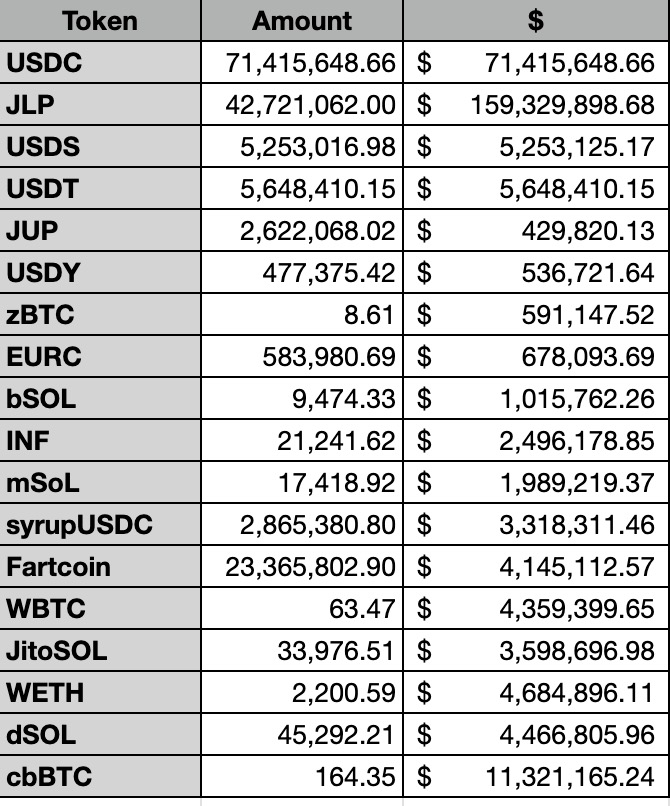
$285M drained from Drift Protocol in under an hour. Admin keys compromised. Vaults emptied from $309M to $24M. Funds already bridged to Ethereum.
Second largest Solana exploit ever. March alone saw $52M in DeFi hacks. The infrastructure layer is broken. Protocols built on exploitable foundations keep paying the price.

The initial estimated loss of today's @DriftProtocol loss is $285m.
Here is the detailed breakdown:
1
1
2
115

We're going around the Moon. Come watch with us. Artemis II's four-astronaut crew is lifting off from @NASAKennedy on an approximately 10-day mission that will bring us closer to living on the Moon and Mars. The launch window opens at 6:24pm ET (2224 UTC). x.com/i/broadcasts/1jxXgeyMk…
5,655
28,982
108,584
17,059,938