
You need HELP with tech; I help you you make a donation to my retirement fund! Is what it is! #BTC will re-valuate the WORLD 🌎
Joined July 2022
- Tweets 10,182
- Following 144
- Followers 186
- Likes 15,418
4,096 Photos and videos



Pinned Tweet

9 May 2024
10
26
38
13,086
Crypto Customer Service retweeted

7
17
37
5,496
Crypto Customer Service retweeted

Jun 9
Fulton Sheen, summarizing the reason for using a crucifix instead of an empty cross: “Keep your eyes on the crucifix, for Jesus without the cross is a man without a mission, & the cross without Jesus is a burden without a Reliever.”

39
536
3,677
40,775
Crypto Customer Service retweeted

What Brandon marsh is doing this season is absolutely incredible
What a revelation and breakout season this is
He is 100% an all star

20
74
1,772
28,974
Crypto Customer Service retweeted

BRANDON MARSH HOMERS FOR THE THIRD DAY IN A ROW!
🗳️ Phillies.com/AllStar
56
337
3,977
233,189
lol
@BitcoinliveDB
May 27

JUST IN: Bank for International Settlements finds tokenized central bank money and bank deposits can make global payments faster and safer.
1
1
2
30
May 26

THE REAL REASON TRUMP IS PRO-CRYPTO JUST CLICKED.
🇺🇸 US national debt: $39,000,000,000,000.
Trump alone added nearly $11,000,000,000,000 in 5.5 years.
Every dollar of debt needs a buyer.
Tether already holds $127,000,000,000 in US Treasuries.
Bessent's target: $3,700,000,000,000 in stablecoin Treasury demand by 2030.
Stablecoins aren't competing with the dollar.
They're financing it.
The deficit found its buyer.

11
Crypto Customer Service retweeted
Thursday on #BitcoinliveDB
#ProofOfWork ⚙️
EP55 “Help us #Satoshi Nakamoto, you’re our only HOPE!”
☆Presented by
@ger313
@BitcoinliveDB
@MatthewRyanCase
☆Time
20:00 / 8PM (CET)
14:00 / 2PM (EDT)
☆Streaming on
@QE4Everyone
@BitcoinliveDB
☆YouTube
m.youtube.com/@BitcoinliveDB…
🛡 Sponsored by @shieldfolio
1
9
11
549
Crypto Customer Service retweeted

May 15
If Communion is symbolic, Paul’s warning makes no sense.
People do not profane metaphors.
17
27
282
4,751
Crypto Customer Service retweeted

May 13
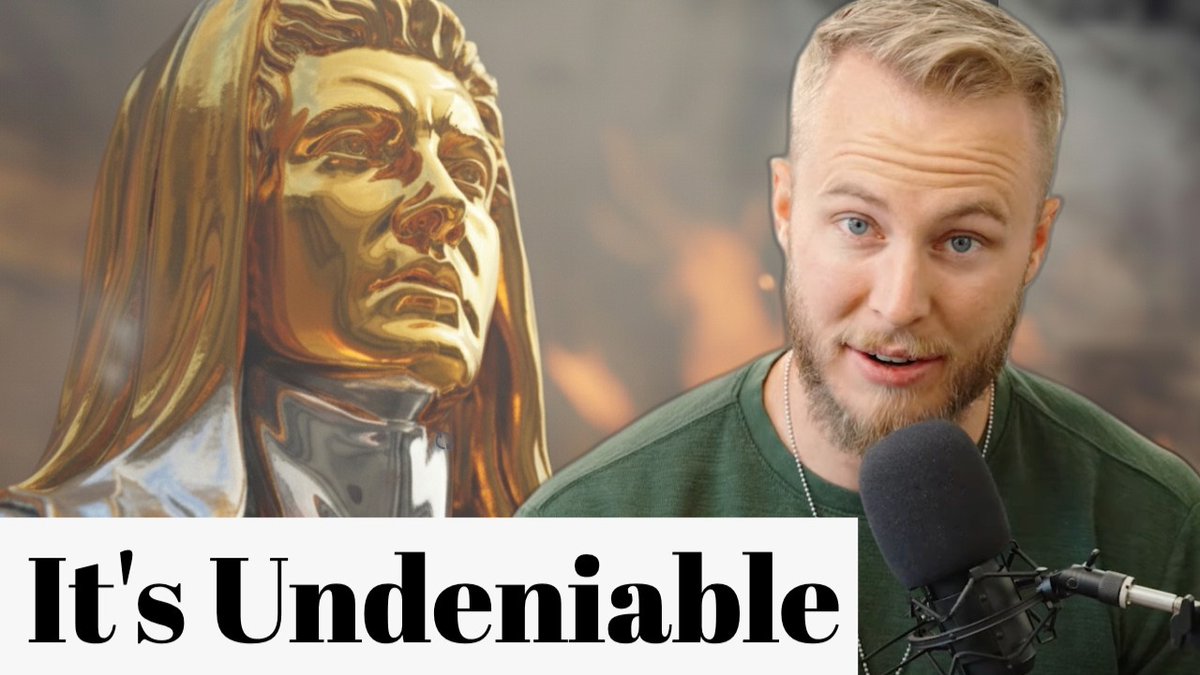
This Old Testament prophecy proves Roman Catholicism.
It's specific. It's detailed. It was written 500 years before Jesus was born.
And once you see it, you can't unsee it.
It's in Daniel chapter 2.
King Nebuchadnezzar has a dream that terrifies him — a massive statue with four sections (Daniel 2:31-33):
— A head of gold
— A chest and arms of silver
— A belly and thighs of bronze
— Legs of iron, with feet of iron mixed with clay
Daniel tells the king exactly what it means. Each section represents a kingdom that would rule over God's people in succession (Daniel 2:36-43):
Babylon. Persia. Greece. Rome.
This isn't speculation. This is just what the Bible plainly says. And history confirms every single one.
But then Daniel says something that should stop every Protestant in their tracks:
"In the days of those kings the God of heaven will set up a kingdom which shall never be destroyed, nor shall its sovereignty be left to another people... and it shall stand for ever." — Daniel 2:44
In the days of those kings.
Meaning during the Roman Empire.
So ask yourself — which church actually began during the Roman Empire?
Not Lutheranism. That started in 1517.
Not Anglicanism. That started in 1534.
Not Calvinism. That started in 1536.
Every Protestant denomination came roughly 1,500 years too late to fulfill this prophecy.
And Daniel doesn't stop there. He says:
"A stone was cut out by no human hand, and it smote the image on its feet of iron and clay, and broke them in pieces... but the stone that struck the image became a great mountain and filled the whole earth." — Daniel 2:34-35
The stone is a kingdom established by God Himself.
A kingdom that would spread across the entire world.
A kingdom that would never be destroyed.
Only one church in human history checks all four boxes:
✅ Founded during the Roman Empire (33 AD)
✅ Established by God Himself (not by a reformer)
✅ Spread across the entire globe
✅ Still standing 2,000 years later
And here's the part that should give every honest reader chills.
Out of all twelve apostles, Jesus singles out one man. He changes his name from Simon to Peter — which literally means rock (John 1:42).
Then He says:
"You are Peter, and on this rock I will build my church, and the powers of death shall not prevail against it." — Matthew 16:18
So where does Peter end up?
Where does he shed his blood for Christ?
Where does he lay the foundation of the Church that Jesus promised would never fall?
Rome.
The stone cut by no human hand — Christ Himself — comes down from heaven during the reign of the Roman Empire.
He builds His Church on Peter, who participates in Christ's "rockness" (as Augustine and Aquinas both put it).
Peter goes to Rome, dies in Rome, and lays the foundation of Roman Catholicism.
And get this — the Catholic Church is the oldest continuously operating organization on the face of the earth.
Every empire that ever persecuted the Church has crumbled to dust. The Catholic Church is still here. Two thousand years later. Exactly like Daniel said.
Scripture predicted it.
History confirmed it.
The Church Fathers taught it.
And the Catholic Church still stands today as living proof.
So the real question isn't whether Daniel's prophecy points to Catholicism.
The question is — what are you going to do about it?
Share with a friend who needs to know this.
117
321
1,194
39,030
Dear protesters LISTEN UP!

2
34
It’s proves he is ia dumb as the girls that made these videos a few years back just saying! @BitcoinliveDB
Mar 20

WATCH: "Professor Jiang" explains that we could fix poverty by printing infinite money but we don't because we want people to be poor.
I am not joking.
1
1
1
65

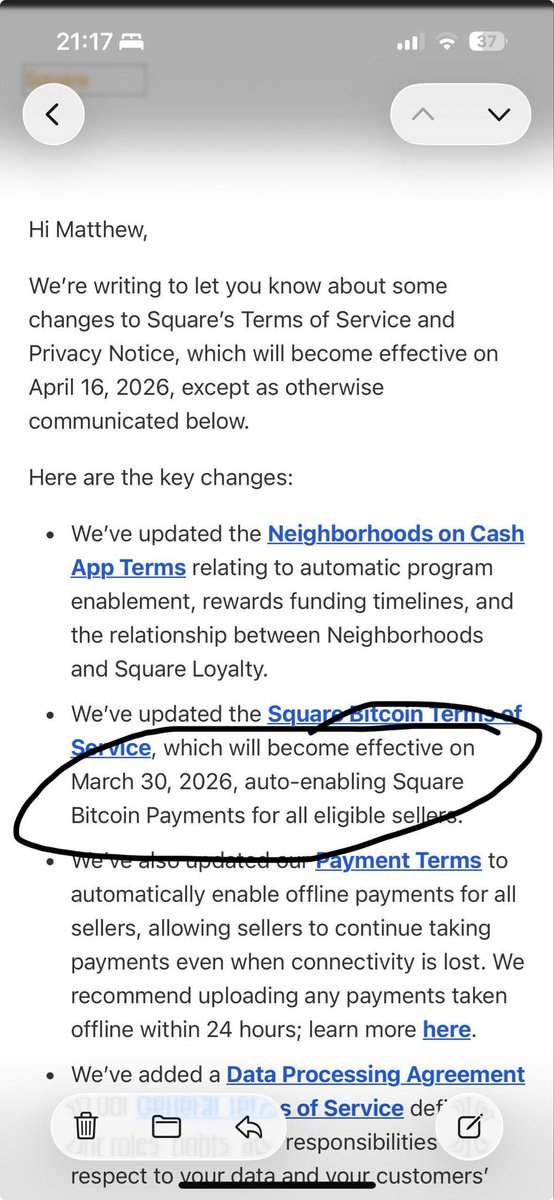
Square to auto-enable Bitcoin payments via Lightning Network for all eligible sellers on March 30, 2026.
h/t @nickslaney
5
19
146
6,032

7
Again, I hate to break it to the protesters, but you’re treading on thin ice!!!
Mar 17

Do sola disciples actually know the faith better than the Apostles? How common is this belief among the sola crowd? More than you can imagine……🍀
1
13
Dear protesters…
Mar 17

Why do the satanists uniquely attack the Catholic Church and the Eucharist and not the Evangelical mega-churches, mosques or synagogues? Do they know something that Protestants don't know?
11
Bro LOL
@taco_talks
This is how uninformed y’all are; THE TERM SAINT DENOTES CATHOLIC!
10
Dear SATANIC GOONS, see below! This is the one thing Hollywood hides from you, the name, Jesus alone, strikes fear in all of these clowns 🤡
Mar 16

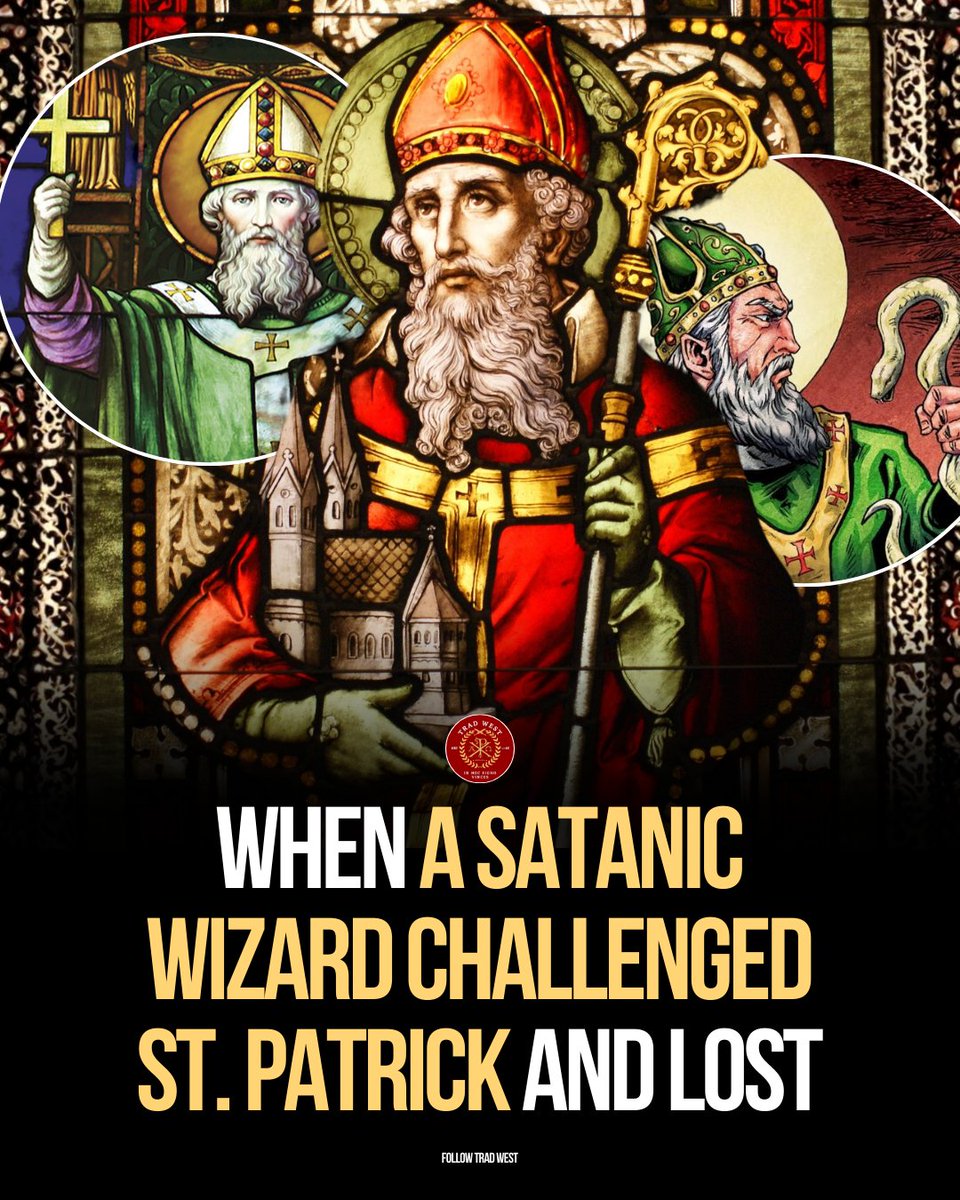
According to tradition, one of the high druids challenged Patrick to a supernatural duel to determine whose god was greater. The druid invoked demons and even levitated before the crowd, but Patrick, filled with the power of Christ, commanded them to fall. The wizard crashed to the ground and died.
Witnessing this, the king was shaken. Convinced of God’s power, he allowed Patrick to continue preaching. Over the next 30 years, Patrick baptized thousands, converted chieftains, and used the shamrock to explain the mystery of the Trinity. Through him, Ireland was set on the path to becoming one of the most Christian lands in Europe.
4
Again, denying the Eucharist, you run away from Jesus, oh by the way, dear protestants, that’s in the dang Bible!
Mar 13

The perfection of Jesus Christ is confirmed here by a Jewish Rabbi. WATCH.
13
FACTS.

6
REAL FEMINISTS NOT FEMINAZIS!
Mar 9

Catholic women in Guadalajara, Mexico, form a human chain to shield their church from International Women’s Day demonstrators.
In previous years demonstrators smashed their windows and vandalized the church with grafitti.
15