
Unleashing The Power Of Crypto , Join Crypto Masters Today ! Partners - #binance , #bybit , #okx ! Contact - t.me/JamesVerse ! TG - t.me/CryptoMastersCo
Joined July 2019
- Tweets 9,837
- Following 338
- Followers 82,728
- Likes 12,819
871 Photos and videos


Jun 16
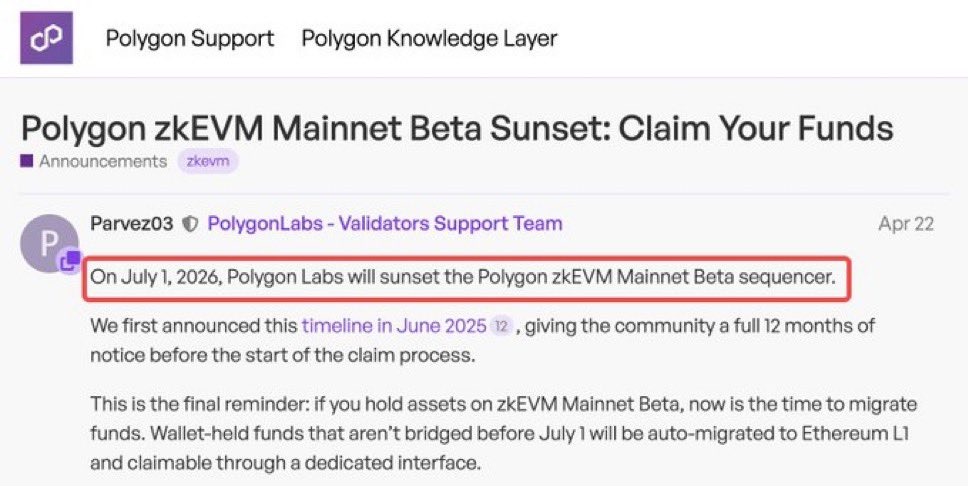
Polygon zkEVM will sunset in ~2 weeks on Wednesday, July 1
Users are advised to withdraw all assets and LP positions from Polygon zkEVM by this date, otherwise funds will be lost.
Funds locked in DeFi protocols cannot be auto-migrated
forum.polygon.technology/t/p…
11
10
40
10,693

Crypto Masters retweeted

Jun 5
👉For 4 years, 1 day, and 10 hours, anyone who understood the Orchard circuit could have minted ZEC out of thin air, silently, with no on-chain signature. The bug was disclosed this week. It was found by an AI-driven audit running Opus 4.8, not by an attacker.
1. Call the bug what it is
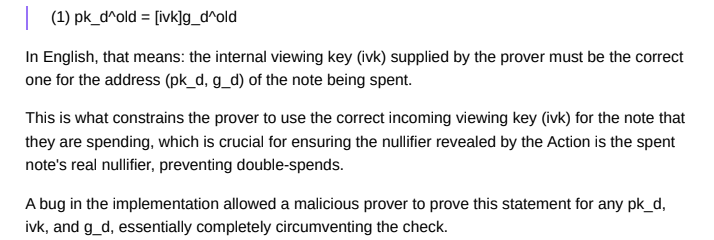
Two lines in halo2's variable-base scalar multiplication gadget used assign_advice() where copy_advice() was required. As a result, the diversified-address integrity check pk_d = [ivk]·g_d could be satisfied for arbitrary inputs. A malicious prover could spend the same note multiple times with different nullifiers, i.e. counterfeit ZEC inside the Orchard pool, undetectable on-chain because the privacy of the ZK proof hides exactly the inputs that would reveal the attack.
We do not know whether it was exploited. We will probably never know.
2. Four years. Multiple audits. Top-tier reviewers.
Orchard was reviewed by some of the strongest cryptographers in the field before activation. They missed it. Earlier automated audits with Opus 4.7 missed it. Opus 4.8 catches it in roughly 1 in 4 runs when prompted generically. The bug is hard.
And ZK inflation bugs are not new. Zcash itself shipped a counterfeiting vulnerability in Sprout (BCTV14) that survived years before being silently neutralized during Sapling. Similar soundness issues have appeared in circom, halo2, and rollup verifiers since. The pattern is consistent: when the protocol is private, exploitation is undetectable. You patch the bug and hope.
3. What Zcash did right
This was a textbook decentralized incident response:
▶️Audit: a full AI-assisted soundness audit of halo2 Orchard, scoped end-to-end.
▶️Discover: the agent flagged the missing constraint and worked out the algebra to turn it into an exploit. A working RPC-level PoC in ~6 hours, mostly waiting on tokens.
▶️Coordinate: a soft fork disabling Orchard, prepared and distributed without leaking the bug, activated 2 days and 15 hours after acknowledgement. Coordinating a soft fork across miners, exchanges, and nodes without disclosing why is genuinely hard. They did it.
▶️Disclose: timeline, code lines, math, open questions. No spin.
Worth naming explicitly: Zcash's turnstile invariant caps the value that can ever leave a shielded pool by the value that entered it. Privacy and verifiability inside the same protocol. That is not an accident. That is good engineering, and it is what kept the worst case bounded.
4. The economics of security just changed
AI does not change whether bugs like this exist. It changes the cost of finding them. I wrote about this x.com/P3b7_/status/203643721…: a missing constraint in a 4-year-old production ZK circuit used to require a top-tier cryptographer with months of context. It now requires a few tokens, an API key, and a well-framed prompt.
The defender benefits. The attacker benefits more, they only need to find it once, and they never disclose.
Orchard is the optimistic version of this story: defense got there first. The pessimistic version is the one we cannot rule out, because the chain is private by design.
5. The only real exit
You do not patch your way out of this asymmetry. You raise the floor.
Formal verification of consensus-critical circuits, every assign_advice audited by SAT solvers and AI for under-constraint, as the reporter himself recommends. Proof-grade engineering that used to be too expensive is now cheap enough to be mandatory.
Hardware roots of trust, secure enclaves, certified secure elements, WYSIWYS. Cryptographic guarantees the user can actually verify, not promises a host can lie about.
Continuous AI-assisted audit of every consensus-critical commit, re-run immediately on the release of any new frontier model.
Zcash didn't just patch a bug. They demonstrated the new defensive playbook: AI-driven audits, decentralized coordination, radical transparency, verifiable invariants. That is the direction the rest of the industry needs to follow.
And those who don't raise the bar for security will be rekt in this new world.
Stay safe. Stay honest about your trust assumptions.

315
213
1,027
269,572
May 29
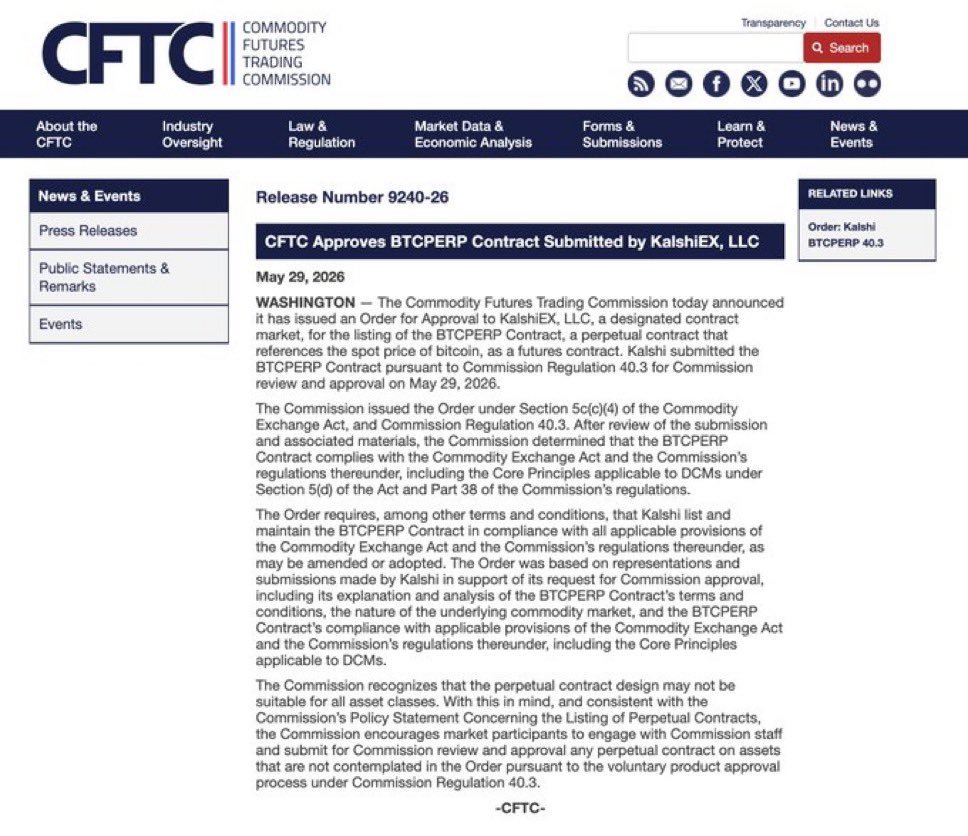
CFTC just approved Perps to be operated legally and Offered to US users
@Kalshi becomes first to launch 🇺🇸’s first regulated perpetual future ( BTCPERP )
Kalshi plans to launch crypto perps across more than a dozen currencies.
who could be the next to get approval?
15
48
14
51,967
May 26
Strategy repurchased $1.5 billion of convertible notes at an 8% discount, cutting total convertible debt from $8.2 billion to $6.7 billion.
61% of cash used in a single transaction , left with $871 million in cash reserves.
The company also raised capital to buy 24,869 bitcoin, bringing total holdings to 843,738 BTC.
no new bitcoin purchases this week , just a debt restructuring
$MSTR

Strategy has completed the repurchase of $1.5 billion of its 2029 Convertible Notes at an ~8% discount to par, generating an incremental 0.7% BTC Yield and lowering aggregate debt to $6.7 billion. $MSTR $STRC
strategy.com/press/strategy-…
17
2
71
14,883
May 25
Vitalik shares his personal perspective on the Ethereum Foundation's ongoing transition
• Emphasizes its shift from a central role to one specialized node focused on longevity, limited resources, and activities uniquely critical for Ethereum's censorship resistance, openness, privacy, and security (CROPS)
• Highlights the EF's reduced ETH holdings at 0.16%, completed original mandate, and strategic choices to support external efforts, making hard decisions on scope while opinionated stands ensure tasks attract outside capital and maintain ecosystem pluralism
• Core technical vision centers on making Ethereum "deeply impressive" through provably bug-free code via AI formal verification, hybrid consensus resilience, and intermediary minimization like FOCIL, all compatible with scaling and high TPS to strengthen ETH as an asset
May 24

Some of my perspective on where the @ethereumfndn is going.
First of all, this is only my own view. The board is not just me, and I have no extra special powers on the board that the other board members do not. @aerugoettinea is the one executing much of this transition. My input has been largely on technical questions. The board is in the process of expanding, and my own power within the org will continue to decrease, which is honestly what I want.
The 2025 era brought many important improvements to EF and its ability to execute. Many issues were resolved, and EF continues to benefit from its improved efficiency and greater focus on concrete goals to this day. And so with those problems resolved, early this year, the largest remaining hole that I perceived was something different nagging at me: I would regularly spot people saying things like "vitalik says these beautiful things about ethereum needing to be decentralized, and have privacy, and be a sanctuary technology, but why do the EF's actions not reflect that?"
Now, you may have been hearing something different. You may not have been sensing a feeling of crisis at all, and maybe were hearing people saying that finally we were taking execution and BD seriously and the main task for us is to keep going that way and be even better and faster. Then probably there is genuine difference between you and me, in what kinds of criticism I take most seriously, and what kinds of critics through their criticism are most able to make me feel pain.
As an analogy, let's briefly switch over to a different domain.
One belief you can have about Google is that it is a success story, and has brought a lot of good to humanity in organizing the world's information. Another belief you can have about Google is that they had a beautiful idealistic beginning, but at some point the corruption of mainstream corporate attitudes seeped in, and they slowly bit by bit completely abandoned the "don't be evil" slogan.
My belief on Google specifically is probably somewhere between the two. BUT, if you had taken me back in time to ~2008, and offered me a button to press to make Google one or two standard deviations more "dogmatic", eg. give Richard Stallman permanent veto power over some key policies, I would immediately press it.
Why? Because a choice for one company is not a choice for the world, or even one country. Google existed and exists in the context of a technology industry generally drifting away from early idealistic don't-be-evil roots and toward greed for financial gain, totalizing visions of accelerated superintelligence, infiltration by sociopaths, and craven capitulation to (or worse, active participation in) government pressure for ideological control, surveillance and war. And so *one company* doing something different, positioning itself to be what George Bernard Shaw calls the Unreasonable Man, resisting the trend of the times, would have been better for freedom, balance of power and stability of society as a whole, than *all* large companies bending to dominant trends. This is a part of my version of pluralism.
This line of thinking is not just mine, but I also is not too far off from what Aya and others had in mind with the Mandate.
Now how does this all get to the role of the EF?
EF is not a "center of Ethereum", rather EF is "one node, with a defined purpose, alongside other nodes". We've always said that the EF should be the latter, but many in the Ethereum ecosystem (and even within the EF) wanted us to be the former. Now, we are taking action to ensure that we will be the latter.
This is particularly important because EF is a limited organization, with limited resources and limited organizational capacity. The EF has only ~0.16% of all ETH (less than many other individual ETH holders), whereas among other blockchains it's common for "the central foundation" to have 10-50%. Fiscally, the EF was originally designed to fulfill a limited work scope defined in the token sale docs and other pre-launch materials (building the chain software; getting through Frontier, Homestead, Metropolis, Serenity), which was fully completed in 2022; it was not designed to be an eternal steward.
And so today, the EF is choosing to use its remaining resources to pursue longevity over breadth (yes, this means we sell less ETH). The EF focuses *specifically* on those activities critical to the success of ethereum as a censorship/capture-resistant, open, private and secure system, that would not happen otherwise. This means making hard choices, and in some cases even activities that we highly approve of and people that we highly respect becoming outside of the EF. People of great technical talent, public respect and even alignment with the mission and CROPS being outside of the EF is in fact necessary if we want important tasks to be able to attract outside capital. This also means the EF taking opinionated stands culturally.
This is all intended in cooperation with all other parts of ethereum. We recognize that many other parts of the ethereum world highly respect CROPS and related values. But highly respecting is not the same as choosing to specialize and totally dedicate to a domain (Compare in a different domain: I think reducing animal cruelty is important, and I like vegan food, but am not full unconditional vegan myself)
EF is still in a transition period, and we expect its new long-term form to stabilize over the next few months. What are the guiding principles of this new form? Again, I am only one person, but I can give my answer from a technical perspective (there are also critical non-technical aspects).
At the core, *Ethereum must be impressive*. We are living in an age of highly intelligent AI and all kinds of other technological acceleration. "Status quo EVM, with a hard fork or two a year to optimize for short-term needs of users" is not interesting.
To some, "impressive" means: 250ms latency and 1M TPS. I think Ethereum trying to go that route is a mistake. Being as fast and as scalable as possible, and only a small epsilon more decentralized than the others, is a route to mediocrity, and if we try it we will lose.
I think Ethereum should scale. But I think Ethereum should strive the hardest to be deeply impressive in a different dimension: the CROPS dimension. This means things like:
* Provably bug-free Ethereum. This is a goal that all cybersecurity researchers would have thought is absurd and impossible, up until roughly 6 months ago. Now, it's on the cusp of being possible, thanks to AI-assisted formal verification. So we should be frontrunners in doing this.
* Available chain consensus. Ethereum is, and with lean consensus will cotninue to be, the ONLY chain that has both (i) traditional-BFT style properties that it's safe under asynchrony up to a high level of fault tolerance, and (ii) the bitcoin PoW-style property that under synchrony it's safe up to 49% attackers. As far as I can tell, literally no other chain has this or is planning for it; bitcoin goes for (ii) only and most other chains go for (i) only. Some will remember I fought hard for this, Unreasonably insisting that it is not OK for ethereum to rely on social consensus and hard forks to rescue ethereum from 34% of nodes going offline. It's OK for chains like hyperledger, bnb, solana, tempo, etc. It's not OK for bitcoin or ethereum or eg. zcash.
* Intermediary minimization. The fact that smart contract wallets, protocols like railgun, etc have to send transactions through intermediaries to get included onchain is honestly embarrassing, and it's a constant point of fragility. Hence the work on FOCIL and EIP-8141 (and 7701 and years of work before) to make transaction sending intermediary-minimized with public mempool and strong inclusion properties, in a truly general-purpose way, that covers not just eg. secp256r1, but also privacy protocols and much more. Kohaku is pushing intermediary minimization at the user layer, pulling Ethereum away from the dystopian status quo world where our wallets don't even verify the chain, send our private data out to a dozen third-party servers, and toward a brighter CROPS future.
Some of these goals are Unreasonable - maybe Ethereum would be "fine" getting only 50% of the way - what if we depend on intermediaries, but make it easy to switch? But going 50% of the way would not make Ethereum Deeply Impressive in the CROPS way. So we push for 100%.
Fortunately all these goals are compatible with high TPS, this is a major focus of research (esp. on scaling the state). Well-designed L2s can also help, especially L2s optimized for specific applications (eg. high-volume trading, privacy...). These goals are even compatible with significantly lower slot times, thanks to Raul's work on erasure-coded P2P, and many other optimizations.
The most high-value "product" of the ethereum blockchain, financially speaking, is ETH the asset. Ethereum secures $250 billion of ETH. The types of properties of Ethereum that I mentioned above are very good for ETH the asset. Nearly 90% of my net worth is in ETH, and most of the remainder is ~$40m of onchain fiat of which every dollar has already been allocated for some open-source biotech or software or hardware initiative. That said, there are aspects of supporting ETH the asset - *necessary* aspects even - that are outside the scope of the EF. This is where we need other heroes (some of whom hold more ETH than the EF does) to step in and help. EF has been recently thinking more about how it will relate to other such organizations, and give them needed initial support.
EF will be a smaller ship than in previous years, a more opinionated one - in some cases more opinionated in ways that might be difficult to comprehend - but a longer-lasting one, and one suited to making sure that ethereum brings something meaningful to the world. We are grateful to all those inside and outside the EF who are helping to make this happen.
12
2
40
6,936
Apr 25
are We Still Doing Mini Apps?
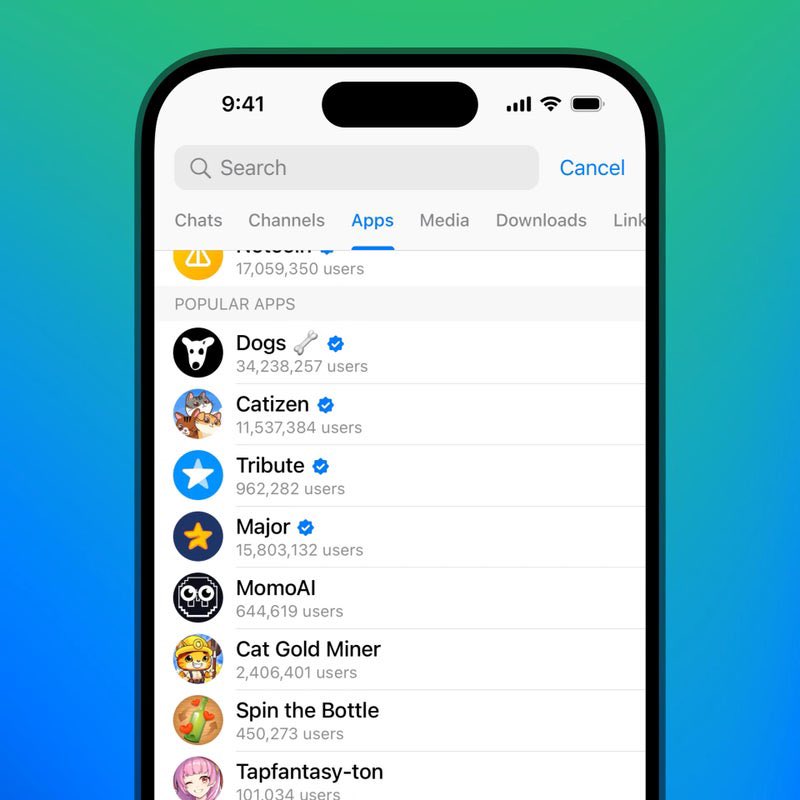
Mini App thesis has effectively collapsed since most "users" are just bots/ airdrop farmers - once incentives driped up, ecosystems became dead
In 2025, Mini Apps exploded in popularity on platforms like Farcaster and Telegram, offering low-cost distribution and user acquisition.
• Telegram Mini Apps fell from 1.44B users to under 150M
• Hamster Kombat's token down 98%
• Base deprecated Mini Apps within six months and pivoted to trading
Mini Apps existed to solve a 2022-era distribution bottleneck for builders who could code but couldn't reach users. By 2026, vibe coding plus virality has dissolved that bottleneck
Conclusion is that Mini Apps have been absorbed as features inside apps that already have distribution
11
2
16
14,273
Mar 22
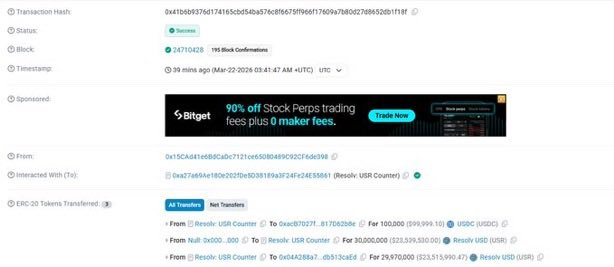
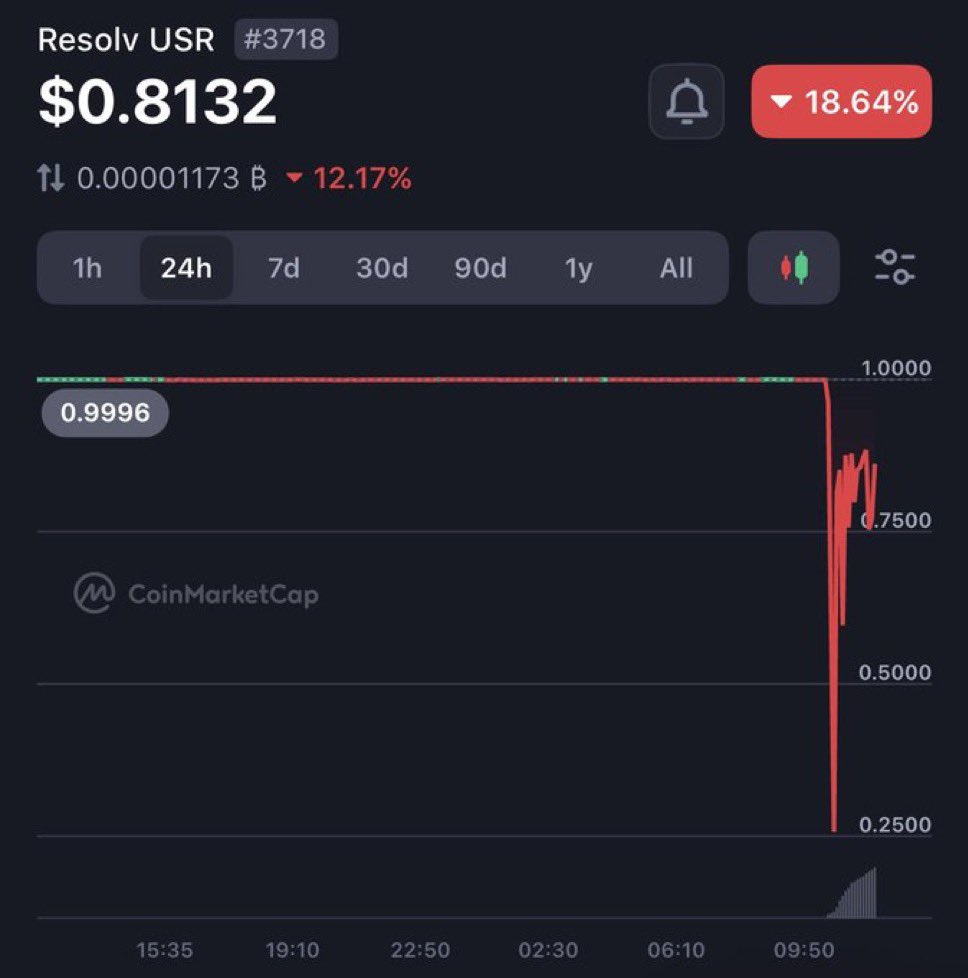
Resolv's $USR Exploited
Attacker minted $80 million USR using $200,000 worth of USDC.
Massive depeg, went down to 0.2$, currently back up at $0.8
Resolv's multisig finally queued a transaction to pause.
2/4 signatures required to execute it so far.
12
5
20
27,124

S&P Dow Jones Indices and trade[XYZ] have joined forces to launch the first official S&P 500 perpetual contract, available exclusively on Hyperliquid.
For 69 years, the S&P 500 has been a defining reference point for global finance. Until now, access to that benchmark has been shaped by market hours, intermediaries, and geography. Today, that changes.
The S&P 500 perp is now available 24/7/365, anchored by the official index data required for deep liquidity and institutional confidence at scale.
SPDJI helped define modern indexing. They are stewards of an iconic benchmark, the standard against which portfolios across the globe are measured. We are honored to bring that legacy on-chain.
Trade[XYZ] is bringing the world's most iconic assets towards a future of global, continuous markets — a future powered by Hyperliquid.
952
1,754
7,985
3,529,231
Feb 22
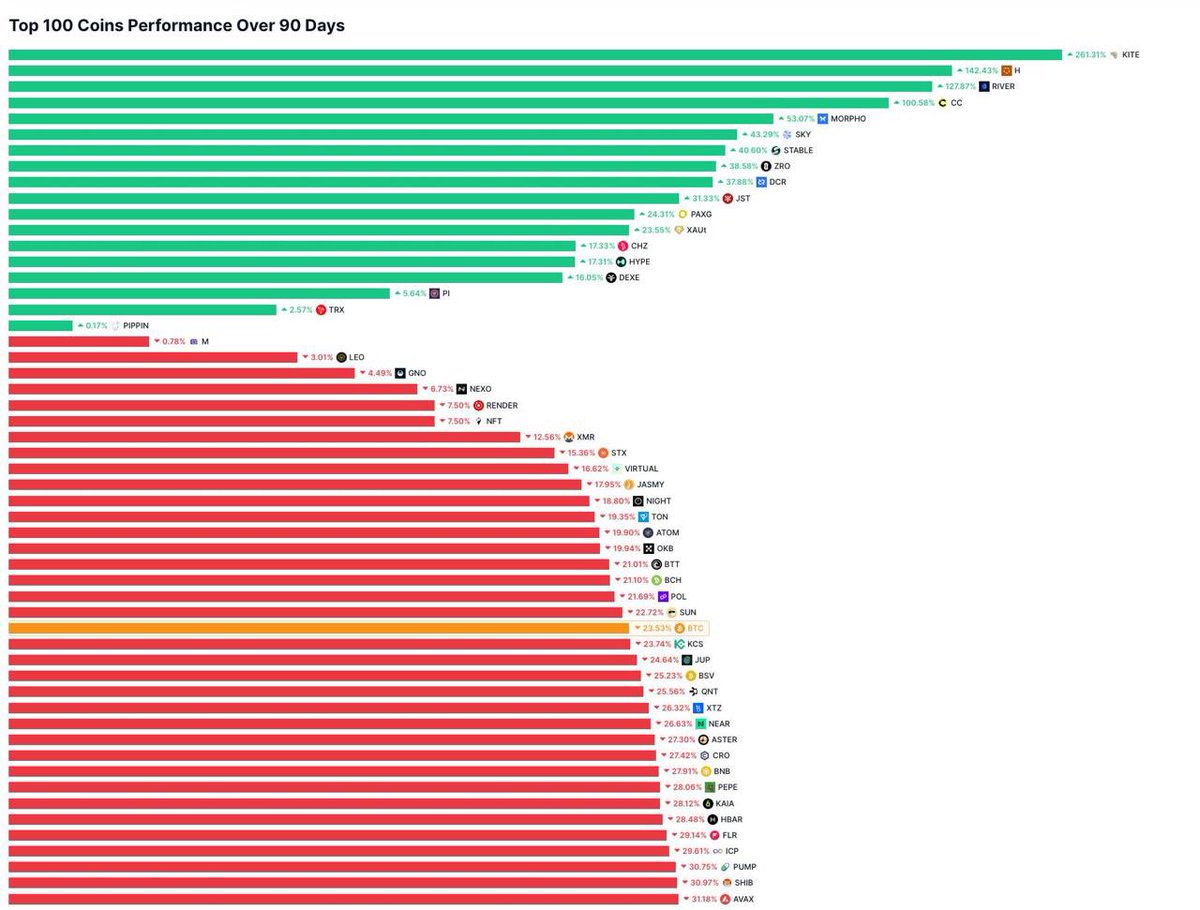
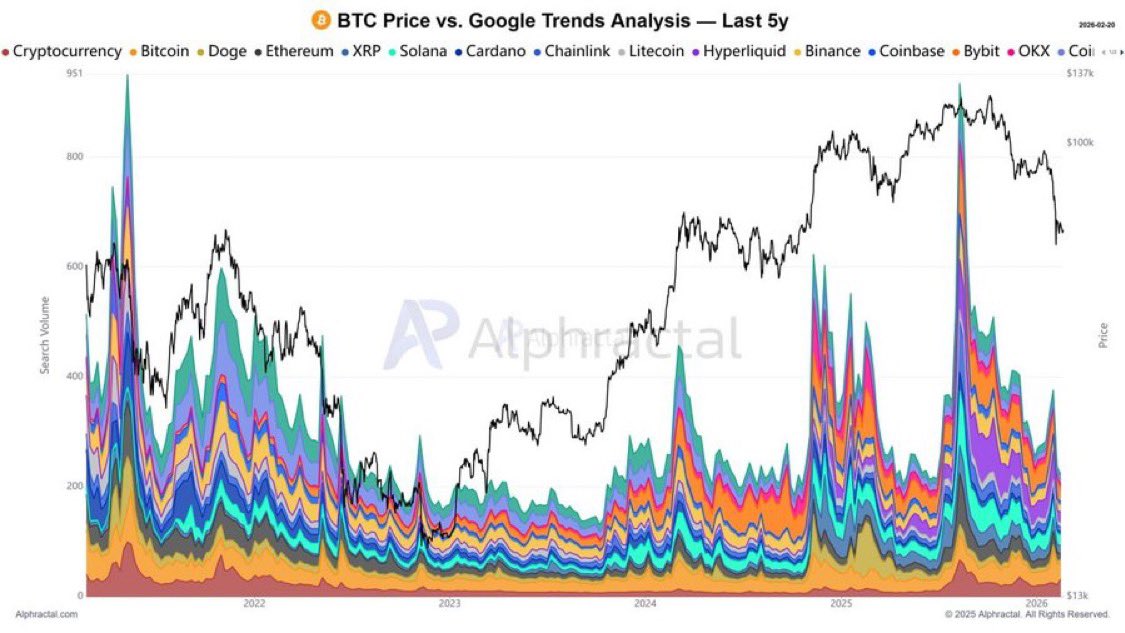
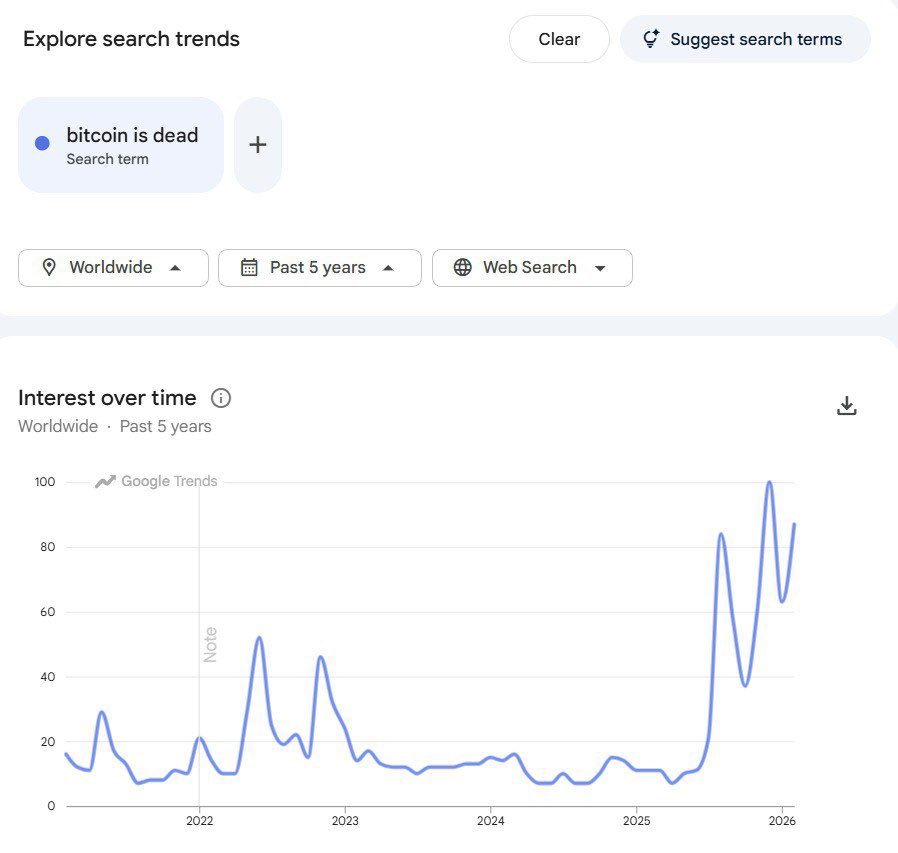
bitcoin is dead
we might be deep into a survival phase - where even winners lose the battles
with ai taking over the majority of hype crypto sentiment just hit 2023 lows
historically this pattern appeared at: 2011, 2014, 2018, 2022 bear markets
- google search interest declining
- CT is dead & telegram gcs are quiet
bottoms form in despair when attention struggles and moves
- 2022 took 12 months to bottom
the “bitcoin is dead” phrase is always the part of 4y-cycle
era where surviving is ultimate skill and survivors are rewarded
10
2
18
12,528
Crypto Masters retweeted

Feb 19
There is nothing more important than PEACE.
13,037
4,875
40,098
12,582,480
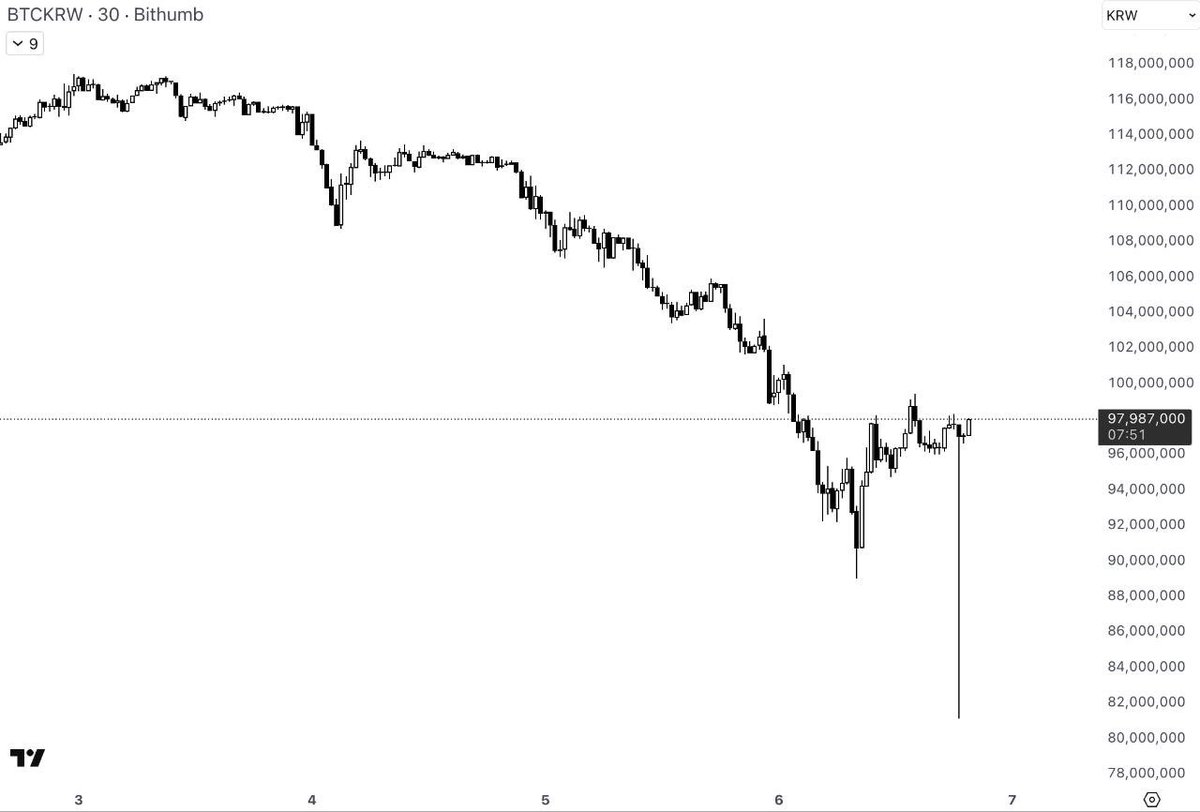
Bitcoin Drops over 15% on Bithumb after Reported 2,000 BTC Distribution Mistake
- A Bithumb staff member mistakenly sent 2,000 BTC instead of 2,000 KRW as a prize to hundreds of users, who immediately dumped at market price.
sometimes even your money ain’t yours
4
4
9
15,458
Jan 13
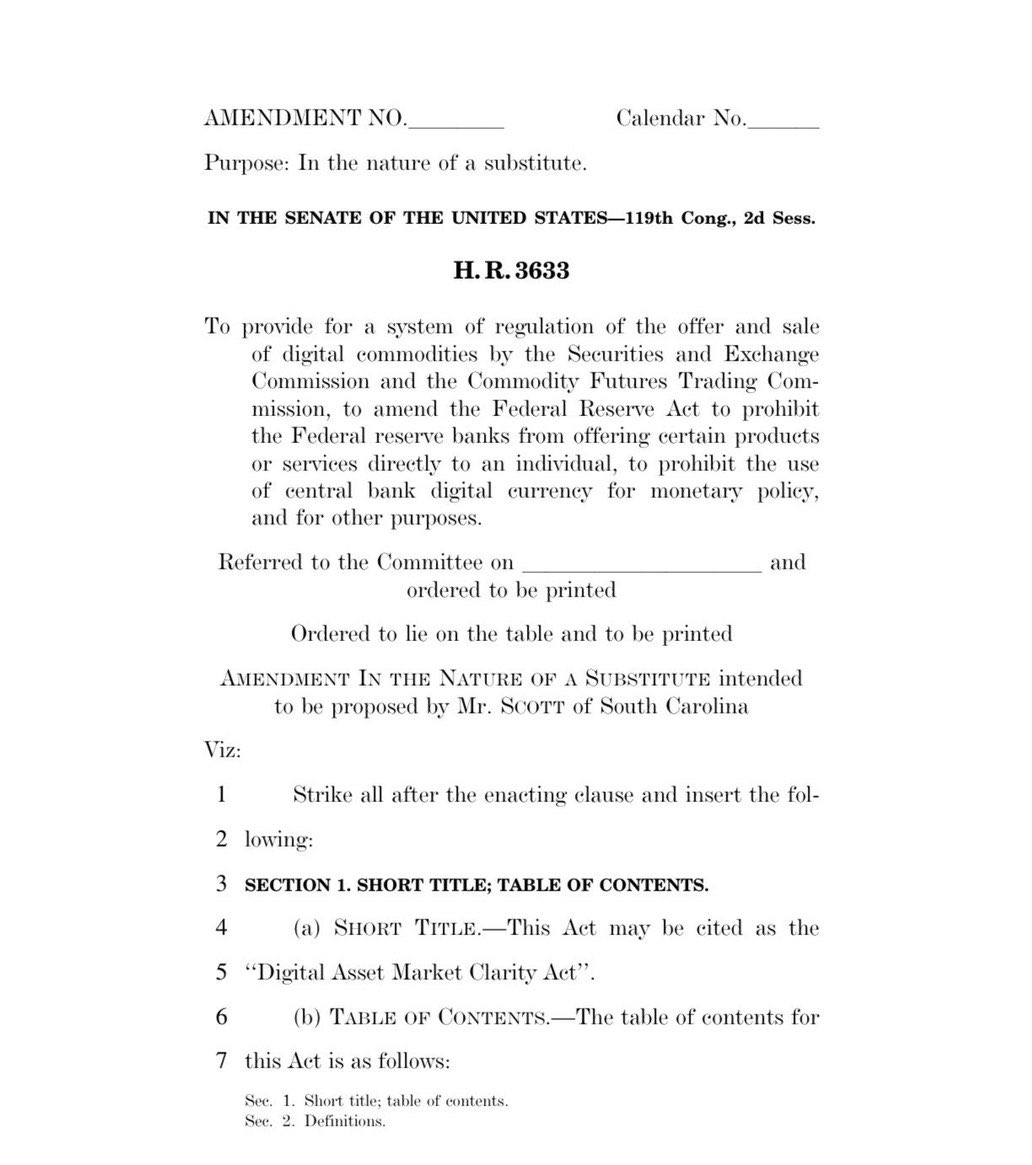
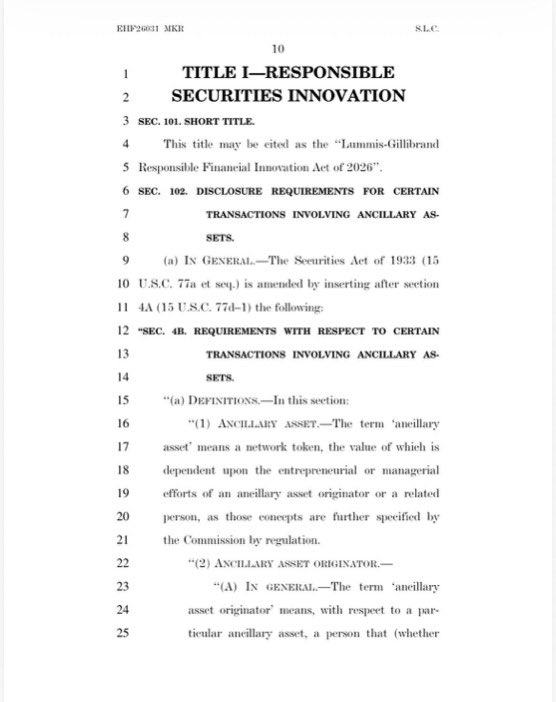
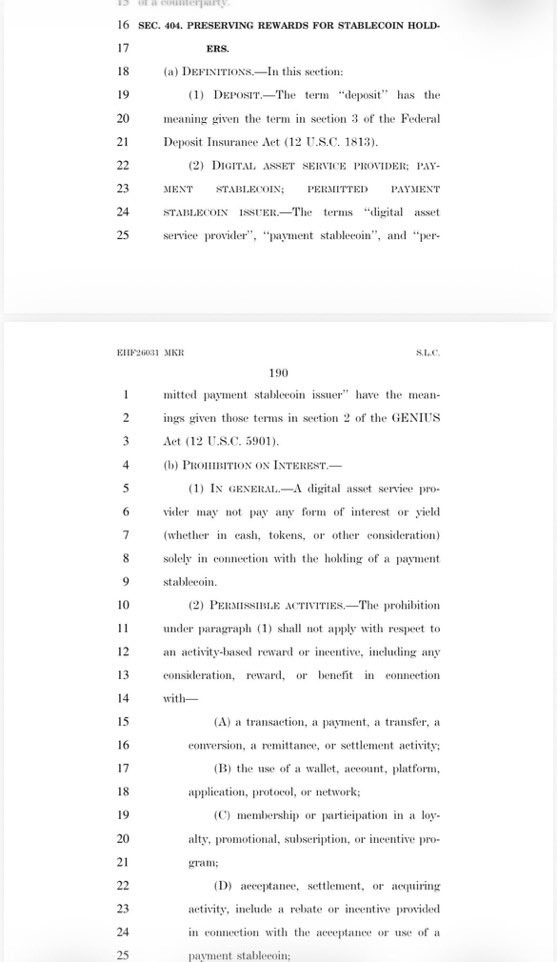
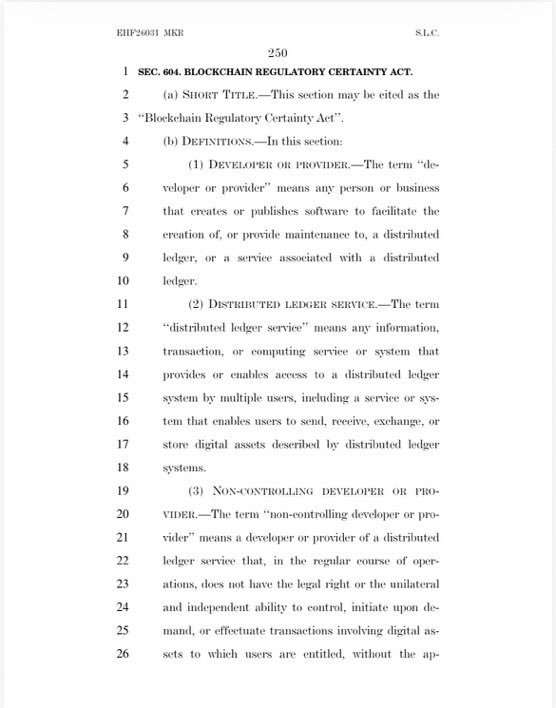
🇺🇸 U.S. Senate has released a draft bill outlining a new crypto market structure
The Digital Asset Market Clarity Act will provide the clarity needed to keep innovation in the U.S. & protect consumers.
Restricts yields on stables , allows some rewards, & its bipartisan
11
3
24
21,984
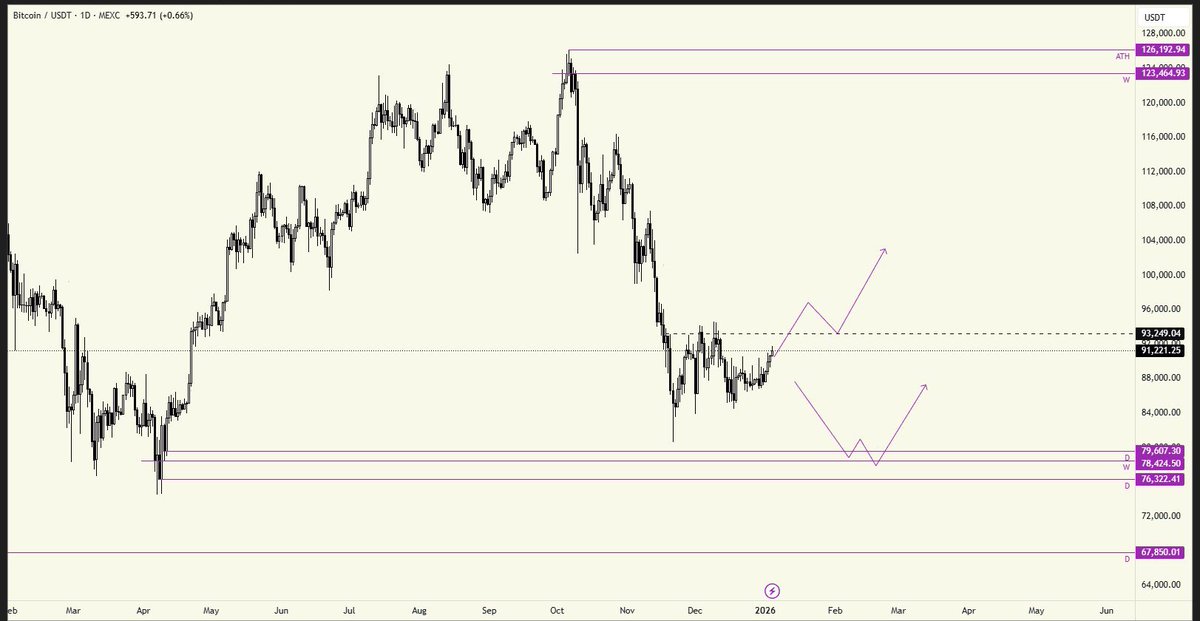
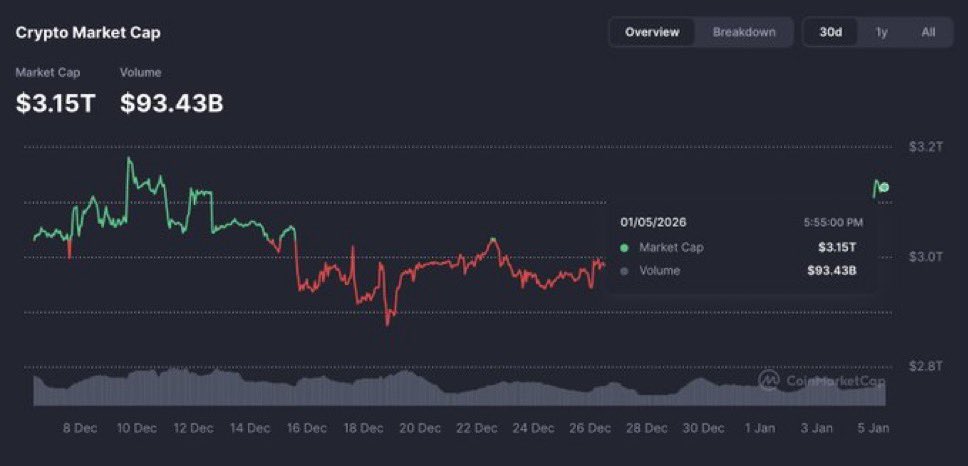
gm fam, been a good start of the new year ! Time for some $btc analysis
BTC keeps holding $90K - $91K on dips, indicating flows are coming in
two CME gaps still existent in short range (88k-91.5k)
Heavy liquidity on both sides , close above 93.2k$ and we are ready to fly
19
9
29
30,361
30 Dec 2025
LIGHTER LAUNCHES AND ENABLES TRADING FOR ITS $LIT TOKEN
Trading at 2.5$ , the current airdrop amounts to be worth 625M$
Currently only available on @Lighter_xyz spot, CeXs to be announced sooner
gLighter

19
8
24
27,531
29 Dec 2025
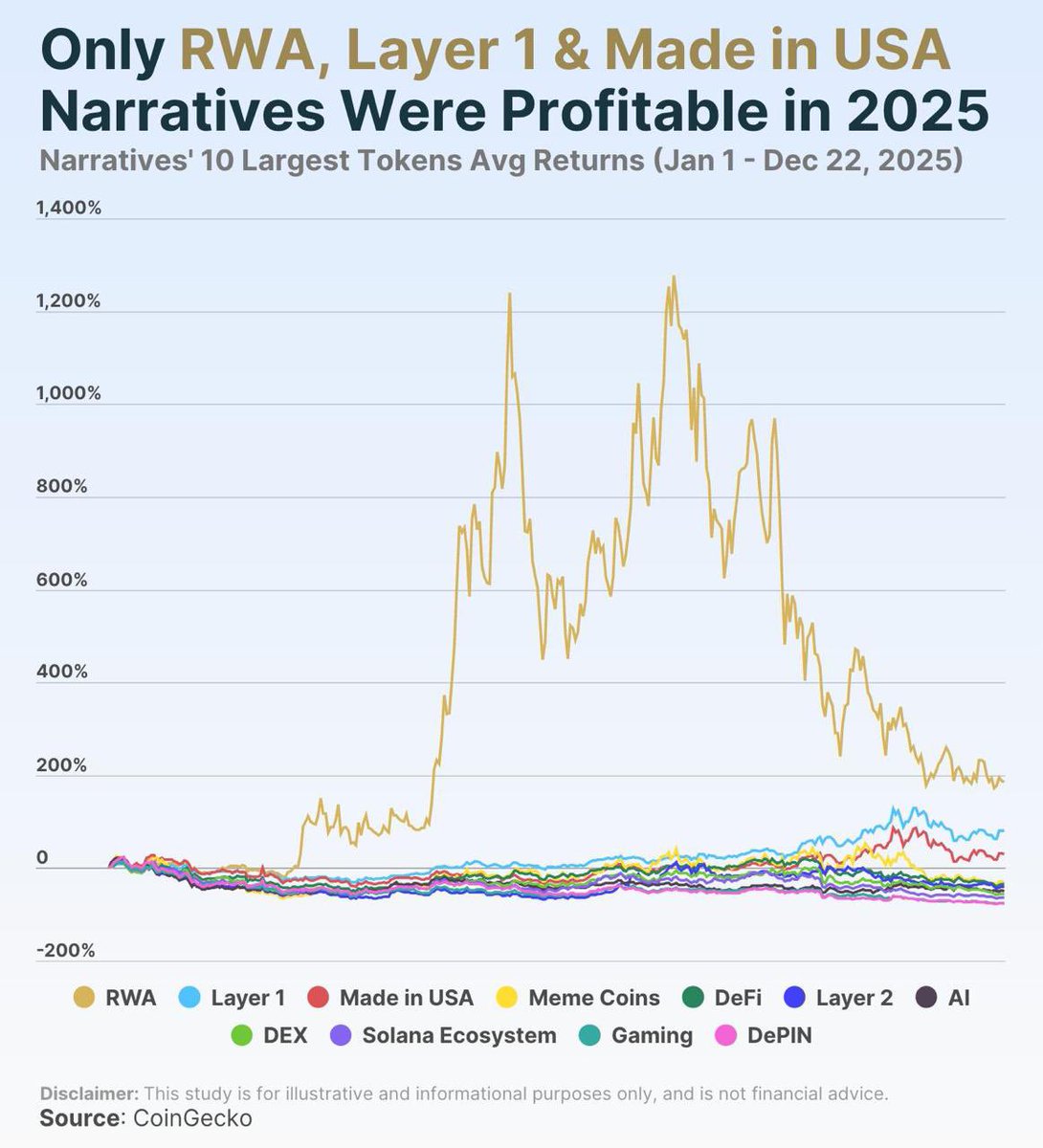
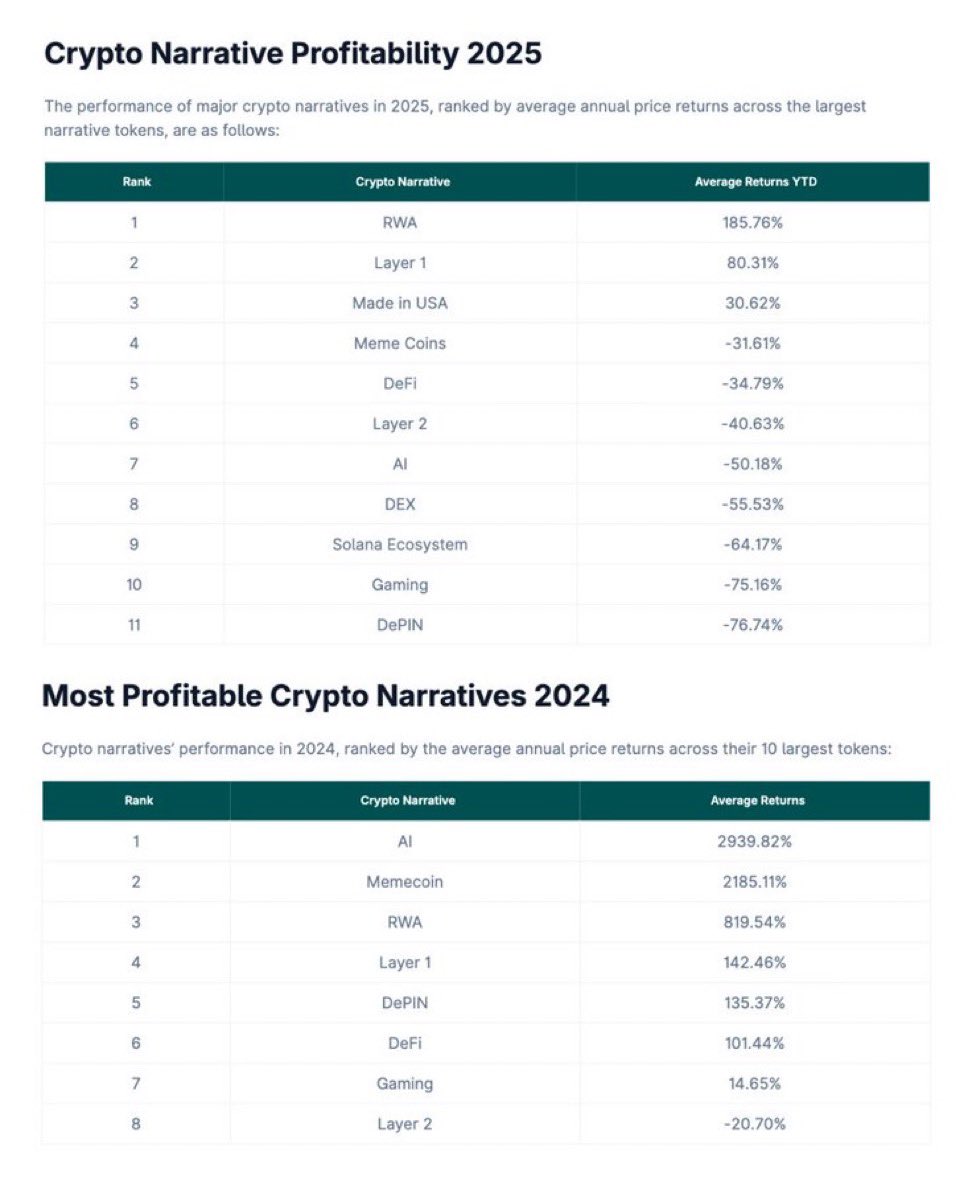
RWA topped 2025 in profitability, averaging ~186% YTD followed by Layer1 and Made in USA 🇺🇸 tokens
Outperformance came mainly from Keeta, Zebec, and Maple Finance
returns were still only a fraction of 2024’s mania.
Drop your top picks for 2026 below
17
1
17
21,828
26 Dec 2025
Trust Wallet confirmed a Security Incident Affecting Browser Extension v2.68
Let’s deep dive into what happened-
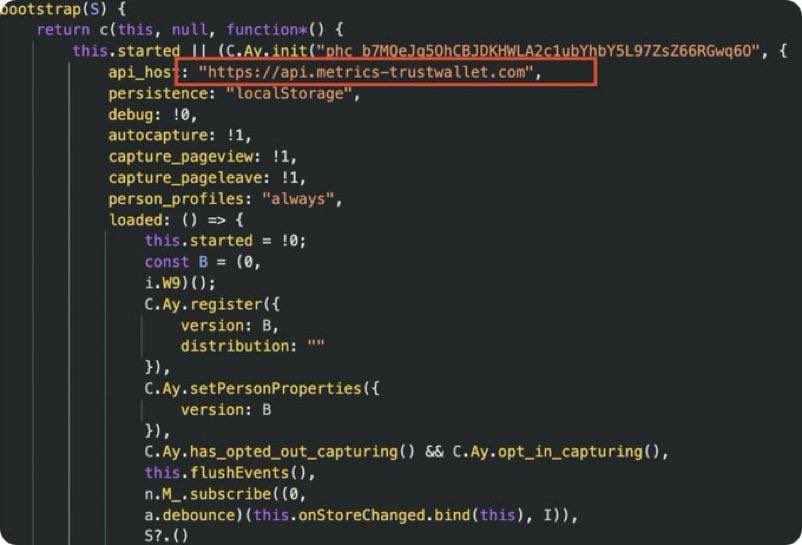
a recent update added hidden code that silently sends wallet data outside
It pretended to be analytics, but it tracks wallet activity and triggers when a seed phrase is imported
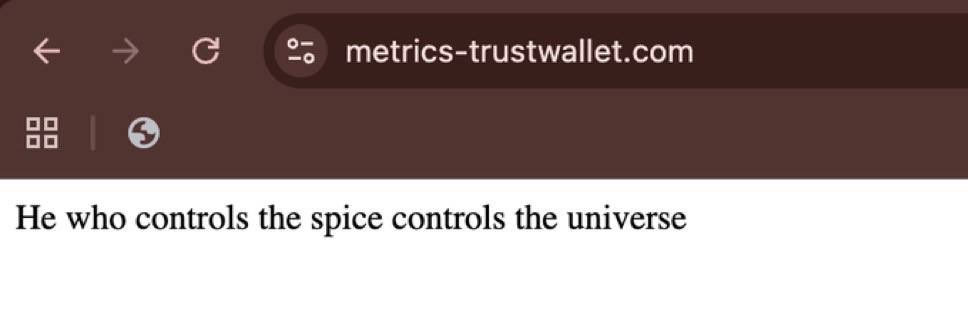
The data was sent to metrics-trustwallet[.]com a domain registered days ago and now down
He who controls the spice owns the universe
@TrustWallet
26 Dec 2025

So far, $7m affected by this hack. @TrustWallet will cover. User funds are SAFU. Appreciate your understanding for any inconveniences caused. 🙏
The team is still investigating how hackers were able to submit a new version.
9
3
18
22,871
22 Dec 2025
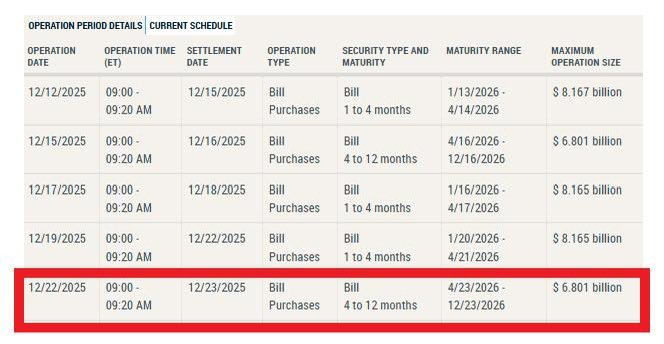
Federal Reserve is set to inject $6.8 billion into the market this week, bringing total injections to $38 billion over the last 10 days.
They are swapping outstanding treasury bills, which are already extremely money like, with central bank reserves.
It's an asset swap on the balance sheet of commercial banks within the federal reserve system.
In the short term, this helps with SOFR funding stress, which is the overnight cost of capital between financial institutions in the open market.
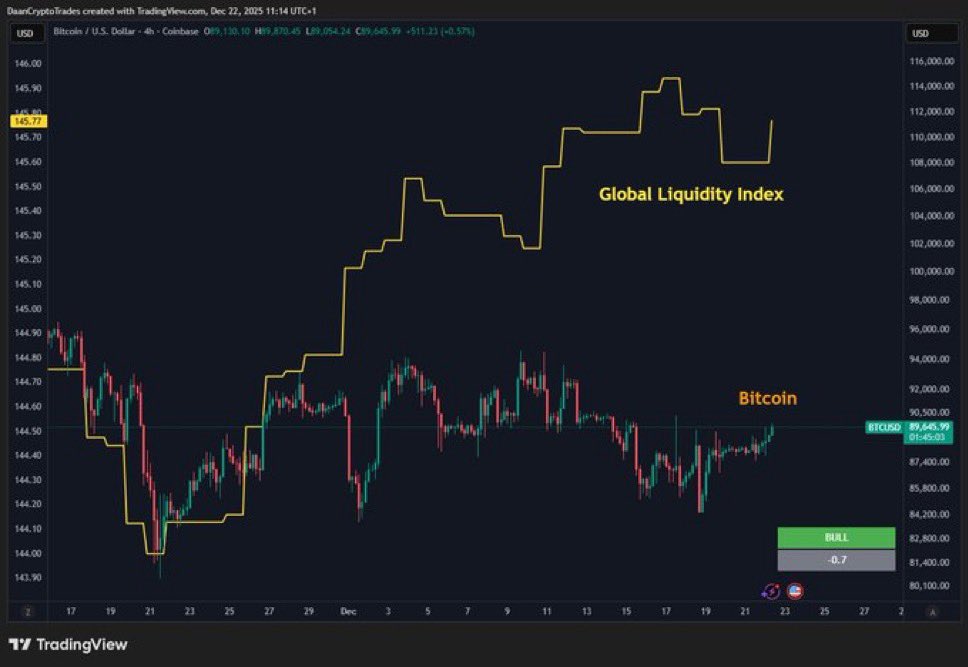
Will this liquidity injection help Bitcoin and crypto markets recover?
- Absolute uncertainty takes over and none knows the right answer 😭
1
6
9
6,473