
🛠️🚧⚒️
Joined August 2013
- Tweets 2,621
- Following 242
- Followers 437
- Likes 5,062
206 Photos and videos










Pinned Tweet

8 Jun 2023
Delete all those apps on your phone now!!
With only Twitter, you can make the most out of your web3 job or DeFi gem hunts.
Yes!
You do not actually need all those tools you have packed in your phone, just your Twitter app is enough.
TWITTER ADVANCED SEARCH
❤️ and 🔄

28
23
75
14,053
CryptoPanda || ₿ || (♟️,♟️) retweeted

1
2
24
1,984
CryptoPanda || ₿ || (♟️,♟️) retweeted
3
4
34
2,272

Before now, liquidity in DeFi used to move in cycles.
The structure was usually fast yields with short-term narratives.
But over time, the market started shifting toward something more sustainable.
Real credit activity.
That shift is exactly where tokenized credit as a RWA narrative started gaining traction.
If you’re new to RWA, here’s an illustration of what tokenized credits mean:
──•❉᯽❉•──
Normally in DeFi, if you want to borrow money, you usually need to lock up crypto like $ETH or $BTC as collateral.
Tokenized credit works differently.
Instead of the money sitting against crypto alone, the capital can be used for things like business loans, treasury investments etc.
The returns from those activities are then brought on-chain and represented as blockchain tokens.
So in simple terms:
People deposit stablecoins, the funds are used in real-world credit opportunities, profits are earned, and yield is paid back to users on-chain.
──•❉᯽❉•──
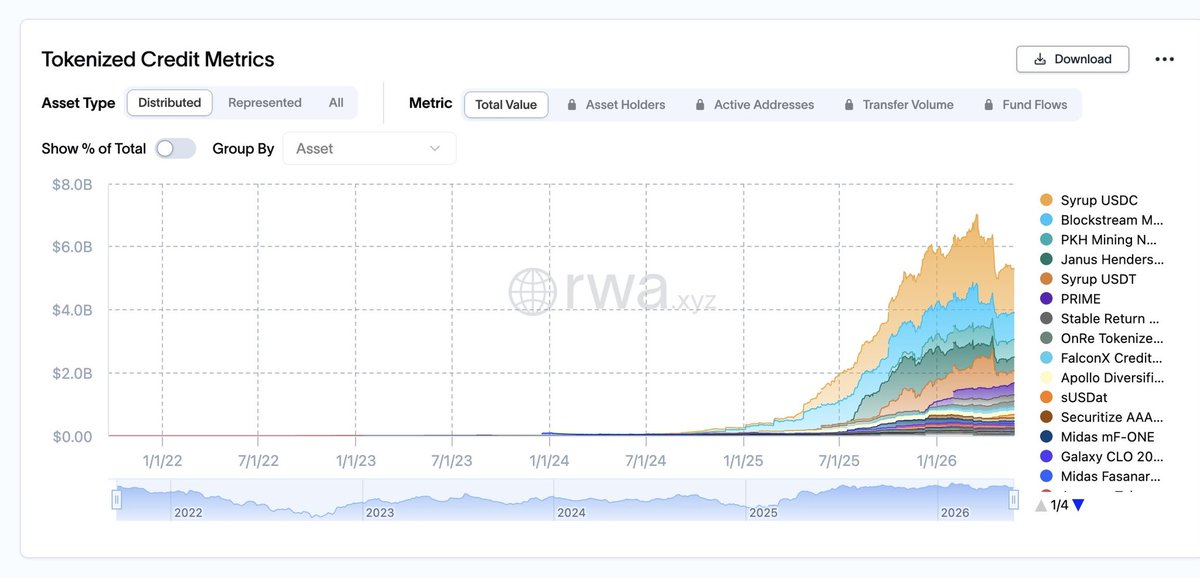
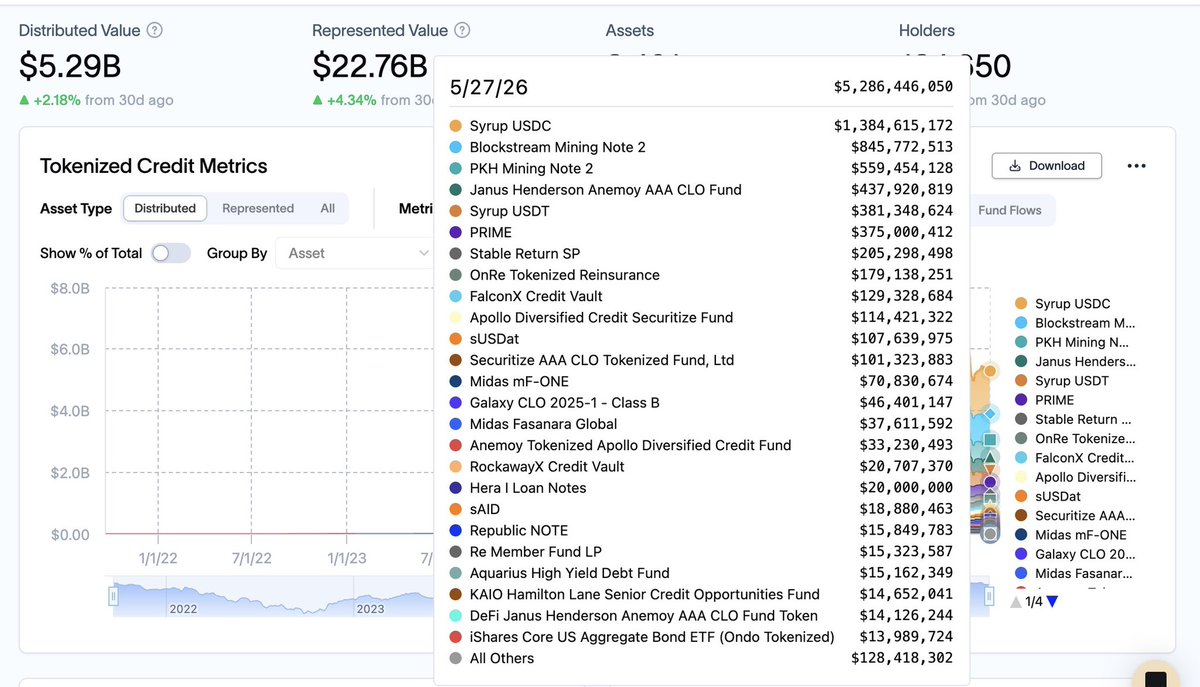
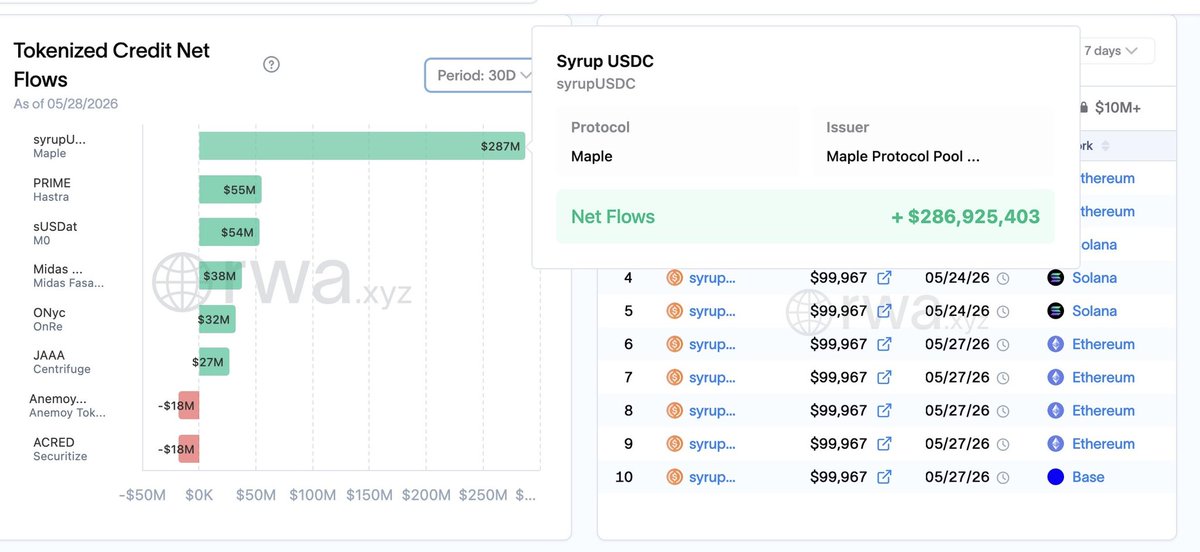
Now, taking a look at the last 30 days data on RWA.xyz, @maplefinance’s syrupUSDC towers high and hard to ignore.
From data, syrupUSDC recorded approximately $286.9M in net inflows, making it the clear leader across tokenized credit products during that period.
At the same time, syrupUSDC’s distributed value climbed to roughly $1.38B, as the largest tokenized credit asset by distributed value in the dataset shown.
That’s important because distributed value reflects actual capital actively deployed across the product.
And the gap is not small.
The next closest product, Blockstream Mining Note 2, sits around $845.7M, while several others trail far behind.
What stands out even more is the consistency behind the inflows.
While some tokenized credit products saw negative flows during the same period, Maple continued attracting capital at scale.
That usually signals confidence from larger market participants rather than short-term speculative rotations.
──•❉᯽❉•──
The bigger picture here is simple:
DeFi is maturing.
And products connected to real credit activity are starting to attract deeper and stickier liquidity.
Maple’s recent performance suggests the market is actually paying attention.
If tokenized credit continues becoming one of crypto’s next major growth sectors, @maplefinance is already positioning itself near the center of that conversation.
880
CryptoPanda || ₿ || (♟️,♟️) retweeted
Before now, liquidity in DeFi used to move in cycles.
The structure was usually fast yields with short-term narratives.
But over time, the market started shifting toward something more sustainable.
Real credit activity.
That shift is exactly where tokenized credit as a RWA narrative started gaining traction.
If you’re new to RWA, here’s an illustration of what tokenized credits mean:
──•❉᯽❉•──
Normally in DeFi, if you want to borrow money, you usually need to lock up crypto like $ETH or $BTC as collateral.
Tokenized credit works differently.
Instead of the money sitting against crypto alone, the capital can be used for things like business loans, treasury investments etc.
The returns from those activities are then brought on-chain and represented as blockchain tokens.
So in simple terms:
People deposit stablecoins, the funds are used in real-world credit opportunities, profits are earned, and yield is paid back to users on-chain.
──•❉᯽❉•──
Now, taking a look at the last 30 days data on RWA.xyz, @maplefinance’s syrupUSDC towers high and hard to ignore.
From data, syrupUSDC recorded approximately $286.9M in net inflows, making it the clear leader across tokenized credit products during that period.
At the same time, syrupUSDC’s distributed value climbed to roughly $1.38B, as the largest tokenized credit asset by distributed value in the dataset shown.
That’s important because distributed value reflects actual capital actively deployed across the product.
And the gap is not small.
The next closest product, Blockstream Mining Note 2, sits around $845.7M, while several others trail far behind.
What stands out even more is the consistency behind the inflows.
While some tokenized credit products saw negative flows during the same period, Maple continued attracting capital at scale.
That usually signals confidence from larger market participants rather than short-term speculative rotations.
──•❉᯽❉•──
The bigger picture here is simple:
DeFi is maturing.
And products connected to real credit activity are starting to attract deeper and stickier liquidity.
Maple’s recent performance suggests the market is actually paying attention.
If tokenized credit continues becoming one of crypto’s next major growth sectors, @maplefinance is already positioning itself near the center of that conversation.
34
4
64
2,218
CryptoPanda || ₿ || (♟️,♟️) retweeted
13
3
39
1,351
CryptoPanda || ₿ || (♟️,♟️) retweeted
Lately, the crypto market has been stalling.
More like ranging.
One moment it looks like we’re about to break resistance, the next we’re staring at red candles again.
So the big question on everyone’s mind is:
Are we witnessing the early stages of a bull run, or just another bull trap?
At the same time, the crypto industry has its eyes locked on the CLARITY Act bill — legislation many believe could become one of the biggest catalysts for institutional adoption and fresh capital inflow into crypto.
With talks of trillions potentially entering the market over time, sentiment is heating up again.
But what does all of this actually mean for the market right now?
Join us this Friday as we break down:
• Current market direction
• Bull trap vs bull run signals
• The impact of the CLARITY Act bill
• Narratives worth paying attention to
• @maplefinance weekly alpha and key ecosystem updates
📍 X Space
🗓 Friday, 22/05
⏰ 6PM UTC 1
Hosted by myself and @Badmus2121, with seasoned speakers and analysts like @Pharmkev, @Bouyantflames and many more
Set your reminders, bring your hot takes, and come ready for real conversations and alpha 🫱🏽🫲🏾
Link in comments 👇🏽

29
6
73
4,530
CryptoPanda || ₿ || (♟️,♟️) retweeted
Maple’s yield product just found a new home!
For a long time, access to reliable, high-quality yield was mostly limited to large financial players.
Everyday onchain users were largely left out.
But guess that is changing now with @maplefinance’s latest update.
Maple’s yield-bearing dollar product, syrupUSDT, just went live to over 10million users on @inkonchain.
Now, users and builders on Ink can access Maple’s yield product directly inside the apps they already use.
Making it easier to:
• Earn passive yield on their USDT
• Use that yield across DeFi apps and strategies
• Access institutional-grade yield in a simpler way
And this is bigger than just another deployment.
It shows how syrupUSDT is evolving beyond a simple yield product into infrastructure developers can build with.
From day one, builders on Ink can integrate it into lending, borrowing, and other DeFi applications.
And the best part?
A dedicated incentives and rewards program will also be launching soon to celebrate the integration.
🗣️I wouldn’t miss this for anything. You shouldn’t too.
Start here 🔗 app.tydro.com/reserve-overvi…

May 13

syrupUSDT is going live on @inkonchain.
Maple's institutional dollar yield, now available on one of the fastest-growing L2 ecosystems.
24
5
65
7,069
CryptoPanda || ₿ || (♟️,♟️) retweeted
On July 18, 2025, the GENIUS Act was signed into law, opening up endless possibilities for stablecoin yields.
But with the CLARITY Act now underway, we’re about to witness an entirely different phase of growth.
Because the next evolution of DeFi won’t just be about launching more stablecoins.
It’ll be about making yield-bearing stablecoins actually usable across the onchain economy.
And while most people are still focused on price action and narratives, some protocols are already building for that future.
One of them is @maplefinance .
Maple just rolled out a new integration framework for builders.
With this new feature, Maple is making syrupUSDC and syrupUSDT easier to use across different DeFi apps, instead of being stuck in just one place.
Developers can now integrate Maple’s institutional yield rails directly into:
•wallets
•lending markets
•treasury platforms
•aggregators
•and other DeFi protocols
The bigger unlock here is capital efficiency.
And with this update, maple is determined to retain the lead as the largest institutional onchain asset managers.

May 8
Your brand. Your earn product. Powered by Maple.
Integrate Maple today: docs.maple.finance/integrate…
33
5
74
2,961
CryptoPanda || ₿ || (♟️,♟️) retweeted
If the Bitcoin whitepaper started with “trust me,” would anyone have even cared?
Probably not.
That is because transparency is what blockchain technology was built for - one of the reasons Bitcoin was made open source.
Yet today, many DeFi projects still ask users for blind trust without real transparency.
But certainly not @maplefinance.
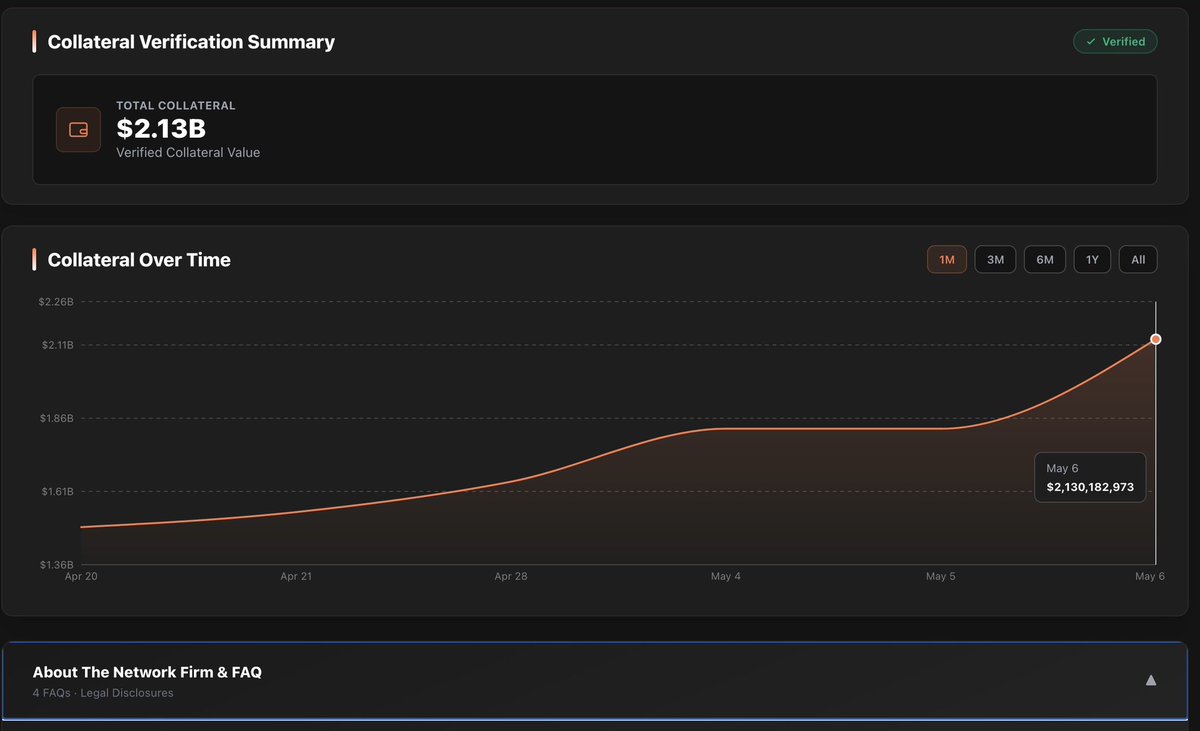
Maple just launched Proof of Reserves for syrupUSDC and syrupUSDT, giving users a way to independently verify that the assets backing these products are actually there.
JSYK, Proof of Reserves simply means you no longer have to rely only on claims.
You can verify:
• loans are fully overcollateralized
• assets are held with approved custodians
• reserves are being checked in real time by a third party
And the best part is that it’s publicly accessible directly on the Maple app.
If you’re looking for a trustworthy DeFi platform for sustainable yields, this is the kind of update worth paying attention to.

May 7
Introducing Proof of Reserves for syrupUSDC & syrupUSDT.
Independent, third-party verification of the collateral backing every loan on Maple, powered by @The_NetworkFirm.
See the report. app.maple.finance/earn
27
3
56
1,746
CryptoPanda || ₿ || (♟️,♟️) retweeted
Most DeFi yields look flashy at first glance until the question of sustainability and risk management is raised.
That’s usually where things start to separate.
Because behind a lot of high APYs are token emissions, looping strategies, and structures built not to last.
For @maplefinance , it’s different.
It’s credit yield structure.
Instead of positioning yield around incentives that eventually fade out,
Maple is doubling down on something more fundamental:
real credit activity powered solely by institutional borrowers.
In simple terms, the yield comes from institutional borrowers paying for access to capital — not from protocols printing rewards to keep liquidity around.
And that distinction is how Maple has been consistent through thick and thin.

May 1
Not all yield is the same.
Incentive yield runs out.
Composability yield inherits every risk in the chain.
Credit yield is interest paid by a real borrower on an underwritten loan, independent of market-driven rewards.
That is why Maple focuses on credit yield.
28
4
62
2,854
CryptoPanda || ₿ || (♟️,♟️) retweeted
GM legends.
Happy new week.
Don’t stop showing up and believing, your big win is just a step away.
God will crown your efforts with success.
Let’s win this week 🫱🏽🫲🏾.

36
3
62
5,843
CryptoPanda || ₿ || (♟️,♟️) retweeted
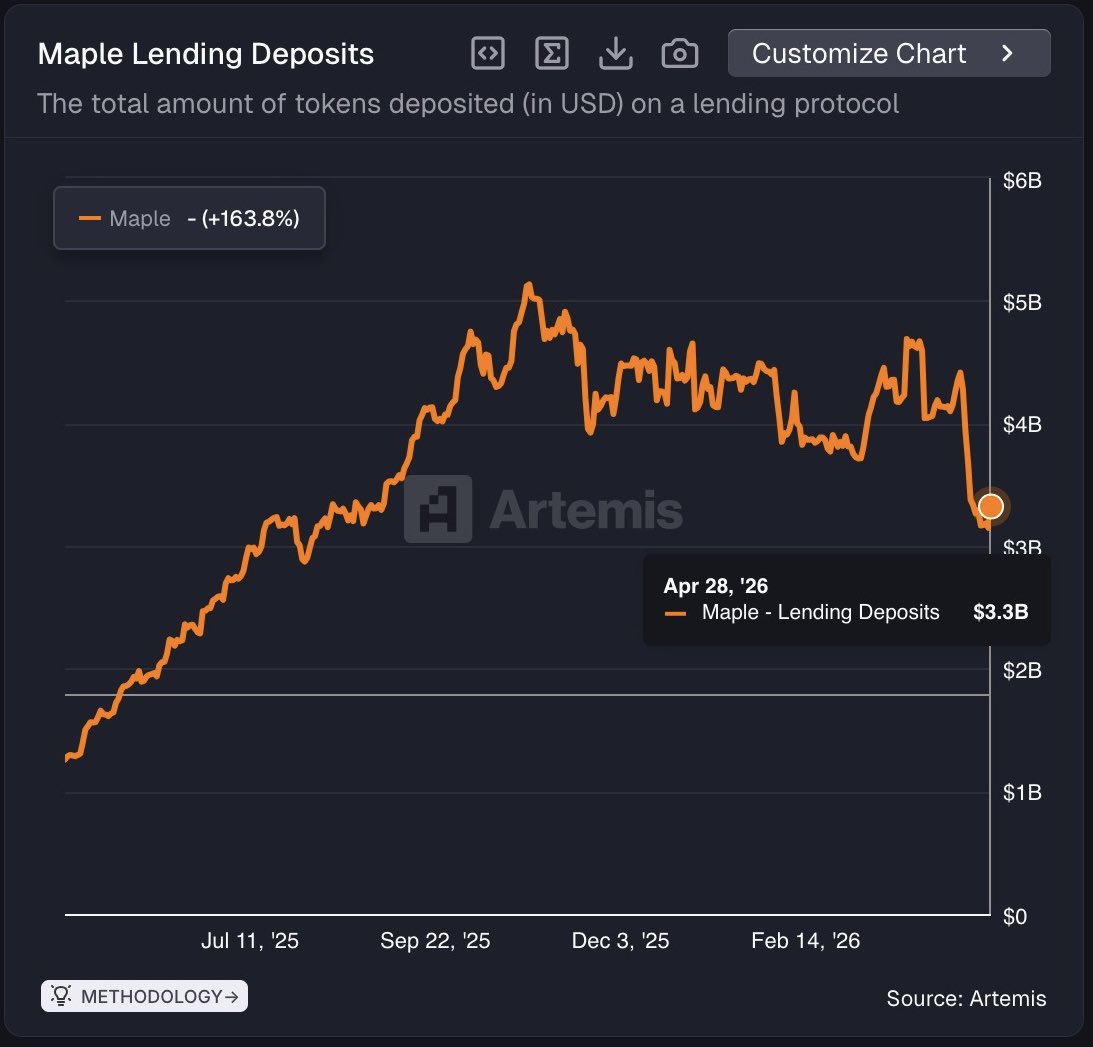
$175M entered @maplefinance from lenders in a single day!
But the bigger picture makes it even more interesting.
Over the past year, Maple’s lending deposits climbed aggressively, peaking above $5B.
Even with recent market volatility and capital rotation, the protocol has managed to hold onto billions in deposited liquidity.
The latest inflow suggests lenders are still comfortable parking serious capital inside Maple’s ecosystem,
especially as demand grows for structured, transparent onchain yield products.
Maple’s positioning is starting to look very intentional now:
➺ build during uncertainty,
➺ focus on sustainable credit markets,
➺ become one of the few DeFi platforms institutions can actually size into comfortably.
If these deposit trends continue, Maple won’t just be seen as another lending protocol,
it’ll keep strengthening its place as core onchain financial infrastructure!
Apr 28
Today, lenders deposited over $175M into Maple's assets.
Maple is the home for onchain allocators to earn yield on their stablecoins.

21
5
73
4,729
CryptoPanda || ₿ || (♟️,♟️) retweeted
Less than a year ago, @maplefinance made a bold move onto Solana.
No one saw that coming.
It was a simple bet:
Expanding its product to a high-performance low-cost L1 chain.
For syrupUSDC, Solana’s strengths mean:
➥ capital can move quickly
➥ yields can be accessed without high costs
➥ users can interact more frequently without friction
Today, that bet crossed a milestone:
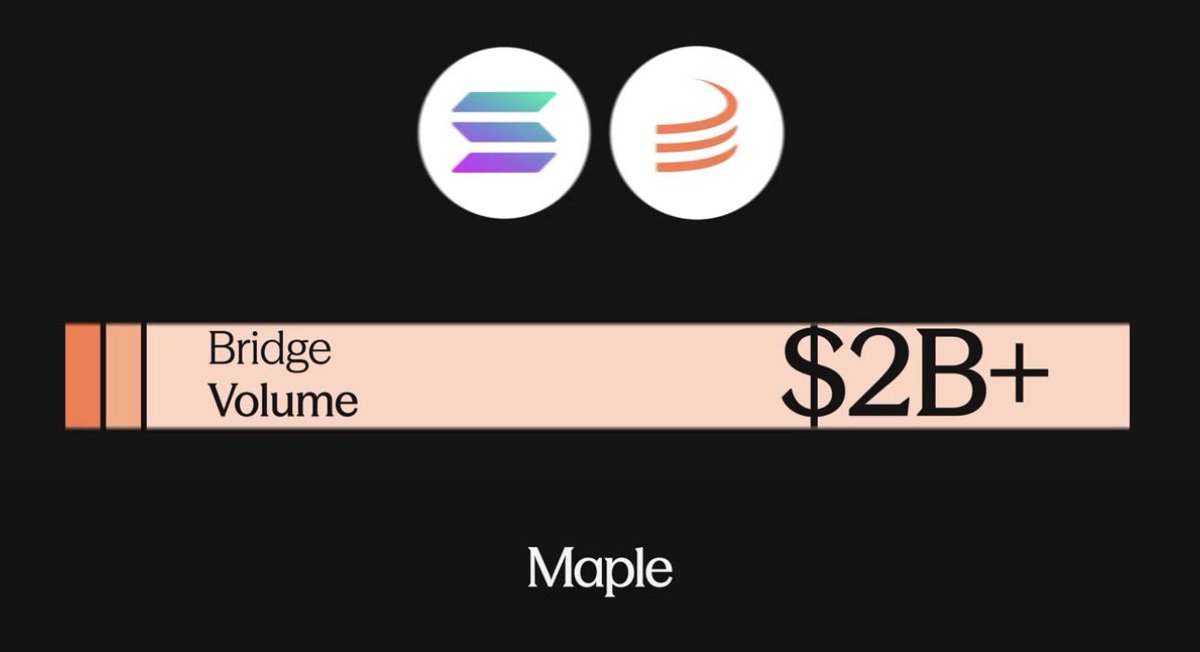
$2B in bridge volume on syrupUSDC.
Maple didn’t reinvent anything for Solana.
They brought what already worked:
a yield-bearing dollar asset backed by real lending activity.
No incentive gimmicks. No complexity.
Just yield the way institutions love it.🥞🥞
Apr 24
Solana is a key expansion venue for syrupUSDC.
The total bridge volume has surpassed $2B in less than a year after the launch.
24
3
74
4,018
CryptoPanda || ₿ || (♟️,♟️) retweeted
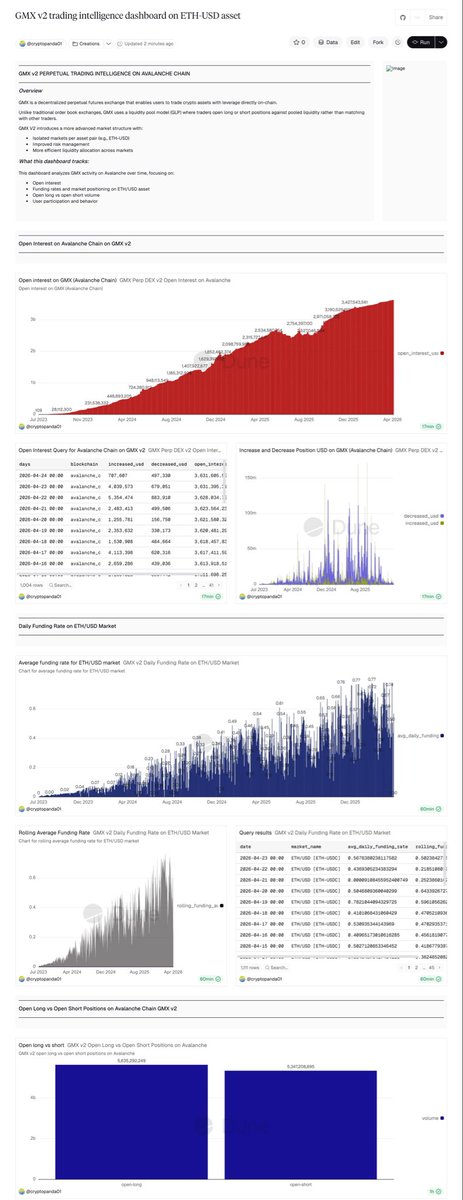
Lately, I’ve been digging deep into DeFi perpetual trading on GMX.
After the recent incident where @meekdonald lost heavy on a perp trade even after catching the top on $RAVE because of funding rate, I’ve been asking questions onchain.
Built a dashboard on perp trading intelligence on @GMX_IO v2.
Examined:
➺ Open interest
➺ Funding rates, with focus on ETH-USD trades
➺ Total volume on open long vs open shorts trades
🔗 dune.com/cryptopanda01/gmx-v…
Data tribe: @AnalyticSages
Data platform: @Dune
Happy weekend legends🫱🏽🫲🏾
15
6
49
2,446
CryptoPanda || ₿ || (♟️,♟️) retweeted
Maple is trending, again!
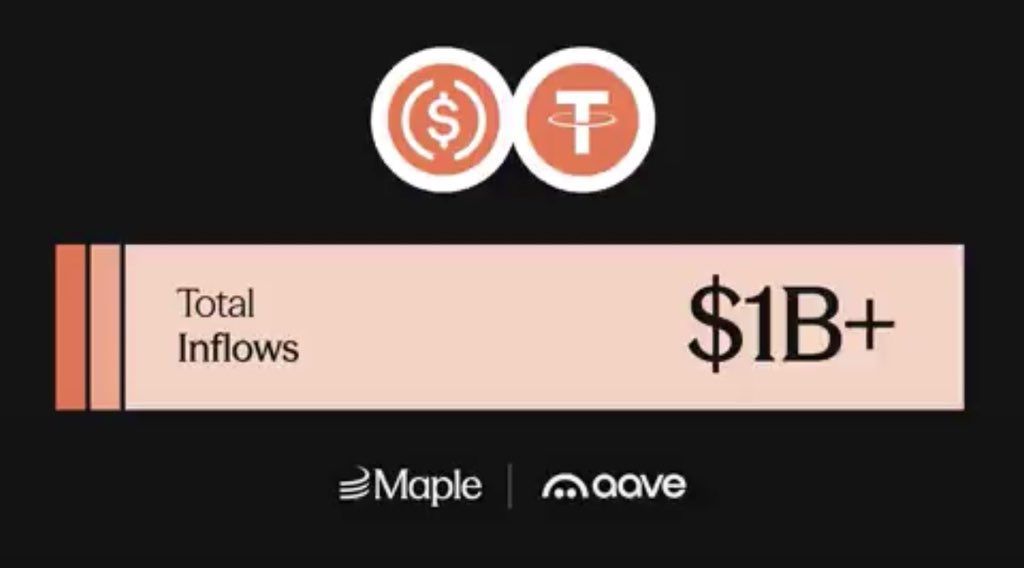
Just last week, @maplefinance hit the timeline with a $1B total inflow milestone.
While most protocols are slowing down because markets conditions are getting shaky,
Maple seems to lean in - quietly stacking progress in places most people aren’t even watching.
And now a new milestone achievement!
First, it was the $1B inflows through syrupUSDC and syrupUSDT into @aave — a number that was achieved from sustained capital choosing Maple’s stable yields.
Then almost immediately after, another update drops:
A new $100M institutional loan backed by Bitcoin.
moments like this don’t just happen overnight.
Instead of disappearing when things get bad, Maple refines how they operate, tighten risk, and focus on borrowers that can actually hold up under pressure.
Now you’re seeing the outcome of that:
→ Yield products scaling into the largest DeFi lending markets
→ Institutional-sized loans being issued consistently
→ Capital flowing in large sums
For what it’s worth, Maple has firmly established itself as a leading institutional credit platform,
and it’s not just leading, it’s sustaining that position.
Apr 22
Maple has issued a new $100M institutional loan backed by BTC.
We continue to facilitate capital inflows at scale.
29
3
62
3,551
CryptoPanda || ₿ || (♟️,♟️) retweeted
I’d love to hear your honest thoughts:
What’s the first thing that comes to mind when you hear @maplefinance?
Poll’s in the comments 🗳️

Apr 16
TVL growth directly drives Maple's revenue.
More capital in syrupUSDC and syrupUSDT means more yield generated, more protocol revenue, and higher SSF allocations.
A flywheel that sustains itself.
33
3
62
2,522
CryptoPanda || ₿ || (♟️,♟️) retweeted
10 years as a classroom teacher taught me one thing:
good teachers are rare.
Great ones are obvious.
I’ve spent over a decade:
• Preparing lesson notes
• Building teaching aids
• Applying different methods to make learning stick
So I know what quality tutoring looks like - and I don’t say this lightly:
You won’t find the depth of tutors anywhere else like @AnalyticSages
Market sentiment might be down,
but your skillset shouldn’t be.
If you’re ready to explore blockchain data analytics and start making real, data-driven decisions,
then Cohort 8 is your entry point.
Registration is live (closes April 30).
🔗 analyticsages.io/beginner-bl…
Use code: SageDandy
My DM is open for any questions, or you can reach out to the founder, @apostleoffin

20
4
58
2,147
CryptoPanda || ₿ || (♟️,♟️) retweeted
Something interesting is happening on Maple… and most people will miss it.
But as your go-to data guy, I’ve got you looped in🫱🏽🫲🏾
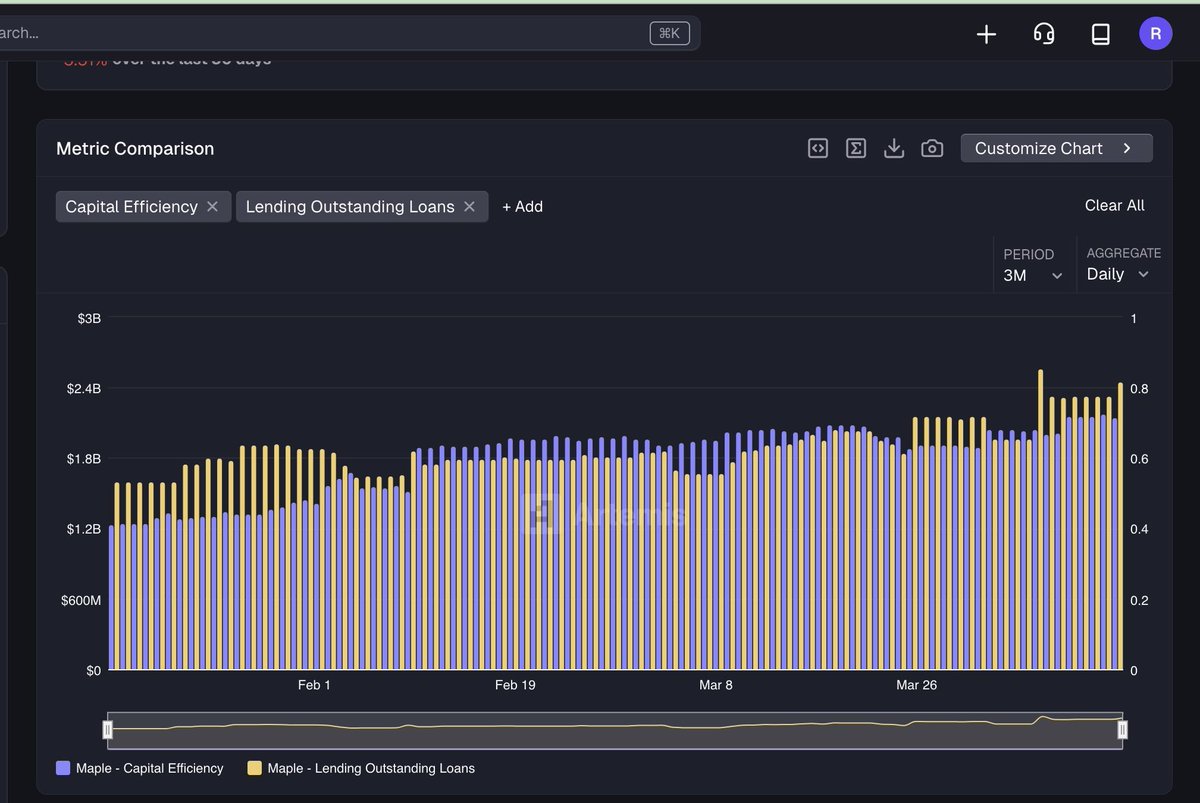
At first glance at on-chain data, you’ll notice lending volume climbing over the last 3 months,
with outstanding loans standing at over $2.4B.
Looks like simple growth, right?
Not quite.
Because underneath that, capital efficiency is quietly trending up too.
Now, quick context:
Capital efficiency means how much loan volume @maplefinance generates per dollar supplied.
So when this goes up, it means:
➺ Maple is doing more with the same (or slightly more) capital
➺ Funds aren’t sitting idle; they’re being actively deployed
That tells you something important about how Maple is structured:
It’s not just attracting deposits,
but putting that capital to work consistently.
And that’s what makes the difference!
While outstanding loans rise steadily, the parallel increase in capital efficiency suggests:
➥ Better utilization of liquidity
➥ Strong borrower demand
➥ And tighter capital allocation across pools
In simple terms:
Growth isn’t just bigger on Maple, it’s smarter - and data confirms it.
Data platform: @artemis
33
3
69
4,831
GMファミリー。新しい週が幸せでありますように。🌞
ニコさん 追加椅子 ドールハンマー クレイガードマン 売り子さん 喫茶店の日
#カルビーご招待キャンペーン #わさビーフてぇてぇ #バリバリバリッチェ
GM legends 🫱🏽🫲🏾
Happy new week.
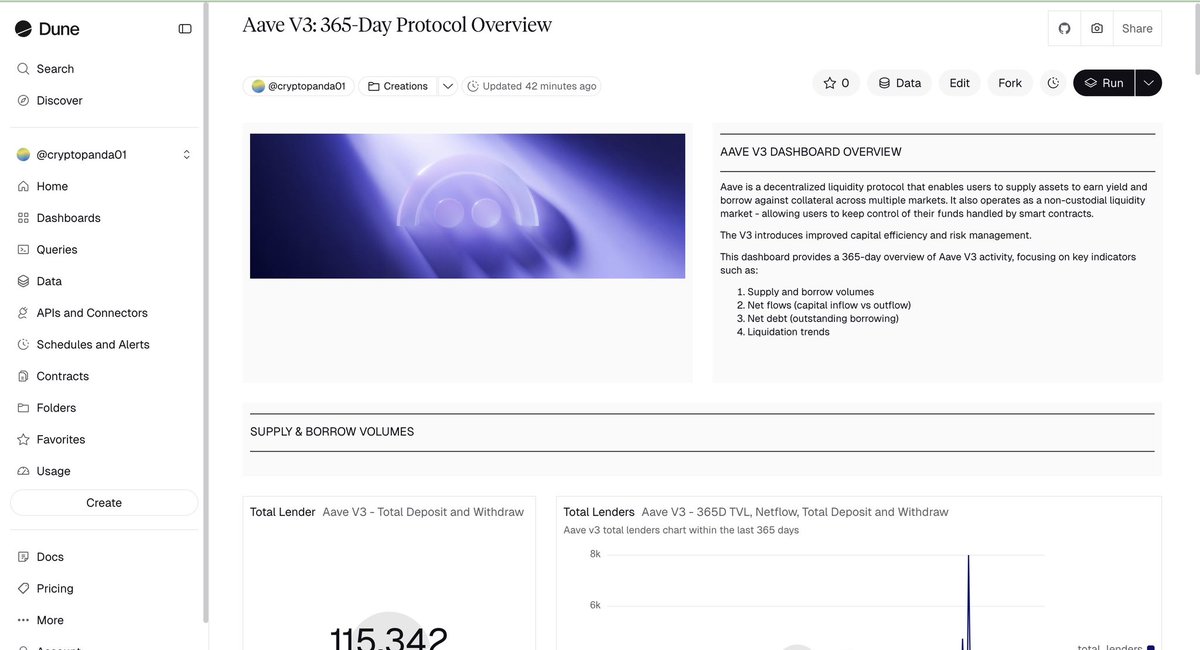
I spent the whole of last week querying dataset on lending and borrowing protocols — focus was on Aave.
Then built a dashboard that captured user activity within a year timeframe.
Looking at my progress so far reminds me that anything is possible.
Don’t overthink it — JUST DO IT.
Data tribe: @AnalyticSages
768
CryptoPanda || ₿ || (♟️,♟️) retweeted
On October 10, 2025, over $19B was wiped out across the crypto market.
Around 70% of liquidations happened within 40 minutes at peak panic — the fastest cascade we’ve ever seen.
It marked the largest liquidation event in crypto history.
DeFi didn’t escape it either.
Borrowers across lending protocols were forcefully liquidated as prices unraveled.
But beyond the headlines, the real question is:
How did on-chain systems actually handle that level of stress?
──•~❉᯽❉~•──
Over the last 365 days, @aave has quietly:
➺ Processed billions in supply
➺ Sustained growing debt levels, and most importantly,
➺ Absorbed multiple liquidation shocks
…without breaking structure.
To understand this better, I dug into a full year of Aave V3 data.
A few patterns stood out:
──•~❉᯽❉~•──
➥ Supply vs Borrow Demand:
Supply grew steadily across the year, but borrow demand lagged behind.
Both follow similar trends, but utilization isn’t maxed out, meaning:
᯽ liquidity is deep, but not fully tapped
᯽ room for more efficient capital deployment
➥ Net Flows (Reactive Capital):
Capital weren’t moving in steadily - it moved in waves.
You see inflows during favorable conditions, then quick pullbacks when sentiment shifts.
This wasn’t sticky capital, but opportunistic liquidity reacting to the market
➥ Net Debt:
Debt trends are upward overall, but not aggressively.
👉 Leverage was increasing
👉 But at a measured pace - no signs of reckless overextension
That’s a key difference between healthy growth vs. systemic risk buildup
➥ Liquidations:
Liquidation spikes were present, but not constant.
The biggest spike aligned exactly with the October 10 market crash when $BTC dropped from ~$122k to ~$102k
This tells us:
Liquidations are externally triggered, not due to internal instability.
Stress events are sharp and short-lived, not prolonged, which is exactly what you want in a resilient system.
➥ User Activity:
There were no dramatic spikes or major drop-offs.
Just consistent usage across the year; suggesting real users, and not just short-term speculation cycles
──•~❉᯽❉~•──
Putting it together:
Aave V3 doesn’t behave like a system people rotate in and out of.
It looks more like infrastructure; something users rely on consistently, even through volatility.
If you’re making decisions around lending, borrowing, or building on top of Aave, these are the signals worth
tracking:
•Utilization vs idle liquidity
•Flow cycles
•Debt growth vs risk
•Liquidation behavior under stress
Date tribe: @AnalyticSages
Data platform: @Dune
Special shout out to @Pharmkev for being an excellent tutor, and to @apostleoffin for founding one of the best academy.
Full dashboard:
dune.com/cryptopanda01/aave-…


33
5
80
2,134