
We want to CryptoParty with you, Minnesota! Come learn how to secure your communications in a relaxed social environment!
Joined April 2013
- Tweets 1,267
- Following 1,728
- Followers 811
- Likes 371
13 Photos and videos
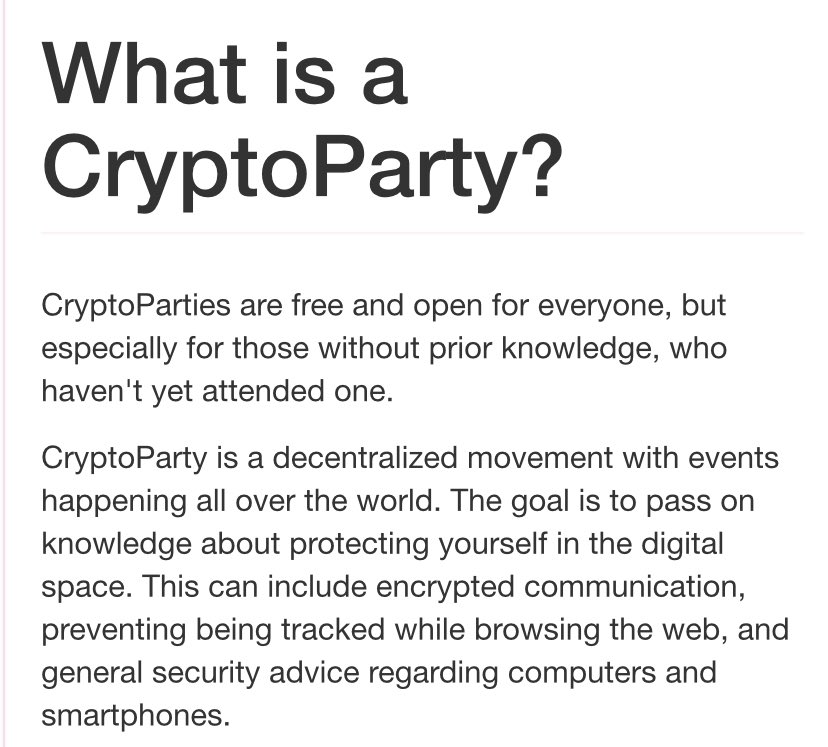
Pinned Tweet

3 Jun 2020
In 2015 we taught a @StarTribune reporter how to use encrypted communications.
After a bit of a break, we have decided to reactivate in order to teach reporters, whistle-blowers, and the general public how to use them as well. #JusticeForGeorgeFloyd
2
3
8
CryptoParty MN retweeted

16 Oct 2020
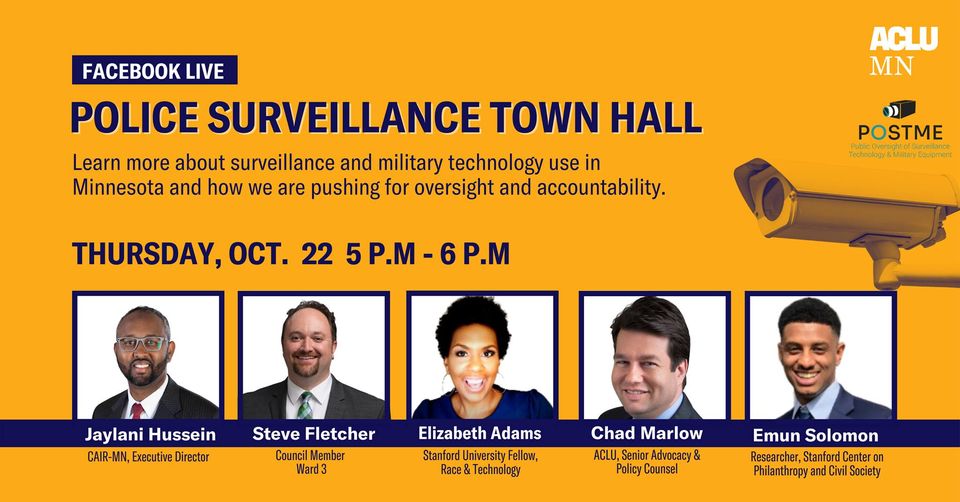
Join us next week for a town hall discussion about a future without facial recognition technology.
We'll hear from national experts about why FRT is bad for our communities and how we can create systems of oversight and accountability.
RSVP: facebook.com/events/27321203…
1
9
13
CryptoParty MN retweeted
16 Oct 2020
Our leaders need to hear the dissent of the people.
But constant, indiscriminate surveillance has a chilling effect on our rights to protest and assemble, because it changes the behavior of people who would otherwise make their voices heard.
(6/7)
1
5
10
CryptoParty MN retweeted
16 Oct 2020
We need oversight and accountability to prevent facial recognition technology from being abused.
But right now, there is no legal or regulatory framework to govern how the tech is used. Do you trust the authorities not to abuse a powerful tool like this? We don't.
(5/7)
1
5
11
CryptoParty MN retweeted
16 Oct 2020
Facial recognition technology gives authorities a powerful tool to identify and target vulnerable groups.
It would be a boon for ICE, allowing them to search for and target immigrants and refugees living in and contributing to our neighborhoods.
(4/7)
1
5
10
CryptoParty MN retweeted
16 Oct 2020
Facial recognition technology replicates and amplifies racial biases at the core of traditional policing.
These technologies have an error rate of 0.8% for light-skinned men but up to 34.7& for dark-skinned women.
This leads the tech to misidentify Black and brown faces.
(3/7)
2
6
11
CryptoParty MN retweeted
16 Oct 2020
Stepping out your front door shouldn't give authorities the consent to watch and track your every move.
But facial recognition technology destroys the idea of being anonymous in public by automatically and indiscriminately surveilling people as they go
about their lives.
(2/7)
1
6
14
CryptoParty MN retweeted
16 Oct 2020
.@MplsWard3 just introduced a bill to the Minneapolis City Council that would ban facial recognition technology in our city. Here's why that would be a good thing.
(1/7)
1
34
113
CryptoParty MN retweeted

22 Oct 2020
amazing rt4mn volenteer @austinwkraft wrote up a great post on POSTME! rt4.mn/our-shared-responsibi…
1
1
CryptoParty MN retweeted

22 Oct 2020
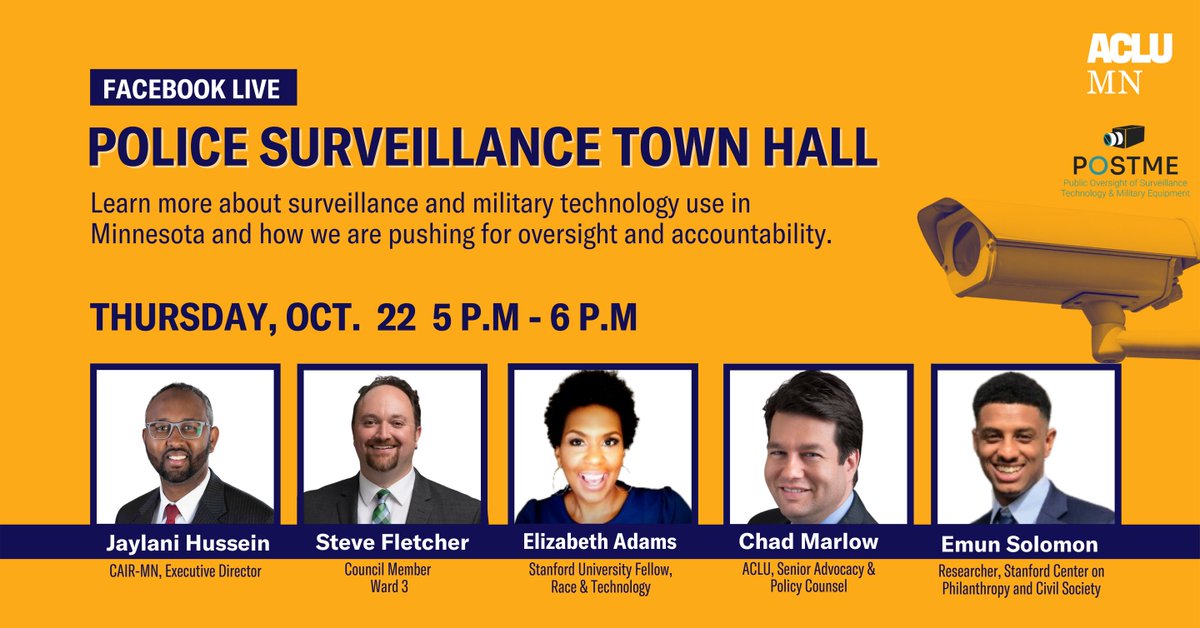
Join us this afternoon at 5pm CDT for our Police Surveillance Town Hall! If you'd prefer to not use Facebook but still want to attend, you can use our free software live stream alternative here: stream.postme.mn #mnleg #mnpol #banFRT #FacialRecognition #mpls #HellaPrivacy
21 Oct 2020

What is facial recognition technology (FRT)? How is it harmful to our communities? Join us for a town hall discussion on banning FRT in Minneapolis, as well as a broader conversation on surveillance and military equipment in your city.
facebook.com/events/27321203…
7
9
CryptoParty MN retweeted

22 Oct 2020
To protect everyone's privacy, surveillance technologies must be governed by appropriate legislation. When used by governments and police forces, proper oversight is even more critical. Congratulations to @postmeMN for advocating for these reforms: vice.com/en/article/epdgdj/m…
5
36
155
CryptoParty MN retweeted
22 Oct 2020
Action step 2/3: tune in today at 5pm CDT to the Police Surveillance Town Hall hosted by @ACLUMN and @MplsWard3. There are 2 watching options: FB at fb.com/events/27321203771037… or, if you don't want to use FB, you can watch using our free software stream here: stream.postme.mn
1
2
5
CryptoParty MN retweeted
22 Oct 2020
Minneapolis, let's bring accountability and oversight to surveillance tech! Here's what to do: (1/3) Visit action.postme.mn to tell your City Council Member to #BanFacialRecognition and to support POSTME. More info on POSTME at postme.mn.
1
6
14

Tor is a volunteer-run service that provides both privacy and anonymity online by masking who you are and where you are connecting. Review our guide on using Tor for Linux to get set up. ssd.eff.org/en/module/how-us…
3
42
112
CryptoParty MN retweeted

14 Oct 2020
New features for Signal private groups are now available, including group admins, @ mentions, and more: signal.org/blog/new-groups/
Your existing group chats will be upgraded in the near future, but in the mean time newly created groups will get you permissions and mentions.
39
231
814
CryptoParty MN retweeted
12 Aug 2020
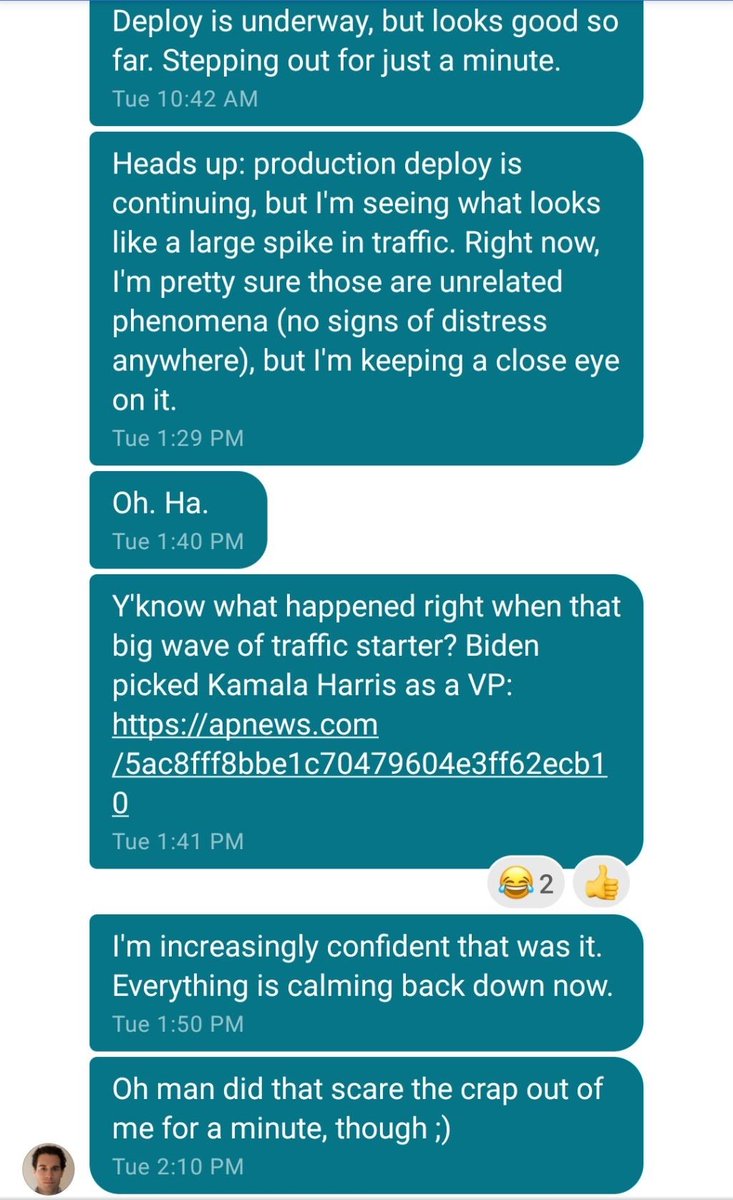
TFW you deploy right in the middle of world events. Good thing we had already chosen our VP of monitoring.
9
95
780
1 Aug 2020
Encryption and privacy tools are vital to many people who are avoiding censorship or trying to stay safe.
Want to learn?
@ us and we’ll teach you for free.
5
8
CryptoParty MN retweeted
4 Jul 2020
Hey friends,
Do you need better privacy to organize, communicate with sources, or live safely?
@ or DM us if you need help encrypting your communications.
We’d like to help you out and get a feel for what people need so we can put together some guides
cryptopartymn.com/?p=226
3
1
CryptoParty MN retweeted
3 Jun 2020
Which other news organizations in Minnesota allow you to send tips via encrypted channels like Signal or PGP?
3
2
