
We use AI and engineering methodologies to help people think more deeply and creatively 💭💡
Joined April 2023
- Tweets 129
- Following 12
- Followers 94
- Likes 7
66 Photos and videos








Curiouser.AI retweeted

Jun 3
Three Years Ago, I Was Frankenstein
Being Chased by Industry Insiders With Pitchforks**
When we started @CuriouserAI, the reaction from the AI world was not subtle.
“You want to do what?”
"Slow people down and use AI to help people think more critically and solve problems for themselves?")
"Are you nuts?"
"Who wants to think!"
At the time, the dominant assumption was simple:
Generative AI would do the prompting.
Humans would do the complying.
AI was designed to make thinking easier.
The problem with that is thinking is not easy
and it's not supposed to be.
The future, we were told, was all of humanity prompting machines
with almost no one stopping to ask what this might do to us.
We were already seeing early signals.
People outsourcing judgment.
Work regressing to the mean.
Brain rot.
Speed increasing while quality quietly declined.
The proliferation of mediocrity (slop).
Curiosity replaced with convenience.
So we flipped the script.
Instead of building an AI that waits to be prompted, we built one that asks questions and essentially prompts you.
Not shallow ones. Strategic ones.
The kind a great co-founder asks.
The kind that slow you down just enough to make you better.
An AI that listens.
Remembers.
Pushes back.
And works with you, not over you.
That alone was heresy.
Then we made a second decision.
We said our first use case wouldn’t be the enterprise.
We said we wanted to focus on entrepreneurs, builders, and creators
people in the messy middle of thinking and building something new.
That’s when the laughter really started.
“That’s insane.”
“You can’t build a serious AI company that way.”
“If you want to get funded, you go after the enterprise.”
But here’s what we couldn’t ignore.
Entrepreneurs and small builders create roughly three-quarters of all new jobs.
They are not a niche.
They are the economic engine.
And unlike large organizations, they don’t need more automation theater.
They need clarity.
They need better thinking.
So we asked a different question:
What happens if you increase the probability of success for people who already know how to create value?
Even a modest improvement, just 1%, doesn’t move a metric.
It changes lives.
It means hundreds of thousands of new jobs.
Real ones. Human ones.
Three years ago, this sounded naive.
Or idealistic.
Or “different.”
Today, the industry quietly admits that speed without judgment didn’t work.
Automation without reflection didn’t deliver intelligence.
And replacing thinking was never the same thing as improving it.
The pitchforks are gone now.

1
45

May 11
We keep debating AI displacement like it's a values problem.
New research suggests it might be a game theory problem.
That distinction changes everything about what we can actually do about it.
🔗👇
1
14
Curiouser.AI retweeted
May 7
We just secured an SEC extension and updated @CuriouserAI 's Wefunder page with our latest traction data and a new video.
Link in comments
1
46
Curiouser.AI retweeted
Apr 9
Most of us say we want to think for ourselves.
But our behavior suggests we’d rather let machines do the thinking.
4
1
18
19,556
Curiouser.AI retweeted
Apr 20
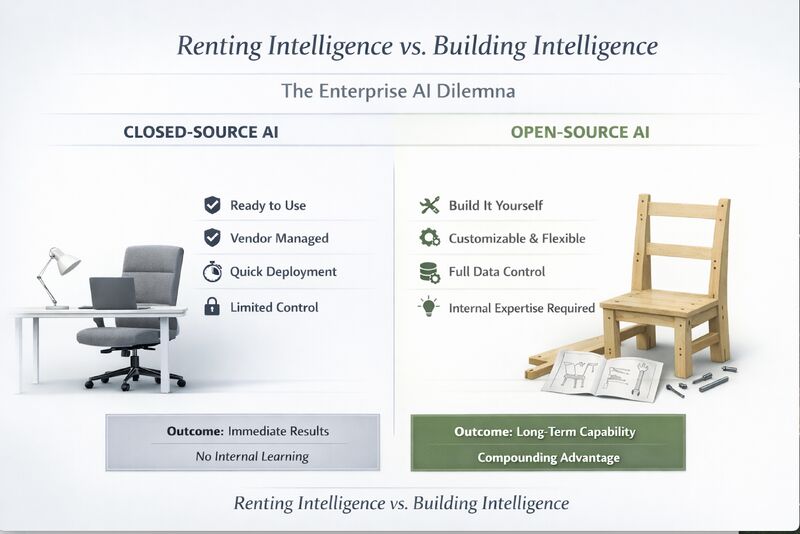
I can't think of many examples in tech history when open-sourced solutions didn't win in the end, and I am not sure why now will be any different.
2
1
33
Apr 2
We’ve all done a lot of things we are proud of. Strangely, most of them never made the cut on our LinkedIn profiles.
What if the jobs that shaped you most never made it to your resume? Read the blog 🔗👇
lnkd.in/ga2XsDEj
17
Apr 2
Today, we’re live on WeFunder!
Come build the future of thinking with us ✨lnkd.in/ggEVDDiH
1
1
1
36
3 Jun 2025
Today, we’re proud to announce the launch of Curiouser.AI Advisory, a values-first growth advisory for CEOs, leadership teams and boards that helps organizations navigate the complexity of AI with clarity, courage, and integrity.
#CuriouserAI #StrategicAdvisory #AI
2
204
28 Mar 2025
Exciting news! Alice sign-ups are booming! We're opening in 500-person cohorts, first-come, first-served. Join today for just $5 for the first month. Thank you for your support! #CuriouserAi #Alice #ReflectiveAi
1
1
2
266
22 Mar 2025
“We Won’t Build AGI — It Will Build Itself.” Dive into how AGI might emerge organically, beyond our control and comprehension, and what it means for humanity's future. Read more and join the conversation! #AI #AGI #FutureOfTech #CuriouserAI medium.com/@curiouser.ai/why…
1
230
14 Mar 2025
Silicon Valley, it's time to learn from Harley-Davidson! It's not just about algorithms & engagement metrics, but about building soul-touching brands. It's time for tech to create identity & community. What if we became our own superfans? medium.com/@curiouser.ai/wha… #TechInnovation
251
7 Mar 2025
Celebrating #InternationalWomensDay at Curiouser.ai! Our team breaks barriers daily, like Alice, our AI thought partner. She inspires ideas and progress. Engage with Alice and let’s innovate! #IWD #WomenInTech
1
183
3 Mar 2025
Exploring with Alice? Rest easy knowing your data stays private. Curiouser.AI stands by your right to privacy, always. Our terms reflect our promise: honesty, clarity, and no data sales #Transparency #PrivacyFirst #AIWithIntegrity #CuriouserAI
medium.com/@curiouser.ai/pri…
203
3 Mar 2025
We at Curiouser are committed to transparency and privacy, regulated by the FTC, CPPA, and more. Your data is yours, and we won’t sell or share it. #PrivacyFirst #TransparencyMatters #CuriouserAI
medium.com/@curiouser.ai/pri…
163
1 Mar 2025
Shadow AI: The quite revolution of the Ambitious and Creative.
Read more: medium.com/@curiouser.ai/sha…
#ai #curiouserai
130