
Joined January 2020
- Tweets 2,116
- Following 635
- Followers 731
- Likes 3,267
111 Photos and videos











Jun 15
You thought Sui meant "water" in Japanese. Wrong.
Sui stands for SUper Intelligence.
The blockchain story was just the bootstrap loader.
Jun 14

If you're a king, queen, president, prime minister, emir, sultan, or any leader of a country, make the development of innovative LLM infrastructure, AI algorithms, and supporting hardware TAX-FREE for at least the next decade. Not for companies that simply use AI, but for those building better AI models and the infrastructure behind them. Provide incentives to bring back expat talent.
If you do, your country might have a chance to survive what’s coming.
1
1
44

cybercent retweeted

Jun 14
The bear market has been canceled.
We now resume the Bull market.
Thank you for your attention to this matter.
146
186
2,972
78,377
Jun 14
SpaceX just IPO'd at $1.77T and suddenly asteroid mining is no longer sci-fi. The asteroid 16 Psyche alone is estimated to contain metal worth ~$10 quintillion, dwarfing Earth's entire economy.
There are only 21M BTC though.
1
34
Jun 14
markets tomorrow 🚀
Jun 14

“The Deal with Islamic Republic of Iran is now complete. Congratulations to all!” President Donald J. Trump 🇺🇸

34
Jun 12
Sounds crazy but if you have $1 in your account you’re worth more than France 🇫🇷
GDP: € 3 trillion
Debt: € 3.4 trillion

46

cybercent retweeted

Jun 11
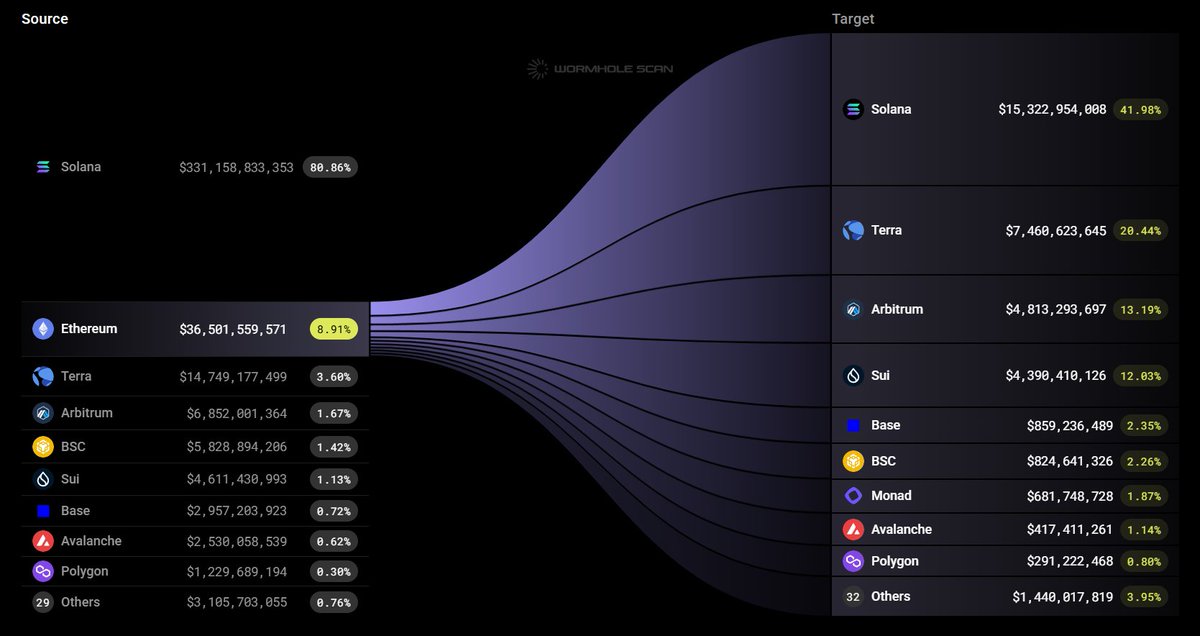
More than $4.3B has been bridged from Ethereum to $SUI via Wormhole.
13
18
191
13,899
cybercent retweeted

Jun 10
Sui <> Bridge 🦾
Jun 8

For stablecoin payments to work at scale, businesses need the same financial privacy they expect from traditional rails, while remaining compliant. We're partnering with @SuiNetwork to explore a new approach to confidential stablecoin transfers. More to come.
19
29
335
13,209
cybercent retweeted

Jun 10
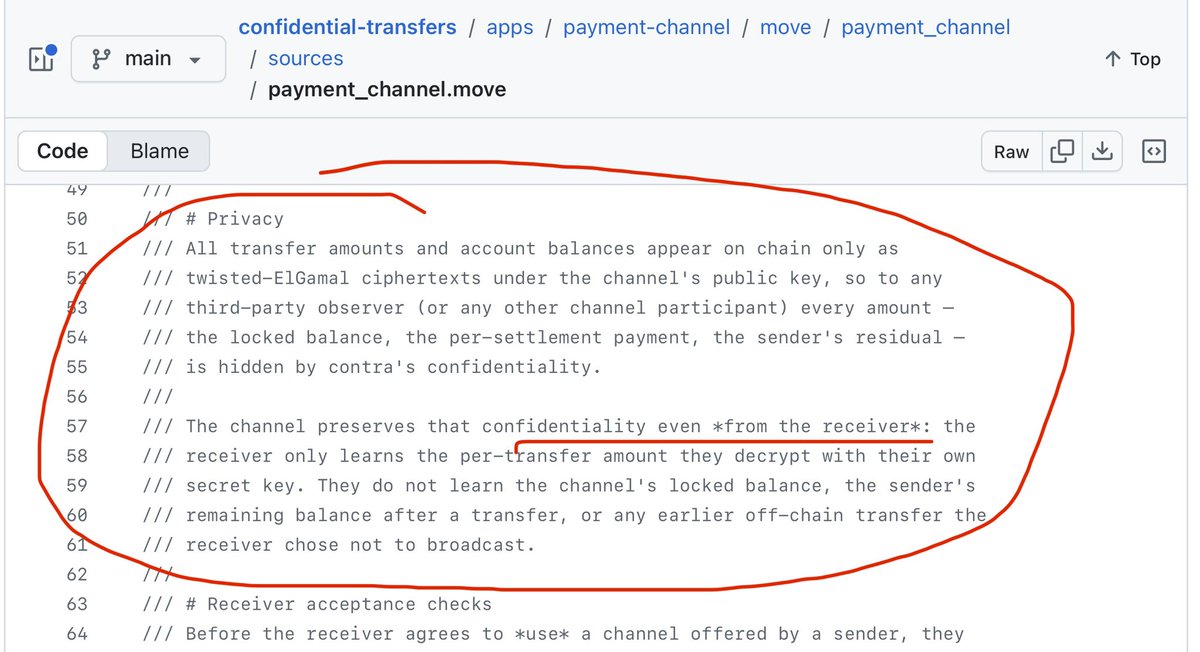
You probably haven’t spotted the hidden gem 💎 behind the future of payments privacy.
Many people just saw Sui Confidential Transfers and thought ‘ok, cool feature’. Wrong.
Look closely at what was open-sourced and you’ll notice a much bigger pattern: Confidential Payment Tunnels.
Remember Bitcoin’s Lightning ⚡️?
Now imagine locking undisclosed amounts and making payments completely off-chain, with privacy even against receiver, built in from the start. It’s a new paradigm.
This could unlock millions of payments per second, gasfree pay your grocery store even when offline, power entirely new startup ideas, and become the default pay-rails for both humans and AI agents who will ❤️ this option!
github.com/MystenLabs/confid…
33
65
318
27,335


Jun 8
you’re sorry you didn’t sell the top, you’ll be sorry you didn’t buy the bottom
20
cybercent retweeted
Jun 8
Step 1: Confidential amounts
Step 2 : Confidential txn parties
Step 3. Confidential defi
Steps 1 to 3 possible today, we are just taking a measured approach to a compliance friendly launch by methodically phasing.
All ZK wizardry without the risk of unauthorized mints. #Sui
17
35
256
12,812
Jun 8
will try this out, private amounts might actually be what everyone needed all along
Jun 8
privacy that actually works, compliance that doesn’t kill UX, serious institutions can touch without calling 12 lawyers first.
Confidential Transfers on Sui Devnet
43
cybercent retweeted

Jun 8
when in doubt, try withdrawing $10k from your bank account
you will quickly remember why crypto is 100000% the future
226
143
1,878
159,702
Jun 8
Let’s go
Jun 8

Confidential transfers are live in public beta on Sui Devnet.
Transfer amounts and balances are private, with controlled visibility for compliance and auditability.
What this means for finance workflows: 🧵
23
cybercent retweeted
Jun 7
I’ve see many discussions last week that formal verification is the only thing needed… but hear me out:
Formal verification is extremely valuable, but not a panacea.
have seen this first-hand in my Silicon Valley career, including at Facebook, where some systems had extremely serious engineering talent behind them and, in some cases, heavy formal verification efforts. And still, things could be missed. Not because people were careless, but quite the opposite. Some of the best engineers and researchers in the world were involved.
The issue is deeper: someone still has to define the rules: formal methods can prove that software satisfies a specification.
They CANNOT magically prove that the specification captured every real-world requirement, every adversarial behavior, every edge case, every dependency, every environmental assumption, and every way humans will compose the system with other systems.
Note that many vulnerabilities do not necessarily come from code failing to follow the spec. They come from the spec being incomplete.
You can prove that a smart contract preserves an accounting invariant, but miss that the oracle price can be manipulated.
You can prove that a protocol transition is valid, but miss that the bridge dependency can be compromised.
You can prove that a cryptographic implementation matches an algorithm, but miss that the randomness source is biased or reused.
You can prove memory safety, but miss a side-channel leak.
You can prove that a wallet signs only valid transactions, but miss that the UI tricks users into approving the wrong intent.
You can prove that a consensus rule is implemented correctly, but miss an economic attack around incentives, MEV, or validator behavior.
You can prove that your code is correct, but still depend on an unverified compiler, library, VM, OS, hardware wallet, cloud service, API, or package maintainer.
Nobody modeled that weird input.
Nobody considered that timing assumption.
Nobody captured that economic incentive.
Nobody thought about that upgrade path.
Nobody formalized that interaction with an external component.
Nobody audited the entire dependency tree.
Nobody asked whether an upstream dependency could be compromised and silently invalidate the whole security story.
So yes, formally verified software can absolutely still have vulnerabilities. In short, “formally verified” does not mean “secure”
It means: secure with respect to the properties someone remembered, understood, and precisely defined, under the assumptions they made about everything around it.
Pease please… do not replace threat modeling, adversarial review, dependency auditing, supply-chain security, fuzzing, continuous audits, testing, economic analysis, and engineering humility with a certificate that says “ah it’s verified”, bulls**t
The hardest part is often not proving that the code is correct. It is defining what “correct” truly means and what the code is allowed to trust.
What you need is a top notch engineering and red hat teams, whoever doesn’t have them at L1, bridge, or wallet layer they are mathematically dead ☠️. And I highlight that finding the top talents in cybersecurity is hard and expensive ;)
42
62
951
1,975,555