Prof at Uni Bayreuth, Germany. Human-computer interaction, building tools for creative people, critically evaluating impact of AI. @DBuschek@hci.social
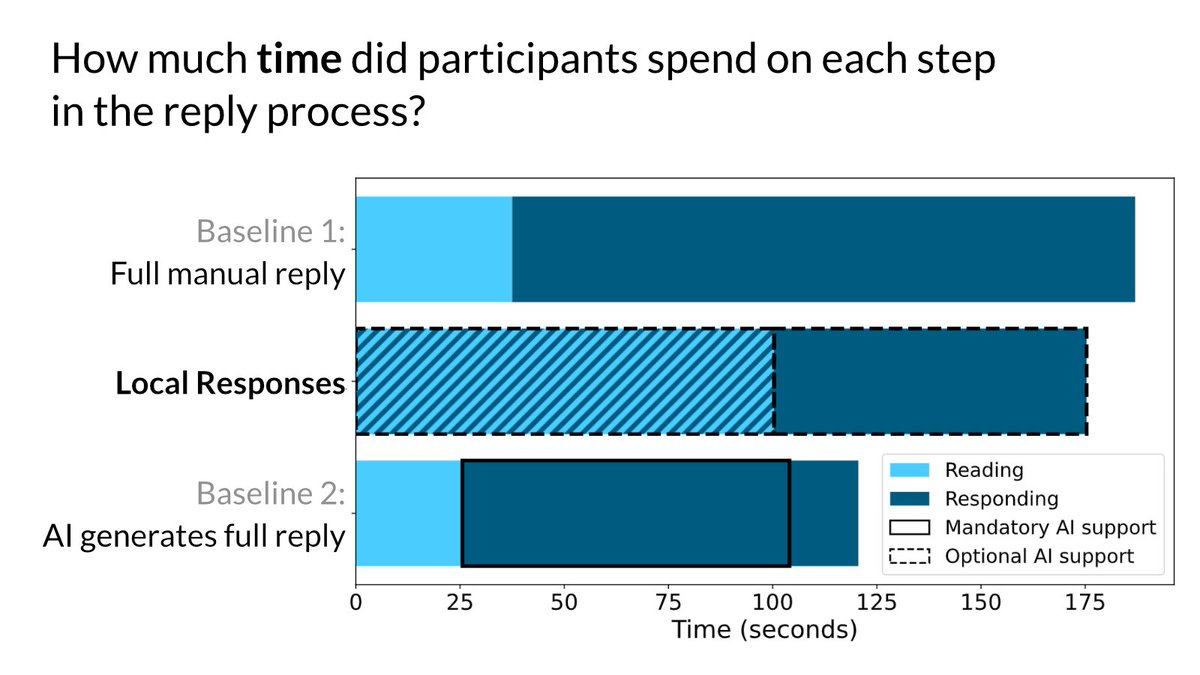
Have you also experienced a “paradox of the perfect start” in a university design project? Students skipping to final-looking apps with AI but struggling to articulate their own ideas, and accidentally excluding team members. Thoughts & ideas here: dbuschek.medium.com/the-para…
Thank you #CHI2026 for an amazing week of inspiring conversations in Barcelona!
ALT Collage of three photos, showing the conference venue, the main exhibition hall from above, and the Sagrada Familia in Barcelona. A text overlay says "Thank you CHI 2026!"
Fun fact for #CHI2026 folks: The generated "Session Summary Podcasts" in the ACM DL "cite" the session's papers and are picked up by Google Scholar, so all papers get 1 citation automatically now!
Can you remember which ideas & sentences were your own and which were generated with AI?
In a controlled study (n=184), we found that AI use significantly reduces the accuracy of content attribution after one week.
#CHI2026 preprint & numbers in 🧵
@welsch_robin@danielaDSF17
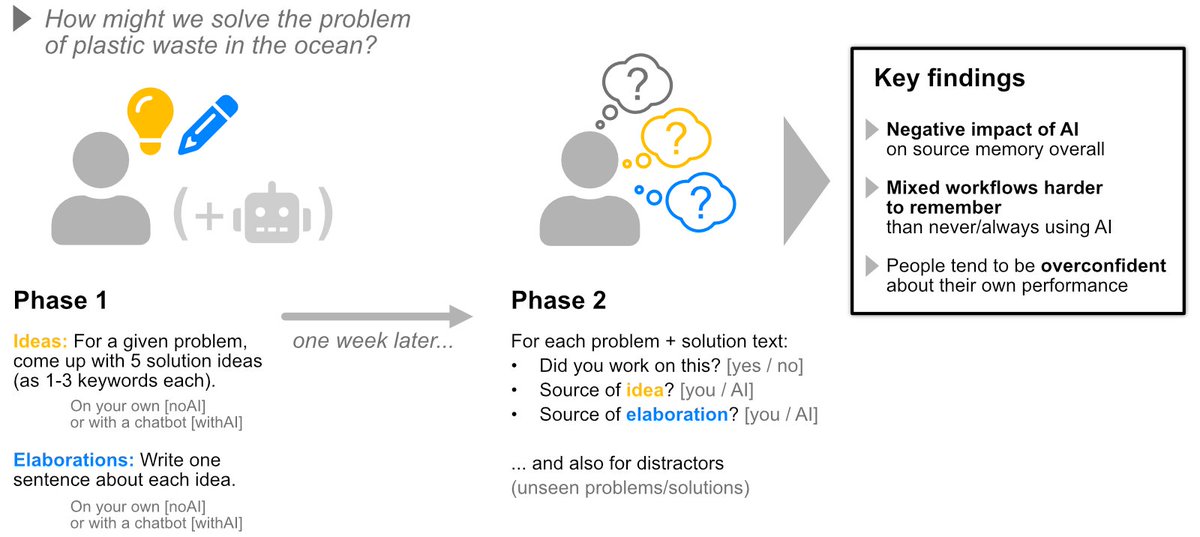
ALT Illustration showing the study flow overall: Left part shows Phase 1 with a user and chatbot working on ideas and elaborations for the example problem "How might we solve the problem of plastic waste in the ocean?" Text says that participants have to come up with five ideas in 1-3 keywords and write elaborations in one sentence each. An arrow with annotation ("One week later") points to a second illustration of a user with question-marked though bubbles. Text says that in this Phase 2, participants were asked: Did you work on this? Source of idea? Source of elaboration? Further text says that they were also asked this for unseen items (so-called distractors). Following another arrow to the right is a box with the title "Key findings" and three bullets: Negative impact of AI on source memory overall; mixed workflows harder to remember than never/always using AI; and people tend to be overconfident about their own performance.
The "memory gap" was most acute in mixed workflows:
1️⃣ If you elaborated on an AI idea, there's a 37.7% chance you remember the idea came from AI.
2️⃣ If you used AI to elaborate on your idea, there's a 64% chance you remember the idea as yours.
Preprint: arxiv.org/abs/2509.11851
Typical chatbots force co-writers to leave shared docs. Our #CHI2026 paper explores collaborative AI use in shared docs via 3 features:
🤖 Shared agent profiles
☑️ Repeatable tasks, triggered by users or system
💬 Agents respond in shared comments
Preprint in 🧵
w @flolehmann_de
Key findings (14 teams, 1 week):
📍Profiles were seen as personal territory but it's ok to interact with others' agents/tasks/comments
📍User-initative preferred
📍Thus, teams incorporated agents into social collaboration norms, rather than treating them as "equal" team members.
Writing an HCI paper about an AI-powered system to a venue like UIST 2026 or CHI 2027? Wondering what reviewers expect you to report, and how to approach paper framing and writing? Check out our reporting guidelines: medium.com/p/7c3ae86341e3?po…
Finalising your #CHI2026 revision? Or suffering from not being allowed to do so? I've "reviewed-to-reject" one of our papers with ChatGPT, to show how this leads to bad reviews - and give ideas for responding to this: medium.com/@dbuschek/dont-re…
ALT Illustration of a sheet of paper with a stylised bullet list in front of a fiery red background.
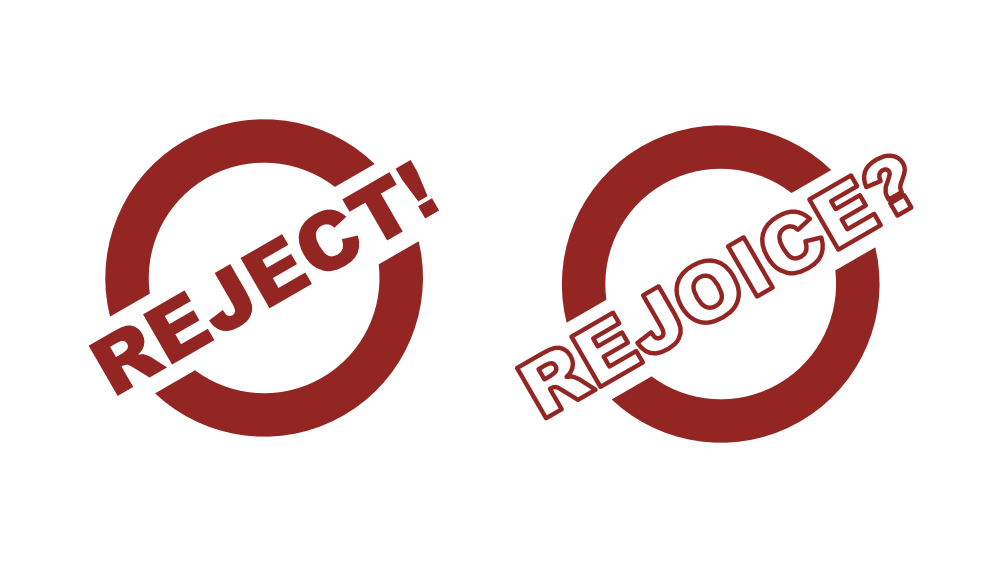
Have we lost peer appreciation?🤔Not just at #CHI2026 I notice many review-to-reject. All studies have tradeoffs & limited scope. Sure, reviews are fast even with "passing knowledge", if we list what's not there to conclude it's lacking. But we should review what *has* been done.
ALT Two illustrated stamps in red on white background, tilted, saying: "Reject!" and "Rejoice?"
Whether you're new or a seasoned reviewer, I highly recommend Ken Hinckley's article on excellence in reviews - and championing papers: kenhinckley.wordpress.com/wp…
Three weeks ago, my feed filled with Grammarly ads - and I wondered: What if we took their messages seriously? My anecdotal “ad-vestigation” connects them to Human-AI interaction concepts, leading to counterfactual questions for alternative designs. medium.com/p/1bab97d0fa98
While reviewing for #CHI2026, I noticed four new writing issues, likely due to increased use of LLMs. I describe them here - and how to fix them: dbuschek.medium.com/when-llm…
Hi folks, Montréal HCI is (still) recruiting! 🇨🇦 We are looking to hire PhD students excited research human-AI interaction, on topics including AI memory, pen-based interfaces and notation, and creative support in writing and game design. Reach out and feel free to share widely!