
The ERC project "DISINTEGRATION - the Mass Politics of Disintegration" explores how voter-based challenges to international institutions reverberate abroad.
Joined June 2020
- Tweets 409
- Following 227
- Followers 341
- Likes 81
171 Photos and videos

Pinned Tweet

23 Jun 2023
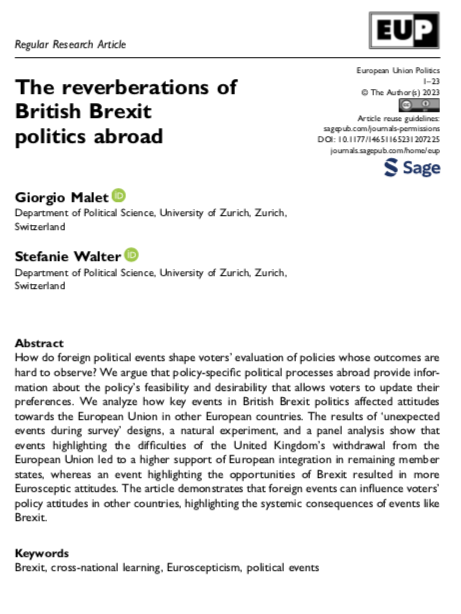
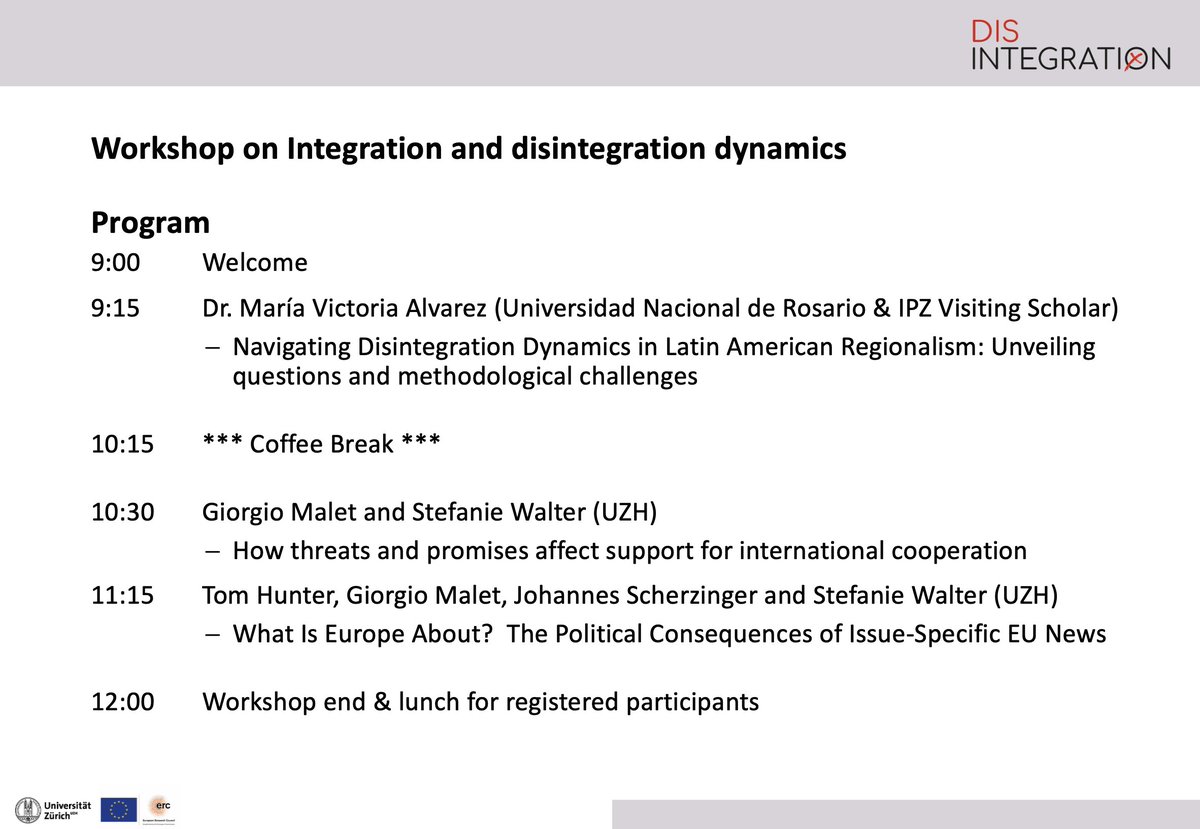
A major focus of the DISINTEGRATION project has been on Brexit. We have studied the role of expectations, possible contagion effects, and how the EU approached the negotiations.
On the seven-year Brexit referendum anniversary, here’s an overview of what we've found so far:

1
2
9
3,897
31 Oct 2024
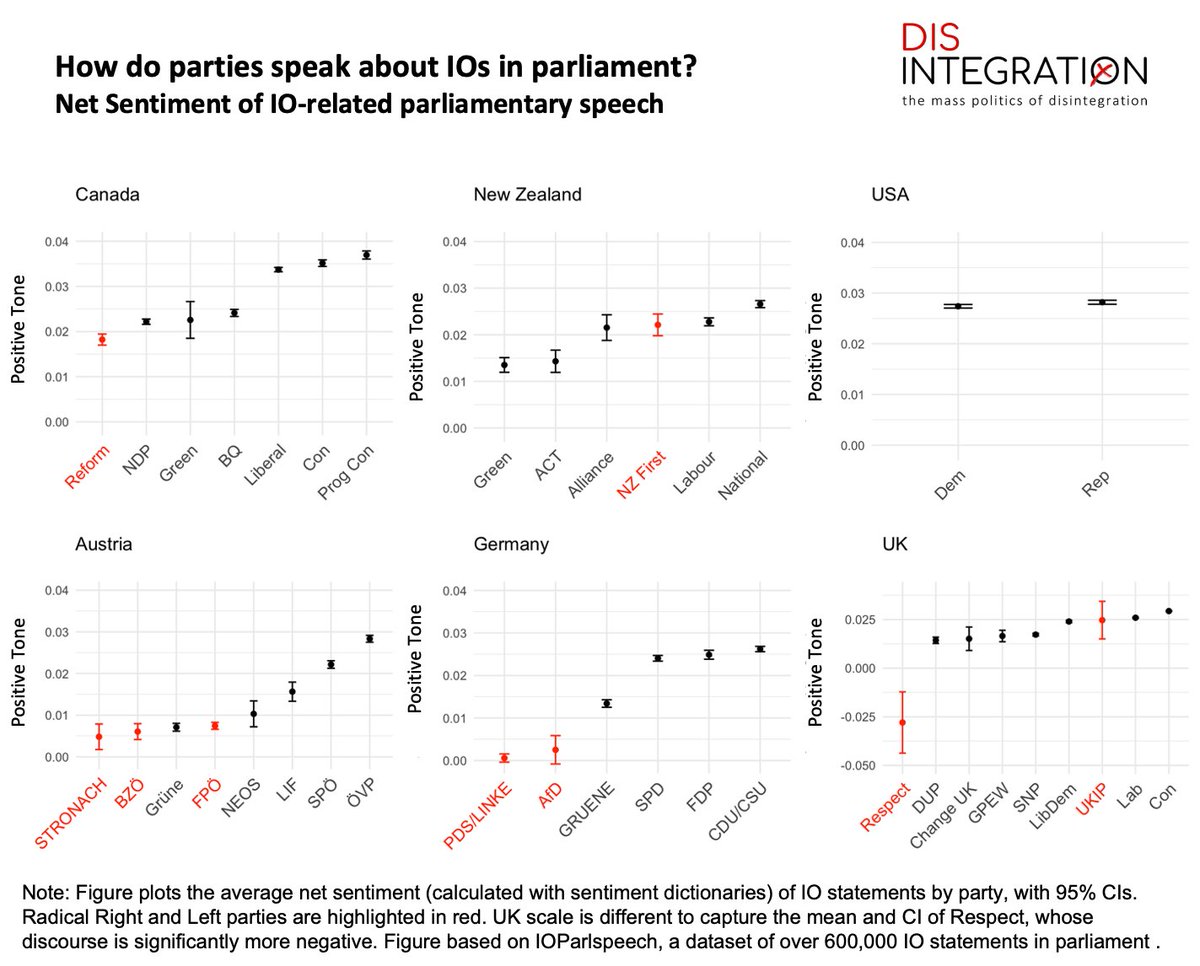
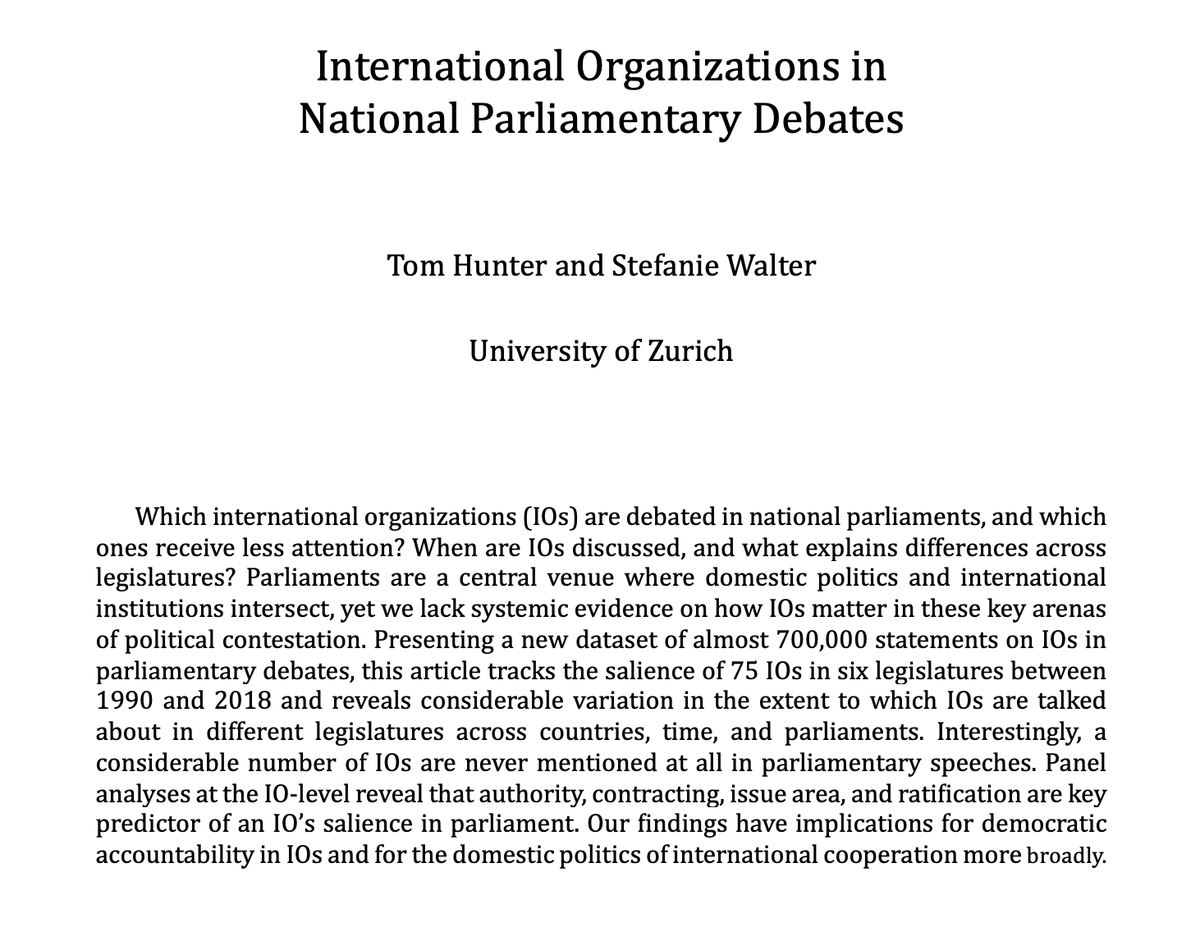
(1/2) *** Graph of the Month *** How do different parties talk about IOs? In a forthcoming article @The_PEIO , @TomMcCraeHunter and @stefwalter__ introduce IOParlspeech, a dataset of over 600,000 statements on IOs in parliamentary debates.
1
3
4,741
31 Oct 2024
2/2) They find that is particularly rad left and rad right parties (highlighted in red) that use most negative language about IOs. Datasets available here: twtr.to/rQn9o and working paper available here: twtr.to/rdlkx
1
78
26 Sep 2024
Graph of the month:
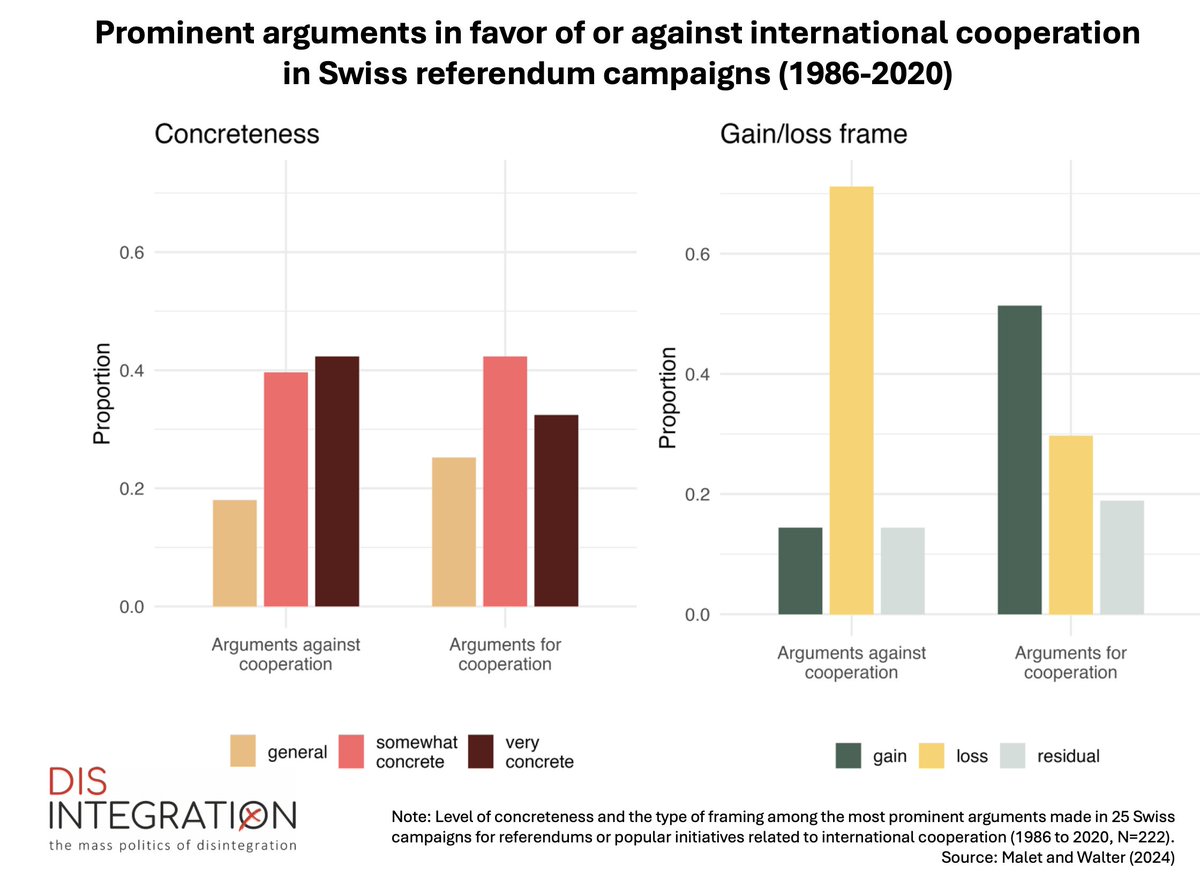
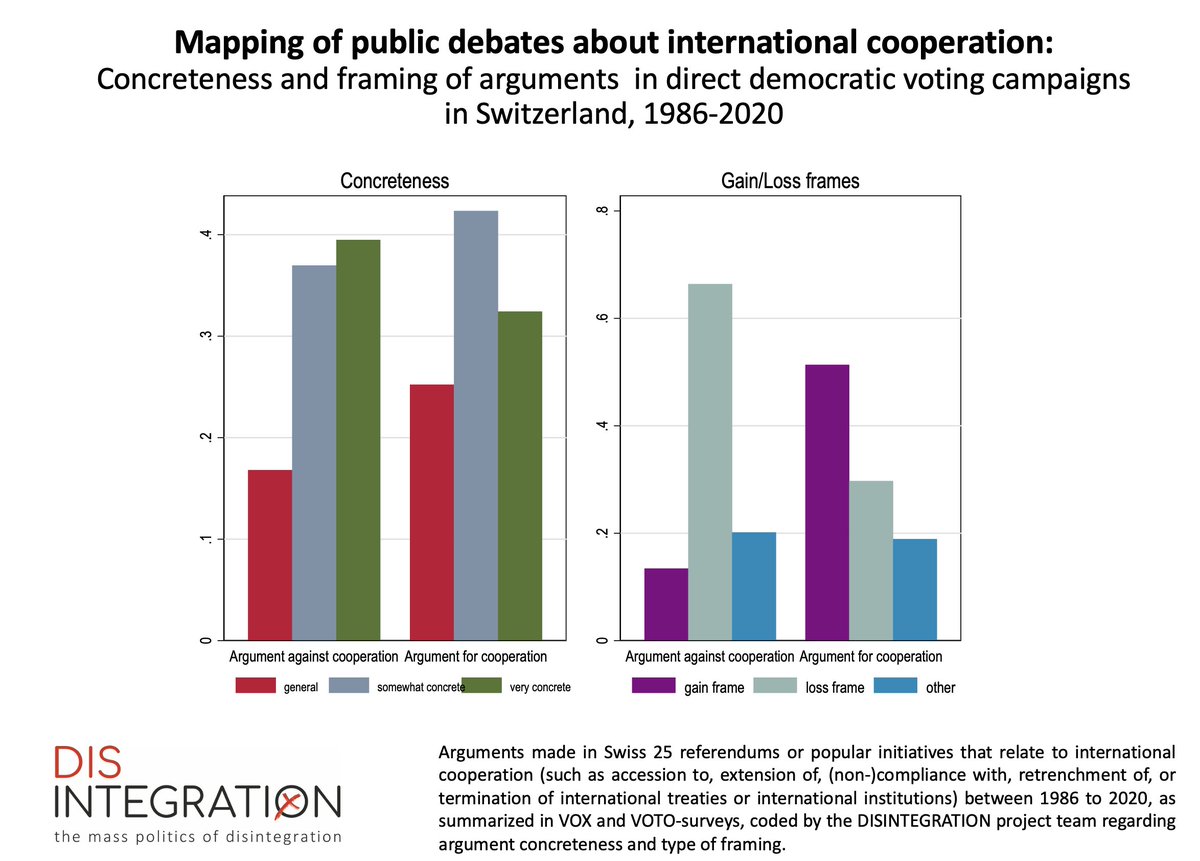
Supporters and opponents of interational cooperation use different types of arguments: Focusing on Switzerland, @giorgiomalet and @stefwalter__ show that arguments on whether or not to maintain or deepen international cooperation are framed differently.
1
1
1
334
26 Sep 2024
Zooming in and analyzing how persuasive different types of pro-cooperation communication strategies are to voters, results suggest that gain frames work better than loss frames, whereas concreteness strengthens loss frames.
39
ERC Project DISINTEGRATION retweeted

25 Sep 2024
Very much enjoyed the great discussion! So cool to see more and more research on IO exit emerge.
Thanks a lot to @sostapel for chairing and to @t_sommerer for great comments.
@DISINTEGRATIONp
25 Sep 2024

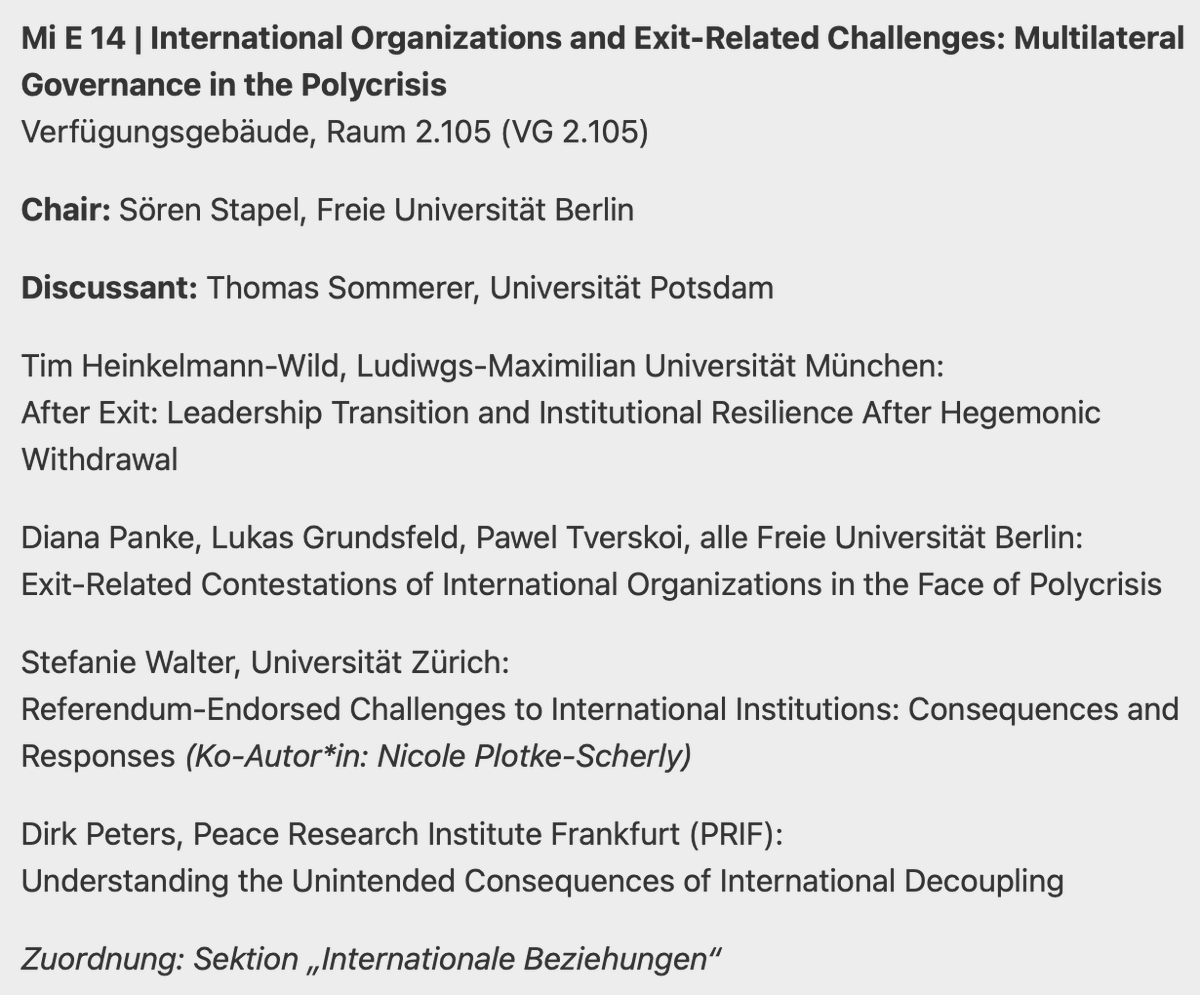
Interested in #exit-related challenges for IOs in times of #polykrise?
Join our panel at the @dvpw ’s #dvpw2024 Congress with @sostapel, @t_sommerer and great contributions by Diana Panke, Lukas Grundsfeld, Pawel Tverskoi, @stefwalter__, Nicole Plotke-Scherly & Dirk Peters!
1
6
621
2 Sep 2024
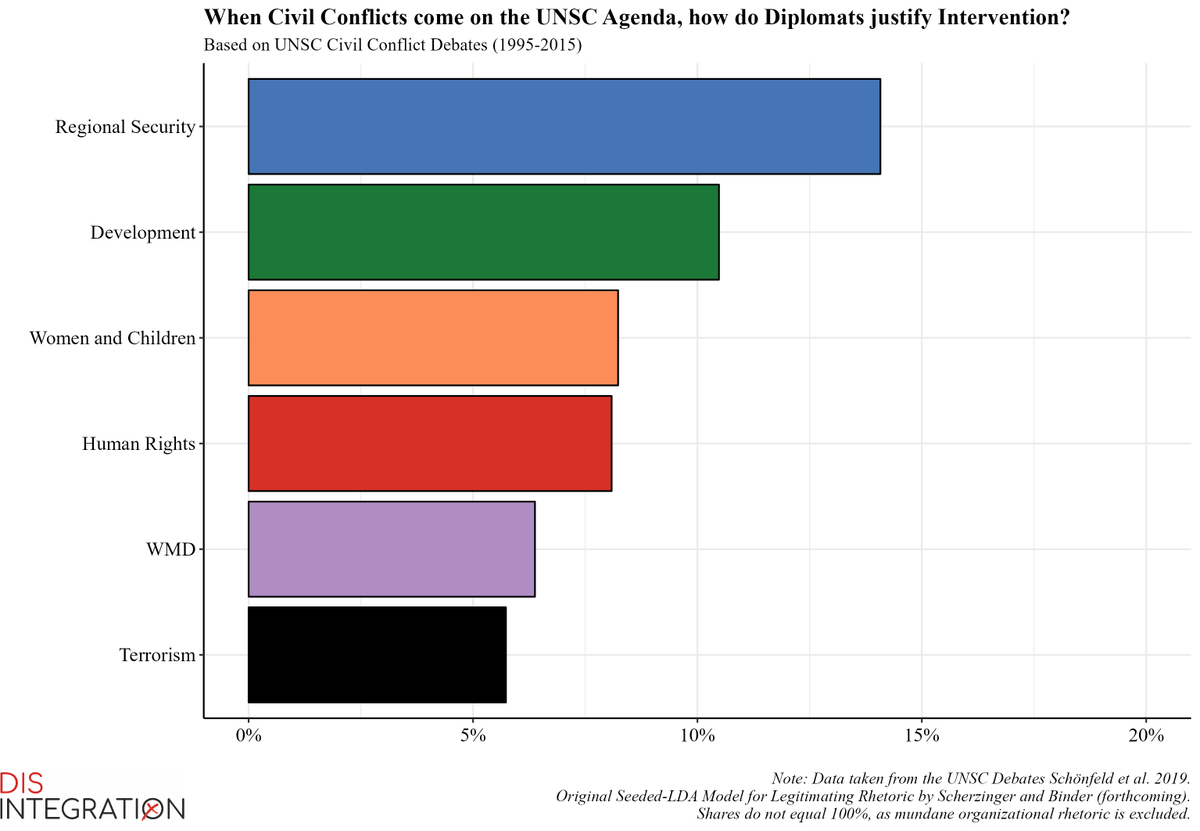
When civil conflicts hit the UNSC agenda, how do diplomats justify intervention? Our analysis reveals justification is oft rooted in the mandate, focusing on regional security & development. Liberal legitimation like Human Rights and Women & Children outrank hard security threats
2
3
451
28 Aug 2024
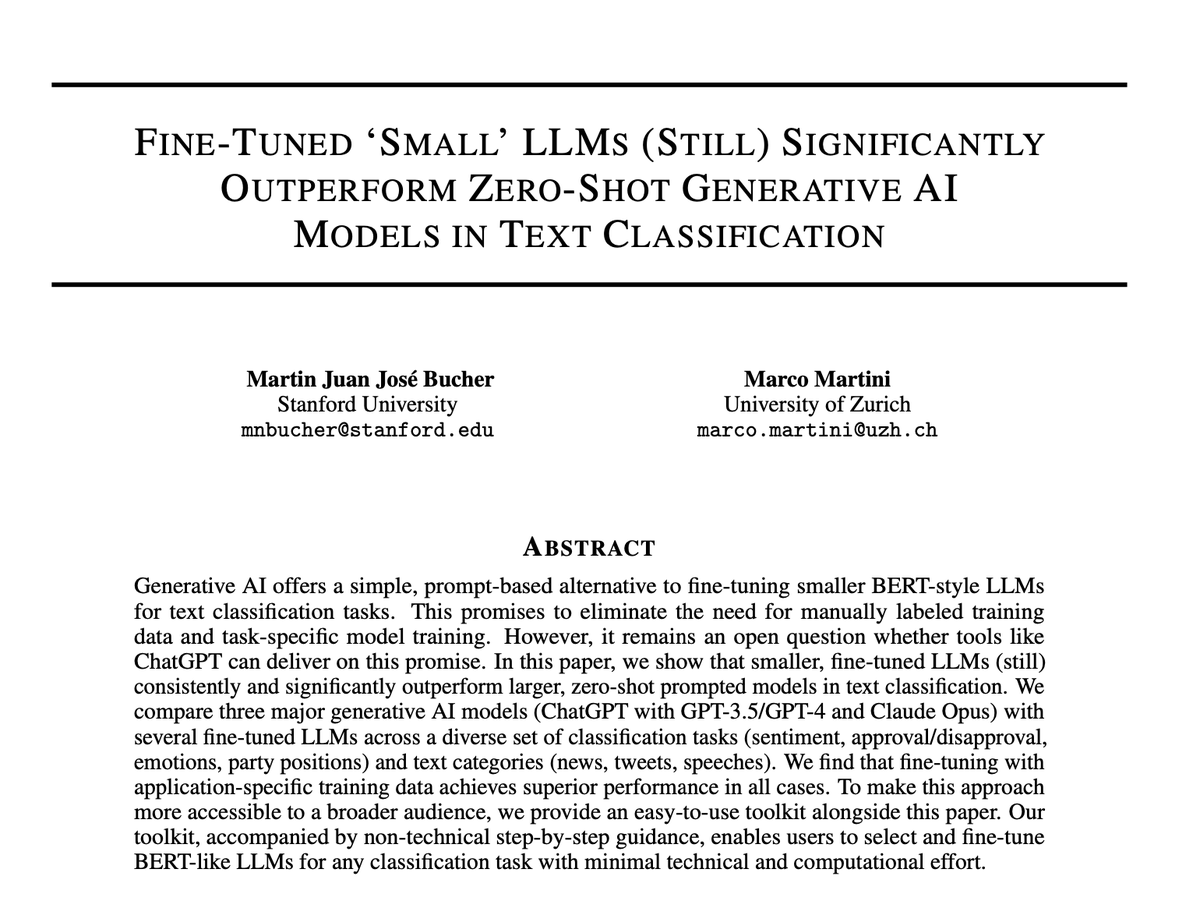
New output from the @DISINTEGRATIONp project by former team members @mnbucher and Marco Martini!
27 Aug 2024

In our latest paper, we challenge the claim that *zero-shot* generative AI models outperform smaller LLMs for text classification — and empirically show that ‘small’ LLMs fine-tuned on a few hundred samples consistently beat larger, zero-shot models across diverse tasks. (1/7)
1
91
17 Jul 2024
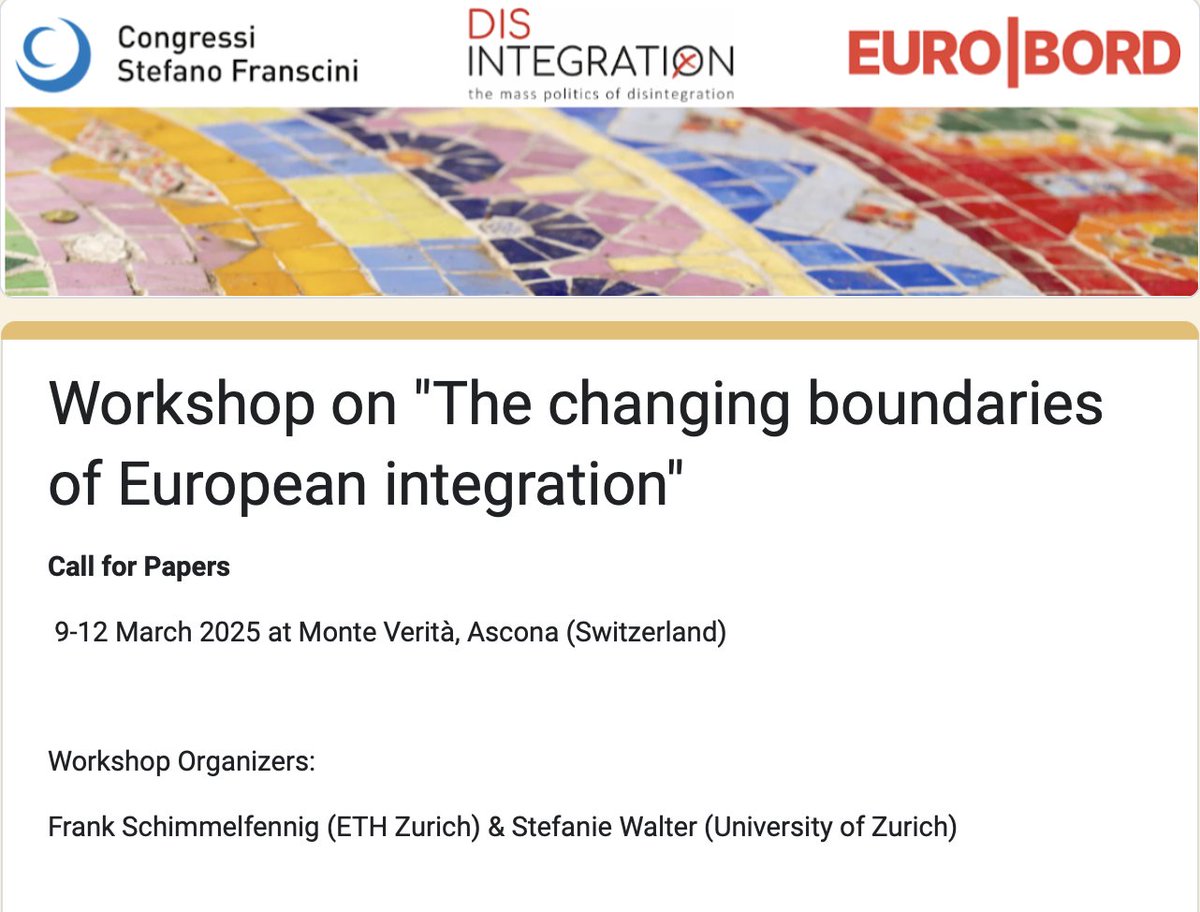
Call for Papers!
The @DISINTEGRATIONp project is co-organizing a workshop on the changing boundaries of European integration.
You can find more information and apply here: docs.google.com/forms/d/e/1F…
596
1 Jul 2024
*** Graph of the month ***
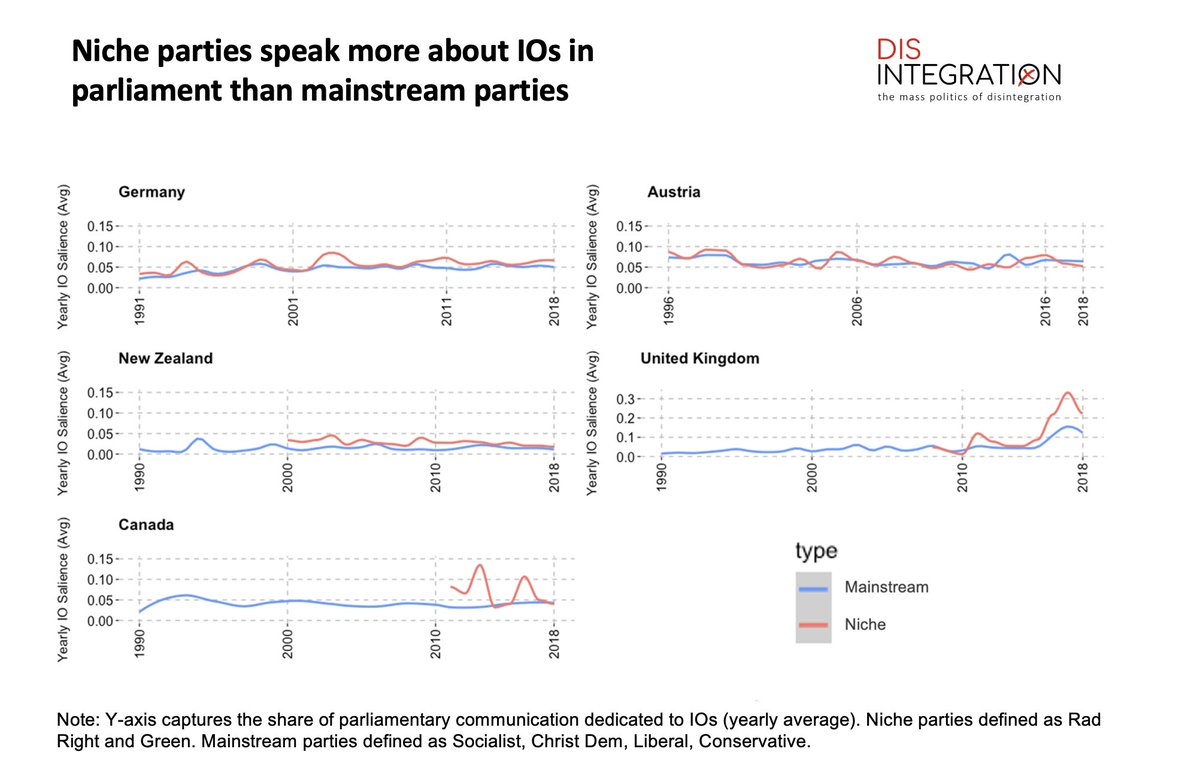
Which parties emphasise IOs in their communication? Our analysis suggests it is niche parties (defined here as rad right and green) that consistently dedicate more of their parliamentary communication to IOs. Graph by @TomMcCraeHunter
2
106
28 May 2024
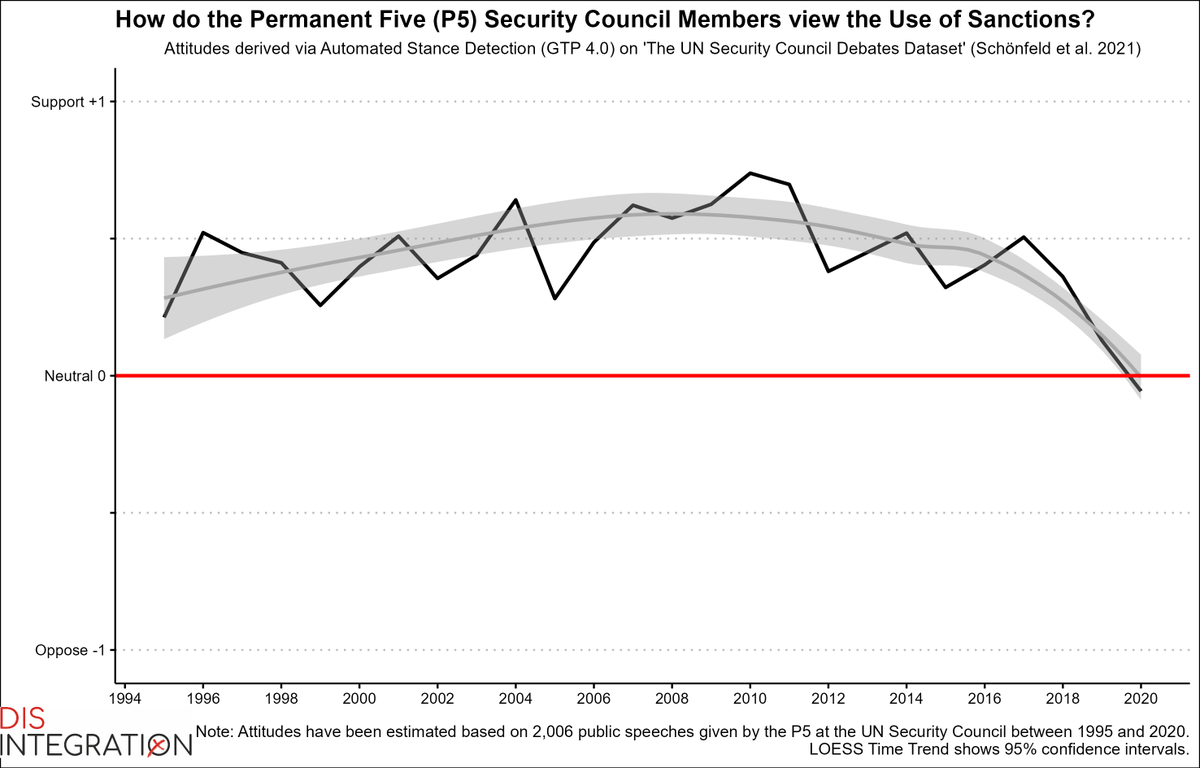
More evidence of change in the global order: An analysis of UNSC speeches from 1995 to 2020 shows that the average stance of the Permanent Five members on the use of sanctions has become significantly less enthusiastic in recent years. By Johannes Scherzinger & @antonpeez
2
1
9
703
29 Apr 2024
*** Graph of the month ***
(1/2) How do political parties speak about IOs? @tommccraehunter and @stefwalter__ compare the communication of parties in national parliamentary debates, with oral statements on 75 different IOs.
1
1
415
29 Apr 2024
(2/2) We find that governing parties use significantly more positive language than opposition parties when talking about IOs. This suggests - among other things - that blame-shifting toward IOs by governments may not be as pronounced as previously thought.
57
28 Mar 2024
Graph of the month:
Analyzing 167 arguments made in 25 direct democratic voting campaigns on international issues in Switzerland, @giorgiomalet and @stefwalter__ show that the framing of arguments in favor and against international cooperation differ significantly.
1
562
ERC Project DISINTEGRATION retweeted
26 Mar 2024
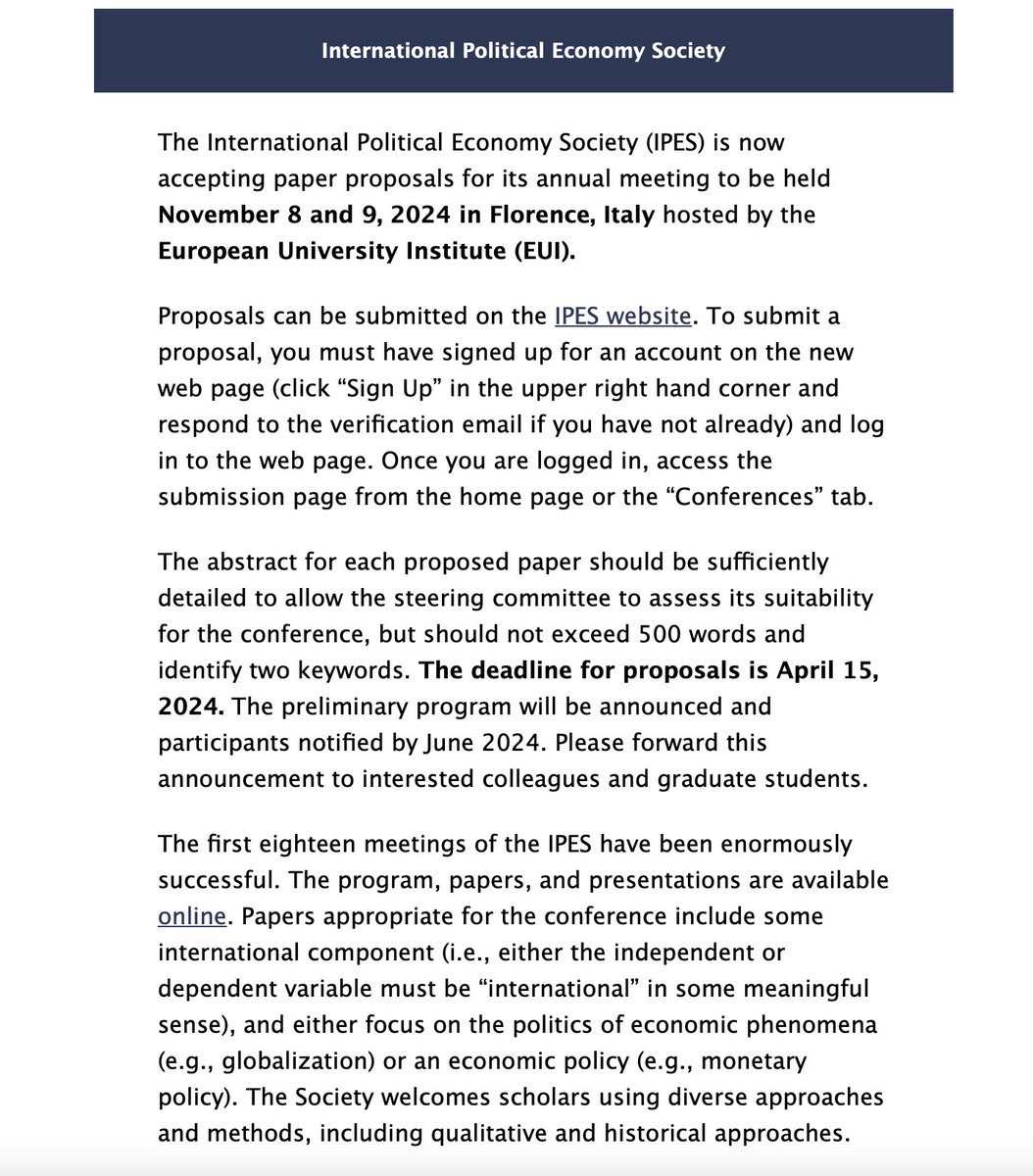
Do you do political economy research related to any international issues? Then consider submitting a paper for the IPES 2024 conference – my favorite conference is being held in Florence (at the EUI) this year – for the first time in Europe.
internationalpoliticaleconom…
25
44
5,553
26 Mar 2024
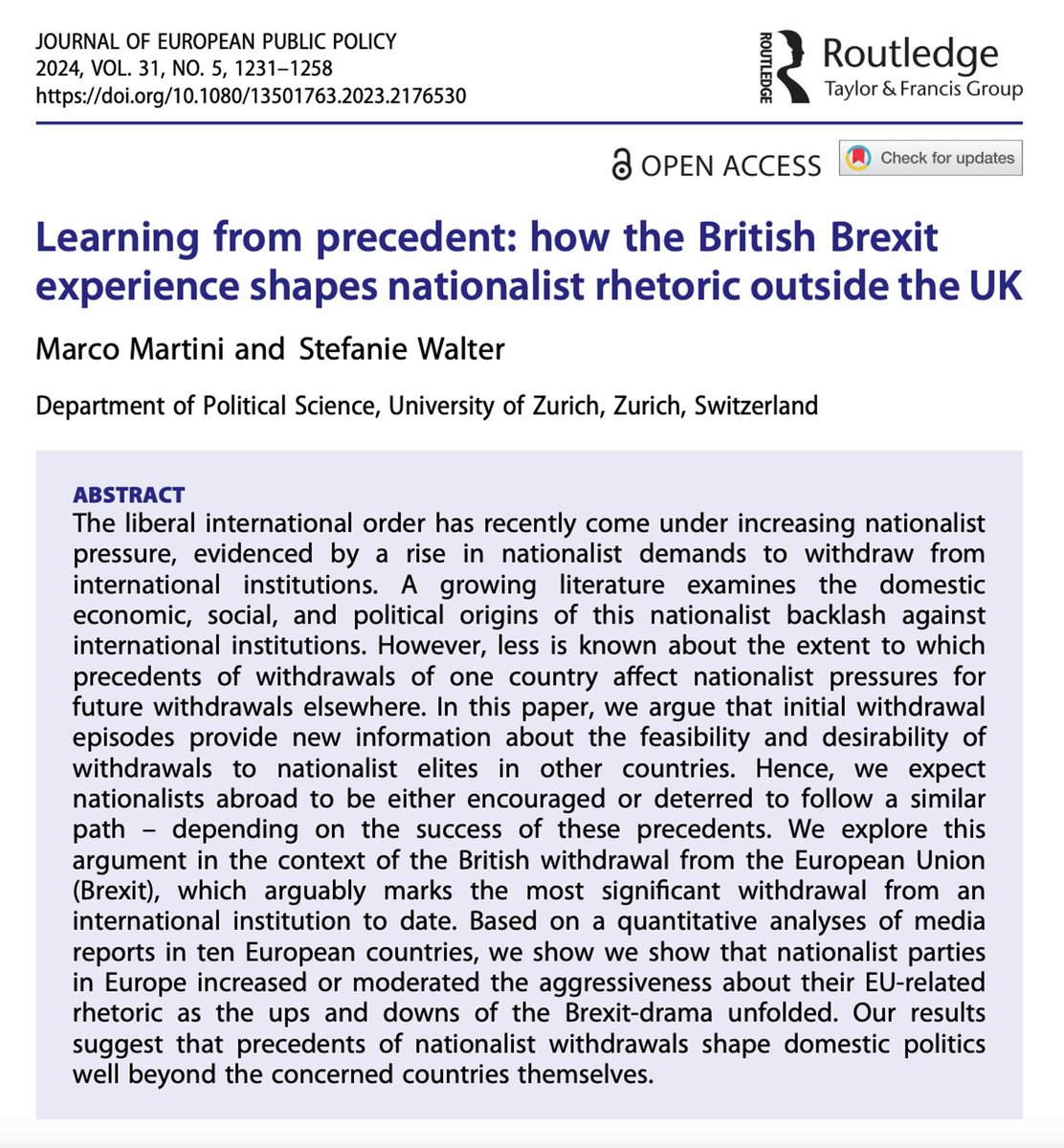
Now published:
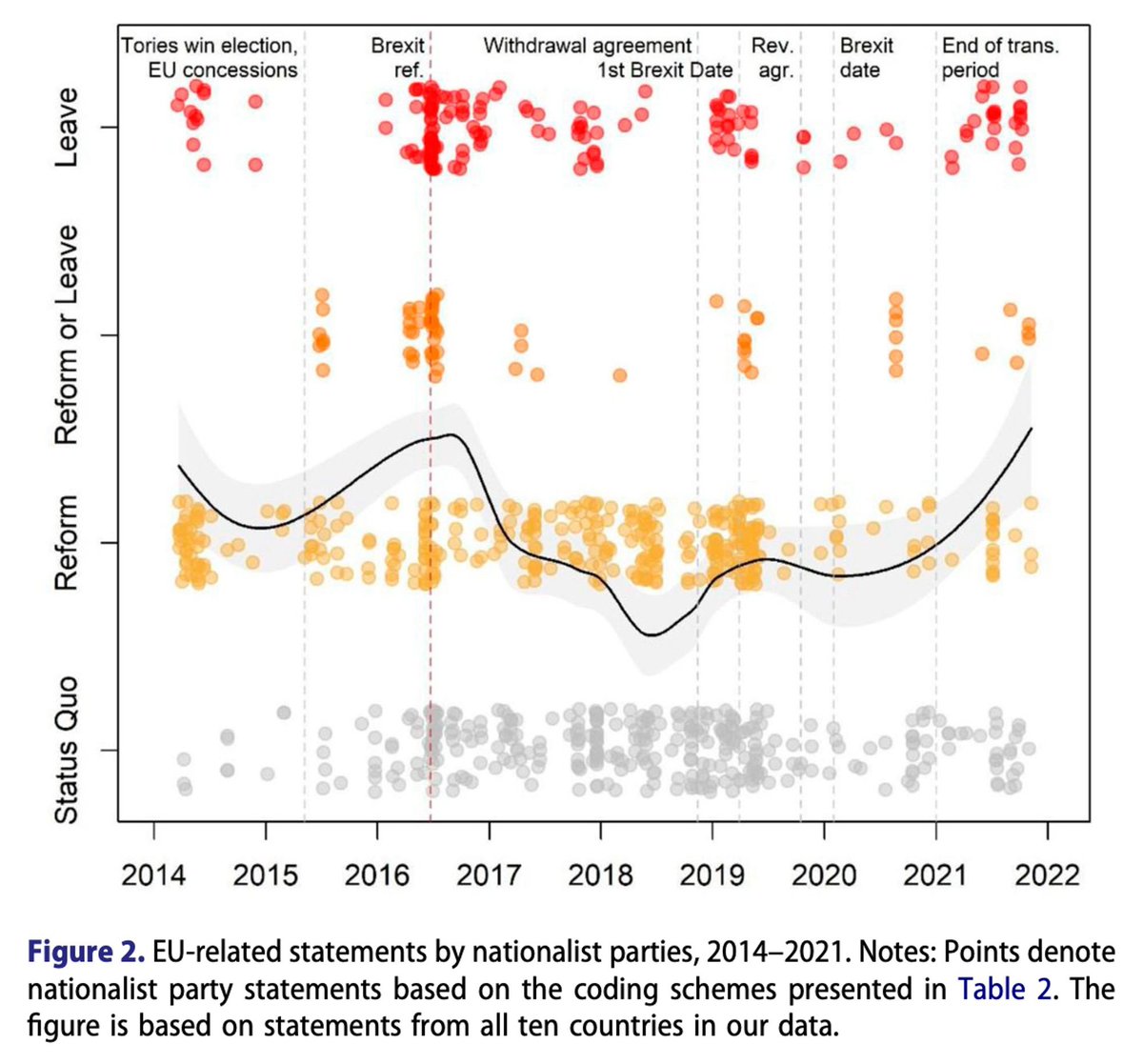
How do populist-right parties respond when their preferred policies are implemented abroad? Focusing on Brexit, Marco Martini & @stefwalter__ show that nationalist parties adjusted their aggressiveness towards the EU in line with the Brexit process ups and downs
4
2
1,494
26 Mar 2024
Our results suggest that precedents of nationalist policies shape domestic politics well beyond the concerned countries themselves.
tandfonline.com/doi/epdf/10.…
1
26
26 Mar 2024
When Brexit seemed to be a nationalist success, euroskeptic parties in other EU countries became much more aggressive in their rhetoric about the EU. But as the negotiations became difficult, they moderated their tone significantly.
3
32
26 Mar 2024
Here is the link:
tandfonline.com/doi/epdf/10.…
26 Mar 2024

Now published:
How do populist-right parties respond when their preferred policies are implemented abroad? Focusing on Brexit, Marco Martini & @stefwalter__ show that nationalist parties adjusted their aggressiveness towards the EU in line with the Brexit process ups and downs
1
128
ERC Project DISINTEGRATION retweeted
26 Feb 2024
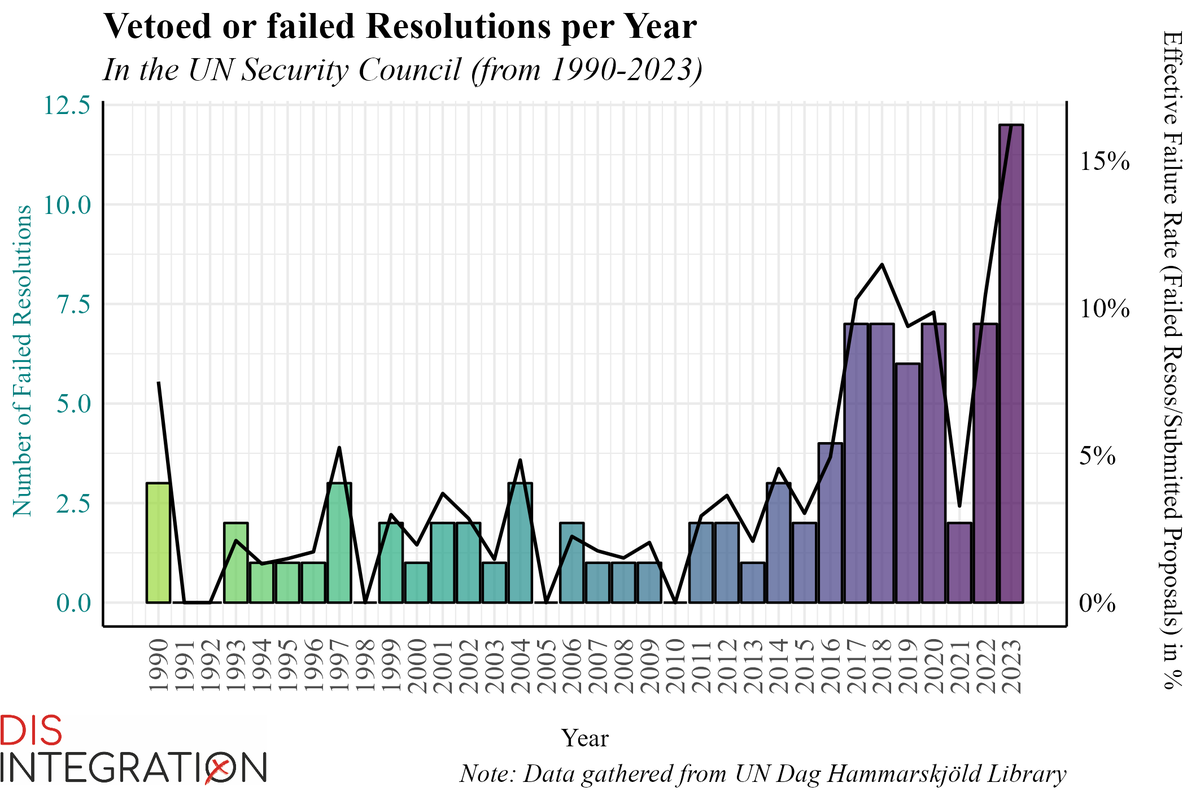
Since the mid-2010s, the number of resolutions in the UNSC that have failed or been vetoed has markedly increased, providing another indicator for growing international dissensus amidst a surge of global crises.
Data & Visualization by Johannes Scherzinger.
#UnitedNations
3
4
320