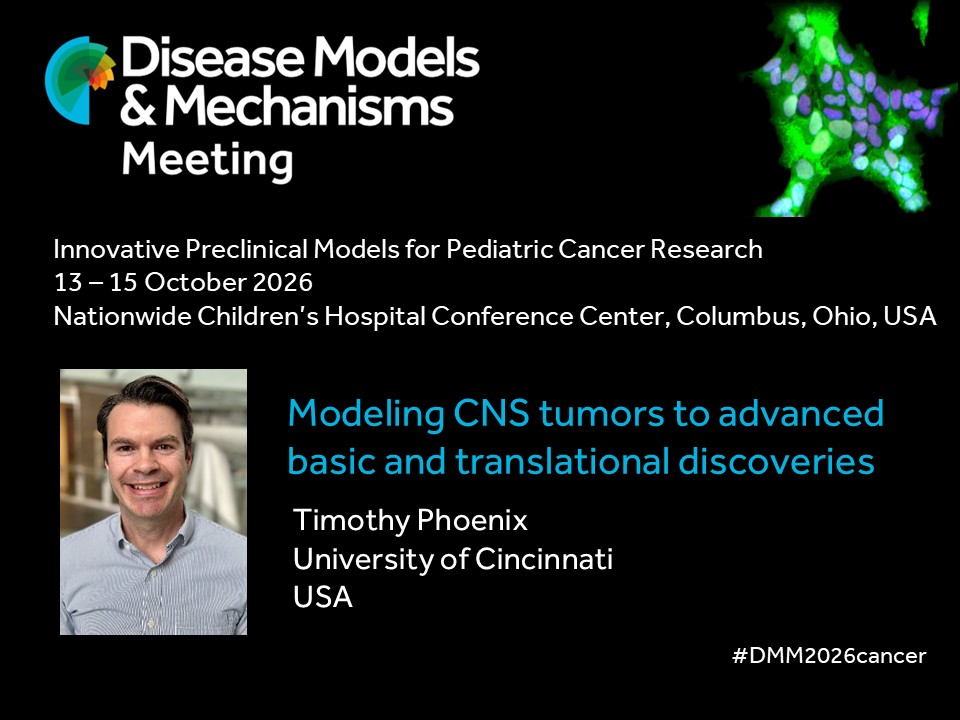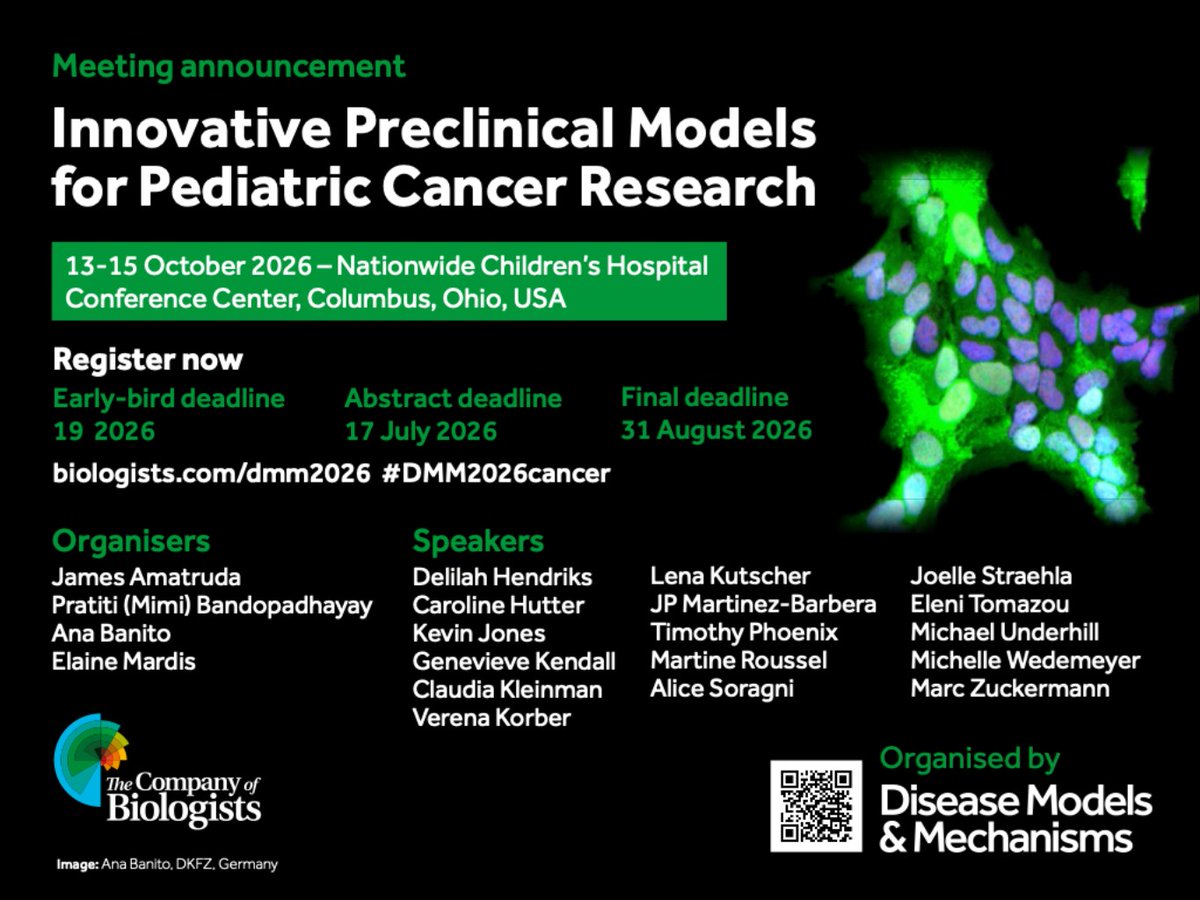
Join researchers working on #PediatricCancer at our Meeting this October at Nationwide Children’s Hospital, USA.
Organisers: James Amatruda, Pratiti (Mimi) Bandopadhayay, Ana Banito & Elaine Mardis
Register at bit.ly/3OCi1q9
Early-bird deadline: 19 June 2026
James Amatruda is speaking on 'From origin to metastasis: zebrafish preclinical models of Ewing sarcoma' at our Journal Meeting in October #DMM2026cancer#pediatriccancer
Register to attend: biologists.com/meetings/dmm2…
Early-bird deadline: 19 June 2026
Completely unable to resist anything that mentions #cats.
Inhibition of VP2-mediated entry: a potential antiviral strategy to treat or prevent calicivirus disease prelights.biologists.com/hig…
We are proud to be sponsoring the @cclguk symposium on the developmental origins of paediatric cancers at @TheCrick on Monday! Our Senior Editor @KirstyHooper13 we will be at our table, so visit her to chat & pick up some goodies
cclg.org.uk/information-prof…
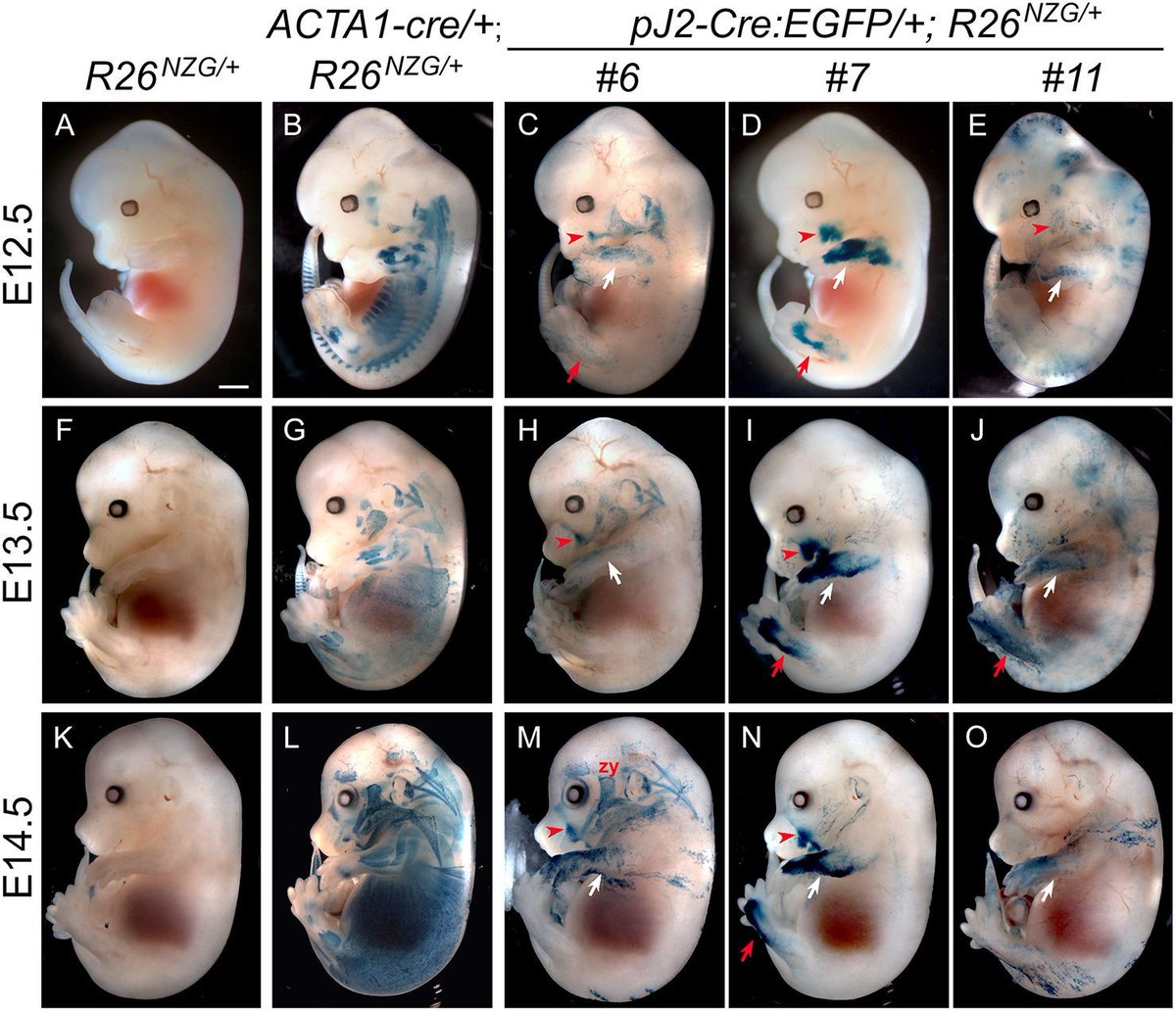
In this new paper Hiramuki, Jones & co show that cre-reporter mouse lines expressing human DUX4 regulatory elements can be used as discovery tools for developmental processes and mechanisms underlying #FSHD (Facioscapulohumeral muscular dystrophy)
doi.org/10.1242/dmm.052637
ALT Multi-panel figure showing lateral views of mouse embryos at embryonic days E12.5, E13.5, and E14.5, arranged in rows and columns (panels A–O). Embryos have been stained with X-gal blue to detect β-galactosidase, which signifies Cre expression and thus active DUX4 regulatory elements. Each row corresponds to a developmental stage, and columns compare different genotypes: reporter-only controls (A, F, K) with little or no blue staining; ACTA1-cre controls (B, G, L) showing widespread blue staining throughout skeletal muscle; and three transgenic insertion lines (#6, #7, #11; panels C–E, H–J, M–O) with localized X-gal blue staining. In transgenic embryos, blue signal appears in forelimbs (white arrows), hindlimbs (red arrows), and facial regions near the lip corner/zygomaticus (red arrowheads). Staining intensity and distribution increase with developmental stage. A scale bar indicates 1 mm.
Hats off to the winner of our 2025 Outstanding Paper Prize for Resources & Methods articles - Victoria Ektnitphong @ UT Southwestern Medical Center
Ektnitphong and colleagues describe a humanized lung-on-a-chip model that offers new insights into TB.
doi.org/10.1242/dmm.052085
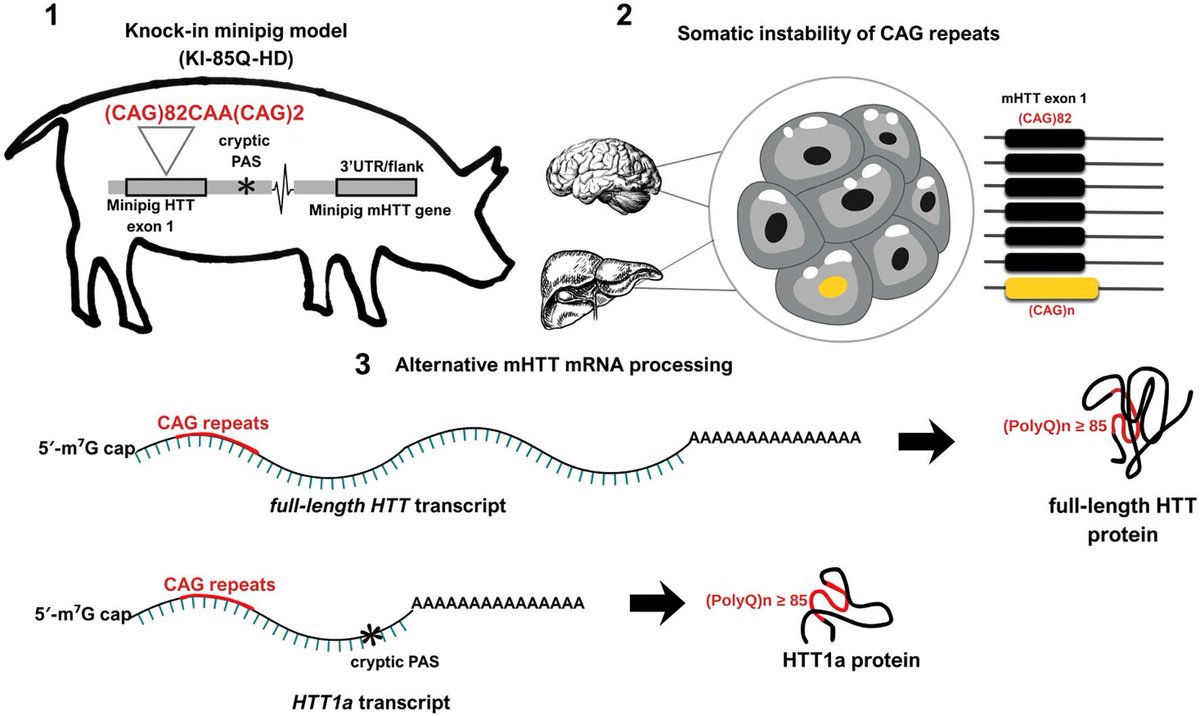
In this new paper Kolesnikova, Ellederova & co generate a knock-in minipig model with an expanded HTT allele to recapitulate early molecular characteristics of #Huntingtonsdisease, providing a valuable platform for evaluating emerging therpaies
📰 doi.org/10.1242/dmm.052803
ALT Schematic overview of the molecular features modeled in the knock-in HTT minipig (KI-85Q-HD). The KI-85Q-HD minipig recapitulates key molecular hallmarks of Huntington's disease: somatic CAG repeat instability and alternative processing of HTT pre-mRNA. (1) A (CAG)82CAA(CAG)2 repeat was introduced into the endogenous porcine HTT locus by CRISPR/Cas9 editing of exon 1. (2) The expanded allele undergoes tissue-specific and age-dependent somatic CAG repeat expansion, with the largest changes detected in the caudate nucleus, kidney and spleen. (3) Full-length HTT mRNA is translated into full-length HTT protein, while activation of a cryptic polyadenylation site (asterisk) within intron 1 generates the HTT1a transcript, which encodes the short, aggregation-prone HTT1a protein.
🏆 Congratulations to the DMM 2025 Outstanding Paper Prize winner for Research Articles: Joshua D. Ginzel @Duke University School of Medicine. Read our Editorial to learn more about the winner & their research.
doi.org/10.1242/dmm.053023
Weekend read: head to @preLights website and read a preprint about the mechanisms underlying sex-specific vulnerabilities to prenatal stress, chosen by Alice Gennevois, Ariane Delisle, uMontreal Neuro preLighters.
Prelight: bit.ly/4wC0jVs
Preprint doi.org/10.64898/2026.02.16.…
ALT An illustration of a mouse running in a wheel with the title 'Animal behaviour and cognition'.
Congratulations to DMM Editorial Advisory Board member Paul Riley (dpag.ox.ac.uk/research/riley…) on being elected to the Fellowship of the Royal Society.
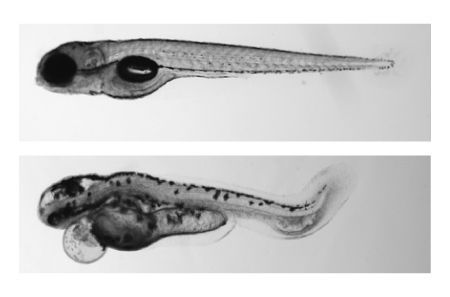
Check out the latest Editor's Choice from Carbrera, Mohamed, Gorelick & co on how folate & magnesium supplementation can prevent developmental toxicity caused by a common #HIV drug in #zebrafish
Highlight and article:
⚡ doi.org/10.1242/dmm.053028
📰 doi.org/10.1242/dmm.052632
ALT Top image is a wildtype zebrafish embryo at 4 days post fertilisation. Bottom image is a zebrafish embryo that has a maternal zygotic homozygous mutation in the folate receptor, also at 4 days post fertilisation. Without any drug exposure, the folate receptor mutant embryos display phenotypes such as cardiac edema and curved tails with ventral thickening.
JCS congratulates our Editor-in-Chief Michael Way on his election as a Fellow of the Royal Society, the UK’s national academy of sciences. royalsociety.org/news/2026/0…
“One never really knows when a basic science finding will transform translational research… ”
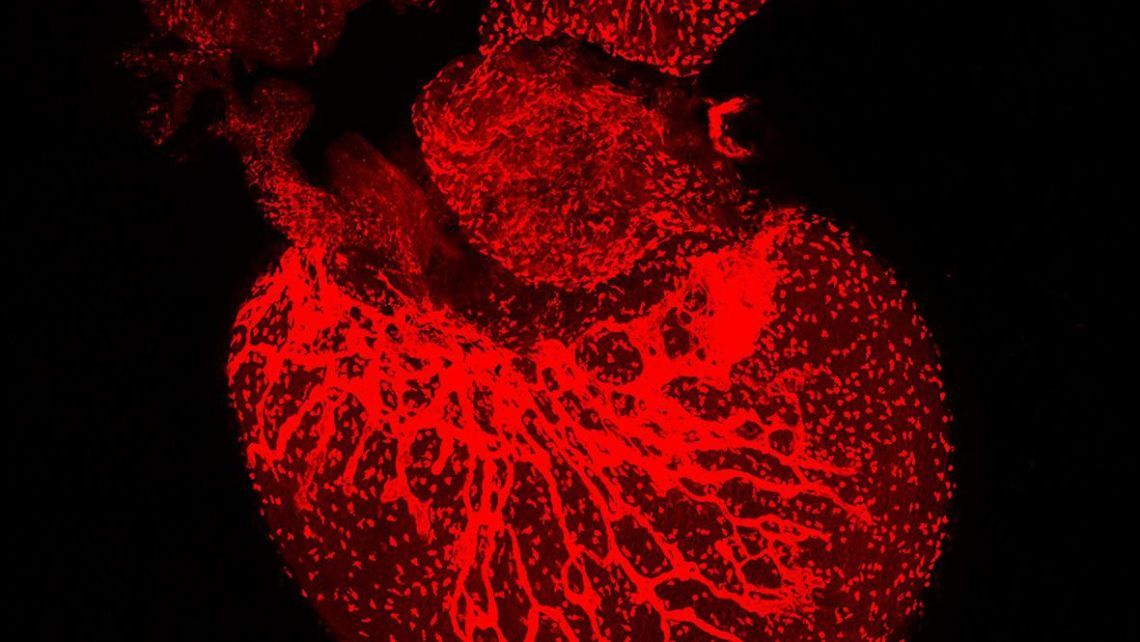
From comparison to mechanism: decoding heart regeneration thenode.biologists.com/from-… via @the_Node
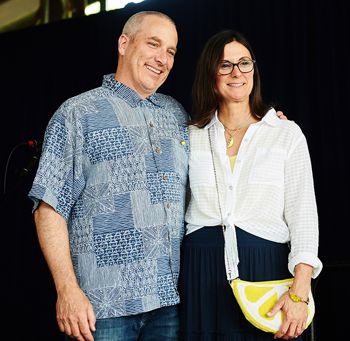
In our April Patient Voice feature, we spoke with Liz and Jay Scott about Alex’s Lemonade Stand Foundation—their mission, the collaborative efforts between physicians, researchers, families, and patient advocates, and their vision for the future.
doi.org/10.1242/dmm.052967
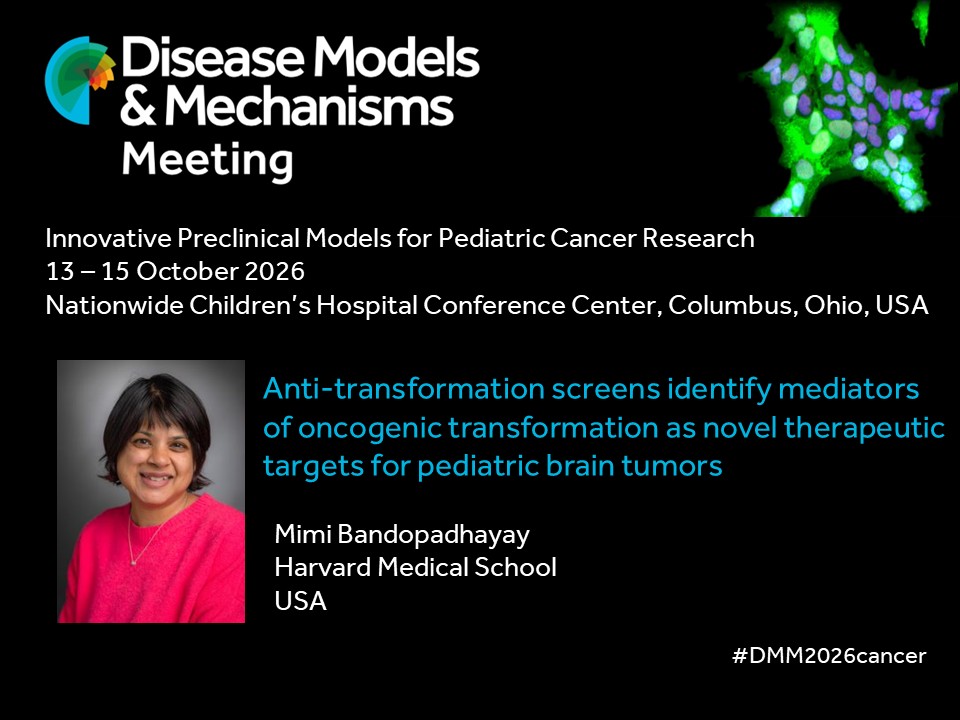
Mimi Bandopadhayay is speaking on 'Anti-transformation screens identify mediators of oncogenic transformation as novel therapeutic targets for pediatric brain tumors' at our Journal Meeting #cancer
Register to attend: biologists.com/meetings/dmm2…
Early-bird deadline: 19 June 2026