
San Francisco Declaration on Research Assessment (DORA). Find us on LinkedIn and Bluesky. Initiated by @ASCBiology. Let's change what we value in research!
Joined April 2015
- Tweets 6,533
- Following 146
- Followers 13,976
- Likes 839
1,760 Photos and videos



Pinned Tweet

Apr 16
🌍 Join us for the launch of our Practical Guide for Funders! Co‑hosted with the Global Research Council and Science Europe, the events bring funders together to explore how the Guide can support changes in research assessment. 📅 Three online sessions in May: register now!
1
1
184
Apr 15
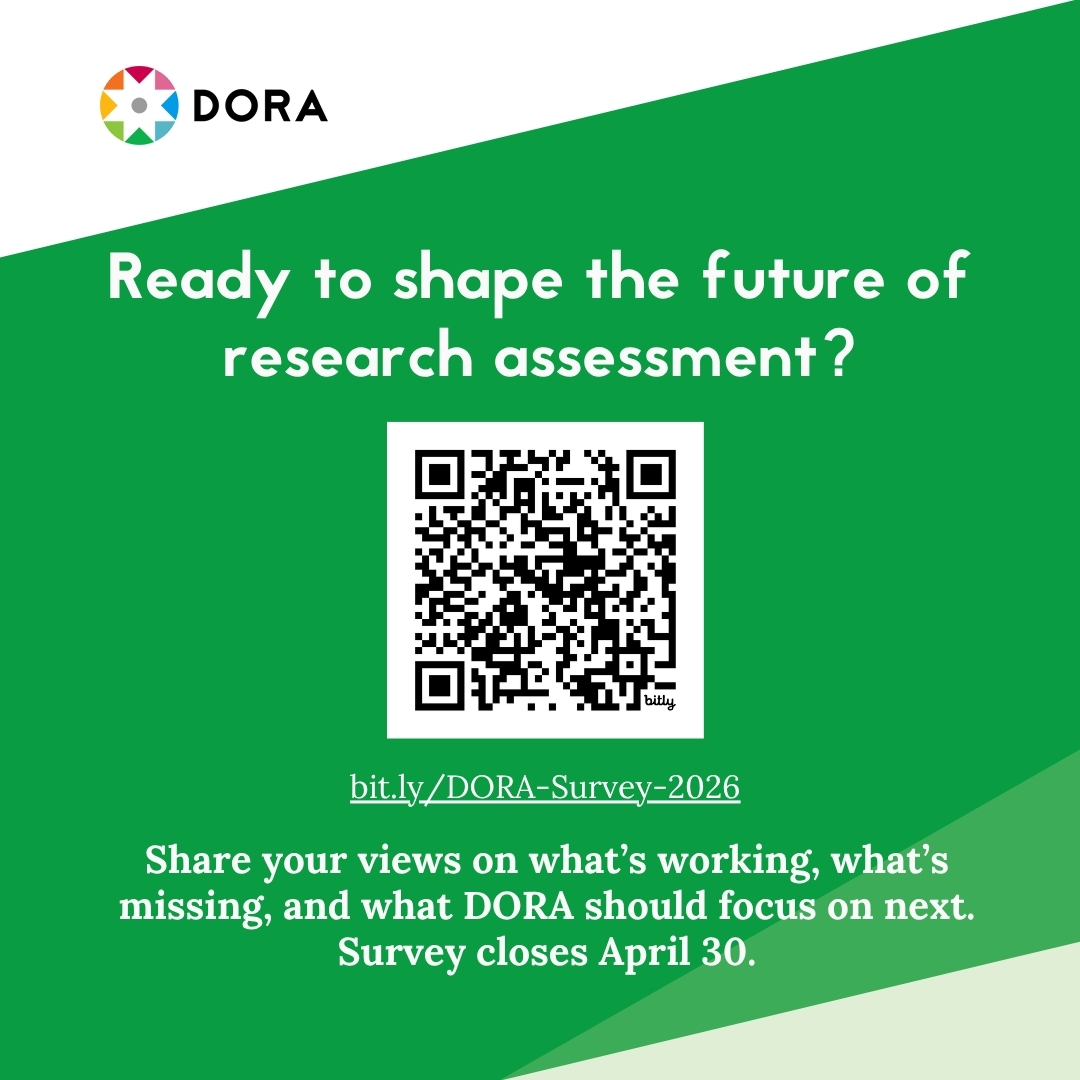
We are developing our 2027-2030 Strategic Plan and welcome input from the research community! Researchers, funders, institutions, publishers: tell us what matters most going forward. Respond as yourself or as an organization. Thank you for your response 👉 bit.ly/DORA-Survey-2026
3
5
446
26 Oct 2025
Want to learn about practical innovations in research assessment in the US? 🇺🇸 Join us on Nov 20, 1pm ET, to hear about innovations in tenure, peer review training, and the Modernizing Academic Appointment and Advancement (MA3) Challenge! Register 👉 bit.ly/RRA-innovations
1
2
528
16 Oct 2025
Shaping research assessment is your thing? Or perhaps one of your friends? There's still time to share this opportunity or send your self-nomination to join our Steering Committee!
Submit via the form 👉forms.gle/aJ8NBXbdotKAyYf3A by October 31 ‼️
6 Oct 2025

‼️Global call 🌍 DORA is seeking new Steering Committee members! We especially welcome applications from Africa, Asia, and Latin America/Caribbean. Help shape the future of responsible research assessment. Submit your self-nomination by October 31: forms.gle/aJ8NBXbdotKAyYf3A
1
607
6 Oct 2025
‼️Global call 🌍 DORA is seeking new Steering Committee members! We especially welcome applications from Africa, Asia, and Latin America/Caribbean. Help shape the future of responsible research assessment. Submit your self-nomination by October 31: forms.gle/aJ8NBXbdotKAyYf3A
3
6
1,846
20 May 2025
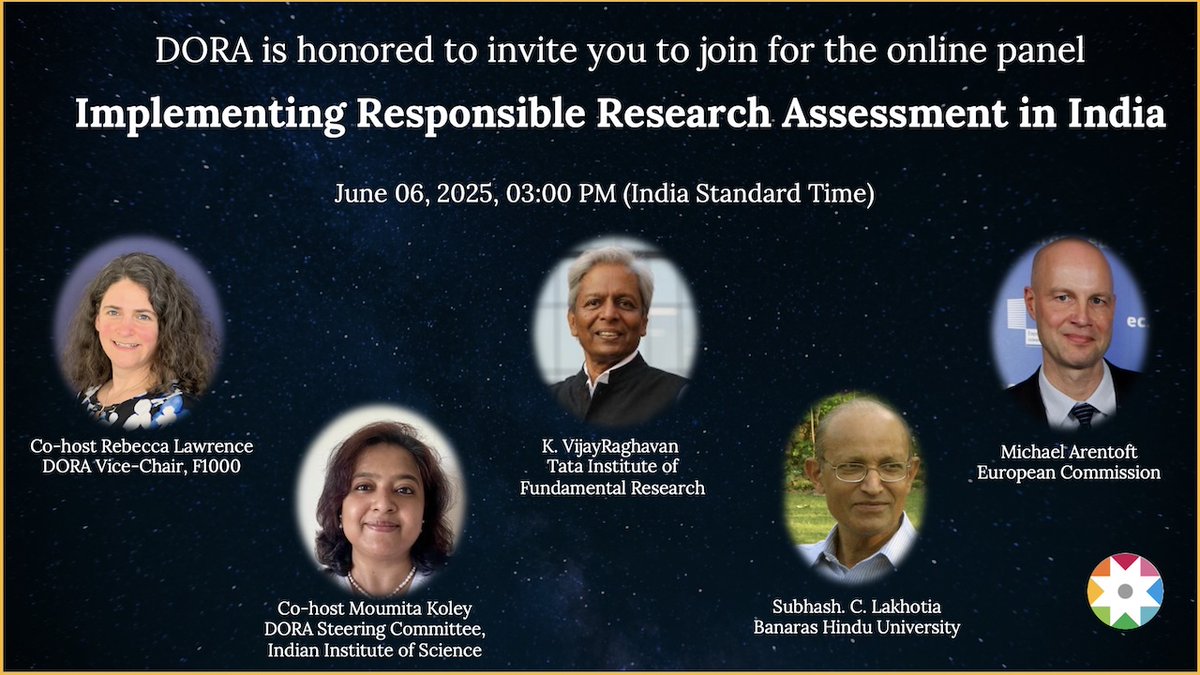
We are pleased to invite you to our online panel Implementing Responsible Research Assessment in India! 🇮🇳
🗓️ Thursday, June 6, 2025
🕒 3:00–4:00 PM IST | 10:30–11:30 AM GMT
📍 Online
Register now 👉 bit.ly/RRA-in-India
3
5
1,198
22 Apr 2025
As we gear up to launch our #ResponsibleResearchAssessment Guide for research performing institutions in just 3 weeks, we want to thank the DORA community and all those who contributed to it! Join us for the launch May 15-16 bit.ly/DORAGuide-Launch
1
3
10
492
DORA retweeted

5 Feb 2025
✨ @Concordia recently joined @DORAssessment!
Join their hybrid seminar on Feb 20, 2025 at 10:15 am - 12 pm ET to learn more about it and hear from an expert panel on what it means to be part of DORA!
Register today: bit.ly/4aP8QJP!
1
1
475
14 Apr 2025
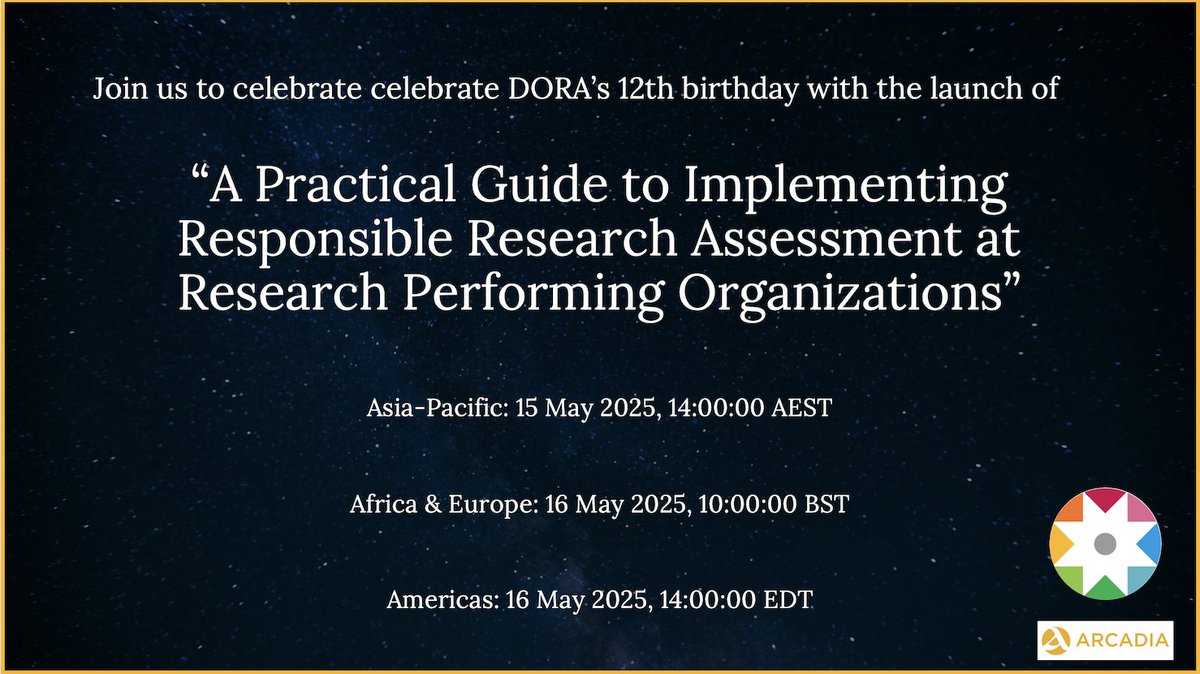
Come celebrate DORA’s 12th birthday with the launch of “A Practical Guide to Implementing Responsible Research Assessment at Research Performing Organizations”! With guest speakers, we will introduce the guide and discuss how it can help you take action. bit.ly/DORAGuide-Launch
2
9
13
2,025
2 Oct 2024
Show your support for DORA with one of our spiffing badges 📛: sfdora.org/resource/dora-bad…
Now includes a 🆕 badge for those of you who have contributed to our Resource Library!
1
1
8
813
1 Oct 2024
Interested in how research assessment can support better diversity, equity, and inclusion?
We have a specific tag for "Equity and inclusion" in #Reformscape, our tool compiling responsible research assessment policies and practices: sfdora.org/reformscape/sourc…
ALT Reformscape wordmark
5
2
688
24 Sep 2024
We have made our biggest update to #Reformscape yet!
We recently added fifteen 1️⃣5️⃣ new institutions and thirty-five 3️⃣5️⃣ new examples of responsible research assessment practices and polices.
(And we fixed a bug 🐜.)
sfdora.org/reformscape/
3
4
614
23 Sep 2024
DORA’s guidance on responsible use of quantitative indicators prompts users to follow 5 principles, like:
💡Be specific: How well does the indicator refer to the qualities of the person or the piece of work being assessed? Be mindful of aggregate metrics.
ow.ly/mb4550T7BGW
5
4
740
20 Sep 2024
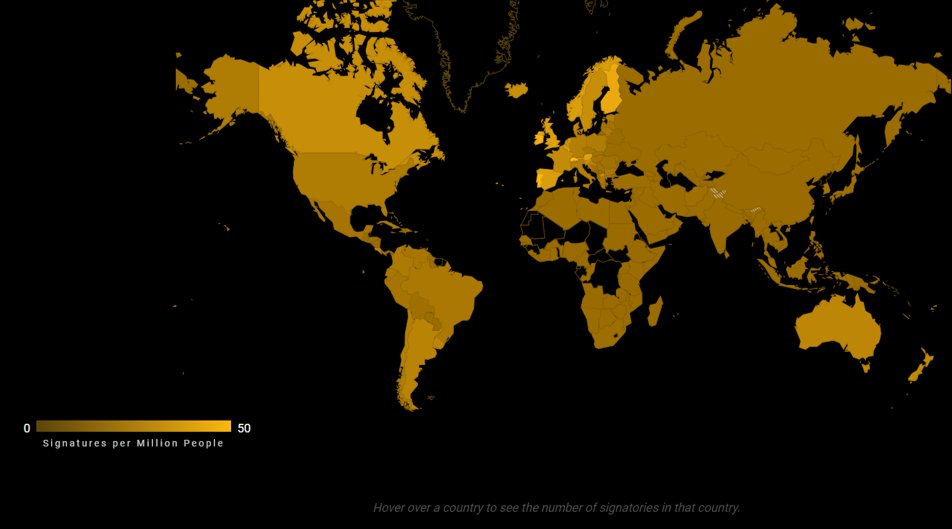
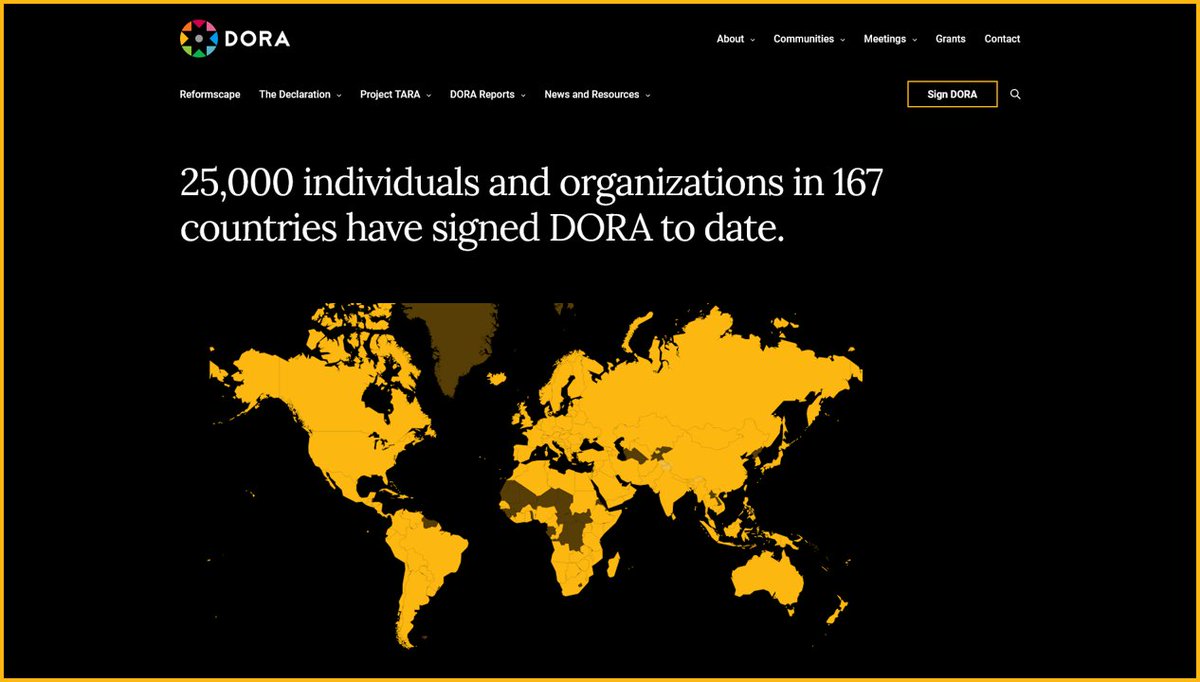
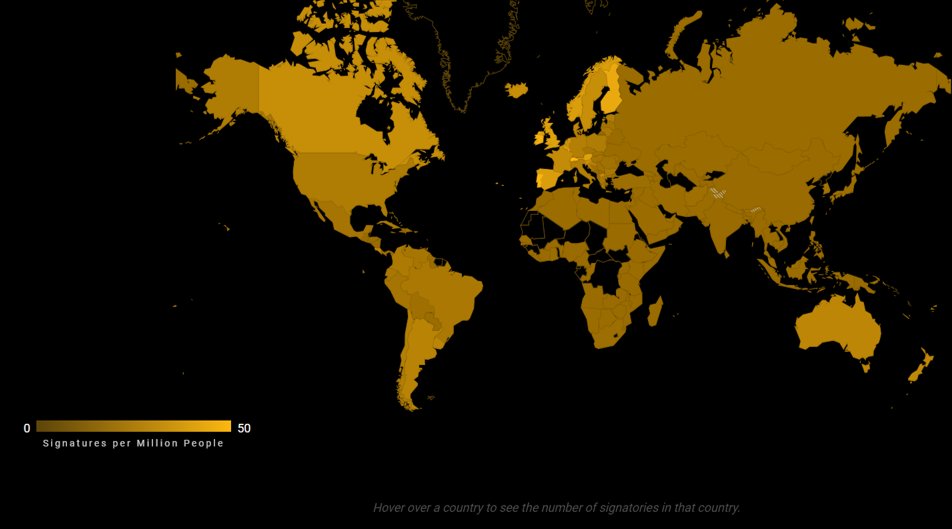
We made a little improvement to our map 🗺 of DORA signatories on sfdora.org/signers/.
Here's why. 🧵 1/4
ALT Map of the world showing number of DORA signatories per million people. Europe is the most brightly lit part of the map, indicating relatively more signatories.
2
2
508
20 Sep 2024
We wanted a map that would give the viewer a better idea 🤔 of where there was more DORA activity.
We scaled it to population so that larger, more populous countries wouldn't dominate the map.
Not as brightly colored but much more informative. 3/4
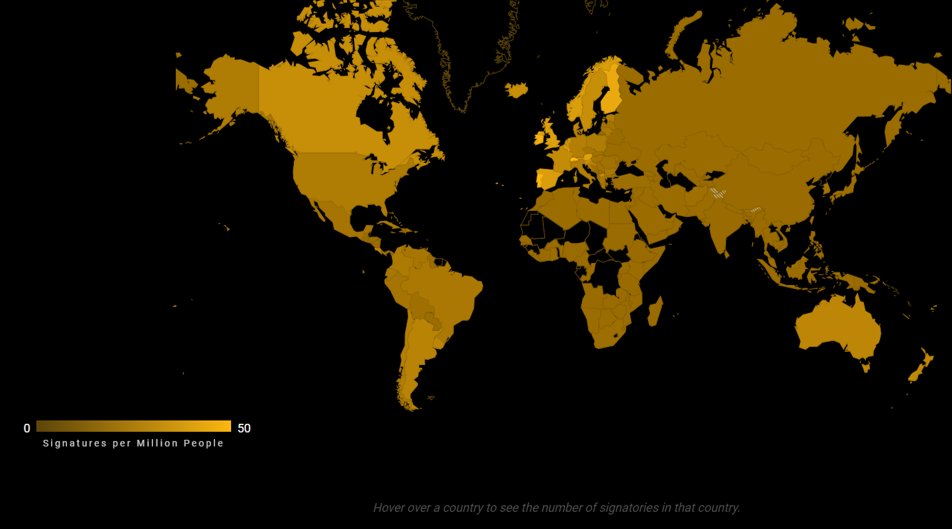
ALT Map of the world showing number of DORA signatories per million people. Europe is the most brightly lit part of the map, indicating relatively more signatories.
1
1
1
399
20 Sep 2024
You can hover your mouse cursor over a country to see the raw number of signers and the number per million people. sfdora.org/signers/
Enjoy this new look into interest in research assessment reforms! 4/4 🏁
1
363
19 Sep 2024
Duncan E. Wright argues that problems of getting peer reviewers, research fraud, paper mills, predatory journals, and trivial papers are all symptoms of research culture emphasizing quantity over quality.
doi.org/10.1002/1873-3468.15…
4
5
752
16 Sep 2024
"Open science arose in response to scientists churning out junk, but junk seems to be what the 'market' that interests scientists still demands."
– Opinion from Nicholas JL Brown on academic "gaming" (quote lightly edited)
doi.org/10.1371/journal.pbio…
1
3
11
1,041
16 Sep 2024
DORA’s guidance on responsible use of quantitative indicators prompts users to follow 5 principles, like:
💡Be fair: How will you avoid biases inherent in quantitative indicators? Be proactive & transparent
in efforts to address this challenge.
ow.ly/980t50T7BGj
2
4
472