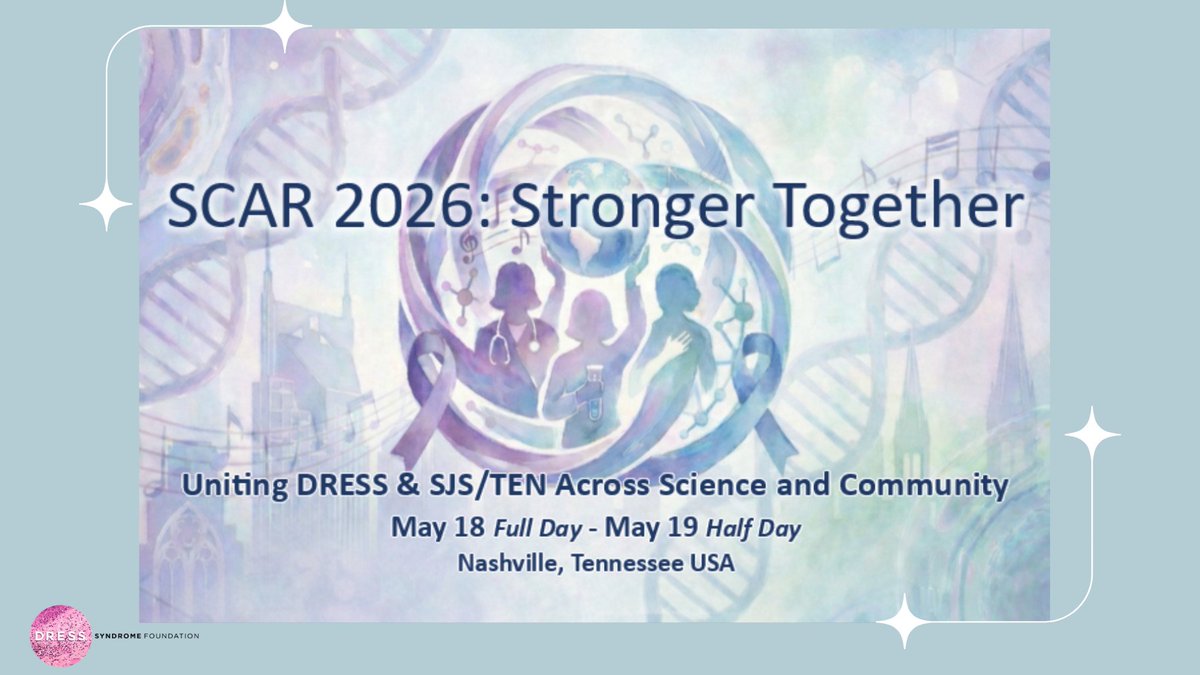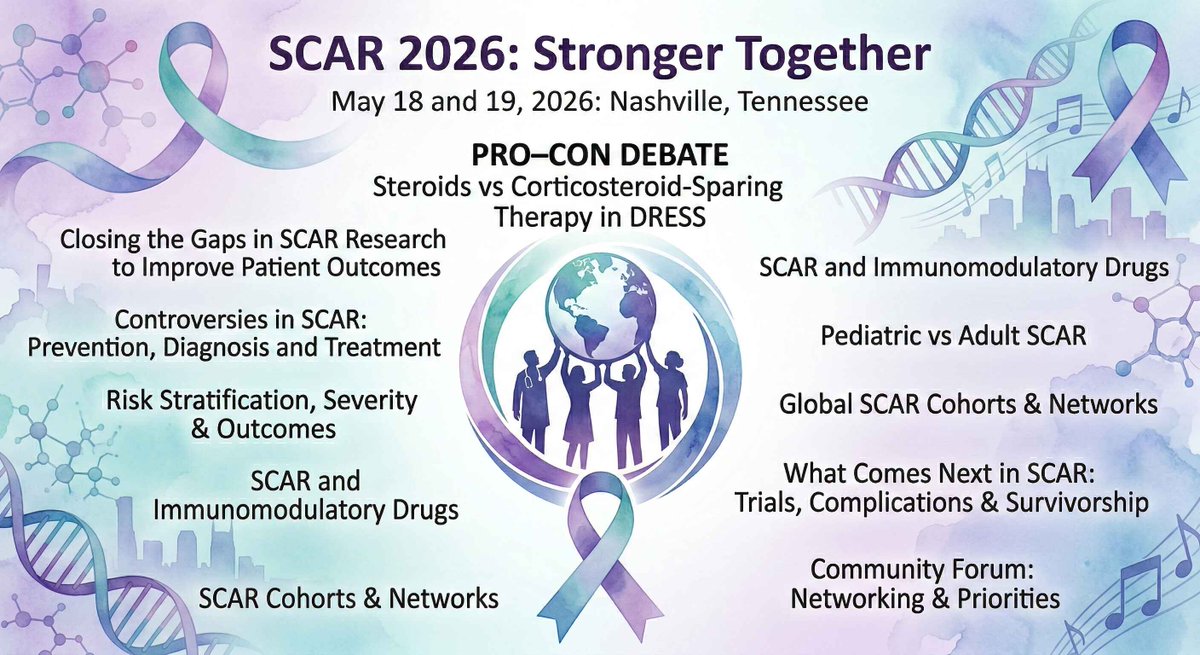
SCAR 2026: Stronger Together is a wrap!
What a powerful week sharing lived experiences of severe drug reactions alongside critical research on these diseases.
Thank you to Vanderbilt University Medical Center, Michelle Martin-Pozo, PhD, April O'Connor, Dr. Elizabeth Phillips, and team for your efforts organizing and bringing us all together!
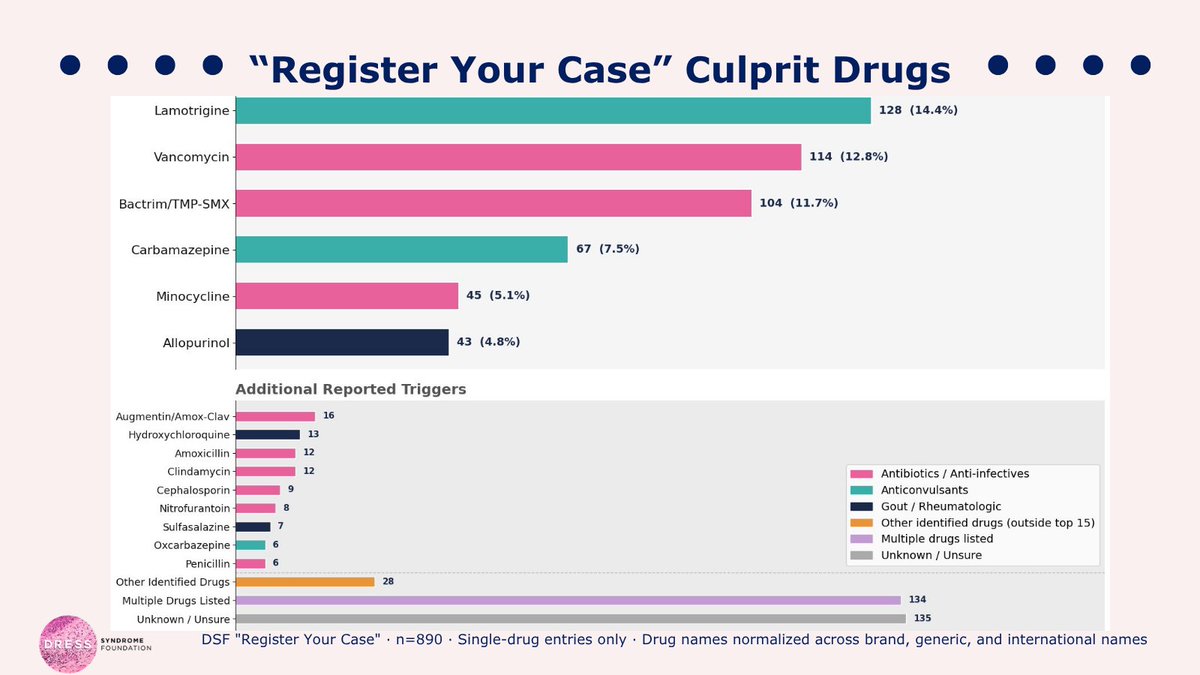
We're grateful for the chance to share insights from our Register Your Case survey — self-reported data capturing the lived experiences of patients and their loved ones.
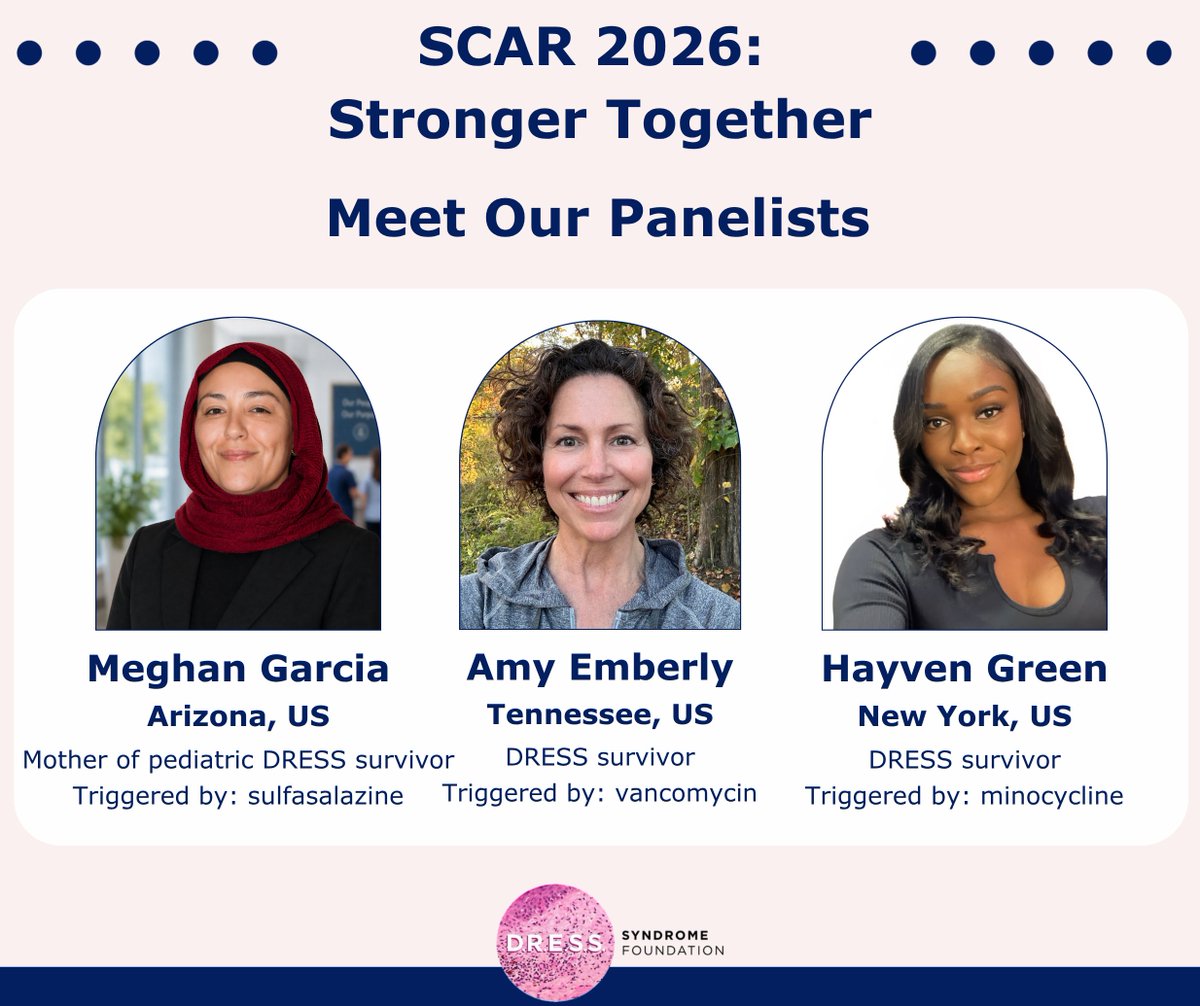
And we especially want to thank the patient community members who joined us in person as panelists:
- Meghan Garcia, mother of a pediatric DRESS survivor
- Amy Emberly, DRESS survivor
- Hayven Green, DRESS survivor
They each shared the critical perspective of living with DRESS Syndrome, from the difficulty of getting a diagnosis to long-term health effects and the gaps in navigating this complicated disease.
Their stories were powerful. Their presence even more so. Thank you for all you do to advocate for better treatment and deeper research. You and your voices matter.
Another shout-out goes to the SJS/TEN patient community and our friends at Stevens-Johnson Syndrome Canada and SJS Awareness Oregon. It was powerful being in the same room together and learning from your lived experiences of a different yet similar severe drug reaction.
And, a sincere thank you to every researcher and clinician working hard to better understand severe cutaneous adverse drug reactions (SCARs) and help patients. Your work is making a difference.
Here are highlights from the meeting:
- Dr. Dean Naisbitt offered an insightful framing of who's at risk — all of us carry HLA and T-cell receptors capable of engaging common culprit drugs, and TNF-α may play a role in who develops a reaction.
- Dr. Roni Dodiuk-Gad stressed the social and mental health impacts on patients and how collaboration and recognizing what we don’t yet know is critical for improved care.
- Dr. Annick Barbaud mapped the role of skin testing in informing drug causality and cross-reactivity in SCAR, including existing gaps and what consensus will require.
- Dr. Saskia Oro made the case for higher-resolution evidence on systemic steroids as the staple treatment and outlined recommended next steps.
- Anita Hanson introduced the "My SJS Passport" — a tool to support survivors after diagnosis, sparking discussion about a potential "My DRESS Passport." We look forward to seeing what develops.
- Dr. Elizabeth Phillips shared critical updates on genetic testing and SCAR, including HLA prediction, current gaps, and pathways to deeper patient support.
We continue to believe in a world where severe drug reactions are identifiable, treatable, and preventable. Meetings like this bring that vision one step closer.
ALT Large diverse group of people seated outdoors on chairs under string lights with trees and stadium in background.
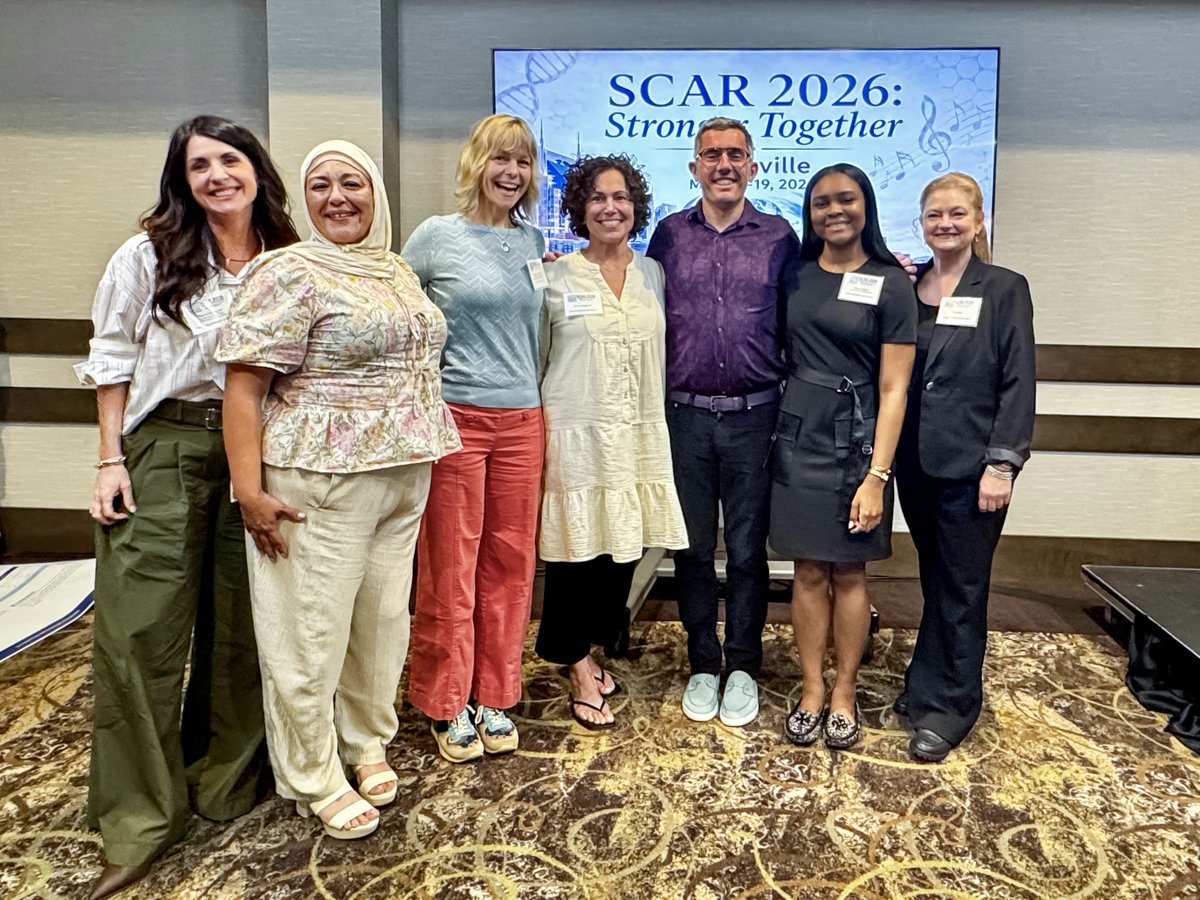
ALT Group of seven people standing together in front of a screen displaying 'SCAR 2026: Stronger Together' at a conference venue.