
Joined September 2009
- Tweets 11,446
- Following 159
- Followers 51,731
- Likes 8,219
2,222 Photos and videos




Pinned Tweet

Apr 28
Carl Jung once said
“Loneliness does not come from having no people around you, but from being unable to communicate the things that seem important to you"
That's something I've been working to resolve for a while now
*Link in comments, if you're keen to know more
6
7
109
6,308
As you probably know, there's a giant skull on display in the Bitcoin Museum in Nashville. It was created in 2023 for GreenpeaceUSA's campaign against Bitcoin mining, and its job was to make the world see Bitcoin as an environmental villain. So how did it end up in a museum built by the people it was designed to shame?
I was close to most of what happened next. But it took me until this year to see what the story was actually about.
Early 2023 was the high-water mark of the environmental case against Bitcoin. Tesla had already stopped accepting Bitcoin payments, citing environmental concerns. Most press on mining was hostile. And GreenpeaceUSA's "Change the Code" campaign, funded with $5 million from Ripple co-founder Chris Larsen, had just unveiled its centrepiece: the Skull of Satoshi, a striking sculpture by the artist Ben Von Wong.
Source: bloomberg.com/news/articles/…
Troy Cross (who became not just a comrade in arms but a friend during this chapter of Bitcoin's history) saw a different way in. Troy's insight was and always had been to turn a public debate into a 1:1 conversation fast. He did that much better than was ever my nature, and he did it with Ben. It was Troy who invited Ben to talk to him: environmentalist to environmentalist, peer to peer. At last year's Bitcoin conference, Troy told me something I didn't know at the time: the conversation had lasted for four days.
Troy made the case most of us would have made: how mining soaks up wasted renewable energy, how it can stabilise grids. And it worked, for hours at a time. Ben would shift. Then he'd check in with GreenpeaceUSA, and the campaign would pull him back to the script. At one point they brought in Alex de Vries, the central-bank employee whose since-debunked research the campaign was largely built on, to talk to Ben directly. Two steps forward, two steps back.
Source: x.com/DSBatten/status/186725…
Then Troy stopped.
He told me later that the breakthrough came "when I stopped trying to spell out the case for Bitcoin and just said, 'OK, let me lay out all the reasons why I think you're opposed to it.'"
Read that again. The turning point in the most public fight over Bitcoin's environmental story was a man offering to argue his opponent's case.
I've coached founders and CEOs for twenty years, and I recognised the move the moment Troy described it. When a person is defending a position, their mind is occupied with protection, and almost nothing you say gets processed. Data bounces off a defended mind. When you lay out someone's case better than they've articulated it themselves, the defence has nothing left to push against - you've proven you understand them before asking to be understood (Aristotle noticed the same thing about character twenty-three centuries ago).
Source: classics.mit.edu/Aristotle/r…
And those first days of arguing weren't wasted. They showed Ben who he was dealing with: an environmentalist who knew the data cold and never once raised his voice. By the time Troy held up the mirror, Ben trusted the man holding it. The order matters. People accept evidence from a messenger they trust, inside a conversation that feels safe, and at no other time.
What happened next was the tide turned. Ben adopted a new position around Bitcoin, not pro-Bitcoin, but definitely no longer anti-Bitcoin either. He was now in the middle ground of uncertainty, redefining the meaning of his own art and expressing hope of both sides engaging in dialog.
His beautiful tweet where he announced this shift was not only public, it has remained his pinned post ever since: "I made the Skull believing that Bitcoin Mining was a simple black-and-white issue. I've spent my entire career trying to reduce real-world physical waste, and PoW felt intuitively wasteful. Of course, I was wrong. Few things in the world are black and white. Dumb me." The "Dumb me" included - his words, on his profile, by his choice, for three years now.
Source: x.com/thevonwong/status/1639…
He let better information redraw the picture in shades of gray, publicly, which takes more intellectual honesty than either defending one's original position or "switching teams".
Then Ben did something nobody asked of him. He set up meetings between the campaign's director, Josh Archer, and four of us: Troy, Margot Paez, Trey Walsh and me. What was said in those rooms stays private, and that's how it should be. What I can share is that I found Josh genuinely interested. A few months later, he left the campaign. Then he left GreenpeaceUSA altogether.
The campaign wound down. Not one node owner changed the code.
In April last year, I reached out to Ben to ask whether we could procure the skull from him, so it could have a second life somewhere better than a warehouse. The reply never came. Six weeks later I found out why: Ripple, the company whose co-founder had funded the campaign, had already bought it under NDA, to unveil at the Bitcoin Conference and gift to the Bitcoin Museum in Nashville.
The sculpture commissioned to bury Bitcoin's reputation was donated to Bitcoin's museum by the campaign's own funder. You couldnt script it.
At the Bitcoin Conference, Ben got back to me with a message: "I think you were right in some ways in that Bitcoin really has been the fastest greening technology out of all the other ones. And looking at how other technologies have gone backwards, Bitcoin hasn't ... yet, anyways." I asked whether I could share it publicly. He replied: "Sure thing go for it. Thanks for asking I appreciate the transparency."
That "yet, anyways" at the end is what intellectual honesty sounds like in two words. Ben was prepared to give time, data and evidence the casting vote. Few things in the world are black and white - and Ben writes like a man who means it.
The skull arrived in Nashville as it should have: unaltered - the same immutable monument Ben has built. What had changed was everything surrounding it: the art's meaning, the story around it, the zeitgeist, the artist himself. All that had changed because of the simple acts of one human talking to another human, repeated over time.
And Troy's four days were one thread of many. Nobody appointed him to talk to Ben. Nobody appointed Margot, Trey or me to defend Bitcoin. No campaign manager set us weekly KPIs for number of GreenpeaceUSA ratios.
Nobody coordinated the Bitcoiners who met every campaign post with their own data, day after day, in numbers no press office could match. The campaign ran on $5 million, a media plan and a famous brand. The defence ran on individuals with no budget, no leader and no title, each deciding alone to talk to another human being directly.
Satoshi's whitepaper described electronic cash that needed no intermediaries. It turned out the defence of his network needed none either. That's what the skull means to me now. A network designed peer to peer was defended peer to peer.
25 Mar 2023

Thurs evening, I was sad.
I had just spent 6 months pouring my heart and soul into building an amazing installation to inspire real change for something few seemed to care about. Then, Bitcoin Twitter noticed the #SkullOfSatoshi, and the rollercoaster began.
Here’s my story /1

11
19
92
4,089
Jun 12
For Bitcoin to win, we need sovereignty over more than own money. Here's my take on optimizing the sovereignty most of us are still missing.

3
3
37
2,776
Jun 10
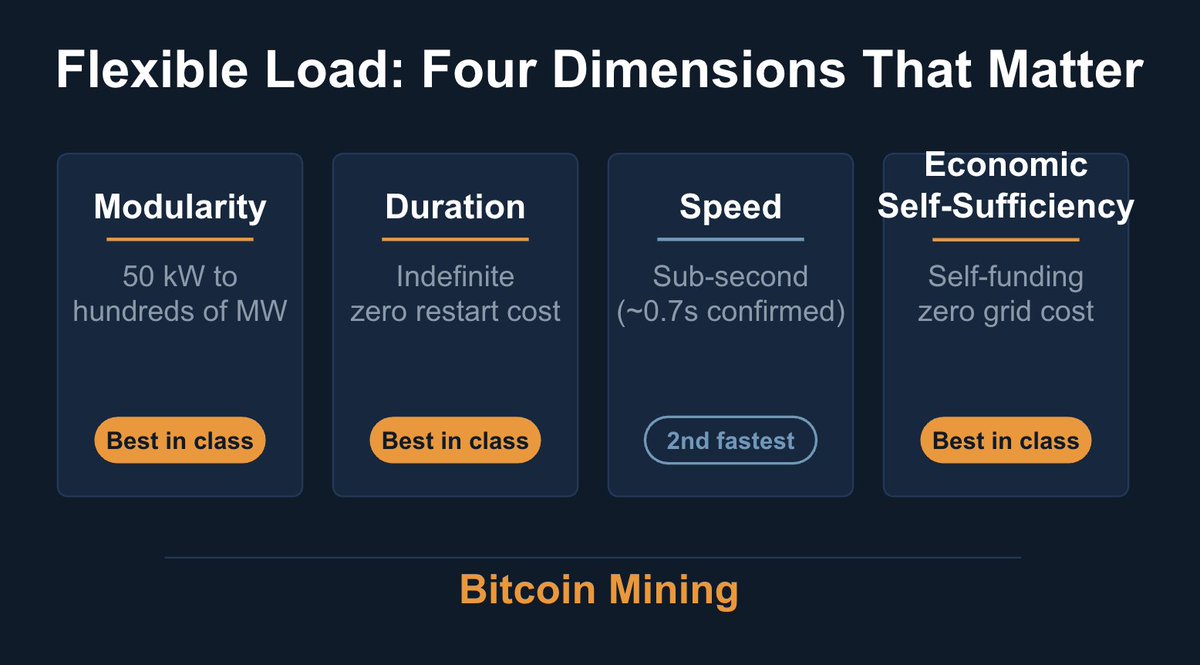
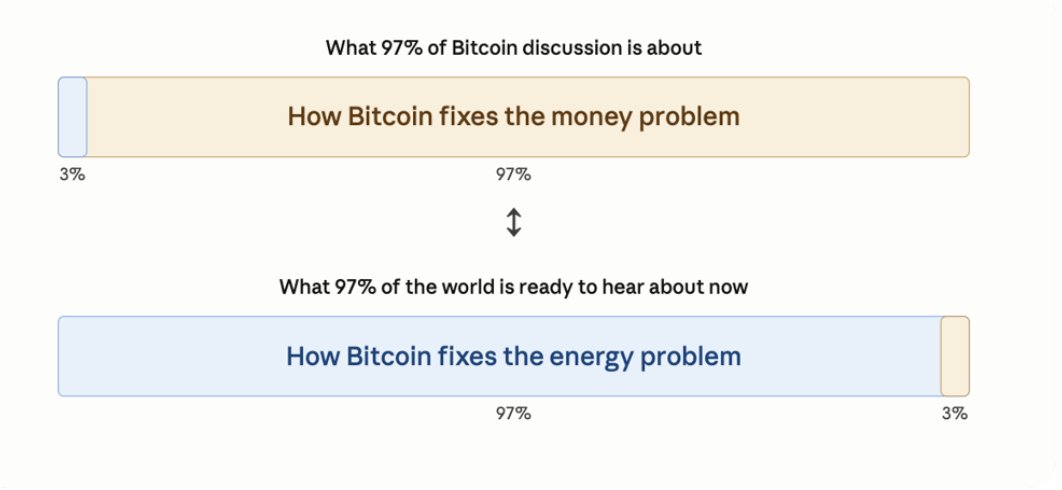
The world is just a hair's breadth away from acknowledging publicly that we need Bitcoin mining on our grids

The AI data center boom is exposing what bitcoin miners have argued for years: flexible load matters on an increasingly stressed grid. From @DSBatten
6
22
139
4,541
Jun 10
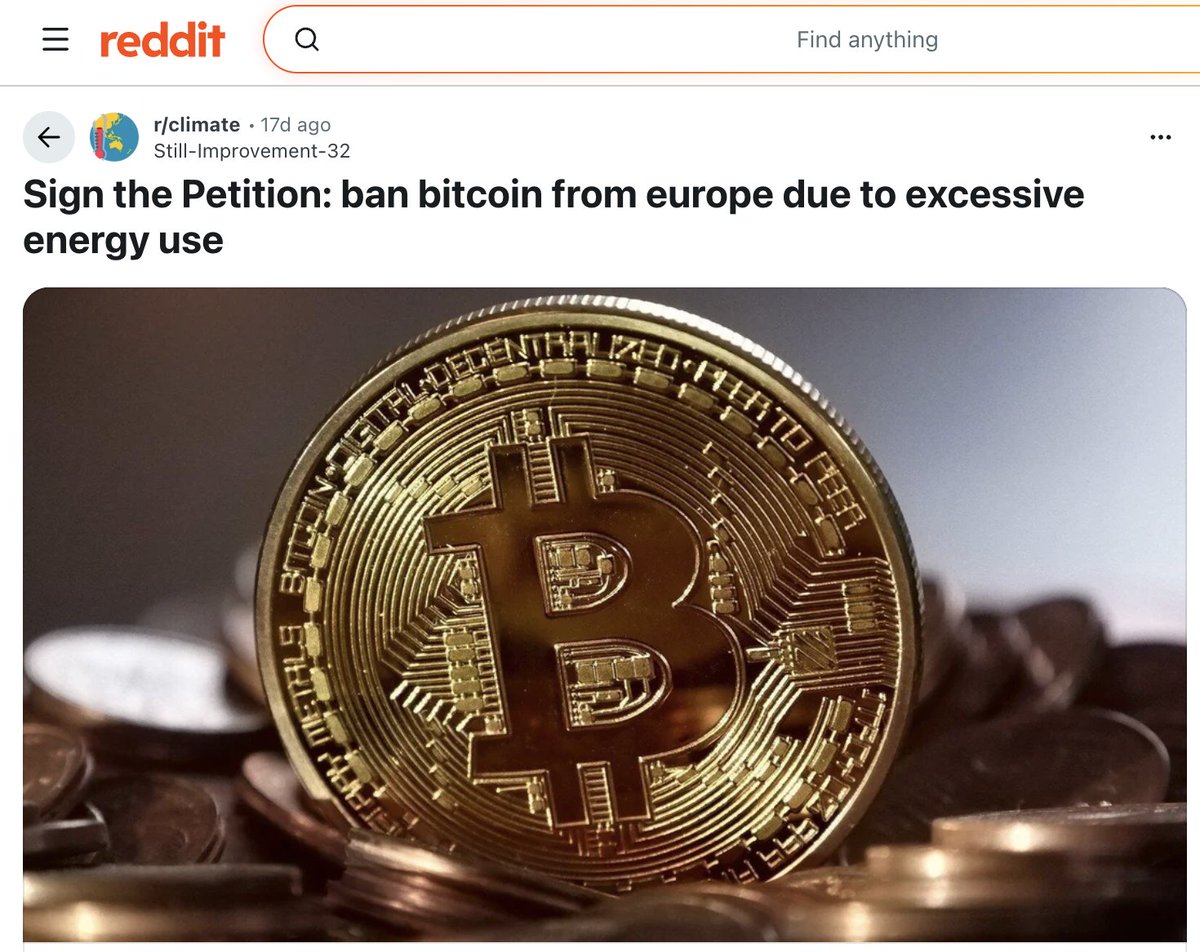
Seeing the sort of laughable ideas that get oxygen in echo chambers such as Reddit makes me grateful that I spend my time on X.
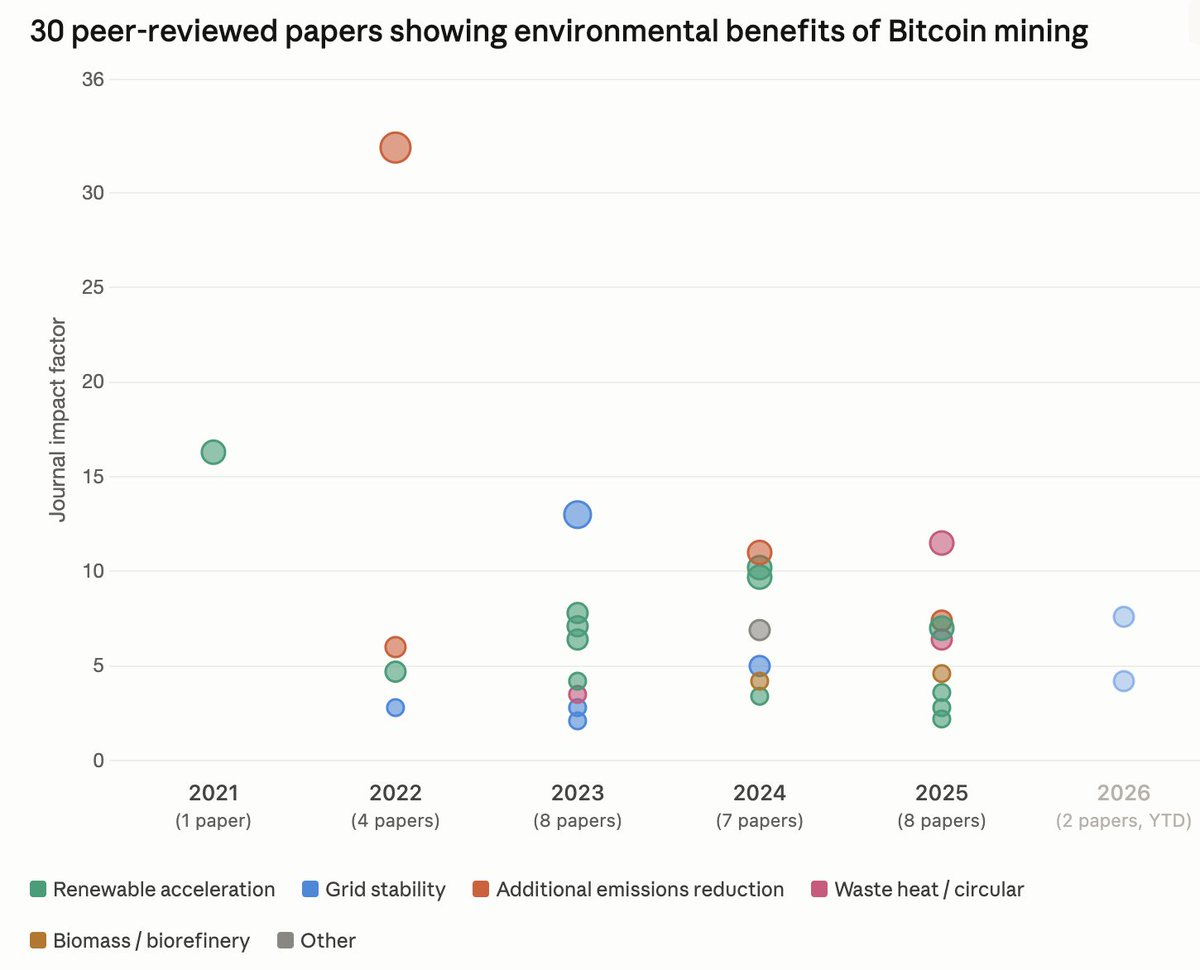
Imagine launching a petition to ban a technology that 30 peer reviewed papers have said is an essential part of the green energy transition
3
26
176
2,573
Jun 9
Mainstream media got something right. Meditation combined with breathwork is a v.powerful unlock
... it's also the tool that made 4 years of calm analysis and FUD-busting around bitcoin energy possible
(... and why almost every leader I coach does it)!

A growing body of research finds that meditation may help reduce anxiety, manage stress, ease pain and improve sleep quality, among other health benefits. The new study suggests that shifts in brain waves could play a hidden role in generating these benefits, and just a few minutes can start calming your brain. cnn.it/4vBWjTi

3
1
20
1,713
Jun 9
First new Bitcoin podcast for some time
All new stuff in here
- why some miners are paying -2c/kWh for power
- why "Bitcoin Will Fix Energy Before Money"
- why the mainstream is now a hair-breadth away from seeing the first (of many) society-transforming uses of Bitcoin
🚨 NEW VIDEO 🚨
AI Is Breaking the Power Grid, and Bitcoin Is the Fix
@DSBatten on how AI data centers are pushing power grids to the brink, and why bitcoin mining may be the only thing that lets grids handle renewables and AI load at once.
7
18
110
6,923
Jun 9
Anti-Bitcoin reporting in the media is at least 24x negatively weighted against Bitcoin.
In other words, a negative take on Bitcoin is 24x more likely to be reported than a positive one.
Exhibit A:
Bitcoin environmental reporting: only 1 of 30 positive studies was picked up by the media, while 4 of the 5 negative (and disputed) studies were. A 24x anti-Bitcoin bias
Exhibit B:
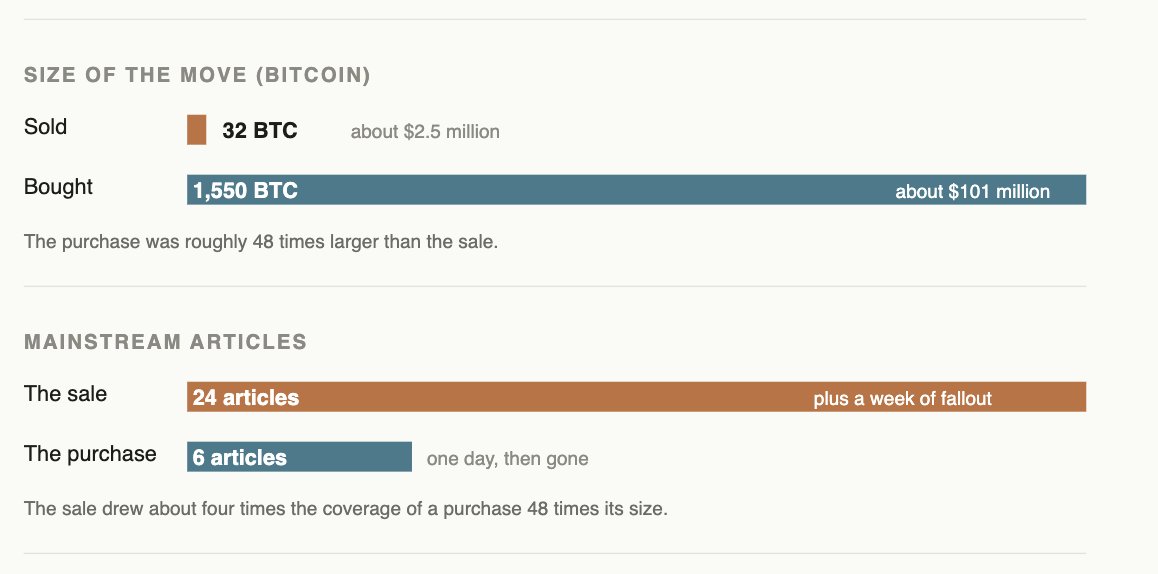
MSTR sell and buy of Bitcoin.
After saying that it would occasionally sell Bitcoin a week ago - Strategy sold 32 bitcoin and the story ran for a week. 24 mainstream articles including Cramer chiming in, a Polymarket betting scandal, a run of paper-loss explainers.
Then MSTR bought 1,550 bitcoin, 48x larger event but only 6 outlets covered it.
That's arguably an event larger asymmetry.
h/t @BTCPerception for data
6
38
170
3,842
Jun 9
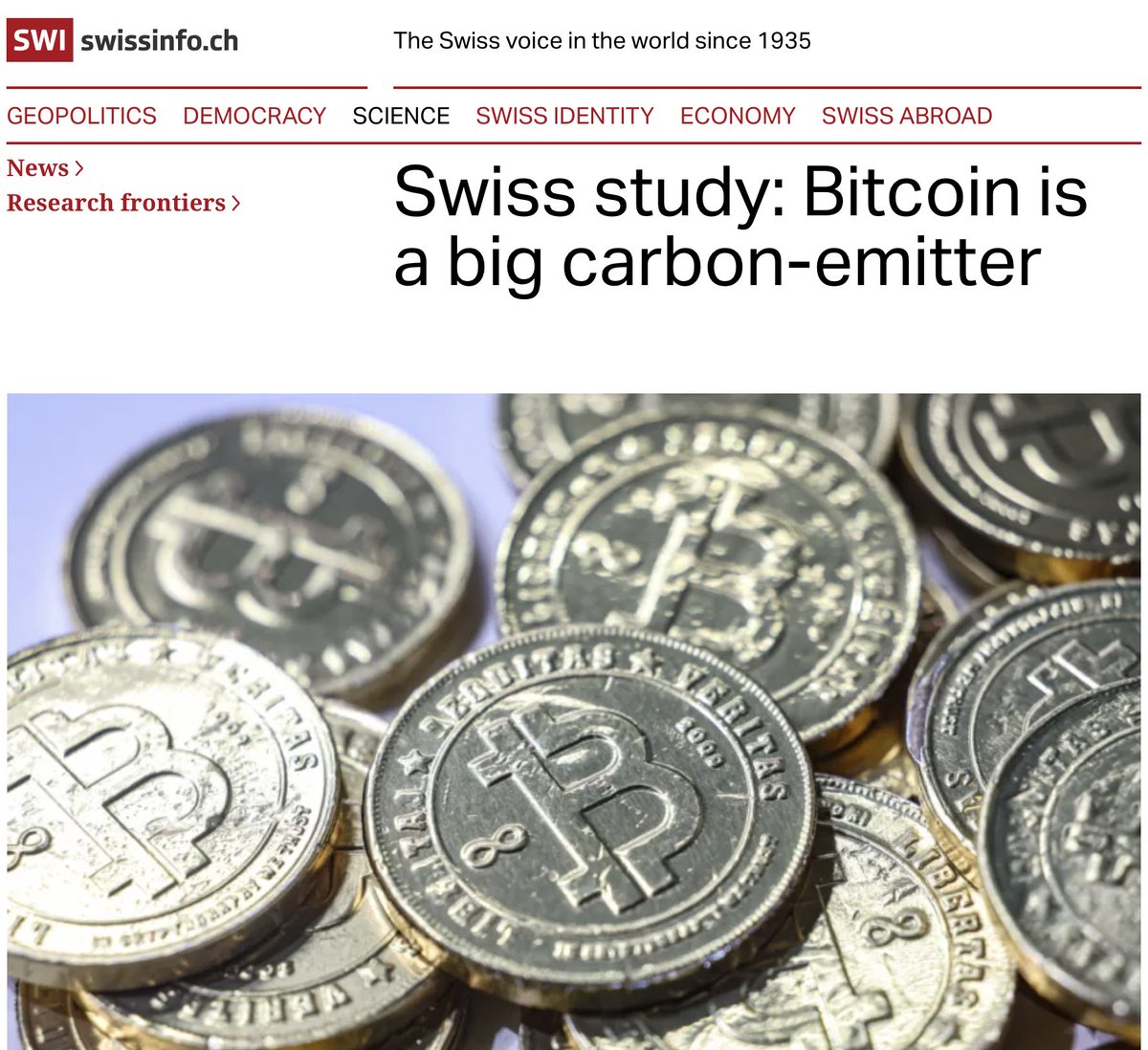
This is the sort of article that can lose a media publication's credibility. Fast.
In a truly embarassing effort from Switzerland's public broadcaster @swissinfo_en just claimed a long-debunked claim that "Bitcoin emits a lot of energy per transaction"
For the record, no it doesn't. Bitcoin resource use comes through mining, not transactions (getting this wrong is a rookie error). It was debunked 4 times in peer reviewed papers (Masanet et al, 2019, Dittmar et al. 2019, Sedlmeir et al, 2020, and Sai and Vraken, 2023.)
That's why no reputable mainstream media companies make this claim any more.
Oops.
Imagine having done so little research on your article that you
a. didn't know that
b. didn't know that all your peers in the media except you already know that
But the Swiss article gets worse. The author mentioned none of the actual contemporary research on Bitcoin, appearing to have no awareness that since 2021 there have been 30 peer reviewed articles (source: x.com/DSBatten/status/206179…) showing that Bitcoin is not only not a big emitter, but it is a genuine solution to ending the era of big emissions by:
- Accelerating renewable energy transition (16 papers)
- Monetizing wasted renewable energy (14 paper)
- Obviating flaring, landfill gas emissions, or gas peaker plants (3 papers)
Finally, the article references its own previous copy, an article from 31 May 2025 quoting the non-peer reviewed hobby blog Digiconomist (which Wikipedia expressly states is not a reputable source), authored by Dutch Central Banker Alex de Vries, whose work on Bitcoin Mining was debunked in 2023 (Sai and Vranken)
Source: sciencedirect.com/science/ar…
So in summary, what can we objectively say is true about this article on Bitcoin's environmental impact from @swissinfo_es. They have
1. Not acknowledged 30 peer reviewed papers which contradict their thesis
2. Referenced the hobby blog from an author whose work's academic merits are disputed (to say the least)
3. stated the flawed "per transaction" metric which has been debunked 4 times in academic work
Irrespective of your opinion on Bitcoin or Bitcoin mining, this is not a great look for Swissinfo.
Rather, it is misinformation against a technology that has been established in multiple academic journals, by energy experts, grid operators and renewable energy generators as being an important part of the UNSDGs and environmental action.
in short: the sort of article that establishes a news outlet as not a reliable source
Do better @swissinfo_jp @swissinfo_fr @swissinfo_de
15
59
303
7,975
Daniel Batten retweeted

Jun 7
⚡️👨🌾 THE BITCOIN FARMER ⚡️👨🌾
(full documentary)
13
38
150
33,667
Jun 8
The gap between these bars is arguably the largest asymmetry in Bitcoin right now
6
26
125
8,848
Jun 6
Urgent need for more flexible load endorsed by
✅World's largest energy policy agency
✅Spanish govt arm responsible for energy
✅EU's largest renewable energy consumer group
✅UN-backed energy policy network
Bitcoin mining is the world's most flexible load
Probably nothing
2
12
43
2,018
Jun 6
30 papers on showing Bitcoin mining's energy and environmental benefits.
Probably nothing.
Below is the full list with sources.
But the TL;DR of findings is...
Bitcoin mining stabilizes grids, obviates gas peaker plants, reduces Landfill emissions, reduces flare gas emissions, accelerates the clean energy adoption, obviates fossil fuel heat through heat recycling, makes battery/biofuel/solar projects more profitable
Full list:
1. How Bitcoin Can Support Renewable Energy Development & Climate Action (Lal & You 2023)
Journal: ACS Sustainable Chemistry & Engineering (Impact Factor: 7.1)
Findings: Bitcoin mining helps renewable developers generate more profits, accelerating the renewable transition
Source: pubs.acs.org/doi/10.1021/acs…
2. Renewable Energy Transition Facilitated by Bitcoin (Velický 2023) Journal: ACS Sustainable Chemistry & Engineering (Impact Factor: 7.1)
Findings:
"The opportunities offered by bitcoin mining in reduction of the greenhouse gas emissions and renewable energy transition are greater than generally assumed"
Source: pubs.acs.org/doi/10.1021/acs…
3. Can bitcoin mining empower energy transition and fuel sustainable development goals in the US? (Lal et al. 2024)
Journal: Journal of Cleaner Production (Impact factor: 9.7)
Findings: Bitcoin mining with renewable energy is profitable in 96% of cases and is consistently more profitable than chemical-based utilization (hydrogen, ammonia, methanol). The "profits from bitcoin mining can empower energy transition."
Source: sciencedirect.com/science/ar…
4. Rethinking bitcoin's energy use through sustainable digital business models and resources monetization (Dasaklis et al. 2025)
Journal: Digital Business (Impact Factor: 7.4)
Findings: Bitcoin mining can "promote cleaner energy use and reduce the carbon footprint of energy production." By using renewable or stranded sources, Bitcoin mining aligns "economic incentives with sustainability goals."
Source: sciencedirect.com/science/ar…
5. Hedging Renewable Energy Investments with Bitcoin Mining (Bastian-Pinto et al. 2021)
Journal: Renewable & Sustainable Energy Reviews (Impact Factor: 16.3)
Findings: Bitcoin mining acts as a financial hedge against low electricity prices, significantly improving the economic viability and profitability of wind energy projects.
Source: sciencedirect.com/science/ar…
6. Robust Optimization for Energy-Aware Cryptocurrency Farm Location with Renewable Energy (Lotfi et al. 2023) Journal: Computers & Industrial Engineering (Impact Factor: 6.7)
Findings: Presents an optimization model for strategically locating cryptocurrency mining facilities near renewable energy sources, minimizing costs and carbon footprints, thereby integrating mining operations sustainably into energy grids.
Source: sciencedirect.com/science/ar…
7. Renewable energy and cryptocurrency: A dual approach to economic viability and environmental sustainability (Hakimi et al. 2024)
Journal: Heliyon (Impact factor: 3.4)
Findings: Bitcoin mining reduces the ROI from 8.1yrs to 3.5yrs while reducing CO2 emissions by 50,000 tonnes/year on a typical 50MW solar farm.
Profits from Bitcoin mining using renewable generation help accelerate the energy transition. PoS blockchains (such as Ethereum) can not offer these features.
Source: cell.com/heliyon/fulltext/S2…
8. Study on the Economics of Wind Energy Through Cryptocurrency (Vega-Marcos et al. 2022) Journal: Energy Reports (Impact Factor: 4.7)
Findings: Co-locating Bitcoin mining operations with wind farms significantly improves economic viability by generating additional revenue during periods when the wind farm is not supplying power to the grid.
Source: accedacris.ulpgc.es/handle/1…
9. Techno-economic and Environmental Evaluations of a Novel Cogeneration System Based on Solar Energy and Cryptocurrency Mining (Nikzad & Mehregan 2022) Journal: Solar Energy (Impact Factor: 6.0)
Findings: Combining crypto-mining with a typical "PV rooftop system can supply 83% of the consumed electricity of the mining system per year and prevent the annual emissions of 5.5 tCO2 to the atmosphere simultaneously."
Source: sciencedirect.com/science/ar…
10. Cryptocurrency mining as a novel virtual energy storage system in islanded and grid-connected microgrids (Hajiaghapour-Moghimi et al. 2024)
Journal: International Journal of Electrical Power & Energy Systems (Impact factor: 5)
Findings: Microgrids (MGs) not using Bitcoin Mining waste significant renewable energy. However using Bitcoin mining stops almost all renewable waste reduces MG costs by 46%, accelerates MG development and decarbonizes power production
Source: sciencedirect.com/science/ar…
11. Climate sustainability through a dynamic duo: Green hydrogen and crypto driving energy transition and decarbonization (Lal & You 2024)
Journal: PNAS (Impact factor 9.4) Findings: Combining green hydrogen and Bitcoin can enable capacity expansions of up to 25.5% for solar power and 73.2% for wind powered operations.
Source: pnas.org/doi/10.1073/pnas.23…
12. Mining Bitcoins with Carbon Capture and Renewable Energy for Carbon Neutrality Across States in the USA (Niaz et al. 2022) Journal: Energy & Environmental Science (Impact Factor: 32.4) Findings: Integrating Bitcoin mining with direct air carbon capture and renewable energy has the potential to make Bitcoin mining carbon-neutral, depending on state-specific electricity grids.
Source: pubs.rsc.org/en/content/arti…
13. The Feasibility Study of the Production of Bitcoin with Geothermal Energy: Case Study (Aliehyaei et al. 2023) Journal: Energy Science & Engineering (Impact Factor: 3.5)
Findings: Demonstrates the economic feasibility of powering Bitcoin mining operations with geothermal energy, providing a renewable, profitable alternative to traditional energy sources.
Source: researchgate.net/publication…
14. The Relationship between Biomass & Bitcoin (Semaan et al. 2024) Journal: Sustainability (Impact Factor: 3.9) Findings: "Bitcoin [can] accelerate the UN's Sustainable Development Goals", and provides a way to make often economically unviable bio-refineries profitable
Source: mdpi.com/2071-1050/16/18/791…
15. An integrated landfill gas-to-energy and Bitcoin mining framework (Rudd et al. 2024) Journal: Journal of Cleaner Production (Impact factor: 9.7) Findings: Bitcoin mining can profitably reduce landfill methane
Source: sciencedirect.com/science/ar…
16. High resolution modelling and analysis of cryptocurrency mining's impact on power grids: Carbon footprint, reliability, and electricity price (Menati et al. 2023)
Journal: Advances in Applied Energy (Impact factor: 13) Findings: Bitcoin mining's flexibility increases both grid reliability & stability
Source: sciencedirect.com/science/ar…
17. Bitcoin's Carbon Footprint Revisited: Proof of Work Mining for Renewable Energy Expansion (Ibañez et al. 2022)
Journal: Challenges (Impact Factor: 2.8)
Findings: [our research finding support] "a possible role for Bitcoin mining in promoting grid decarbonization" through effective demand response"
Source: mdpi.com/2078-1547/14/3/35
18. Bitcoin and Its Energy, Environmental & Social Impacts (Rudd et al. 2023)
Journal: Challenges (Impact Factor: 2.8)
Findings: There is "transformative potential in the Bitcoin mining sector, especially regarding demand response, grid flexibility, and methane mitigation"
Source: mdpi.com/2078-1547/14/4/47
19. Can Bitcoin mining increase renewable capacity? (Bruno et al. 2023)
Journal: Resource & Energy Economics (Impact Factor: 2.6)
Findings: Bitcoin mining can increase renewable energy penetration, replacing the need for gas peaker plants. Also: "When Bitcoin miners provide ... demand response, their emissions impact is largely mitigated."
Source: sciencedirect.com/science/ar…
20. Hedging Investments of Grid-Connected PV-BESS in Buildings Using Cryptocurrency Mining: A Case Study in Finland (Hajiaghapour-Moghimi et al. 2025)
Journal: IEEE Access (Impact Factor 3.6)
Findings: Bitcoin mining is more effective at accelerating rooftop solar development than using either Batteries, or standalone solar deployments. 12.5% ROI for Battery versus Bitcoin a 57.7% ROI using Bitcoin (4.6x higher).
Source: ieeexplore.ieee.org/document…
21. Energy Modeling and Techno-Economic Feasibility Analysis of Greenhouses for Tomato Cultivation Utilizing the Waste Heat of Cryptocurrency Miners (Asgari et al. 2023)
Journal: MDPI Energies (Impact Factor 3.2)
Findings:
- Repurposing miner waste heat minimizes overall energy consumption and fossil fuel reliance, enabling year-round crop cultivation in cold regions
- The integration promotes electrification and sustainable practices by avoiding CO2-emitting furnaces, contributing to net-zero goals in agriculture and reducing the environmental impact of food production chains, which account for 19-29% of global GHG emissions
Source: mdpi.com/1996-1073/16/3/1331
22. Empirical Insights into Economic Viability: Integrating Bitcoin Mining with Biorefineries Using a Stochastic Model (Semaan et al. 2025)
Journal: MDPI Systems (Impact Factor: 3.1)
Findings: Integrating Bitcoin mining with bio-refineries can
- avoid waste by creating an additional revenue stream that could lower prices for bio-based products
- supports renewable energy growth by acting as a flexible, off-grid power sink, that reduces (flare) emissions
Source: mdpi.com/2079-8954/13/5/359
23. Energy optimization of bitcoin mining integrated greenhouse with model predictive control (Chen and You 2025)
Journal: Applied Energy (Impact Factor: 11.0)
Findings:
Findings: Bitcoin mining
- waste heat can be transformed into a resource for "advancing sustainable food production", while "enhancing food security" amid population growth
- "reduce[s] reliance on fossil fuels, lower greenhouse gas emissions, and enhance the economic sustainability of food production"
- "reduc[e] energy consumption by up to 15%"
Source: sciencedirect.com/science/ar…
24. Promoting rigor in blockchain energy and environmental footprint research (Sai & Vranken 2024)
Journal: Blockchain-Research and Applications (Impact factor 6.9)
Findings: Reveals data-gathering and methodological flaws in the works of Alex de Vries/Digiconomist and other early commentators on Bitcoin mining
Source: sciencedirect.com/science/ar…
25. Hybrid Hydropower-PV with Mining Flexibility and Heat Recovery (Lee et al. 2025)
Journal: Sustainability (Impact Factor 3.3)
Findings: Bitcoin supports local renewable projects with heat recapture as an additional benefit.
The study documented micro-hydropower solar coupled with flexible Bitcoin mining and heat recovery for a greenhouse, finding that Bitcoin mining added operational optionality and local community benefits.
Source: mdpi.com/2071-1050/17/21/948…
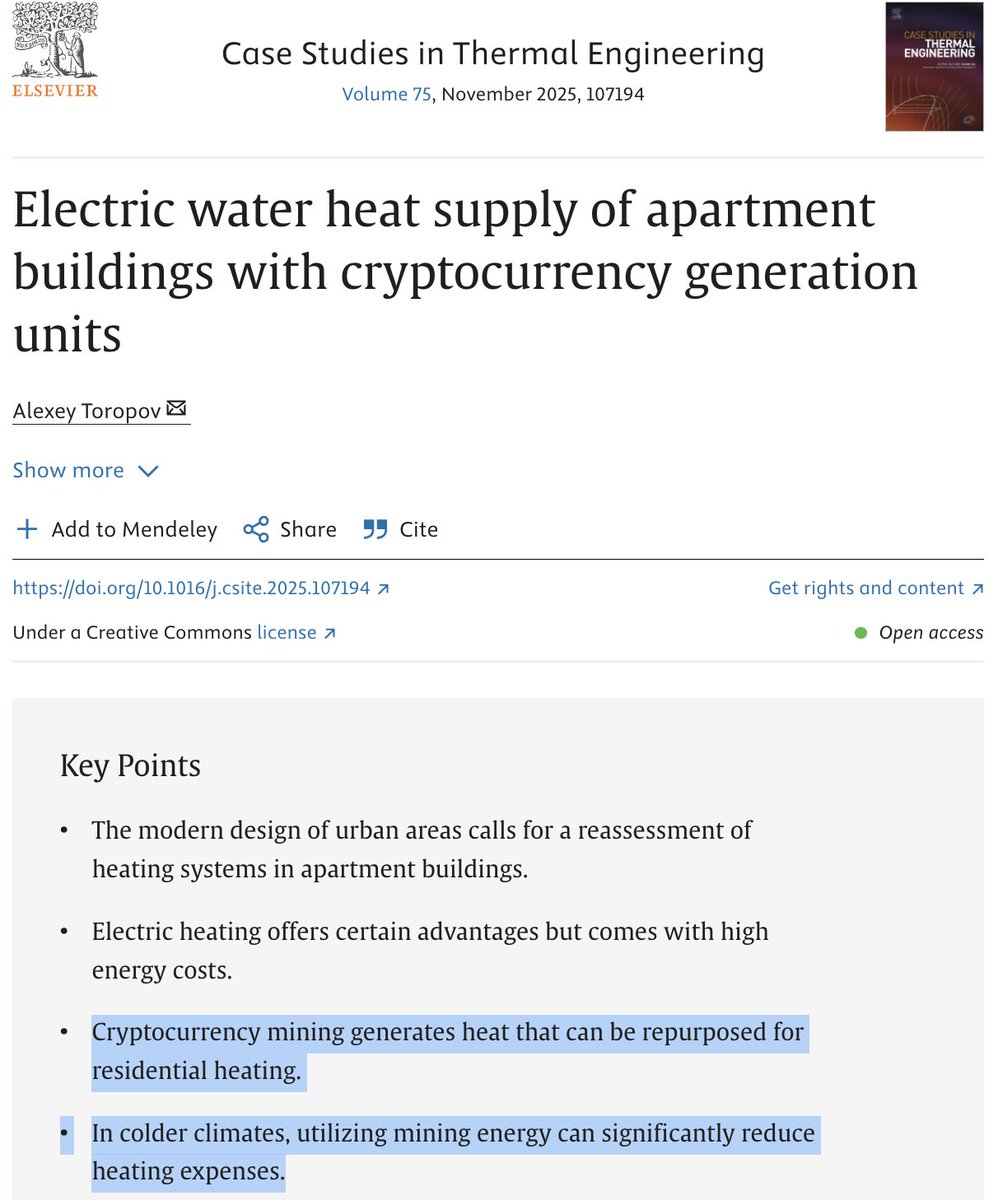
26. Electric Water Heat Supply Using Cryptocurrency Mining (Toropov 2025)
Journal: Case Studies in Thermal Engineering (Impact Factor 6.4)
Findings: Bitcoin mining recycled heat can be directly captured and repurposed for domestic hot water supply and space heating in apartment buildings, turning a byproduct into a practical heating.
The Bitcoin generated can subsidize or fully offset the high electricity costs of electric water heating, making the system more affordable for residential buildings, especially in colder climates.
27. Source: sciencedirect.com/science/ar…
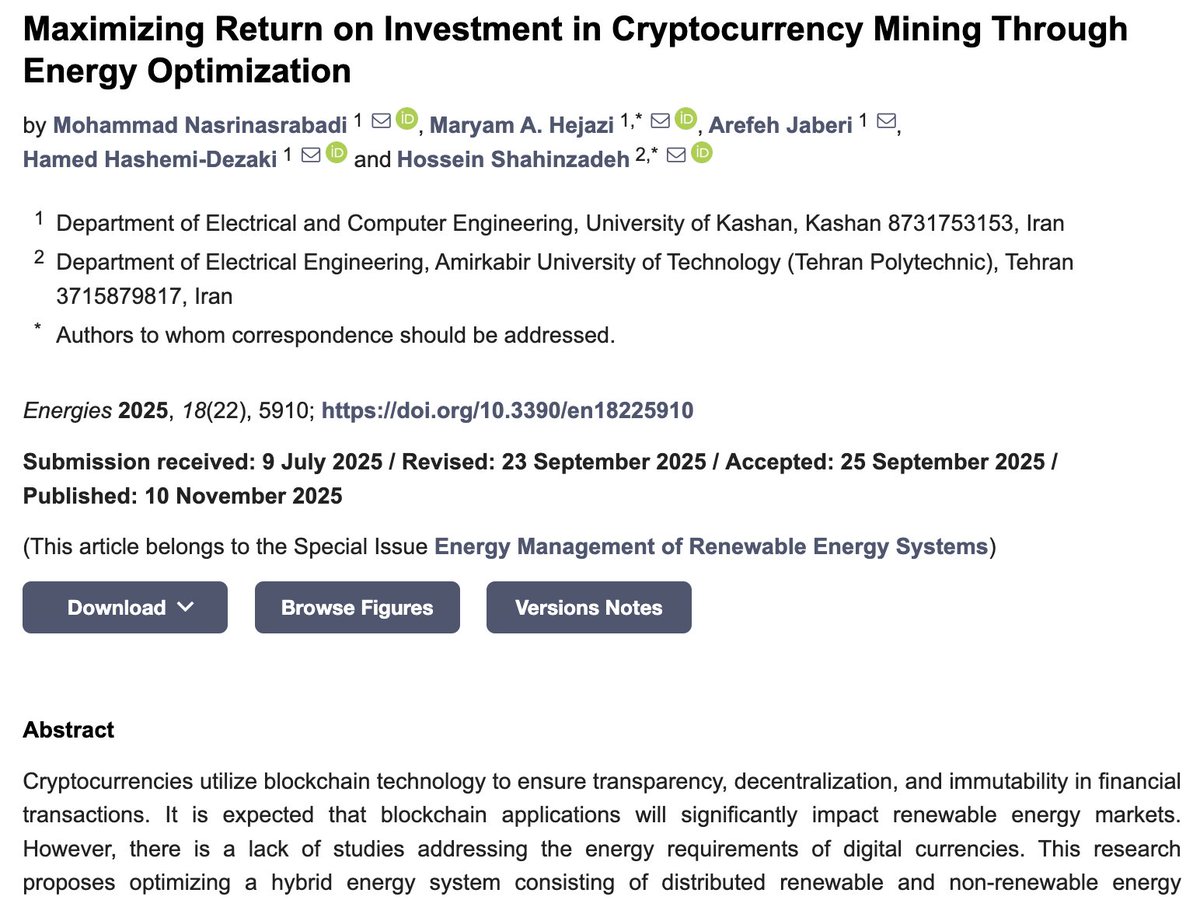
Maximizing ROI in Cryptocurrency Mining Through Energy Optimization (Nasrinasrabadi et al. 2025) Journal: Energies (Impact Factor: 3.2)
Findings: Renewable-powered mining is both profitable and lower-emission than renewable operations where Bitcoin mining is absent, making Bitcoin mining a potential driver of large-scale renewable deployment in regions with abundant solar and wind resources.
Additionally, in hybrid operations (eg: solar wind diesel), Bitcoin mining reduced fossil fuel dependence and enabled a significantly higher renewable energy share.
Source: mdpi.com/1996-1073/18/22/591…
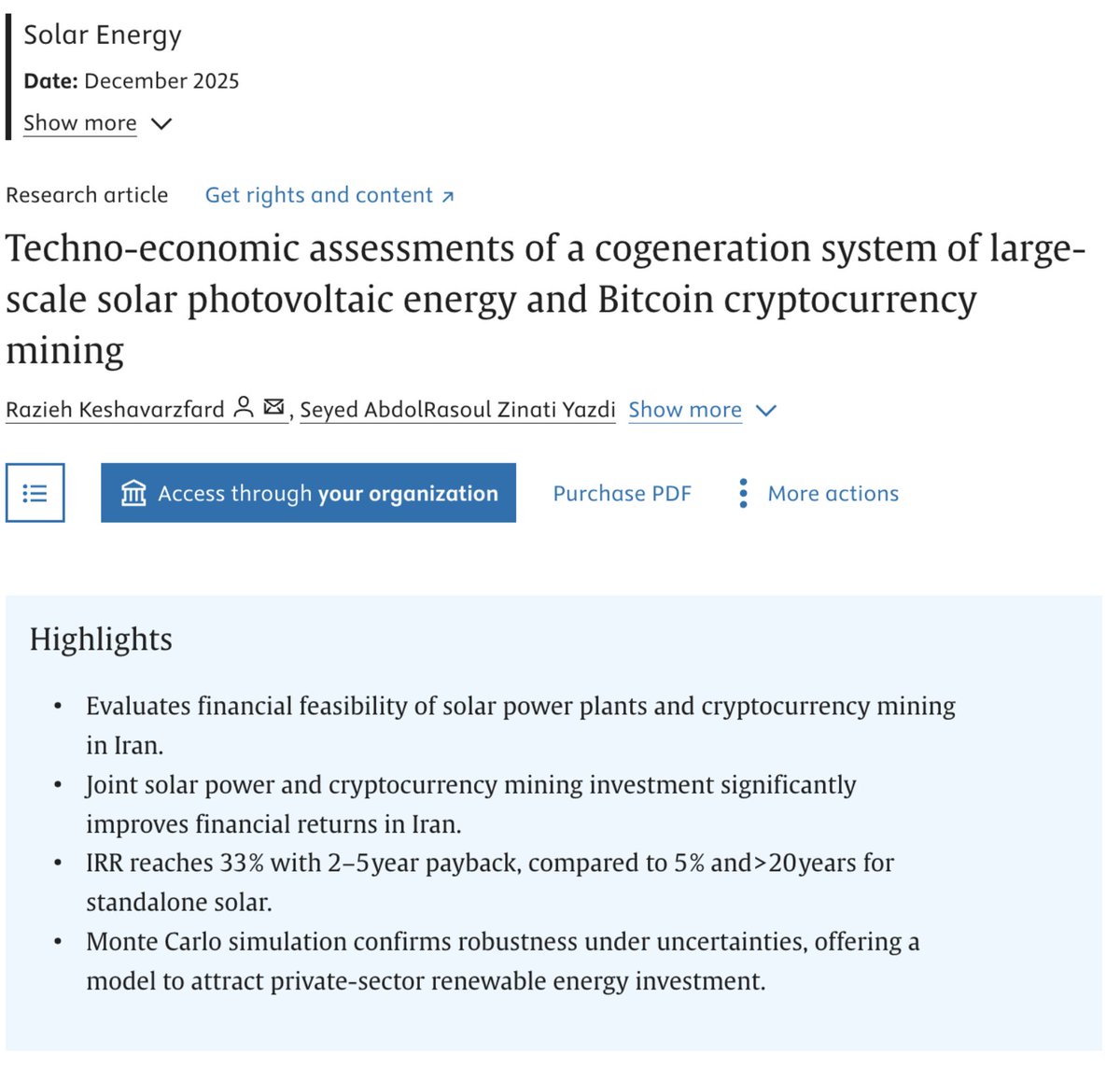
28. Techno-economic Assessments of Large-Scale Solar PV and Bitcoin Mining (Keshavarzfard & Zinati Yazdi 2025)
Journal: Solar Energy (Impact Factor: 6.6)
Findings: Pairing large-scale solar PV with Bitcoin mining transforms a low-viability standalone solar project (10-year payback, ~5% IRR) into a highly profitable venture with 2-5 year payback and 33% IRR (for a 10MW Solar farm).
Pairing Bitcoin mining with a 10MW Solar farm was also found to result in ~10,457 tons of CO2 avoided emissions per annum.
Source: sciencedirect.com/science/ar…
29. Energy, Economic and Environmental Impacts of Cryptocurrency Mining: A Review (Jafari et al. 2026) Journal: Energy Conversion and Management: X (Impact Factor 7.6)
Findings: Bitcoin mining operations are extremely flexible loads that supports renewable-led decarbonization by absorbing excess renewable generation. The operations can curtail demand within minutes, participate in demand response programs, and provide ancillary services, directly enhancing grid stability and enabling higher renewable energy integration.
Source: sciencedirect.com/science/ar…
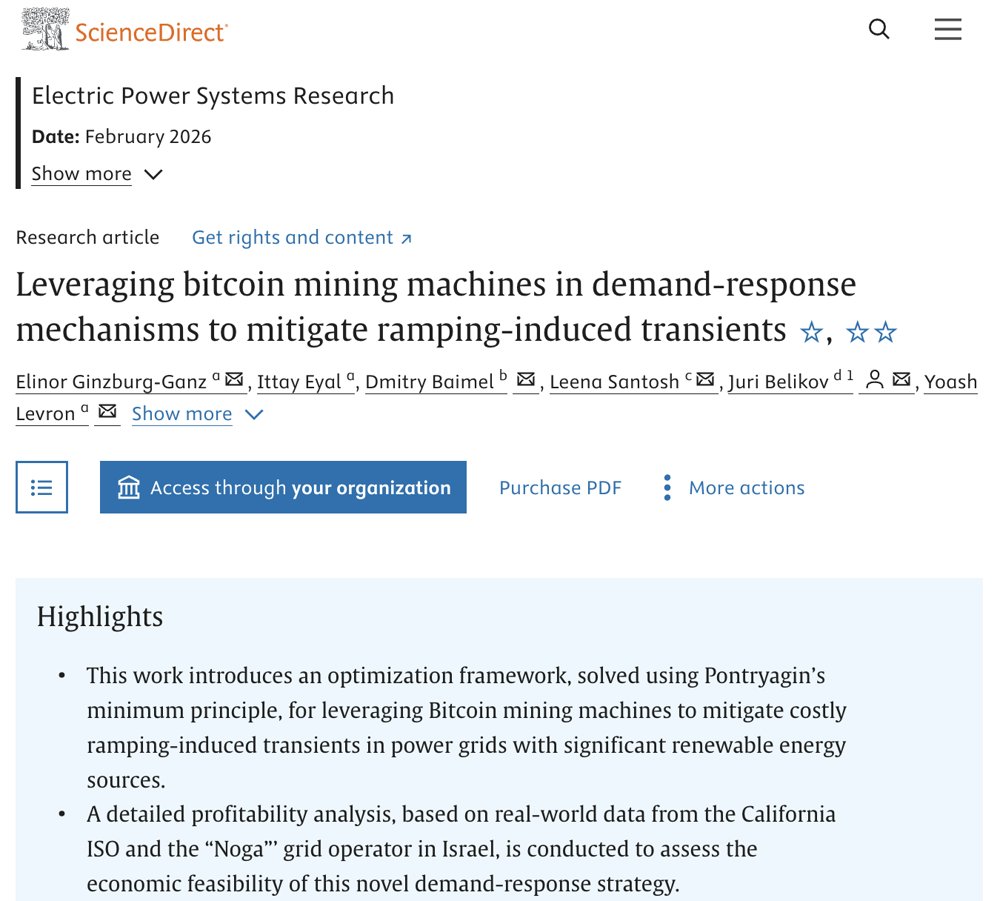
30. Leveraging Bitcoin Mining in Demand-Response to Mitigate Ramping-Induced Transients (Ginzburg-Ganz et al. 2026)
Journal: Electric Power Systems Research (Impact Factor 4.2)
Findings: Bitcoin mining enables better absorption of surplus renewable generation, minimizing curtailment and supporting higher renewable integration without extra storage or infrastructure costs, creating a win-win for grid stability and mining profitability. Bitcoin mining also was found to suppress costly ramping-induced "transients" (such as frequency fluctuations) while reducing grid operational expenses in power systems with high renewable penetration.
Source: sciencedirect.com/science/ar…
3
42
126
5,495
Jun 5
While attending the @MadBitcoin_ conference, @CriptoNoticias also grabbed me for an interview
We talked about why Bitcoin mining has an incredible future (based on trends, not hopium)
¡Disculpen que mi español no sea lo suficientemente bueno como para hacer esto en español!

La IA está cambiando el negocio de la minería de Bitcoin… pero no como imaginas. 🤔
Daniel Batten (@DSBatten) explica por qué los centros de datos de IA necesitan a Bitcoin para sobrevivir. ⚡
Energía.
Minería.
Redes eléctricas.
Una conversación que cambia la forma de entender Bitcoin.👇
vist.ly/56rvs
#Entrevista
2
4
23
4,085
Jun 5
Why do we go to Bitcoin events, Bitcoin conferences, listen to Bitcoin pods and hang out on BT?
Wouldn't it be more valuable for us to appear on non-Bitcoin podcasts?
Wouldn't there be more value talking to non Bitcoiners than each other about Bitcoin?
Shouldn't we be appearing as speakers and participants at more conferences in the adjascent areas of energy, finance and AI?
The answer to these questions is irrelevant, because they are framed incorrectly as though it is a binary choice.
Of course, it is valuable to also do those things.
But a different type of value occurs when we meet and share inspiring stories with each other
We remember why we do what we do
We remember that the people who are crazy enough to think they can change the world, are the ones who do.
We remember that we are not alone
We remember that we are not alone in our struggles
We discover that others we think are bullet-proof do not have all the answers either
We remember that our setbacks are temporary
We become more resilient
We help eachother
We remind others of the value they bring us, as they remind us of the value we bring them
We get energized
We gain clarity
We rediscover the power of our own peer-to-peer network the only way possible, experiencially
We get enriched with some the richest currencies in the world: friendship, connection, stories and actionable information
We retell, relive, and therefore re-experience, our victories
We remember the path to changing the world is not easy, and feel grateful for hidden gifts within that difficulty
We discover that the journey is the goal
Onwards!
9
10
95
10,038
Jun 5
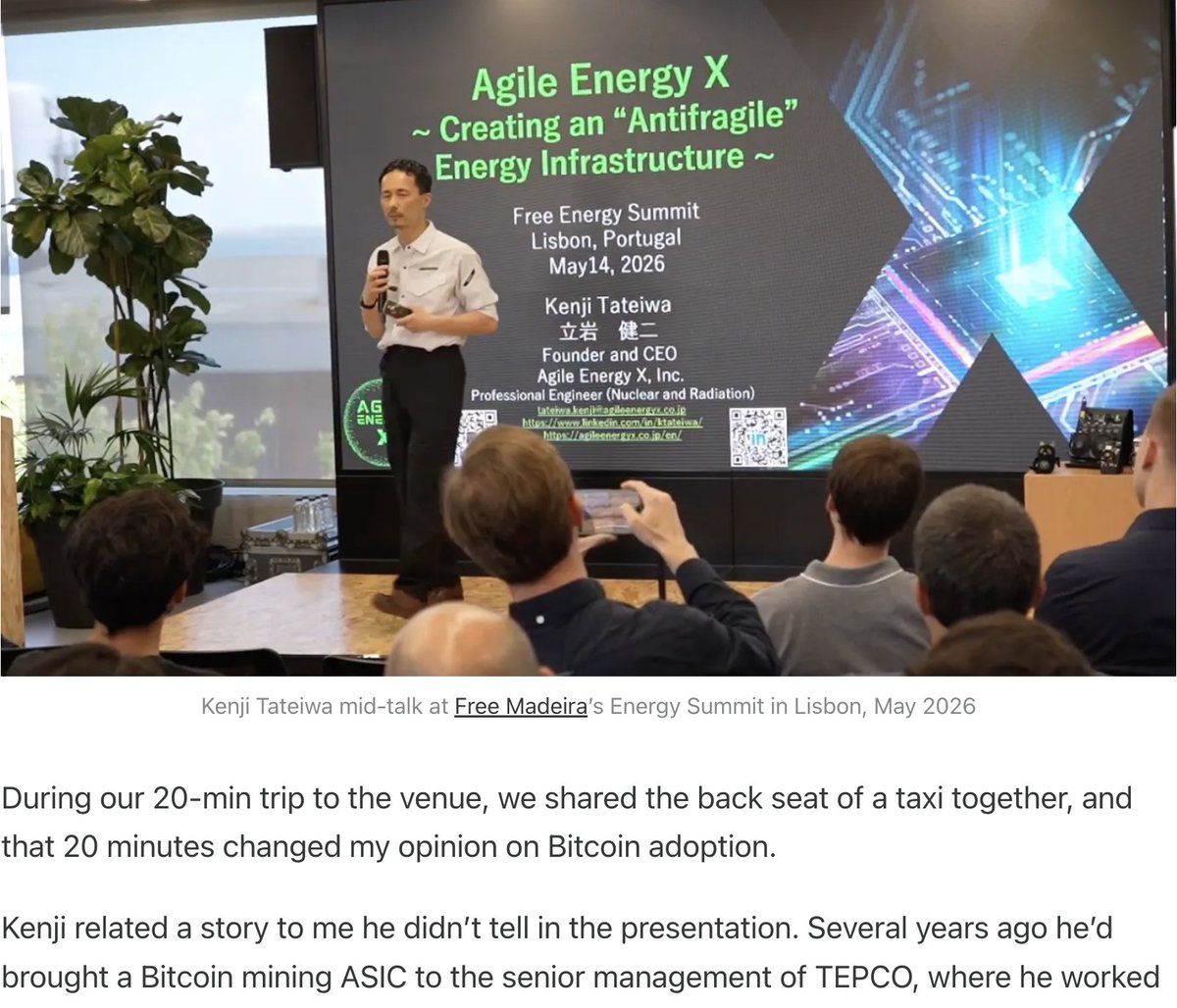
1. a principle that would transform the speed of Bitcoin adoption if more people applied it
2. The real reason we meet up for events and conferences
Well said Rachel
Jun 5

⚡ "Don't talk to them, listen to them".
We talked with Rachel Geyer during the FREE Energy Summit 2026 to hear some of her thoughts about the event and the future of Bitcoin mining.
5
25
2,076