
Quant Fund Manager | Macro Crypto | Researching, writing & sharing for clarity of thought and learning. Not financial advice, only my own opinions.
Joined December 2010
- Tweets 1,586
- Following 302
- Followers 724
- Likes 316
67 Photos and videos

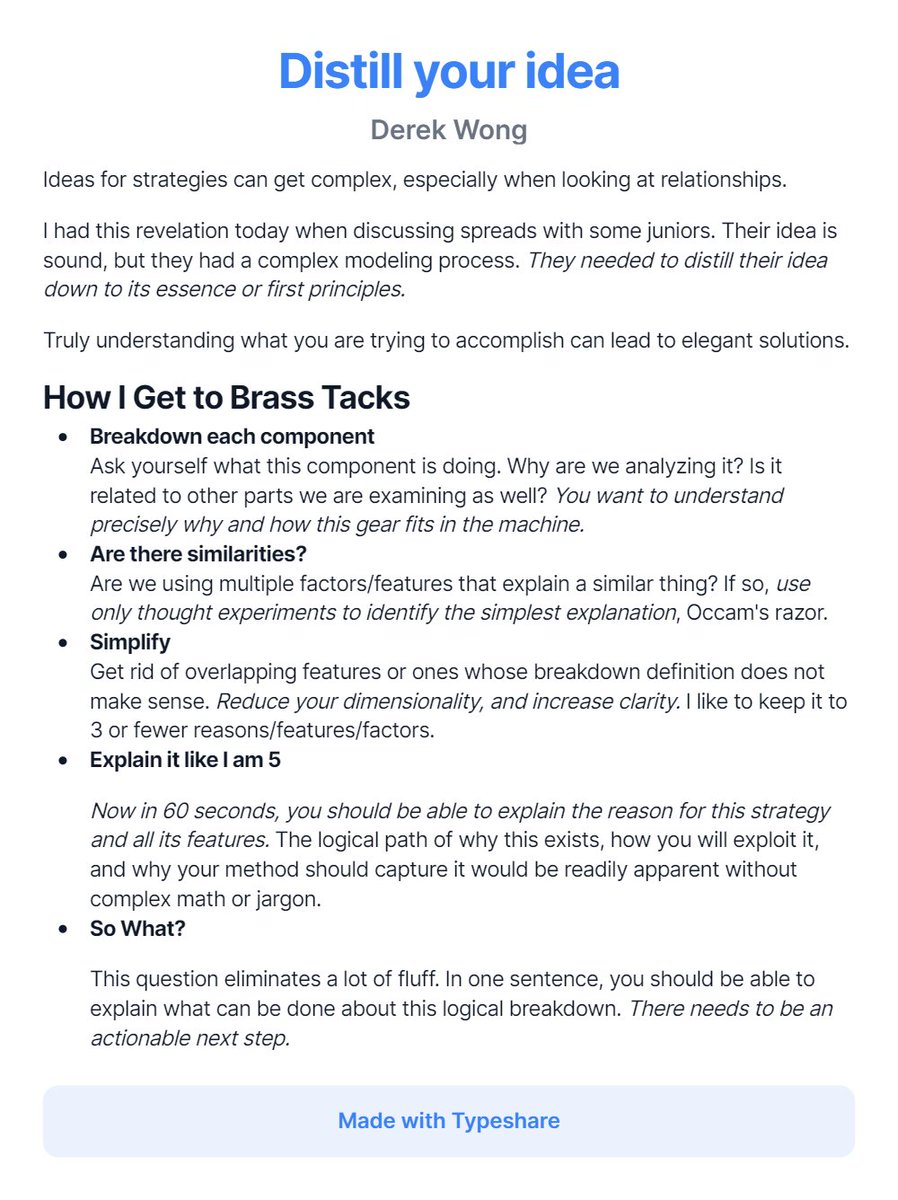
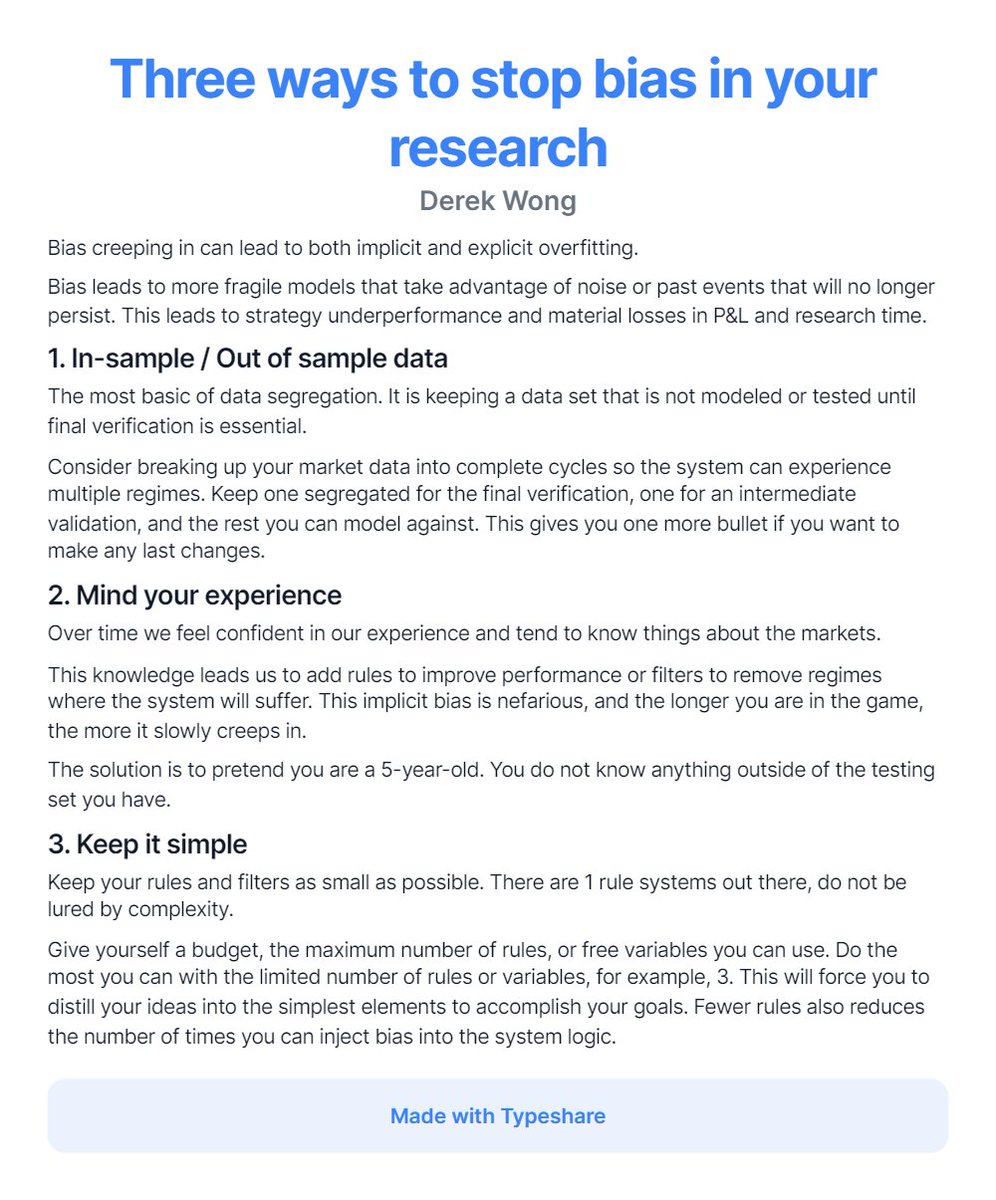
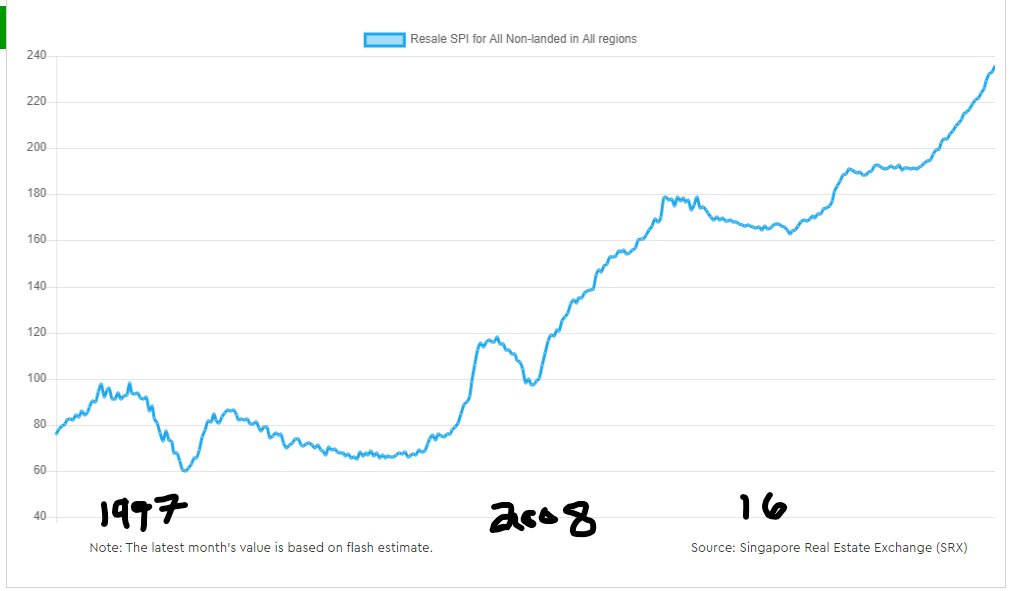
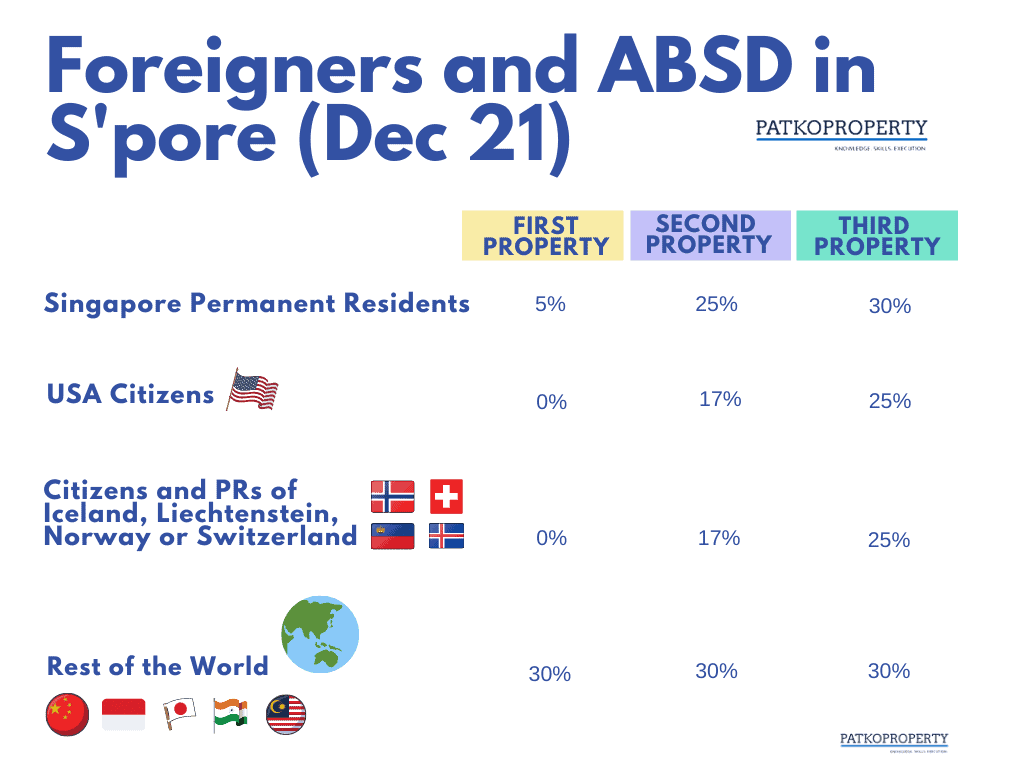

18 Sep 2023
If you were taking a quantitative or computational finance under grad or masters what do you wish they taught?
5
513
16 Jun 2023
Rough Volatility is a newer concept in financial mathematics that depicts how market volatility behaves. It's named 'rough' due to the irregular and complex patterns it uncovers in volatility data, akin to a rugged landscape rather than smooth changes. 1/11
2
4
640
16 Jun 2023
Adopting Rough Volalitilty and other model improvements is not just about feeling smart using modern mathematical models. It is about getting our models as close to reality as we can. Capturing as much of the market dynamics as possible. 10/11
1
347
16 Jun 2023
Those who can capture more of the actual reality that is the markets will have much more opportunities than those who do not. In our example the ability to deal with sharp market shifts or not is a serious edge Bob has over the textbook model of Alice. 11/11
277
12 Jun 2023
The use of similarity and dissimilarity metrics is fundamental to many quantitative finance tasks, such as portfolio optimization and pairs trading. This thread aims to shed light on these key concepts and their applications in finance. Correlation is not the only way. 1/7
2
1
446
12 Jun 2023
To convert dissimilarities into similarities (essential for correlation analysis and portfolio diversification), we can employ functions like f(x) = 1 - x, with x = distance/sum(distances), or use flexible kernel functions like the Gaussian kernel. 6/7
1
237
12 Jun 2023
Choosing the right (dis)similarity metric and transformation functions can significantly impact your trading strategy's performance. A well-informed choice, based on the specific application and the attributes of the function will help your strategies signal reaction function 7/7
215
27 Apr 2023
Sitting here evaluating the trading and execution costs of my strategies and realized how important this is and how variable they can be over time.
Managing your costs and fees is as important as creating a successful trading strategy.
1/8
3
3
536
27 Apr 2023
Which area is costing us the most?
Fixed variables like fees are mostly finding the best provider and doing some negotiation.
Variable market-based things like bid/ask spread, market impact, and adverse selection are much harder but do provide meaningful improvements
7/8
1
243
27 Apr 2023
Some tips on mitigation:
1. find good providers and negotiate
2. optimize your trade execution
3. use lower-cost instruments if they are available
4. constantly monitor costs
5. minimize trade frequency
6. when looking at strategy performance, include fixed and variable costs 8/8
1
213