
Joined August 2019
- Tweets 2,784
- Following 84
- Followers 4,022
- Likes 690
454 Photos and videos



Pinned Tweet

28 Feb 2023
Exciting news!
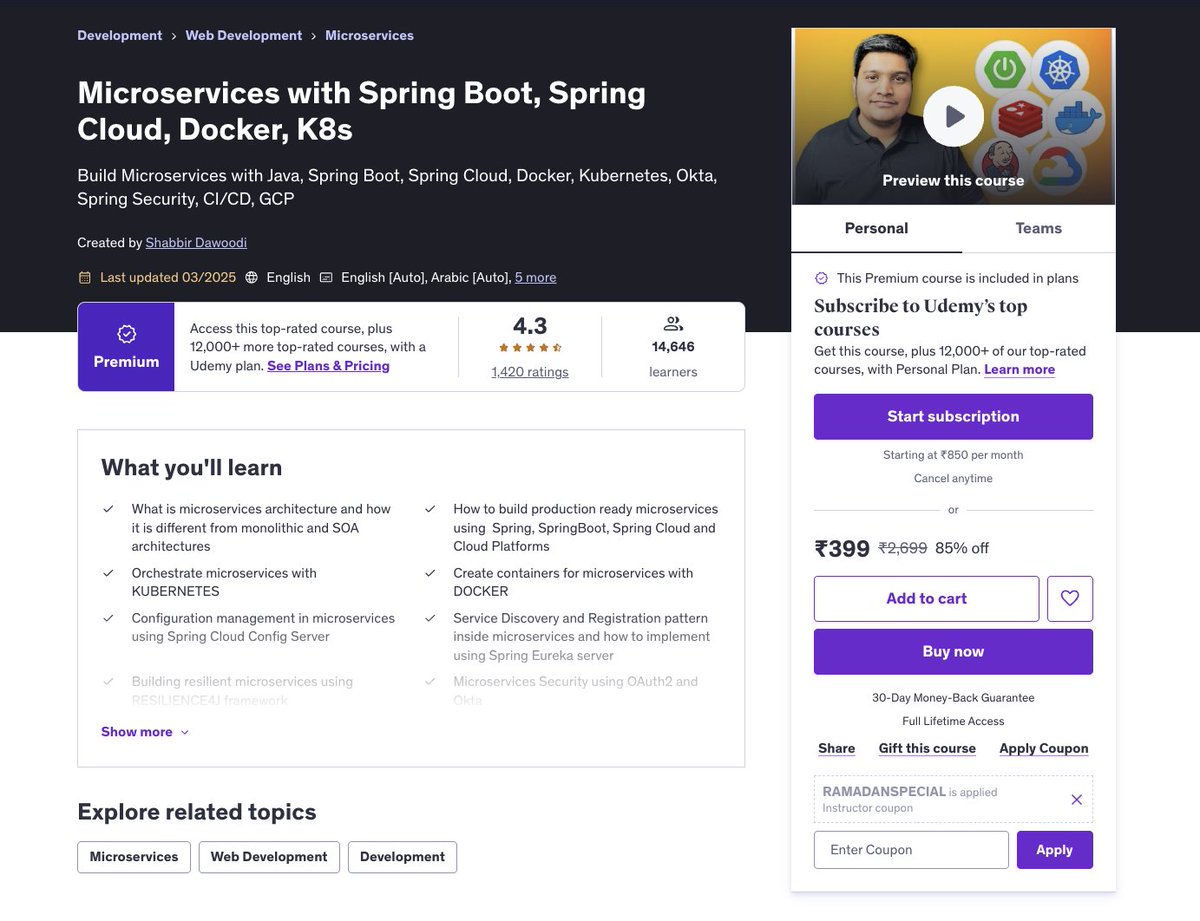
I've just launched a new course on Microservices with Spring Boot. And for a limited time, we're offering 100 free enrollments with the code DCB100. Don't worry if you miss out, you can still get a huge discount with the code DCBFEST.
cutt.ly/o8jKLBH
14
10
75
11,597
Shabbir Dawoodi retweeted
6 Apr 2025
LLMs are smart.
But they're not magic.
You give them a prompt… they reply.
But what if you want them to:
- Access your files?
- Talk to your tools?
- Use real-time data?
You end up writing _tons_ of glue code.
Every app, every model, and every tool = custom integration.
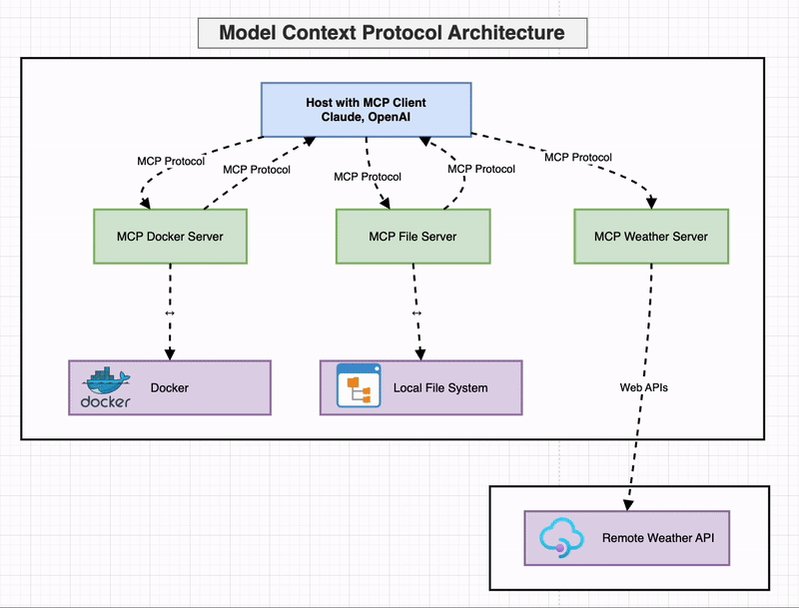
That’s where **MCP (Model Context Protocol)** steps in.
Let’s break it down 👇
🔍 Step 1: The Problem
LLMs are context-hungry.
They need data from APIs, databases, files, and tools.
Right now, you’re duct-taping everything together.
💡 Step 2: The Fix
MCP provides a standard way to connect AI models with tools.
No more custom hacks for every use case.
Write once, use anywhere.
⚙️ Step 3: How it Works
MCP splits the world into two roles:
- MCP Client → the LLM app (Claude, ChatGPT, etc.)
- MCP Server → your tool or service (APIs, files, code)
Clients ask.
Servers respond.
It’s like giving your AI a universal remote.
🚀 Step 4: Why it Matters
- Add new tools without rewriting everything
- Works across vendors (Claude, OpenAI, etc.)
- You control what the model sees
- No vendor lock-in. No data leaks.
This isn’t just a spec.
It’s already working in Claude and GitHub Copilot.
MCP is how AI tools will _actually_ become useful.
🎯 If you’re building anything with AI, go read about MCP:
👉 lnkd.in/gMqSZ54j
2
6
1,146

Shabbir Dawoodi retweeted
30 Mar 2025
You think leader election is easy.
Just pick a server, right?
Then, a network failure happens.
The leader disappears.
Two new servers claim leadership.
Now, you have chaos instead of consensus.
This is why Paxos exists.
Here’s how it works:
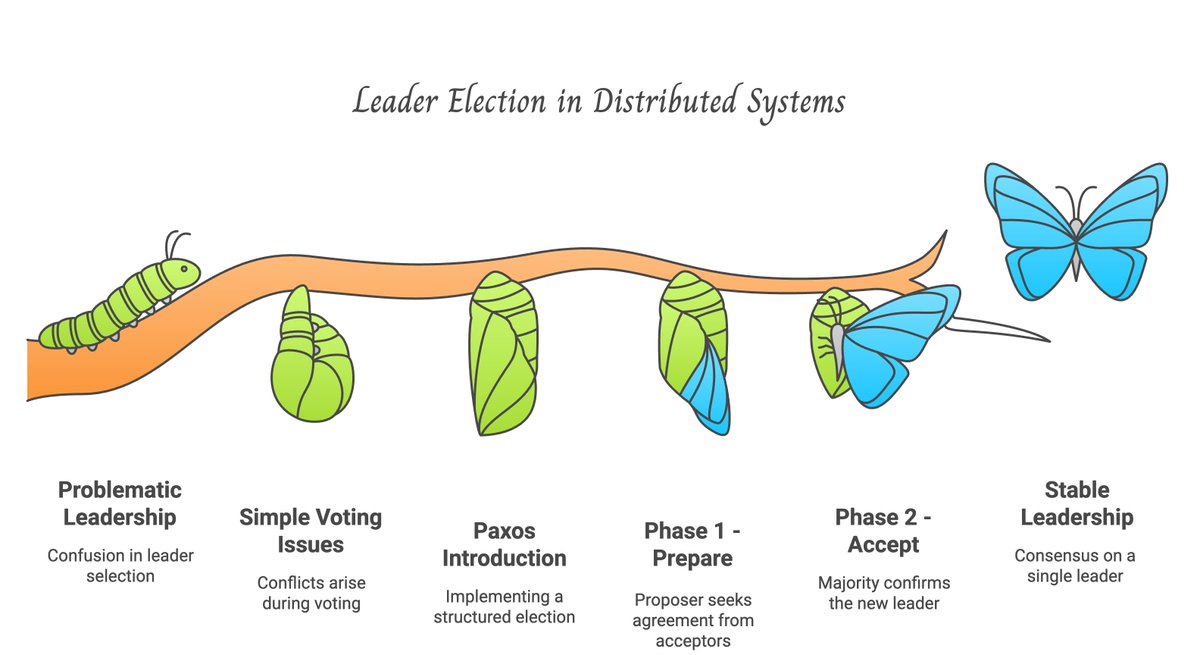
Step 1: The Problem
- In distributed systems, you need one leader.
- But nodes crash, networks split, and failures happen.
- How do we elect a leader that everyone agrees on—without confusion?
Step 2: Why Simple Voting Fails
- If two nodes get votes at the same time, who wins?
- If the leader crashes, how do we pick a new one without breaking the system?
Step 3: Enter Paxos – The Two-Phase Election
📌 Phase 1: Prepare (Propose a Leader)
- A node (proposer) says, “Can I be the leader?”
- Acceptors respond:
-- If they haven't committed to another leader, they agree.
-- If they have already accepted someone, they will return that info.
📌 Phase 2: Accept (Confirm the Leader)
- If the proposer gets a **majority (quorum)** to agree, it declares itself the leader.
- Now, everyone follows this leader until failure happens.
Step 4: What Happens on Failure?
- If the leader crashes, a new election starts using the same process.
- Since a quorum always overlaps, nodes never get split-brain.
Paxos ensures that:
✅ There’s only one leader at a time
✅ The system never contradicts itself
✅ Even if failures happen, a new leader emerges without confusion
This isn’t just theory. Google’s Chubby and Zookeeper use similar ideas.
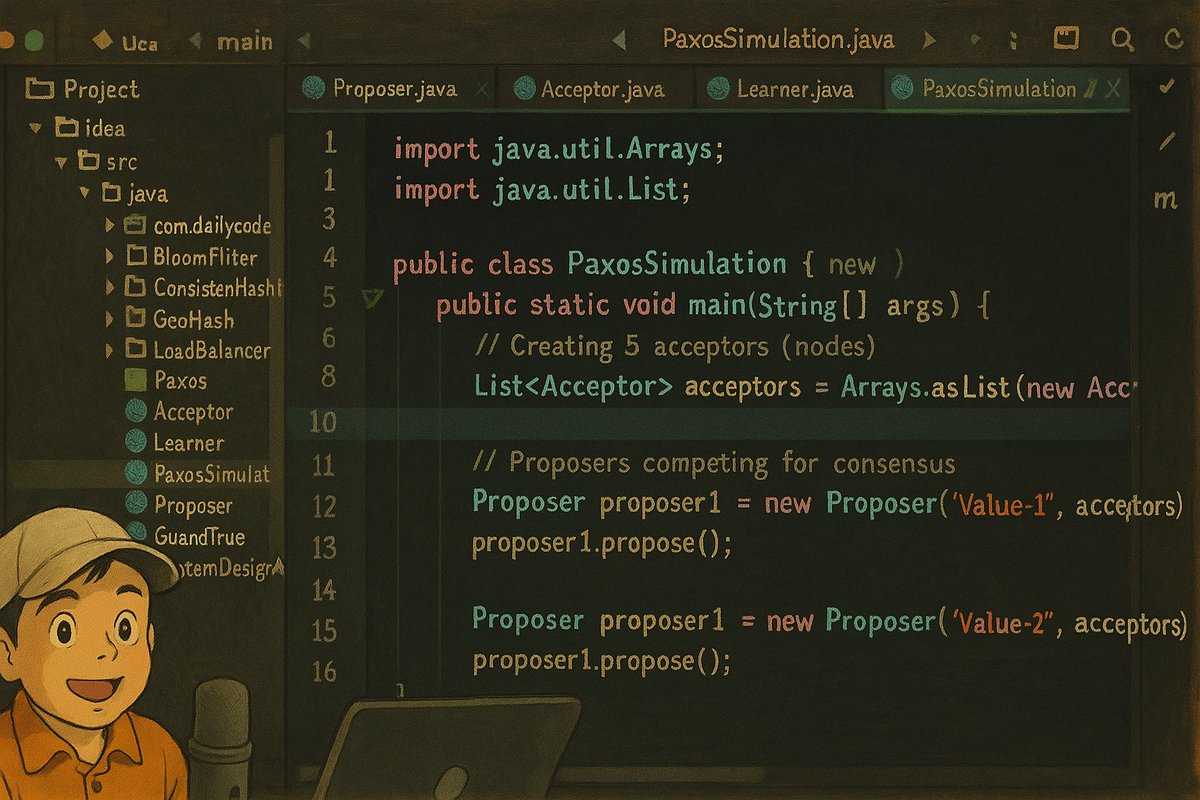
If you’re still confused, I break it down visually in my latest video—check it out.
1
6
735
29 Mar 2025
Your microservices are running.
Everything looks good.
Then—🚨 Access denied.
Users are locked out.
Endpoints fail.
Logs? Useless.
You panic.
Was it the authentication layer?
A misconfigured role?
An expired token?
Security isn’t just hard—it’s brutal when things break.
Most teams get it wrong:
❌ They bolt on security as an afterthought.
❌ They copy-paste configs without understanding them.
❌ They think “just add JWT” means they’re safe.
Then one day, a breach happens—or worse, everything locks up.
Real security isn’t guesswork.
🔑 You need Role-Based Access Control (RBAC) that actually works.
🔑 You need scalable security that doesn’t slow you down.
🔑 You need to build it right from Day 1.
I’ve broken it all down in my course:
🚀 Microservices with Spring Boot, Spring Cloud, Kubernetes, Docker
🚀 Building GenAI Apps with Spring AI
🚀 Spring Boot 3 & Spring Framework 6
No fluff. Just real-world security that won’t fail you in production.
🎟 Grab it now at a massive discount (RAMADANSPECIAL).
Because broken security isn’t just an outage—it’s a disaster.
1
1
10
630
29 Mar 2025
Here you go
Microservices with Spring Boot, Spring Cloud, Docker, K8s
udemy.com/course/microservic…
Master Generative AI with Java and Spring Boot | Spring AI
udemy.com/course/gen-ai-spri…
2
250
Shabbir Dawoodi retweeted
27 Mar 2025
If one failure can bring down your system,
You don’t have a system.
You have a single point of failure.
Your server goes down.
Your app’s offline.
Users? Gone.
Revenue? Bleeding.
You scramble to fix it.
But here’s the truth:
One server is a liability.
One failure, and you’re done.
Distributed systems don’t panic.
They prepare.
How?
Step by step 👇
1️⃣ Replication.
One copy of your data? Risky.
So you make copies.
One server dies?
Another steps in like nothing happened.
2️⃣ Load balancers
They’re the traffic cops.
Directing users.
Detecting dead servers.
Rerouting on the fly.
Your users never see the crash.
3️⃣ Heartbeat checks.
Servers constantly ping each other.
If one goes quiet?
The system knows.
Removes it—moves on.
4️⃣ Failover magic.
Something breaks?
A backup server instantly takes over.
Zero human intervention.
Zero downtime.
5️⃣ Eventual consistency.
You don’t wait for every server to sync perfectly.
That kills speed.
You let it lag a little.
Because uptime > perfection.
Distributed systems don’t hope for the best.
They assume the worst—and design for it.
That’s how they stay up when others go down.
Most teams fix failures.
Great teams plan for them.
Which one are you building?
2
4
486
25 Mar 2025
Did You Know Your Favorite Ride-Sharing App Uses a Secret Code to Find Drivers Near You?
Imagine you are organizing a huge library with millions of books.
Each representing a location on earth
Now, imagine you want to find all the books about a specific city.
How would you do it efficiently?
The Old Way:
You'd have to look through every single book, one by one, see if that's about the city.
This will take forever!
The Smart Way: GeoHash
GeoHash is like a special labeling system.
It divides Earth into small, tiny squares and labels those squares as unique values.
Consider this as a Pin/Zip Code for the entire world.
Now, when you want to find a book about a specific city,
You just need to look at the books with the same or nearby GeoHash Code
To top it off, there are GeoSpatial Indexes:
It is like organising the books on a single shelf.
When finding a book, directly look at the shelf and get the books.
Here is how different length GeoHash values define an area:
The longer the values, the more precise the location would be,
9 --> North America
9v --> United States
9v32 --> State
9v32qx --> City
9v32qxr --> Neighbourhood/Society
Benefits:
Faster Search
Efficient Storage
Build better Apps
I have done a deep dive into GeoHash and Geospatial Index in my latest YouTube video.
Share your stories or questions in the comments below!
2
350
24 Mar 2025
Happy Birthday to the one who revolutionized Java
Spring Framework 1.0
spring.io/blog/2004/03/24/sp…
5
552
23 Mar 2025
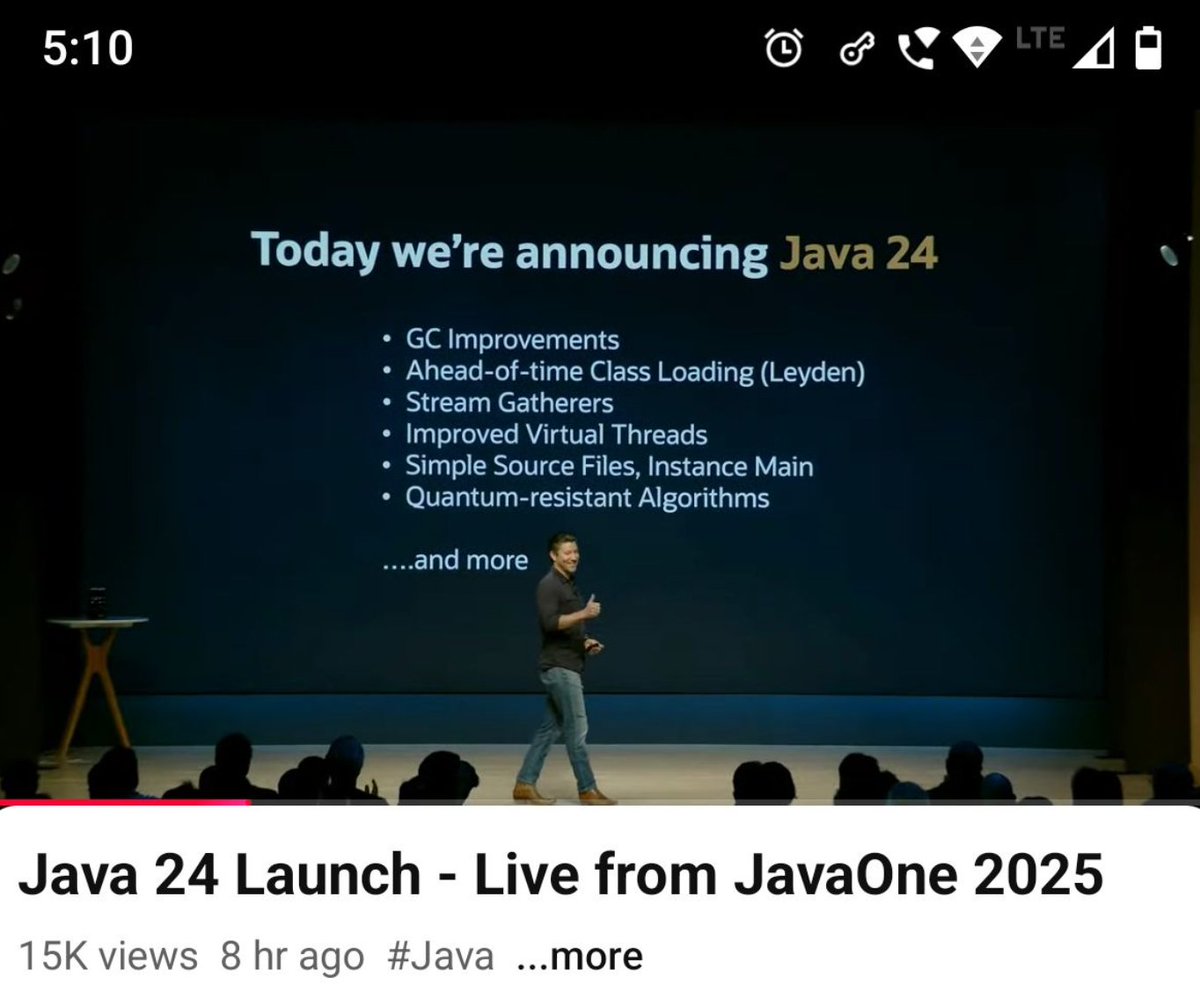
New Java 24 has been launched, and it is less verbose.
There are a lot of features in Java 24 and we are going to talk about them in detail on the channel,
Stay tuned
7
403
18 Aug 2024
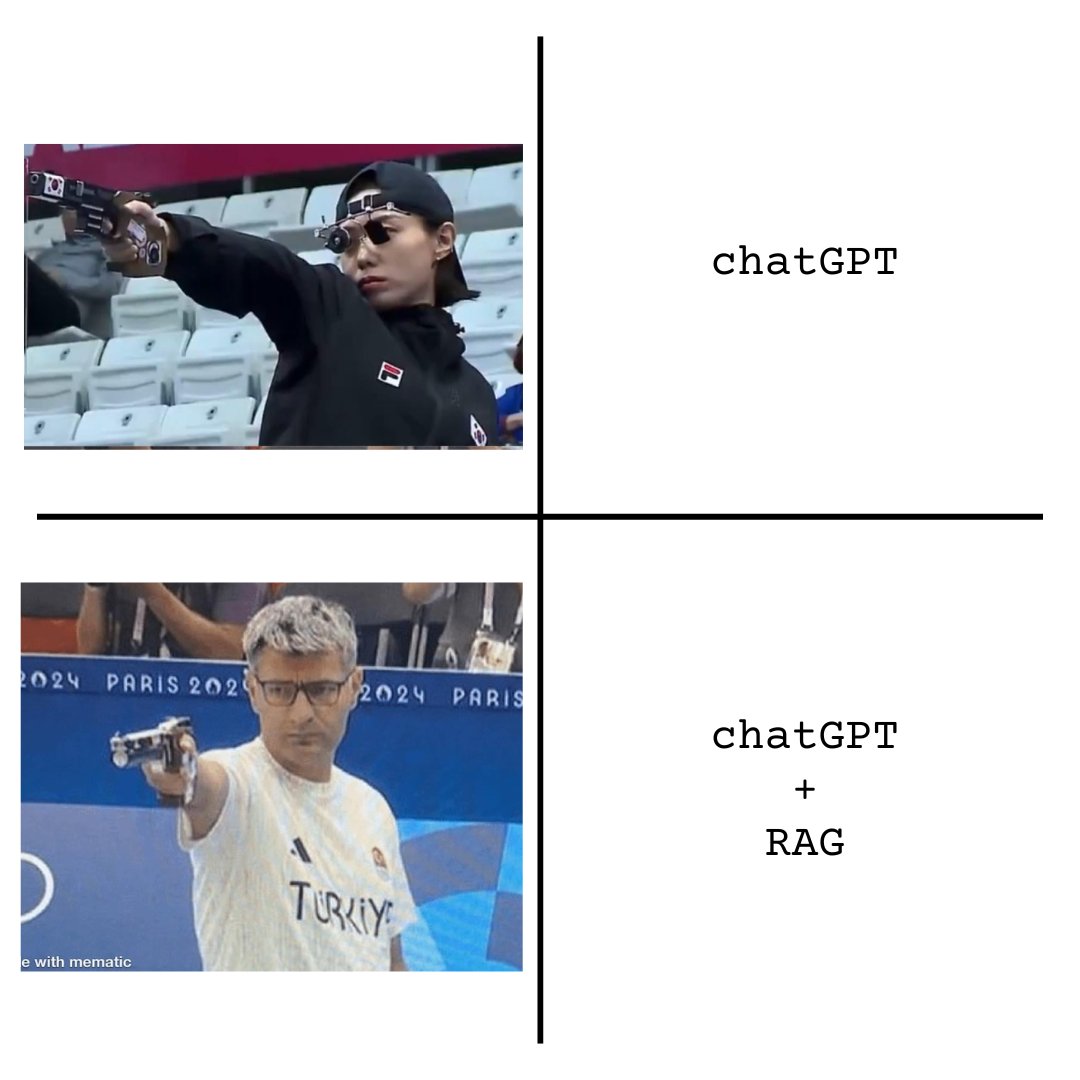
Combine retrieval with generation for precise, context-aware outputs. Implement RAG using Spring AI Vector Store to boost scalability and real-time accuracy in your AI models. Elevate your applications today! 🌟
youtu.be/X5j2fweLzb4
#AI #RAG #LLM #SpringAI #TechInnovation
1
7
620
15 Aug 2024
🎉 Celebrate Independence Day with 78% OFF on our top courses!
📚 Master Spring Boot & Microservices at your own pace. No rush, no deadlines—just pure learning.
Use code INDIA78 today till 11:59 PM
#IndependenceDay #SpringBoot #Microservices
1
434
11 Aug 2024
🚀 Ready to master #Docker? Check out my latest YouTube video where I dive into containers, Docker vs VMs, essential commands, and more! 🐳
🎥 Watch here: youtu.be/HR7wjLxQw1Q
Let's build and deploy like a pro! 💻 #DevOps #CloudComputing #TechSkills #DockerCourse
2
2
17
567
4 Aug 2024
🚀 Excited to announce our new course: "Learn Spring Boot 3, JDBC, JPA, MySQL, MongoDB, Kafka, AI"! 🌟 Master Spring framework essentials, build REST services, integrate with databases, and much more. Enroll now and level up your skills! 🔗 cutt.ly/spring3
#SpringBoot
15
581
27 Jul 2024
🚀 Just dropped a new video on the amazing features of #SpringAI! 🎉 Learn how to create images with prompts, describe images, transcribe audio, and generate audio in different languages with OpenAI models like #DALLE.
📺 youtu.be/5qG9Yi3bHd8
#AI #MachineLearning #Tech
10
518
20 Jul 2024
🚀 Discover 12 essential ways to test your APIs! From unit testing to fuzz testing, ensure your APIs are robust and reliable. Check out my latest video and elevate your API game! 📹👉 youtu.be/ZWp0aQAnDiM
#APITesting #TechTutorial #SoftwareDevelopment #QA
1
353
6 Jul 2024
🧠 Dive into Retrieval-Augmented Generation (RAG) and discover how it revolutionizes AI! 🚀
Learn the basics and see it in action in my latest video. Watch now! 🎥👇
🔗 RAG Explained | Retrieval-Augmented Generation
youtu.be/jf4kgBqTCw8
#AI #MachineLearning #RAG #Tech
1
3
435