
Dailybot is the coordination layer for teams where people and AI coding agents work side by side.
Joined February 2017
- Tweets 680
- Following 36
- Followers 310
- Likes 437
155 Photos and videos



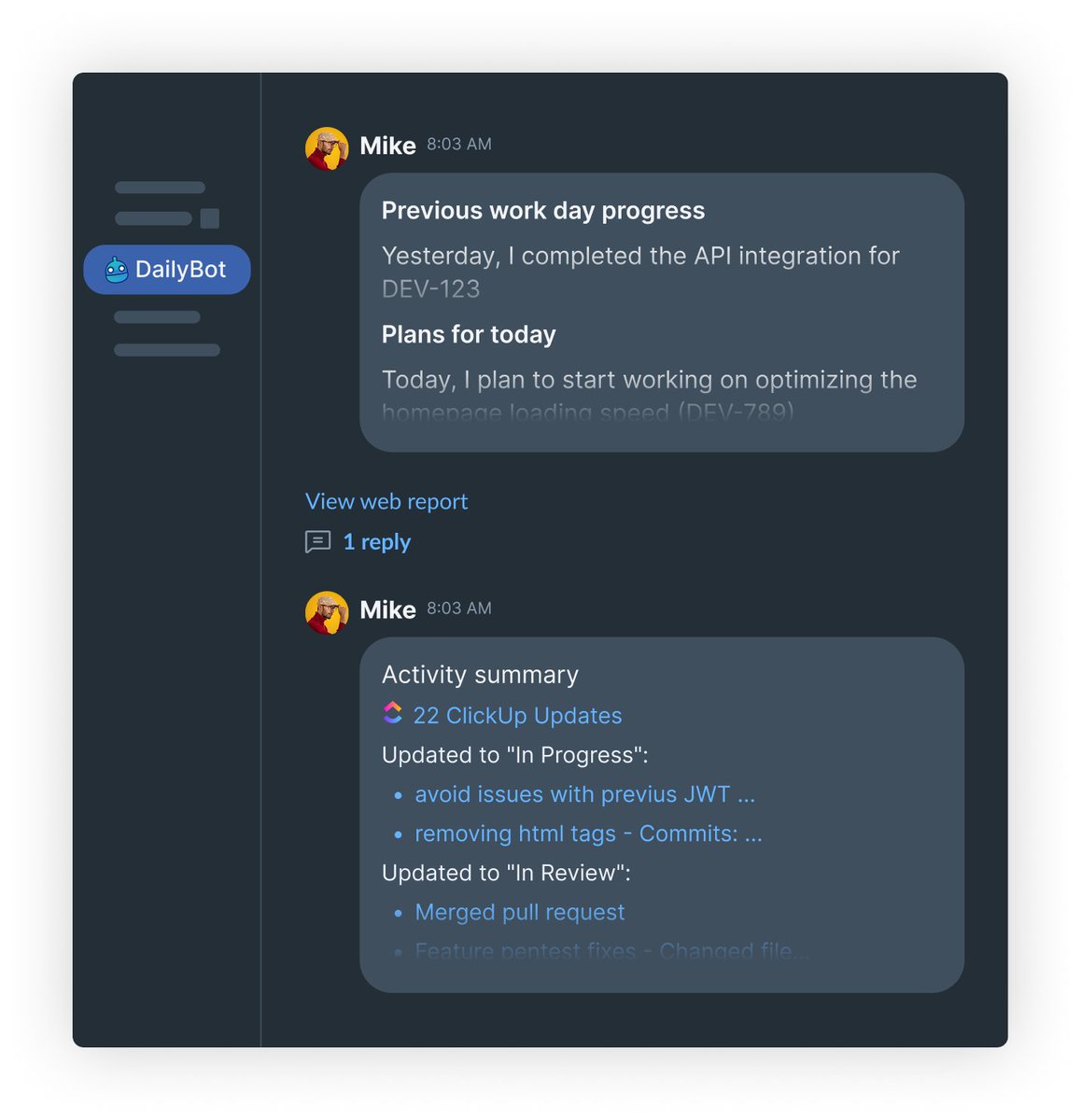


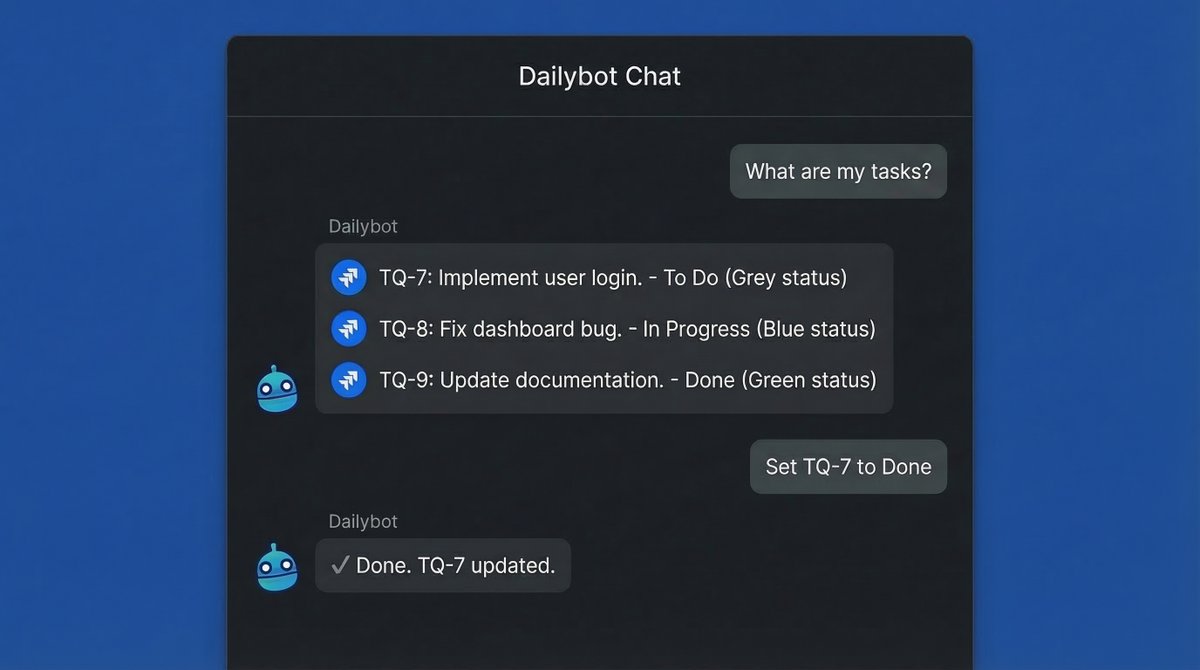

Dailybot started as a check-in tool, that is: you schedule a standup, the bot pings your team, people fill it out, the manager sees a digest. It worked well for remote and distributed teams adapting to a post-2020 world.
The assumption underneath it that all the workers are humans who use Slack or Teams etc. was invisible because it was completely true.
By around Dec 2025 it stopped being true. Devs at companies we work with were running Claude Code, Cursor, and Codex agents for hours every day.
Those agents were doing real, reviewable work, but with less handholding. And none of that work was showing up anywhere a manager or the right person could see it.
After all, these agents don't check Slack (at least not yet!) The agent doesn't answer check-ins either. We know they work because they close tasks on Linear or stop when they get stuck.
We could have built a separate product for agents. We thought about it.
But in the end, we didn't because that's the wrong model. A manager with two dashboards - one "for humans," one for agents is just running the same coordination problem at twice the surface area.
The answer is one place where all work is visible, regardless of who or what did it.
That's what Dailybot 3 is in a nutshell, and we're sharing it with the public today. ✨
4
7
231
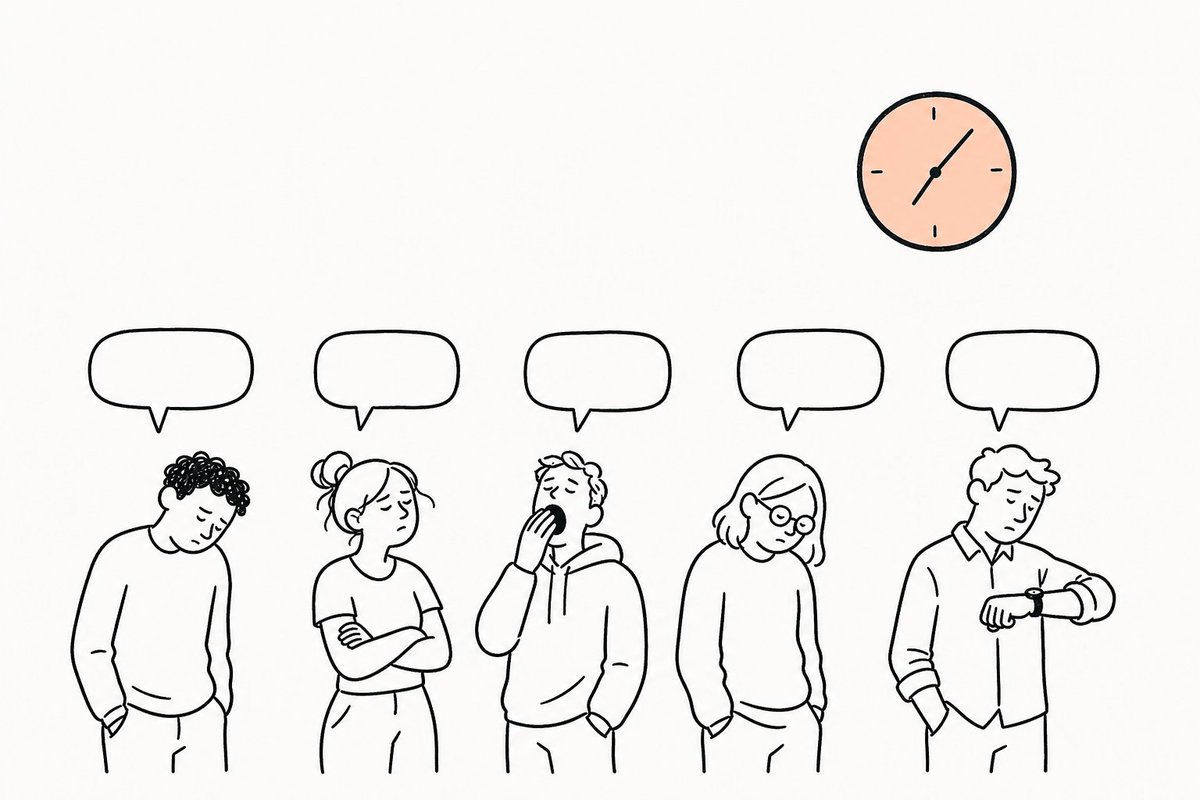
Most standups still run on the same three questions: what I did yesterday, what I'll do today, what's blocking me.
That's a status report read out loud. People wait their turn, say their piece, and quietly check out for everyone else's.
There's one question worth sitting with. When did your standup last actually change someone's plan for the day? If you can't remember, the format is the problem, not the team.
1
12
Our CTO, Sergio, wrote up what actually changed with Claude Fable 5, and the part that stuck with us isn’t the benchmark slide.
Anthropic kept the same model weights from Mythos and wrapped them in a safety harness. Less than 5% of sessions hit the filters. The rest runs at full power. It seems Stripe migrated a 50-million-line Ruby codebase in a day. 🤯 SWE-bench Pro landed at 80.3%.
The intelligence that finds zero-days and the intelligence that holds a migration together are the same capability pointed different ways. What changed between April and June wasn’t the brain. It was everything around it.
That’s the part we keep coming back to while building with agents.
xergioalex.com/blog/claude-f…
1
56
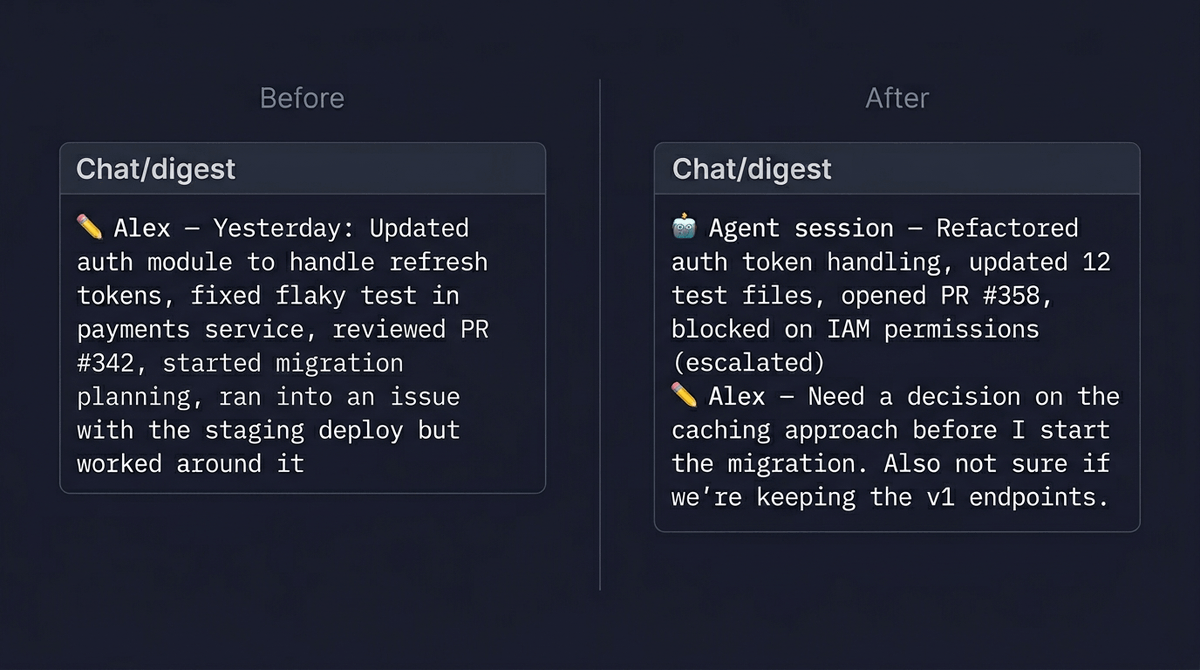
The standup has been the same format for about twenty years. What did you do yesterday, what are you doing today, anything blocking you. It works well enough that nobody questions it, but it’s basically asking people to manually reconstruct information that already exists in git, in PRs, in messages.
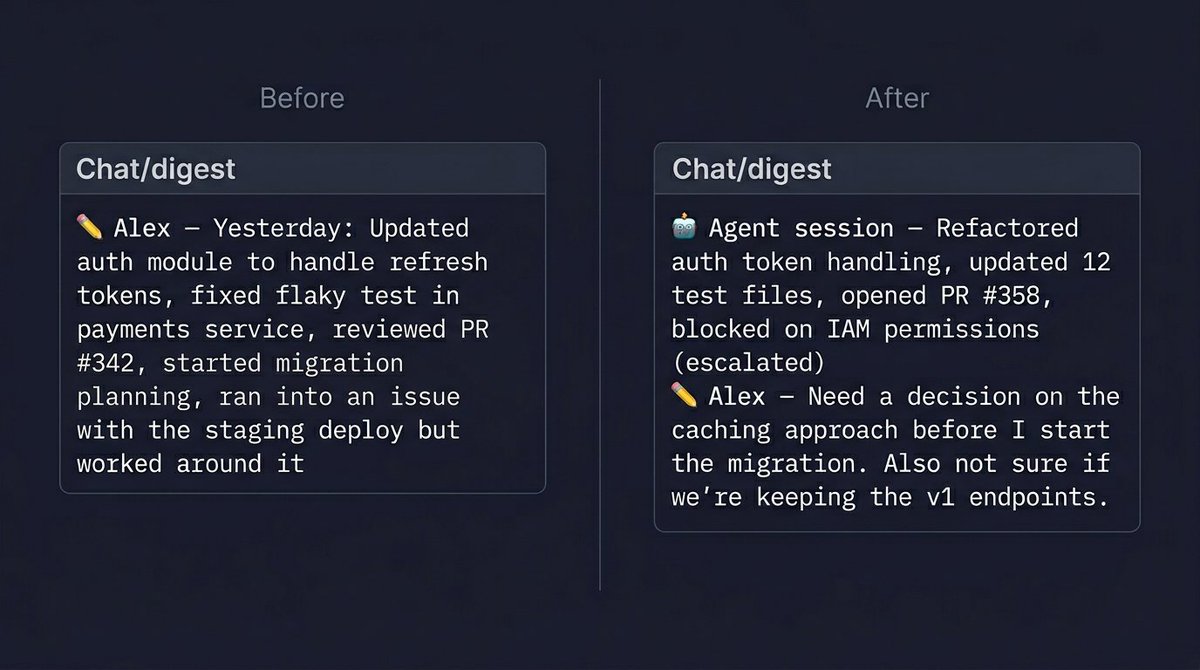
We started routing agent session reports into the same standup channel and the part that surprised us was the human side. Developers stopped writing detailed recaps because the automated part already covered it. Instead they’d leave a line about where they need a decision, or what they’re not sure about yet.
The standup went from a status log to a thinking-out-loud channel. We didn’t design that change, but it happened once the reconstruction part went away.
Worth watching on your own team if agents are in the mix.
1
23
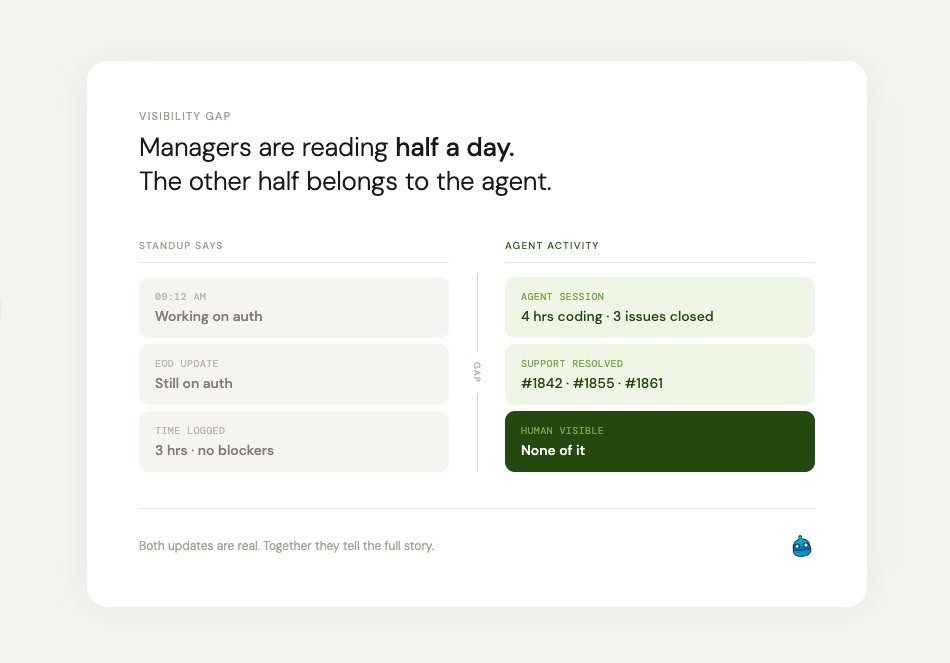
Most of the work coding agents do never shows up where anyone else can see it. The developer knows, sort of. The manager finds out eventually, usually by asking.
Dailybot Agents exists to close that gap. Your agent reports its work sessions, your standup auto-populates from what it actually did, and the whole team sees human and agent work in one feed. You can also see which agents are active, which ones are stuck, and what each one shipped.
1
18
We wrote up the full migration of dailybot.com from Webflow to Astro. The short version is that our marketing site had grown past what a visual-editor CMS could handle at the pace we needed.
Then @xergioalex with Cursor/Claude Code had the groundwork up in a weekend. The full migration ran six weeks and also included a complete rebrand, because doing it separately would've meant touching every page twice.
The site scores a straight 100 on Lighthouse now, desktop and mobile, but honestly most of that credit belongs to Astro's static-first output. The CI pipeline is what actually keeps it there: TypeScript, Biome, Vitest, and Lighthouse CI on every PR.
If you're considering something similar, the post covers what we'd do differently, how we handled i18n across three languages, and why we rebuilt instead of porting.
dailybot.com/blog/how-we-mig…
1
1
67
The minimum viable agent harness: a prompt, git access, a test runner, and a feedback loop. We broke down how Mozilla, Google, and others are turning LLMs into structured bug-hunting pipelines and what any engineering team can take from it.
dailybot.com/blog/agent-harn…
1
51
From one of our devs:
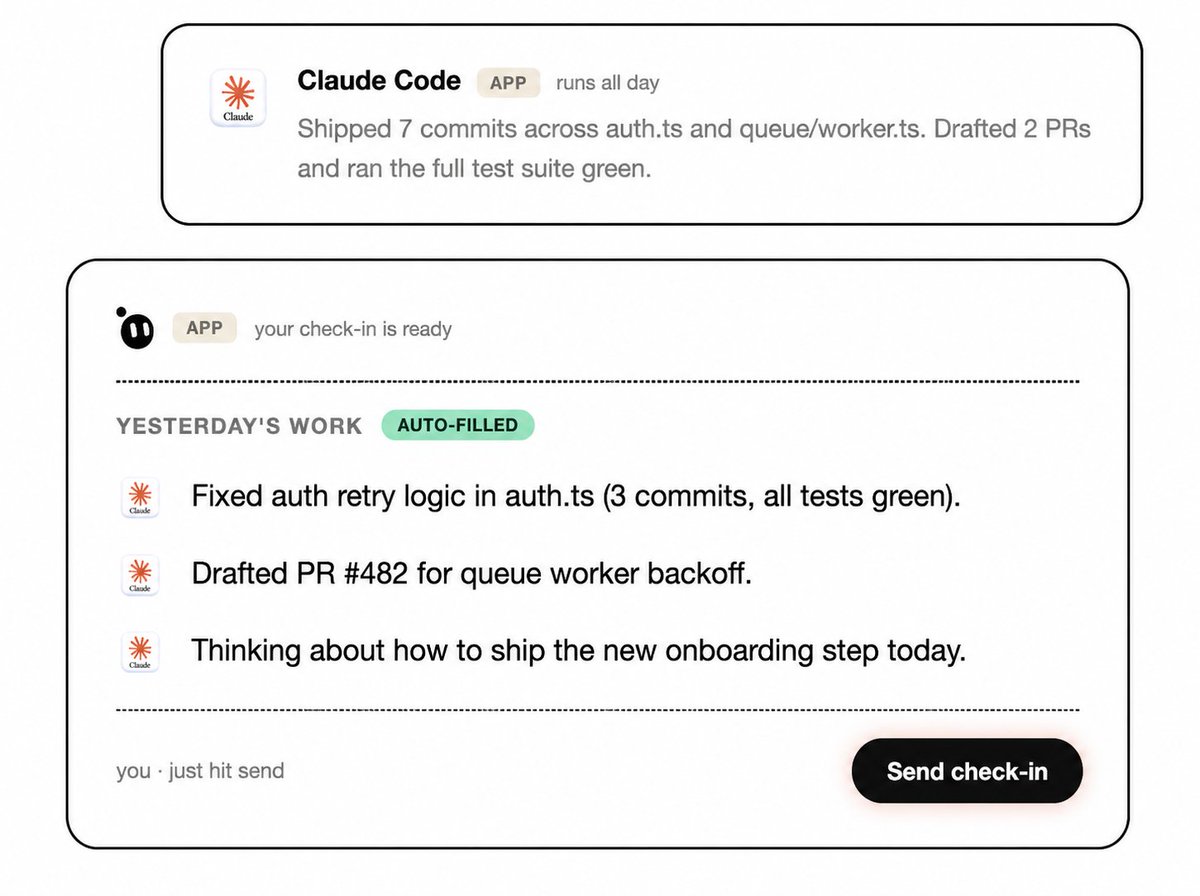
"I stopped writing my standup about three weeks ago and nobody on my team noticed because the answers were already there.
Our Claude Code agent runs all day, and by morning Dailybot has pulled what it did into my check-in. I just hit send. Sometimes I add a line about something I'm thinking through, but the work summary part is handled.
Feels weird the first time. Then it just feels obvious."
2
47
We just published the full story of moving dailybot.com from Webflow to Astro. Six weeks, three languages, 700 pages per language, and a rebrand that would've eaten the quarter on its own if we'd tried it in the old CMS.
1
5
63
We wrote up how the whole thing went, including what we'd tell another team considering the same move.
dailybot.com/blog/how-we-mig…
1
29
One of the most shared agentic workflows this year is the Night Shift pattern. Jamon Holmgren wrote it up in March and it's been circulating ever since. The idea is: you spend the day writing specs and thinking through architecture, then you kick off your coding agent before you close the laptop. It works overnight. You review commits over morning coffee.
Mitchell Hashimoto shared something similar. Last 30 minutes of the day, he spins up agents for research, issue triage, parallel experiments. They generate reports he reads the next morning. He calls it a "warm start" instead of a cold one.
Both workflows are genuinely good. If you haven't tried some version of this, you probably should. The individual productivity gains are real.
But here's the part that keeps bugging me. These are all single-player workflows. When three developers on the same team each kick off a night shift, who knows what happened by morning? The lead reviews their own diffs. The other two review theirs. Nobody has a combined picture of what all three agents and all three humans actually shipped overnight.
We solved the "write code faster" part pretty convincingly this year. The "tell the team what happened" part is mostly unsolved, and it's the part that matters for everyone who isn't the person who kicked off the agent.
1
3
118