
Writing, Real Estate And Under And On Top Of Oceans!
Joined June 2009
- Tweets 61,625
- Following 1,194
- Followers 1,688
- Likes 54,184
13,562 Photos and videos



Pinned Tweet

Apr 16
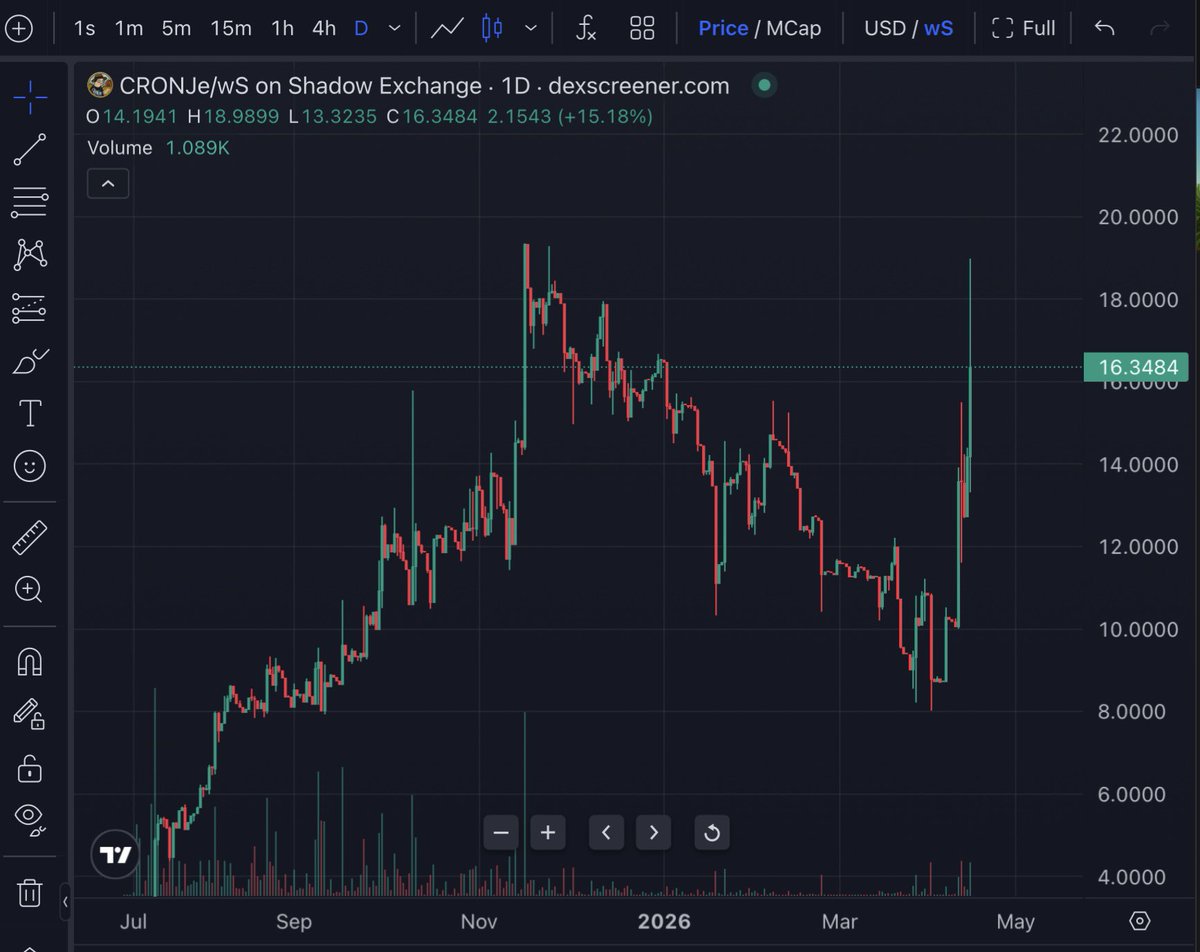
I’m sorry, but I see no gain to holding liquid $S.
Look at this chart.
$CRONJe has vastly outperformed $S since it launched last year.
At least farm the two.
But, even better , I’d farm CRONJe with several of the historically better-performing pairs first!
**THE GAS TOKEN DOESN’T HAVE TO GO UP TO MAKE MONEY**
Note: If you have only a small amount, a good strategy may be to farm the biggest APY pool - or even spread across several of the highest APY pools.
Remember that the APY goes down with more that is put into the pool.
The single-sided staking is much better for 4 figs investors - if you have less than get into the highest APY pool(s).
$METRO $ANON $PHANIC $HEDGY $THC $GOGZ $FIVE $HESS



4
11
24
1,410
DannyManDeBo retweeted

Announcing a new division of Midjourney called "Midjourney Medical"
1,740
3,226
26,973
8,335,740

You are focused on the $422B @USDC transfer volume processed on @SonicLabs.
The number is impressive, but I think the bigger story is what it represents. 💭
In crypto, many metrics can be misleading. Transaction counts can be inflated. Wallet numbers can be farmed. Even TVL doesn't always translate into actual usage.
Stablecoin flow is different.
When billions of dollars in USDC consistently move through a network, it suggests that users, protocols, traders, and applications are actively choosing that network as a settlement layer for value transfer.
That's why stablecoin activity is one of the strongest signals of real economic utility in crypto.
The key question isn't whether Sonic processed $422B.
The key question is why that volume chose to move through Sonic in the first place? 🧠
The answer comes down to reducing friction.
Most blockchain discussions revolve around throughput and TPS, but for the average user, the real problem has never been TPS.
The real problem is complexity.
Today, sending stablecoins often requires users to understand gas tokens, manage balances across multiple assets, bridge liquidity between networks, and wait for transaction finality.
Crypto-native users have learned to accept this.
Mainstream users have not.
For digital dollars to scale globally, the experience needs to become dramatically simpler.
This is where Sonic's positioning becomes interesting.
The network combines near-instant finality, extremely low transaction costs, deepening stablecoin liquidity, and a history of reliable uptime.
These characteristics are particularly valuable for stablecoin transfers because payment infrastructure succeeds when it becomes invisible.
Users don't care about consensus mechanisms.
They care that money arrives instantly, cheaply, and reliably.
The most interesting part of Sonic's roadmap may not even be the volume it has already processed.
It's the effort to remove gas friction from stablecoin transfers.
For years, one of the biggest usability barriers in crypto has been the requirement to hold a separate token just to move your money.
A user may hold USDC, but still be unable to send it because they lack the native gas token.
From a mainstream payments perspective, that experience makes little sense.
If stablecoin transfers become effectively gasless from the user's perspective, blockchain payments start to feel much closer to modern financial applications.
And that's where the opportunity becomes much larger than trading.
The long-term opportunity isn't simply moving crypto assets between wallets.
It's powering payments, remittances, merchant settlement, digital commerce, and eventually broader on-chain economic activity.
Every major blockchain is competing for a share of that future.
What Sonic appears to be optimizing for is becoming a high-performance rail for digital dollar movement.
$422B in USDC transfer volume doesn't prove that Sonic has already won.
Volume alone is not the same as adoption.
But it does suggest that the network is becoming increasingly relevant as a place where stablecoin liquidity moves.
And in an industry that is rapidly converging around stablecoins as its most successful product, that may be one of the most important trends to watch.
$S $USDC

Jun 13

$422B USDC moved on Sonic in ~18 months.
A number this large is hard to picture. This is what stablecoin scale looks like on Sonic. 👇
4
16
46
1,579
DannyManDeBo retweeted

Contract Law 101: Both parties must sign a deal.
If anyone thinks the terrorist Islamic Regime will sign & honour a deal made with "The Great Satan", while their beloved Supreme Dictator remains unburied & rotting in a fridge, I have a bridge to sell you.
Jun 14

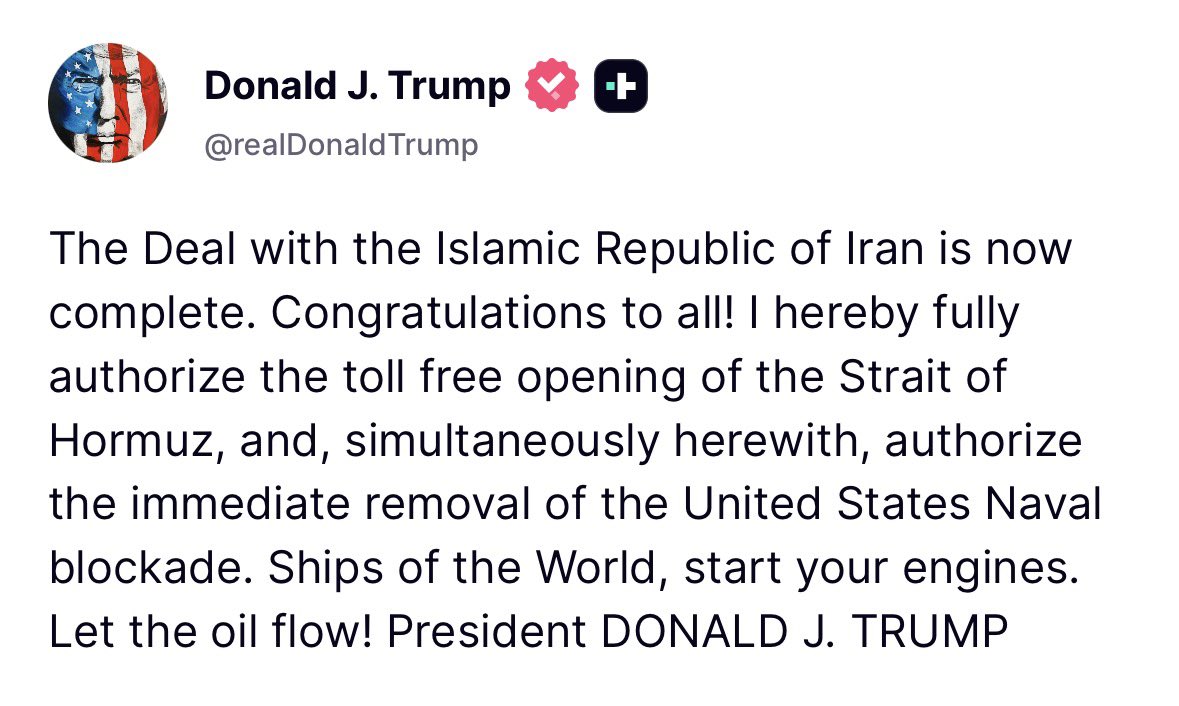
“The Deal with Islamic Republic of Iran is now complete. Congratulations to all!” President Donald J. Trump 🇺🇸
125
344
1,455
32,563
DannyManDeBo retweeted

Jun 15
🇺🇸🇮🇷 Vice President Vance: "If the Iranians abide by the agreement, it will change the Middle East for the next 50 years."
Who is going to tell Vance that terrorists never abide by agreements?


2,151
2,551
14,555
182,269
DannyManDeBo retweeted

Jun 15
The Black single mother culture and White guilt culture has lead to America's depravity and degeneracy. So now size matter, ok we can play that game. Stop trying to deminish Karmelo Anthony murder conviction. #guilty #kameloAnthony #TamirRice
15
41
153
1,872

4
7
13
144
DannyManDeBo retweeted

Jun 13
In Finland they made a dance to show migrants not to rape them
"Stop don't touch me, this is my no go space"
May 24

What's a video that defines Peak Woke?
5,017
7,064
72,984
4,969,489
DannyManDeBo retweeted

🇮🇪⚔️ An armed Irish group has issued a direct warning to politicians:
“You have flooded our communities with military-age migrant men.
We will not sit back and watch our culture and religion destroyed.”
The pushback has begun.
Ireland is waking up.
4,025
21,689
110,604
3,312,560
DannyManDeBo retweeted

Jun 13
I don’t think Billy Woods and I are related, but, dear Lord, I wish we were.
2,149
15,323
91,637
999,602
DannyManDeBo retweeted

Jun 13
You know what I’ve been thinking about? There are far more racist people in this country than I ever realized.
I have been blown away watching people celebrate the death of a White teenage boy simply because the person who killed him was Black.
This teenager was not on drugs. He was not a troublemaker.
He had never committed a crime.
He played sports, made good grades, respected his parents, and was loved by so many people.
Yet some people have found joy in his death because they care more about race than right and wrong.
That is not justice. That is racism, hatred, and pure evil.
A teenage boy lost his life. Anyone celebrating that should be ashamed.
1,962
12,239
61,572
1,063,007
DannyManDeBo retweeted

Jun 13
Islam is our common enemy: “Allah orders Muslims to kill Christians and Jews.”
90
371
542
6,136

This speech is covered in Suicidal Empathy.
Jun 12

The most racist speech in the last 25 years. Ex Scottish PM Humza Yousaf complains that there are too many white Scots in Scotland.
- @RadioGenoa
224
1,748
7,174
74,203
DannyManDeBo retweeted

Jun 13
I say this in love with if you want to keep you child out of prison, please share this with them so they can understand what a deadly weapon is. Please do not listen to Jasmine Crockett.
224
843
3,774
34,612
DannyManDeBo retweeted

Jun 13
This sick, racist, MURDER APOLOGIST, Howard University ‘professor’ Dr. Stacey Patton, feels completely comfortable and job secure in saying that STABBING ANOTHER HUMAN BEING to DEATH is the UNARMED WHITE VICTIM’S FAULT! Of course Howard University hasn’t asked her to recant.
Jun 11

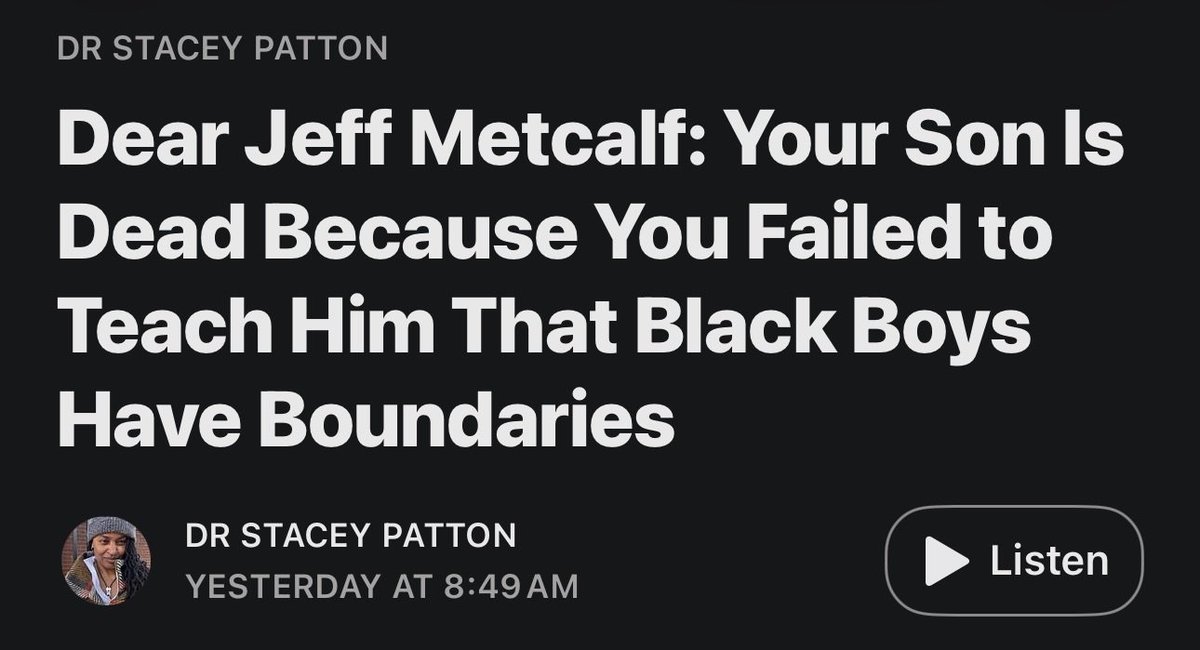
🚨 Dr. Stacey Patton, a professor at Howard University, wrote an article in which she blamed Austin Metcalf – and his family – for Karmelo Anthony's decision to murder him.
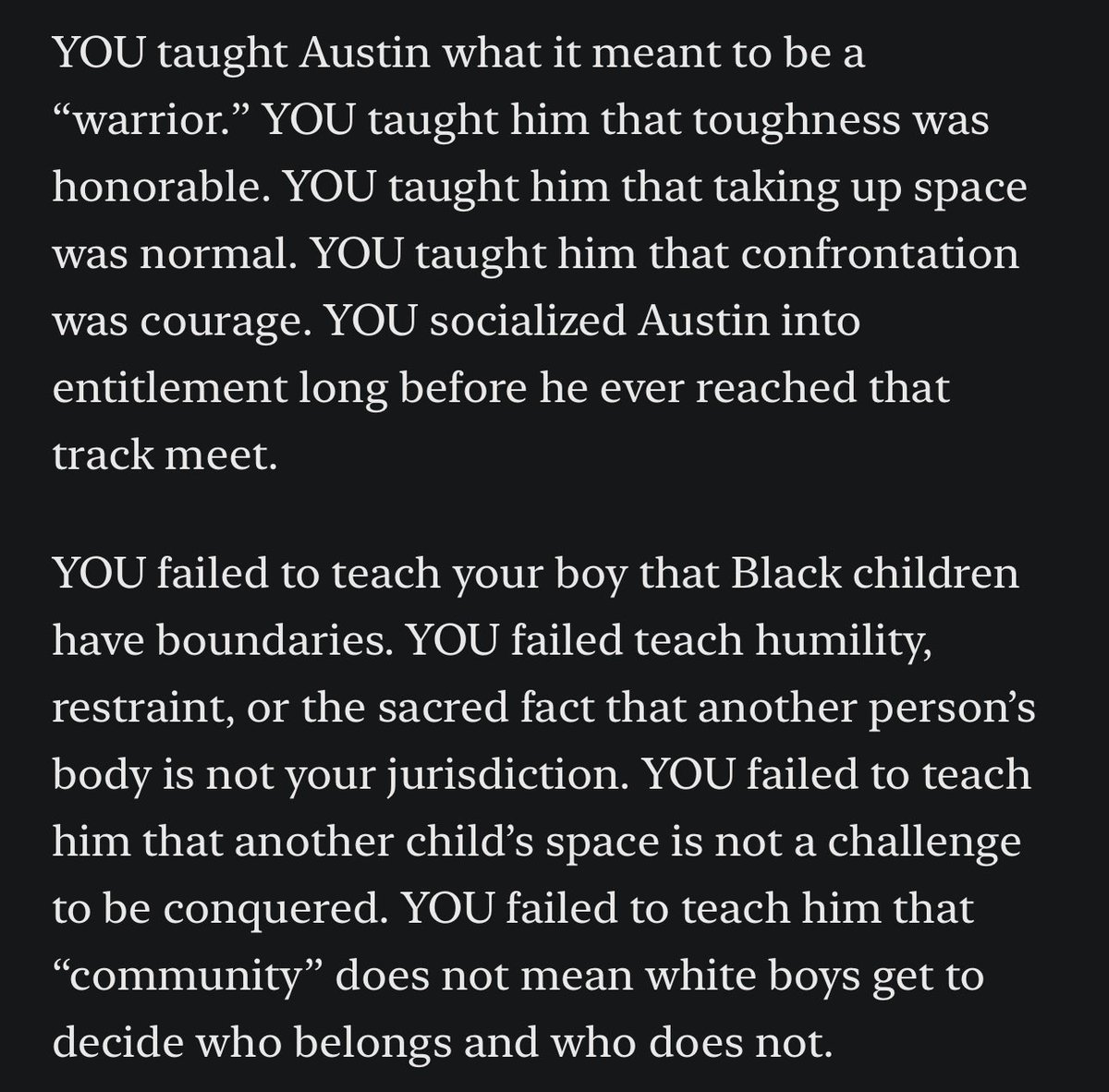
Titled "Dear Jeff Metcalf: Your Son is Dead Because You Failed to Teach Him That Black Boys Have Boundaries," the article argues that Jeff Metcalf failed to teach Austin that "black children have boundaries." In other words, Jeff should have taught Austin that black people will try to kill you if you ask them to stop violating social norms.
While Patton falls short of outright defending Karmelo's decision, the entire purpose of the piece is to rationalize his behavior. Kind of like "Sure Karmelo shouldn't have stabbed him, but it was Austin's fault at the end of the day."
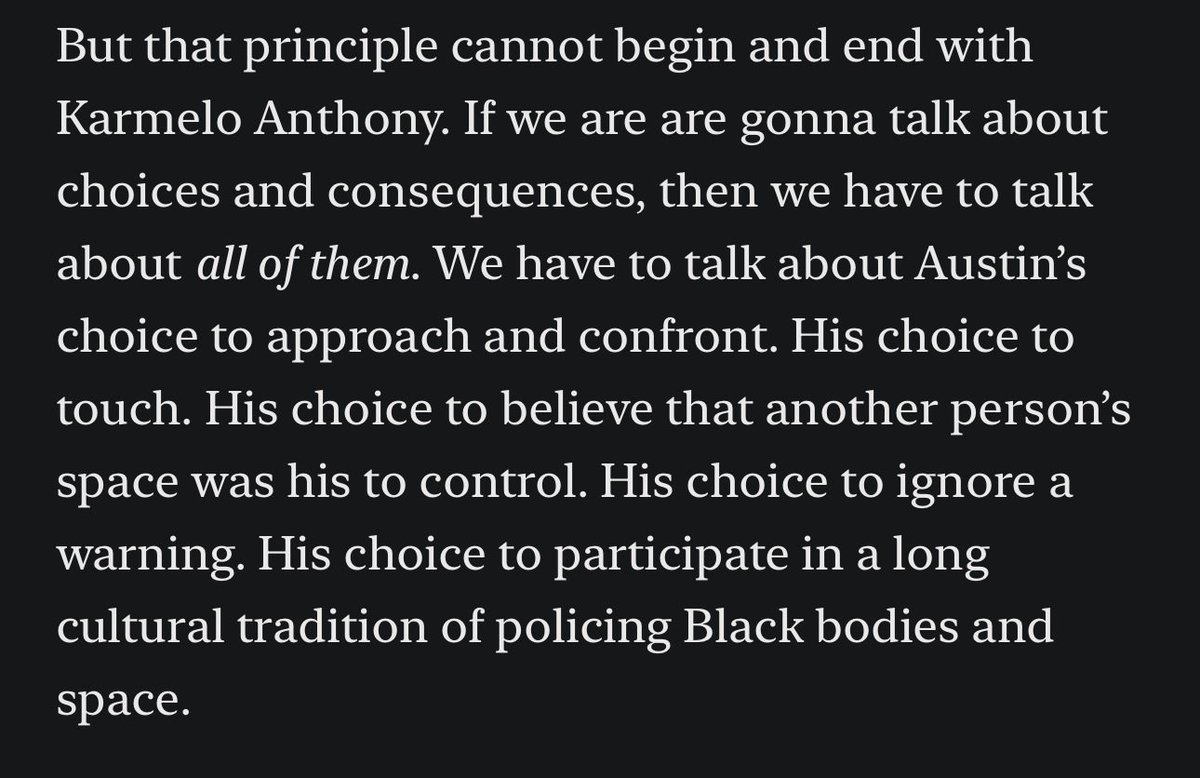
She writes, "We have to talk about Austin's decision to approach and confront." As if Austin didn't have the right to tell someone from another school to leave his school's tent. As if somehow that minor confrontation justifies stabbing him in the heart. It is complete insanity. Patton ties Austin's behavior to "a long cultural tradition of policing black bodies and space."
Right.
Patton's Substack has nearly 50k followers. He has 300k followers on Facebook. She is an accomplished professor and journalist. The article received thousands of likes. We've all seen the low-class black people causing a scene outside of the courthouse. But it appears that even many educated blacks believe that people of their race have the right to murder anyone who asks them to stop playing music in public, respect physical boundaries, and so on.
"Let us do what we want or we'll kill you" appears to be the message being broadcast by a sizable share of the black community. You don't have to be a far-right radical to recognize the many unsettling implications this holds for the future of American race relations.
609
5,567
14,572
151,692
DannyManDeBo retweeted
Jun 12
It was a racist hate crime thrill killing. They took his phone, killed him for no apparent reason, and threw the phone away. #FATIGUE
Jun 11

The 2 guys who shot and killed Billy Schmidt, a 22 year old Penn State student, FOR HIS PHONE.

1,106
13,986
40,217
521,633
DannyManDeBo retweeted

Jun 11
We don’t fool around in Ireland 🇮🇪
Belfast boys went door-to-door seeking out migrant-occupied houses.
They had enough of ultra-violent migrant attacks on Irish people.
The government started all of this, but by God will the Irish finish it.
Follow us and share
Community note
This video shows riots in Middlesbrough, England in August 2024, not recent events in Belfast. youtube.com/watch?v=fdanhE…
1,683
6,512
31,556
1,023,068

Denmark publishes crime by country of origin, not nationality. I looked at 2021-2025 data.
Overall: Somali-origin 7.8x the Danish rate. American-origin 0.34x.
Thread of Top Five and Bottom Five.
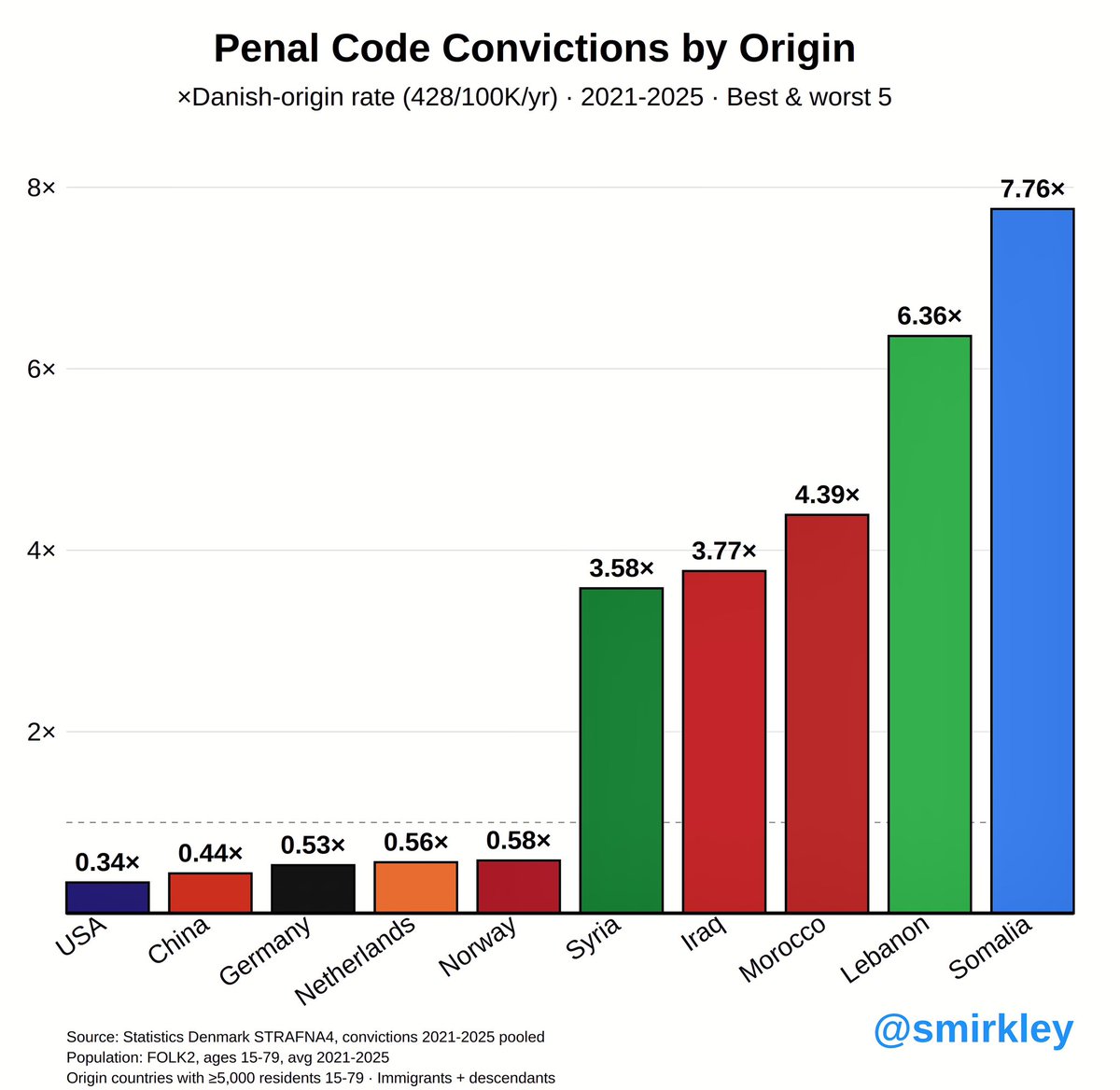
ALT Penal code conviction rates by origin, Denmark. Statistics Denmark STRAFNA4, 2021-205. @smirkley
200
2,471
7,632
709,130
Oh no! This is Islamophobic forbidden knowledge.

Denmark publishes crime by country of origin, not nationality. I looked at 2021-2025 data.
Overall: Somali-origin 7.8x the Danish rate. American-origin 0.34x.
Thread of Top Five and Bottom Five.
ALT Penal code conviction rates by origin, Denmark. Statistics Denmark STRAFNA4, 2021-205. @smirkley
259
6,107
20,997
452,289
DannyManDeBo retweeted

Jun 12
This video of Marco Rubio is still my favorite one.
"I want Israel to destroy Hamas. They're vicious animals."
Accurate, precise, no bullshit.
267
1,127
5,316
47,000
DannyManDeBo retweeted

Jun 11
HERE WE GO 🚨 Britain’s Minister for Northern Ireland is preparing a major crackdown on social media companies to force removal of all content they say “is illegal”
He says anti-immigrant talk causing outrage will no longer be tolerated
(Holy sh*t)
UK Secretary of State for Northern Ireland “Social media companies have a very heavy responsibility. It's why we're going to bring forward new powers next week to make it clear that social media companies need to take down illegal content, particularly when we are facing circumstances such as the ones we've seen in Northern Ireland over the last two days”
This is going to be enforced under the Online Safety Act which Hillary Clinton flew over and helped pass
‘Under the UK’s Online Safety Act 2023 platforms must proactively assess, mitigate, and rapidly remove “illegal content.”’
Liberals are tyrants and the are going to being mass censorship until the western world is completely overrun with foreigners and conquered
4,991
8,807
17,501
466,334