
AI for Africa by Africa
Joined April 2026
- Tweets 170
- Following 14
- Followers 17
- Likes 72
26 Photos and videos

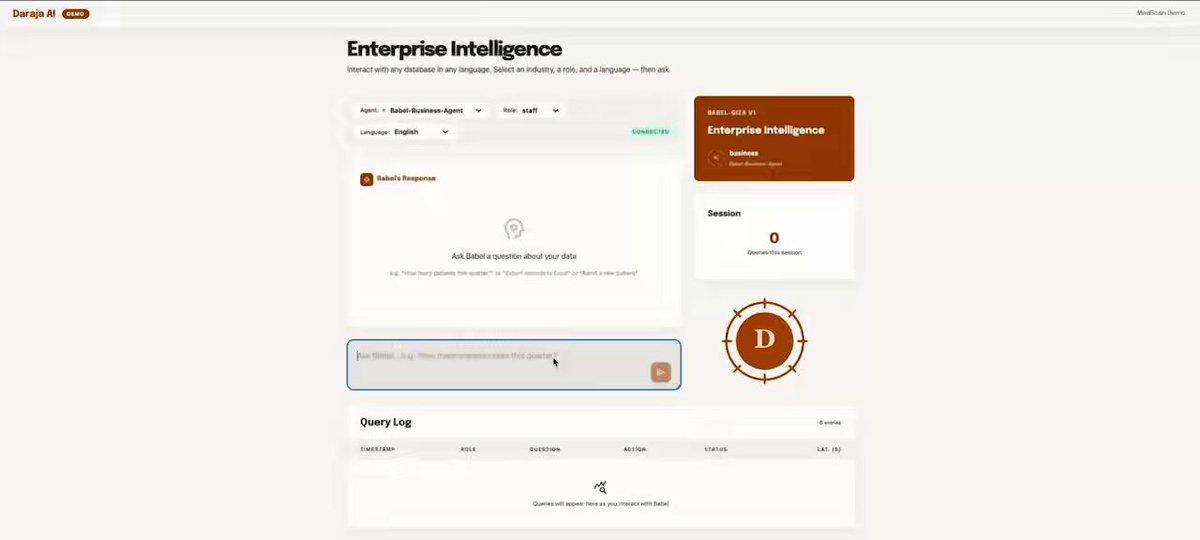
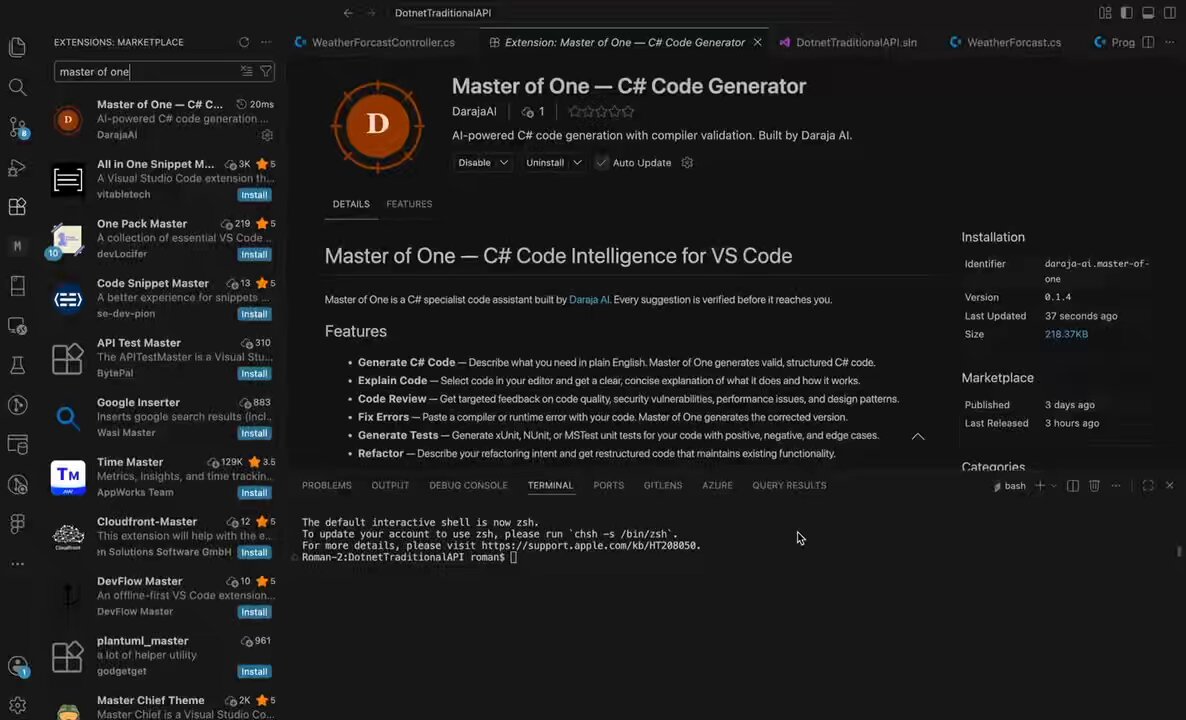
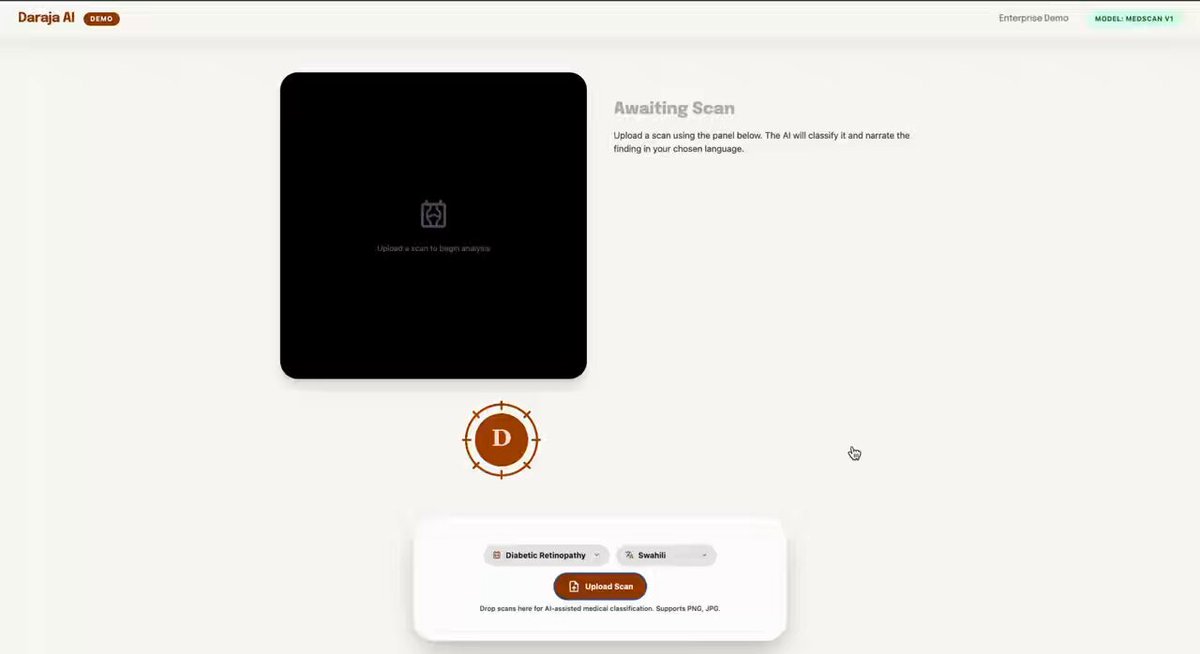
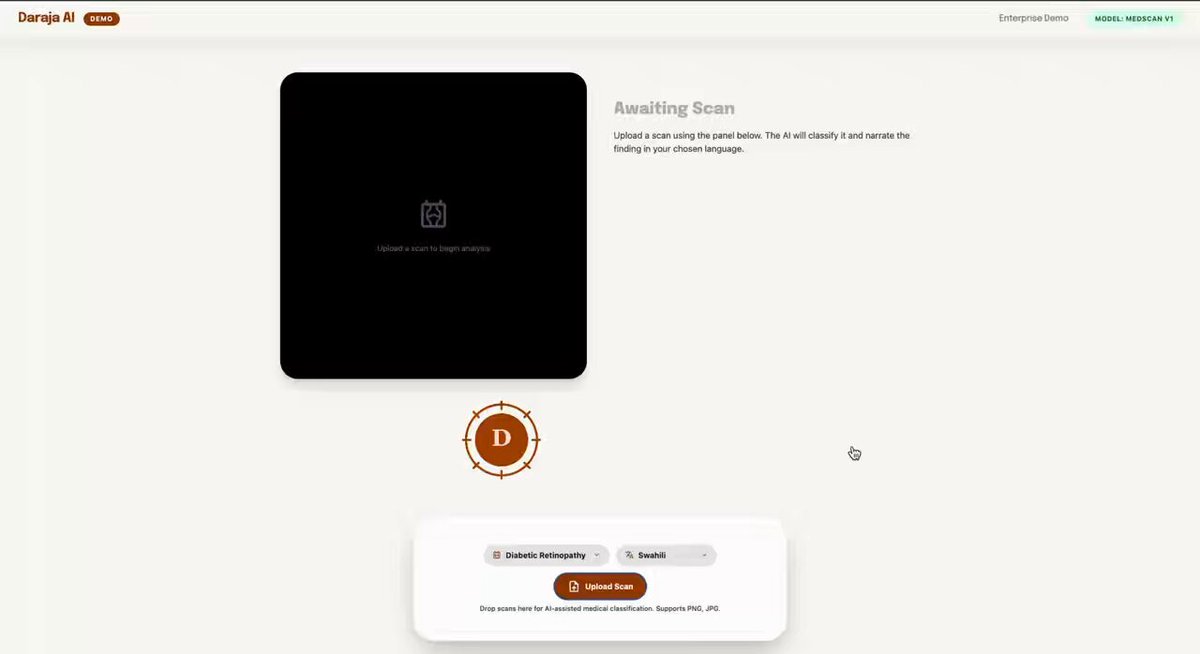
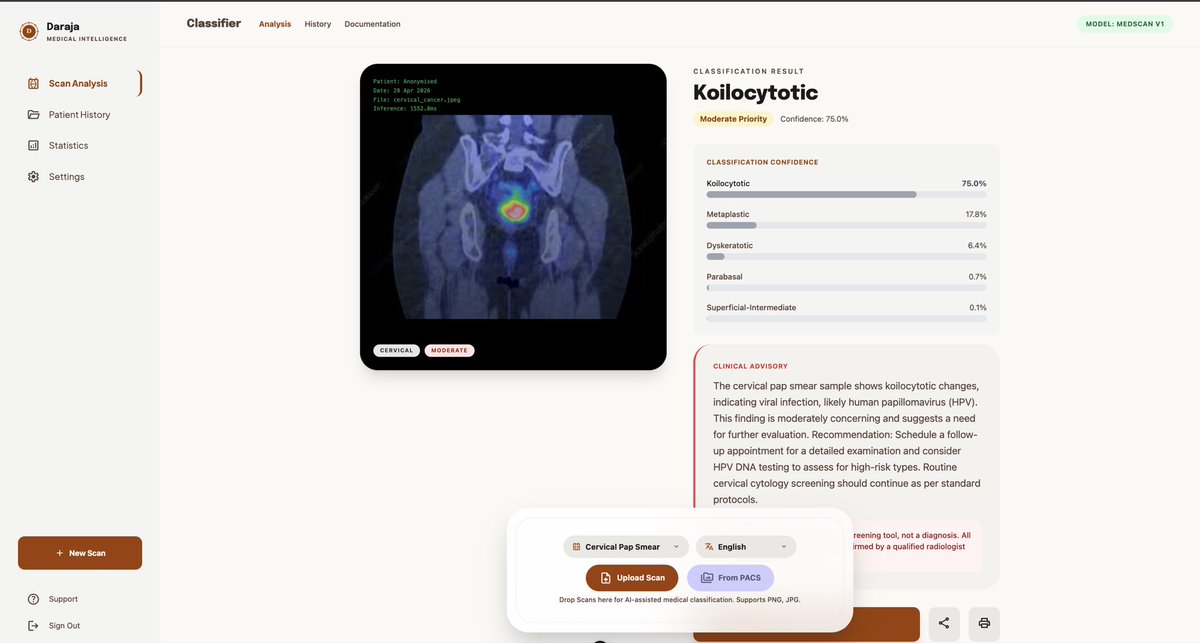
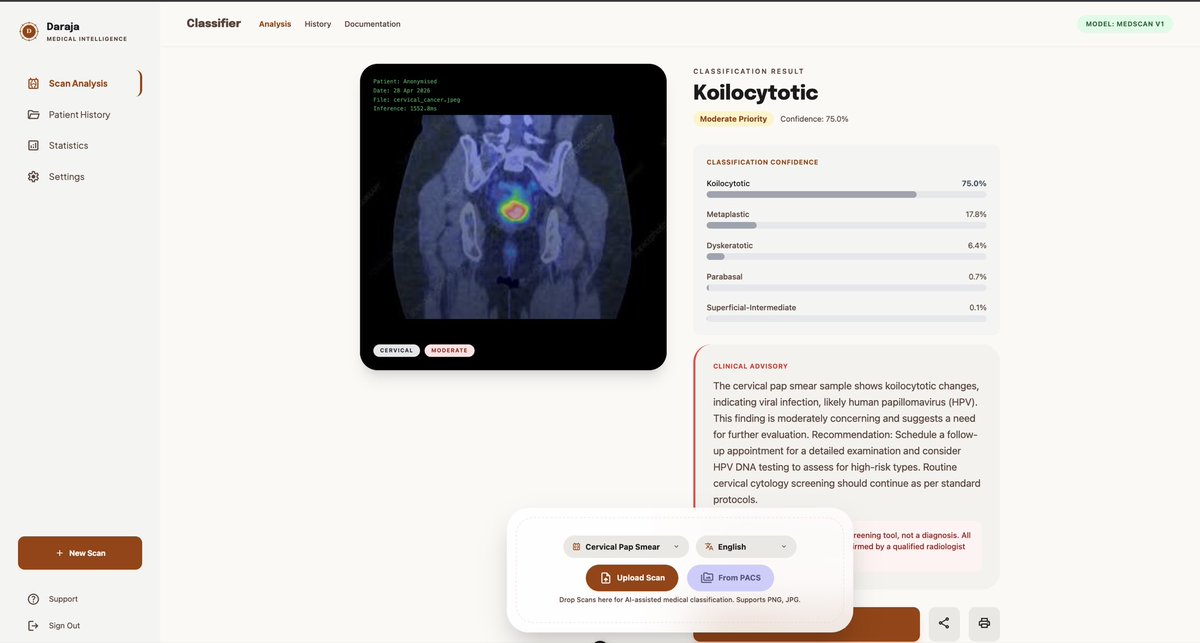
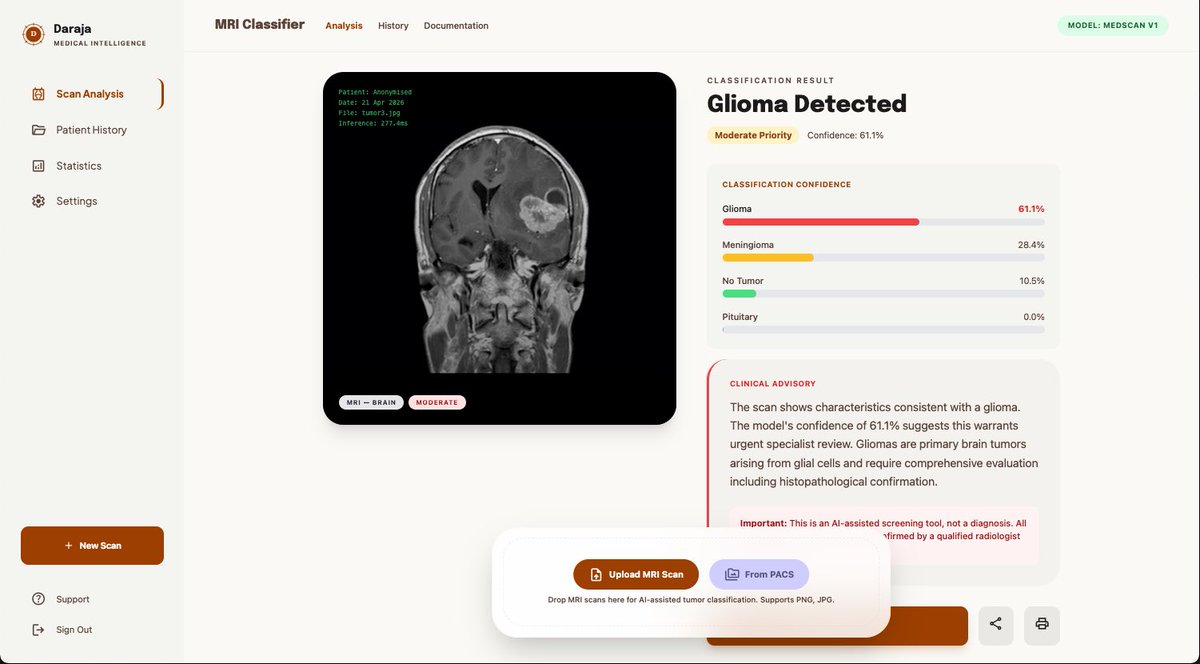

This is the standard every MedScan model is held to.
In medical AI the dangerous error isn't the answer that's obviously wrong. It's the confident "you're fine" given to someone who isn't. We build against that one first - even when it costs us a prettier number.
Jun 12

A wrong answer in most AI is an inconvenience. You laugh at the chatbot, refresh, move on.
A wrong answer in a cancer screen is a funeral.
I had to sit with that early. When you build a model that tells a clinician "nothing here," you're not tuning a metric anymore. You're deciding, in some small way, who gets caught in time and who gets sent home.
So I stopped chasing accuracy.
Accuracy is a vanity number. It rewards a model for being right about the easy cases - the healthy scans, the obvious negatives. A model can be 95% accurate and still miss the one tumour in the room, because the one tumour was rare and the metric didn't care.
I build against the opposite mistake. The miss. The false "you're fine" handed to someone who isn't. In medicine that's the only error that kills - so that's the one I optimize against, even when it makes the headline number look worse.
It means my models are sometimes more cautious than they strictly need to be. They flag things for a human to check that turn out to be nothing. I'll take that trade every time. A second look costs a clinician a minute. A missed cancer costs a life.
People think the hard part of medical AI is making it smart.
The hard part is making it humble - teaching a machine to fear the mistake that matters more than it loves the score that doesn't.
That's the standard. Not because it's clever. Because someone's mother is on the other side of the result.
1
1
25
Daraja retweeted

Jun 12
A wrong answer in most AI is an inconvenience. You laugh at the chatbot, refresh, move on.
A wrong answer in a cancer screen is a funeral.
I had to sit with that early. When you build a model that tells a clinician "nothing here," you're not tuning a metric anymore. You're deciding, in some small way, who gets caught in time and who gets sent home.
So I stopped chasing accuracy.
Accuracy is a vanity number. It rewards a model for being right about the easy cases - the healthy scans, the obvious negatives. A model can be 95% accurate and still miss the one tumour in the room, because the one tumour was rare and the metric didn't care.
I build against the opposite mistake. The miss. The false "you're fine" handed to someone who isn't. In medicine that's the only error that kills - so that's the one I optimize against, even when it makes the headline number look worse.
It means my models are sometimes more cautious than they strictly need to be. They flag things for a human to check that turn out to be nothing. I'll take that trade every time. A second look costs a clinician a minute. A missed cancer costs a life.
People think the hard part of medical AI is making it smart.
The hard part is making it humble - teaching a machine to fear the mistake that matters more than it loves the score that doesn't.
That's the standard. Not because it's clever. Because someone's mother is on the other side of the result.
1
1
40
Daraja exists for one reason: so Africa never has to rent its intelligence.
Language by language, built from the ground up - including the ones the giants skipped.
The future will speak many tongues. We're making sure ours are among them.
daraja.ai
#AIforAfrica
Jun 11
We talk about food sovereignty. Energy sovereignty. We need to start talking about cognitive sovereignty.
Every nation is racing to own its AI. But ownership isn't just data centres and chips. It's language. A model that can't think in your language can't serve your people - it can only translate them, flatten them, approximate them.
Right now a handful of companies on two continents are deciding which of the world's 7,000 languages are worth teaching a machine. Most African languages didn't make the list. That isn't a technical accident. It's a decision about who the future is for.
Africa cannot outsource that decision.
We need to build what only we can build.
The future will speak many languages. Ours had better be among them.
daraja.ai
#AIforAfrica
1
1
17
Daraja retweeted
Jun 11
We talk about food sovereignty. Energy sovereignty. We need to start talking about cognitive sovereignty.
Every nation is racing to own its AI. But ownership isn't just data centres and chips. It's language. A model that can't think in your language can't serve your people - it can only translate them, flatten them, approximate them.
Right now a handful of companies on two continents are deciding which of the world's 7,000 languages are worth teaching a machine. Most African languages didn't make the list. That isn't a technical accident. It's a decision about who the future is for.
Africa cannot outsource that decision.
We need to build what only we can build.
The future will speak many languages. Ours had better be among them.
daraja.ai
#AIforAfrica
1
1
28
Babel Voice is now available to all our Enterprise Intelligence Agents!
#BabelVoice #AIforAfrica
1
1
15
Daraja retweeted
Jun 10
2
2
45
Daraja retweeted
Jun 8
Great article @MuturiAlex!
Every point here came from scars not slides. Tutorial purgatory is real - I lived there. The moment I stopped learning to build and started building to learn that's when everything changed.
While products come and go, the lesson holds: ship beats study every time.
To all developers building and the ones thinking of transitioning remember to fail hard, fail fast, fail often.
Thank you @MuturiAlex & @TechopsHub.
Jun 7

In Builders Space: Building Products in Africa's Tech Ecosystem Episode 2 we had a chat with @KelvRoman and @opere_brandon on Developer to Builder: Moving Beyond Tutorials Into Real Products here are the takeaways linkedin.com/pulse/developer…
1
2
35
Text was the foundation. Voice is the bridge. 23 languages spoken, not just written.
Coming soon.
daraja.ai
#BabelVoice #AIforAfrica
Jun 9
23 languages. That was the text layer.
But 60% of Africa's internet users prefer voice over text. And millions more never learned to read in any language.
Text-only AI excludes the people who need it most.
So we taught the bridge to speak.
Voice is coming to @DarajaAI. Not as an add-on. As a core layer. Translation, conversation, medical screening - all delivered in the language you think in, spoken in a voice you understand.
daraja.ai
#AIforAfrica
1
1
23
Daraja retweeted
Jun 9
23 languages. That was the text layer.
But 60% of Africa's internet users prefer voice over text. And millions more never learned to read in any language.
Text-only AI excludes the people who need it most.
So we taught the bridge to speak.
Voice is coming to @DarajaAI. Not as an add-on. As a core layer. Translation, conversation, medical screening - all delivered in the language you think in, spoken in a voice you understand.
daraja.ai
#AIforAfrica
1
1
47
The bridge doesn't just connect anymore. It speaks.
Voice is coming to Daraja. One language at a time.
daraja.ai
#AIforAfrica #BabelVoice #BabelSpeaks
Jun 8
2 AM. A GPU somewhere is learning how to pronounce Yoruba.
3 AM. Another one is learning Pidgin.
4 AM. I'm reading training logs the way a new parent watches a baby monitor.
There's no shortcut to teaching a machine to speak a language. You feed it thousands of hours. You clean every sample. You train, fail, retrain, fail differently, retrain again.
But when it finally says "Habari yako" and it sounds right - that silence after is the best sound in the world.
Voice is coming.
daraja.ai
#AIforAfrica
1
1
40
Daraja retweeted
Jun 8
2 AM. A GPU somewhere is learning how to pronounce Yoruba.
3 AM. Another one is learning Pidgin.
4 AM. I'm reading training logs the way a new parent watches a baby monitor.
There's no shortcut to teaching a machine to speak a language. You feed it thousands of hours. You clean every sample. You train, fail, retrain, fail differently, retrain again.
But when it finally says "Habari yako" and it sounds right - that silence after is the best sound in the world.
Voice is coming.
daraja.ai
#AIforAfrica
1
2
68
Daraja retweeted
Jun 4
Thank you

User feedback drives everything we build. When our users speak, we listen - and we ship.
Thank you.
daraja.ai
#AIforAfrica
1
1
28
One language became 12, then 23.
One greeting became Babel Translate.
One translation became Babel Chat.
One conversation became Enterprise Intelligence.
One vision became the foundation for The Bridge.
The Bridge keeps growing.
daraja.ai
#AIforAfrica
Jun 5
"Bonzour Babel"
That was the first sentence ever spoken to an AI in Mauritian Creole. I typed it into a model nobody knew existed, for a language nobody had built for.
Babel replied in Creole. Naturally. Like a person would.
That was one language.
Today it's 23. Twelve African. Five European. Six Asian. Any language to any language. Interconnecting Africans and the world.
Every revolution starts with one sentence nobody thought was possible.
daraja.ai
#AIforAfrica
1
1
33
Daraja retweeted
Jun 5
"Bonzour Babel"
That was the first sentence ever spoken to an AI in Mauritian Creole. I typed it into a model nobody knew existed, for a language nobody had built for.
Babel replied in Creole. Naturally. Like a person would.
That was one language.
Today it's 23. Twelve African. Five European. Six Asian. Any language to any language. Interconnecting Africans and the world.
Every revolution starts with one sentence nobody thought was possible.
daraja.ai
#AIforAfrica
1
3
122
User feedback drives everything we build. When our users speak, we listen - and we ship.
Thank you.
daraja.ai
#AIforAfrica
Jun 4
I love many aspects of being an engineer but one thing that stands out is user feedback. Nothing really comes close to it.
You get to understand where the user's mind is at, how they interact with your system, and most importantly - where you got it wrong. That data is invaluable. No amount of internal testing replaces it.
This morning a user flagged something. Within minutes it was addressed and deployed. Not because I'm fast. Because when someone takes the time to tell you what's broken, the least you can do is take it seriously.
Every piece of feedback makes the system better. Every bug report is a contribution. Every 'this doesn't feel right' is someone who believes in what you're building enough to help you build it better.
We are listening. We are improving. Every single day.
daraja.ai
#AIforAfrica
1
1
63
Daraja retweeted
Jun 4
I love many aspects of being an engineer but one thing that stands out is user feedback. Nothing really comes close to it.
You get to understand where the user's mind is at, how they interact with your system, and most importantly - where you got it wrong. That data is invaluable. No amount of internal testing replaces it.
This morning a user flagged something. Within minutes it was addressed and deployed. Not because I'm fast. Because when someone takes the time to tell you what's broken, the least you can do is take it seriously.
Every piece of feedback makes the system better. Every bug report is a contribution. Every 'this doesn't feel right' is someone who believes in what you're building enough to help you build it better.
We are listening. We are improving. Every single day.
daraja.ai
#AIforAfrica
1
8
188
Babel-Virahsawmy is named after Dev Virahsawmy (1937–2023) - the poet who translated Shakespeare, the Bible, the Bhagavad Gita and the Quran into Mauritian Kreol, insisting it was a language, not a dialect.
Our Kreol model carries his fight into the age of AI.
Jun 3
As Africans, we have always passed down knowledge and wisdom through oral tradition - from the scholars of Timbuktu to the storytellers of today.
So when we built Babel, we refused to give our models cold, forgettable codenames. Each one carries the name of a son or daughter of the motherland - a poet, a playwright, a linguist, a keeper of stories - who loved their language so fiercely that history could not forget them.
Babel-Virahsawmy honours Dev Virahsawmy, who spent his whole life insisting that Mauritian Creole was a language and not a lesser tongue - translating Shakespeare, the Bible, the Bhagavad Gita and the Quran into Creole so his people could meet the world in their own voice.
Mariama Bâ, who gave Senegalese women a literature of their own.
Chinua Achebe, who made the world read Africa on Africa's terms.
Hadraawi, the "Master of Speech," who would not stop writing the poems that put him in prison.
They were told their languages were too small to carry literature, science, scripture. They refused to believe it.
We carry that same refusal into the age of AI. Every time someone speaks to Babel in their mother tongue and is understood, the work these men and women began continues.
We didn't borrow their names for prestige. We took them so that a child using Babel might one day ask, "Who was Virahsawmy?" - and go and find out.
Their legacy lives on.
Now it answers back, in the languages of the continent.
daraja.ai/explore
@DarajaAI
#AIforAfrica
1
1
61
Daraja retweeted
Jun 3
As Africans, we have always passed down knowledge and wisdom through oral tradition - from the scholars of Timbuktu to the storytellers of today.
So when we built Babel, we refused to give our models cold, forgettable codenames. Each one carries the name of a son or daughter of the motherland - a poet, a playwright, a linguist, a keeper of stories - who loved their language so fiercely that history could not forget them.
Babel-Virahsawmy honours Dev Virahsawmy, who spent his whole life insisting that Mauritian Creole was a language and not a lesser tongue - translating Shakespeare, the Bible, the Bhagavad Gita and the Quran into Creole so his people could meet the world in their own voice.
Mariama Bâ, who gave Senegalese women a literature of their own.
Chinua Achebe, who made the world read Africa on Africa's terms.
Hadraawi, the "Master of Speech," who would not stop writing the poems that put him in prison.
They were told their languages were too small to carry literature, science, scripture. They refused to believe it.
We carry that same refusal into the age of AI. Every time someone speaks to Babel in their mother tongue and is understood, the work these men and women began continues.
We didn't borrow their names for prestige. We took them so that a child using Babel might one day ask, "Who was Virahsawmy?" - and go and find out.
Their legacy lives on.
Now it answers back, in the languages of the continent.
daraja.ai/explore
@DarajaAI
#AIforAfrica
1
3
225
Seeing Babel power the translation layer of a pipeline like this - confidence, back-translation, a verdict you can trust - is exactly the future we’re building toward.
Translation you can measure is translation that can carry weight. Beautiful work @ianktoo

This is how tafsiri works with @DarajaAI
Project: github.com/ianktoo/tafsiri
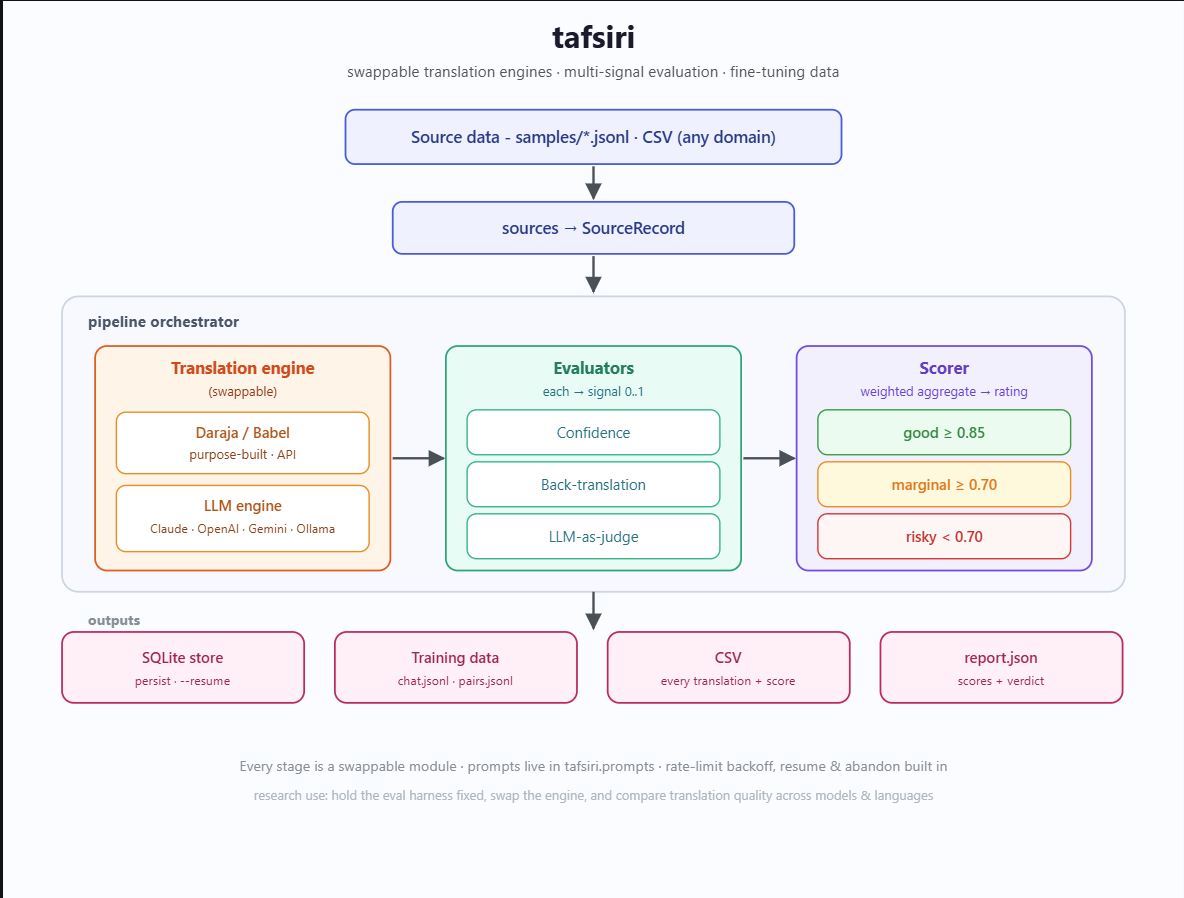
ALT Tafsiri pipeline architecture diagram
1
1
30
This is what the bridge is for, @ianktoo. Emergency translation where a wrong word costs more than silence - built by someone who measures trust before he ships it.
Proud to be the engine behind tafsiri.
Keep building!
Came across @DarajaAI and their African language models while building Crea (an emergency response app).
That stopped me.
Language is a barrier in emergencies, a wrong translation can be worse than none.
So I built tafsiri. An eval pipeline that runs on @DarajaAI API as translation engine. Right now, it translates into Swahili, Yoruba, Amharic (rides on Daraja).
Evaluates each output confidence (Daraja's own confidence), back-translation (asks Daraja the reverse translation) and LLM-as-judge (any frontier large language model).
Not just a translation. A score you can trust.
It's < 5 days old.
Open source. No stats yet. Try it out!
github.com/ianktoo/tafsiri
1
1
39